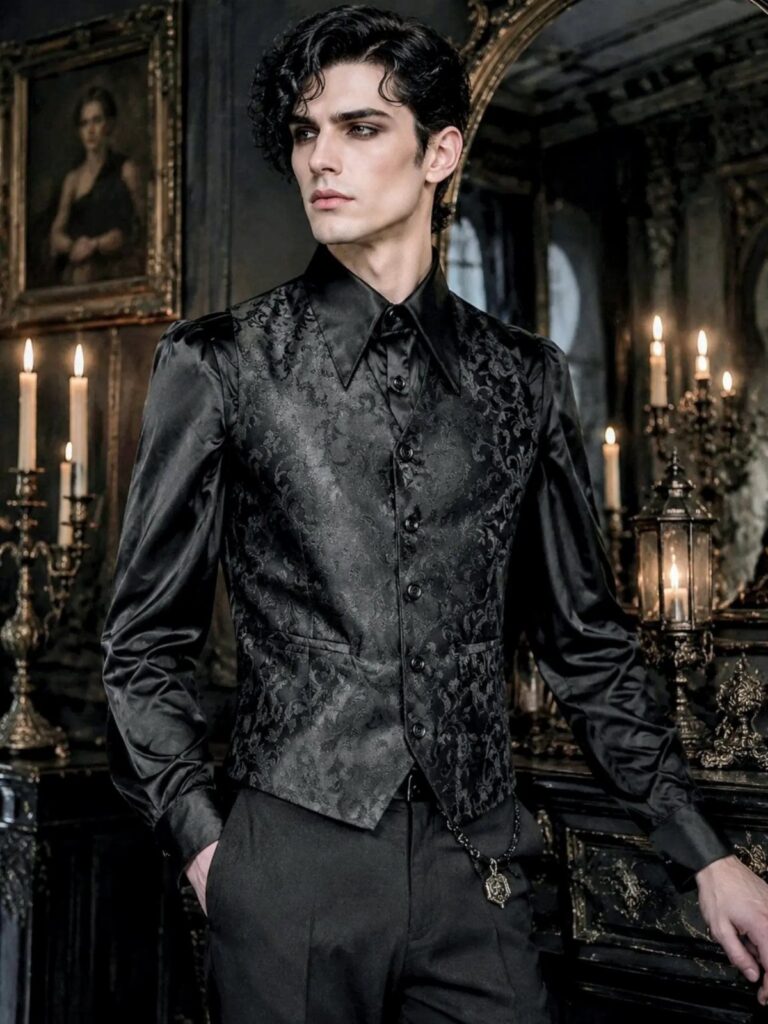
Combat boots and military jackets offer structure and weight, while vampire shirts and velvet bring the Romantic and Victorian periods forward.
Silver jewelry scales from a single ring to layered chains across a vest, and the volume you choose changes how the outfit reads.
1. Combat Boots
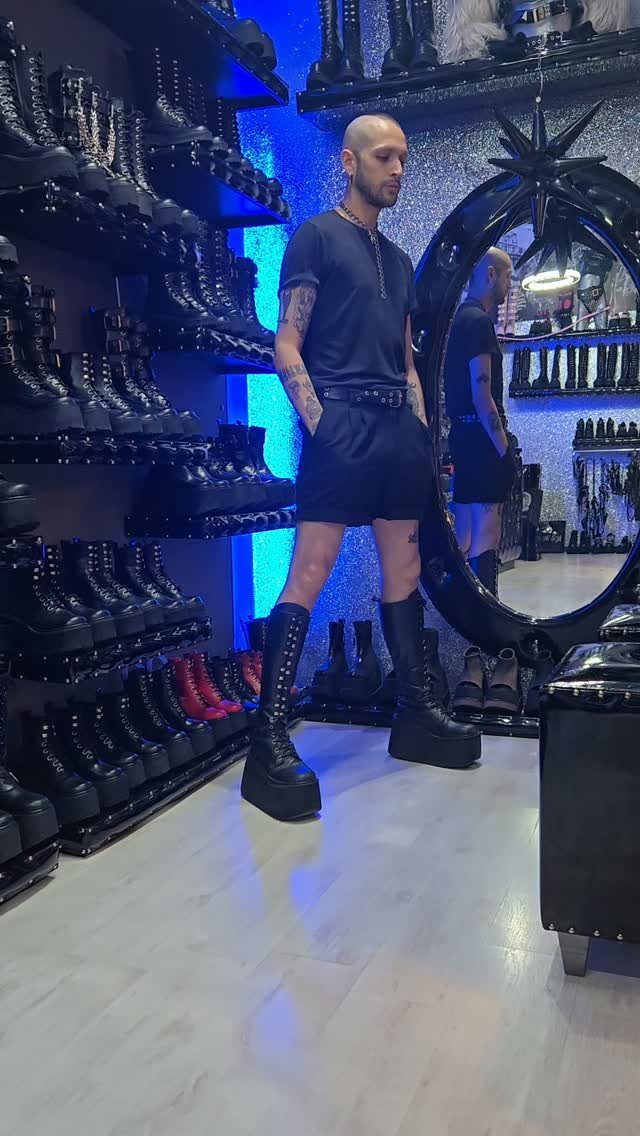
Combat boots anchor gothic style with weight and presence most sneakers can’t deliver. A platform sole adds height and presence while the lace-up front keeps the profile clean.
Plain black leather is where I’d begin.
They work under jeans, cargo pants, or anything loose enough to sit over the shaft. The heavier the sole, the more committed the look, so if you’re testing the style, a lower profile still reads gothic without dominating the outfit.
2. Color Palette

Black dominates gothic fashion, but burgundy, deep purple, and charcoal gray open the palette without softening the mood. A single dark red piece against black creates contrast while holding the same weight.
Burgundy works particularly well in velvet or wool, where the fabric catches light and adds depth.
I’d pair it with a black shirt and tie, the way that outfit does, or swap the blazer for a burgundy button-up under a black coat. Keep everything else dark so the color reads as an accent, not a departure.
3. Luxe Velvet
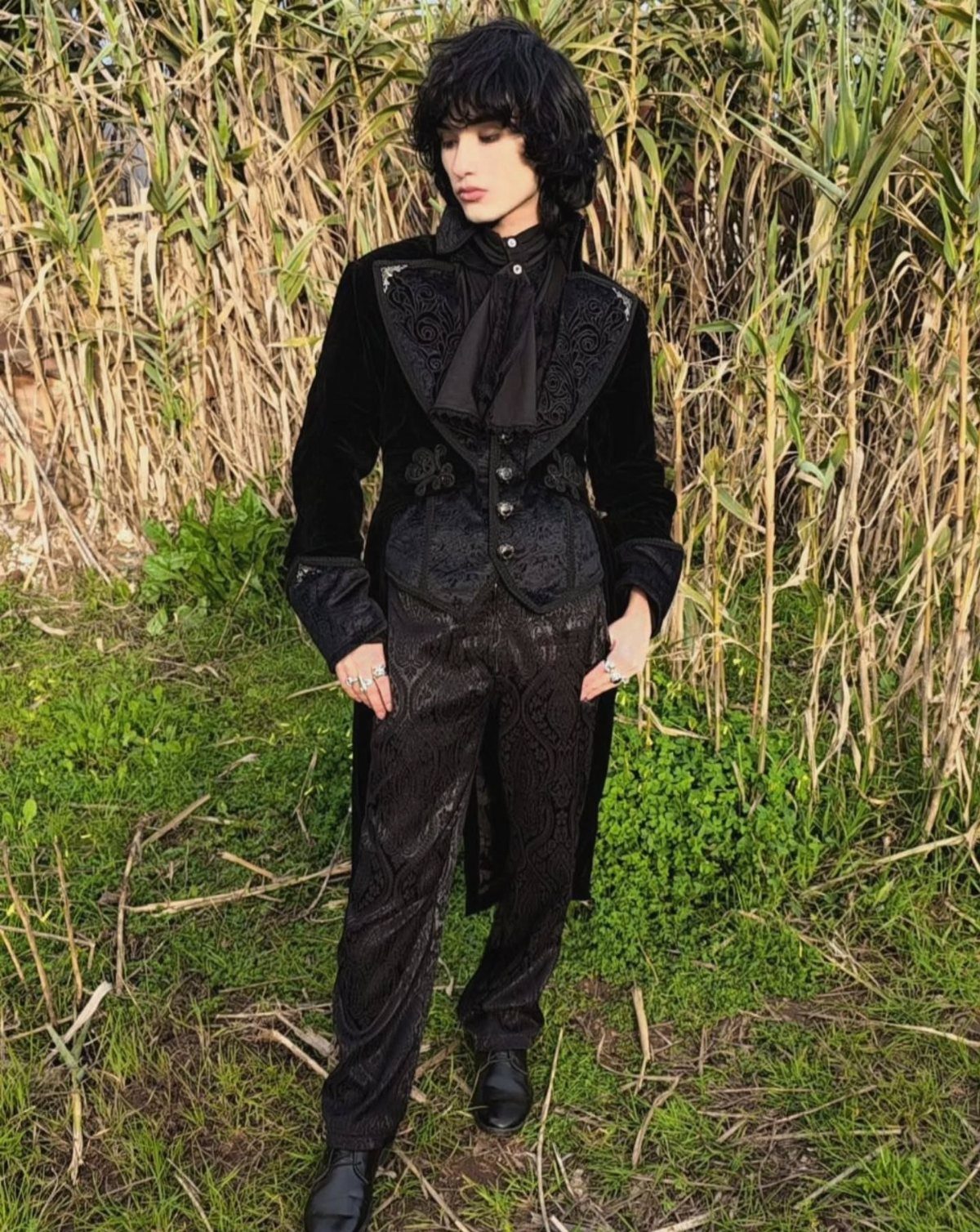
Velvet brings texture and formality to gothic style in a way cotton or denim never will.
Velvet suits fall or winter best. The fabric holds heat and can look out of place in warm weather.
I’d wear a velvet blazer or waistcoat if a full coat feels like too much. Keep the rest simple: black trousers, minimal jewelry, and let the velvet carry the outfit.
4. Casual Goth Aesthetic

Casual goth strips the style down to black basics and small details. The tattoos add to the look, but the clothes themselves are simple enough to wear anywhere.
The chain is doing most of the work here. Without it, the outfit is just black on black.
I’d add silver rings or a pendant if you want more detail and a lighter overall feel. The fit should be close but not tight, and the fabric matte rather than shiny.
5. Punk Goth Style
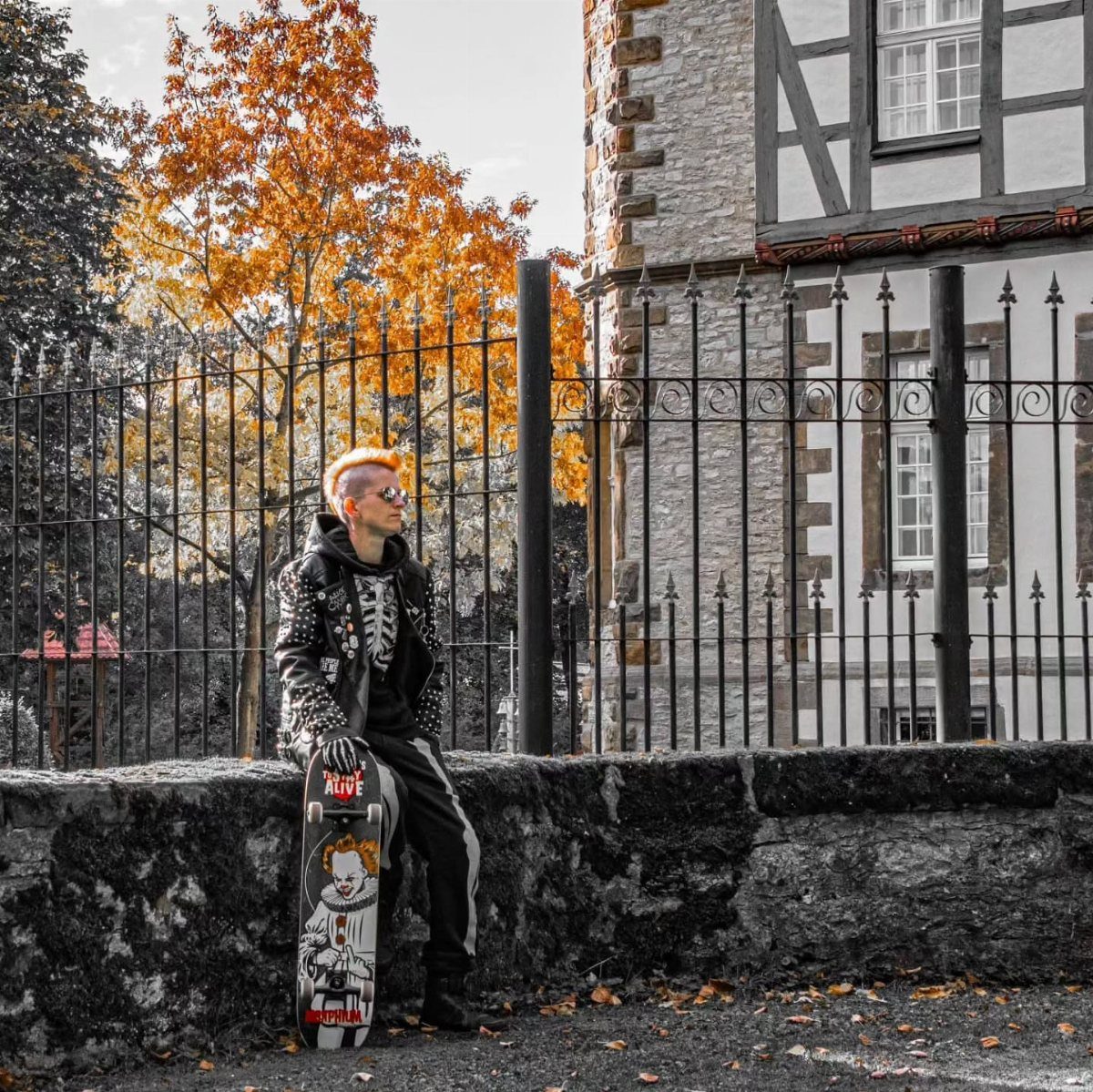
Punk goth mixes aggression with darkness: studs, leather, and asymmetry instead of the clean lines you see in Romantic or Victorian styles.
The studded jacket is the centerpiece, and while the mohawk reinforces the attitude, the clothes alone carry the look.
I’d start with a leather jacket and add studs or patches yourself if you can’t find one already done.
Black jeans or cargo pants work better here than dress trousers. The style reads louder than most gothic looks, so it suits settings where standing out is the point, not a problem.
6. Accessories
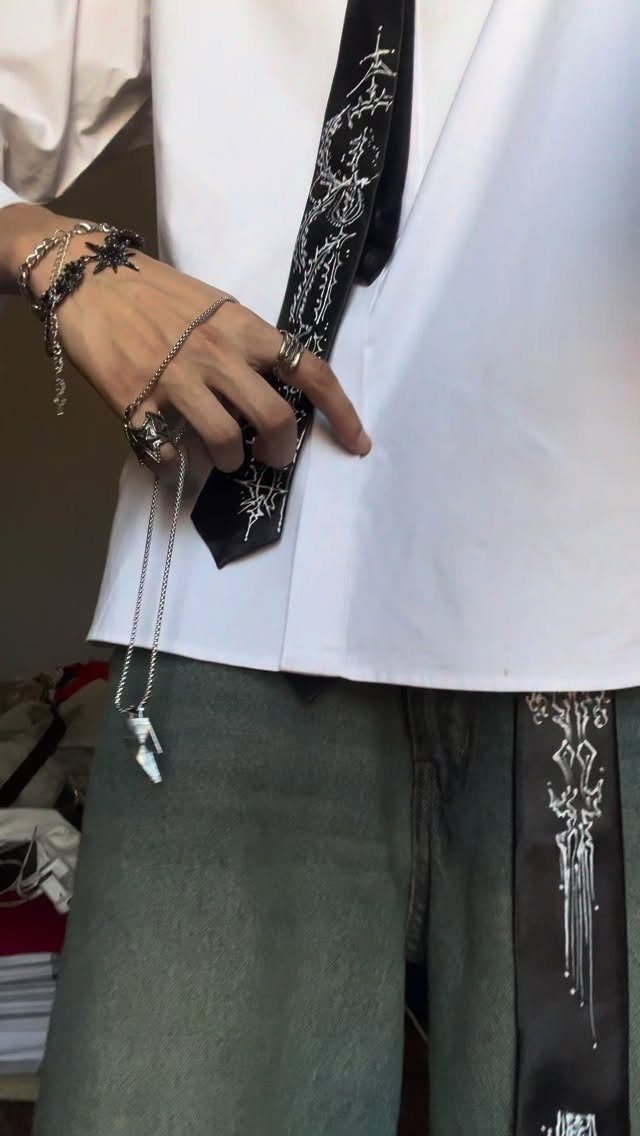
Silver jewelry defines gothic accessories more than any other metal. The volume matters: a single ring is subtle, several signal commitment.
I’d layer a few pieces rather than wearing one statement item. Skip gold unless the outfit leans Romantic or Victorian, where warm metals fit the period reference.
7. Black Trench Coats
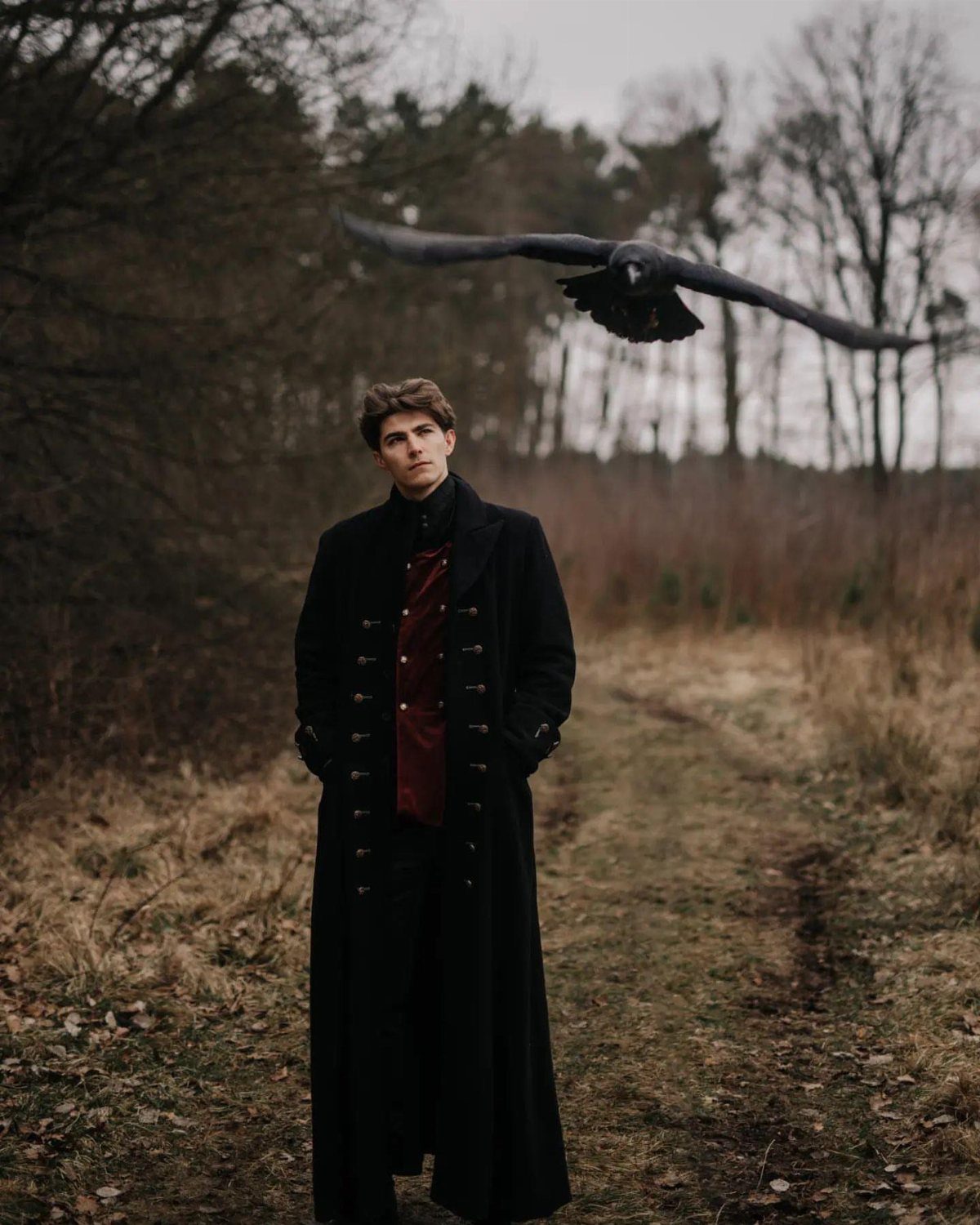
A black trench coat gives you length and drama without needing anything else to work. The silhouette alone reads gothic, particularly when the coat falls below the knee.
I’d wear it over simple pieces so the coat does the talking. A red vest like this one adds color without competing for attention.
Keep the rest black: shirt, trousers, boots. The coat should move easily when you walk; anything too stiff loses the effect.
8. Gothic Vests
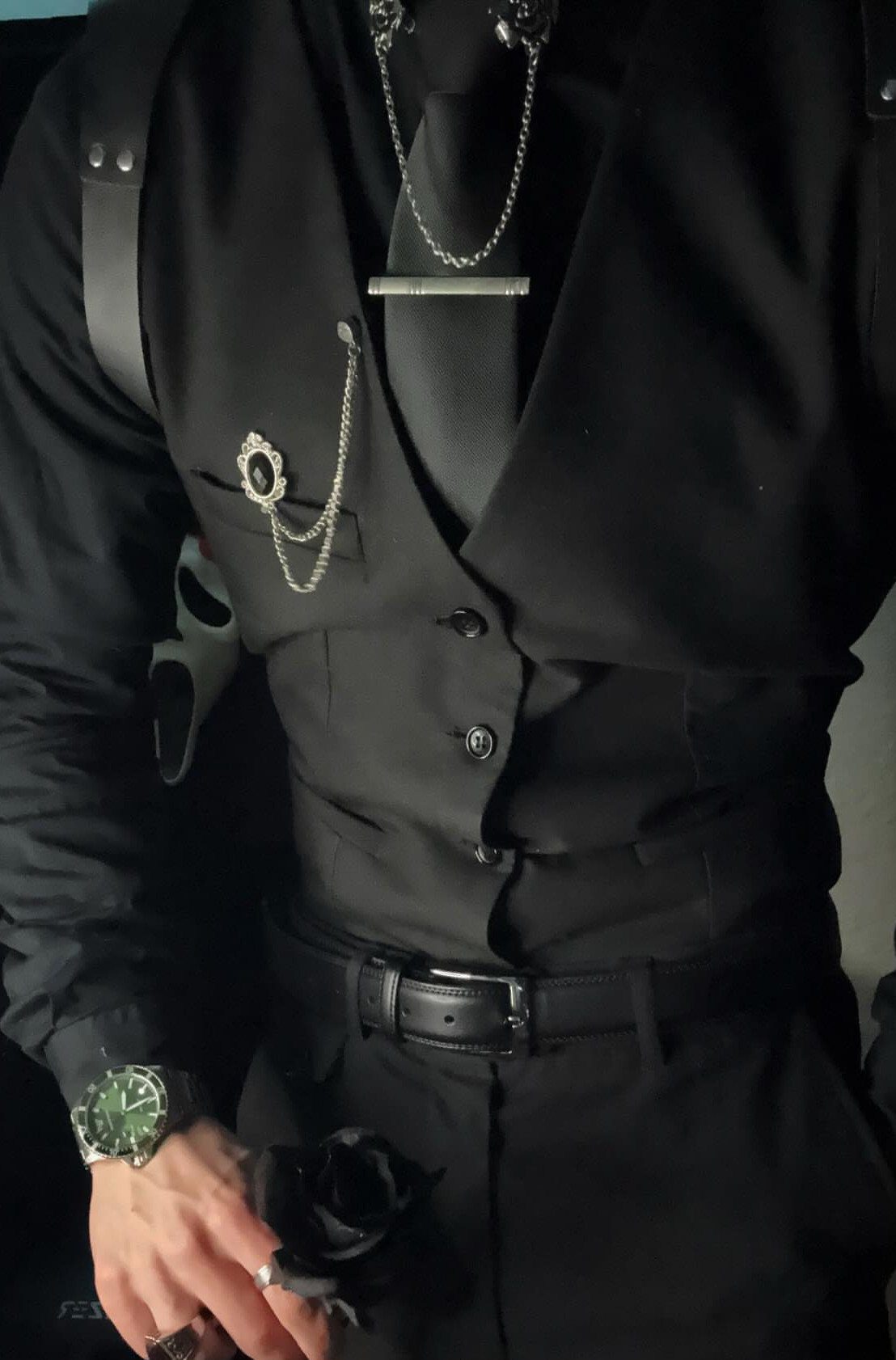
A vest adds structure to a black shirt and tie without the bulk of a jacket. Silver chains across the chest turn formal into gothic, and the effect scales with how many you add.
I’d start with one chain and a lapel pin, then add more if the setting allows.
The vest should fit close through the body but leave room to move. Pair it with a black dress shirt and slim tie, and let the metal catch the light.
9. Distressed Gothic Pants
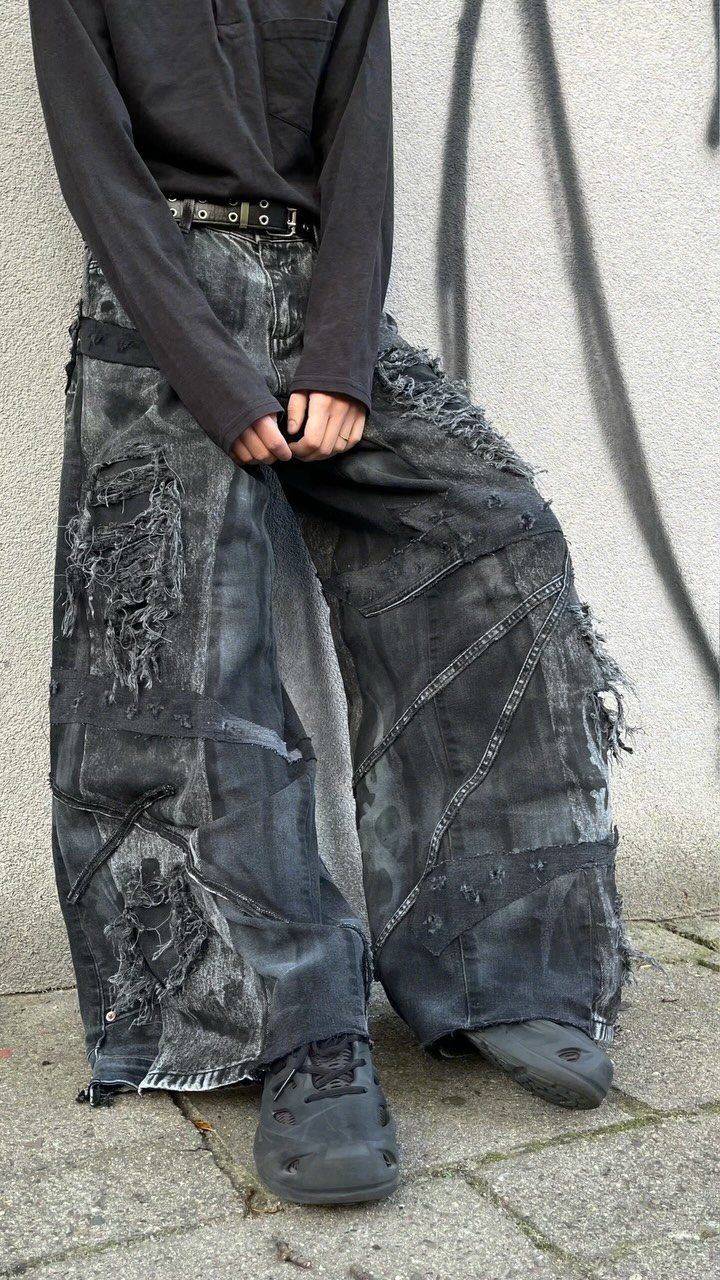
Distressed pants soften the sharp edge most gothic looks carry. These are oversized and grey, not black, which makes them easier to wear with pieces you already own.
The fit matters more than the color. Loose through the leg gives you a relaxed fit, and the tears should sit naturally where fabric wears, not placed at random.
I’d pair them with a fitted black top to balance the volume and black shoes to keep the palette from drifting too far from gothic.
10. Romantic Vampire Shirts
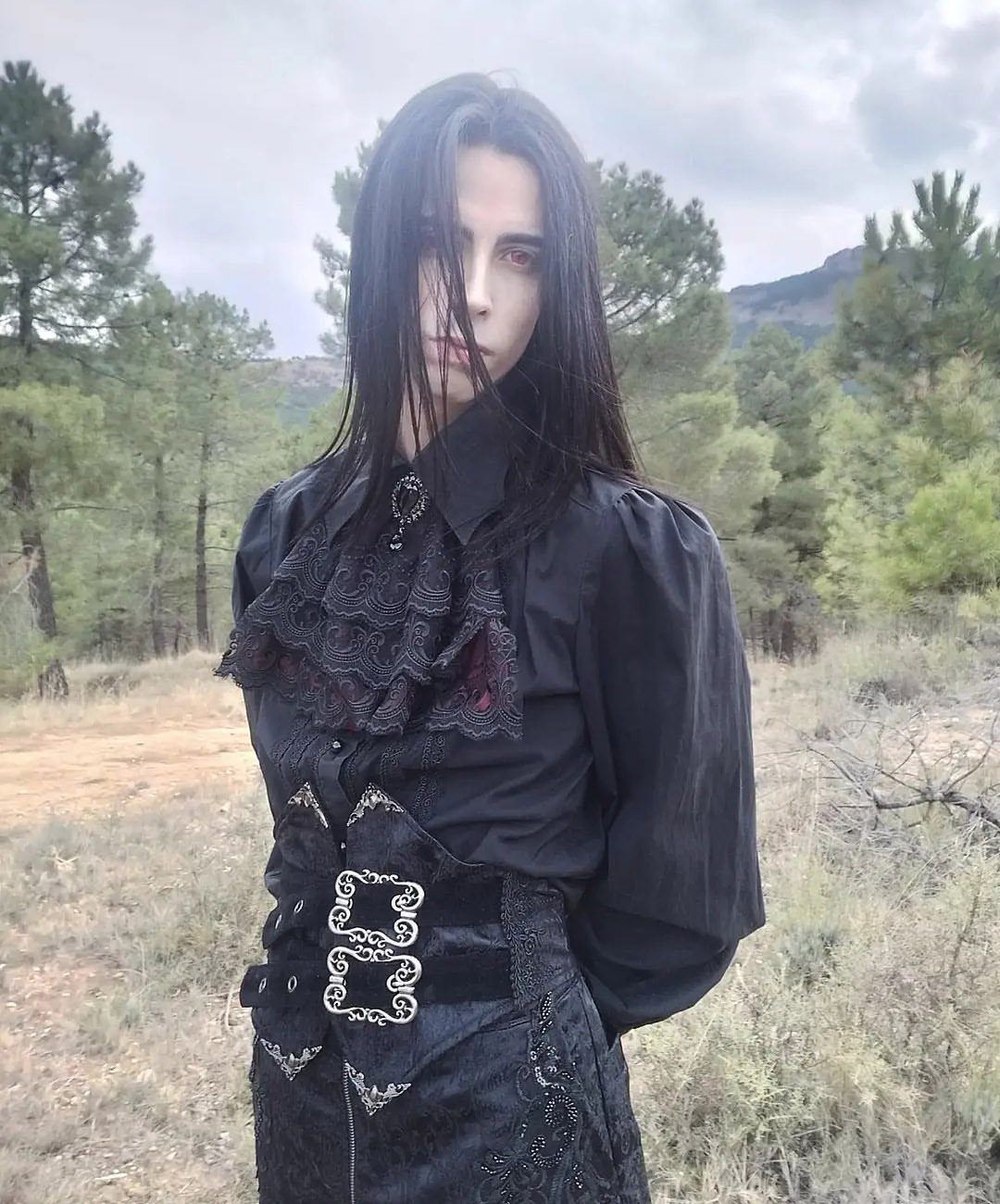
A ruffled lace jabot brings Romantic gothic into sharp focus. The detail is entirely in the neck piece, which sits over a black shirt and draws the eye up.
The sleeves here are puffed, but you could wear this with any black shirt if the jabot fits the collar.
I’d add a belt with visible hardware to match the formality of the lace. The look works best for evening or events where period detail fits the setting.
11. Gothic Military Jackets
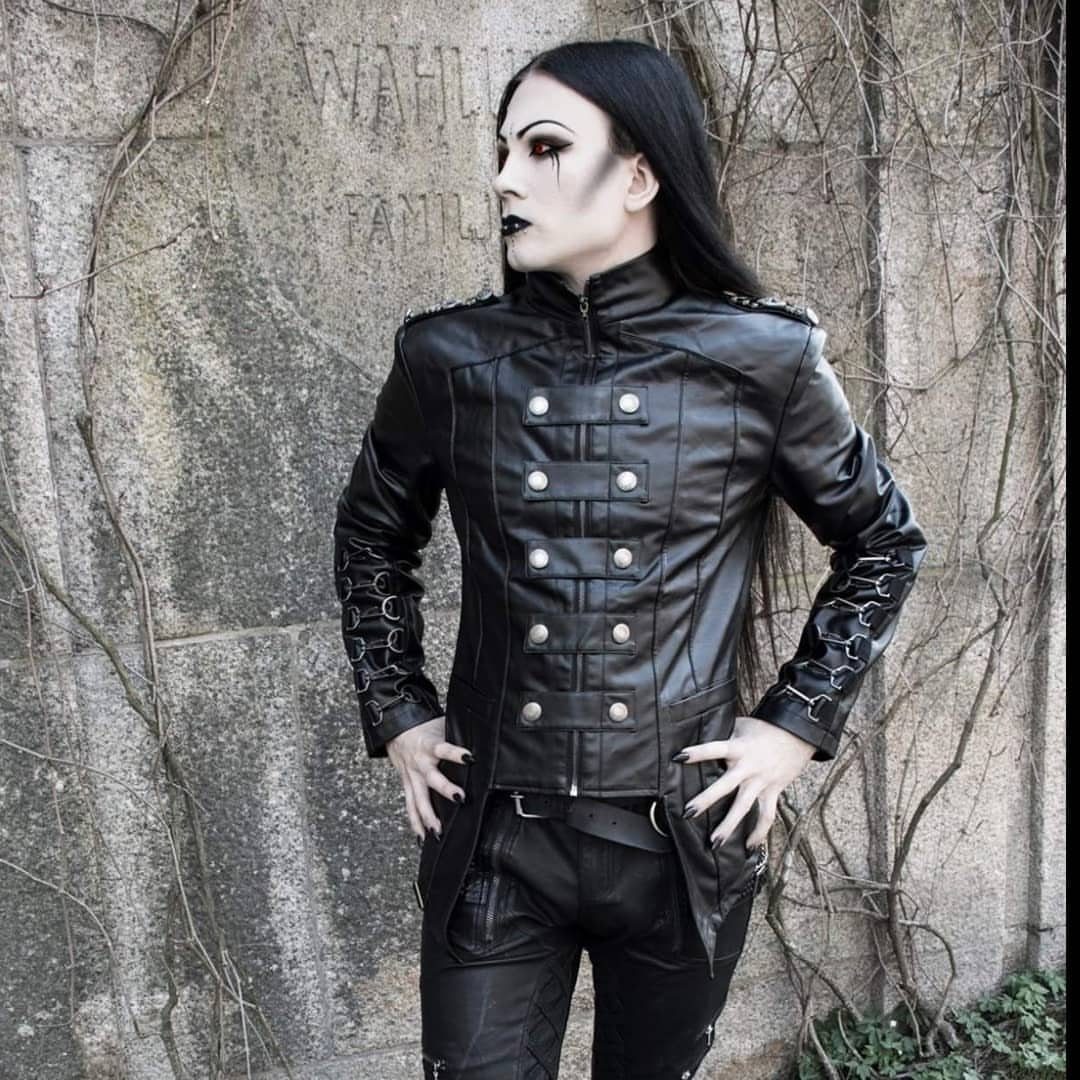
A military jacket brings structure and hardware to gothic style. The double-breasted front and silver buttons create symmetry, and the high collar frames the face without a scarf or jewelry.
Leather works better than wool here if you want the jacket to feel modern rather than costume.
I’d pair it with black pants and boots, keeping everything else plain so the jacket’s details stand out. The style suits anyone comfortable with a formal silhouette.
Gothic Style Adaptability
Gothic style works in ordinary settings when you keep the palette dark and the details small. A black button-up and dark jeans read gothic without costume, and the look holds in places where a full Romantic outfit wouldn’t.
Designers pull gothic elements into ready-to-wear collections often enough that pieces cross over easily.
A black silhouette or studded belt fits into most wardrobes without signaling subculture unless you want it to. Long-sleeve shirts with subtle texture, oversized hoodies in black, and minimal silver jewelry all sit comfortably in everyday rotation.
The style adapts because the foundation is simple. Black clothing is already common, so adding gothic detail is a matter of choosing the right cut, fabric, or accessory rather than rebuilding an entire wardrobe.
Gothic fashion for men is more than a mere style statement; it’s a living embodiment of a unique culture, an expression of individuality, and a tribute to the music that fuels its rhythm.
Punk Influences
Studded leather, combat boots, and graphic tees all come from punk, and they layer easily over gothic foundations like lace shirts or velvet.
A studded jacket over a black lace shirt mixes both influences without diluting either.
Platform combat boots do the same: the height and sole come from goth, the ruggedness from punk. Band tees work under blazers or alone, depending on how far you want to lean into either direction.
The 2 styles share a monochrome palette and a preference for heavy footwear, so combining them feels natural rather than forced.
Frequently Asked Questions
What does gothic mean in clothing?
Gothic style is built on black and deep tones, sharp or flowing cuts, and pieces that nod to Victorian tailoring, punk hardware, and the bands that shaped the sound.
Black dominates the palette, often layered with velvet, leather, lace, or metal details. The style expresses individuality through bold choices that carry historical weight and modern edge.
How do you dress like a goth dude?
Black denim or wool trousers, a plain black shirt or a band tee, and a leather jacket or long coat layered over it will get you most of the way there.
Finish with black boots and a few pieces of silver on your wrists or fingers. Keep the palette dark and let one or two pieces carry the detail.