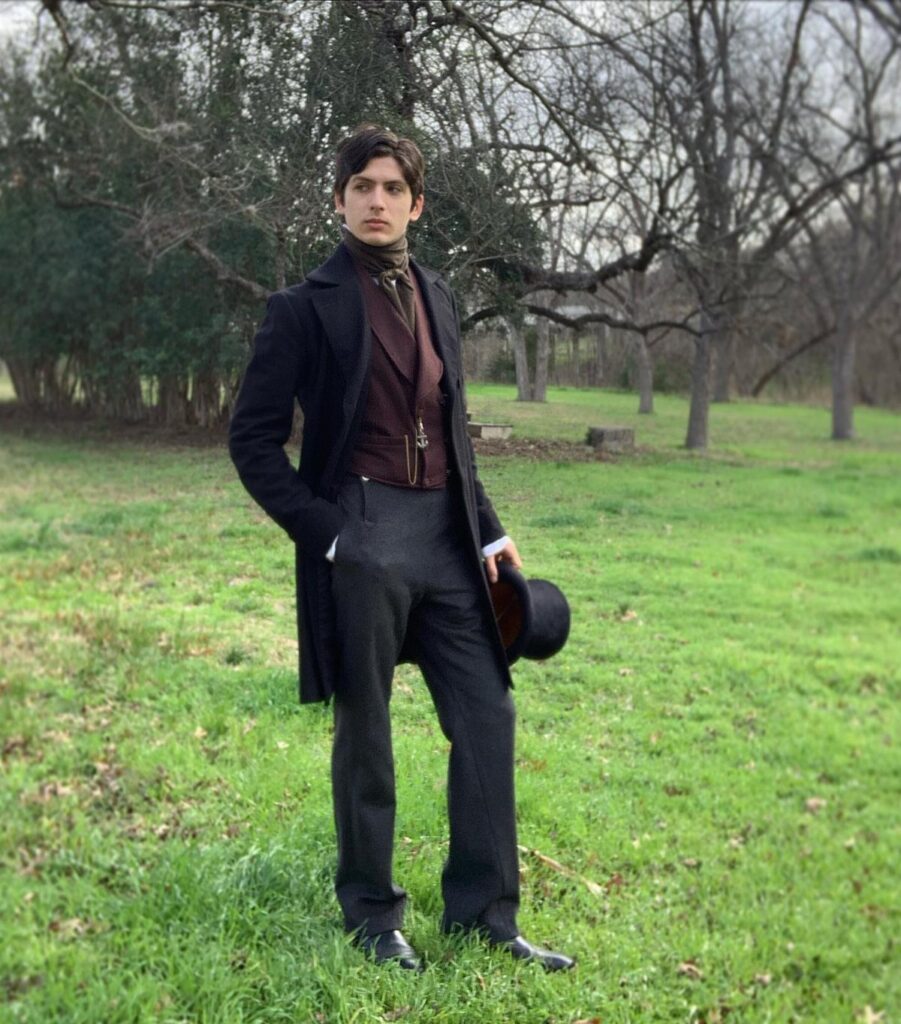
Victorian dress ran along a spectrum of formality, from the black evening tailcoat at the top, through the frock coat for business and calls, down to country tweeds for field sports.
If you need full dress, I cover the tailcoat with wing collar and white tie below. If your event sits below that or you’re dressing for daytime, the frock coat or three-piece suit avoids costume weight while keeping period accuracy.
1. Victorian Suits
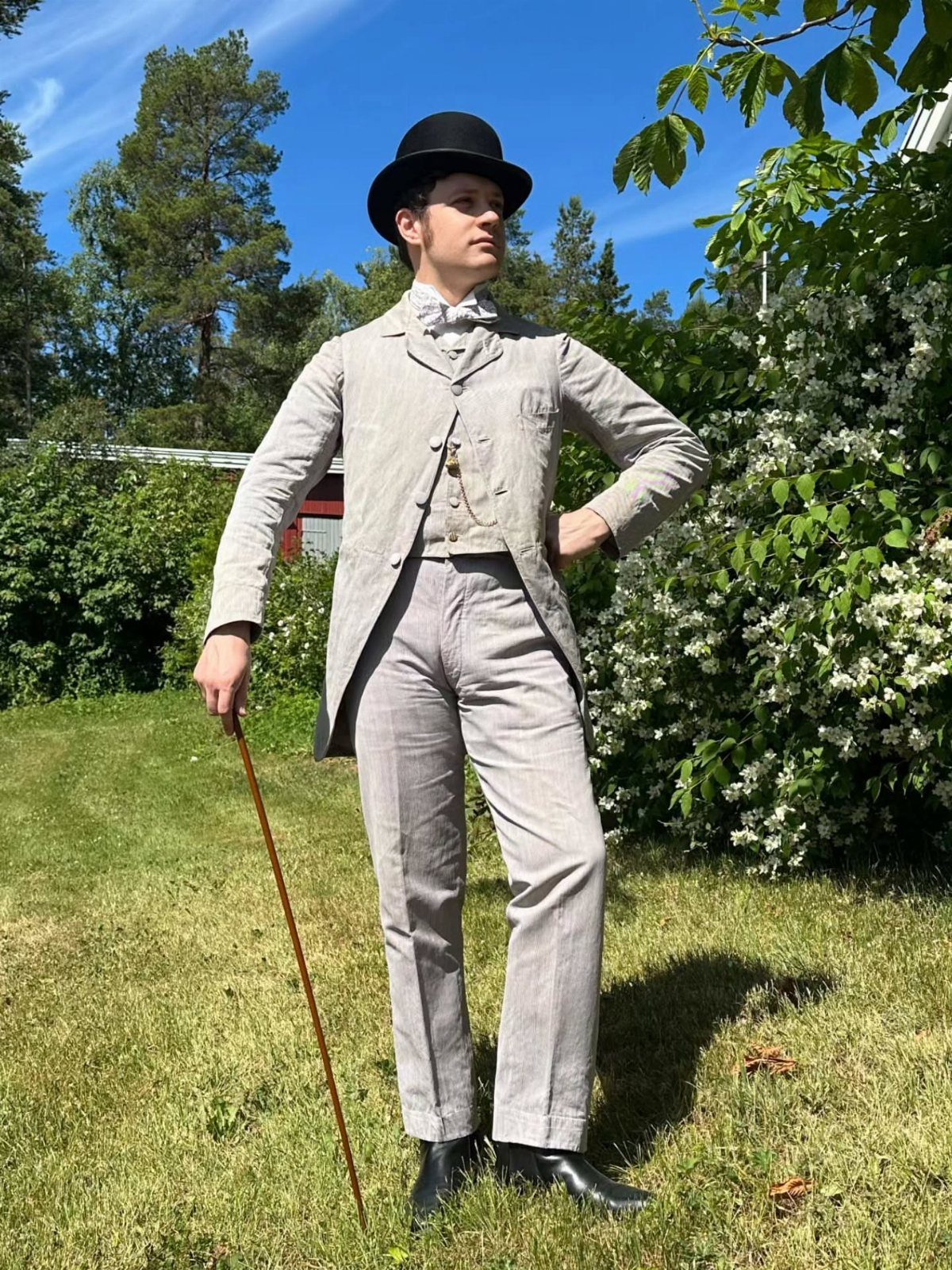
The three-piece foundation, coat with waistcoat and trousers, ran through most of the Victorian period and still works for a pulled-together look that reads formal without costume weight.
Light grey keeps it wearable for daytime events or shoots where you need period detail but not the full black-frock gravity. The waistcoat adds one more layer of shape and covers the trouser waistband.
A bowler and cane finish the silhouette. Both accessories anchor the era without much effort, and the cane works as a practical prop if you’re standing for photos or moving through uneven ground outdoors.
2. Frock Coats
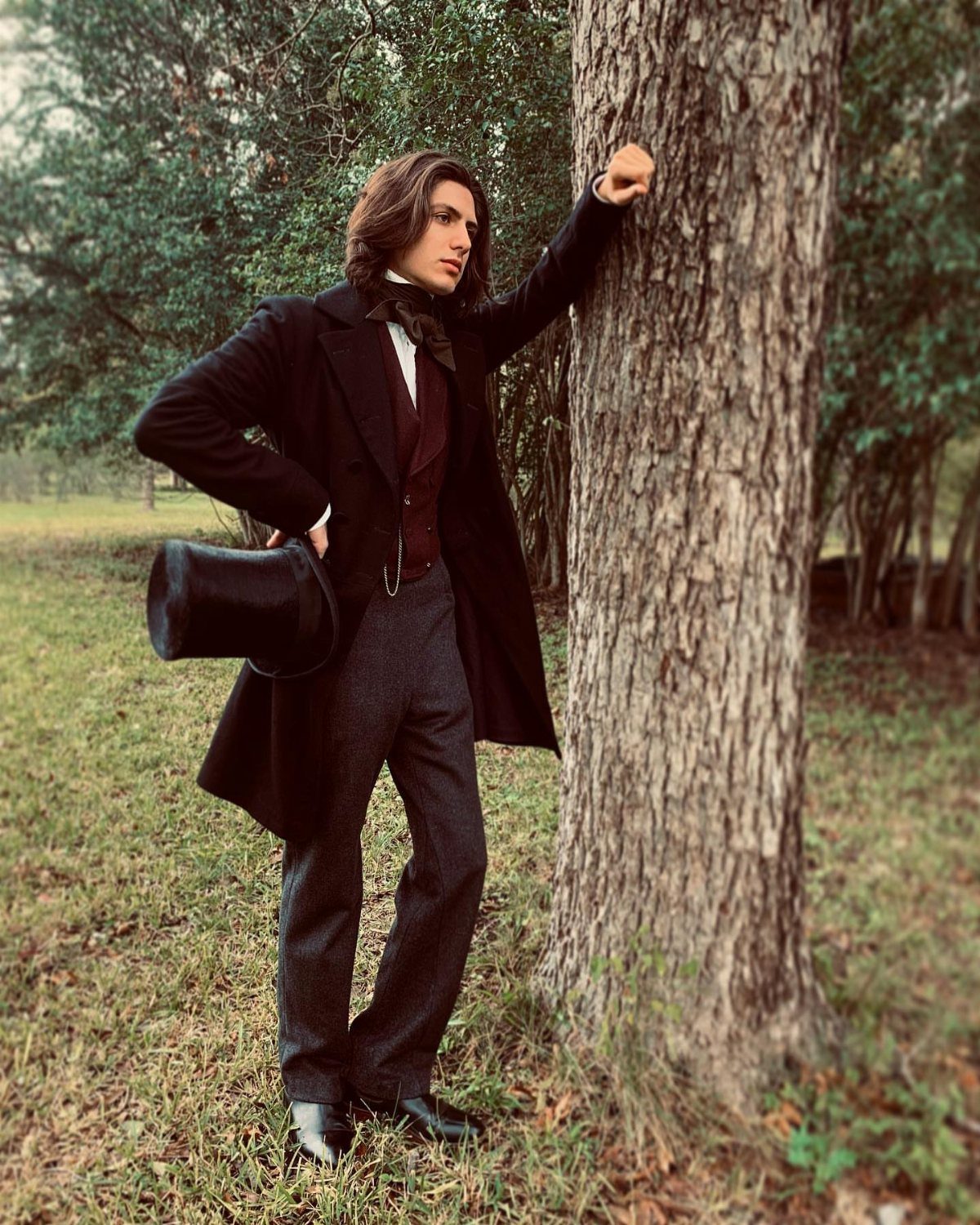
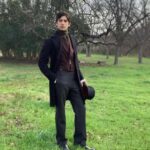
Frock coats were the standard for Victorian day dress from the mid-century onward. The long skirt, knee-length or just above, and the fitted waist gave men a formal silhouette that still moved well for work and social calls.
Black remains the most versatile choice. A waistcoat in a contrasting color like burgundy or patterned silk separates the layers enough to keep the outfit from going flat.
The hat adds height and balances the coat’s length, which matters when you’re aiming for proportion rather than just adding pieces.
3. Overcoats
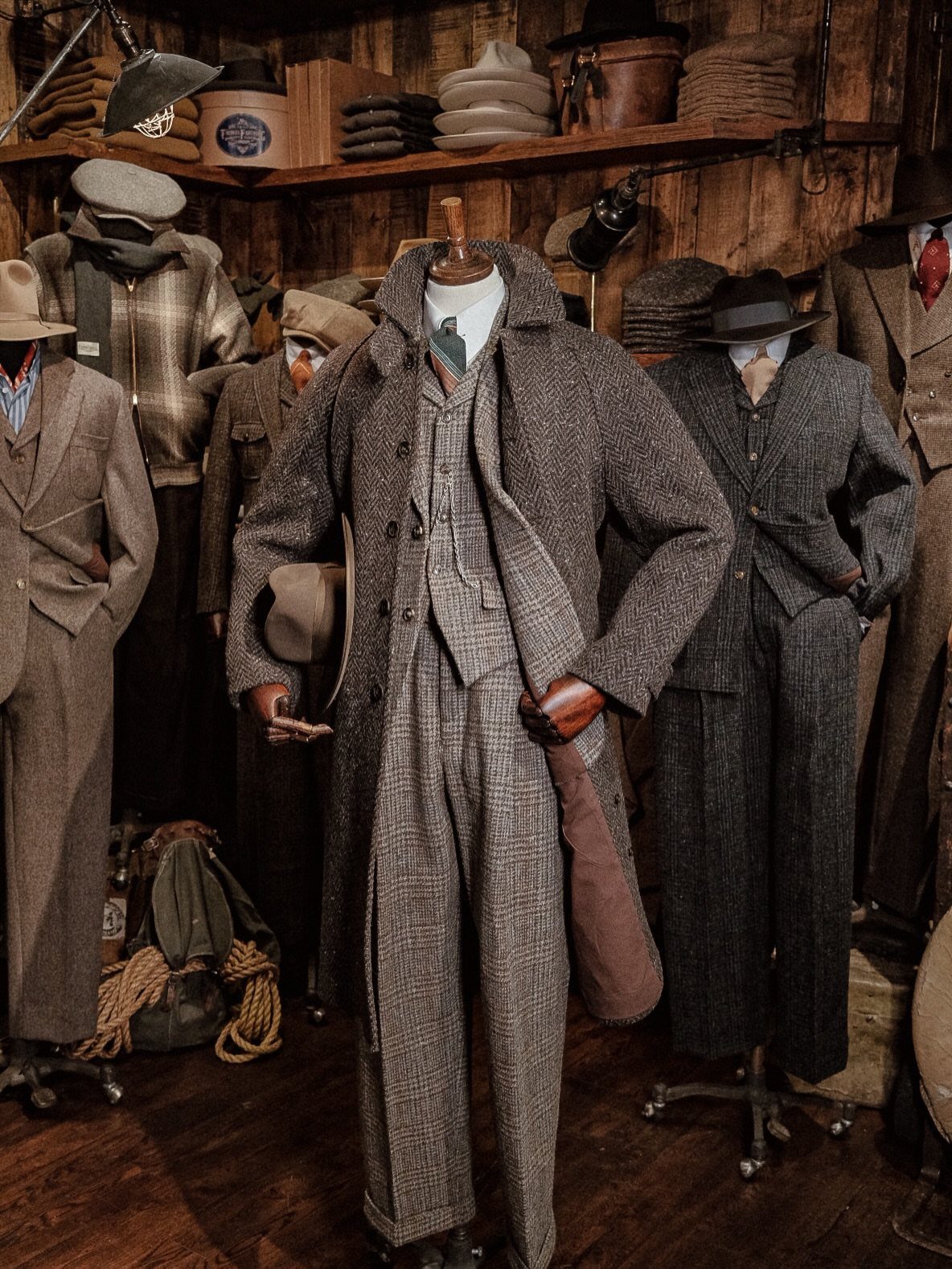
Victorian overcoats layered over suits for cold weather, and grey tweed remains one of the most practical fabrics for something that looks right but doesn’t demand dry cleaning after every wear.
The length typically fell to mid-thigh or just above the knee, covering the suit coat underneath while still allowing you to walk freely.
Tweed adds texture and weight without bulk, and it photographs well in natural light if you’re planning period shoots or reenactment events.
A matching cap or fedora keeps the silhouette consistent. The overcoat can match your suit exactly, or sit one shade darker or lighter.
4. Waistcoats and Cravats
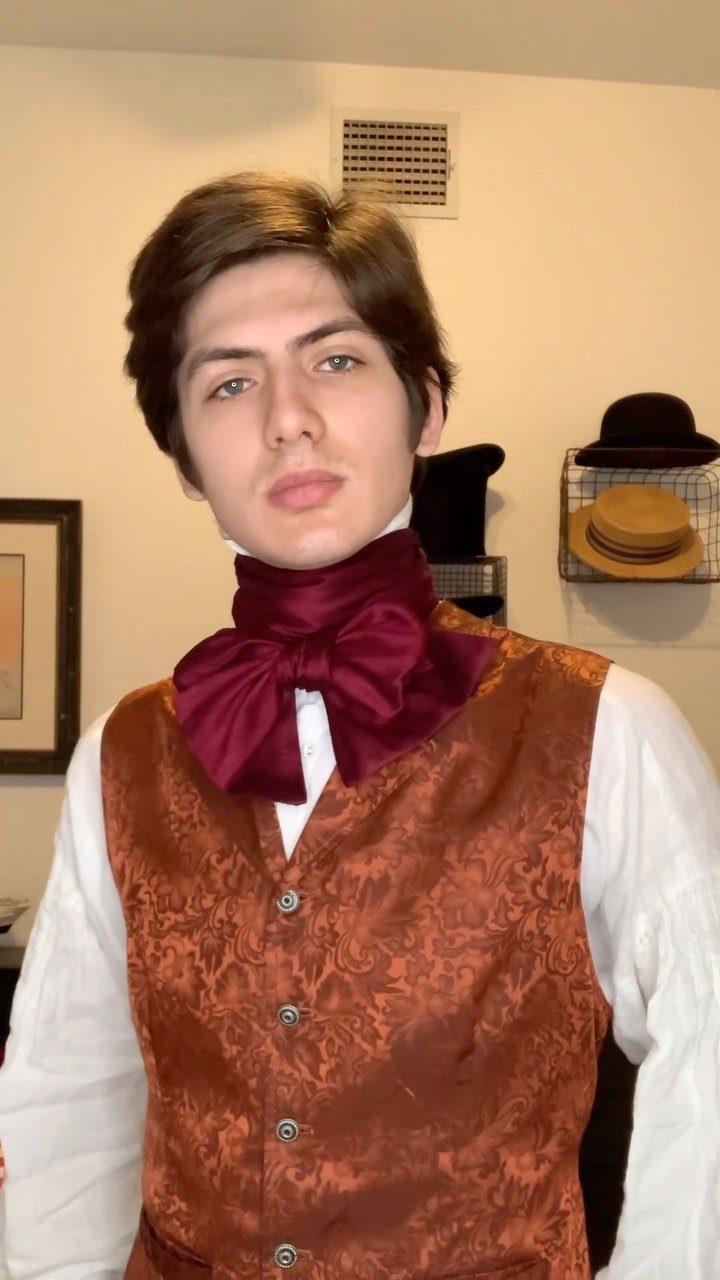
Waistcoats and cravats together give you the most visible color and texture in a Victorian outfit. The copper brocade here catches light differently than flat fabric, and the maroon satin cravat adds a second rich tone without competing.
Brocade waistcoats were common for evening or semiformal day wear.
The pattern sits quietly under a coat but becomes the focus once the coat comes off, which makes it a good choice if you’re dressing for an event that moves between spaces.
Tie the cravat at the collar and let the ends fall naturally. Modern ascot ties mimic the look but often sit too wide or stiff.
5. Victorian Button Boots
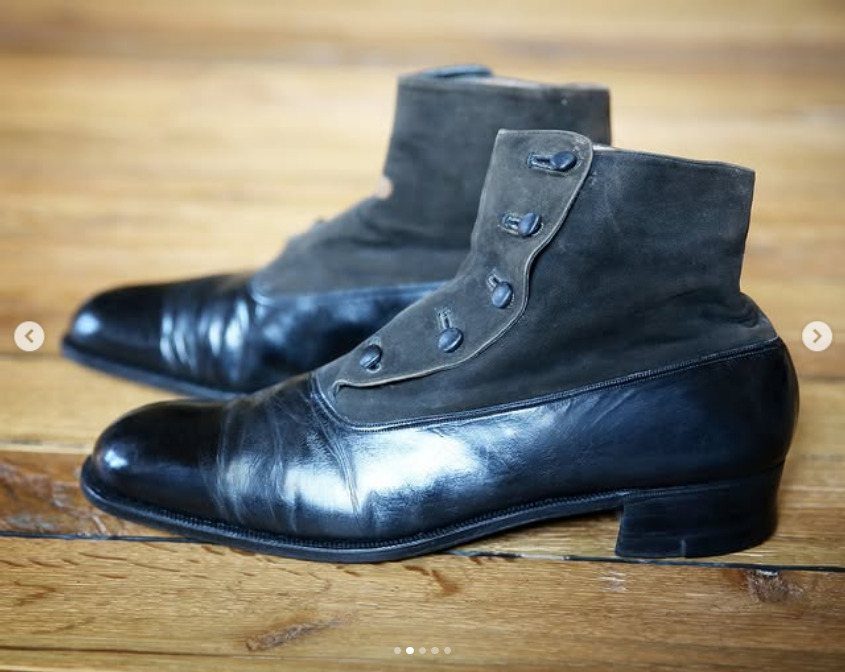
Victorian button boots, black leather uppers with suede panels, close with a row of small buttons along the side rather than laces. The side-button design gives a cleaner line than modern lace-ups.
The ankle height keeps them versatile. You can wear them under trousers that break slightly over the boot, or with knickerbockers for a more specific period look.
Reproduction boots with functional side buttons are easier to find than originals in wearable condition, and the black-and-suede combination hides wear better than all-leather versions.
6. Pocket Watch with Vest Chain
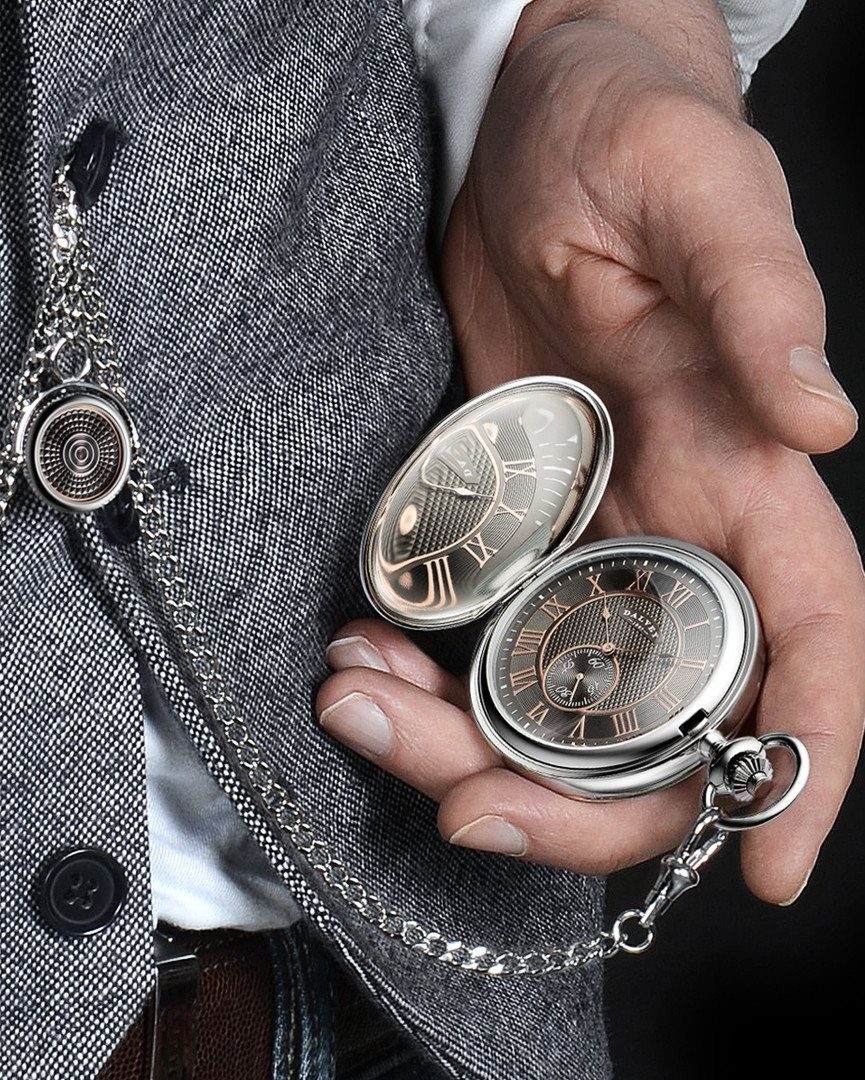
A pocket watch with a vest chain anchors the waistcoat and gives you a working timepiece that sits flat in the pocket.
Silver cases were standard for day wear, gold for evening, and the chain runs through a buttonhole or attaches to a bar behind the fabric.
The grey textured vest here keeps the watch visible without overwhelming it. Smooth fabrics can let the chain slide, so a bit of tooth or weave helps hold it in place.
Open-face watches, which have no cover over the dial, were more common in America. Hunter cases, with a hinged lid, read more formal and protect the crystal if you’re moving around outdoors or at crowded events.
7. Evening Tailcoat
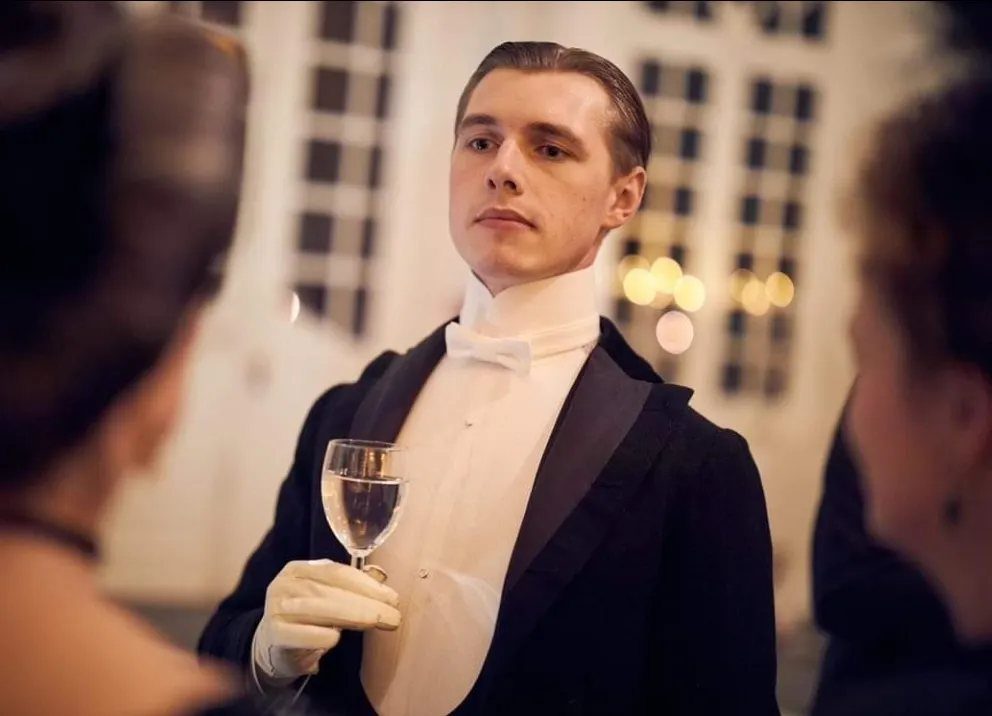
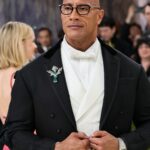
The black evening tailcoat, cut away at the front and falling to 2 long tails at the back, was the required uniform for formal evening events by the late Victorian period.
White tie, wing collar shirt and a tailcoat together signal full dress.
The coat sits fitted at the torso and flares slightly at the tails, which end around the back of the knee. Black wool barathea was standard for the fabric, with silk facings on the lapels.
This is the most formal option on the list.
If your event calls for anything short of white tie, a dinner jacket or frock coat reads better. The tailcoat works for weddings, galas or reenactments where the dress code is explicit.
8. Tweed Knickerbockers and Blazer
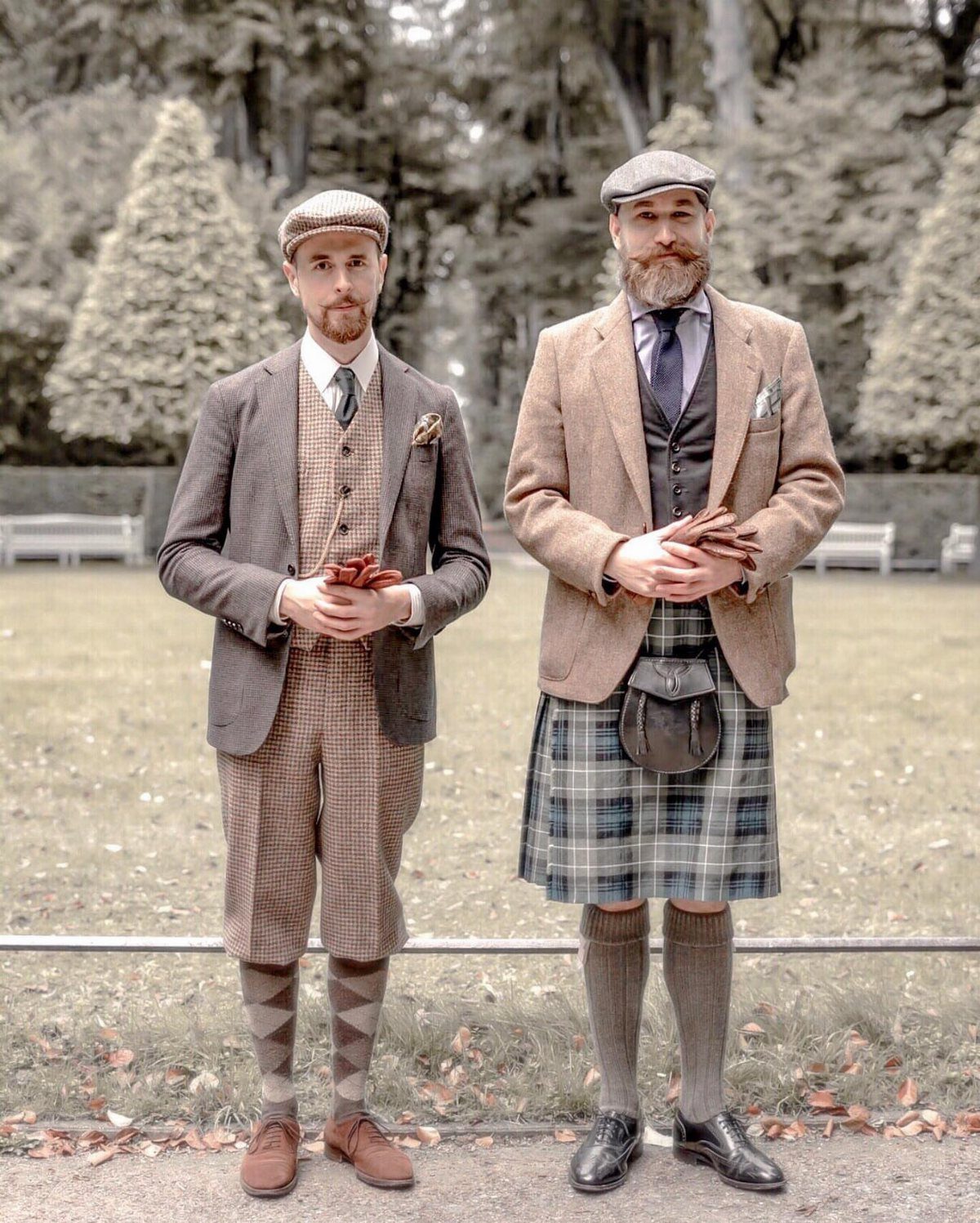
Tweed knickerbockers, cut full through the leg and gathered just below the knee, paired with a matching or toning blazer, were standard country wear for shooting, walking or cycling.
Brown tweed hides dirt better than grey and moves easily over uneven ground.
The waistcoat adds a third layer and covers the gap between trouser waistband and jacket hem when you’re moving or seated.
A flat cap balances the volume of the knickerbockers and keeps the outfit from reading too heavy on the bottom half.
Knee-high wool socks and boots complete the silhouette. This setup works for outdoor events where you need period accuracy and plan to walk or stand for hours.
9. High-waisted Trousers with Suspenders
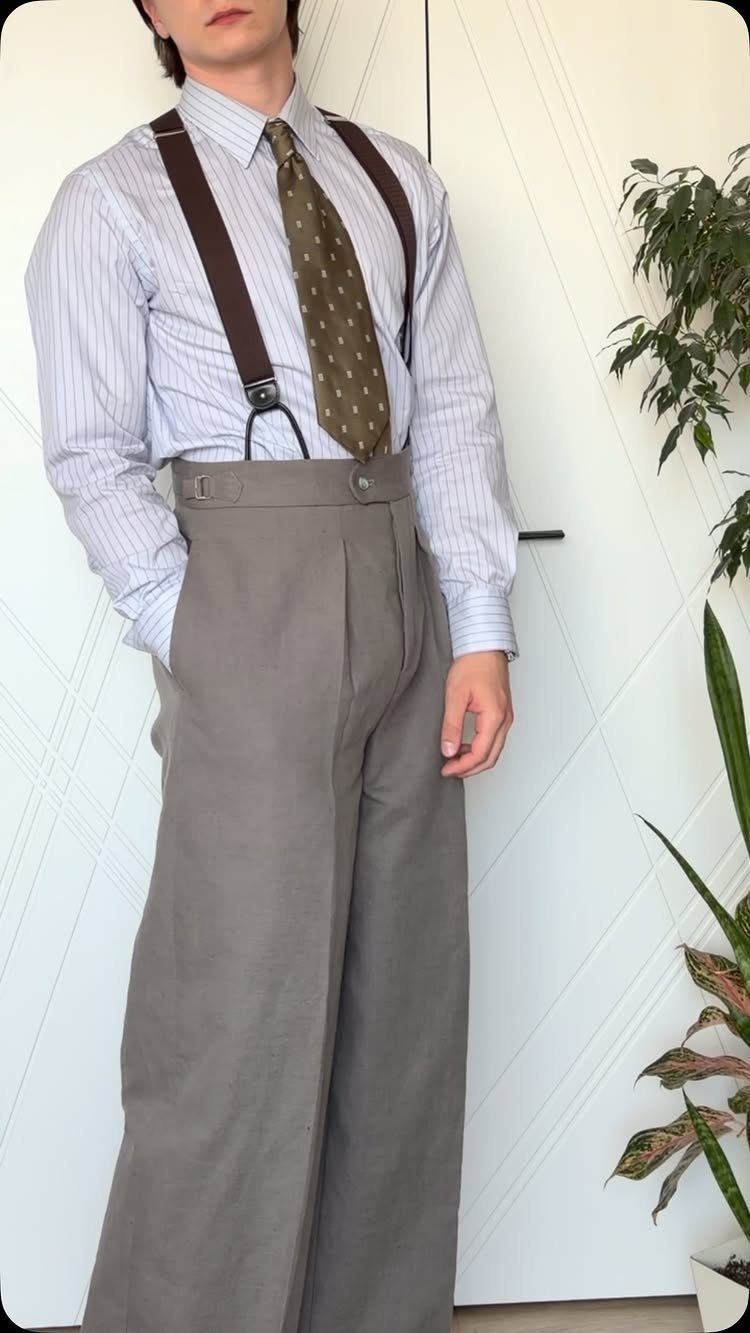
High-waisted trousers, sitting at or just above the natural waist, rely on suspenders rather than a belt to stay in place.
The higher rise gives a longer leg line and keeps your shirt tucked cleanly, which matters when you’re wearing a vest or leaving the waistcoat off.
Grey wool trousers with brown leather suspenders keep the contrast visible without looking too matched. Striped shirts were common for day wear and add pattern without competing with the trousers.
The suspenders should attach with buttons sewn inside the waistband, not clips. Clips can slip and damage finer fabrics over time.
Victorian Evening Wear
Between 1840 and 1860, short evening coats followed the body coat’s fitted line and often appeared with a top hat. The strict codification came later, between 1860 and 1880, when black became the standard and the rules narrowed.
The dinner jacket arrived in the 1880s and split evening wear into 2 tiers. The dinner jacket sat one step down, less formal but still appropriate for evening events that didn’t call for the tailcoat’s ceremony.
Overcoats for colder months dropped to the knee. Morning coats, high-buttoning and cut away at the front, were another shorter option for daytime formality before the evening silhouette took over.
Fit and Tailoring
The waistcoat did more than add color.
A back belt or tie pulled the garment close at the waist, giving men’s bodies the same shaped line that corsetry gave women. That back adjustment let you control the fit and keep the front smooth under a coat.
Double-breasted waistcoats became more common after 1850.
Notched lapels, set at different heights, built shape across the chest. Pockets on either side of the center held watches and handkerchiefs, and the tight fit kept everything in place without shifting as you moved.
The goal was a narrow waist and defined chest. Tailoring through the torso created that silhouette, and the waistcoat reinforced it by holding the shirt flat and covering the trouser waistband completely.
Historical Context
The industrial revolution was in full swing when Queen Victoria took the throne in 1837. A rising middle class wanted respectability and uniformity, and Protestant restraint replaced the flash of the Regency years.
Men who owned banks and factories wanted to appear as serious as their businesses.
Impractical dandyism gave way to functional clothes in muted colors, and dress stopped signaling social rank as directly as it had. By 1878, The Tailor and Cutter observed that dress no longer signaled a man’s place in society.
The gentleman replaced the courtier. That shift meant men across classes wore similar silhouettes, and the differences came down to fabric quality and tailoring rather than entirely separate styles.
The Victorian era spans the years 1837-1901. Fashions changed continually and drastically over that period, so there isn’t any one “Victorian” style, but there were consistent principles throughout the era.
Frequently Asked Questions
What did Victorian era men wear?
Men wore three-piece suits with coat, waistcoat and trousers as the daily foundation, plus frock coats or overcoats for formality and cold weather. Formal evening events demanded black tailcoats worn with white tie by the close of the era.
Accessories like pocket watches, cravats, bowler hats and canes completed the silhouette, and the waistcoat added shape at the waist while covering the trouser band.
How to dress like a Victorian gentleman?
Start with a three-piece suit in grey or black, fitted close at the torso with a waistcoat that sits tight at the waist and covers the trouser waistband completely.
Add a pocket watch on a chain through the waistcoat, a cravat or bow tie at the collar, and a bowler hat or top hat depending on the formality.
Where can I buy Victorian fashion?
Reproduction Victorian clothing, including button boots, waistcoats and frock coats, is easier to find in wearable condition than original pieces from the period.
Online retailers that specialize in period costume and reenactment clothing carry functional reproductions with details like side-button boots and proper vest chains. Original Victorian trousers are especially rare, while waistcoats and coats survive in greater numbers.