A wallet ranges from a slim 4-card metal holder that fits a front pocket without printing through to a zip-around chain wallet built for visibility and security.
The choice comes down to what you carry and where you keep it: count your cards and cash, then match the format to the pocket.
Full-grain leather develops a patina over time, embossed texture adds depth without actual crocodile skin, and a chain adds both security and visibility.
1. The Ridge Wallet
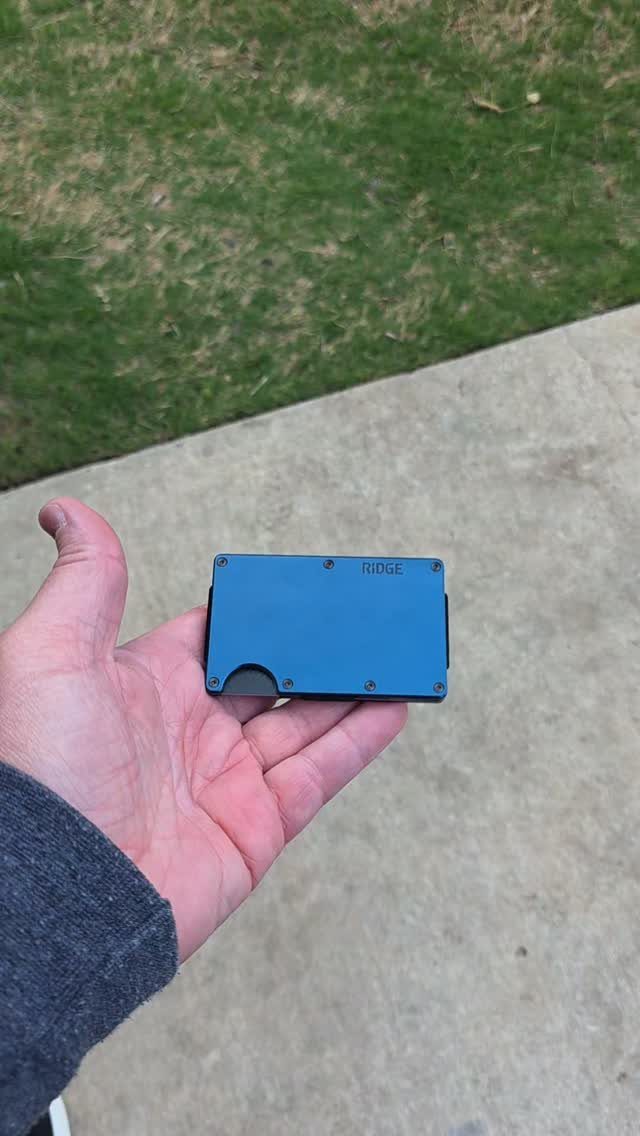
A minimalist metal wallet built to hold cards flat in a rigid stack. The body is aluminum or carbon fiber, held together by an elastic band that grips the cards without sagging over time.
This format suits someone carrying several cards and little cash. Metal protects against bending and blocks RFID skimming, though the construction adds a bit more weight than leather.
The finish can be matte, brushed or anodized in color. Blue reads modern without looking technical; black and gunmetal stay neutral across most outfits.
2. Classic Brown Leather Bifold
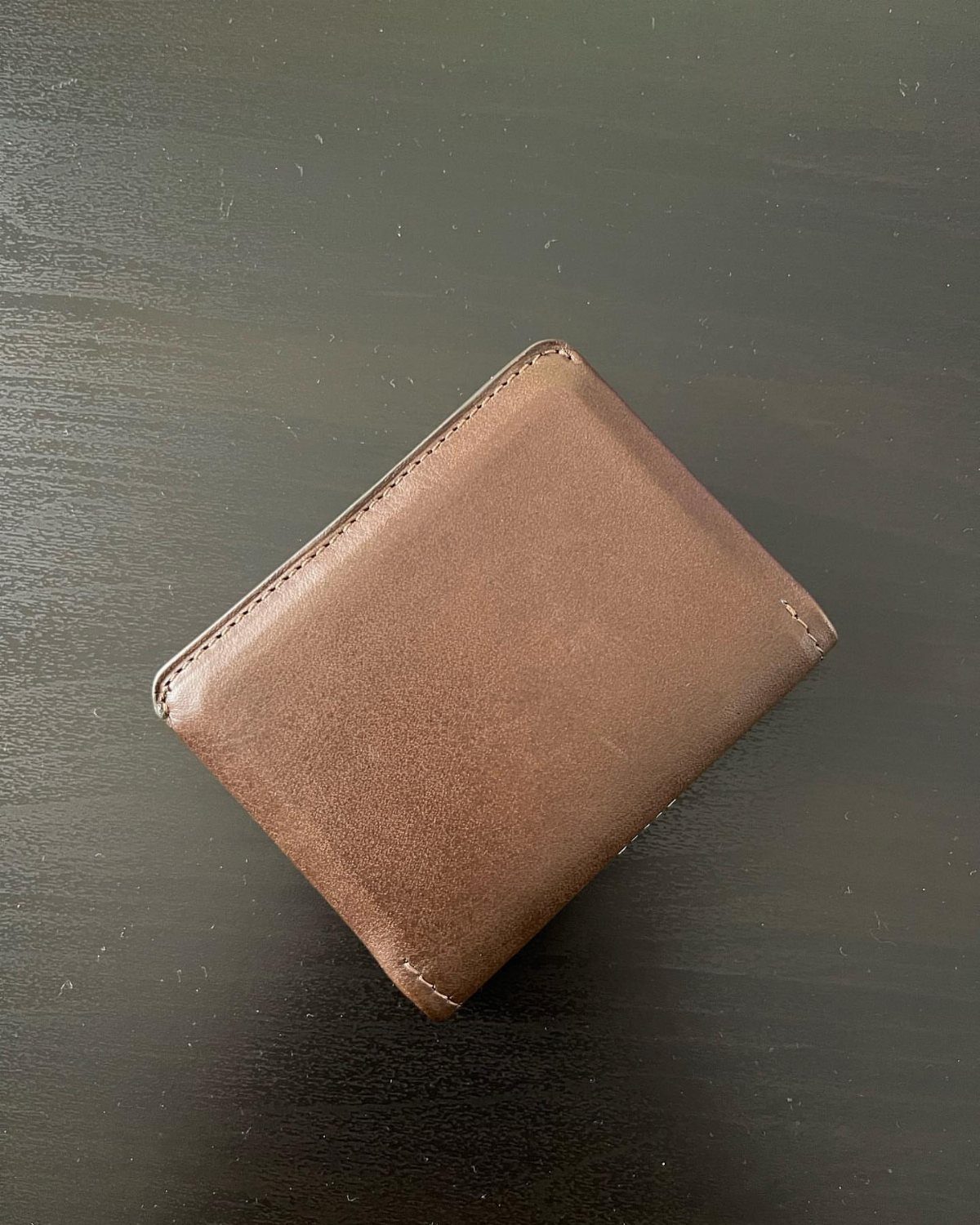
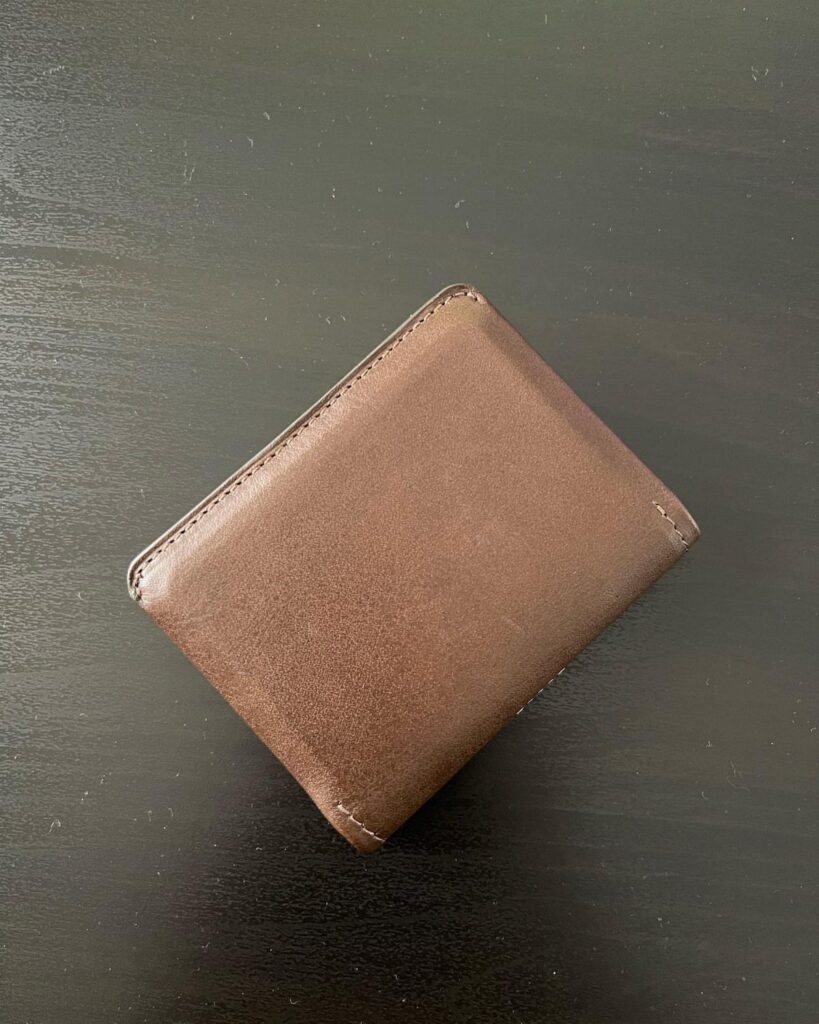
Brown leather in a bifold format is the most familiar wallet shape for good reason. The material softens with use, the color hides wear, and the layout holds cards, cash and receipts without forcing a choice between them.
Full-grain leather ages better than corrected grain, which is sanded smooth and stamped with texture. A vegetable-tanned hide darkens to a richer brown over a few years; chrome-tanned leather holds its original color longer but doesn’t develop the same patina.
This works across casual and business dress. Wear it with brown shoes and a belt in a similar tone.
3. Navy Blue Leather Bifold
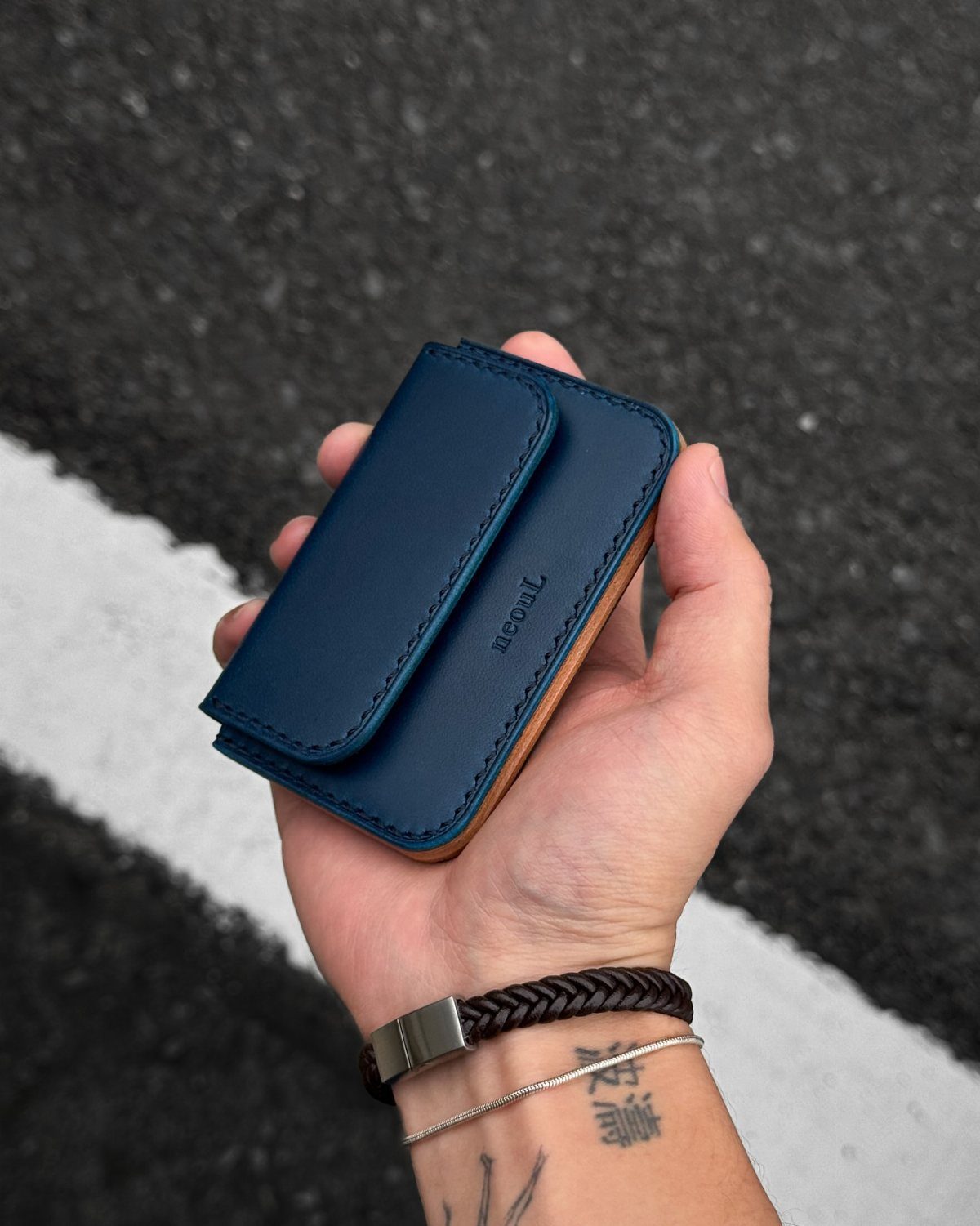
Navy leather offers the structure of a traditional bifold without defaulting to brown or black. The color pairs naturally with denim, gray trousers and most business casual outfits, and it reads as deliberate without looking loud.
Smooth grain leather stays refined. An embossed logo or monogram adds detail without covering the surface, though a plain finish works just as well if you prefer understatement.
Navy sits between brown’s warmth and black’s formality. It’s a middle option that still looks considered.
4. Dark Green Leather Wallet
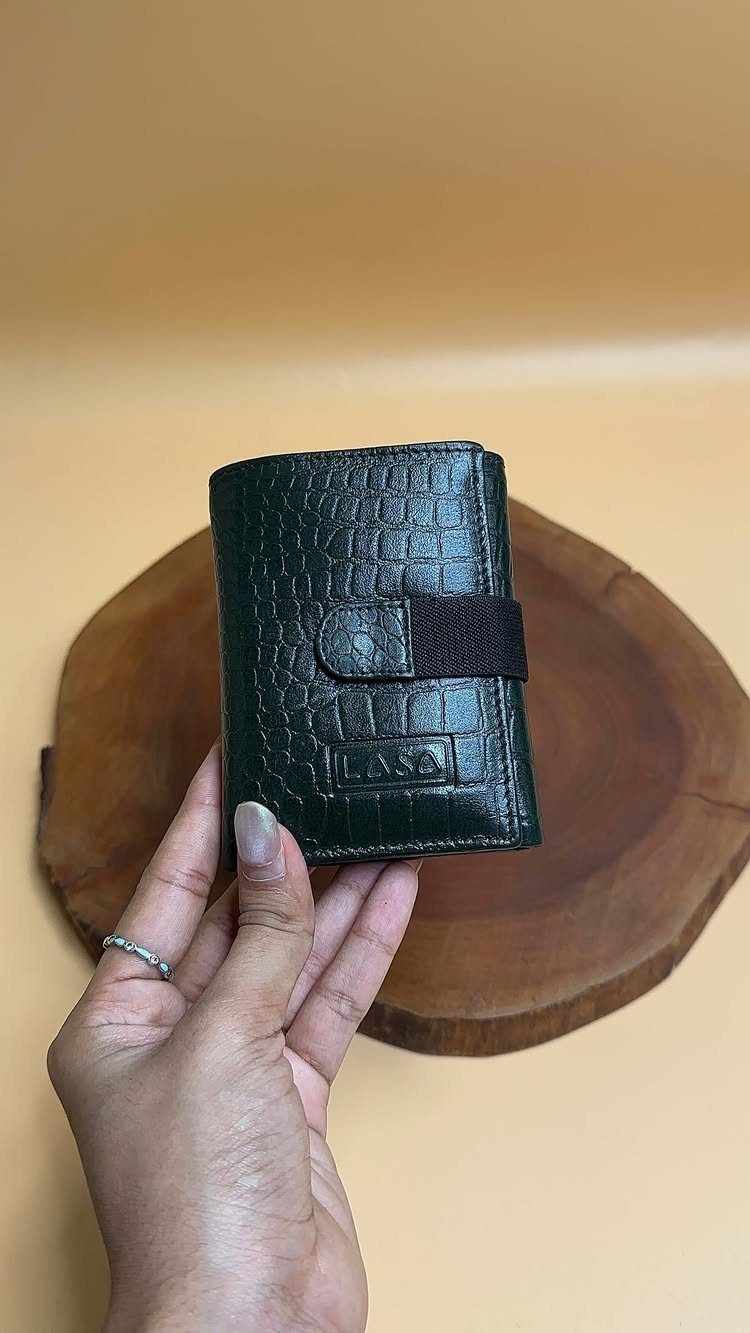
Dark green crocodile leather brings texture and color at once. The embossed scales catch light differently than smooth leather, and the green tone separates this from every brown bifold in the room.
Crocodile embossing is stamped into cowhide, not actual reptile skin, which keeps the cost reasonable. The pattern adds visual weight, so this wallet stands out more than a plain leather fold.
Green works with earth tones, navy and gray. It’s bolder than brown but still grounded enough for daily use.
5. Textured Leather with Accent Stripe
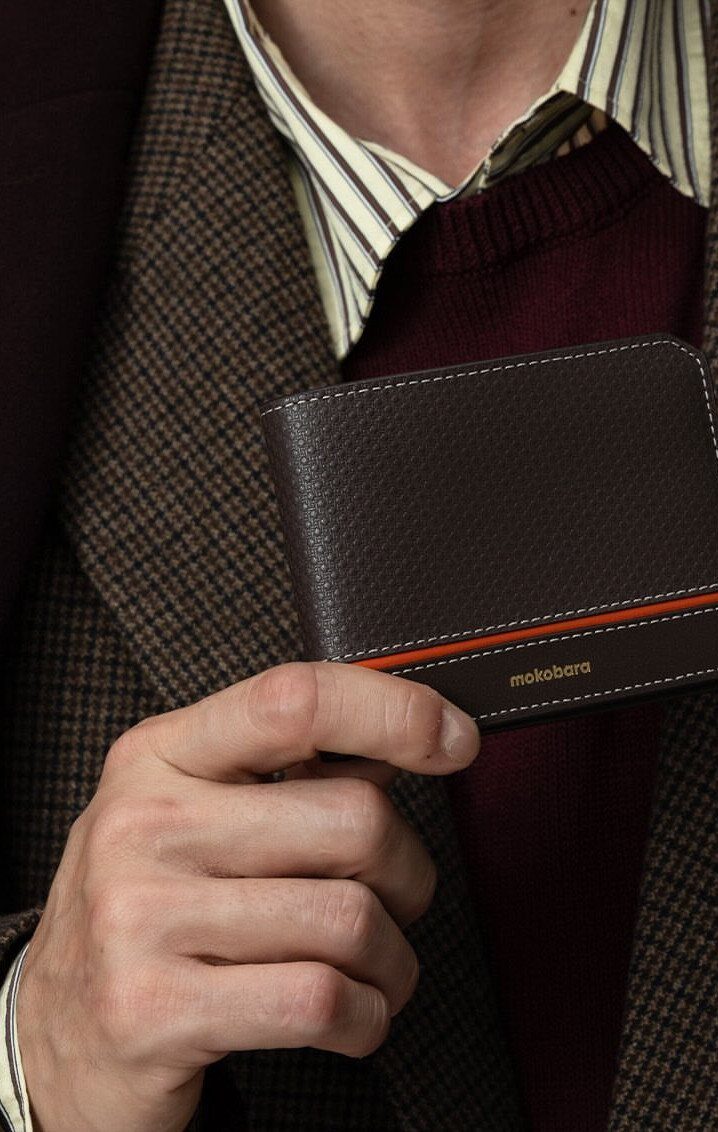
A textured leather bifold with a single contrasting stripe along the edge. The orange accent lifts the brown base without covering it, and the contrast stitching adds definition to the fold line.
Pebbled or grained leather hides scuffs better than smooth finishes. The stripe can match a shoe detail, a watch strap or a bag trim if you’re coordinating accessories, though it works fine on its own.
This reads as slightly more styled than a plain bifold. Wear it with casual blazers and knit sweaters.
6. Contrasting Two-Tone Leather Wallet
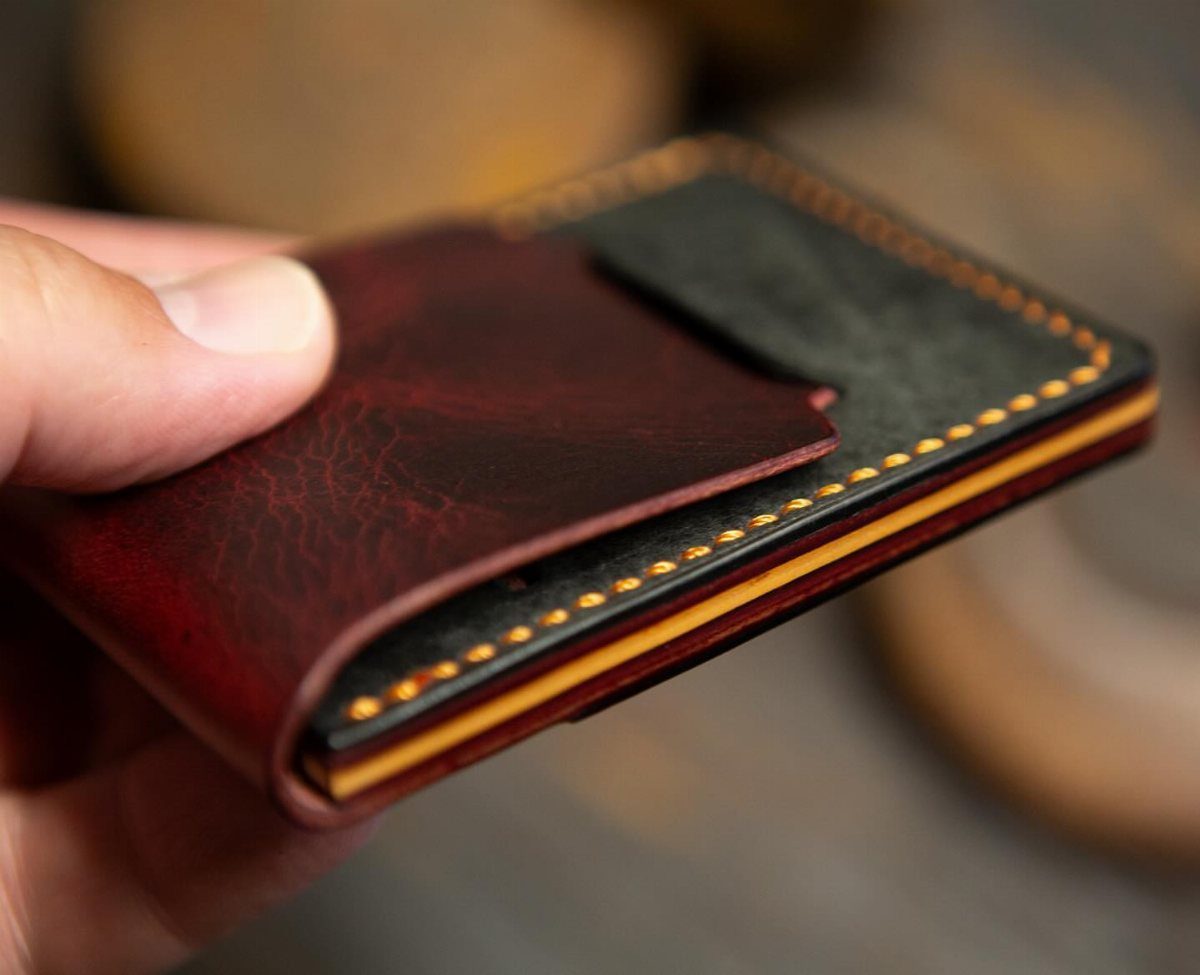
A slim bifold in 2 leather tones, red and black, joined with yellow topstitching. The color blocking is bold, and the stitching emphasizes the seam rather than hiding it.
This format carries fewer cards than a standard bifold, usually 4 to 6, with a single bill slot. The slim profile fits a front pocket without printing through chinos or jeans.
The color combination is louder than most wallets. It works best with simple outfits where the wallet is the only accent piece.
7. Edgy Chain Wallet
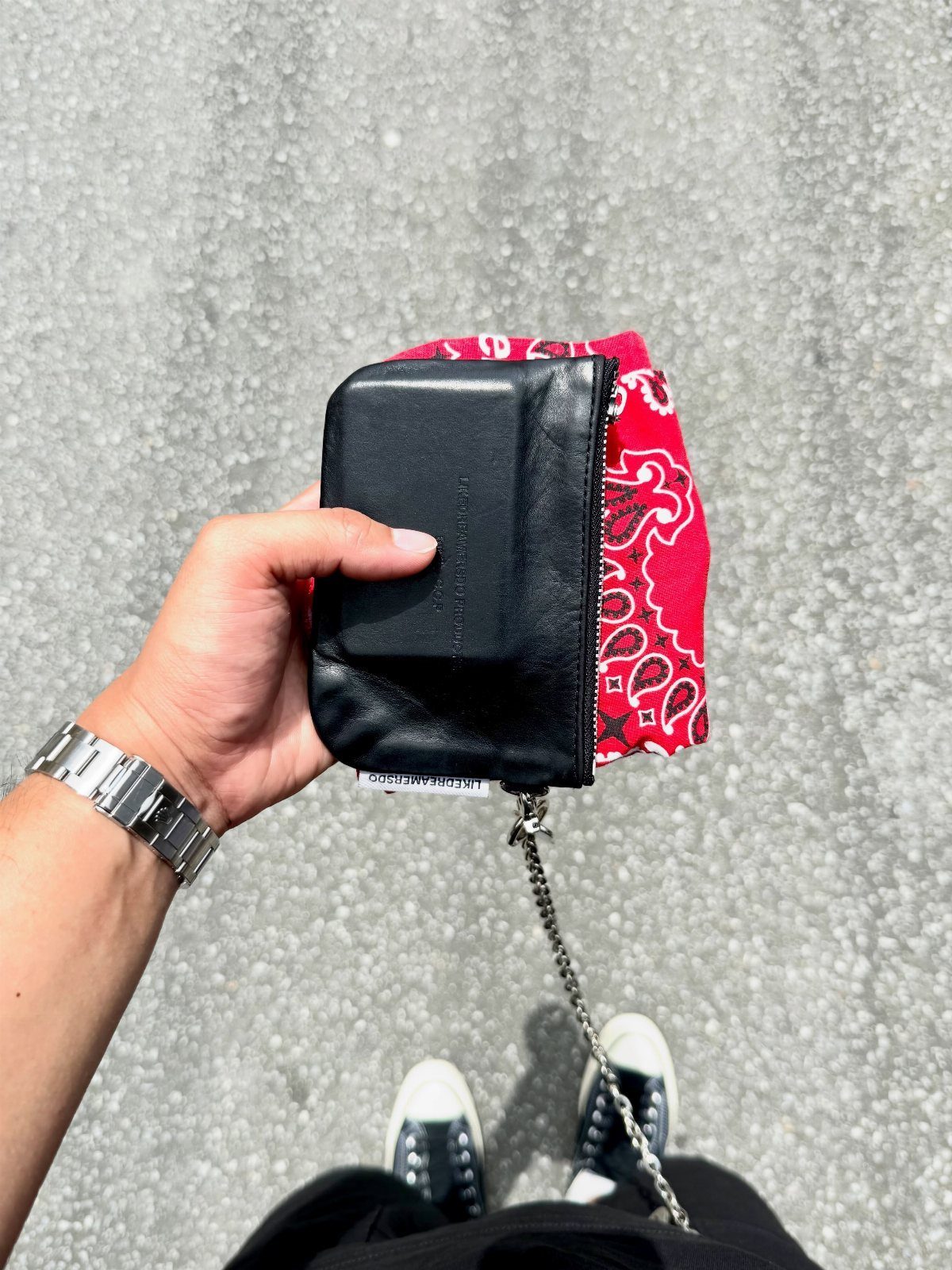
A zip-around wallet with a chain attached, worn with a bandana folded into a back pocket. The chain clips to a belt loop and keeps the wallet from sliding out or getting lifted.
This style comes from biker culture and reads louder than most wallets. The zip closure protects cards and cash better than an open fold, and the chain adds weight.
Wear it with black jeans and boots. The bandana can match the wallet or add contrast, red against black stays classic.
8. Embossed Patch Leather Bifold
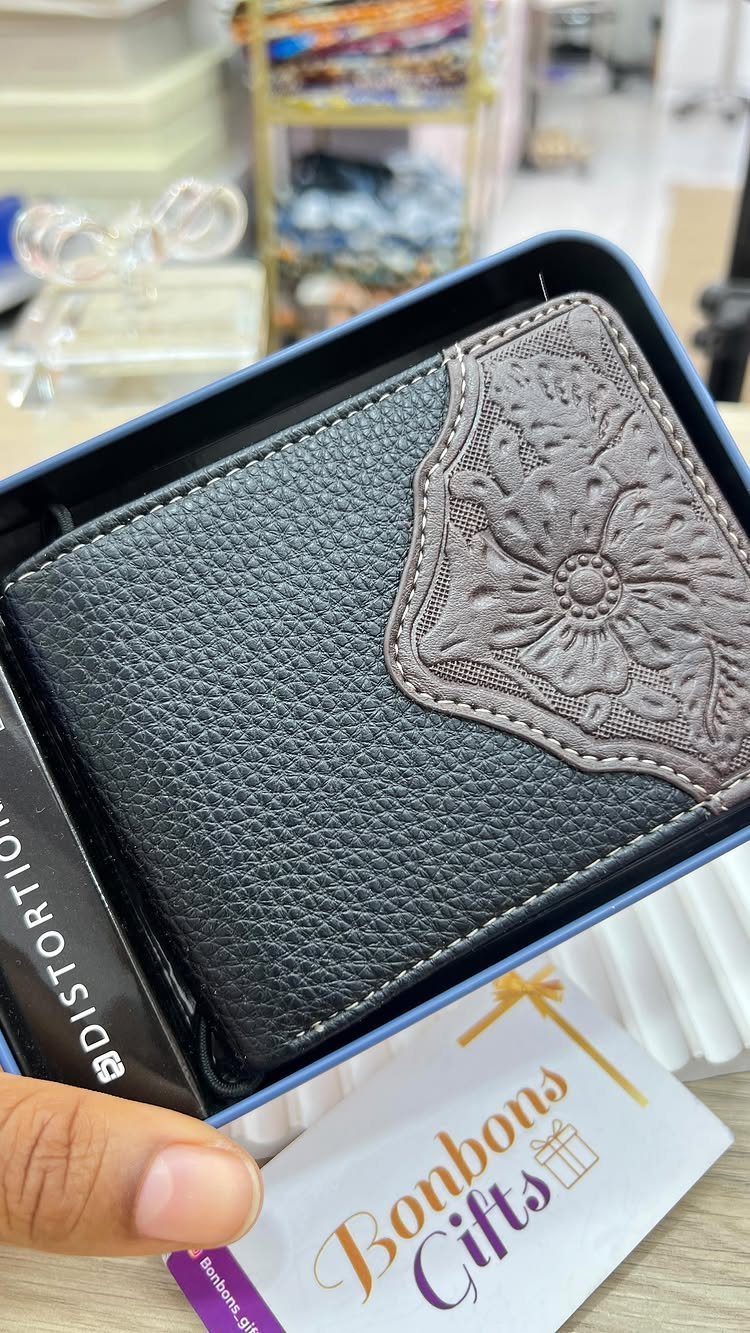
Black textured leather with a small embossed floral patch in brown at one corner. The patch adds detail without covering the whole surface, and the texture hides everyday wear better than smooth leather.
The embossing can be done on full-grain leather or a separate piece sewn on. A corner placement keeps the design subtle enough for business casual.
This works when you want something slightly decorated but not loud.
Choosing the Right Wallet
Start by counting what you actually carry.
Material matters for longevity.
Leather and canvas wallets both age well if you don’t overstuff them. Aluminum holds its shape under pressure, so if you tend to pack a wallet tight, metal prevents stretching.
Consider closures if you lose things.
A zip or magnetic snap keeps cards from sliding out. An open bifold is faster to access but offers no barrier if the wallet tips over.
Match the size to where you carry it. A thick wallet in a back pocket becomes uncomfortable fast.
Wallet Trends
Slim profiles dominate current wallet design. The most favored styles stay nearly invisible in a pocket while holding everything you need, and testers report noticing bulk far more than they notice style.
Compact layouts that strip out extra slots are replacing the overstuffed bifold. Card cases and minimalist metal holders have moved from niche accessories to standard options, especially in summer when lighter clothing makes a thick wallet obvious.
The shift is toward function that doesn’t announce itself. A wallet should stay out of the way until you reach for it, and the designs getting attention are the ones that disappear in your hand and your pocket alike.
Keeping your wardrobe lightweight and simple is key in the dead of summer. One sure way to keep downsize is to swap out your overstuffed wallet for a small but mighty card case.
— GQ
Wallet Materials
Either material works if the wallet is built with straight stitching and thick thread.
Metal wallets survive drops on hard surfaces with minimal damage, though scratches show up on polished finishes. Leather develops wear that reads as patina rather than damage, but the material stretches if you overload it.
Check for a warranty. A company that backs its product for years is building wallets that last, and the guarantee tells you they expect the construction to hold.
Durability is part material, part build. Look for clean seams and reinforced stress points where the wallet folds.
Frequently Asked Questions
What’s trending in men’s wallets?
Card cases and metal holders are the most common choices now.
Bifolds have fallen out of favor because tight summer pants show every ridge. Good design means you forget it’s there until you pull it out.
What is a stylish wallet for men?
A stylish wallet is sleek, functional, and made from quality materials like full-grain leather or aluminum.
The profile matters more than the logo, especially in tailored pants where bulk telegraphs through the fabric. Style shows in clean construction and considered details, not loud decoration.