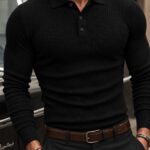
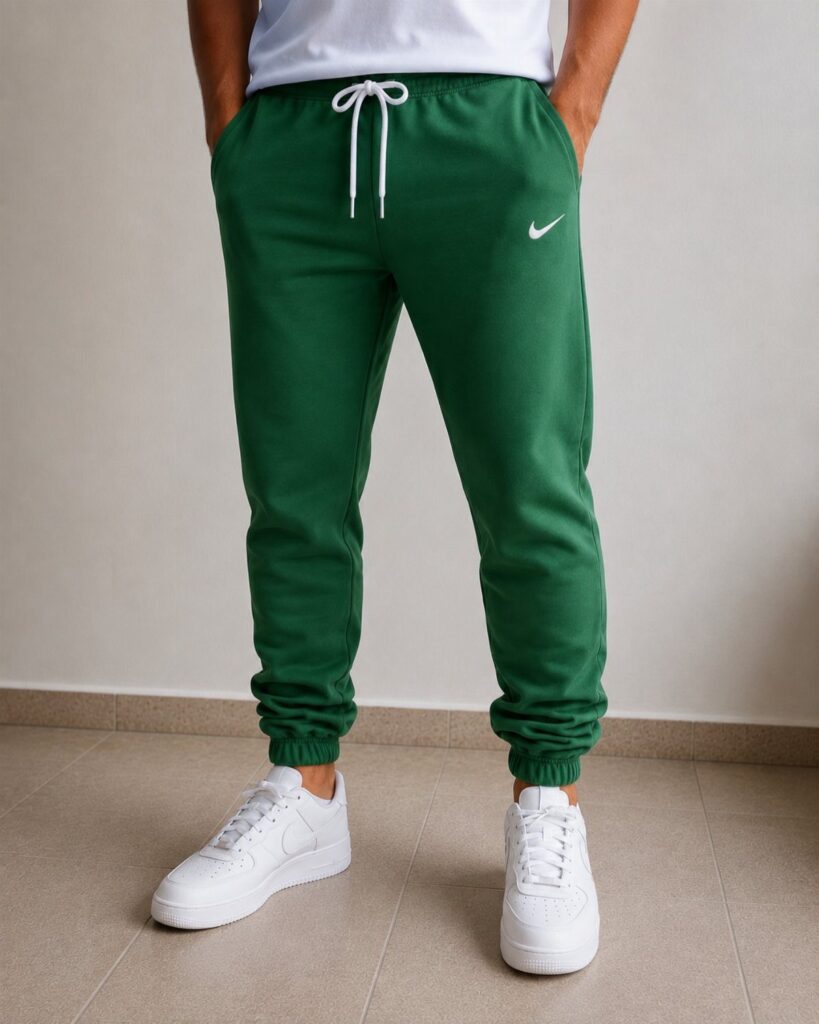
The brands pulling attention right now range from athleisure staples like Nike and Adidas to Flint and Tinder workshirts built to layer over basics.
The one you reach for depends on whether you want a full athleisure kit that looks intentional or a single workshirt that adds structure to what you already own.
1. Nike Sportswear and Athleisure
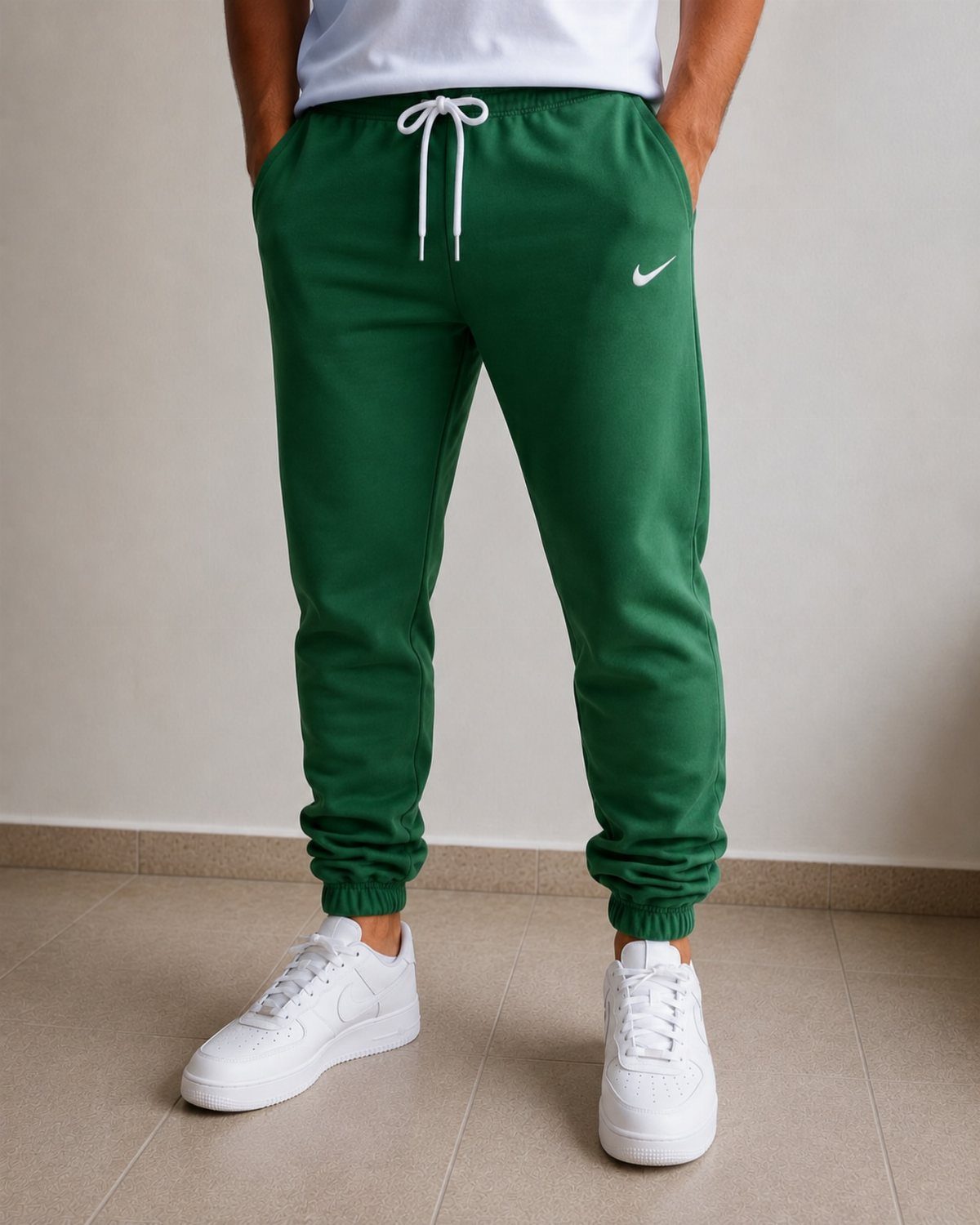
Nike joggers in a clean colorway and Air Force 1s are as foundational as athleisure gets. The fit here is straight through the leg, gathered at the ankle, which keeps the silhouette modern without reading gym-only.
I like this for men who want one pair of joggers that works outside the house.
The white tee keeps it simple, and the tonal green with white branding stays low-key enough for errands or casual meets. Air Force 1s ground the look in sneaker culture without trying too hard.
2. Adidas Sportswear and Athleisure
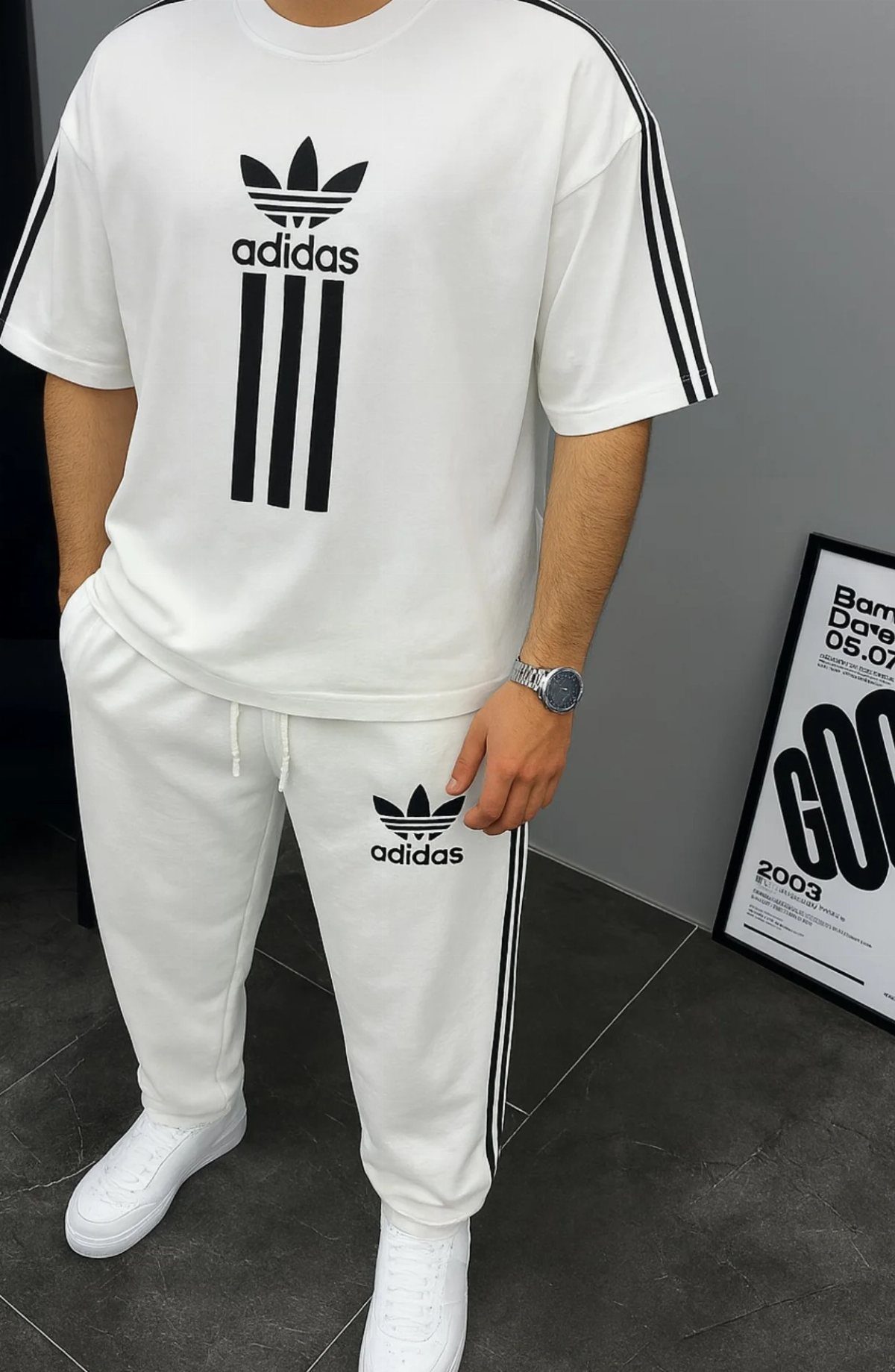
Adidas owns the three-stripe look, and a matching set in white reads cleaner than most athleisure because the branding does the work.
The joggers and tee here keep the same colorway, which makes the outfit feel intentional rather than thrown together.
The monochrome base with black stripes gives you structure, and white sneakers tie it all together without adding another color. It works for men who want athleisure that looks like a choice.
3. Flint and Tinder Workshirts and Jackets
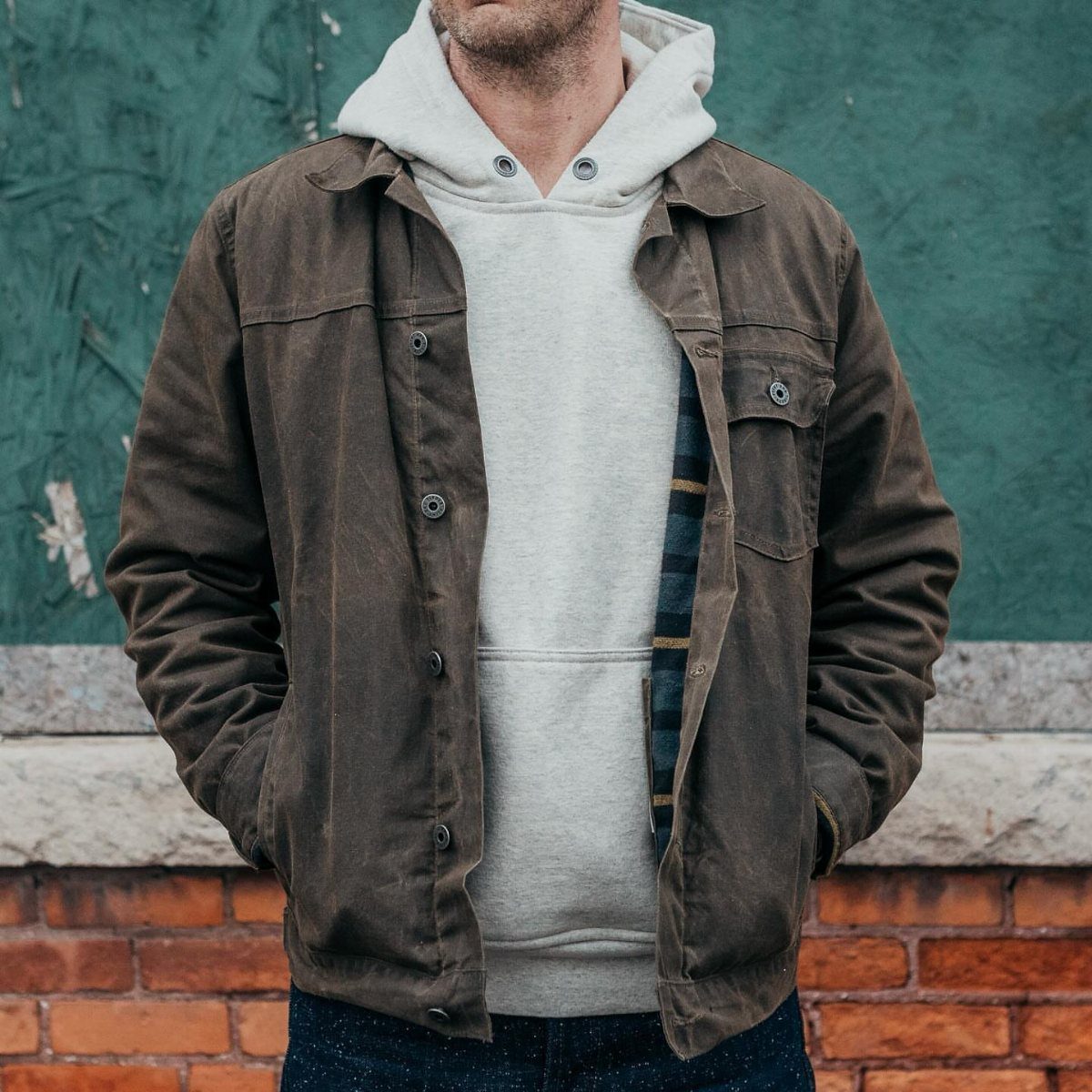
A brown canvas work jacket over a grey hoodie is the fastest way to add weight to a casual outfit.
The waxed finish here gives the jacket a worn-in look that reads more lived-in than new, and layering it over a hoodie softens the workwear edge.
I prefer this combination for fall and early winter when you need one more layer but don’t want to look bundled. The brown and grey keep it neutral, and the canvas holds its shape better than a denim jacket would.
Comfort and Style Balance
Most men want clothes that feel good and look right, and the number backs it: 68% say comfort comes first.
That doesn’t mean settling for formless fits. The brands making ground now build stretch into chinos, use breathable fabrics that hold their shape, and cut dress pants that move without looking athletic.
I like wrinkle-resistant shirts for travel or long days, where you need to look sharp without ironing between meetings. The fabric does the work, and the tailoring keeps it from reading casual.
Stretch in the waistband or through the seat makes dress pants easier to wear all day, and a clean taper keeps them looking deliberate.
Comfort that shows up in the fit, not the silhouette, is what separates a piece you reach for from one that sits in the closet.
Sustainability Expectations
Searches for sustainable men’s fashion have jumped more than 100% since 2024, and buyers want to see where materials come from before they commit.
A brand that stays quiet on where its fabric comes from or how garments are made is losing ground to ones that publish it plainly.
I see this most with younger buyers who check tags for recycled content, organic cotton, or fair-trade certification before they check the price. Eco-conscious doesn’t mean expensive anymore, but it does mean the brand has to show its work.
The shift isn’t about virtue, it’s about trust. Men want to know what they’re buying and who made it, and the brands that answer that question clearly are the ones gaining loyalty.
In 2025, it can feel like menswear brands release new product every day, if not every hour. But menswear buyers—those highly dialed, incredibly discerning folks who decide what hangs on the racks of your favorite store—still live and die by the seasons.
— GQ
Social Media Influence
A jacket that shows up in multiple fits on your feed builds familiarity faster than a billboard, and men trust what they see worn by real people over what a campaign says.
I find this shifts which brands gain traction.
A smaller label with strong visibility on Instagram can outpace a legacy name that isn’t posting or getting tagged. The algorithm rewards frequency and authenticity, and men buying clothes respond to both.
Brands that post fits, respond to comments, and let their product show up in user content build stronger recognition than ones relying on traditional media alone.
Frequently Asked Questions
What are some online clothing stores for men?
Mr. Porter, Nordstrom, and Uniqlo are reliable starting points. Mr. Porter stocks designer and contemporary brands in one place, Nordstrom runs from accessible to high-end, and Uniqlo focuses on quality basics at lower prices.
How to find clothes that fit well?
Look for brands that publish detailed sizing guides and offer virtual fitting tools.
Pieces with stretch built into the fabric, like chinos with waistband give or dress pants with mobility through the seat, make it easier to get a fit that works all day without looking loose.
What are some popular brands of men’s shirts?
Ralph Lauren, Brooks Brothers, and Uniqlo lead in sales and repeat purchases.
What are the top luxury brands?
Gucci leads the luxury segment with bold, trend-setting menswear that includes logo-heavy knitwear, standout tailoring, and high-fashion pieces. The craftsmanship is exceptional and resale value stays strong, but the price point is steep and the maximalist styling doesn’t suit everyone.