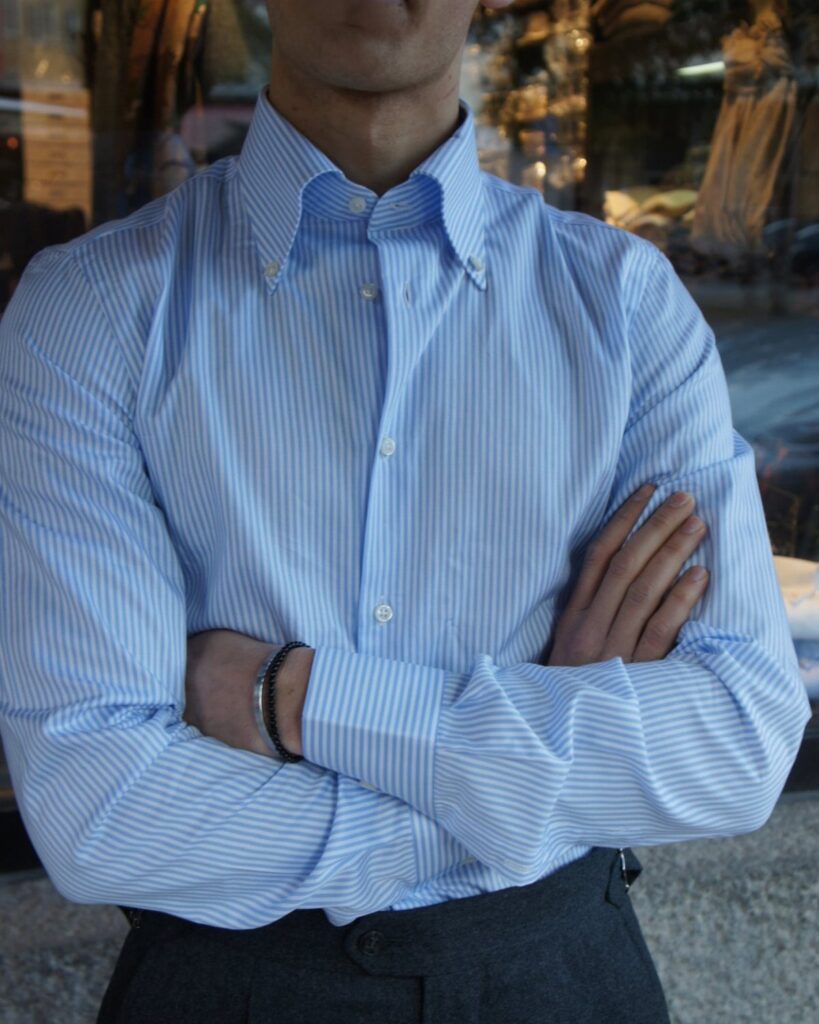
A narrow face gains width from a spread collar that pulls attention toward the shoulders, while a round or square face benefits from a point collar that adds vertical length.
The list runs from the button-down collar that works under a blazer or worn alone on weekends to the pin collar, where a metal bar clips beneath the tie knot and lifts it slightly.
Collar height and stiffness signal occasion: a tall spread collar stands formal under a suit, a button-down relaxes business casual, and a band collar drops the tie for casual wear.
1. Button-Down Collar
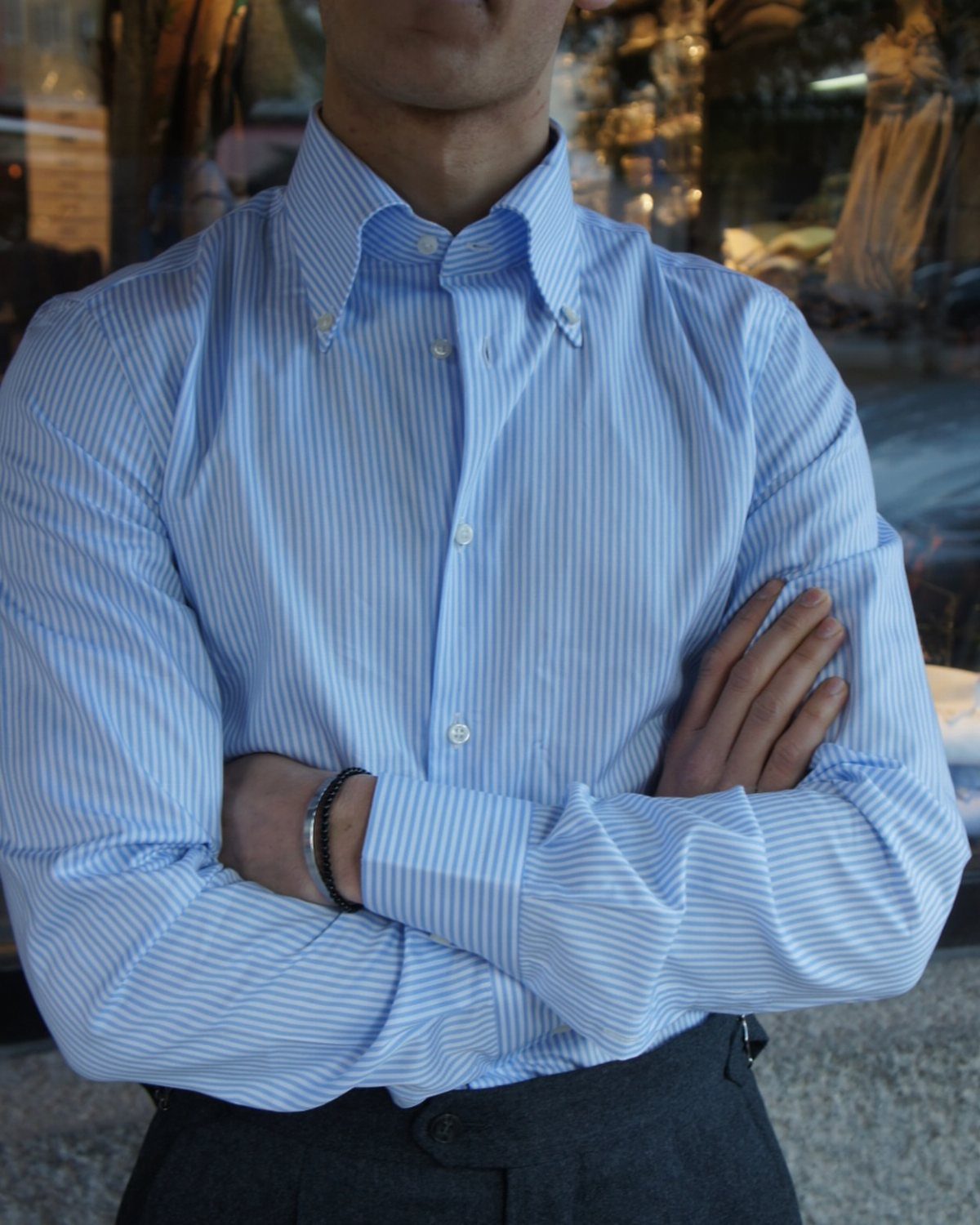
The collar points fasten to the shirt with small buttons, keeping the shape controlled without a tie. That makes it work equally well under a blazer for business casual or worn alone on weekends.
The collar holds its line even when the shirt is worn open, which matters if you skip the tie. Pair it with chinos or grey trousers and you have a look that reads polished without reading stiff.
Button-down collars wrinkle less than other styles because the points stay fixed, which helps when you’re moving between meetings and dinner.
2. Band Collar
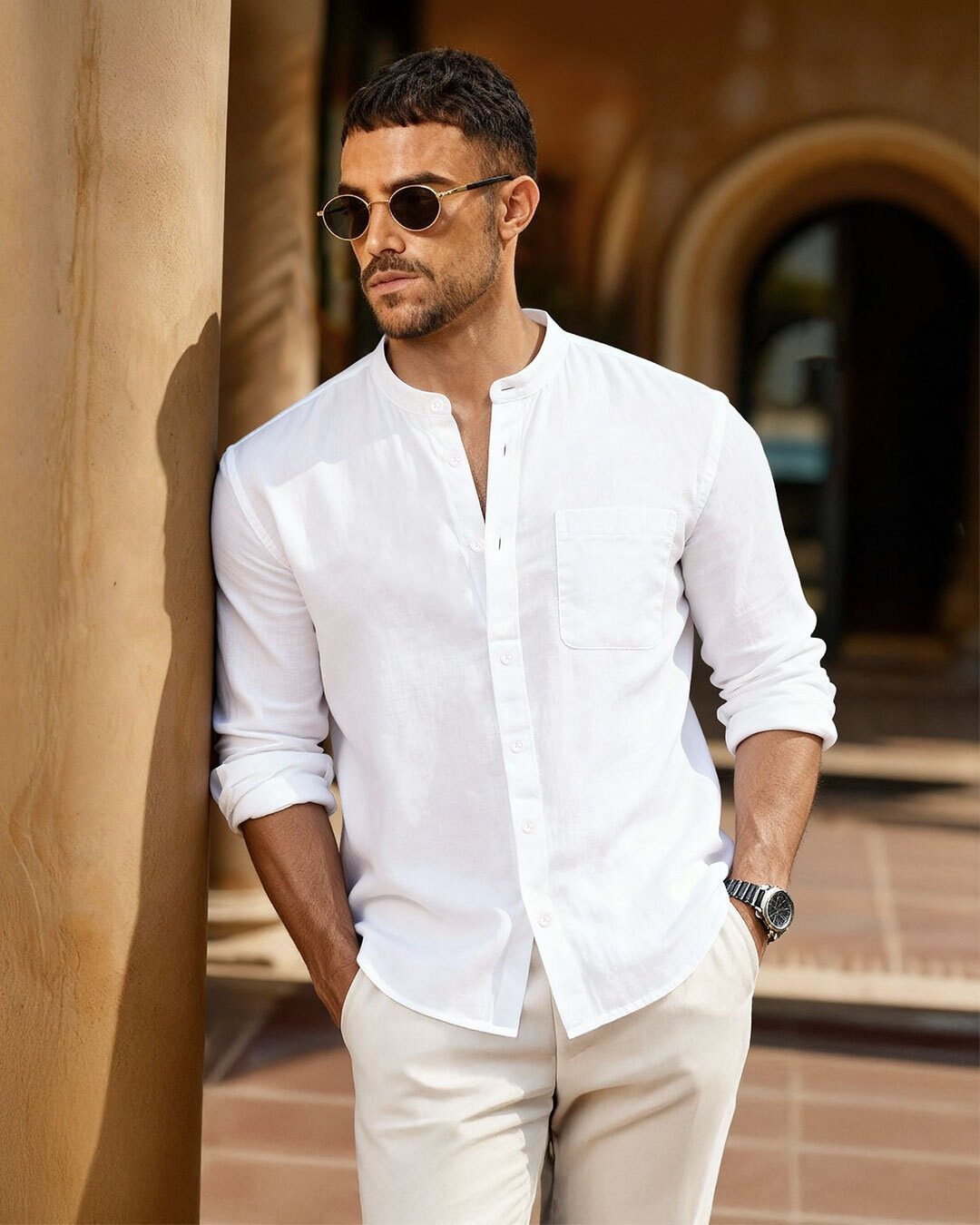
No fold-over collar at all, just a narrow standing band that circles the neck. You’ll see it called band collar most often, though officer collar appears occasionally.
This white linen version shows the clean neckline the style produces. It reads more relaxed than a point collar but still structured enough for tailored trousers and a blazer when you skip the tie.
The look suits warm weather especially well because there’s less fabric around your neck. Sunglasses and beige trousers complete a summer outfit that feels finished without feeling formal.
3. Point Collar
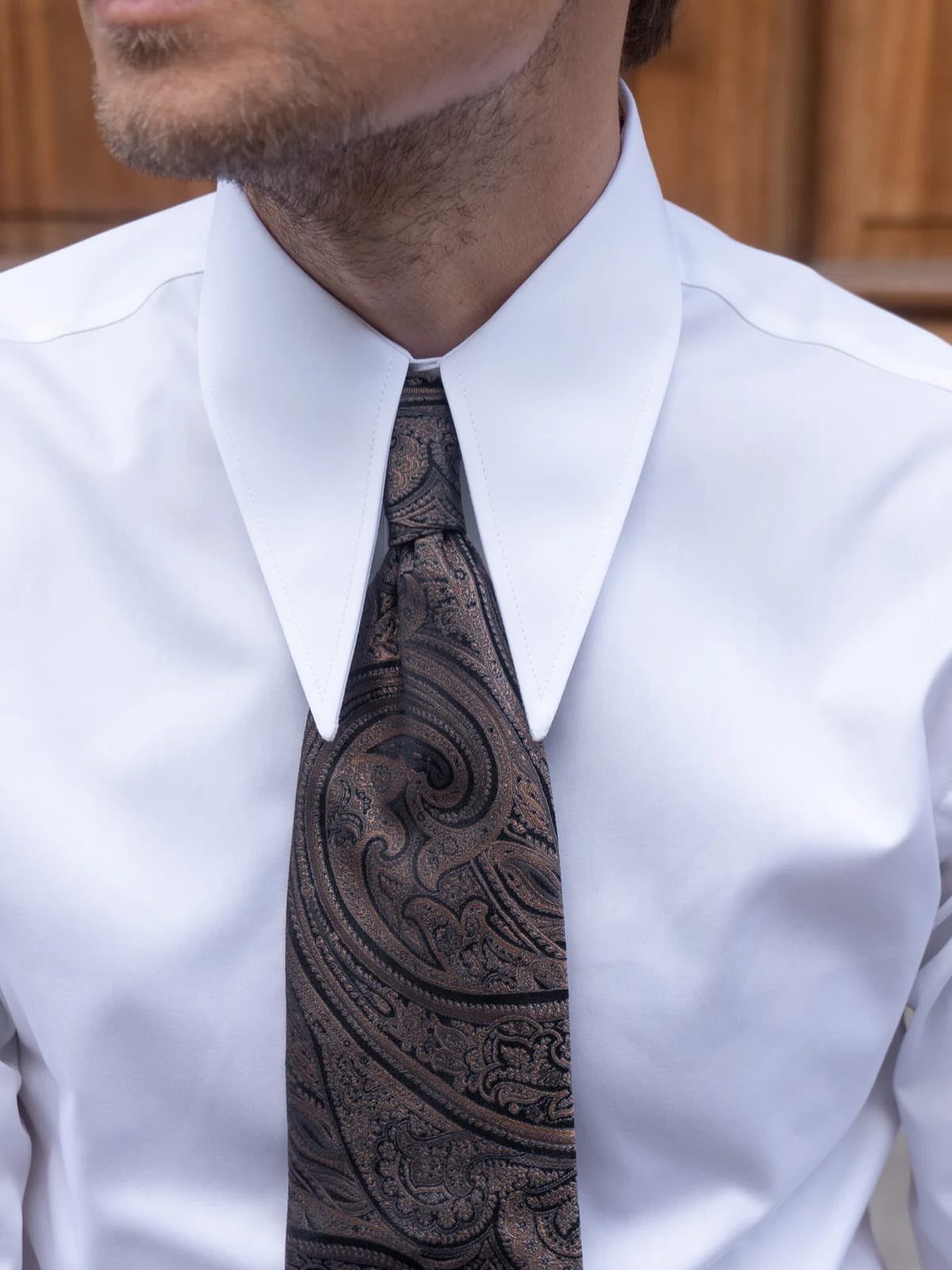
The collar spreads at a moderate angle, leaving room for a tie knot without crowding the space. That versatility makes it the default for dress shirts, and it works just as well when you leave the top button open.
This white shirt with a brown paisley tie demonstrates the proportions: the collar frames the tie without competing for attention, and the points sit flat against the chest.
Formal enough for a suit, relaxed enough for jeans. If you only own one dress shirt, this is the collar it should have.
4. Mao Collar
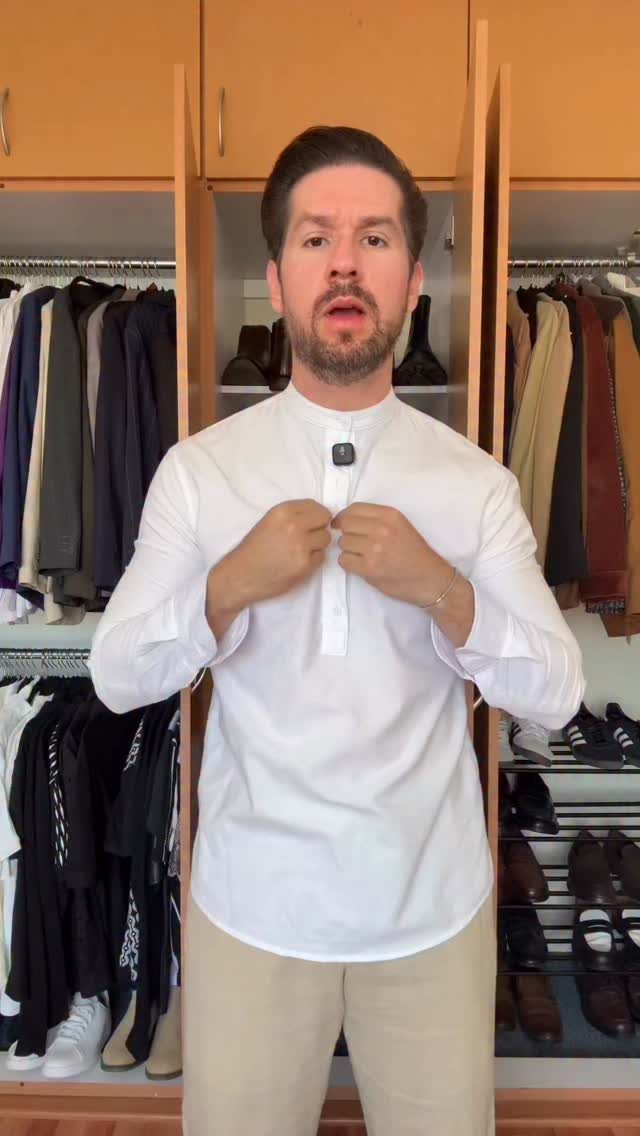
A U-shaped neckline with no collar thighs, so the band curves gently rather than meeting at a sharp point. That gives a softer line than the mandarin collar, which closes in a straight band.
The band sits close to the neck without pressing against it. Khaki trousers keep the look light for warm-weather events where a tie feels like too much.
The style reads modern without reading costume. Stick to neutral colors and the collar does the work.
5. Mandarin Collar
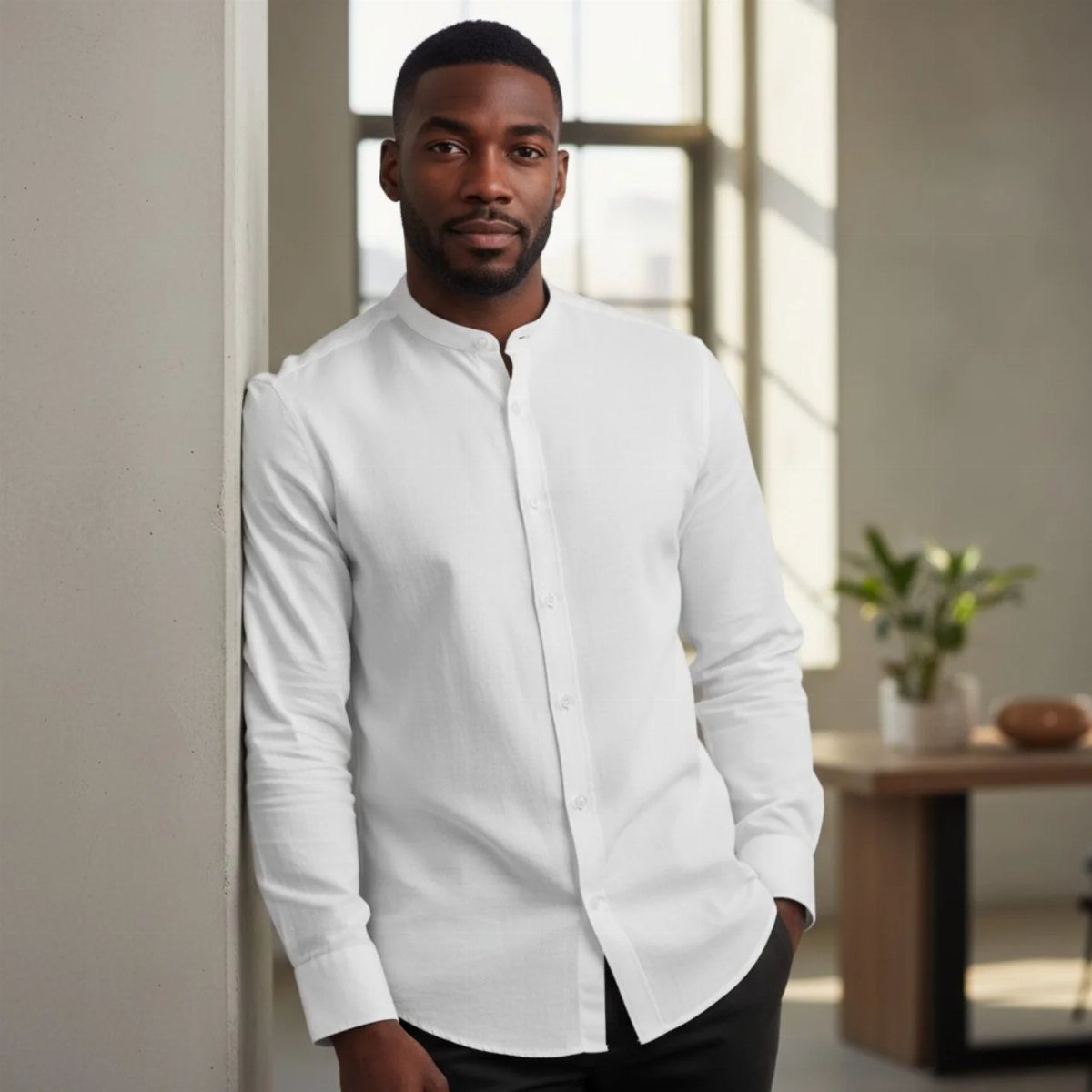
A short standing band with no fold-over collar, giving a neckline that reads minimal and modern.
The style works best when the fit is precise because there’s no collar spread to hide adjustments. Dark trousers balance the sharp look without the formality of a standard dress shirt.
Skip the tie entirely. The collar’s appeal is in what it leaves out, and adding a tie defeats that.
6. Cuban Collar
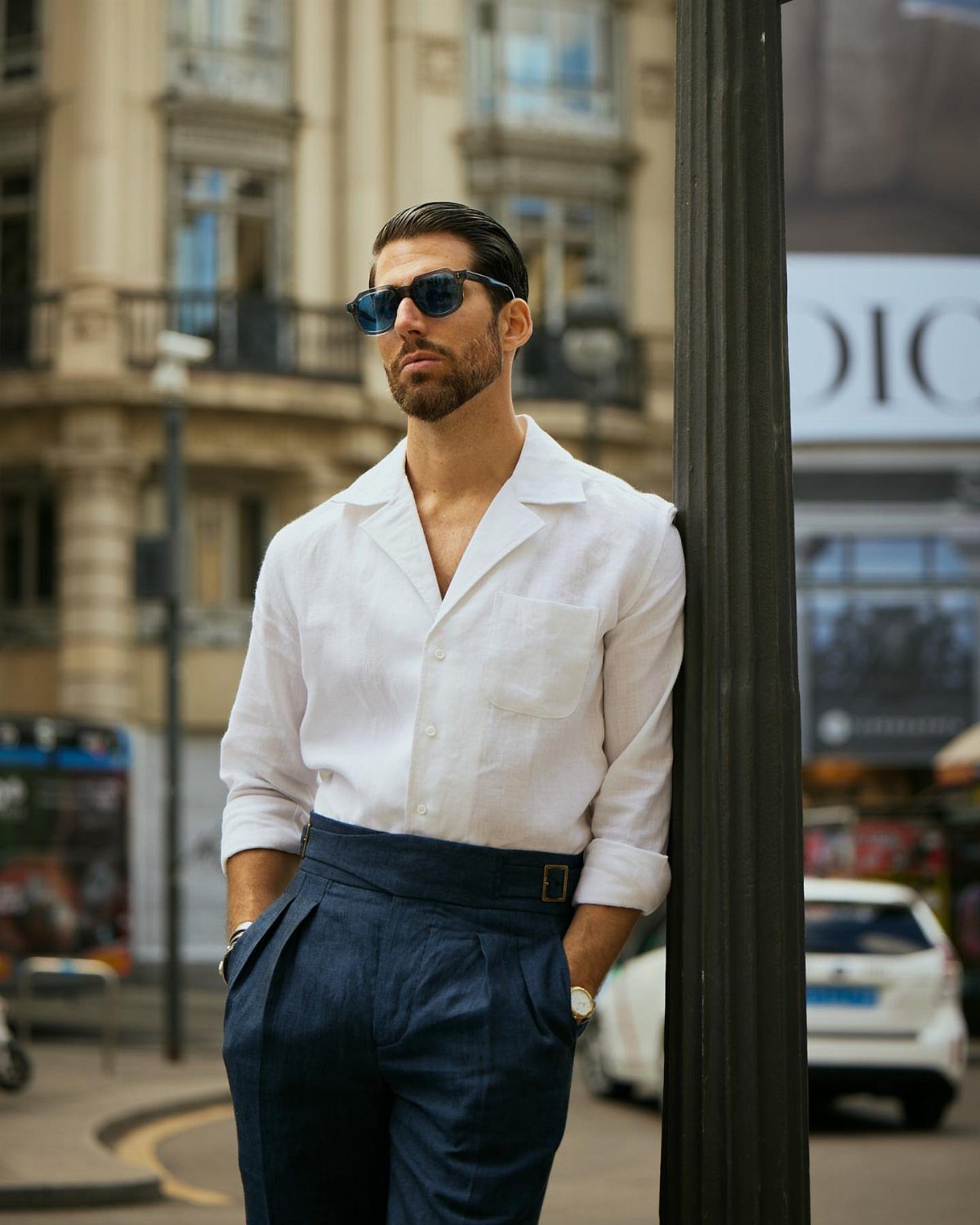
The collar sits flat against the chest with a notch at the front, designed to be worn open rather than buttoned to the neck.
This white shirt with navy trousers shows the relaxed line the style produces, somewhere between a dress shirt and resort wear.
The look suits summer because the open collar lets air move, and the flat shape means no collar points curling up in humidity. Pair it with tailored trousers to keep the outfit from reading too casual.
A Cuban collar reads confident when the fit is right and sloppy when it isn’t. Keep the shirt trim through the body.
7. Pin Collar
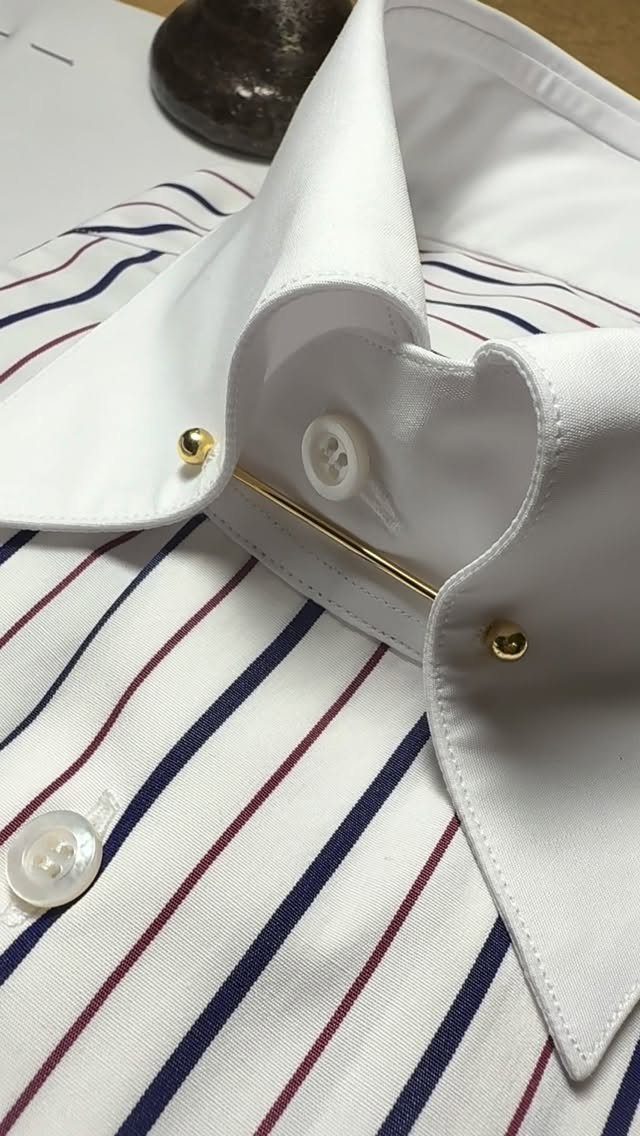
A metal bar clips across the collar points beneath the tie knot, lifting the knot slightly and pinning the collar in place. The bar adds formality without requiring a different shirt.
This gold version sits just below the knot, giving structure to the neckline. The look works best with a four-in-hand or half-Windsor knot, anything small enough that the bar doesn’t crowd the space.
Buy a collar bar that matches your tie clip if you wear one. Silver for cool tones, gold for warm.
8. Knit Polo Open Collar
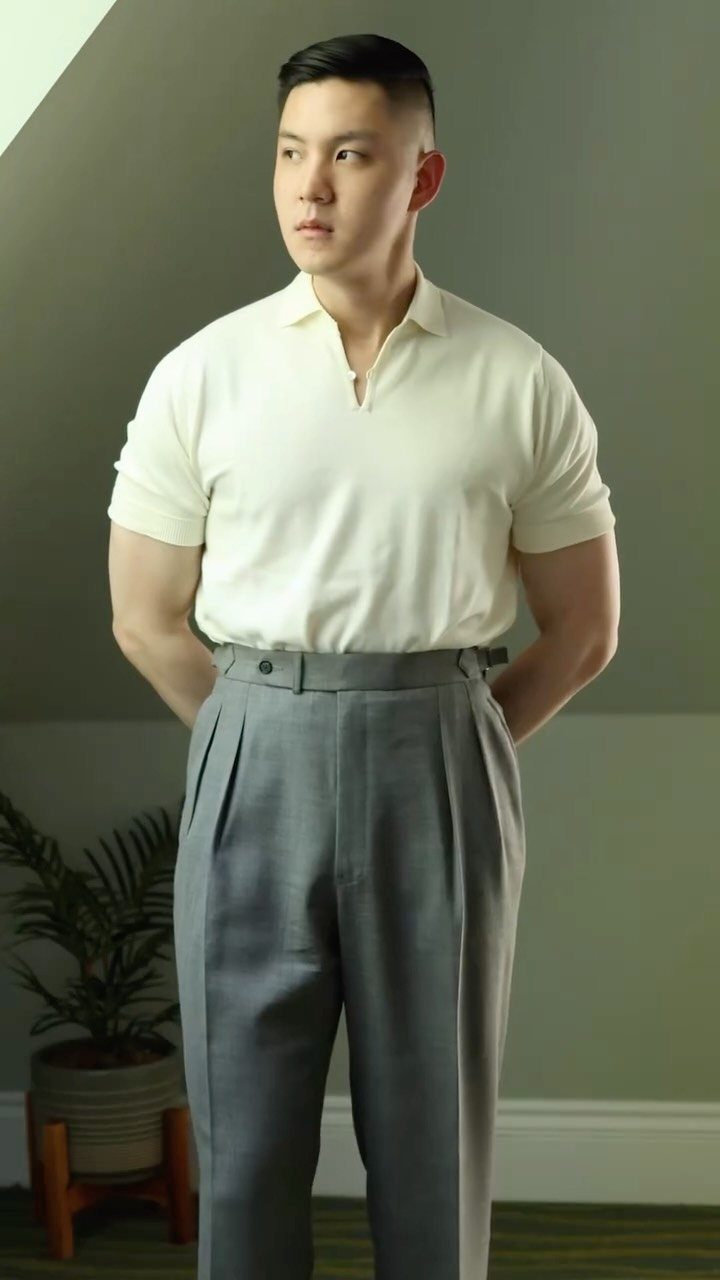
The knit polo collar folds open in a soft V rather than buttoning to the neck, giving the ease of a T-shirt with slightly more shape.
Knit fabric moves with you and doesn’t wrinkle the way woven cotton does, which matters when you sit for hours. The open collar stays relaxed enough for coffee or a gallery without reading like you’re dressed for the gym.
Stick to neutrals. Cream, navy, olive.
9. Club Collar
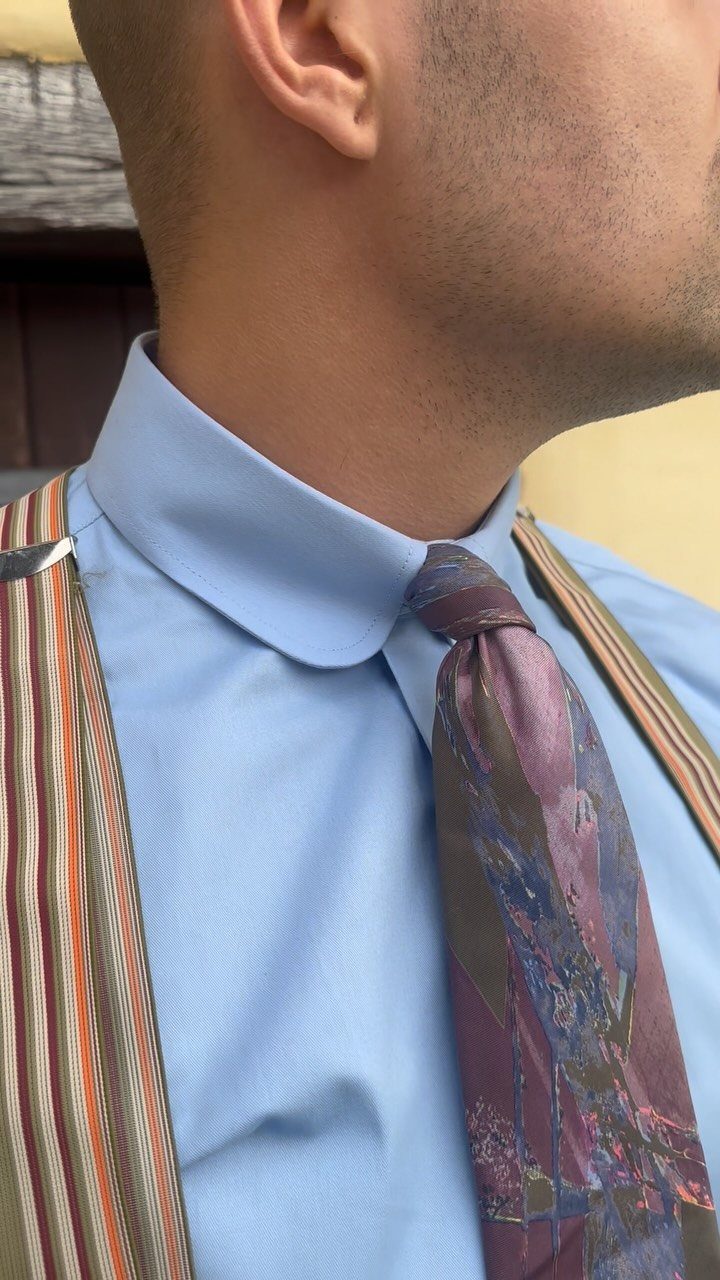
The collar points curve into rounded edges rather than ending in sharp angles, softening the formality of a dress shirt without losing structure. The rounded shape frames the knot differently than a standard point collar.
The style belongs to the interwar years, which means it reads vintage even in modern fabric.
Pair it with a vest or cardigan to lean into that era, or wear it alone under a blazer if you want the detail without the period costume.
Fits best on men with angular faces. The curves balance sharp features.
Choosing the Right Collar
Face shape decides how much collar spread you need.
A wider spread balances a narrow face by sending the eye out toward the shoulder line instead of straight down. Cutaway and club collars both do this.
A broad face benefits from a narrower spread that keeps the sight line vertical rather than emphasizing width. A closed collar, where the points angle inward, balances the proportions.
Collar height matters if your neck is long.
A taller collar shortens the visible length between jaw and shoulder, bringing the proportions closer to center. Angular collars like the point style can lengthen a round face by adding vertical lines.
Match the collar’s geometry to what your face needs more of: width for length, length for width.
Occasion Suitability
Formality rises with how the collar sits. Spread and cutaway collars pair with ties and hold their shape under a jacket, which makes them the right choice for anything that requires a suit or tailored separates.
Button-down and Cuban collars lose that structure, which moves them into business casual or weekend territory. A button-down works under a blazer without a tie.
A collar bar can lift formality even when your jacket and trousers stay casual. A band or Mao collar skips the tie entirely, putting them firmly in the casual half of your wardrobe.
The black-tie rule still applies: a button-down collar does not belong with a bow tie, and a pin collar reads wrong with chinos.
Frequently Asked Questions
What collar is in style for men’s dress shirts?
Right now the point collar is back in a big way, valued for its clean proportions and the refinement it brings without trying too hard.
Cuban collars remain a warm-weather staple, and band collars are gaining ground for their clean, modern line. The right style depends less on what’s trending and more on what balances your face and fits the occasion.
What are the different types of collars?
Collars fall into 3 categories: flat collars that lie against the fabric, standing collars like the mandarin that rise without folding, and turnover collars that stand and then fold over.
Most dress shirt collars are turnover styles, including point, spread, and button-down. Band and Mao collars are standing styles.