Casual 1900s menswear split between field sports and summer leisure, with Norfolk jackets and tweed knickerbockers at one end, boating blazers and lightweight three-piece suits at the other.
The setting decides which direction you take: practical pieces like flat caps and tweed for walking or outdoor events, a boating blazer with a stiff detachable collar for formal leisure occasions, or a three-piece suit in checkered wool or lighter summer fabrics.
1. Norfolk Jacket
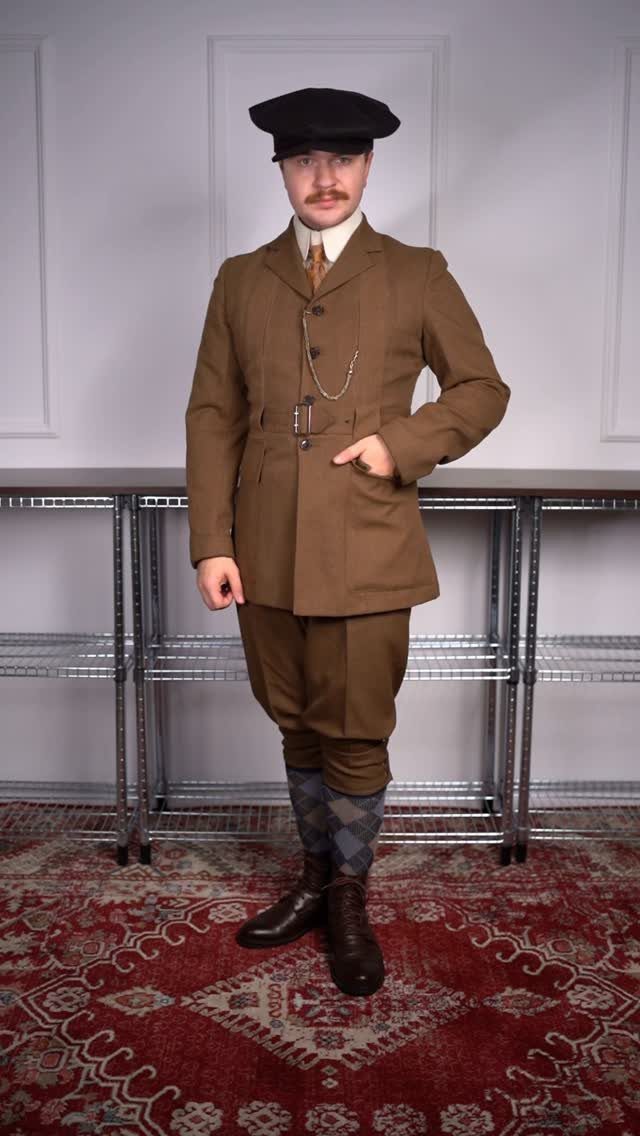
The Norfolk jacket is a belted, loose-fitting piece built for walking, shooting and field sports. Box pleats at the front and back let you move freely, and the self belt keeps the silhouette from turning shapeless.
Wear it with knickerbockers or full-length trousers, depending on the terrain.
Pair it with boots and a flat cap. The look reads as practical rather than formal, which is exactly where 1900s casual style lived.
2. Tweed Jackets and Knickerbockers
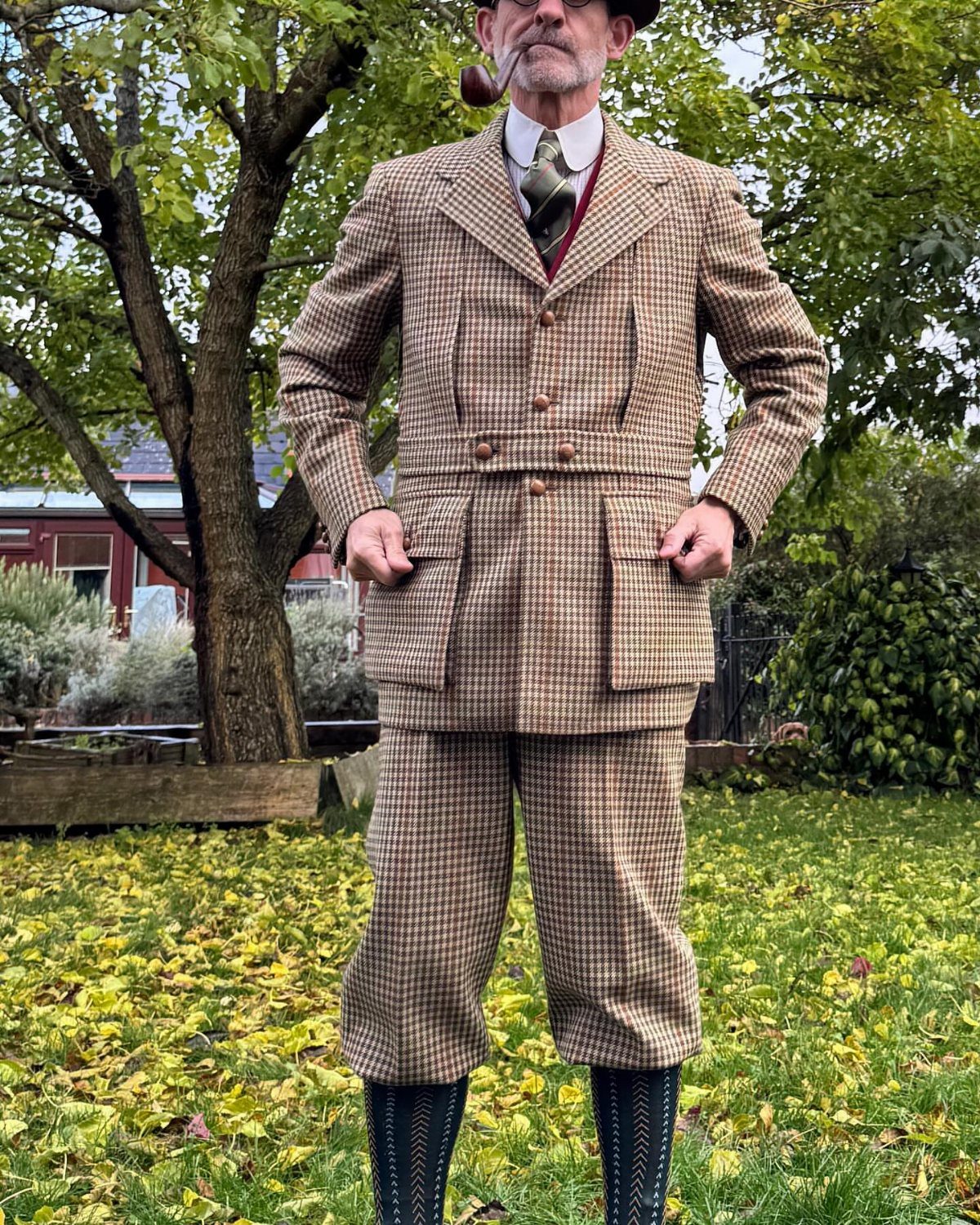
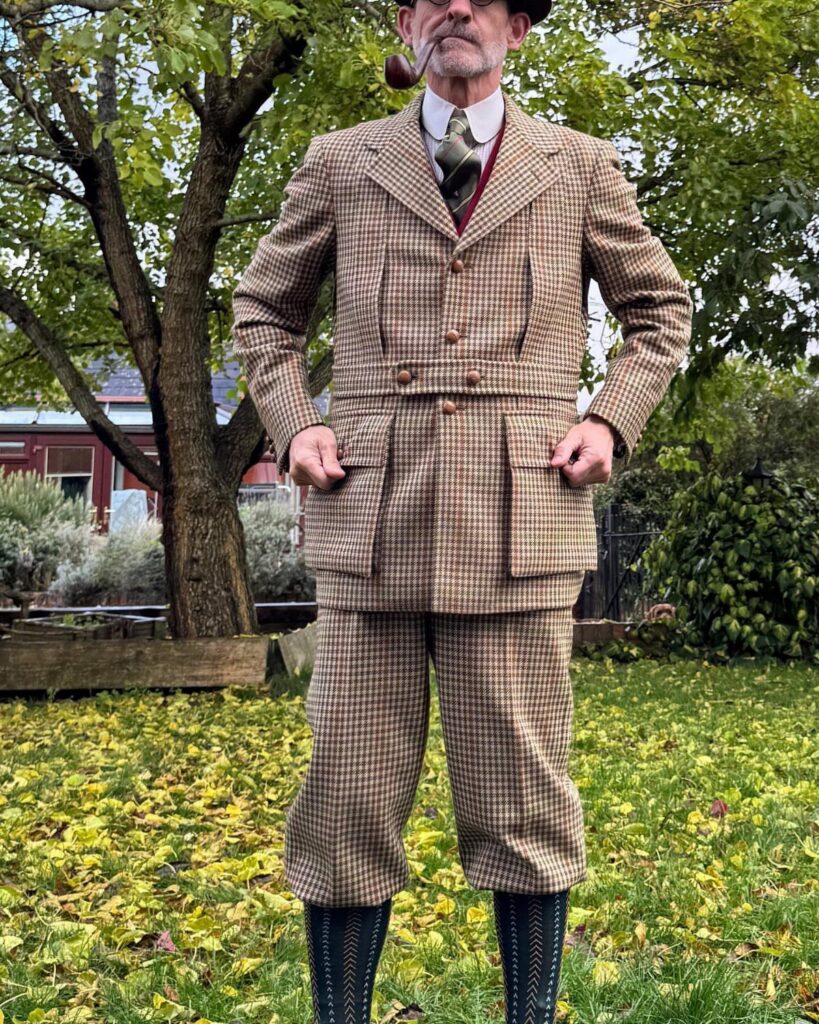
A tweed jacket and knickerbockers give you the country sportsman silhouette without needing a full Norfolk rig. The jacket can be a standard single-breasted cut or a Norfolk with pleats, both work.
Knickerbockers button or buckle at the knee, and you finish them with wool socks pulled to meet the hem. The texture of the tweed holds up outdoors and adds visual weight to an otherwise simple outfit.
Match the jacket and knickers or run them in different tweeds. Add a pipe for the full effect.
3. Casual Summer Attire
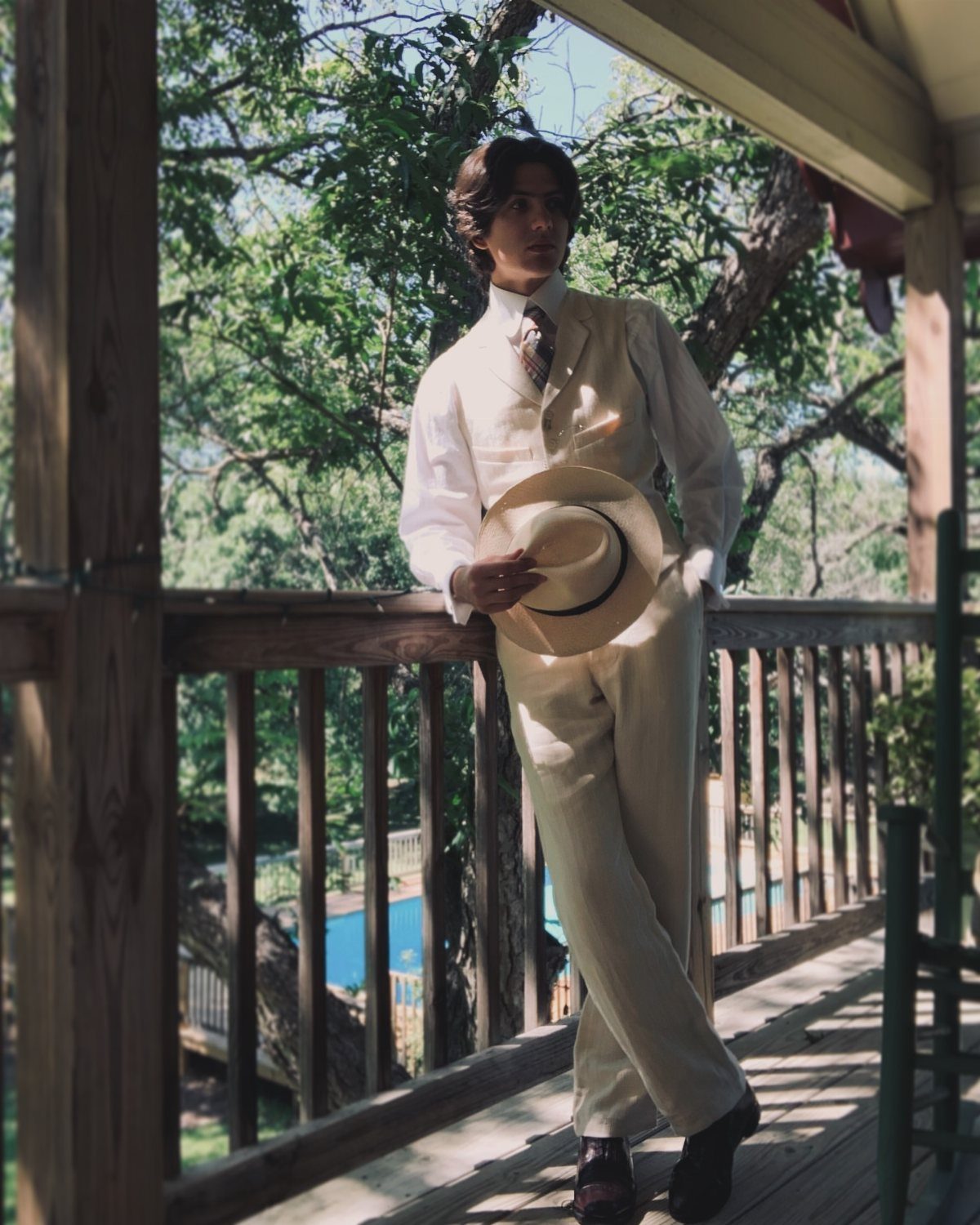
Lightweight summer suiting in cream or off-white keeps you dressed without overheating. A three-piece suit in linen or cotton drill gives you structure and formality, but the pale color and breathable fabric make it appropriate for warm afternoons.
Finish it with a straw boater hat, which you hold rather than wear indoors. The look suits garden parties, outdoor events and any occasion where a dark wool suit would be too heavy.
The whole effect depends on the suit staying crisp, so press it before each wear.
4. Flat Cap
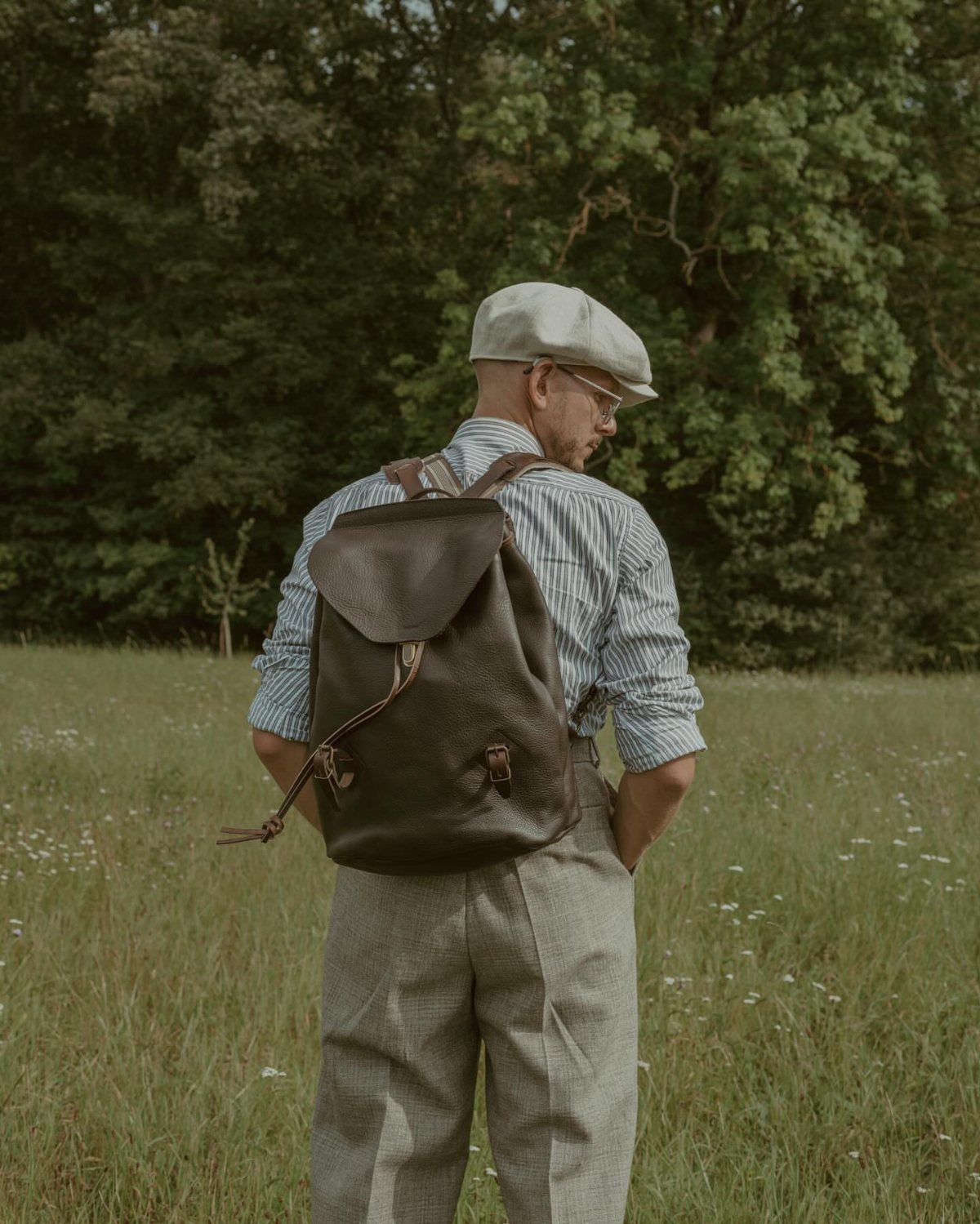
The flat cap is the single most useful accessory from this decade. Wool or tweed, worn slightly forward on the head.
It suits almost every casual outfit from this period and works with modern clothes too. Pair it with a shirt and trousers, a jacket, or a full suit, and it pulls the look together without adding formality.
Choose one in a neutral tone to work with multiple outfits, or match it to your jacket for a more finished effect.
5. Trousers with Cuffs
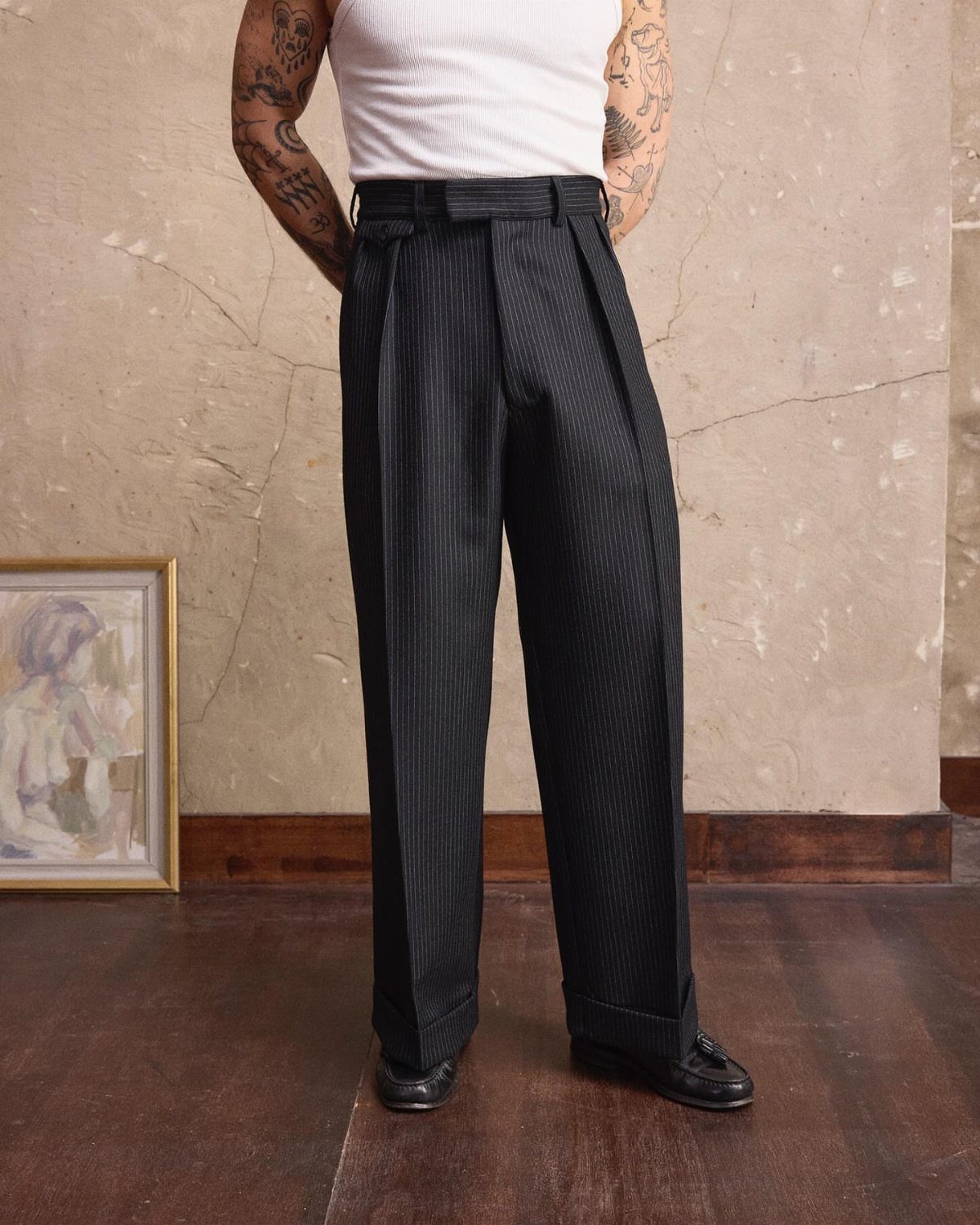
Trousers with cuffs add weight to the hem and create a clean break at the shoe. The cuff is folded and sewn or just turned up and pressed.
High-waisted trousers sit at your natural waist, which lengthens the leg line and lets you skip a belt if you wear suspenders. Pinstripe or solid wool both work, depending on how formal you want the look to feel.
Cuffs collect dust and rain, so some prefer a plain hem for everyday wear. But the visual finish is sharper with the cuff.
6. Boating Blazer with Stiff Collar
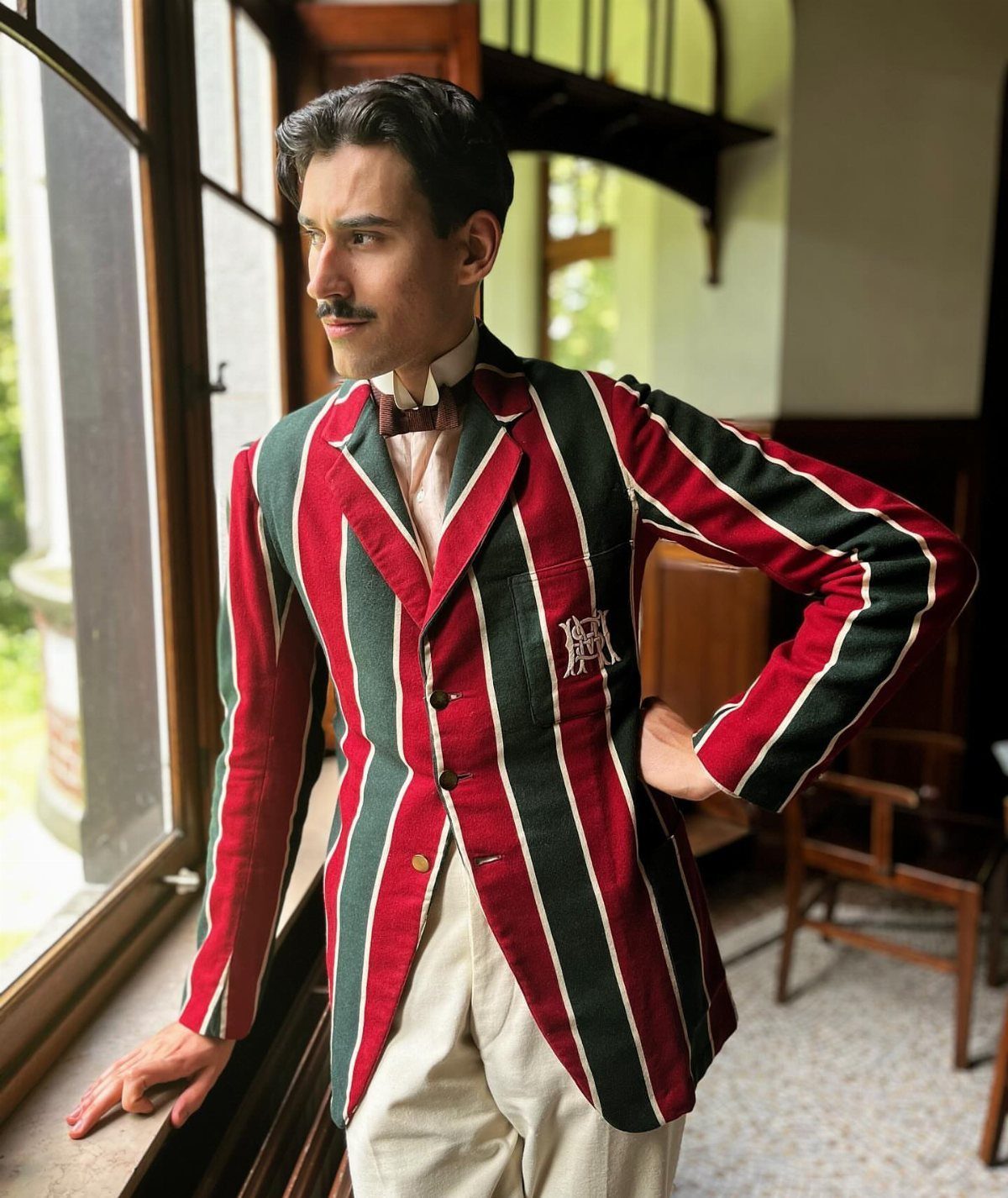
A boating blazer in bold stripes, worn with a stiff detachable collar and a bow tie, is formal leisure wear. The stripes are wide, often in 2 or 3 contrasting colors, and the blazer itself is cut short and boxy.
The stiff collar stands upright and fastens with studs, which means you need the right shirt: one with a collarless neckband. Cream or light trousers keep the outfit from feeling too heavy.
This look is specific to rowing clubs and summer events, so it reads as costume unless the setting supports it. But the blazer alone, worn casually with a soft collar, still works.
7. Waistcoat with Pocket Watch Chain
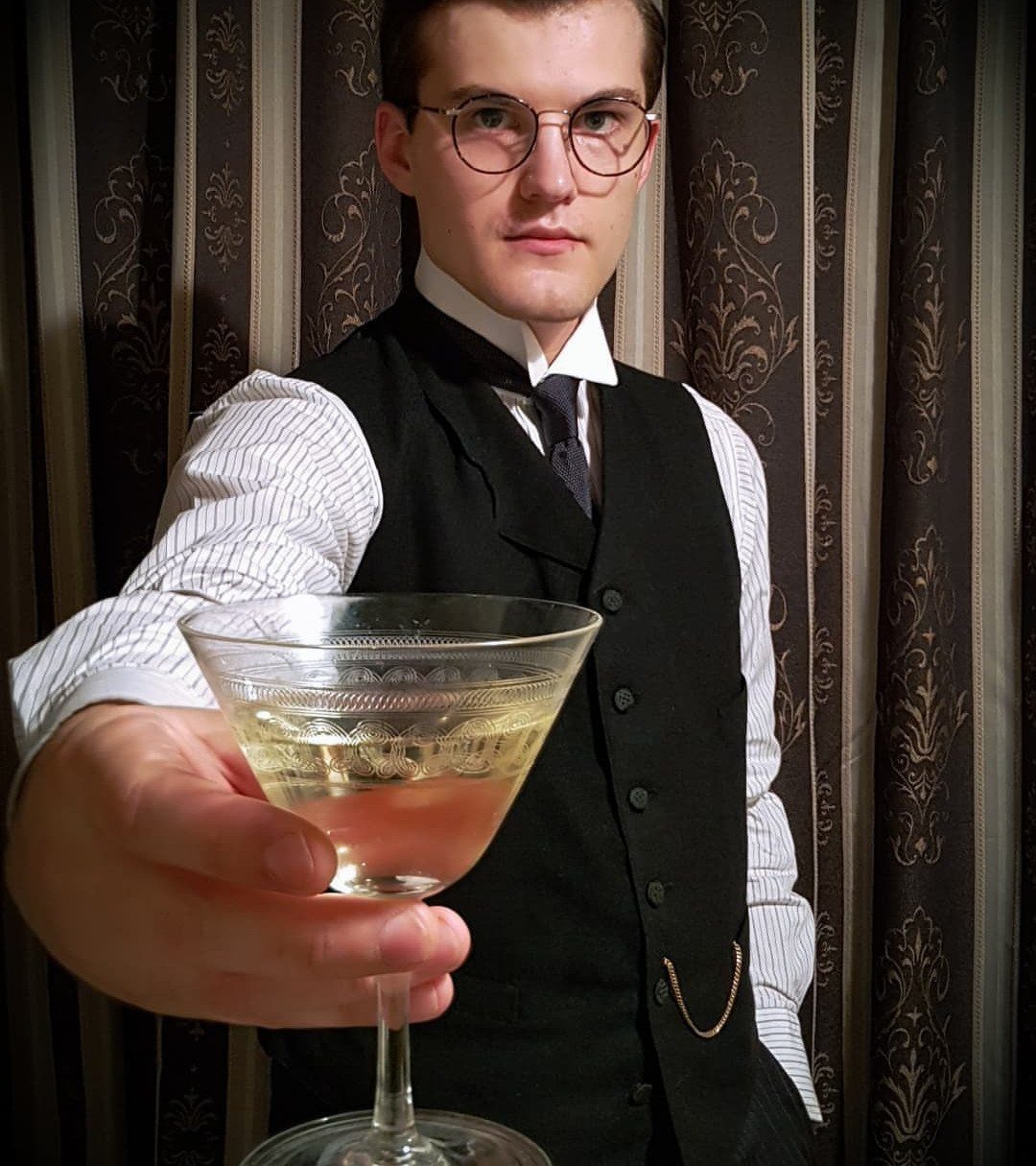
A waistcoat with a pocket watch chain keeps the formality of a three-piece suit but lets you drop the jacket indoors.
The chain drapes across the front, clipped to a buttonhole or looped through the waistcoat pockets, with the watch itself tucked into one of them.
Choose a chain in gold or silver to match your cufflinks. The waistcoat should sit close enough that it doesn’t ride up when you move, and the watch becomes a functional detail rather than just decoration.
Pair it with a collared shirt and tie. The look works for dinner, formal events, or any occasion where you want structure without the weight of a full suit jacket.
8. Button-Down Shirt with Suspenders
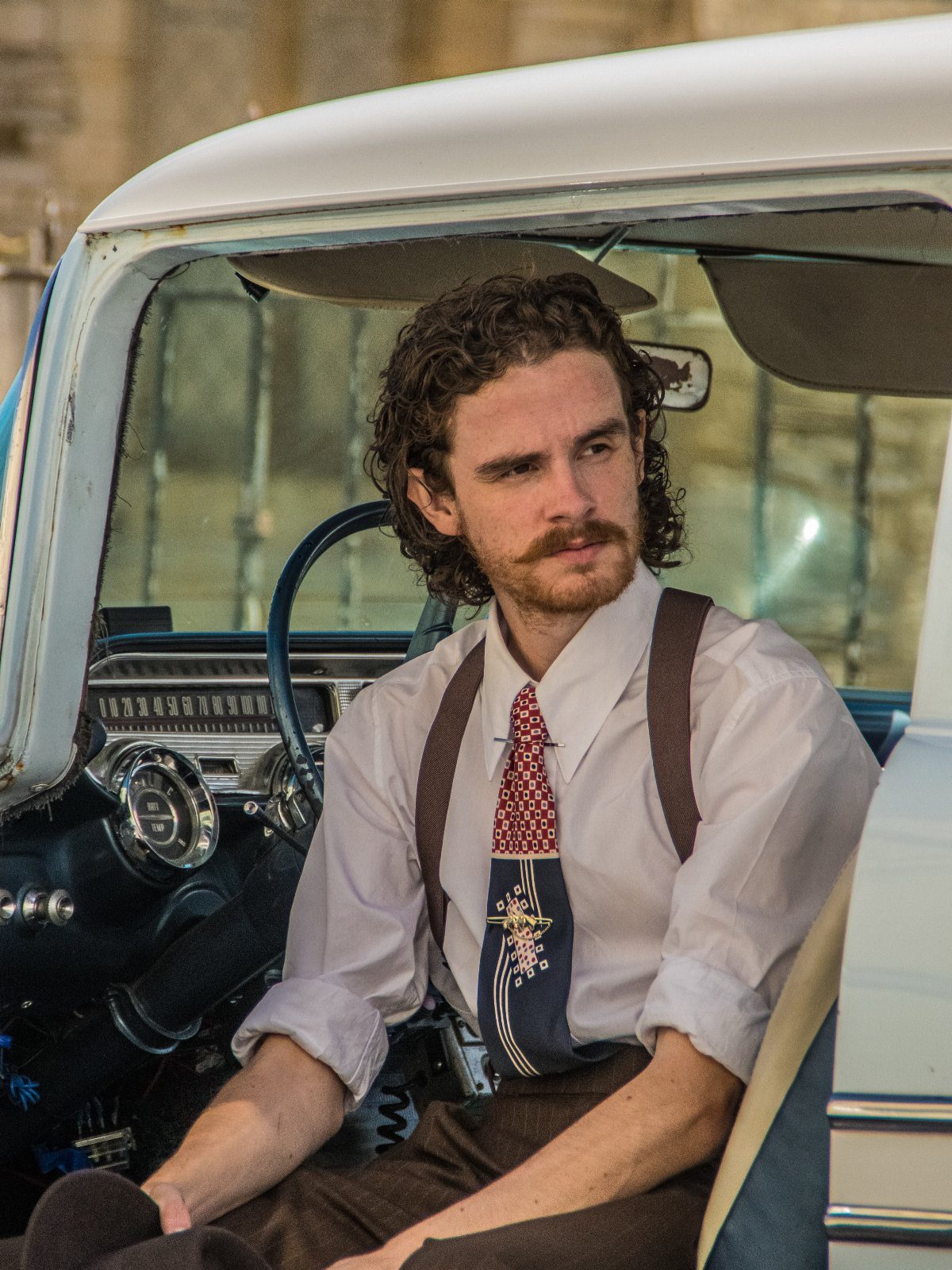
Button suspenders hold your trousers at the natural waist without a belt, and they let you adjust the rise and length more precisely than a fixed waistband allows.
Attach them to buttons sewn inside the trouser waistband, with a pair at the front and another at the back.
A white button-down shirt with the sleeves rolled and a tie keeps the outfit casual but still composed. The suspenders add vertical lines and break up the expanse of the shirt.
Skip the jacket and the look stays comfortable for driving, casual outings, or warm afternoons. Add a waistcoat if you need more formality.
9. Checkered Three-Piece Suit
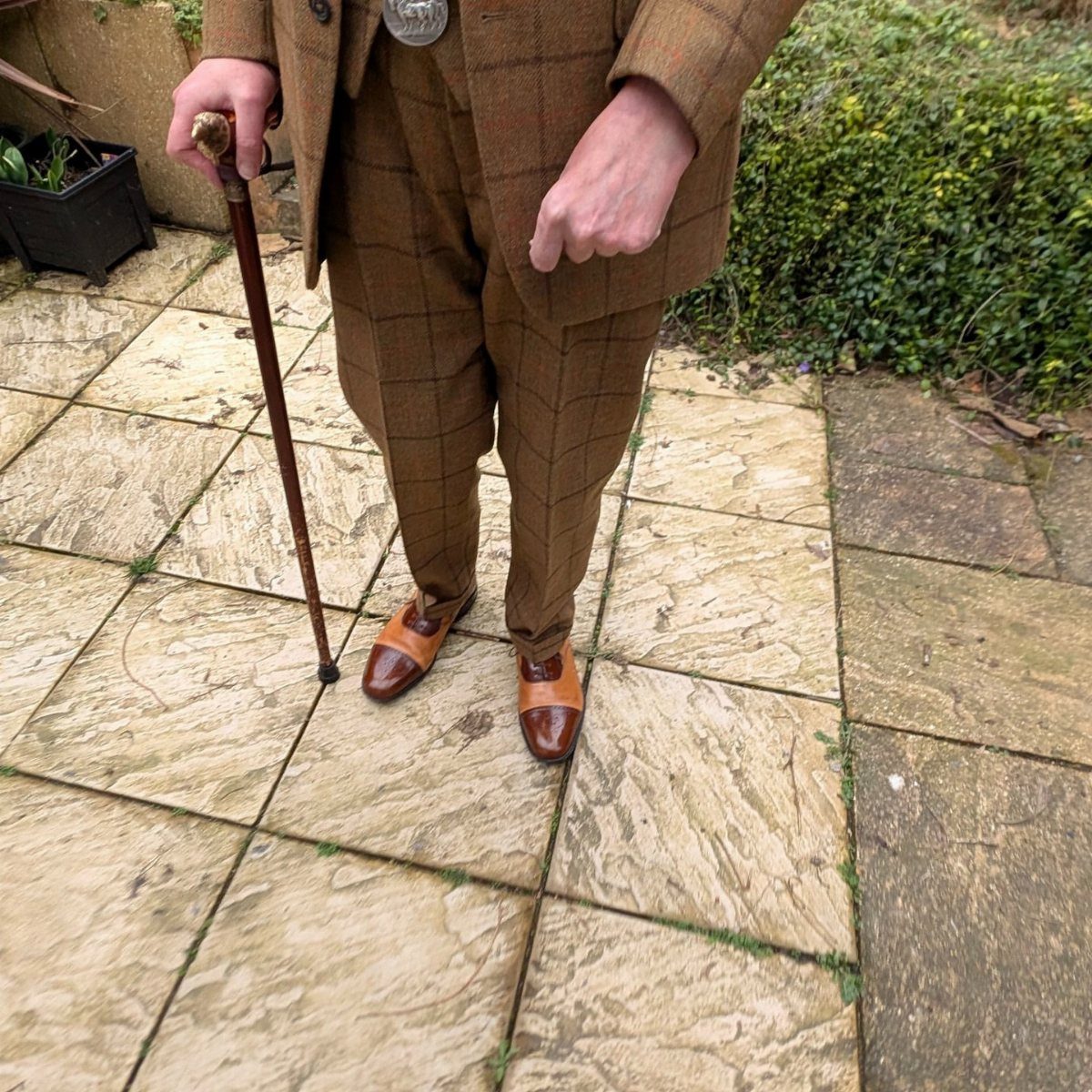
A checkered three-piece suit in brown or tan gives you the structure of formal suiting with a pattern that reads as country wear rather than business.
The check should be visible from a distance but not so large that it overwhelms the silhouette.
Match the waistcoat to the jacket and trousers, and finish it with brown leather shoes. A walking cane adds another layer of period detail, and it works if you actually use it rather than just holding it.
Press the trousers before each wear to keep the check crisp.
10. Tweed Three-Piece Suit
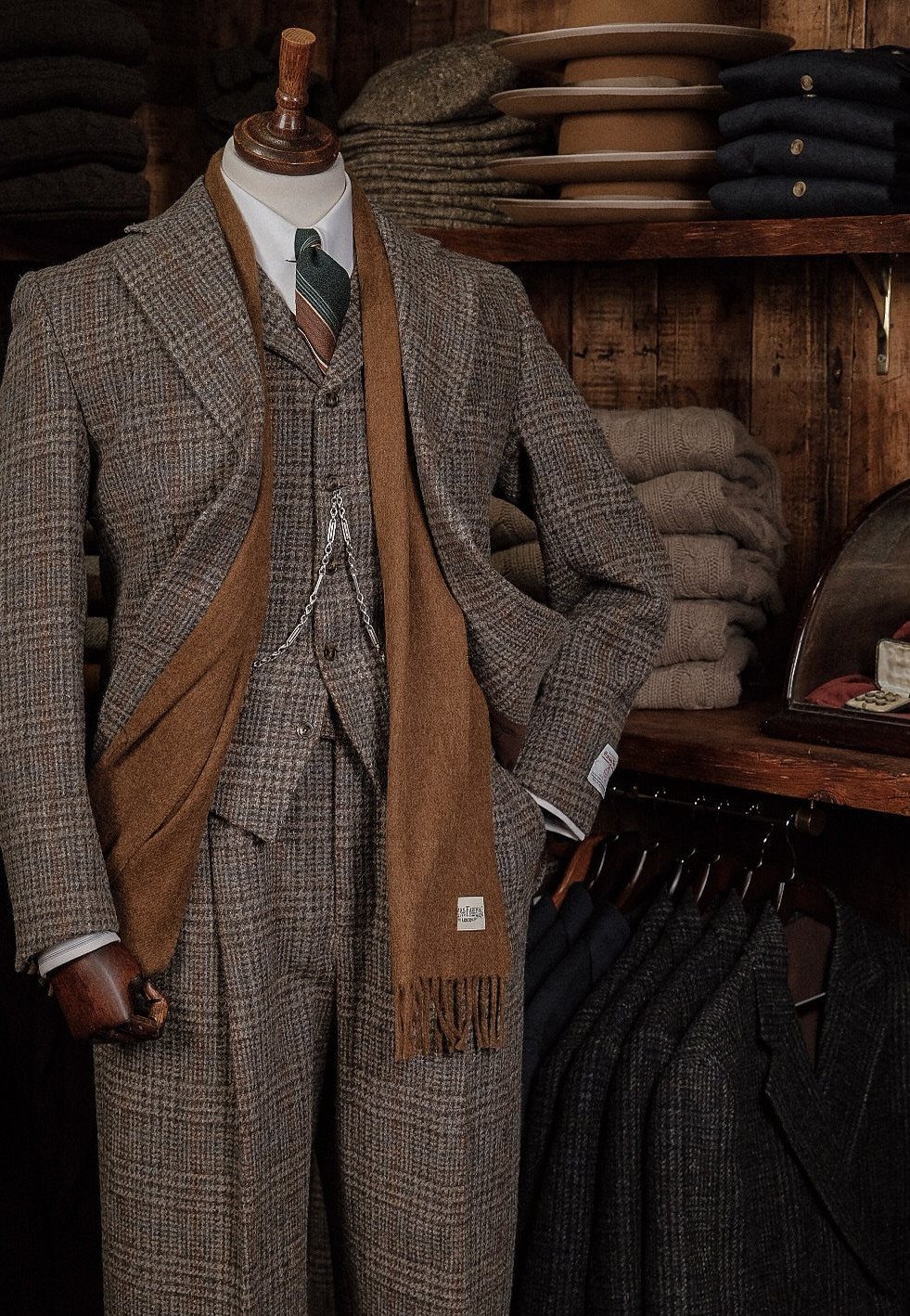
A tweed three-piece suit in brown tones is the most versatile tailored outfit from this period.
The texture holds up outdoors, the 3 pieces let you adjust formality by adding or dropping the waistcoat, and the neutral color works across seasons.
Add a scarf in a matching or contrasting tone for colder weather. The scarf drapes over the lapels and adds another layer without requiring a coat.
The suit reads as refined casual rather than formal, which makes it appropriate for a wider range of occasions than a dark wool suit would be.
Evolution of Casual Wear
Casual wear in the 1900s meant clothing you could move in without abandoning structure entirely. The Edwardian silhouette held through most of the decade: high collars, fitted waistcoats, morning coats for daywear.
But the lounge suit appeared by the end of the period, a less rigid alternative that let you sit, walk and socialize without the formality of a frock coat.
Sportswear grew as a separate category. Norfolk jackets, knickerbockers and flat caps became standard for field sports and outdoor pursuits, marking the first real split between formal dress and practical leisure clothing.
Ready-to-wear clothing gained ground during this period, making tailored pieces more accessible. The shift from bespoke to mass production started here, though most men still relied on local tailors for anything beyond basic shirts and trousers.
Influence of Sports
Sports shaped 1900s menswear by creating demand for clothing that worked outdoors. Shooting, walking and rowing all required garments that moved with you, and the fashion followed the function.
Tweed knickerbockers came from walking rough terrain.
Boating blazers came from rowing clubs. Each piece started as gear, then moved into casual wear once men saw it worked better than adapting formal suits for every activity.
The distinction between formal and casual clothing solidified during this decade because sports required it. A morning coat doesn’t work in a field, so the clothing adapted, and that practical approach carried over into everyday leisure wear.
Mass Production of Clothing
Mass production of menswear gained traction in the early 1900s, making fashionable clothing more widely available. Ready-to-wear suits and shirts appeared as an alternative to bespoke tailoring, though quality and fit still varied widely compared to custom work.
The shift toward mass production wouldn’t fully take hold until the 1940s, when custom tailoring became expensive enough that ready-to-wear became the everyday norm.
But the groundwork started in this decade, as factories began producing basic garments at scale and retailers stocked standardized sizes.
The trade-off showed immediately: lower prices and wider access, but less variety in styles and a looser fit than bespoke work could deliver.