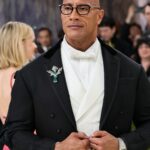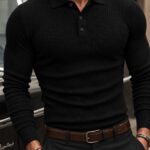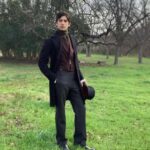
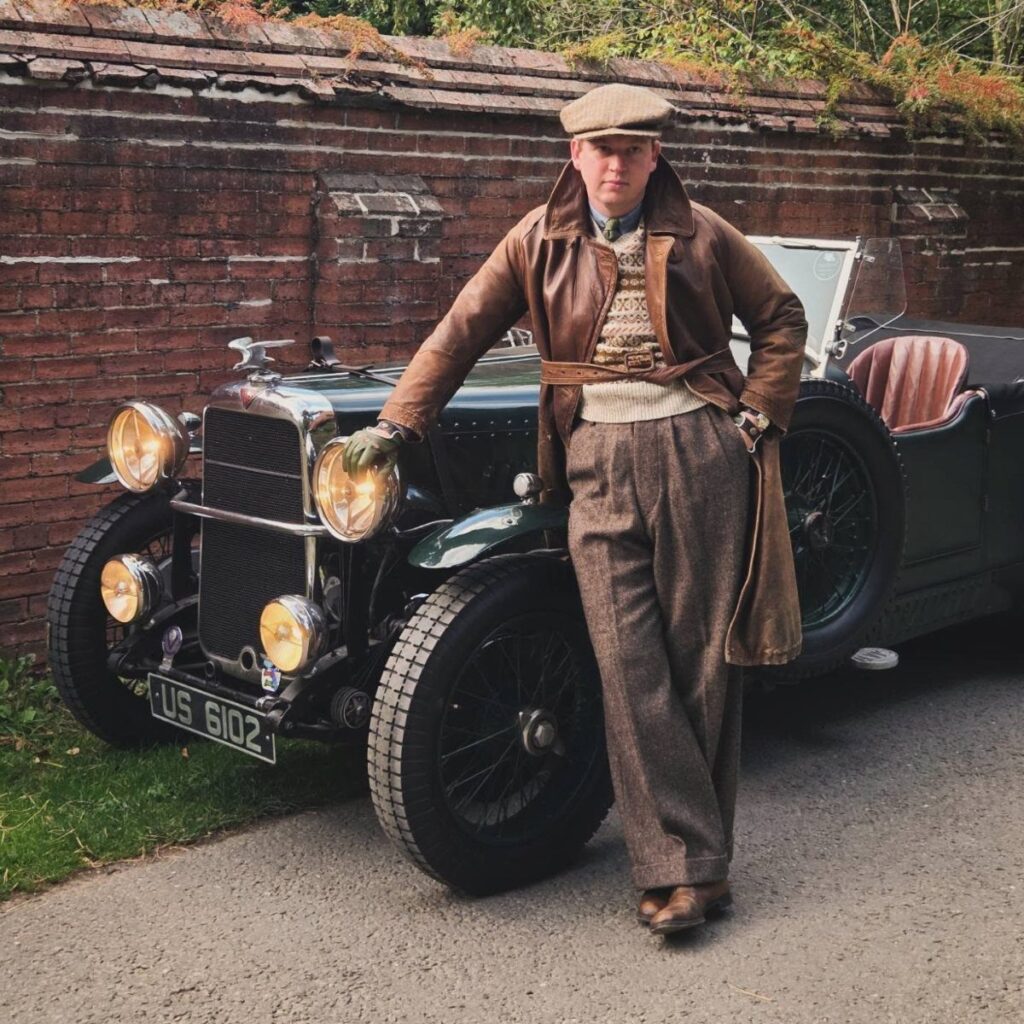
The wardrobe spans two-tone wingtips and formal top hats at one end, knickerbockers and flat caps at the other, with three-piece suits holding the middle.
If the event calls for white-tie formality, you need a top hat and wing collar; if you’re dressing for daytime leisure, high-waisted trousers and a boater hat work better.
1. Two-tone Shoes
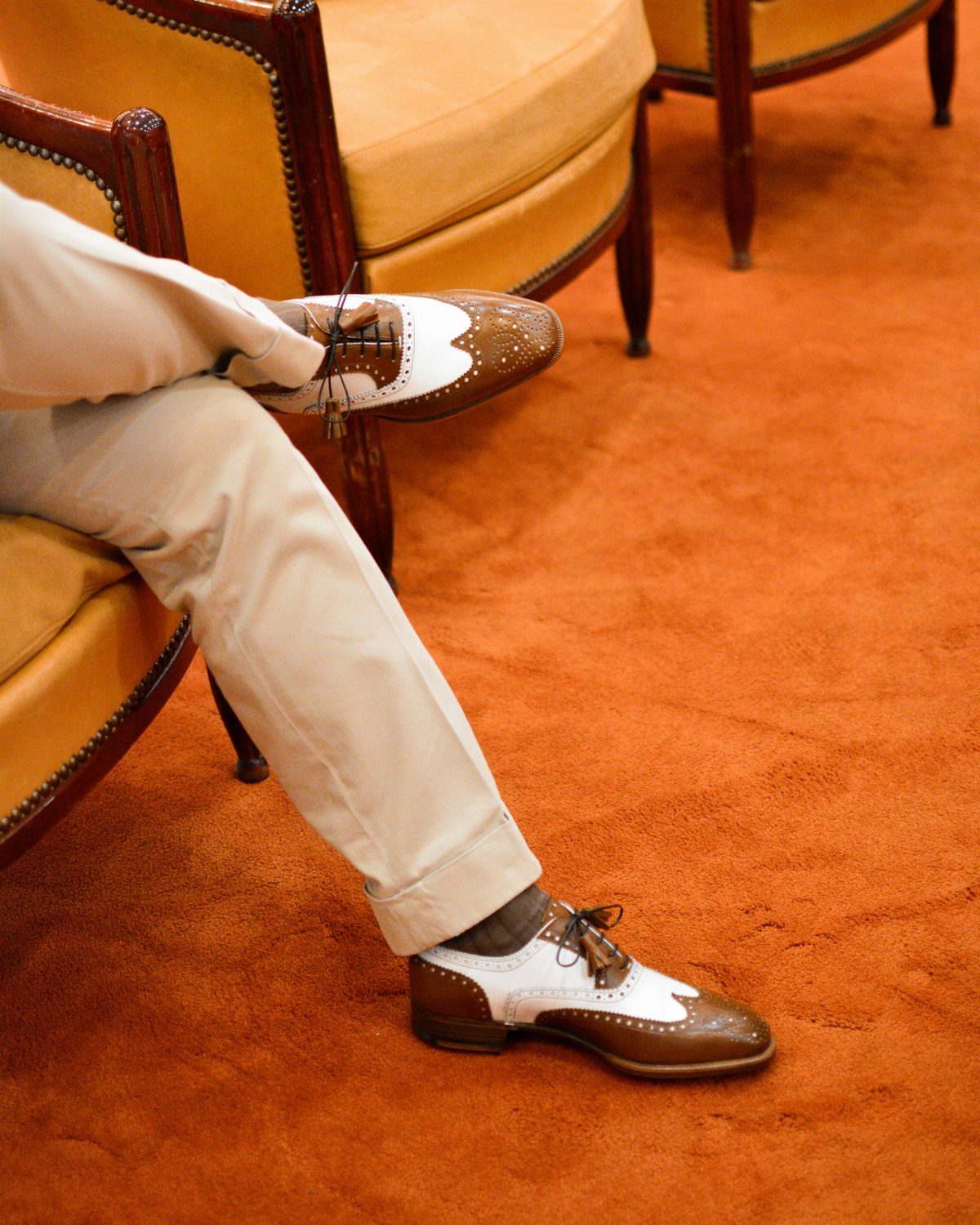
Two-tone shoes pair a light cream or white leather with a darker brown or tan across the toe cap and heel, creating a sharp contrast that stands out without needing much else.
Brown and white needs restraint, so pair it with beige trousers that keep the palette narrow. If you go for this style, match the darker tone in the shoe to your belt or watch strap so the look holds together.
Keep the rest of the outfit simple. Two-tone shoes already draw attention, so a plain trouser and clean shirt let them do their job.
2. Ties and Pocket Squares
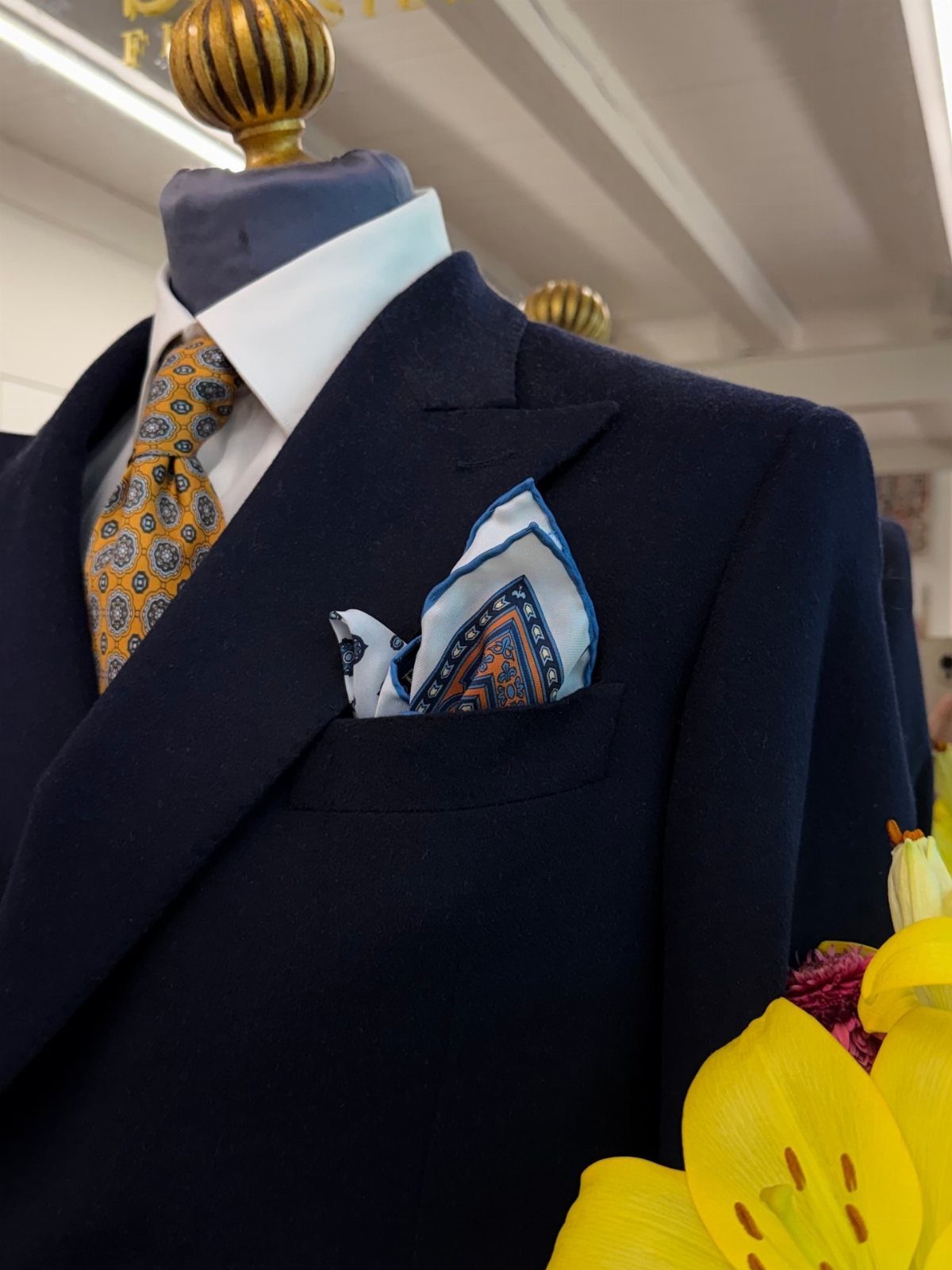
A patterned tie and pocket square give you room to add color and detail to a suit without changing the silhouette.
A gold tie pulls out warm tones in the shirt or suit, while a patterned pocket square in blue and white adds visual interest without competing.
I prefer keeping the 2 patterns different in scale so they sit beside each other rather than compete. A small repeating motif on the tie pairs well with a larger geometric or paisley square.
Silk works for both. Fold the square into a flat or puffed style depending on how formal the rest of the outfit reads.
3. Tailored Suits
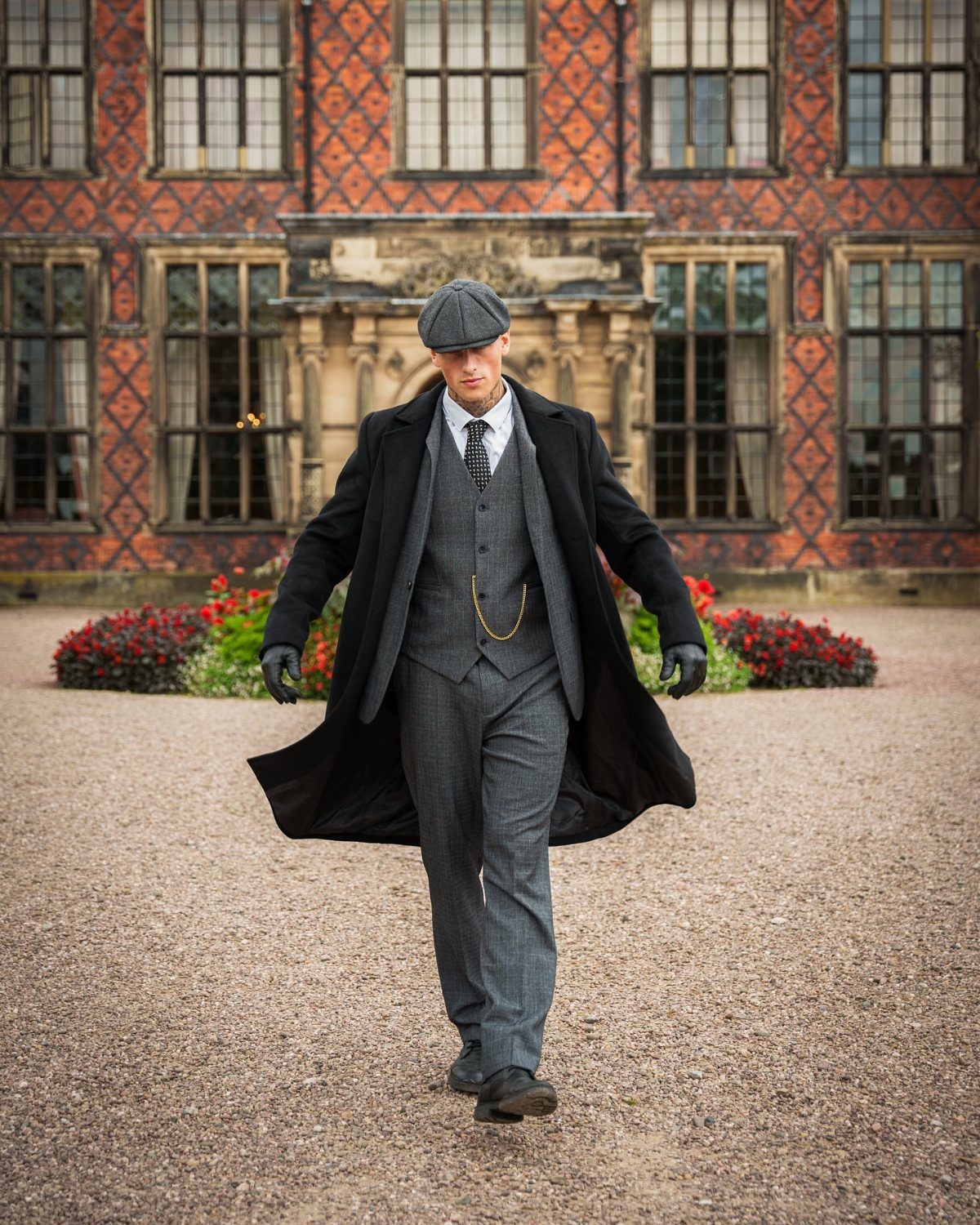
A three-piece suit in grey wool, fitted through the waist and chest, gives you the clean lines that defined men’s formal wear in the 1920s.
A suit should sit close without pulling at the chest or waist, and a vest underneath adds structure that holds the silhouette.
Pair it with a flat cap and overcoat if you want the full period look, or wear the suit alone for something more wearable now.
Tailoring makes the difference. Off-the-rack suits can work if you have them altered at the shoulders and sleeves.
4. Vests
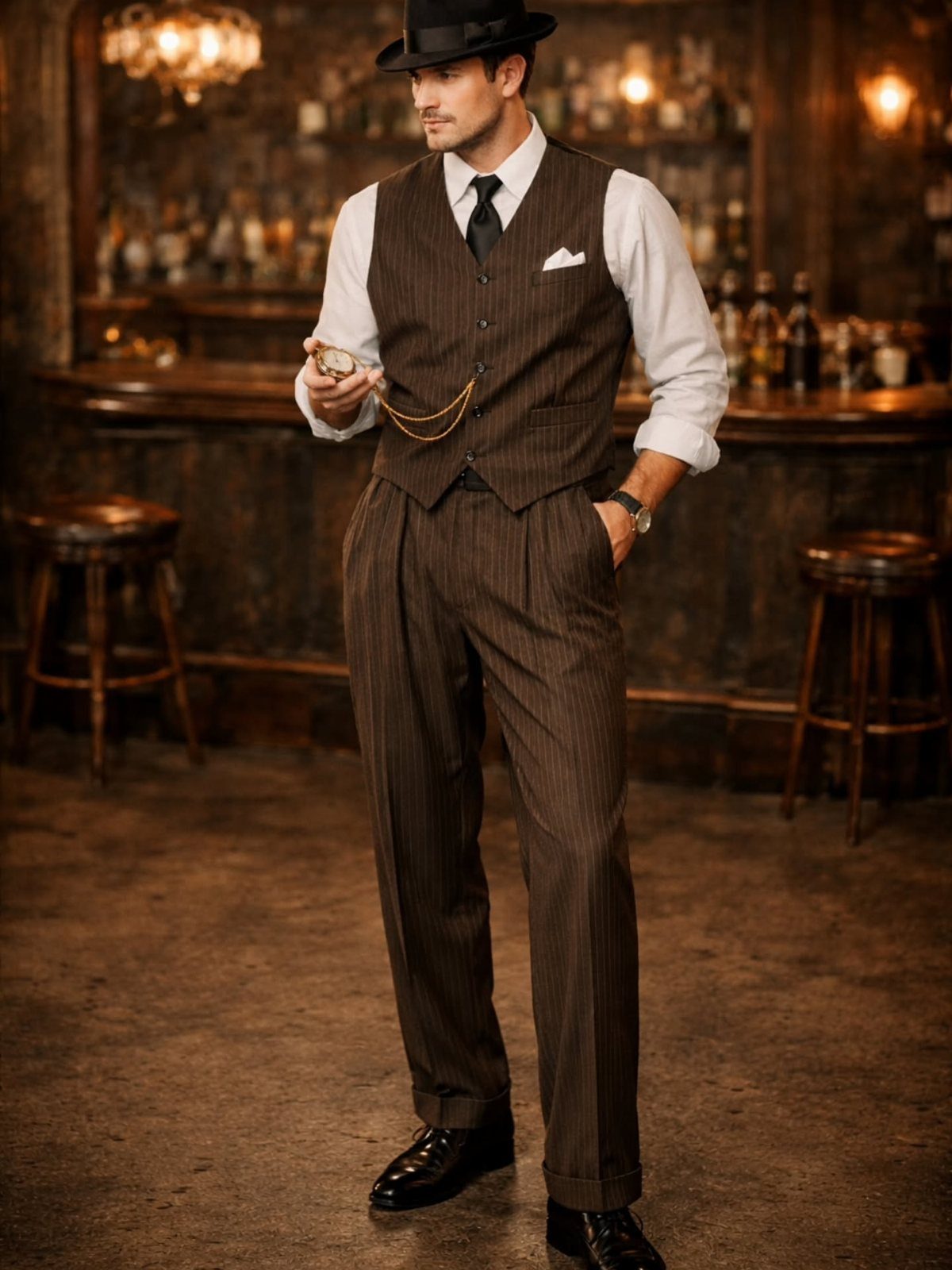
A pinstripe vest in brown or charcoal, worn over a white shirt and under a jacket or on its own, brings in the layered formality of the era without requiring a full suit.
Look for a slim vest with subtle vertical stripes that make the torso appear longer. A pocket watch on a chain adds period detail, but the vest works fine without it if you prefer to keep things simple.
Pair it with matching trousers or go tonal with a slightly different shade. Either reads as intentional rather than mismatched.
5. Crisp Collared Shirts
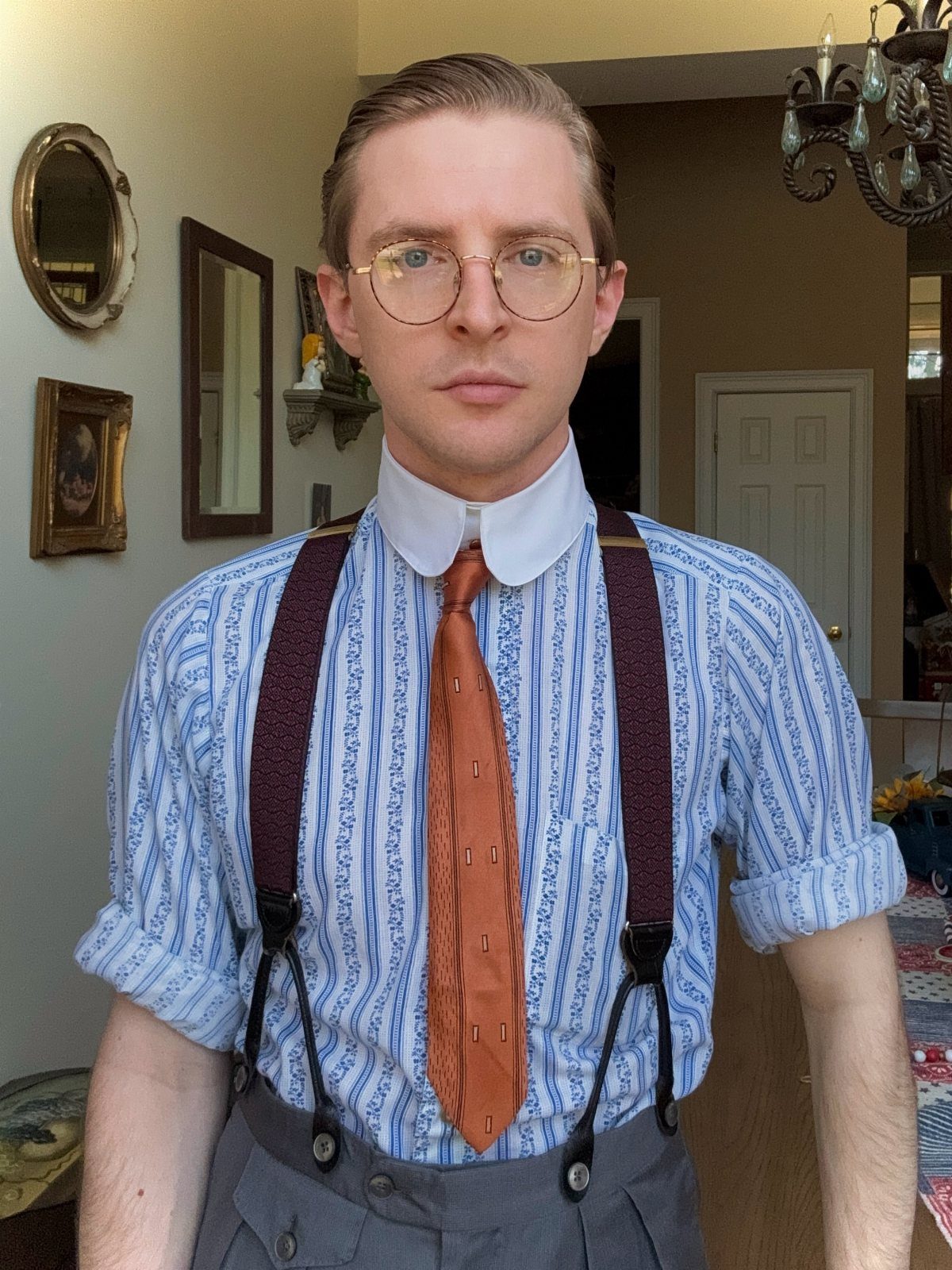
Detachable collars let you swap a fresh white collar onto a colored or patterned shirt, cutting down on laundry and giving you a crisper neckline.
A contrast collar in white against a colored shirt sharpens the transition to the tie, and collar studs hold the points in place.
You can buy reproduction detachable collars online, or wear a standard shirt with a club or spread collar if you want the look without the hardware.
Suspenders keep the trousers up and the shirt tucked without a belt, which keeps the waistline clean under a vest.
6. Vintage Overcoat and Fedora
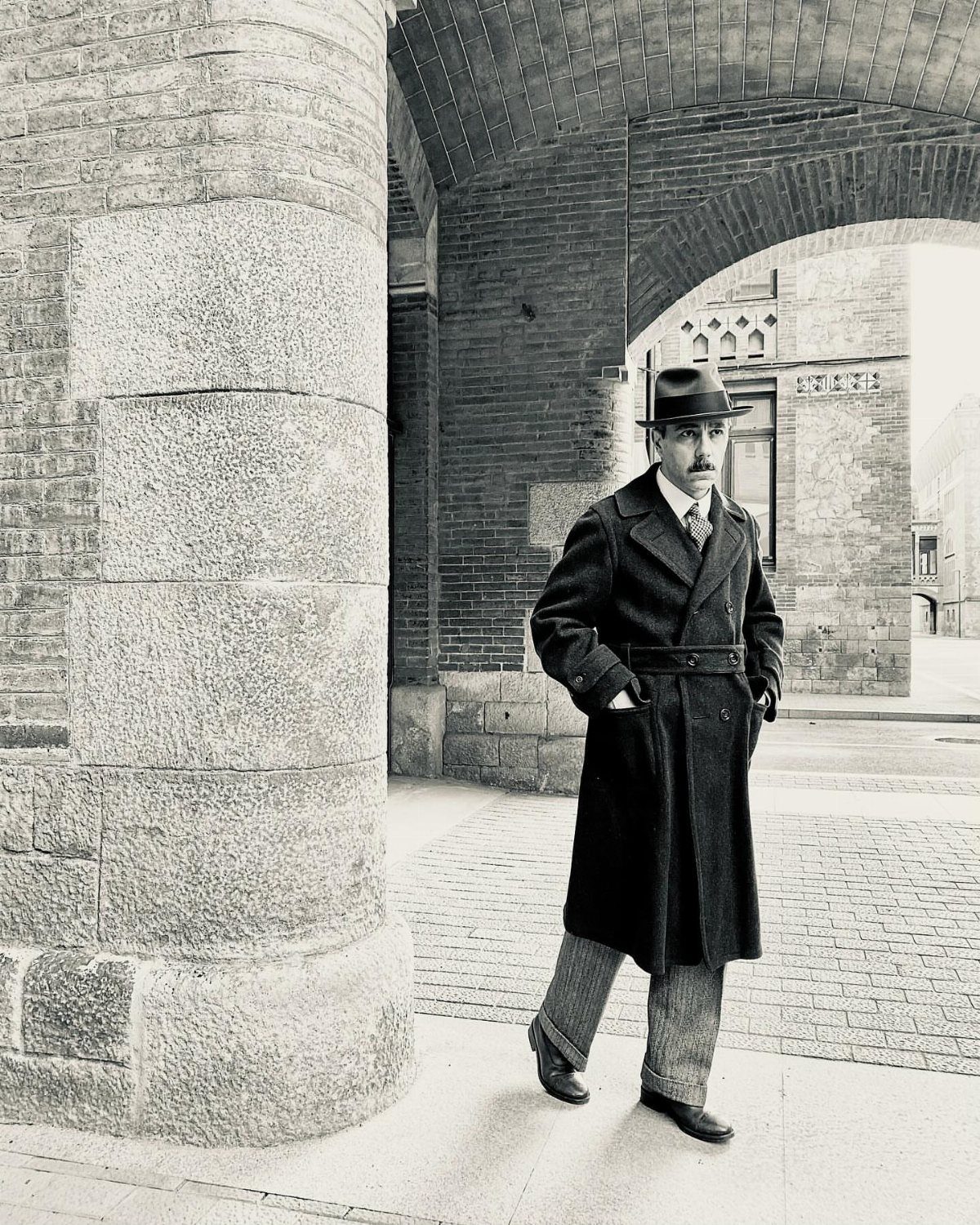
A long wool overcoat in charcoal or black, worn over pinstriped trousers and a fedora, gives you the silhouette of a 1920s businessman without needing much else.
The classic cut is single-breasted with notched lapels and a length that falls below the knee.
Pair it with a fedora in grey or black felt, and keep the brim medium width so it balances the coat rather than overpowering it.
This look works best in cold weather when the coat has a practical reason to be there. In warmer months, skip the overcoat and keep the fedora with a lighter suit.
7. Tweed Knickerbockers and Flat Caps
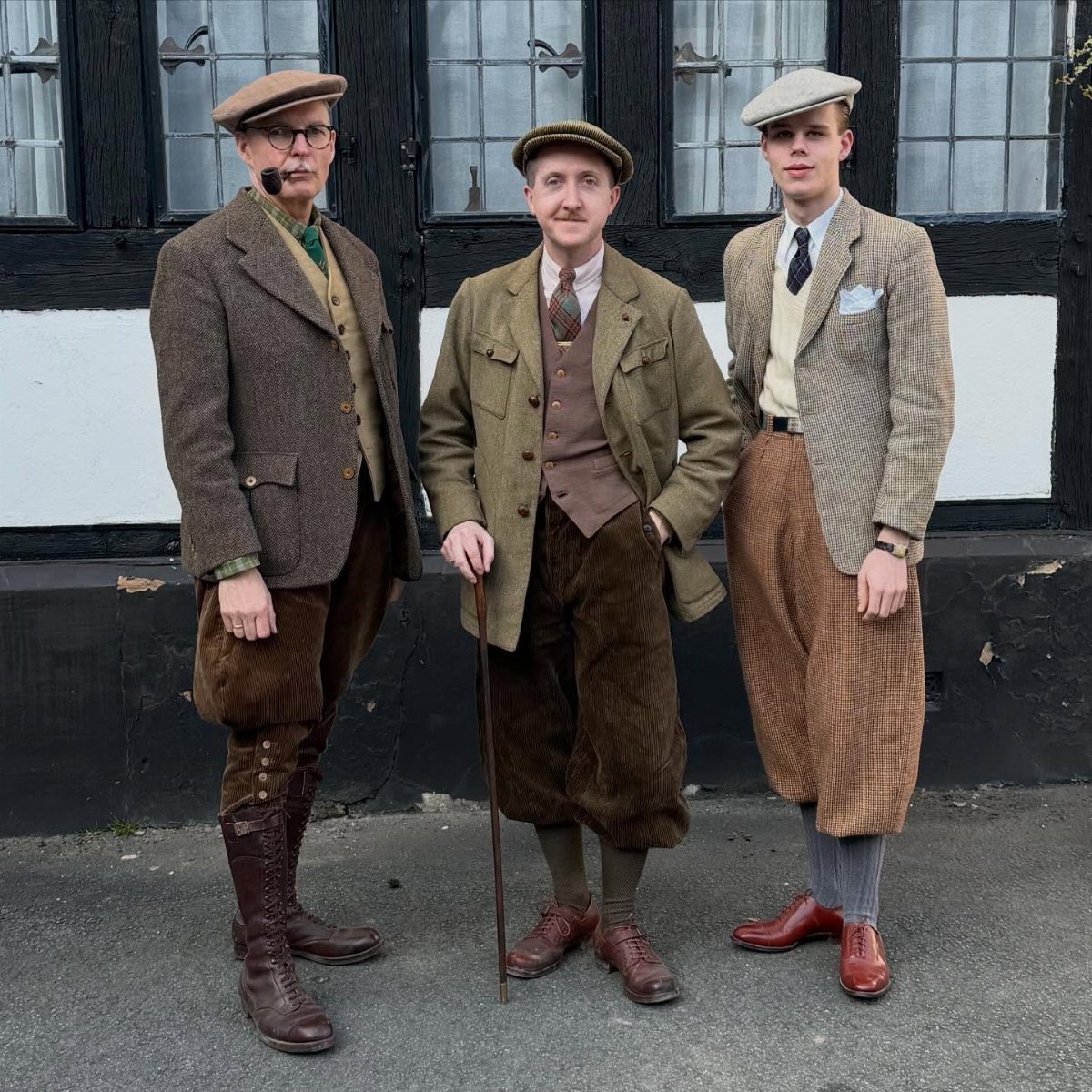
Knickerbockers cut the trouser at the knee and fasten with a button or buckle, creating a break that works with knee-high socks and tweed in a way full-length trousers don’t.
Pair them with a matching waistcoat and jacket in brown or grey tweed, and add a flat cap to finish the silhouette. The cap should sit forward on the head, not pulled back, so it keeps the proportions right.
This look suits cooler weather and outdoor settings where the formality of a full suit would feel out of place. For everyday wear, swap the knickerbockers for standard trousers and keep the cap and waistcoat.
8. Formal Top Hat and Tuxedo
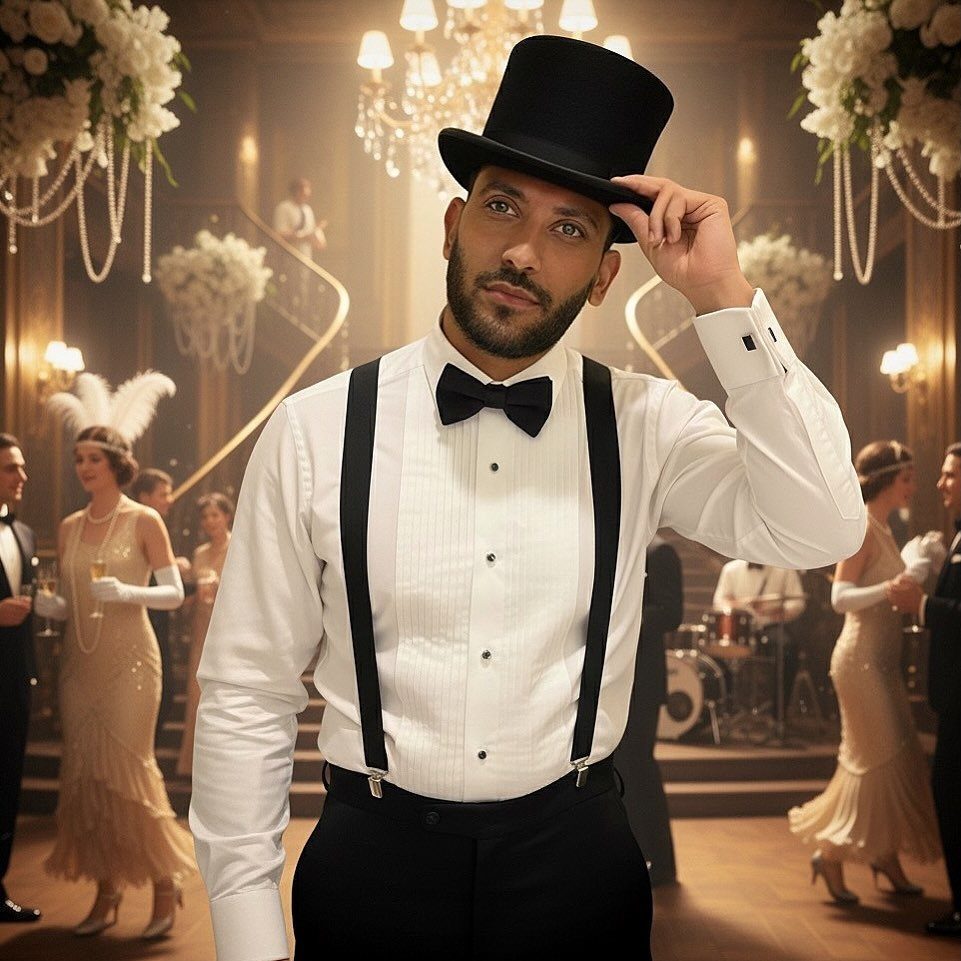
A top hat gives you the most formal version of 1920s menswear, reserved for evening events and white-tie occasions.
The shirt should be white with a wing collar, worn with suspenders rather than a belt to keep the waistline clean under the jacket.
A black or midnight blue tuxedo jacket completes the outfit, though the white shirt and bow tie carry most of the formality on their own.
This look only works when the event calls for it. Worn anywhere else, it reads as costume rather than dress.
9. Wingtip Oxford Shoes
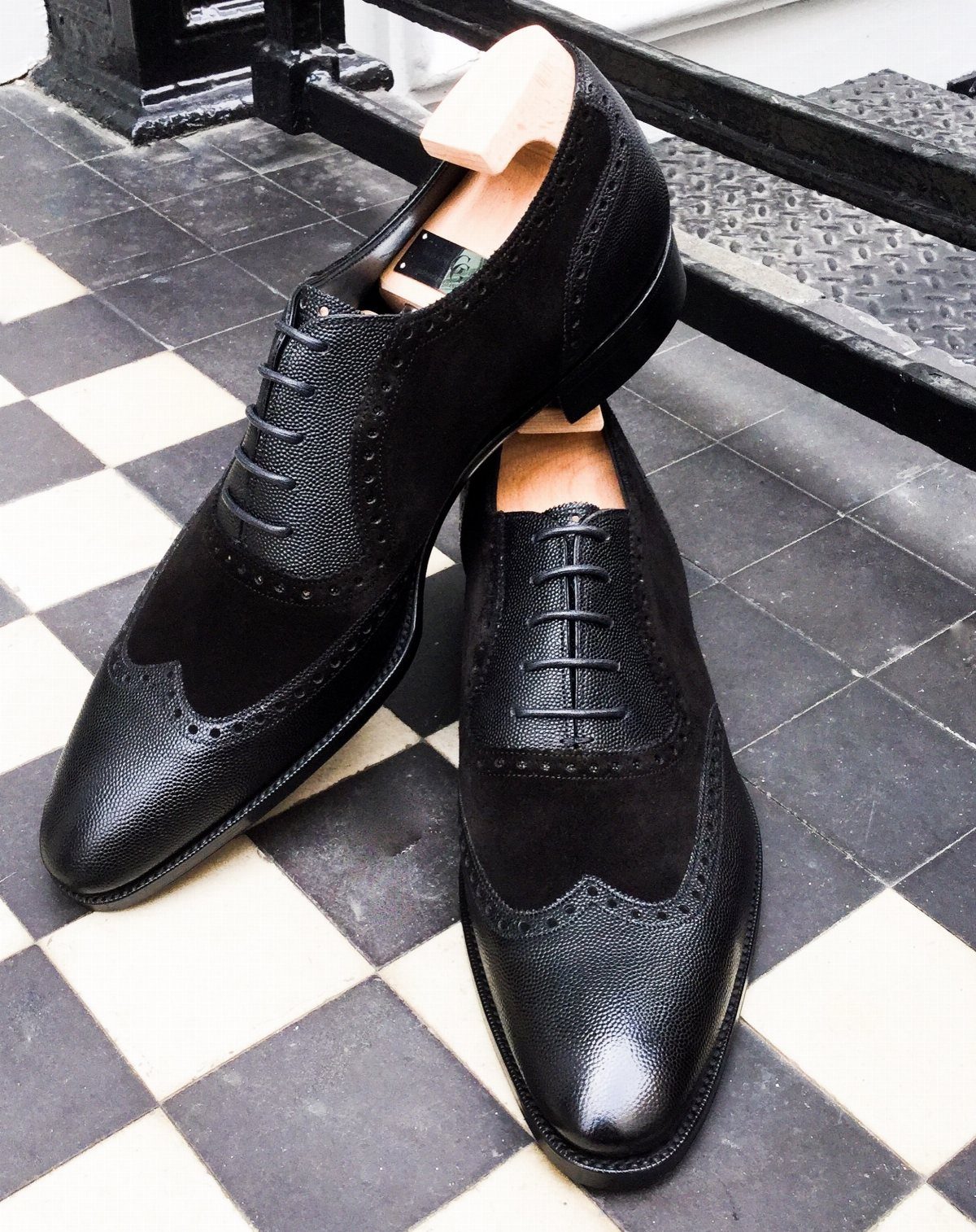
Wingtip oxfords in black leather with perforated brogue detailing across the toe and sides give you a formal shoe that still has texture and visual interest.
The perforations should be precise and symmetrical, and the shoe should lace cleanly up the instep. Pair them with a suit or dress trousers in grey, navy or black.
Polish them regularly to keep the leather from dulling. A matte or suede panel, if present, stays brushed rather than polished.
10. Great Gatsby 1920s Men’s Fashion
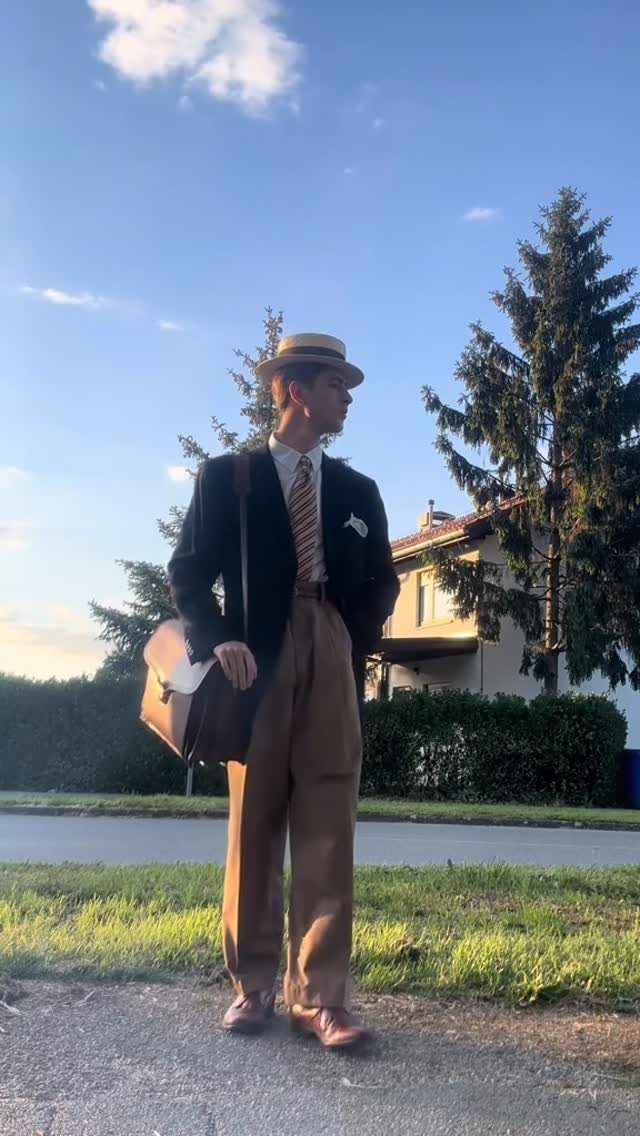
A boater hat, high-waisted trousers and a soft cardigan over a shirt and tie give you the relaxed side of 1920s style, worn for leisure rather than business.
The trousers should sit at the natural waist, held up with suspenders or a narrow belt, and the cardigan should be slim enough to wear under a blazer if needed.
The boater keeps a flat crown and a narrow ribbon band, usually in navy or black.
This outfit works for warm weather and daytime events where a full suit would be too much. Swap the cardigan for a linen jacket if you need more structure.
Grooming and Detail
Cufflinks in the 1920s were made from precious metals and carried intricate designs that showed how much care went into getting dressed. Tie pins held the tie in place and added another layer of finish to the neckline.
Ties in silk featured geometric patterns, stripes, or Art Deco motifs, tied at the collar for a structured appearance. The knot itself was relatively new at the time and added formality that earlier styles lacked.
A perfectly tailored suit, a crisp shirt without wrinkles, and accessories that coordinate in tone and metal finish make the difference between an outfit that references the period and one that actually holds together.
Small details like suspenders and pocket squares complete the look, but only when the fit and proportion are already right.
Historical Context
After World War I ended, men’s fashion shifted away from the rigid formality that had defined earlier decades.
A generation that had lived through the war wanted to leave its constraints behind, and that sense of liberation showed up in clothing that was more relaxed and comfortable.
The prohibition era, the rise of jazz, and Hollywood’s growing influence all shaped what men wore. Suits became less stiff, with jackets cut wider through the lapels and trousers that allowed more room through the leg.
Formal wear declined in favor of clothing that could move between settings without feeling out of place.
The three-piece suit remained the standard, but the way it fit and the way men wore it changed in response to a culture that valued ease and optimism over tradition.
Influence of Hollywood
Rudolph Valentino made the tuxedo a permanent fixture of evening wear, associating it with elegance in a way that stuck long after the silent film era ended.
The cut of his suits, those wide lapels and the hair slicked just so, became the template men wanted when they looked in the mirror.
Douglas Fairbanks wore breeches and high boots in his adventurous roles, and the look carried over into menswear for those who admired his on-screen persona.
Duke Ellington brought the same attention to clothing that he brought to music, favoring bold colors and intricate patterns in his suits and accessorizing with fedoras and pocket squares.
His sartorial choices influenced jazz musicians and audiences alike, making formal dress feel expressive rather than merely correct.
Frequently Asked Questions
What did men in the 1920s wear?
Wool suits in charcoal, grey and brown dominated, tailored close through the body and worn with white cotton shirts and printed silk neckties.
Accessories included fedoras, flat caps, wingtip oxfords, and two-tone shoes. Lapels widened and the cut relaxed slightly after the war, leaving behind the stiff tailoring of the Edwardian period.
What do you wear to a roaring twenties party?
A grey three-piece suit with a patterned tie and pocket square gives you the formal look, while high-waisted trousers, a soft cardigan, and a boater hat work for a more relaxed approach.
Add wingtip oxfords or two-tone shoes, and finish with a fedora or flat cap. Keep the fit close through the waist and chest, and use suspenders instead of a belt to hold the silhouette together.