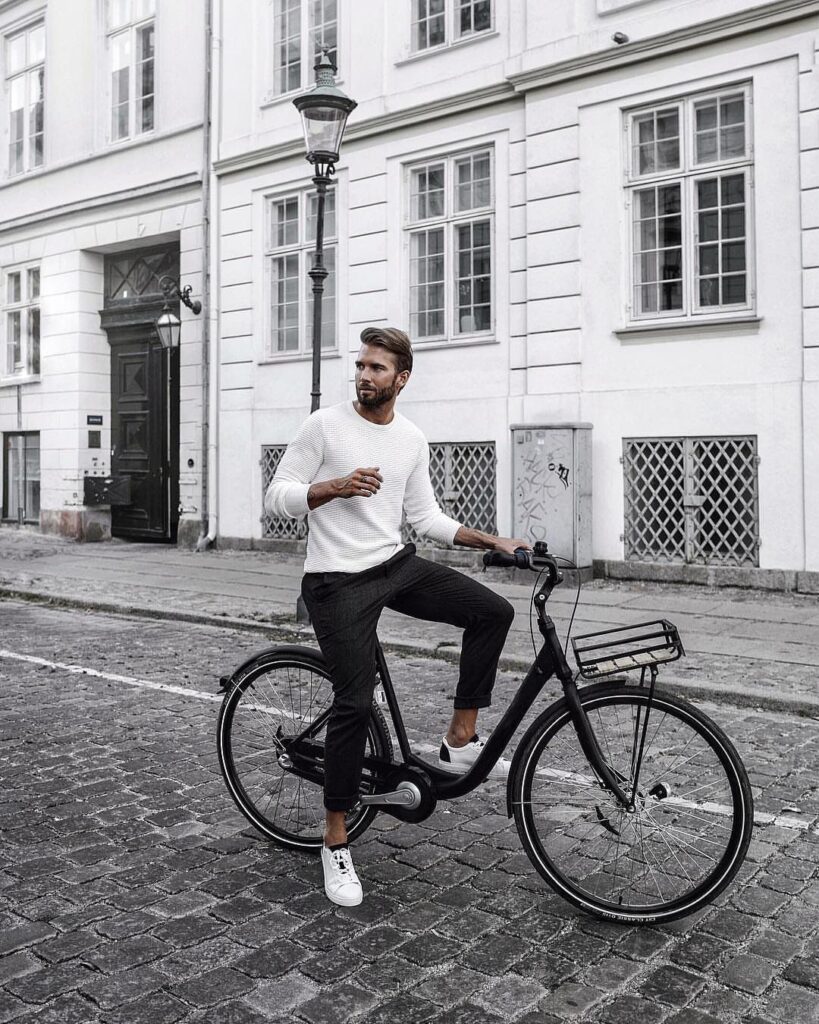
Copenhagen street style runs on restraint: neutral basics paired with one or two considered pieces, then stop.
The balance shifts depending on whether you want to soften tailoring with sneakers, anchor a bright print with quiet trousers, or layer texture while keeping the silhouette clean.
Start with navy, beige, grey, and black, then add orange, cobalt, or pink when you need energy.
1. Street Style Inspiration
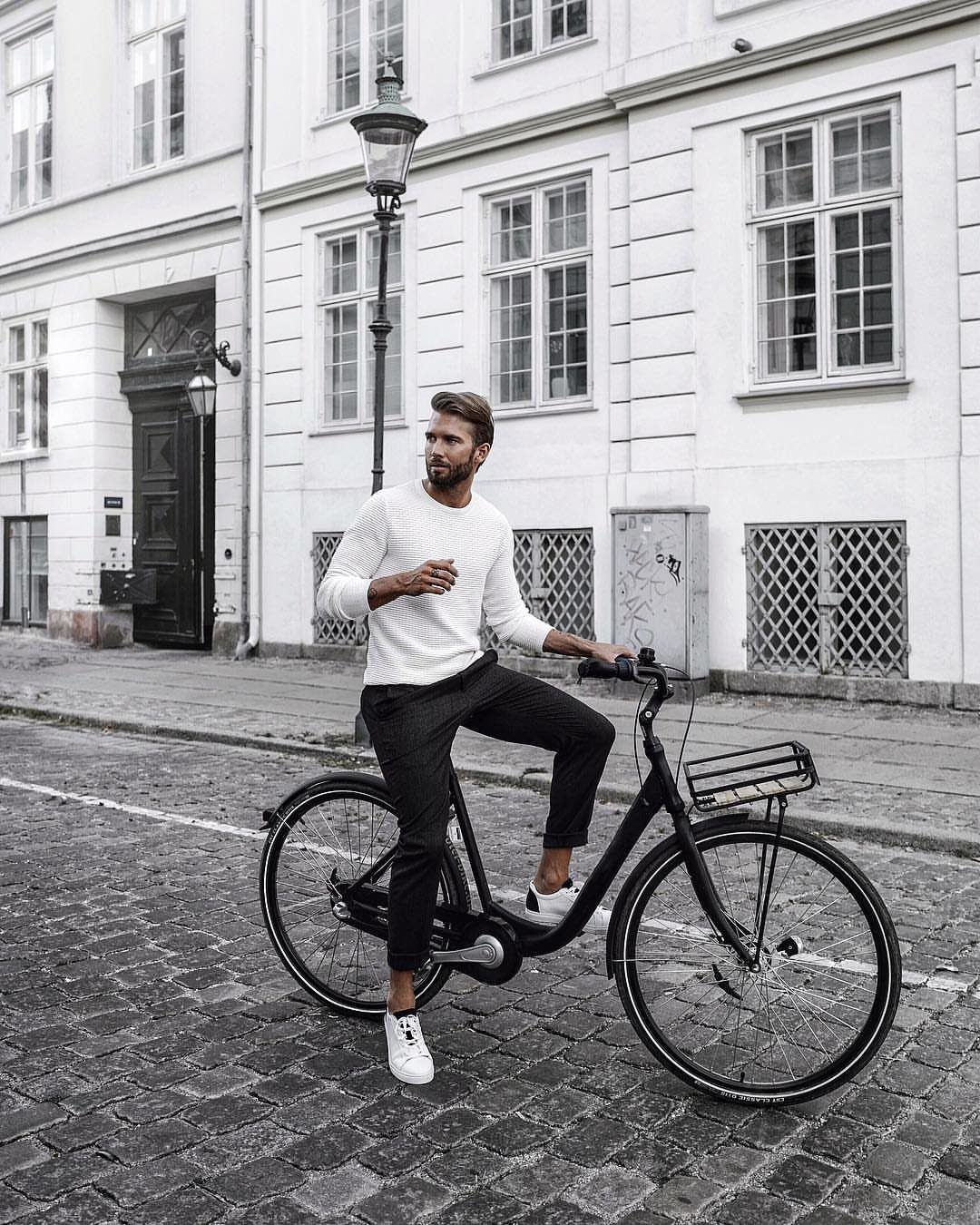
Copenhagen street style runs on restraint. The looks that work best pair neutral basics with one or two considered pieces, then stop.
What you see most often: clean sneakers, fitted trousers, a sweater or shirt in white, grey, or navy. The palette stays quiet, the fit stays close without pulling, and the whole thing reads casual but intentional.
It suits men who want to look sharp without standing out. Build from a few pieces that mix well, keep the colors easy, and let the fit do the work.
2. Oversized Shirts, Jackets, and Knits
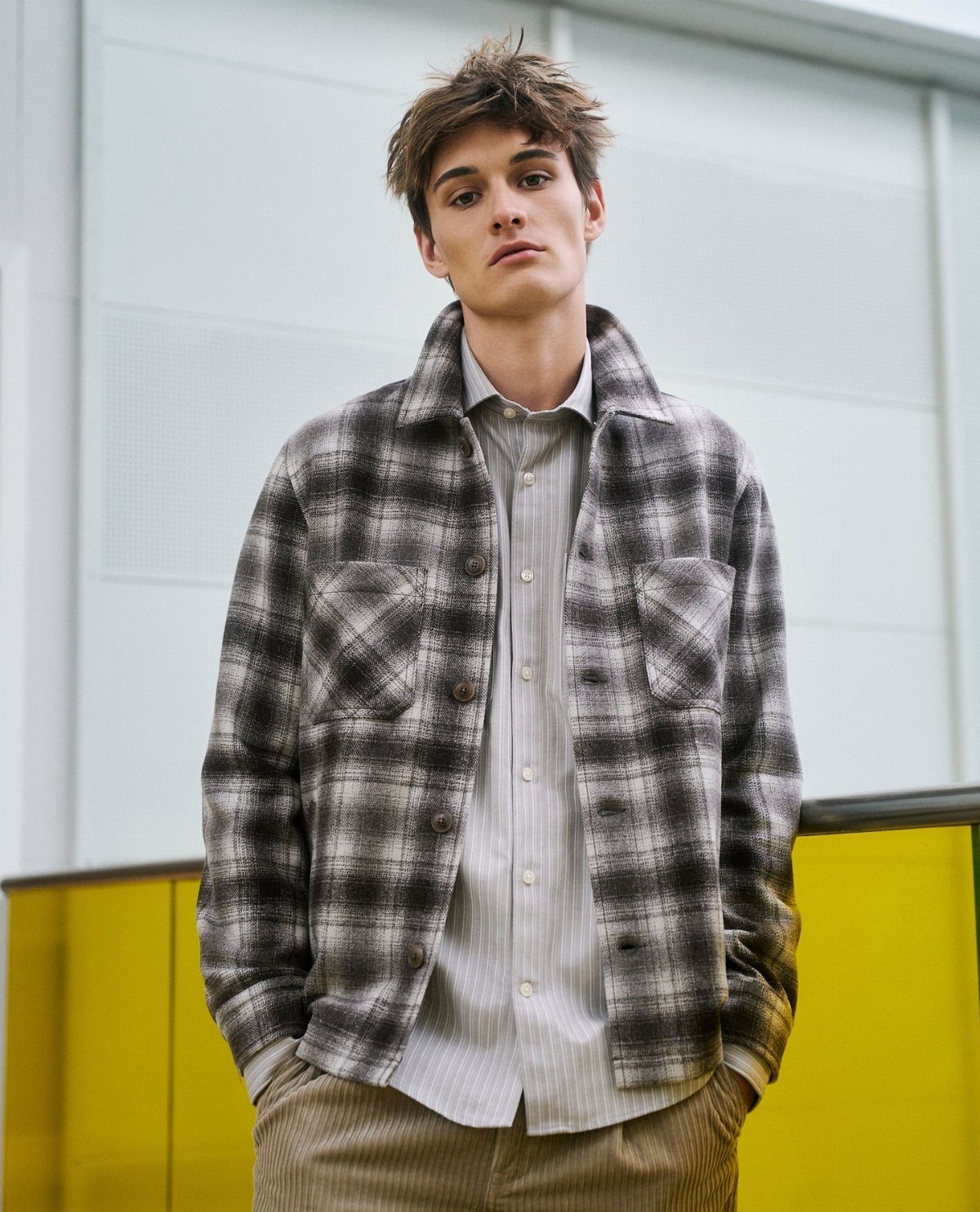
An oversized fit softens a structured piece. The plaid jacket sits loose through the shoulders and chest, giving the fit room to breathe.
Pair it with slimmer trousers to balance the volume. The corduroy adds texture without competing with the plaid, and the stripe underneath breaks up the weight of the outer layer.
If the jacket runs too big, the sleeves will cover your hands and the hem will hang past your hips. Look for one that stops at mid-hip and leaves about half an inch of cuff showing.
3. Bold Colors and Prints
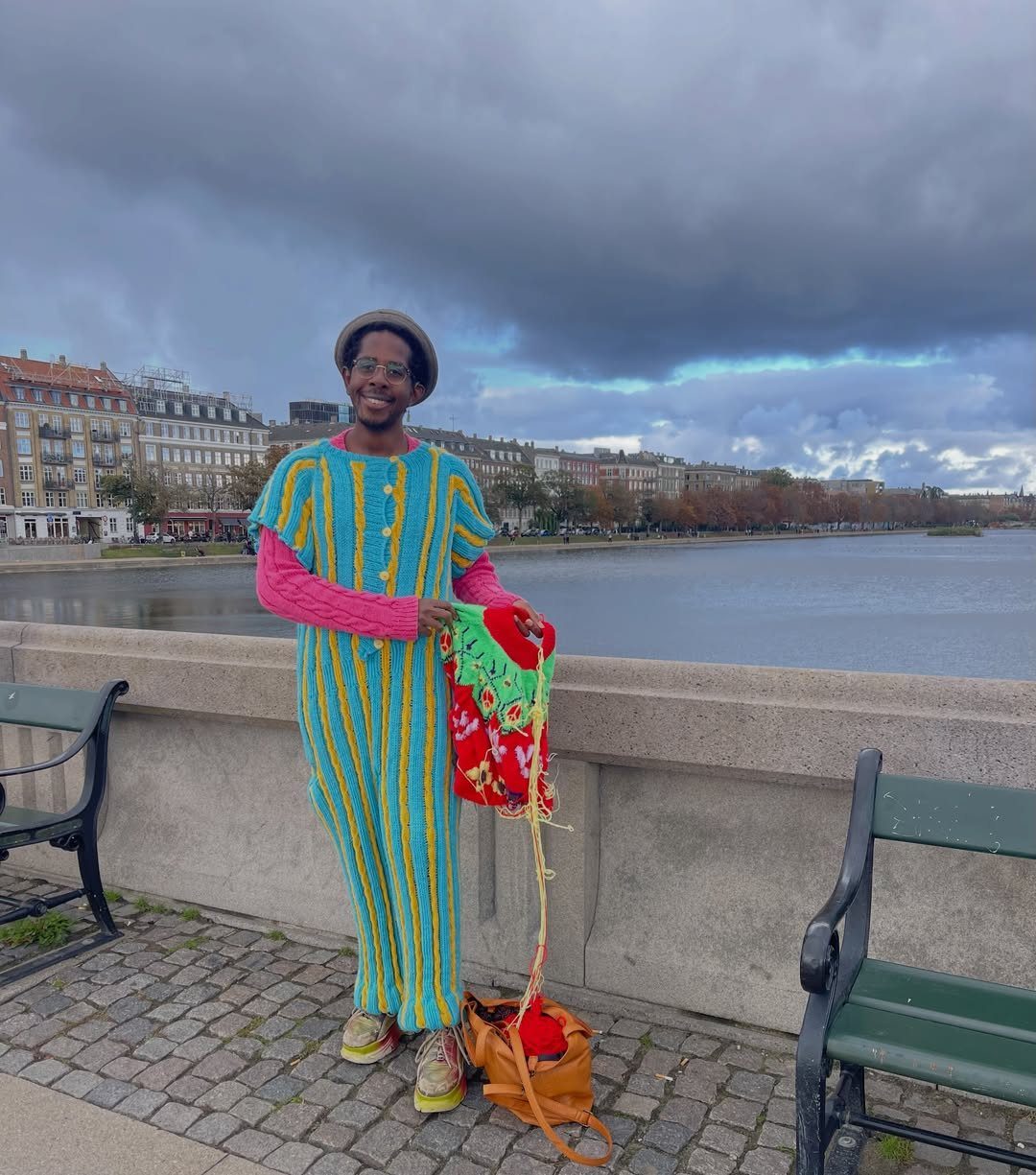
Bright colors and bold patterns give an outfit energy. The striped knit here covers most of the body, so the rest of the look stays simple.
Wearing a print this loud means limiting the palette elsewhere. The pink shirt underneath picks up one color from the stripe, and the accessories keep the same warm tones.
If you are not ready to wear head-to-toe pattern, start with a striped sweater over a plain shirt. The knit does the work, and the base stays neutral.
4. Loafers, Chunky Boots
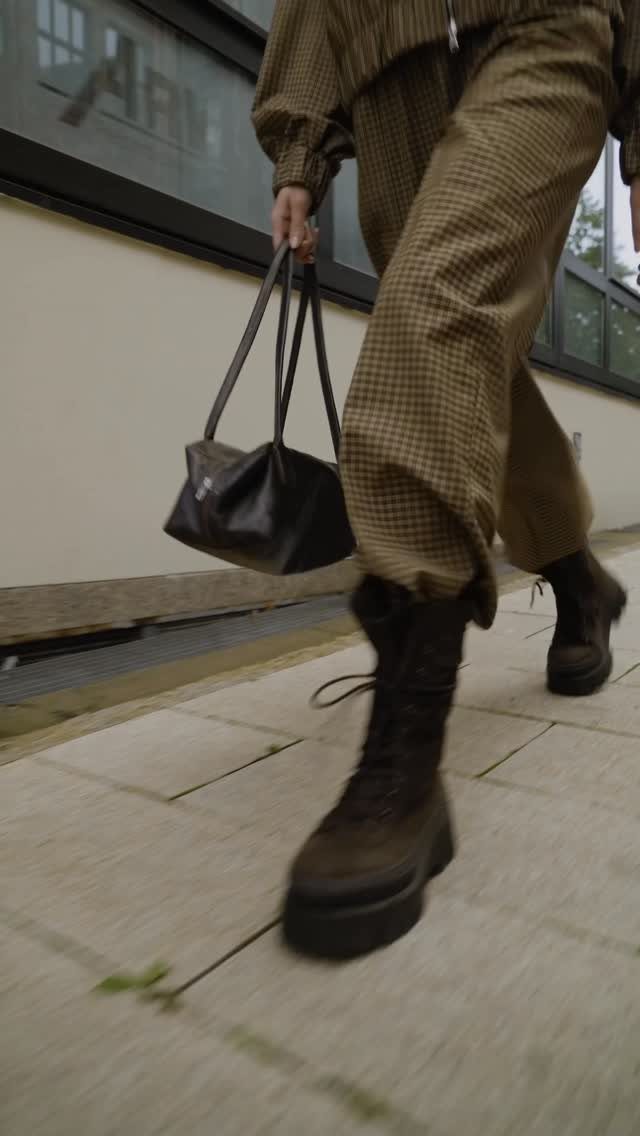
Chunky boots ground an outfit. The black lace-up pair here anchors the brown checkered set, adding weight and contrast to a lighter palette.
Loafers work when you want something refined, boots when you need more presence. The thick sole lifts you slightly and the extra leather makes the shoe read formal enough for tailored trousers.
If your trousers taper at the ankle, size the boot so it sits snug against the leg. A wide boot opening under a slim trouser looks unfinished.
5. Tailored Blazer with Sneakers
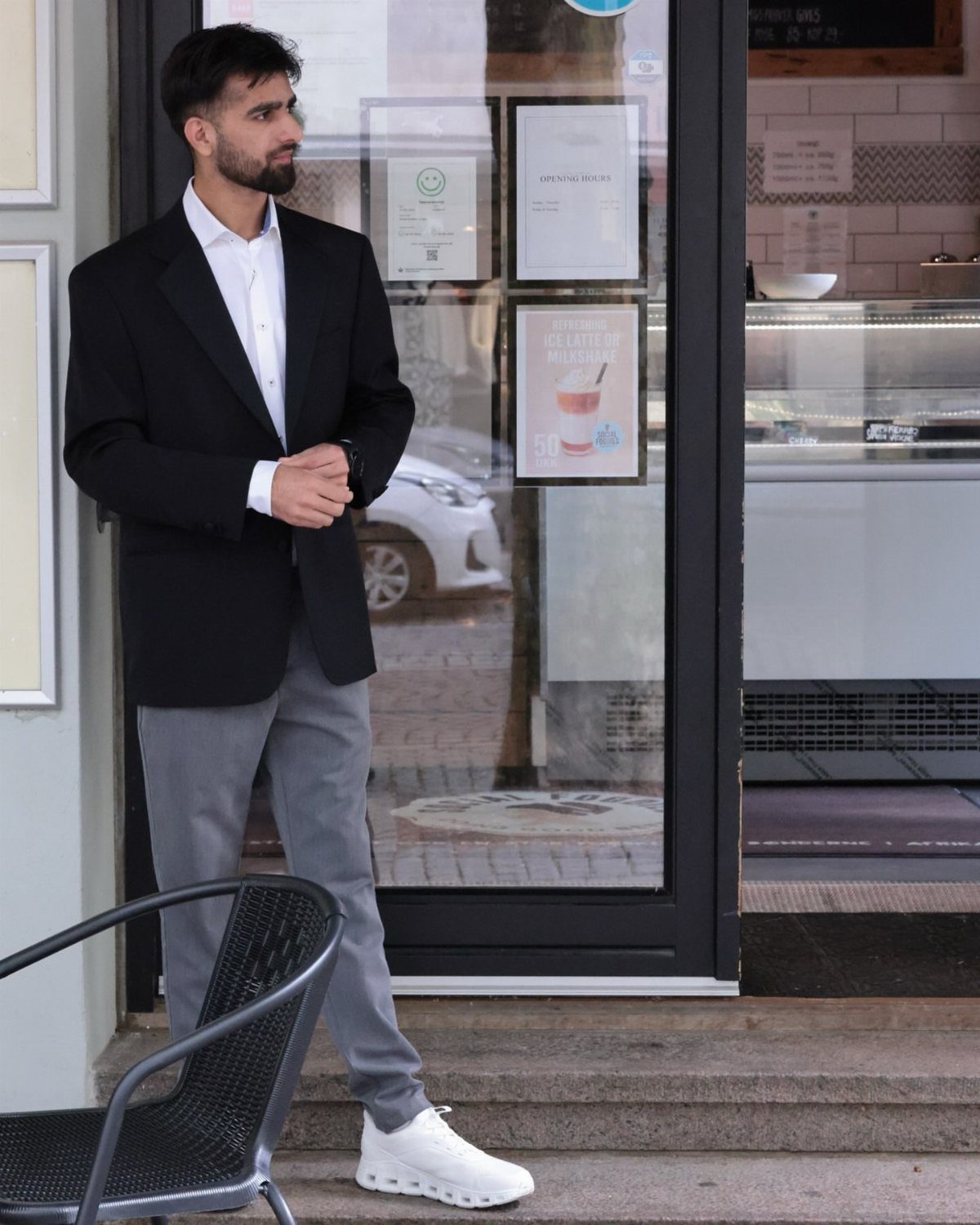
A tailored blazer pairs with sneakers better than most men expect. The black jacket and grey trousers here keep the top half structured, and the white sneakers soften the formality without undoing it.
The contrast works because the blazer fits well. If the shoulders are too wide or the waist too loose, the sneakers will make the whole thing look casual in the wrong direction.
Stick with clean, low-profile sneakers in white or grey. A chunky sole or bright accent pulls focus away from the tailoring.
6. Minimalist Beanie and T-Shirt Outfit
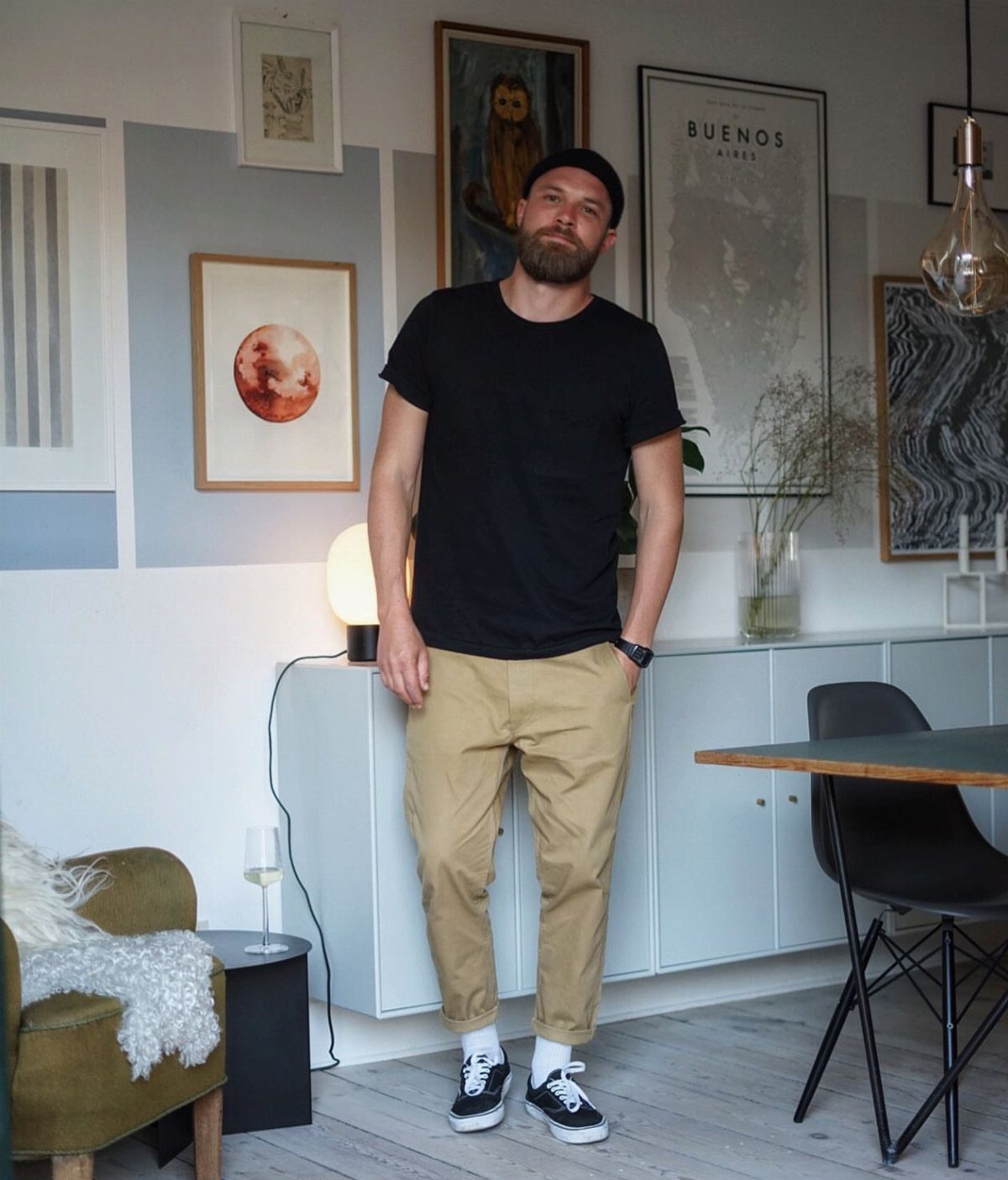
A fitted black t-shirt, tan trousers, and a beanie form a minimal outfit that still reads intentional. The colors stay neutral, the fit stays clean, and the beanie adds just enough detail to separate this from basics thrown together.
The t-shirt should sit close through the chest and shoulders without pulling. If it hangs loose, the silhouette softens and loses shape.
Keep the trousers slim or straight. A wide leg changes the proportions and makes the t-shirt look too small by comparison.
7. Turtleneck and Corduroy Jacket
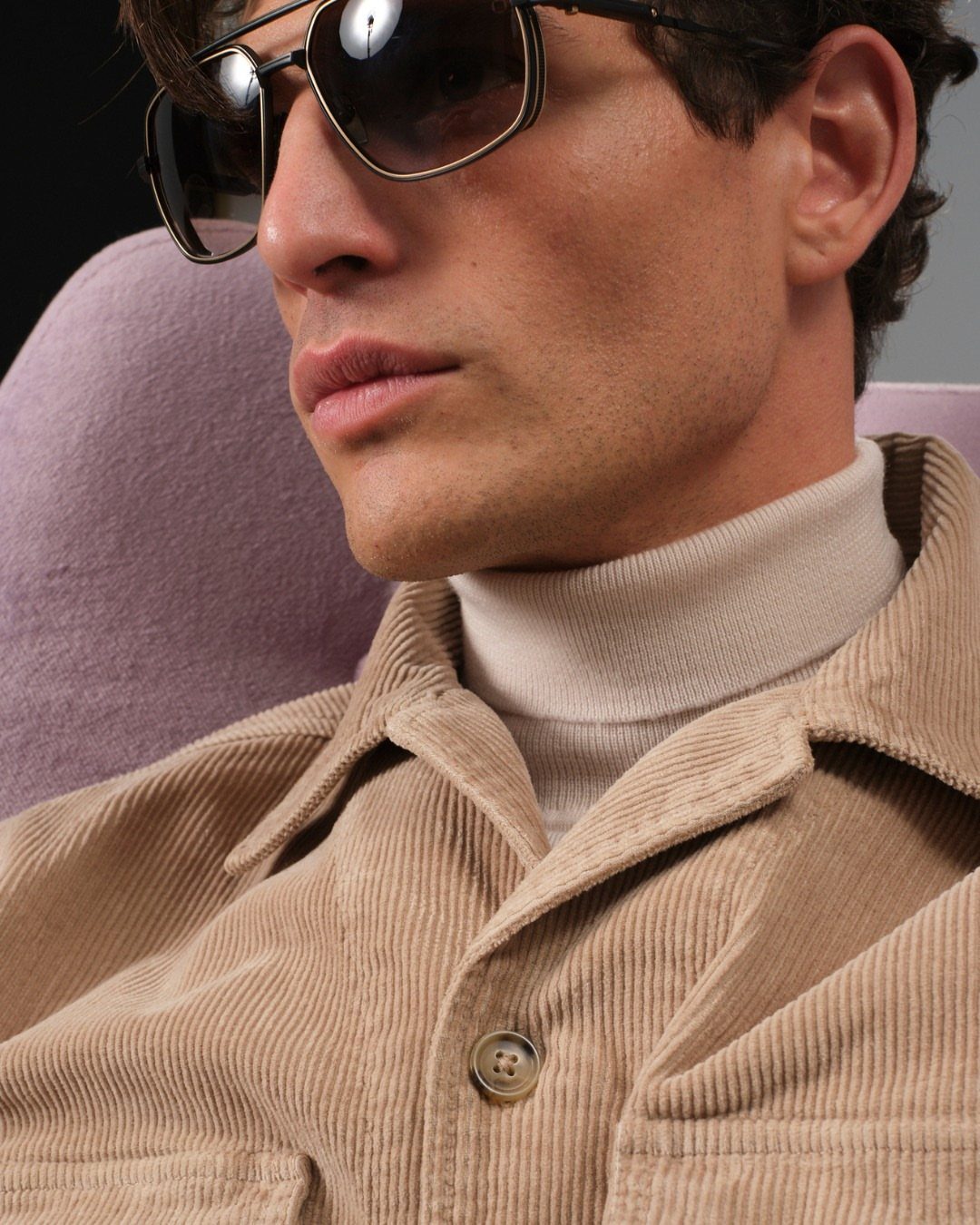
A white turtleneck under a corduroy jacket layers texture and stays trim. The knit sits close to the neck and the jacket drapes over it, giving you warmth and a clean silhouette.
Corduroy in tan or camel works with most neutrals. The ribbed surface catches light differently than smooth cotton, so the jacket reads as a separate layer even when the colors stay quiet.
If the turtleneck bunches under the collar, size down or choose a finer knit. The fabric should lie flat against your chest.
8. Denim Shirt with Cropped Trousers
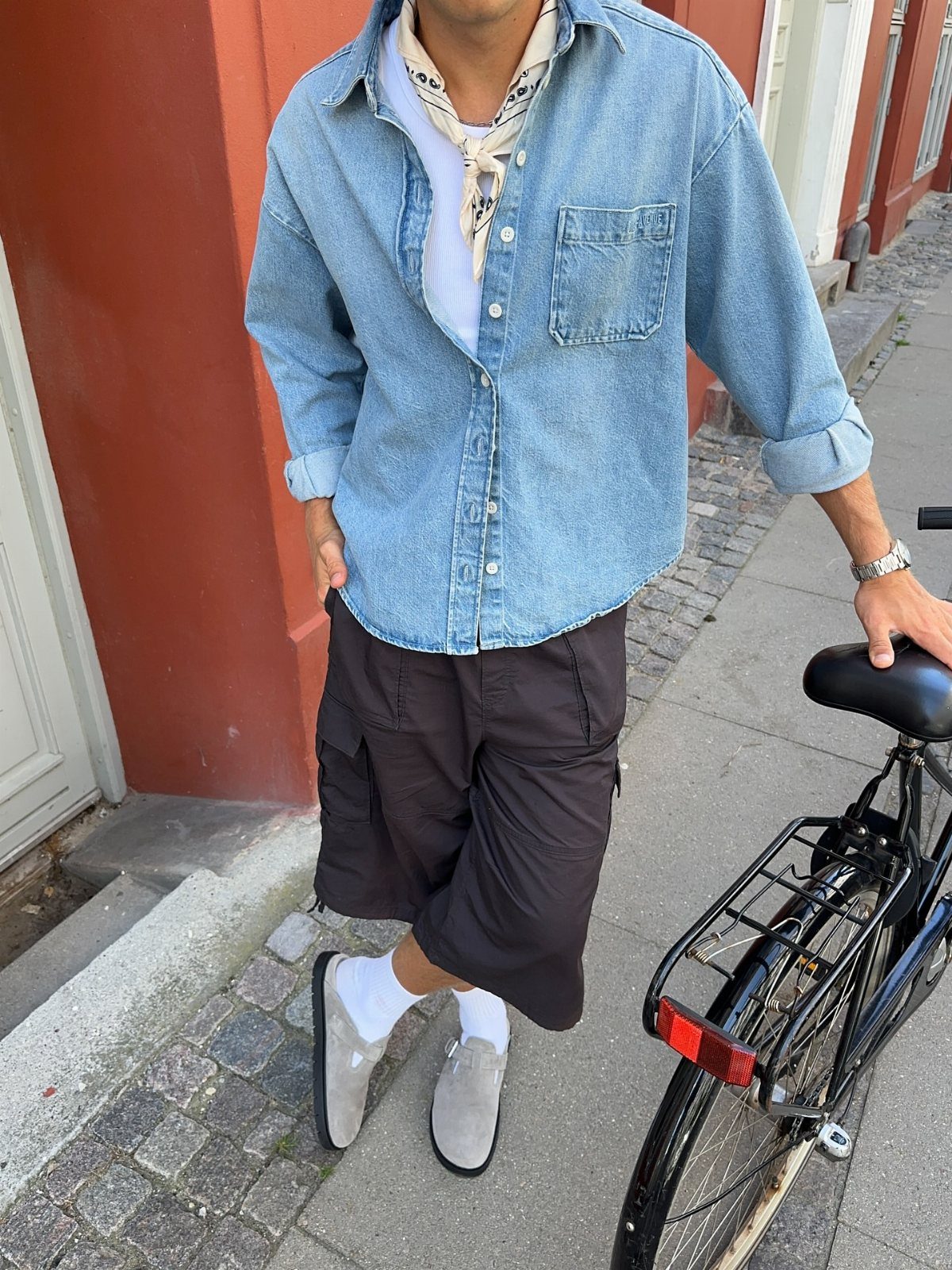
An oversized denim shirt worn loose gives you room through the body without losing shape. The light blue here sits over cropped black trousers, and the proportions balance because the trouser stays fitted.
Cropping the hem to show ankle and sock adds a break in the silhouette. White socks and grey clogs keep the palette simple and the look relaxed.
If the shirt runs too long, it will cover the crop and flatten the outfit. Look for one that stops at mid-thigh or cuff the sleeves once to adjust the length.
9. Tan Trench Coat with Baseball Cap
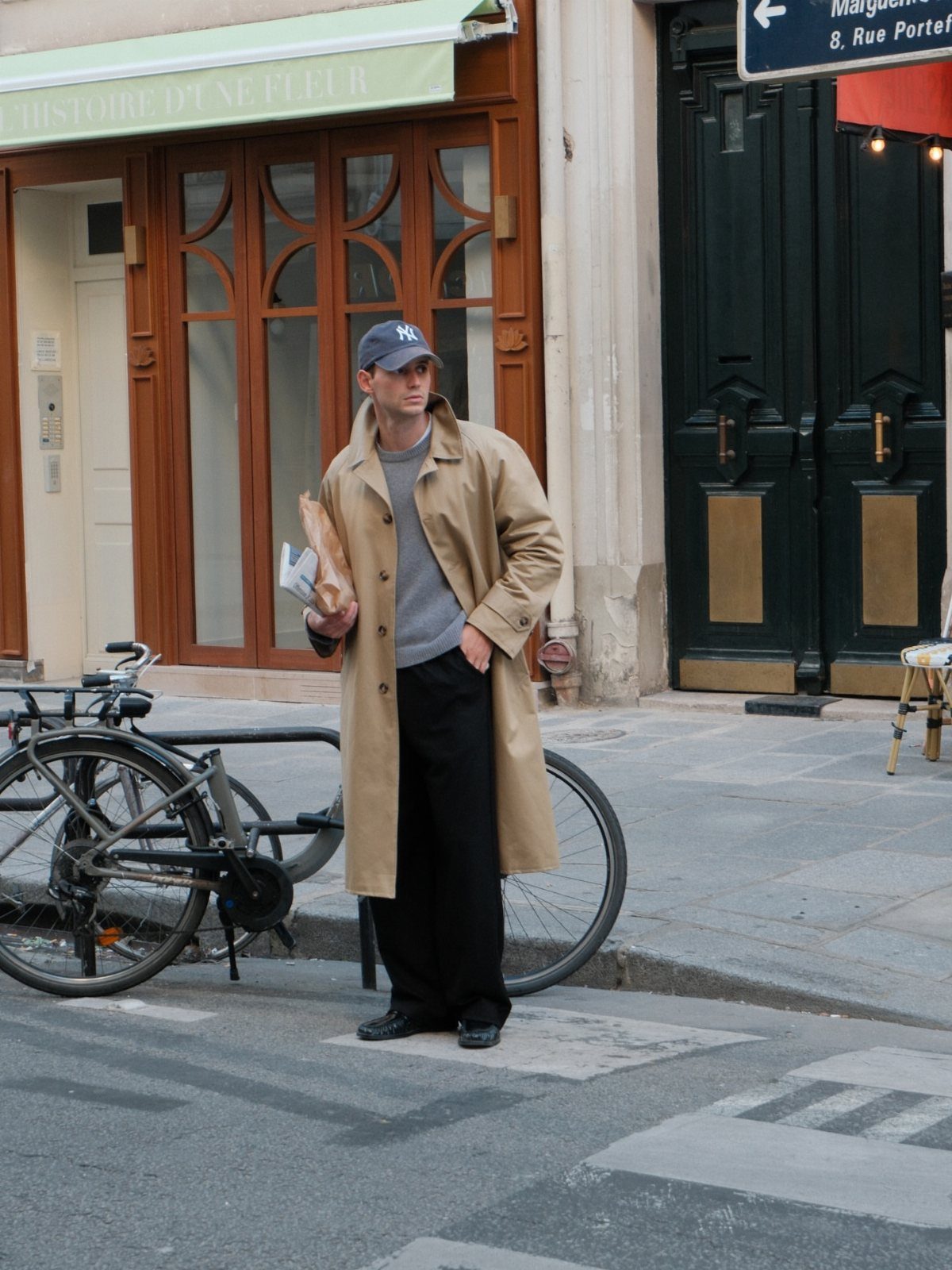
A trench coat in tan softens tailoring with a baseball cap. The grey t-shirt and wide black trousers here keep the middle casual, and the cap pulls the whole thing away from formal without making it sloppy.
The trench should hit just below the knee. Any longer and it drags the line down, any shorter and it reads more like a jacket.
Pair it with a fitted cap in navy, black, or a muted color. Bright logos or mesh backs will compete with the coat.
10. Long Black Overcoat with Wide Trousers
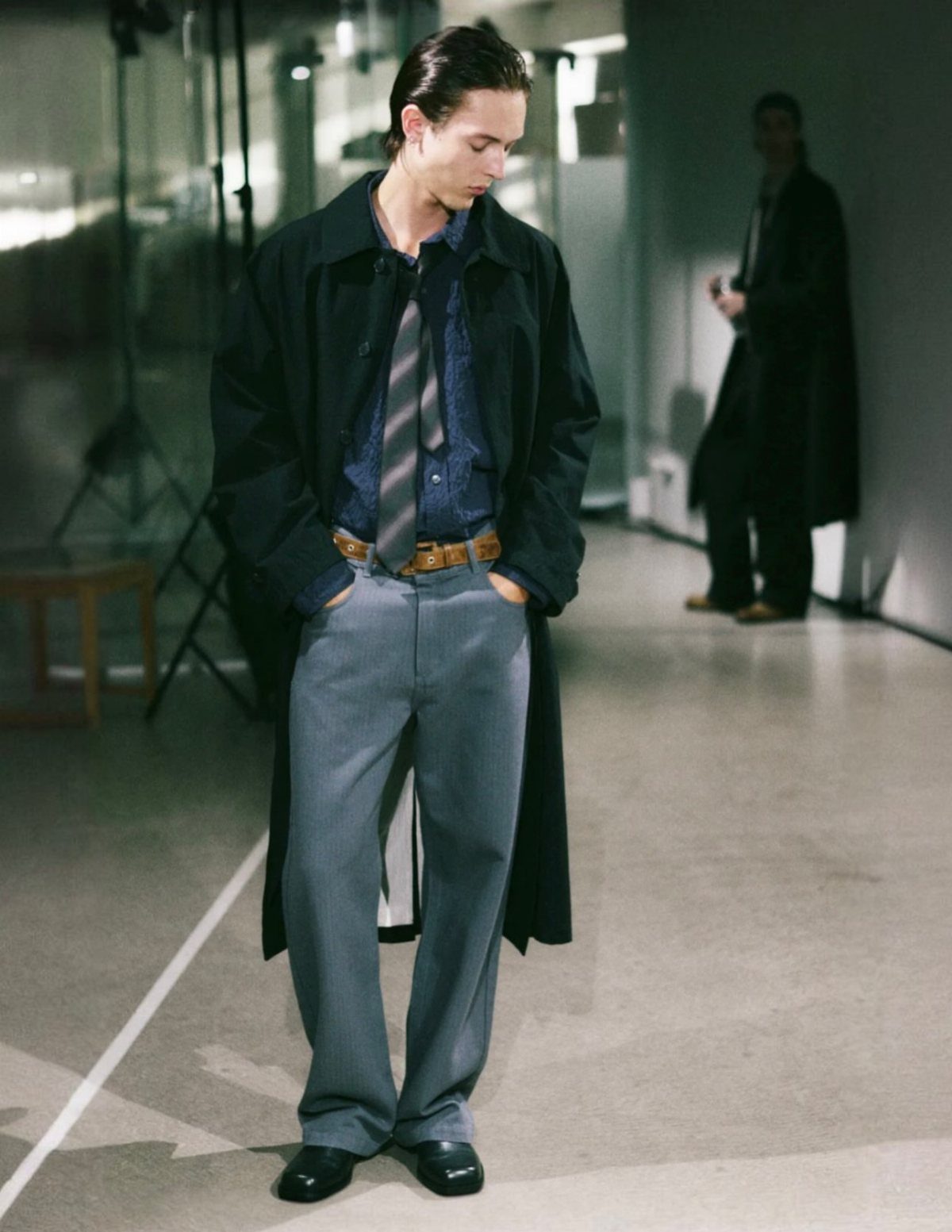
A full-length black overcoat lengthens your frame and anchors a dressed-up look.
The coat should skim your body, not pull tight across the chest or hang loose at the waist. If it fits well, you can wear it open and the silhouette still reads clean.
Wide trousers work because the coat is long enough to match the volume. A shorter coat with the same trouser will look bottom-heavy.
11. Draped Sweater Over Button-Down
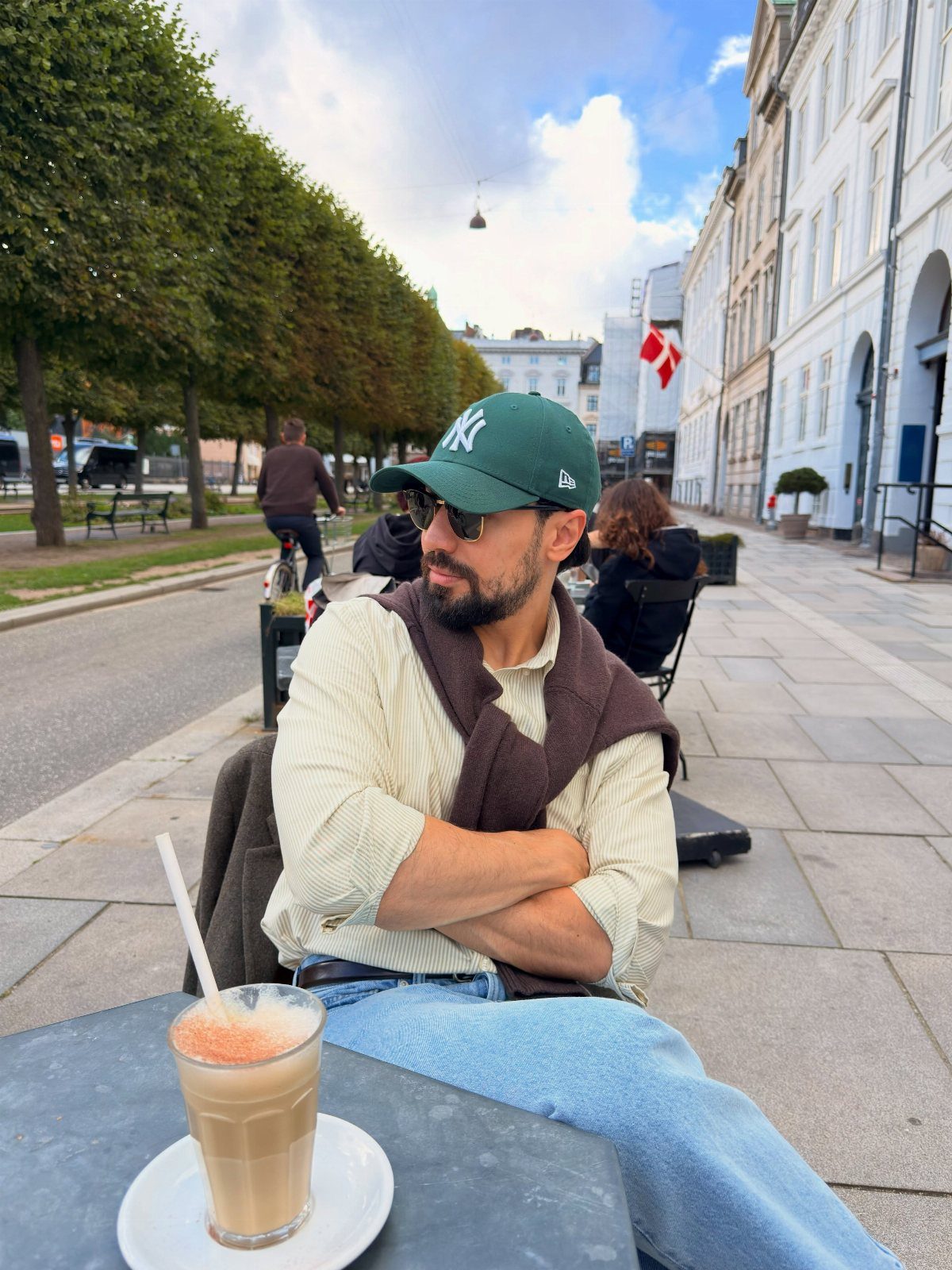
Draping a sweater over your shoulders adds a layer you can drop when you need it. The brown knit here sits over a button-down, and the sleeves hang in front without fastening.
This works best with a midweight sweater that holds its shape. If the knit is too heavy, it will slide off, and if it is too thin, it will bunch and look accidental.
Keep the shirt fitted so the sweater has something structured to rest on. A loose shirt underneath makes the whole thing look unsettled.
Copenhagen Fashion Week
Copenhagen Fashion Week runs twice a year, bringing together Nordic labels like Ganni, Acne Studios, and Stine Goya alongside smaller local brands. The shows blend minimalism with streetwear, and the presentations lean toward sustainability and function over spectacle.
Street style during the week leans heavily on neutral palettes broken by single bright pieces. You will see tan trench coats, grey sweaters, black trousers, and one pop of tangerine or cobalt to lift the look.
The event sits outside the main circuit of London, Paris, and Milan, but the styling holds up. Attendees wear well-cut basics layered with intention, and the results read effortless without looking careless.
If you want to see how the aesthetic works in practice, search for street style coverage from the most recent season. The looks repeat the same principles: close fit, quiet color, and one or two pieces that do the talking.
“There’s probably over 40 Danish menswear brands now. It’s fucking insane,” says Nikolaj Hansson, the founder of Palmes, a local label that makes tennis-inspired gear.
— GQ
Danish Design Philosophy
Danish design philosophy puts function and quality ahead of trend. The culture builds clothing around pieces that last, fit well, and work together across seasons.
That approach shows in the cut and fabric choices. You get trousers that hold their shape after a full day of wear, sweaters knit tightly enough to block wind, and coats that skim the body without pulling tight.
The construction focuses on durability, and the silhouette stays clean because the tailoring does not rely on embellishment.
The balance between modernity and tradition comes through in how the pieces combine. A classic trench coat pairs with sneakers, a structured blazer sits over a t-shirt, and the mix reads current without abandoning the basics.
The result is a wardrobe built for cycling, walking, and spending time outdoors in variable weather.
Comfort matters, but the fit stays intentional. The look works because the pieces are built to hold up under real use.
Color Palette Trends
Copenhagen fashion runs on 2 color strategies.
The first keeps everything neutral: navy, beige, camel, grey, black, and white. The second adds one or two bright accents to a neutral base.
When color appears, it shows up as tangerine, fuchsia, emerald, or cobalt.
These sit against the quiet backdrop and give the outfit energy without covering the whole body. A bright sweater over grey trousers, a cobalt jacket with black pants, or a fuchsia scarf over a tan coat.
The palette also allows for unexpected pairings.
Pink and red together, or brown and blue, create contrast that reads modern without clashing. The combinations work because everything else you’re wearing stays restrained.
If you want to try this, start with one bright piece and build the rest in neutrals. The color does the work, and the base holds it in place.
Frequently Asked Questions
What are people wearing in Copenhagen right now?
Oversized silhouettes paired with slimmer pieces form the base of most outfits, along with neutral colors like navy, beige, and grey broken by single bright accents in tangerine, fuchsia, or cobalt.
Chunky boots and clean sneakers show up more than dress shoes, and layering runs heavier on knitwear and corduroy than structured suiting.
What is Copenhagen fashion style?
Copenhagen style pairs minimalism with practical design, building outfits from well-cut neutral basics and adding one or two bold pieces for contrast.
The aesthetic blends function and quality, favoring pieces that last and work across seasons rather than following trend cycles. Comfort matters as much as fit, and the look reads modern without abandoning classic tailoring.