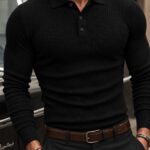
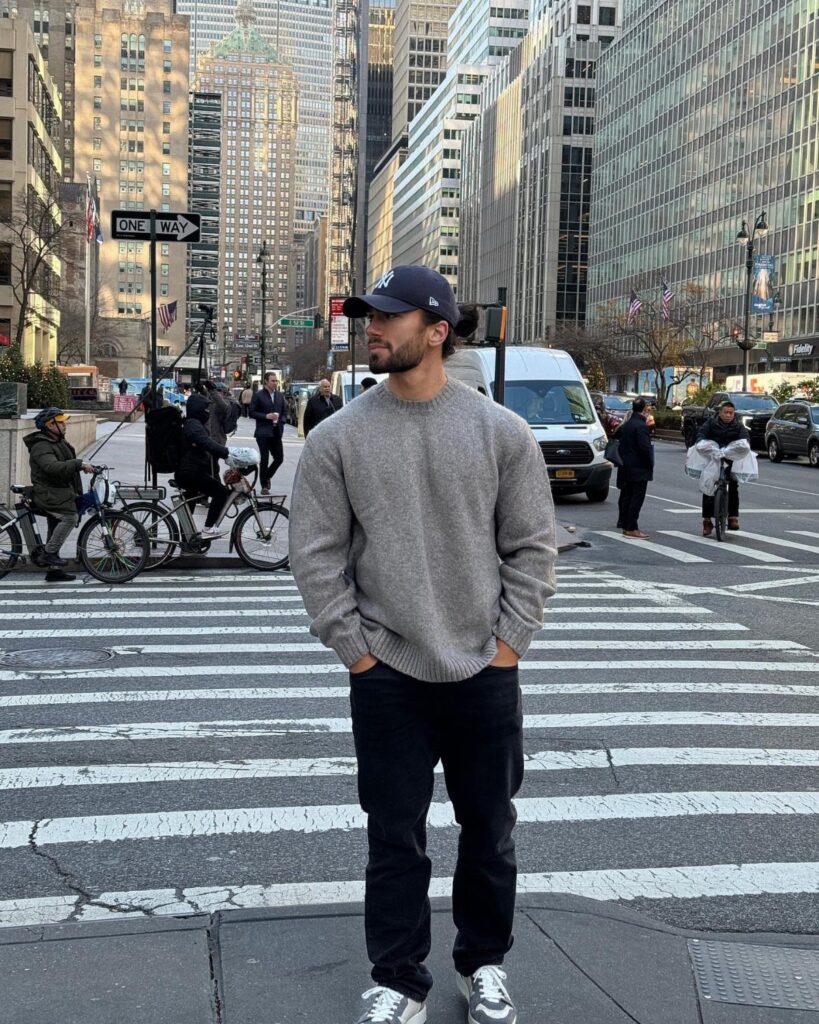
An oversized knit that sits a full size up balances a frame that’s narrow on top, while a navy blazer over jeans splits the difference between a suit and a hoodie.
The right choice depends on where you’re going: a structured overcoat and boots work for cold weather, a plain tee with comfortable trousers works when you want simple and clean, and keeping things neutral lets each piece do its job without competing.
1. Oversized Fits for Broader Shoulders
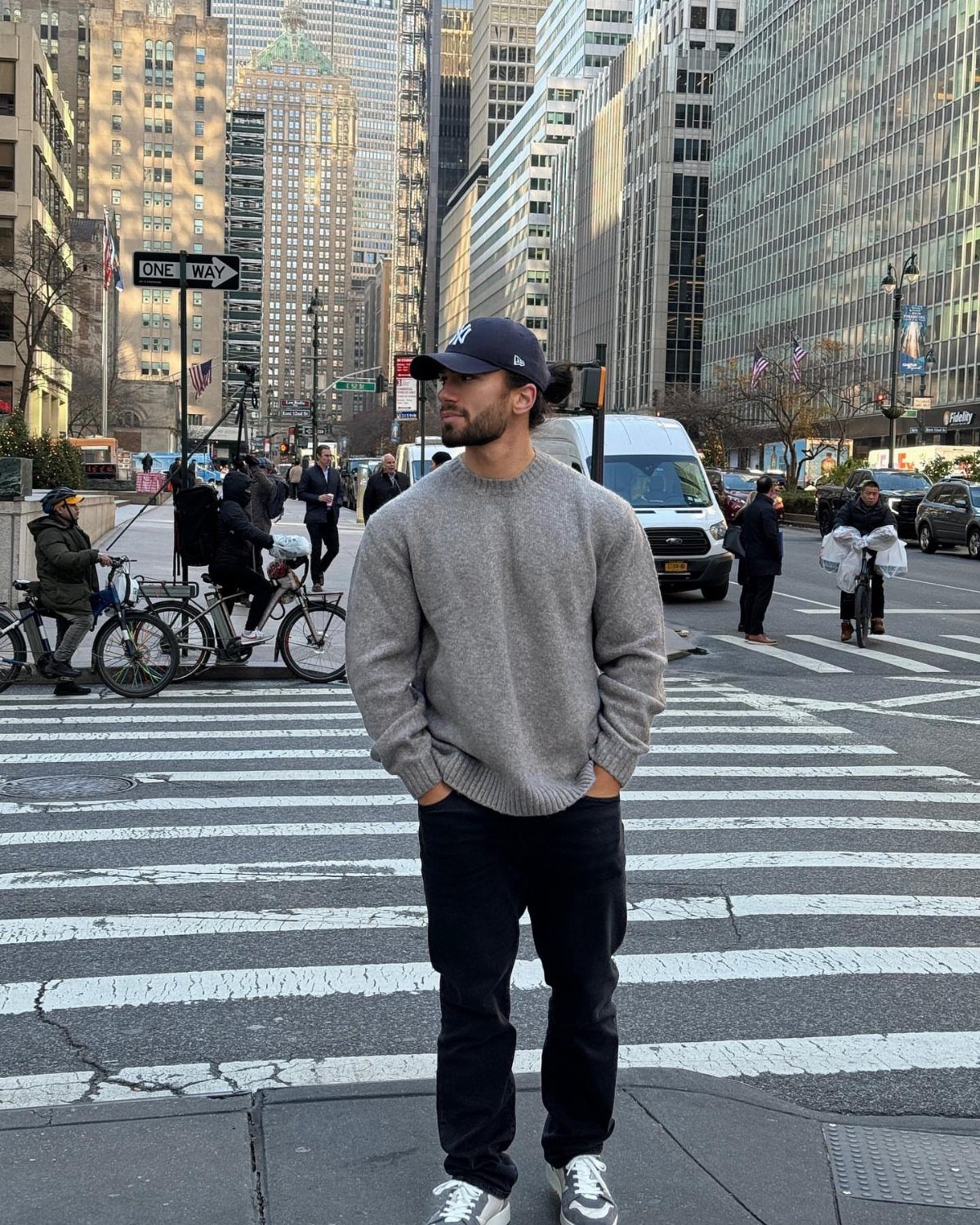
An oversized sweater and straight trousers add width across the shoulders and chest, balancing a frame that carries more weight below the waist or through the hips.
The grey knit here runs a full size up, maybe two, so the shoulder seam sits past the natural line and the body drapes without clinging. Black trousers keep the lower half streamlined, and the cap pulls attention upward.
If your build is narrow on top, this shape gives you proportion without tailoring. It reads casual but intentional, and the pieces mix back into tighter fits when you want them to.
2. Neutral Color Palette Outfit
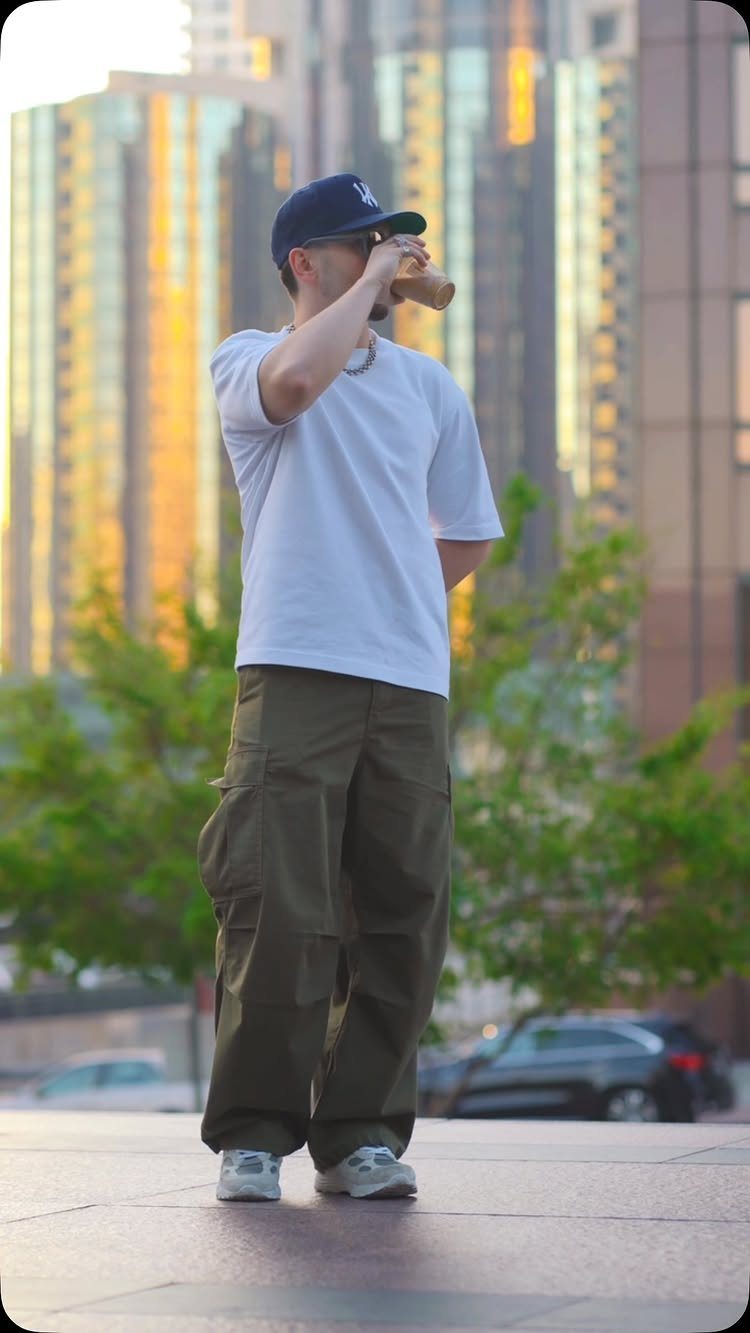
A handful of neutral colors, repeated across top and bottom, gives you more outfits than pieces. White, olive, tan, grey and navy cover most of what a city wardrobe needs.
The white tee and olive cargos here anchor the palette.
A blue cap and white sneakers stay in the same family, and nothing competes for attention. The creator grounded the look with New Balance 992s for their classic, chunky silhouette.
Start with one neutral trouser, one white tee, one jacket in a second neutral. Add a second trouser in a third color and the combinations multiply before you pick up a shirt.
3. Accessorizing with Intent
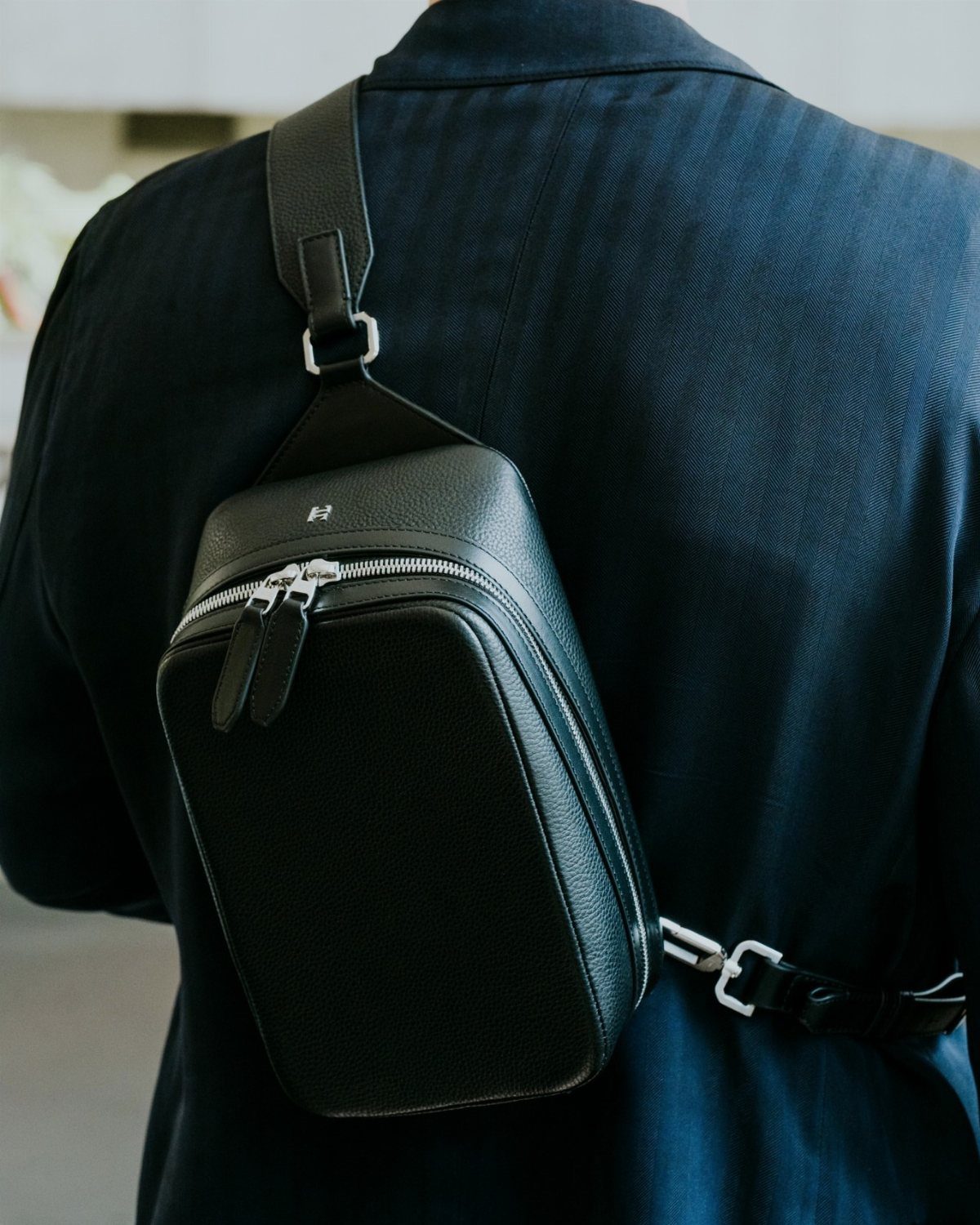
A crossbody bag or a simple watch gives the outfit a finish, but only if the accessory does something or says something about how you move through the day.
The black leather bag here has a clean shape and silver hardware, and it sits against the pinstripe blazer without pulling focus. It holds a phone, wallet and keys, and it keeps your hands free.
A bag that serves a purpose reads different from one that decorates.
If you carry a laptop, carry a bag that fits it. If you don’t, a smaller crossbody or a card case is enough.
4. Smart-Casual Outfits
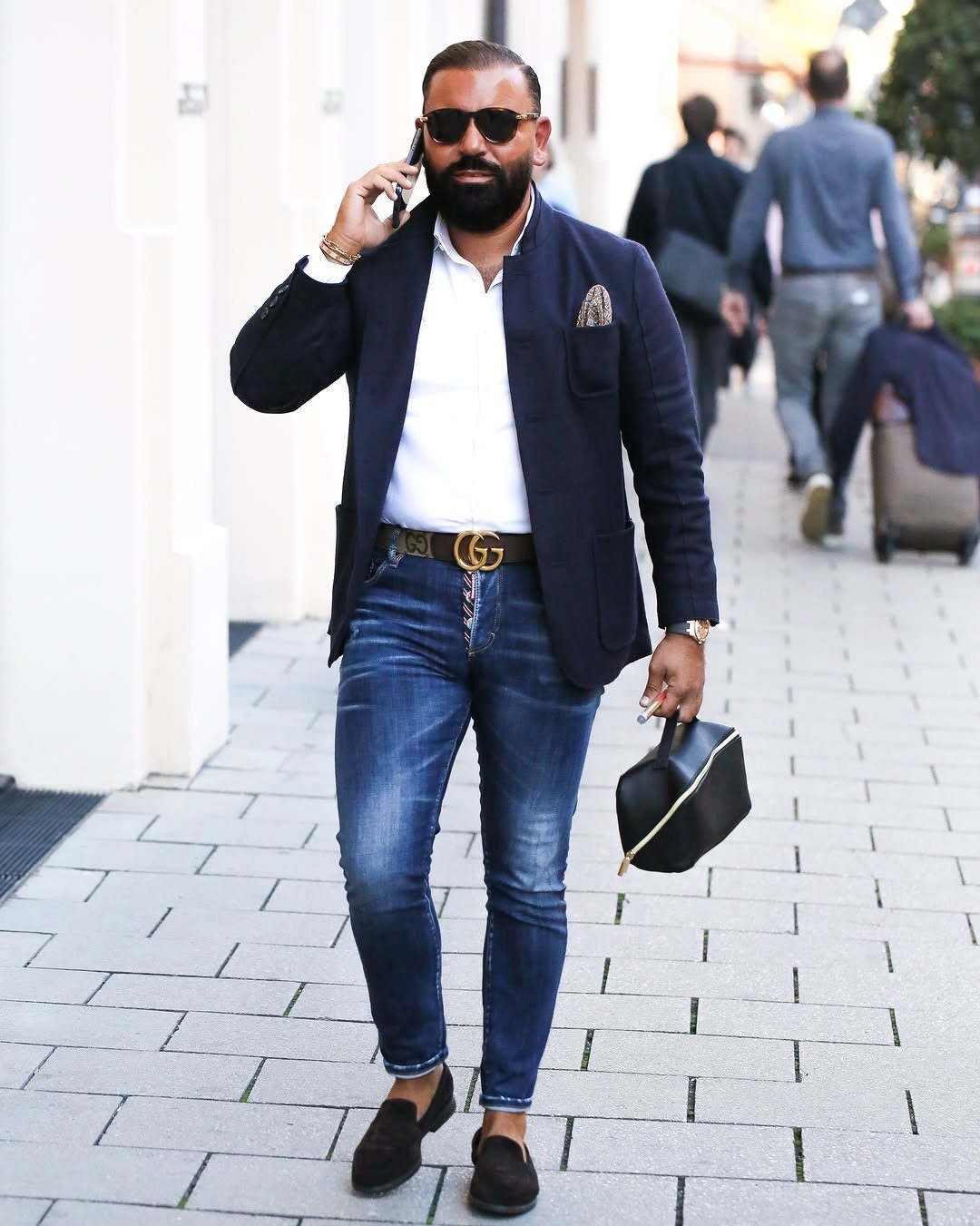
A navy blazer over a white shirt and jeans splits the difference between a suit and a hoodie, and it works for a dinner, a first date, or a day when the office expects more than a tee.
The blazer here is unstructured, so it moves like a cardigan, and the jeans keep it from reading too formal. Loafers instead of sneakers tilt it slightly dressier, and the black clutch holds what pockets won’t.
Fit matters more than formality. A blazer that pulls at the button or bunches at the shoulder cancels the effort.
5. Plain Tee with Comfortable Trousers
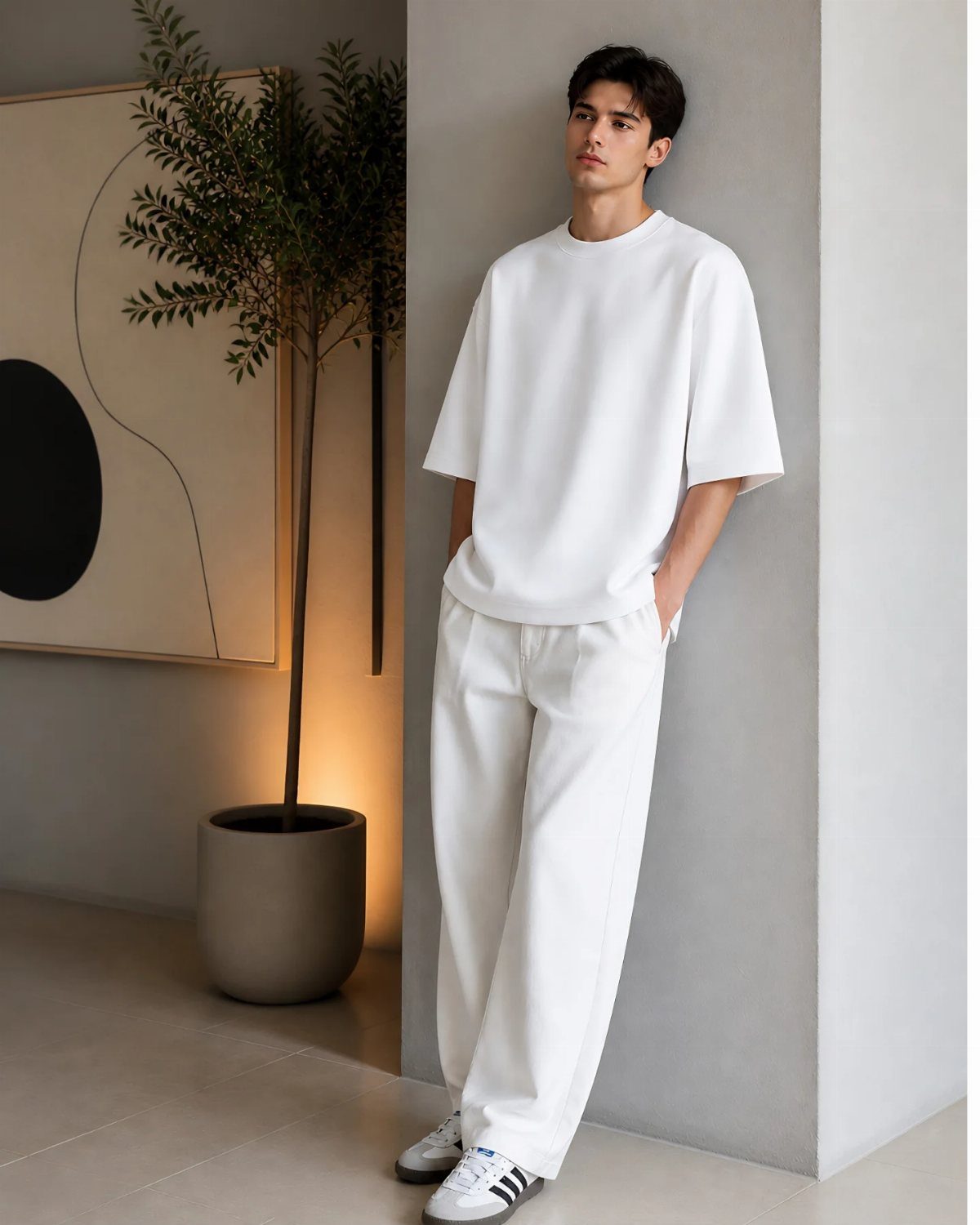
A plain white tee and wide-leg trousers in the same color give you a monochrome look that feels intentional without requiring much thought.
An oversized tee hangs past the waist and balances wide trousers. White sneakers extend the line, and the whole thing works because the fit is deliberate, not accidental.
If you go monochrome, the proportions have to be right.
A slim tee with wide trousers reads unfinished. An oversized top with a relaxed leg looks like a choice.
6. Overcoat with Turtleneck and Boots
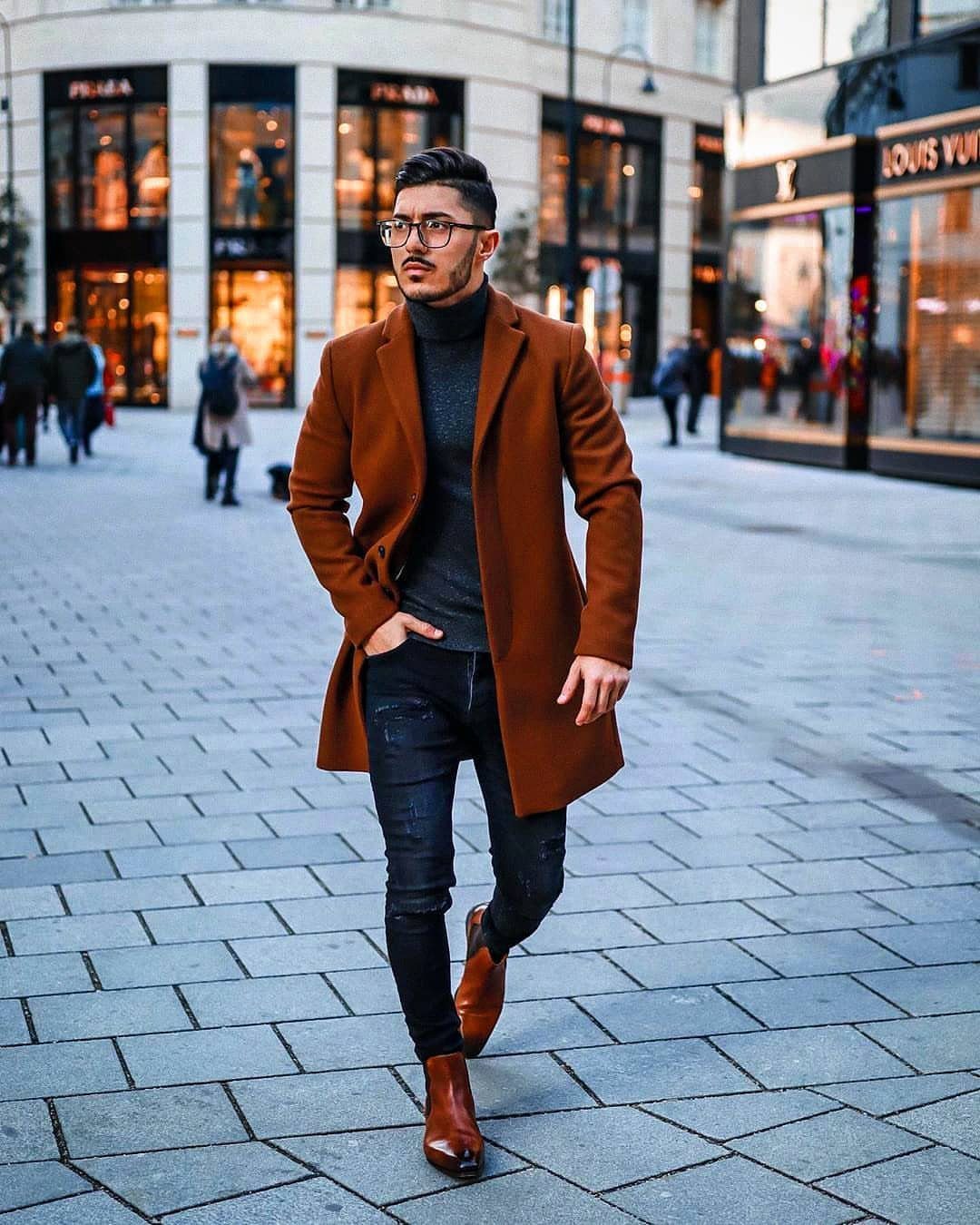
A long overcoat layered over a turtleneck and jeans adds structure to a simple base, and the boots give the silhouette a clean finish at the ankle.
The brown overcoat here hits mid-thigh and sits over a grey knit turtleneck.
Black jeans taper slightly, and brown boots match the coat without matching exactly. The proportions work because the coat is long enough to balance the boots, and the turtleneck fills the space between collar and chin.
A coat this long needs a slim leg underneath. Wide trousers would weight the bottom too much.
7. Sporty All-Black Athleisure
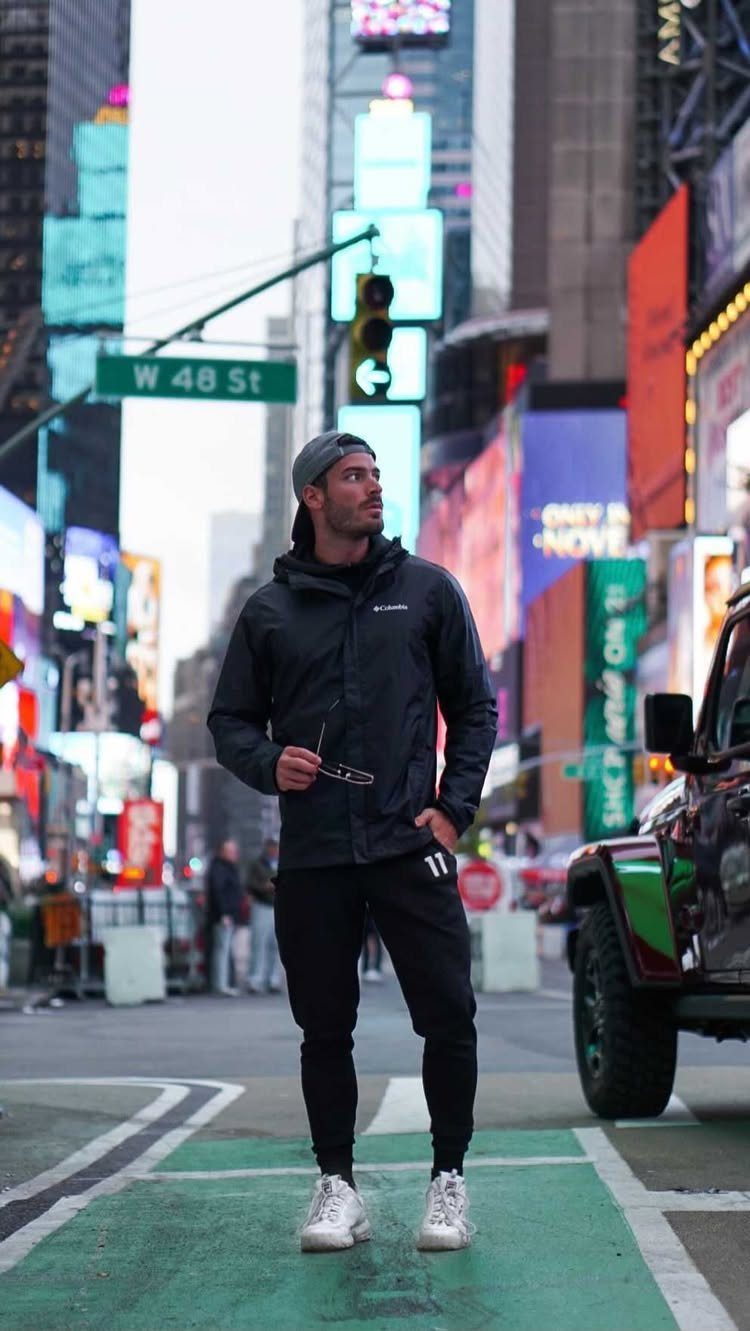
Black on black creates a simple outline, and white sneakers break it up just enough to keep the look from disappearing into itself.
The hooded jacket and joggers sit in the same tonal range, so the outfit reads as one continuous line. The grey cap adds a second neutral without pulling focus, and the sneakers ground the proportions at the ankle.
Athleisure works in the city when the fit is clean. Joggers that taper toward the ankle balance the volume of the jacket, and sneakers that sit low keep the line streamlined.
8. Overcoat with Matching Shirt and Shorts
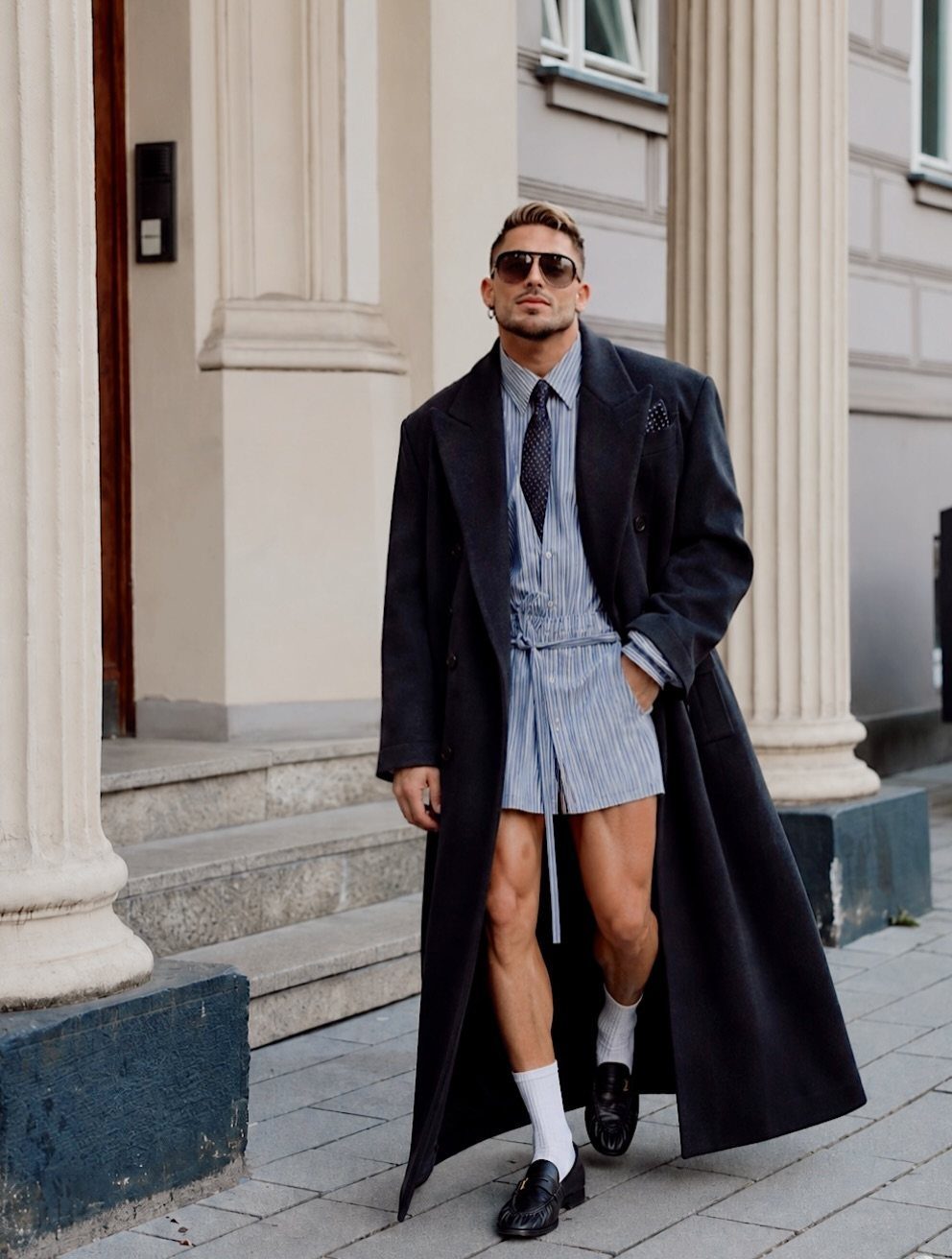
Shorts under an overcoat feel unexpected, but the structure of the coat and the formality of the loafers keep the look grounded.
The black overcoat here is long enough to cover most of the leg, so the shorts register as deliberate rather than accidental.
The striped shirt and shorts match, which ties the upper and lower halves together, and the tie leans into the formality instead of softening it.
This only works if the coat is structured. A drapey overcoat would make the shorts read casual, and the tension between formal and relaxed would collapse.
Importance of Cleanliness
Press your clothes before they leave the house. Wrinkled fabric reads as carelessness, and it pulls focus from everything else you got right.
A clean shirt and polished shoes will carry you further than a logo or a high price tag. A tee and jeans look intentional when the tee sits clean against your frame and the jeans hold a crease.
Check hems and seams regularly.
A loose thread or a worn cuff signals neglect, and grooming follows the same rule. Clean shoes, trimmed nails, and a shave or a shaped beard finish the outfit in a way accessories can’t.
Cleanliness and attention create the difference between someone who dressed and someone who got dressed.
Avoiding Style Mistakes
Fit comes first.
Mismatched colors happen through laziness, not ignorance.
A navy blazer, brown belt, and black shoes sit together only when you stopped looking. Stay within one color temperature or keep metallics consistent, and the palette holds.
Dressing identically for every occasion flattens your range. A hoodie works for errands, not dinner.
A suit works for a meeting, not a Saturday. The same outfit in both places signals that you didn’t consider the room.
Wrinkled fabric, scuffed shoes, and worn hems broadcast carelessness louder than any wrong purchase. These mistakes are fixable, and fixing them is faster than replacing what you bought.
Building Personal Style
The answer is usually in the silhouette, the color, or the era the piece references, and that pattern gives you a principle to repeat.
Study outfits you admire and identify what they share. If 3 looks you like all use a similar silhouette or color palette, that direction is worth testing.
If they lean toward neutral palettes, start there. Personal style is extracted, not copied.
A closet full of tailoring fails if you work from home, and heavy knits fail if you live somewhere warm. Dress consistently within your reality, and confidence follows from that alignment.
Swap one piece, try one new color, and observe how it feels. Confidence grows as the experiments add up.
Frequently Asked Questions
How do I actually dress well as a man?
Get the fit right, stick to a handful of neutral colors, and match what you wear to where you’re going. Fit and context matter more than the label inside.
What should I wear to evening events?
A navy blazer over a white shirt and tailored trousers works for most evening occasions, and loafers instead of sneakers tilt it slightly dressier.
The blazer should move easily through the shoulders and avoid pulling at the button. If the invitation doesn’t specify, check whether the venue or host expects jacket and trousers.
What makes an outfit actually work?
Shoulders that sit flat, sleeve and hem length that match your actual proportions, and colors from the same side of warm or cool.