Dressing a slighter build comes down to adding dimension through pattern and layering, choosing cuts that balance your frame, and picking accessories that finish the outfit.
1. Layering Is Key
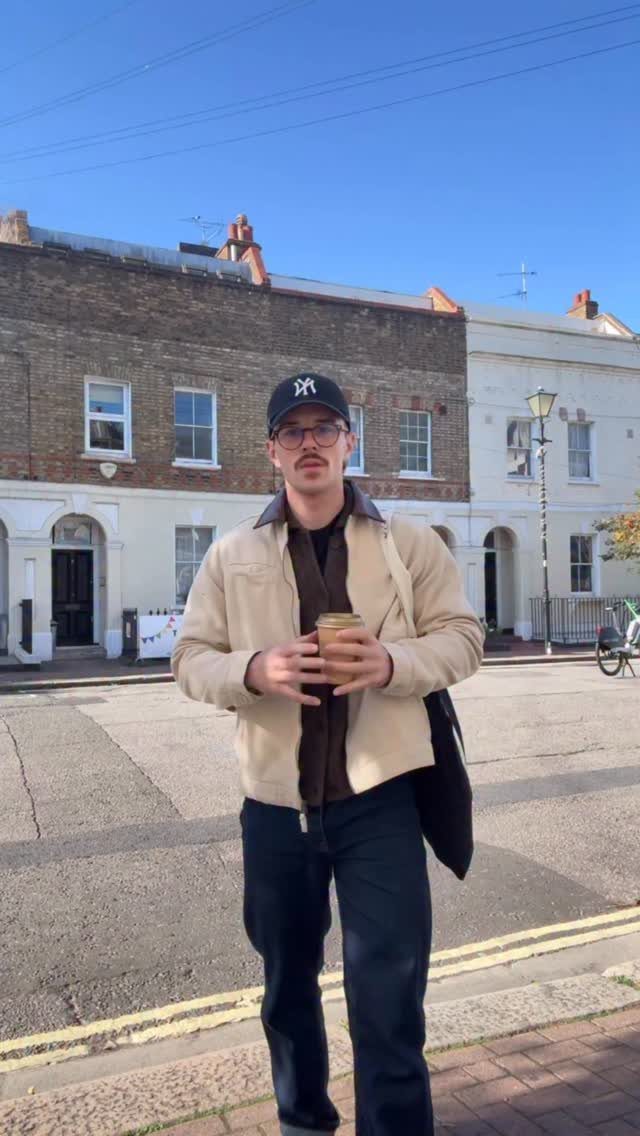
A jacket over a shirt creates a second line of fabric that adds visual weight across your chest and shoulders.
The beige and brown here work because they sit close in tone but different in texture, so the layers read clearly without contrast doing all the work.
I’d keep the base layer fitted and let the outer piece carry a bit more room. A shirt that’s too loose under a jacket just bunches at the waist and cancels the effect you’re after.
2. Straight-leg Trousers
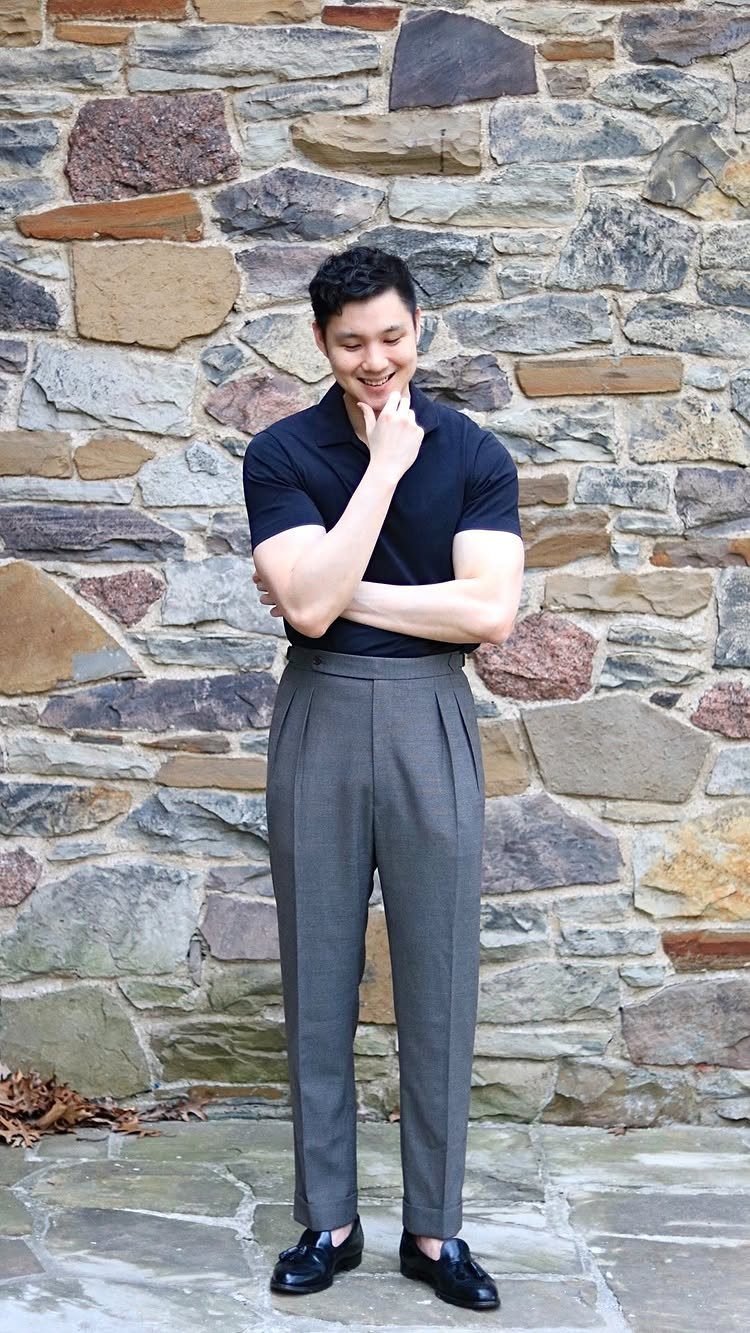
A straight leg holds its width from knee to hem, which balances a narrow frame better than anything that tapers hard or clings through the calf.
The grey pair here hits that middle width: enough room to move without extra fabric pooling at the ankle.
Fit the waist and hip first, then check the leg opening. The real test is whether the line from your pocket to your shoe stays clean when you stand still.
3. Plaids and Checks
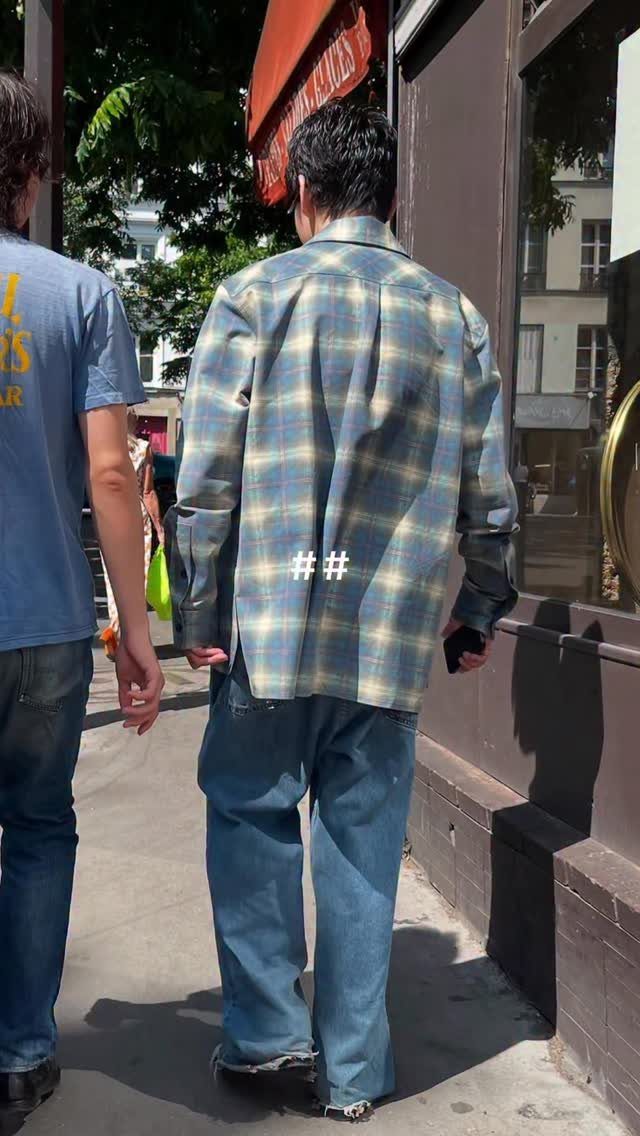
Pattern breaks up a flat plane, so a plaid shirt adds dimension where solid color would read as a single unbroken surface.
Blue and yellow is bold, but any check or plaid does the same work: the eye tracks the grid instead of reading your width.
I’d go for medium-scale checks first. Too small and the pattern fades from a distance, too large and it can overwhelm a slighter build.
4. Lighter Colors
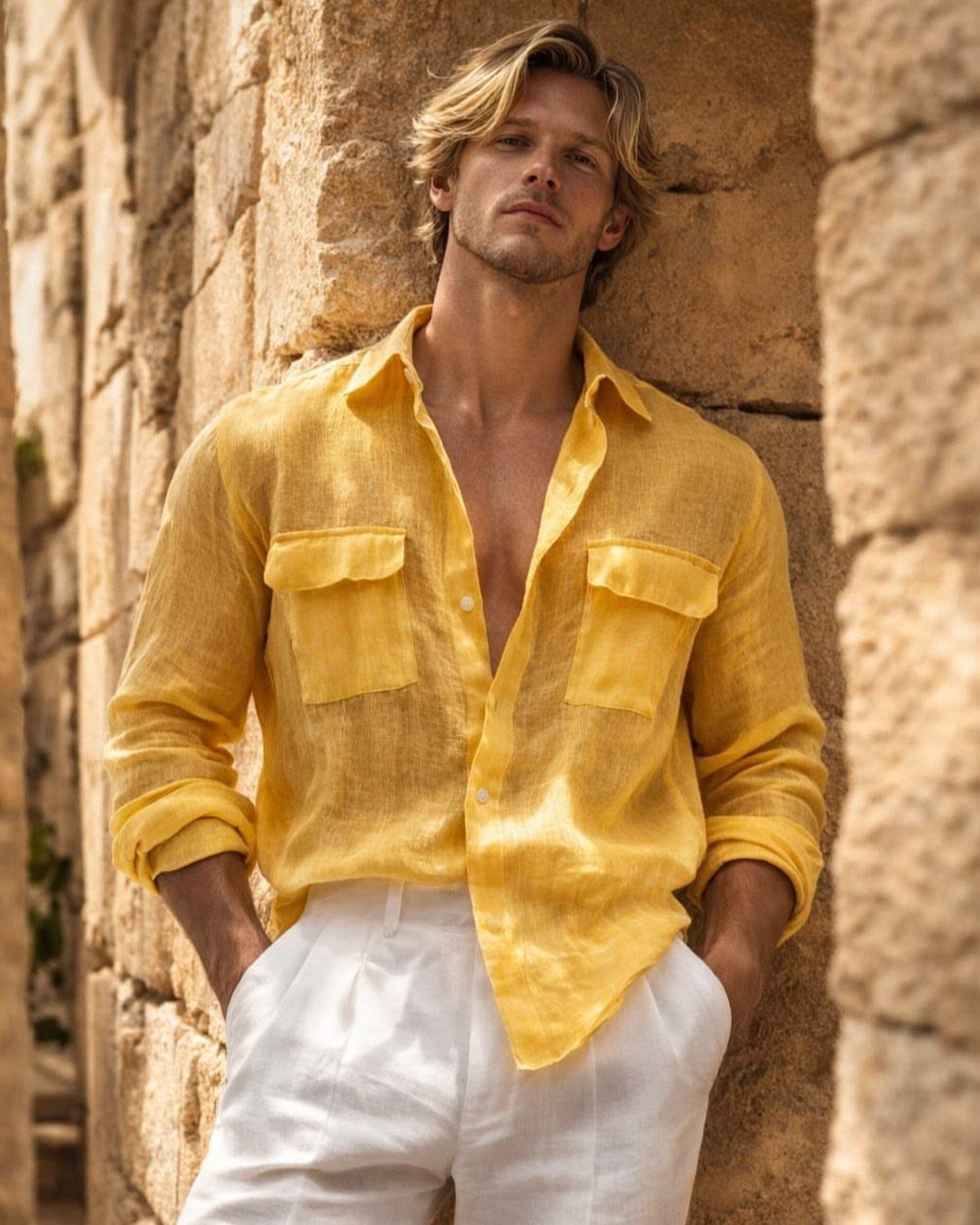
Light tones reflect more, which makes surfaces appear to advance rather than recede.
Yellow and white here do that across the torso and legs, and because linen has texture, the fabric catches light unevenly and adds another layer of visual interest.
Pastels and neutrals in the cream-to-sand range work the same way. Darker colors can sharpen your silhouette, but they also make you look narrower, so I’d save them for pieces where that serves the outfit.
5. Incorporate Accessories
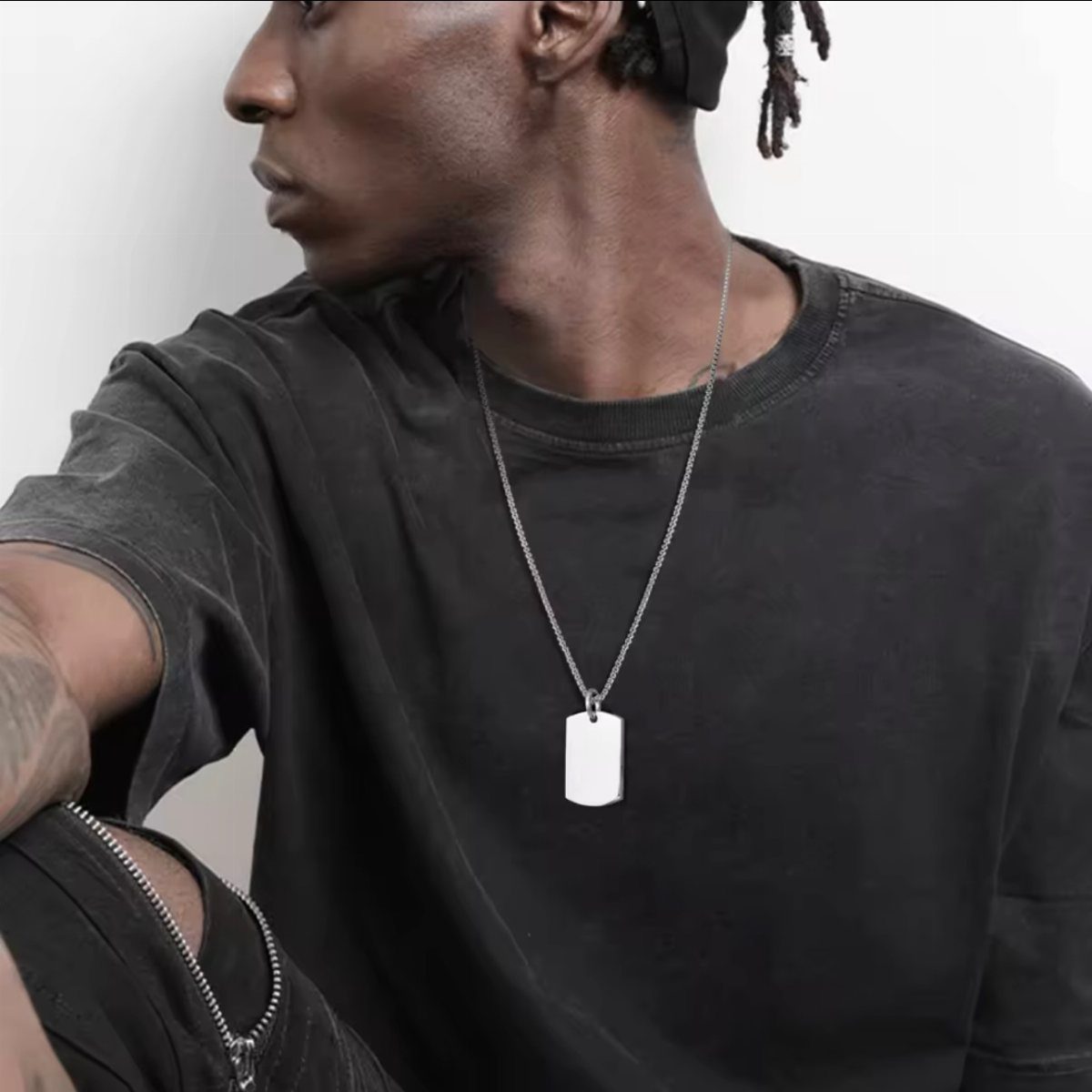
A chain or pendant sits at your chest and draws the eye to a point of detail, which distracts from width or the lack of it.
The silver dog tag here is simple and carries enough weight to read as intentional, not loud against the shirt.
Watches, rings and bracelets do the same thing at the wrist. I’d keep metals consistent within one outfit and choose pieces that feel like they belong to everything else you’re wearing, not added to fix a problem.
6. Double-breasted Suits
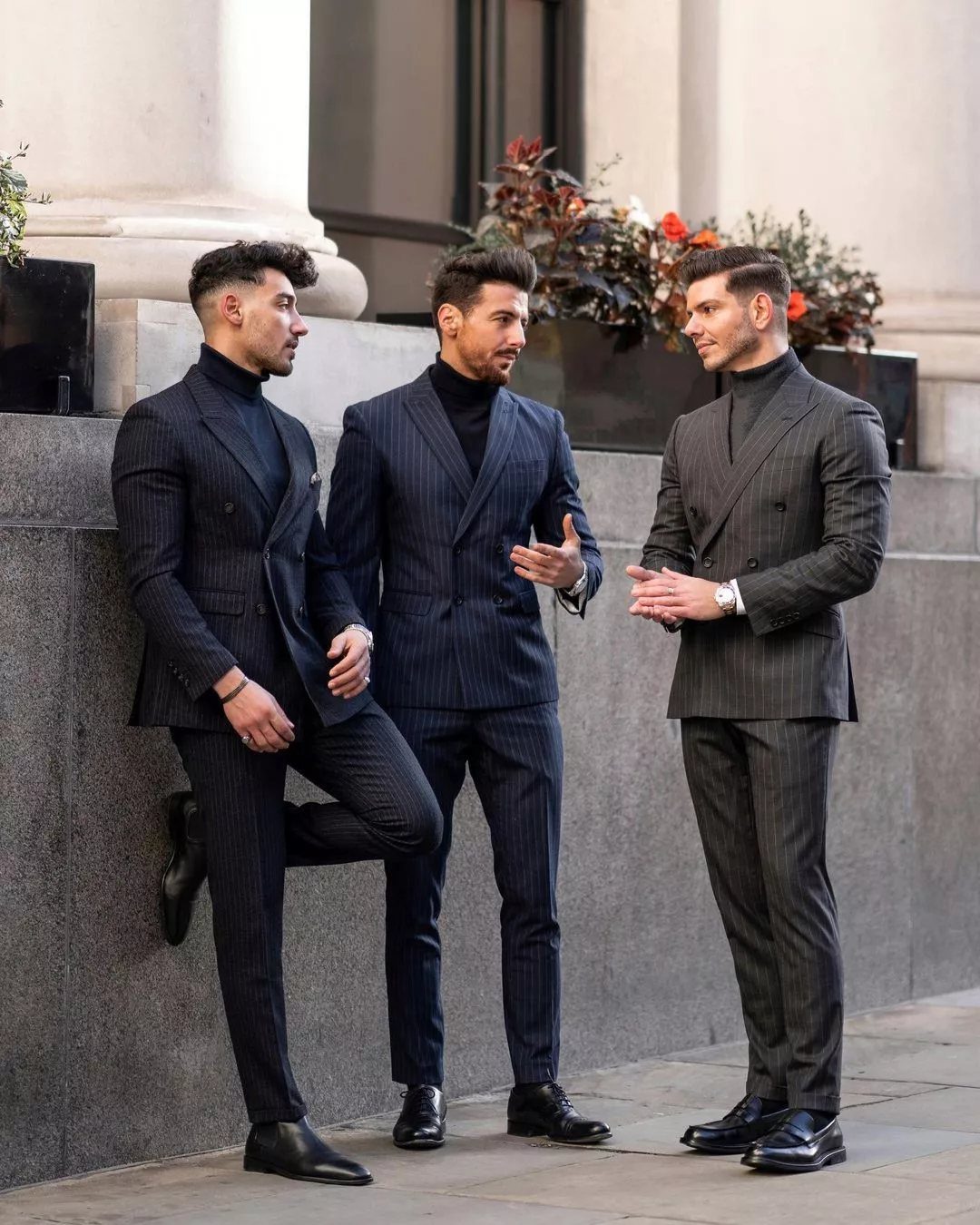
A double-breasted jacket wraps farther across your chest than a single-breasted cut, which creates a wider front panel and adds visual bulk through the torso.
The pinstripe here helps too, but the real advantage is that extra layer of fabric and the way the buttons sit in two columns instead of one.
Fit matters more here than with a single-breasted suit. The jacket should close without pulling, and the shoulders need to sit clean because any excess fabric will bunch and work against the structure you’re trying to build.
7. Vertical Pinstripe Suit
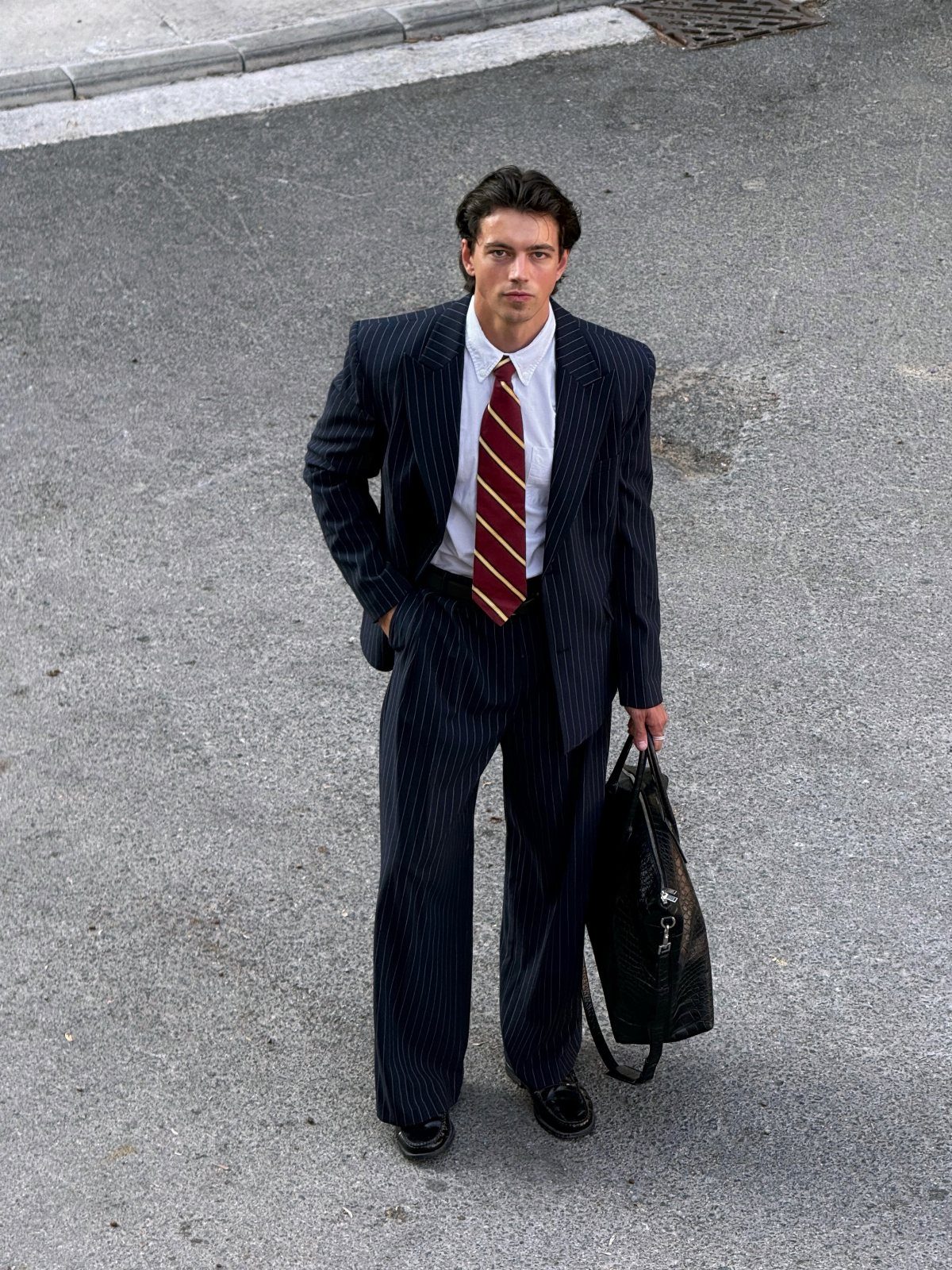
Vertical stripes pull the eye up and down rather than side to side, which lengthens your silhouette and makes you look taller. Navy with a thin white stripe is classic and works across most settings without feeling loud.
The suit itself should fit close through the body. If the jacket is too loose or the trousers bag at the knee, the stripe loses its effect and the whole thing reads as oversized rather than structured.
8. Structured Outerwear
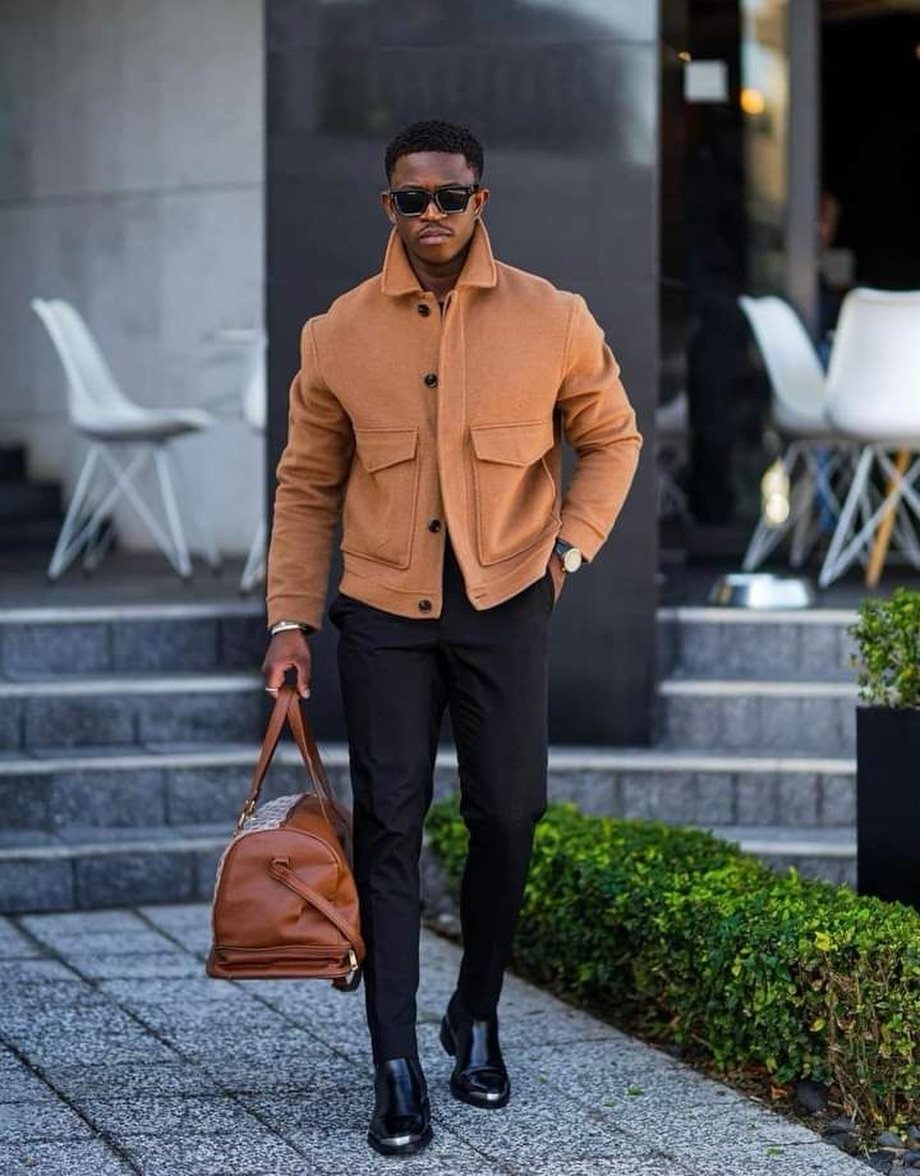
A jacket with structure stands away from your body, which adds width through the shoulders and chest without relying on what’s underneath.
The tan here is cut with enough body that it stands up on its own, and the button front keeps the line clean from collar to hem.
Fit the shoulders first.
If they’re too wide, the jacket will slip back and lose the frame you’re building. If they’re too narrow, the fabric pulls and the structure collapses.
9. Wide-leg Trousers with Blazer
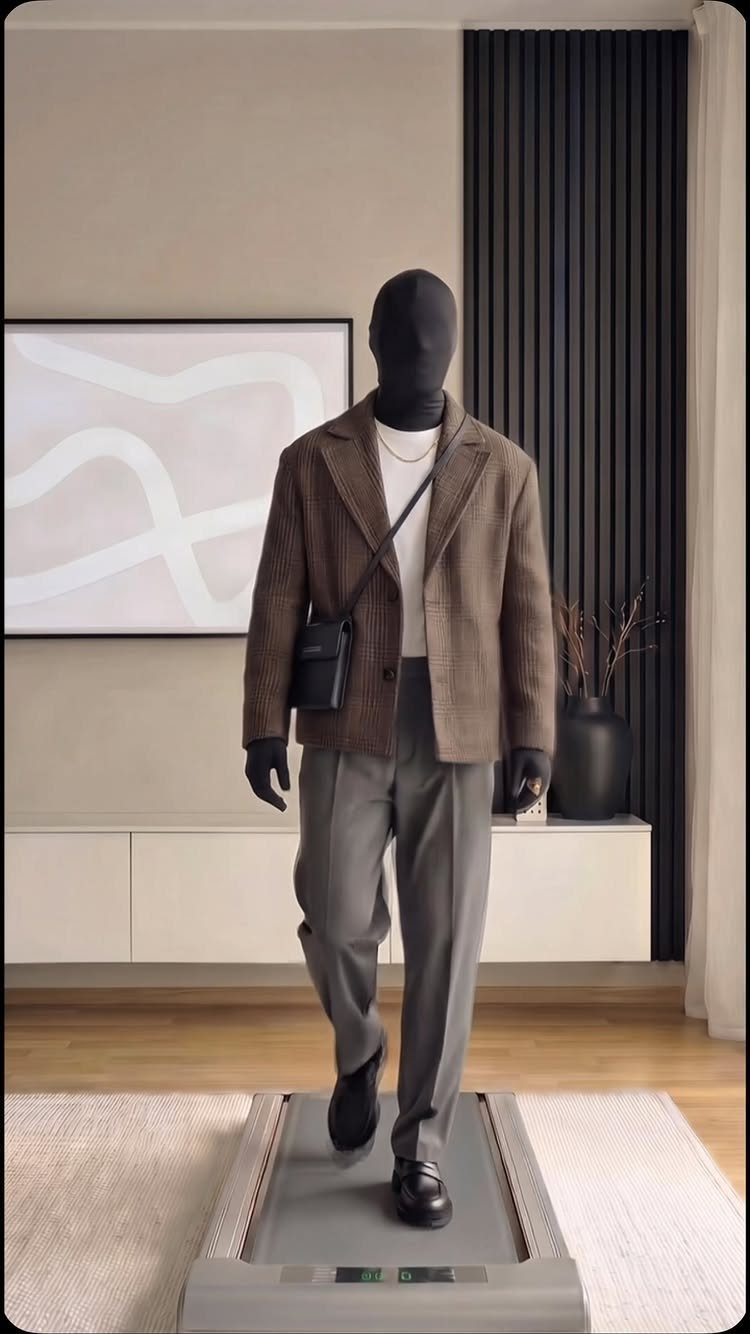
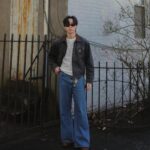
Wide-leg trousers add volume below the waist, which balances a narrow upper body and keeps your proportions from reading as all torso.
Grey here is neutral enough to work with most blazers, and the width from hip to hem gives you room without the appearance of borrowed clothes.
The blazer should fit closer than the trousers. If both pieces are loose, the outfit loses shape, but a fitted jacket over wide trousers creates contrast that flatters a slighter frame.
10. Bold Printed Shirts
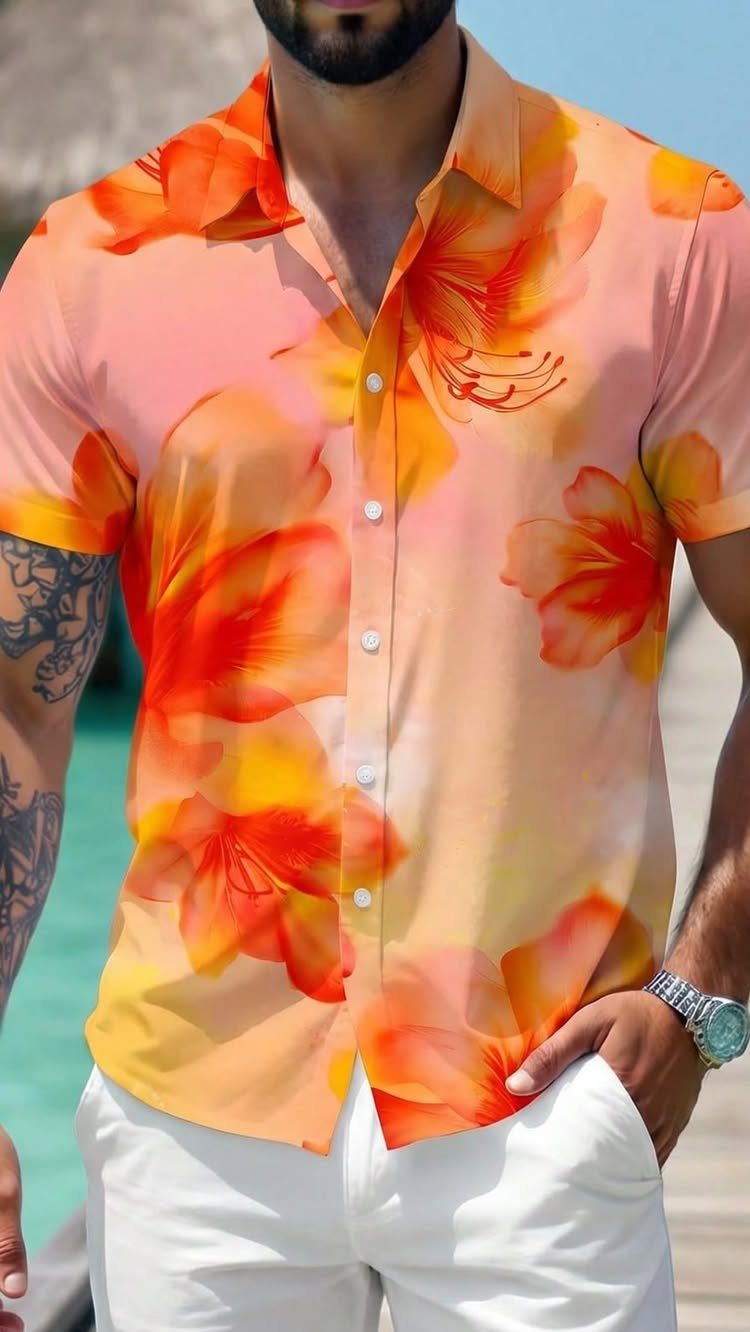
A bold print scatters attention across the surface of the shirt, which keeps the eye from tracking your width or reading your frame as a single narrow line.
Orange and yellow here are warm and high-contrast, so the pattern does a lot of work even from a distance.
Pair it with neutral trousers. White, beige or grey keeps the shirt the focus and prevents the outfit from feeling too busy, which is where loud prints usually fail.
Fashion for Skinny Guys
Dressing well when you’re slim isn’t about hiding your frame or pretending you’re built differently. It’s about knowing which cuts, fabrics and proportions work with a leaner build to create balance and add dimension where you want it.
The goal is clothing that follows your shape without clinging and adds structure without bulk.
Fabric choice plays a role too. Thin jersey or anything that drapes flat does the opposite.
Smart choices add up to an outfit that feels right and looks intentional, not like you’re working around a problem.
Confidence in Dressing
Clothing that fits well and suits your build makes you feel better in it, and that shows.
When a jacket sits clean at the shoulder and a shirt follows your frame without pulling, you stop thinking about what you’re wearing and start moving through the day with more ease.
Style is personal. The colors, patterns and cuts you choose reflect how you want to present yourself, and when those choices align with your natural proportions, everything reads as coherent rather than forced.
Dressing well isn’t about following every trend or buying into a specific look. It’s about understanding what works for your body and building a wardrobe from pieces that fit, mix easily and feel like yours.
Avoiding Common Mistakes
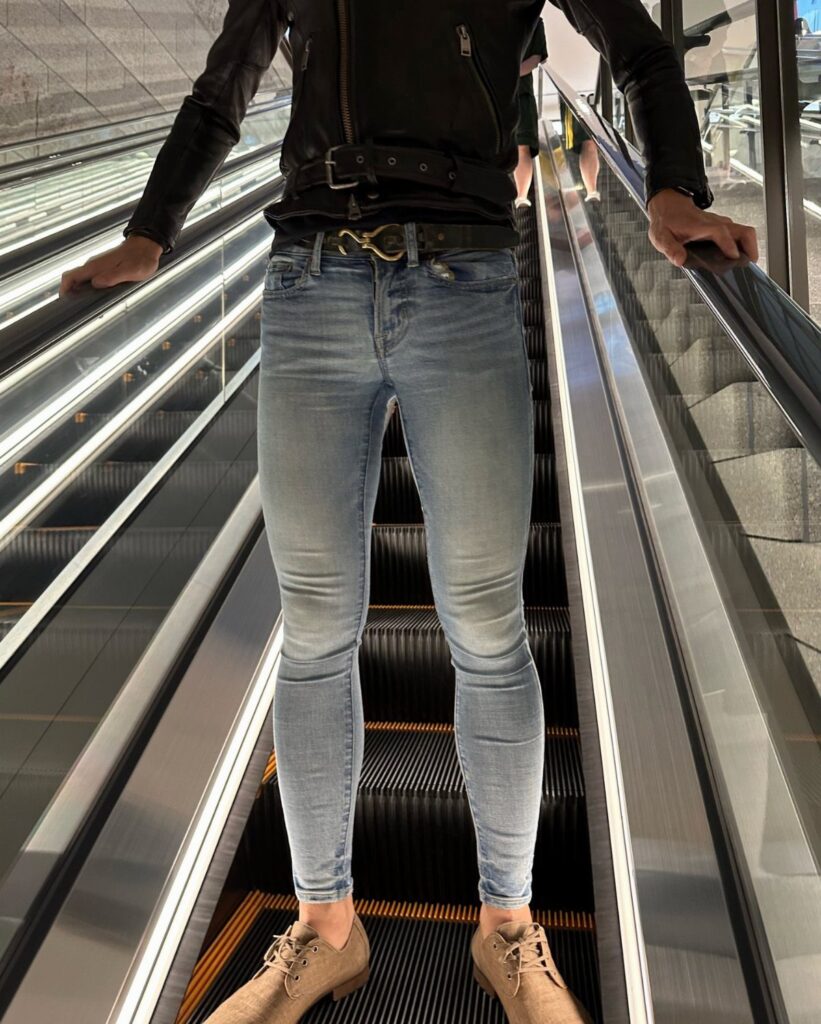
Skinny and slim-fit cuts sound right for a slighter build, but they often sit too close and emphasize the narrowness you’re trying to balance.
A shirt that clings through the chest or trousers that hug your calves just make you look smaller, not sharper.
Oversized doesn’t fix it. A jacket with shoulders that hang past yours or trousers that pool at the ankle read as borrowed, and the extra fabric swallows your frame instead of adding structure.
Regular or straight cuts follow your frame without pulling tight or hanging loose. A shirt should skim your torso with enough room to move, and trousers should sit clean at the waist and leg without extra fabric bunching or dragging.
Fit close where structure matters, like the shoulders of a jacket, and allow room everywhere else.
Skinny guys need cuts that generate the illusion of proportional width. Clothes that sit too close to the body – besides being uncomfortable as hell – just draw attention to your predicament.
— DMARGE
Frequently Asked Questions
What clothes suit skinny guys?
Structured jackets, straight-leg or wide-leg trousers, and patterns like plaids or pinstripes work best because they add visual weight and dimension without clinging. Avoid skinny fits that emphasize narrowness and oversized pieces that swallow your build.
Are skinny jeans still in fashion for men?
Skinny jeans emphasize narrowness rather than balance it, which makes them a poor choice for slimmer builds.
Straight styles keep an even width from thigh to ankle for a modern silhouette, and fuller legs introduce mass through the lower half that offsets slim shoulders.
Both options fit better into current style and work with your proportions instead of against them.