Business casual covers fitted button-downs with dress trousers, quarter-zip sweaters over collared shirts, unstructured blazers with chinos, and full suits worn without ties.
The formality level of your office decides which end of that range you pull from: public-facing or high-prestige roles lean closer to business, smaller or relaxed workplaces give you more room to trend casual.
An unstructured blazer has no shoulder padding and no canvas stiffening the front, so it drapes closer to your body and works over knitwear without looking rigid.
1. Unstructured Blazers
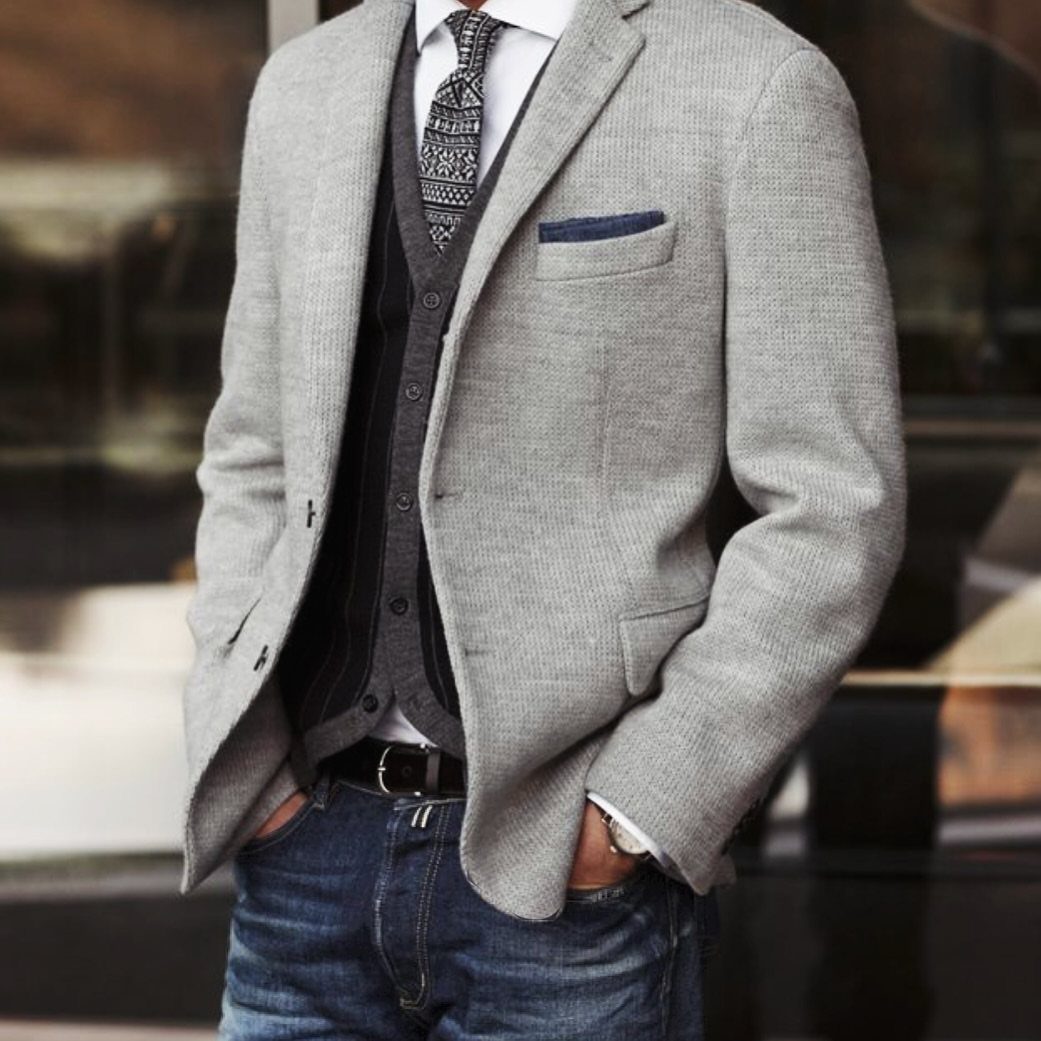
An unstructured blazer has no shoulder padding and no canvas stiffening the front, so it drapes closer to your body and moves with you instead of holding a fixed shape.
The grey piece here sits over a cardigan, which adds texture without bulk. That combination works because the blazer is soft enough to layer over knitwear without looking rigid.
Wear it with jeans or chinos. The lack of structure keeps it from reading as formal, so you can wear it in offices that expect smart casual without looking like you brought half a suit.
2. Loafers, Brogues
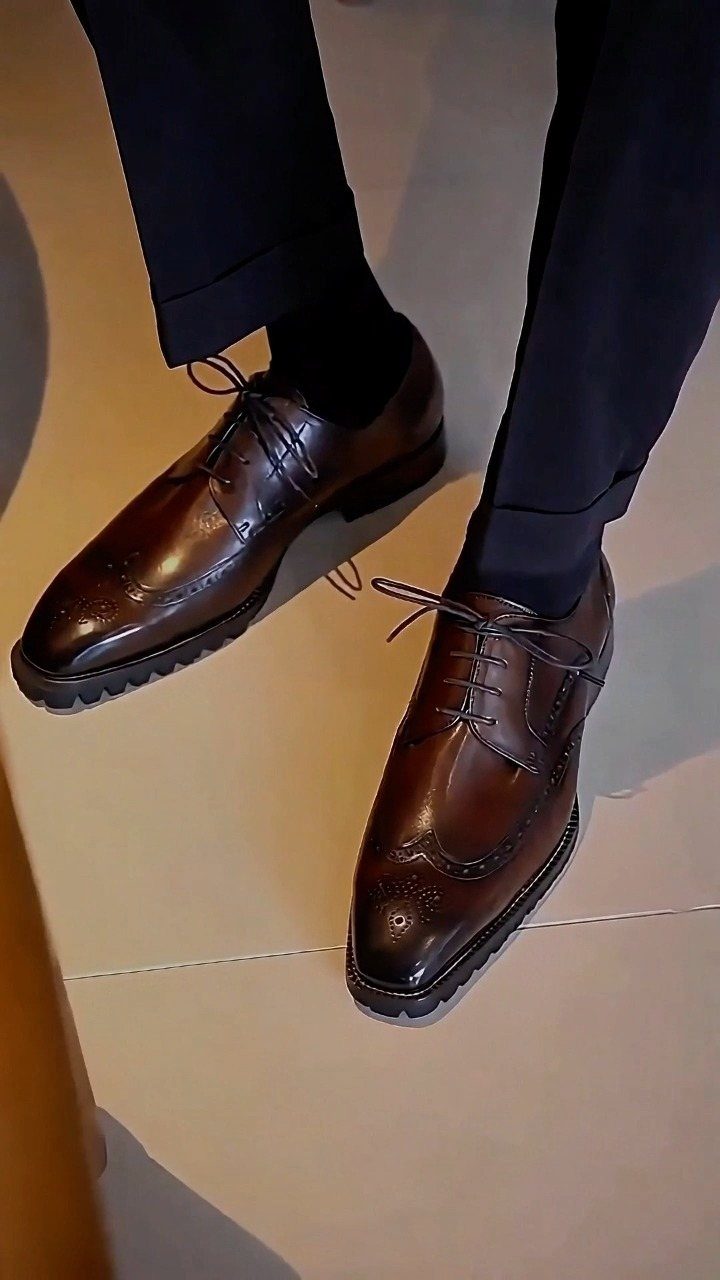
Brogues and loafers replace sneakers without the stiffness of an oxford. Brogues have perforated detailing along the seams, loafers slip on without laces.
Black works too but reads more formal.
Polish them once every few wears to keep the leather from drying out. Scuffed shoes stand out more than a wrinkled shirt, and leather shoes last years if you rotate pairs and let them dry between wears.
3. Quarter-Zip Sweater
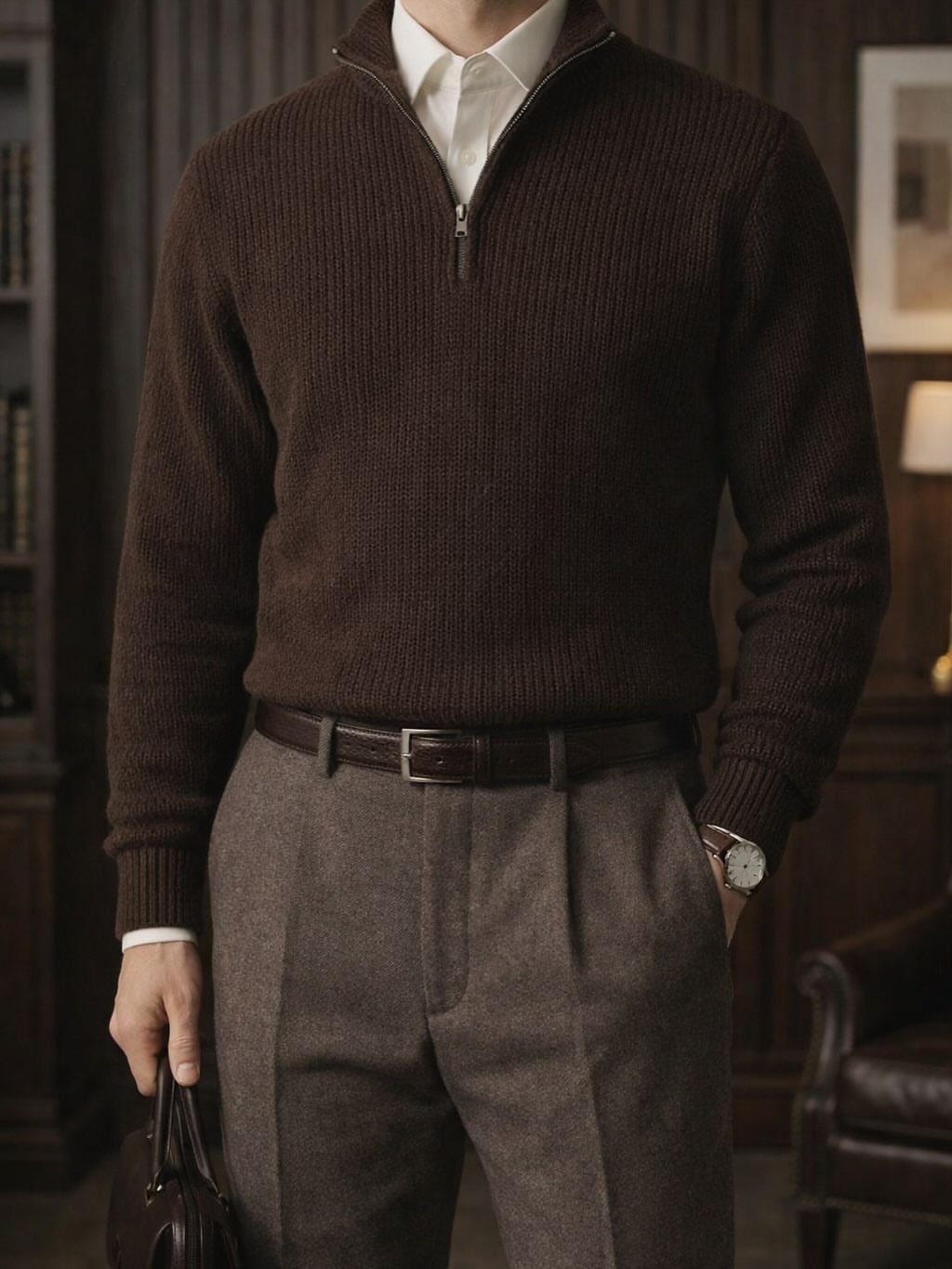
A quarter-zip sweater sits between a polo and a full sweater. The collar adds structure, the zipper gives you control over how much shirt shows underneath.
A quarter-zip sweater worn over a collared shirt works in most business casual settings because the sweater softens the formality of the shirt without losing the shape.
Merino wool holds its shape better than cotton blends and won’t pill after a few washes. Fit snug enough that it doesn’t bunch when you layer it, loose enough that the shirt underneath doesn’t pull.
4. Casual Fridays
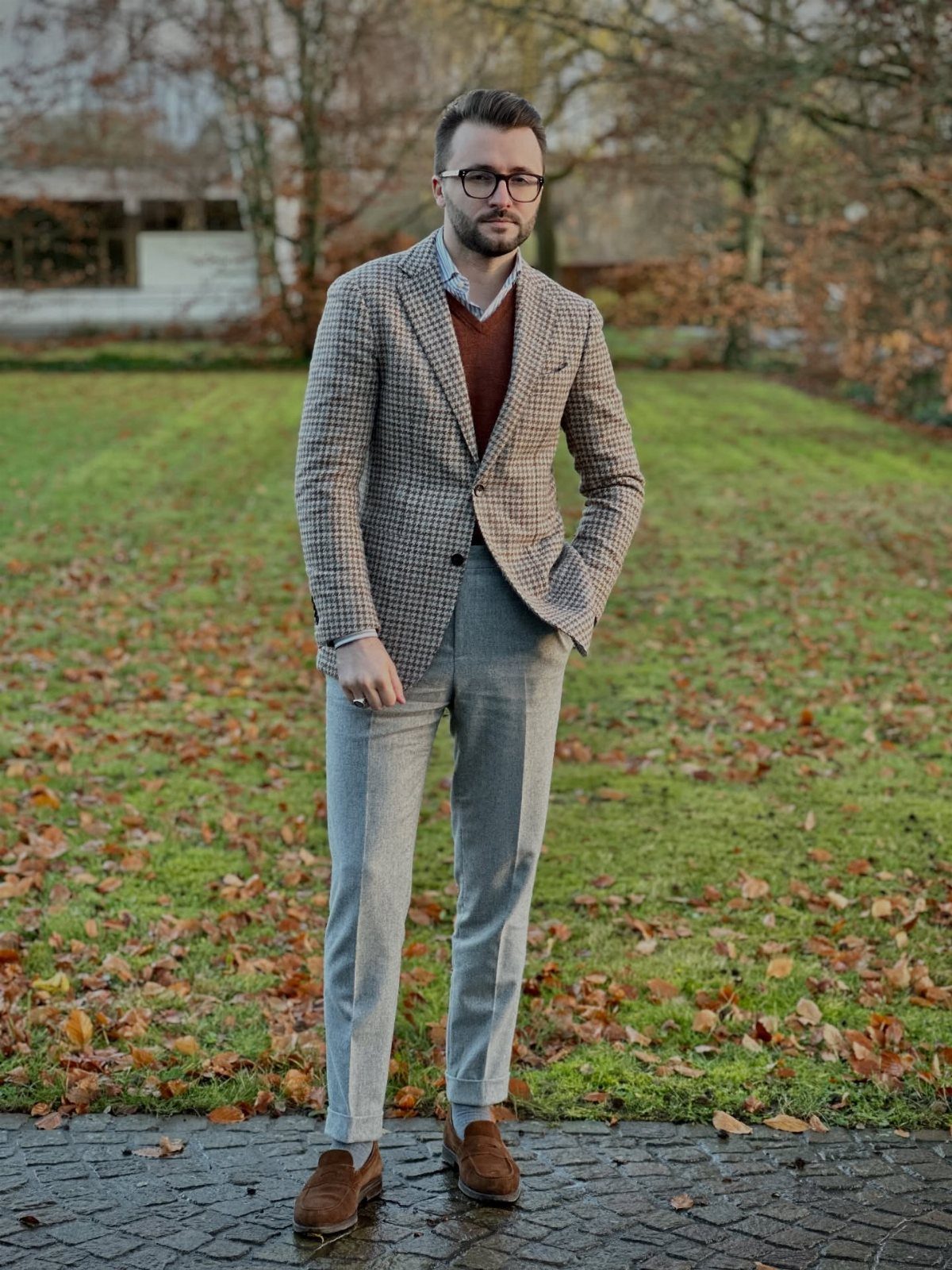
Casual Fridays let you mix patterns and textures that wouldn’t fly earlier in the week.
Keep the fit clean. A loud pattern on a loose blazer looks careless, the same pattern on a tailored piece reads as intentional.
Stick to 1 pattern at most unless you’re confident mixing them. Solid trousers anchor the look, and leather shoes keep it from tipping into weekend wear.
5. Button-Down Shirt and Trousers
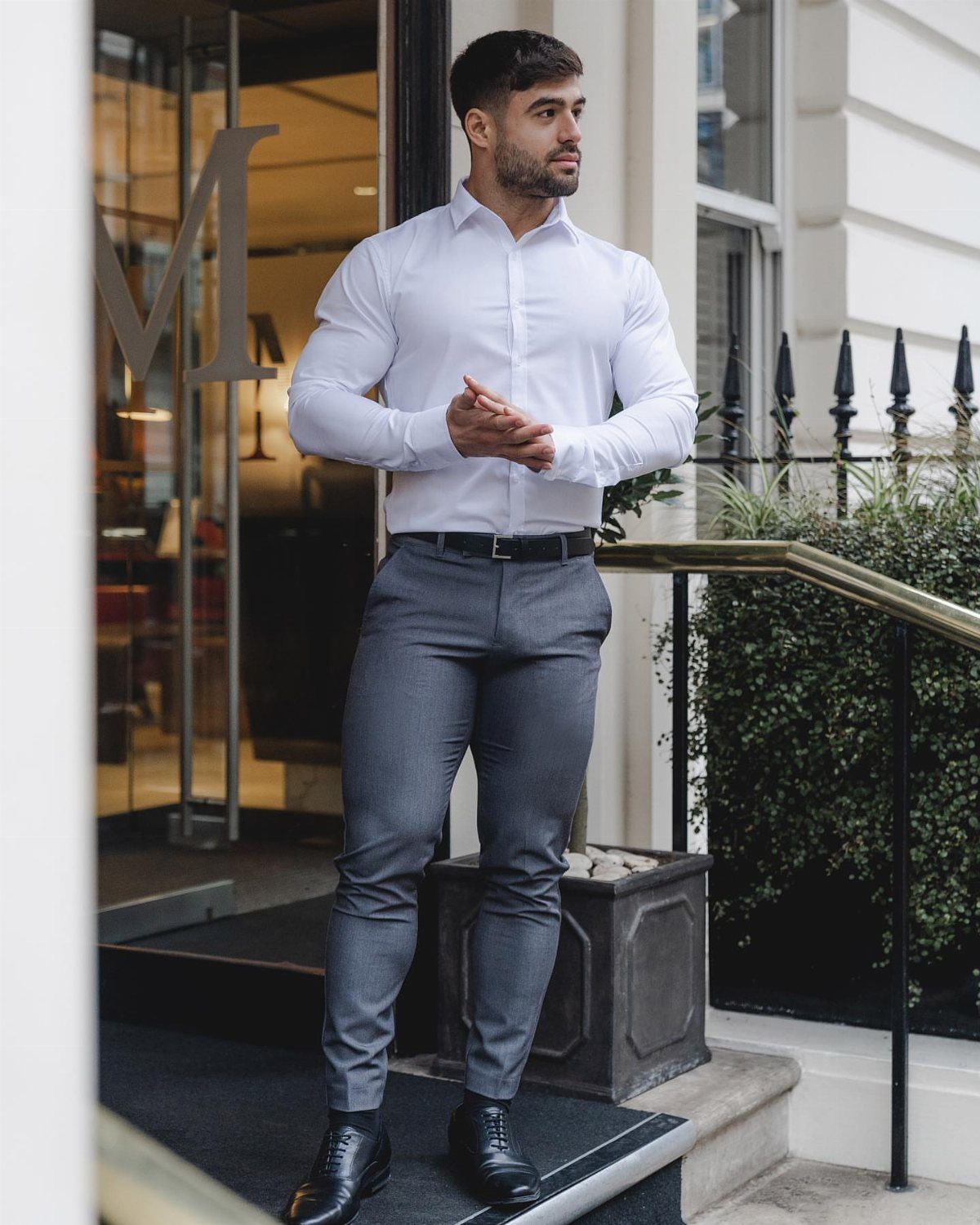
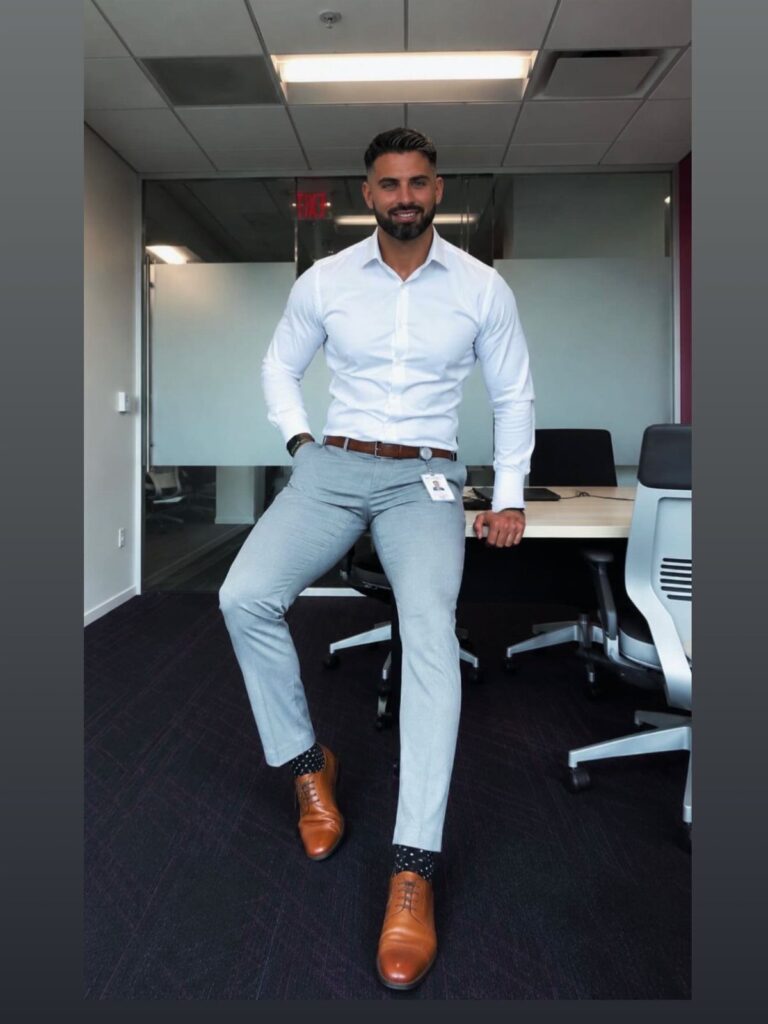
A fitted button-down tucked into tailored trousers is the simplest version of business casual, and the one that works in the widest range of offices.
A button-down shirt paired with trousers is formal enough for client meetings, neutral enough that you can repeat it twice a week without anyone noticing.
Fit matters more than fabric.
The shirt should sit flat across the chest without pulling, the trousers should break once at the shoe. Iron the shirt or it reads as lazy.
6. Sweater Layered Over Collared Shirt
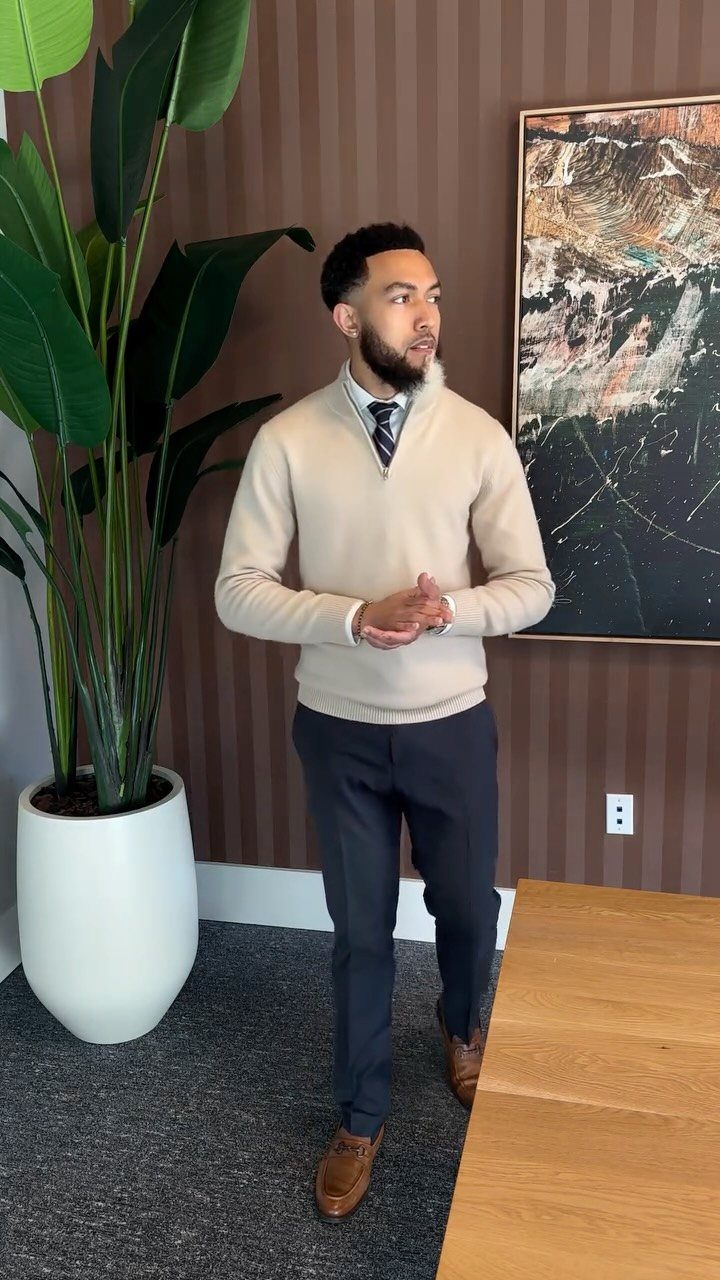
A knit sweater over a collared shirt and tie adds warmth without a blazer. The beige sweater here is worn with a tie and navy trousers, keeping the formality of the shirt while softening the silhouette.
The sweater should be thin enough that the collar sits flat underneath and the tie doesn’t bunch. Merino or cotton knits work better than chunky cable knits, which add too much bulk.
Skip the tie if the office leans casual. The sweater alone over the collared shirt still reads as put-together, and you avoid looking like you’re trying harder than the room expects.
7. Knit Polo with Trousers
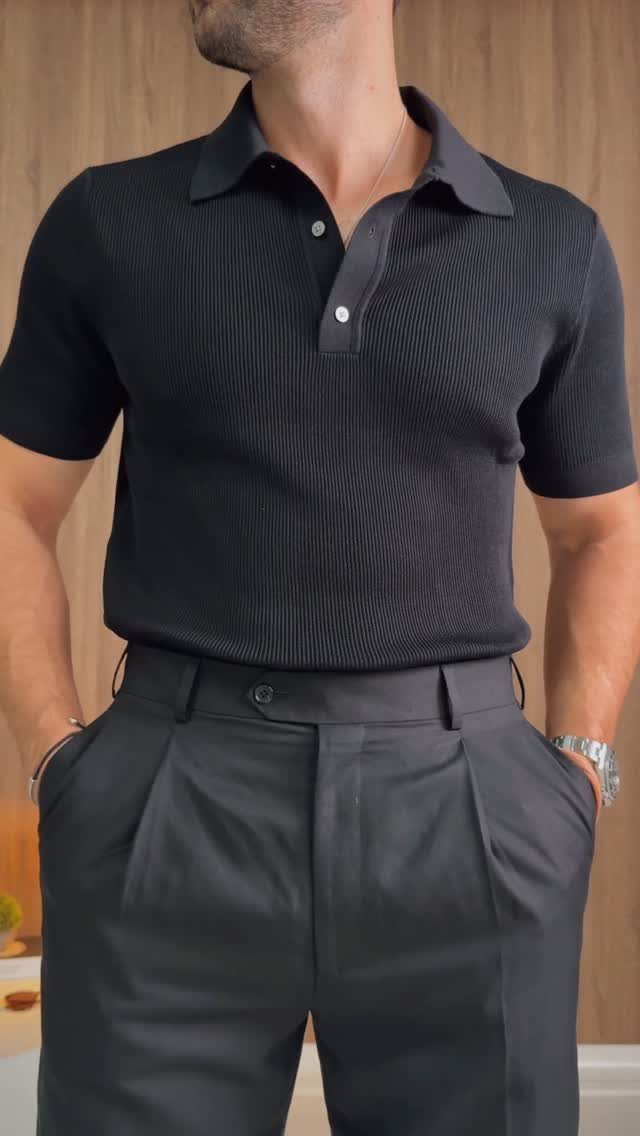
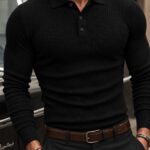
A knit polo tucked into pleated trousers lands somewhere between a dress shirt and a sweater, with the collar of a polo and the structure of knitwear.
The black-on-black here reads minimal and refined. Pleats add room through the hips without loosening the waist, so the trousers sit clean even when you’re moving.
Short sleeves work in warm offices or when you’re layering a coat over it. Long sleeves read more formal and layer better under blazers.
Some of the coolest technology on the planet – it’s 19 times more breathable than cotton pique fabric – powers this supremely high-performing, polished dress shirt.
8. Button-Down with Clean Sneakers
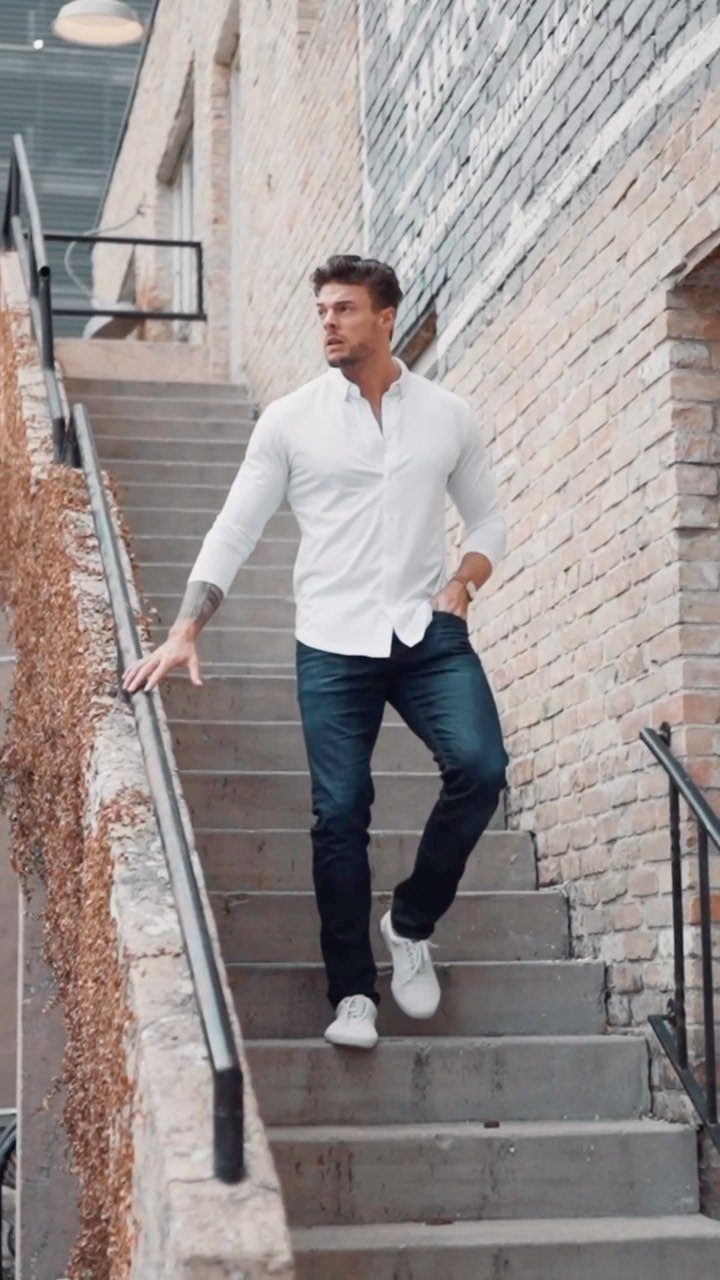
White sneakers under a button-down and trousers work when the sneakers are clean and minimal. Leather or canvas, no visible branding, white or off-white.
The contrast here is high: white shirt, navy trousers, white shoes. That keeps the outfit from looking like you forgot dress shoes, because the sneakers match the shirt.
Tuck the shirt. An untucked button-down with sneakers tips too far into weekend wear, and the trousers lose their shape.
9. Suit with Open-Collar Shirt
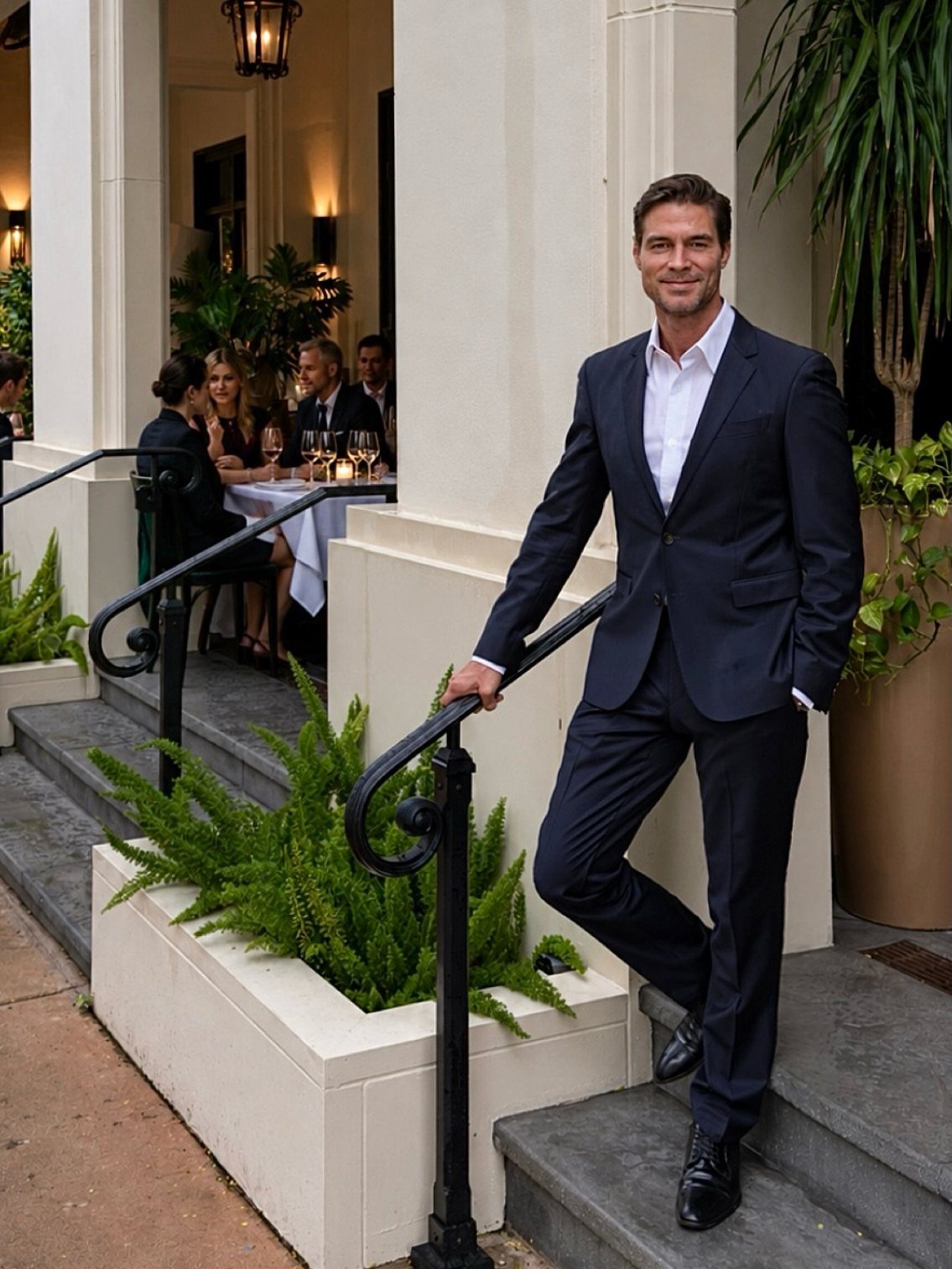
Dropping the tie and leaving the collar open softens a suit without losing the structure. The navy suit here stays formal, the open collar makes it approachable.
This works best when the shirt is white or light blue, and the suit fits close enough that the open collar doesn’t leave too much fabric bunching under the lapels.
Skip this in offices that still expect ties. Everywhere else, it’s the fastest way to wear a suit without looking like you’re headed to court.
Understanding Business Casual
Business casual sits between formal suiting and casual wear, and the line moves depending on where you work.
Public-facing roles or high-prestige offices lean closer to business: collared shirts, dress trousers, leather shoes. Smaller, private, or relaxed workplaces give you more room to trend casual.
Watch what the people in your office actually wear. That tells you more than any general rule can.
Going too casual reads as careless.
A collared shirt with chinos or dress trousers, leather shoes, and an optional blazer cover most offices. What counts as business casual shifts by field, but the goal stays fixed: look put together without looking like you’re headed to court.
Fit Is Key
Fit decides whether an outfit works. A tailored shirt or pair of trousers will always look better than expensive pieces that don’t sit right on your body.
A shirt that bags at the waist or trousers that fold over your shoes will wreck the cleanest outfit you can build. Try everything on before you buy it, and tailor what doesn’t fit off the rack.
Tailored clothing costs more upfront, but it lasts longer and looks intentional every time you wear it. Fit is the difference between looking put-together and looking like you borrowed someone else’s clothes.
Mixing Formality Levels
A tailored blazer over distressed denim reads confused because the jacket says one thing and the jeans say another.
The blazer reads structured and polished, the jeans read relaxed. That gap makes the outfit look unplanned.
Match the level of formality from top to bottom. A blazer pairs better with chinos or dress trousers than with distressed denim.
Leather shoes pair better with tailored trousers than with cargo pants. Each piece should sit at roughly the same level of polish.
When business casual isn’t formal enough, a full suit is still the safer choice for interviews, important meetings, or evening events.
You can always dress a suit down by skipping the tie. Overdressing rarely costs you anything.
Frequently Asked Questions
What is business casual for men?
Business casual sits between a suit and weekend clothes: professional, but not formal. The goal is looking put together without the stiffness of formal suiting.
Do I need a tie for business casual?
A tie is optional in most business casual settings. Skip it unless your office still expects ties, but keep one ready for interviews or important meetings where business formal is safer.
Do jeans come under business casual?
Dark, well-fitted jeans without rips can work in some offices, but chinos or dress trousers are safer.
Jeans paired with an unstructured blazer stay casual enough to avoid looking rigid, but not all workplaces accept denim. If you’re unsure about jeans, see what your coworkers show up in first.