
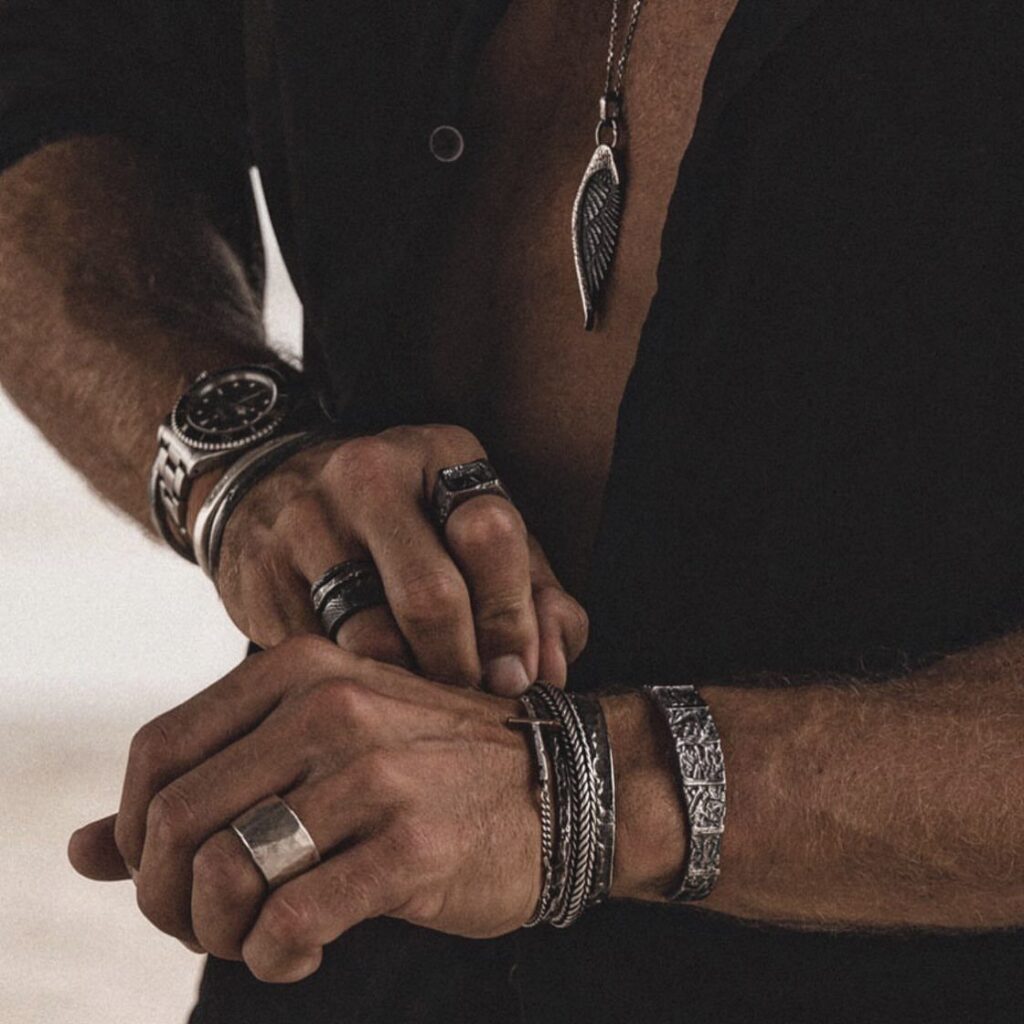
A ring or bracelet says more about how carefully you got dressed than the jacket itself, and choosing one well means someone reads intention before they take in the rest of the outfit.
A ring or watch sets the tone before someone takes in the whole outfit, and getting the details right separates careful dressing from throwing on whatever was closest.
1. Rings
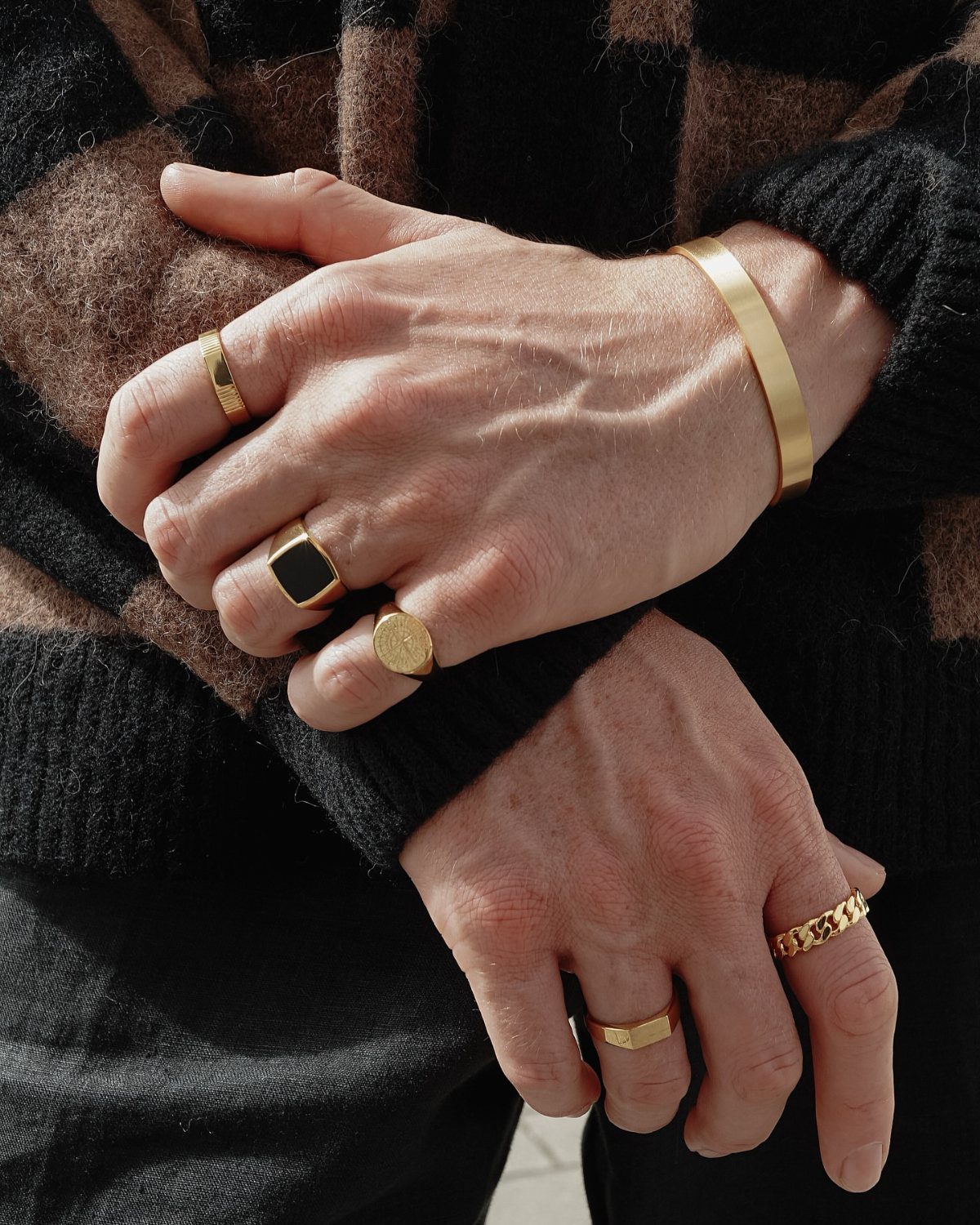
Rings let you carry metal on your hands without the commitment of a sleeve full of bracelets.
Gold works across most skin tones and warms up against darker sweaters or jackets, though silver runs cooler if that suits your watch or other metal better.
Stacking several on one hand reads intentional; spreading them thin across both can look accidental. Start with one or two on your dominant hand and add from there if it feels right.
Once a telltale sign of social standing, now signet rings just let people know you’re stylish.
— GQ
2. Cufflinks
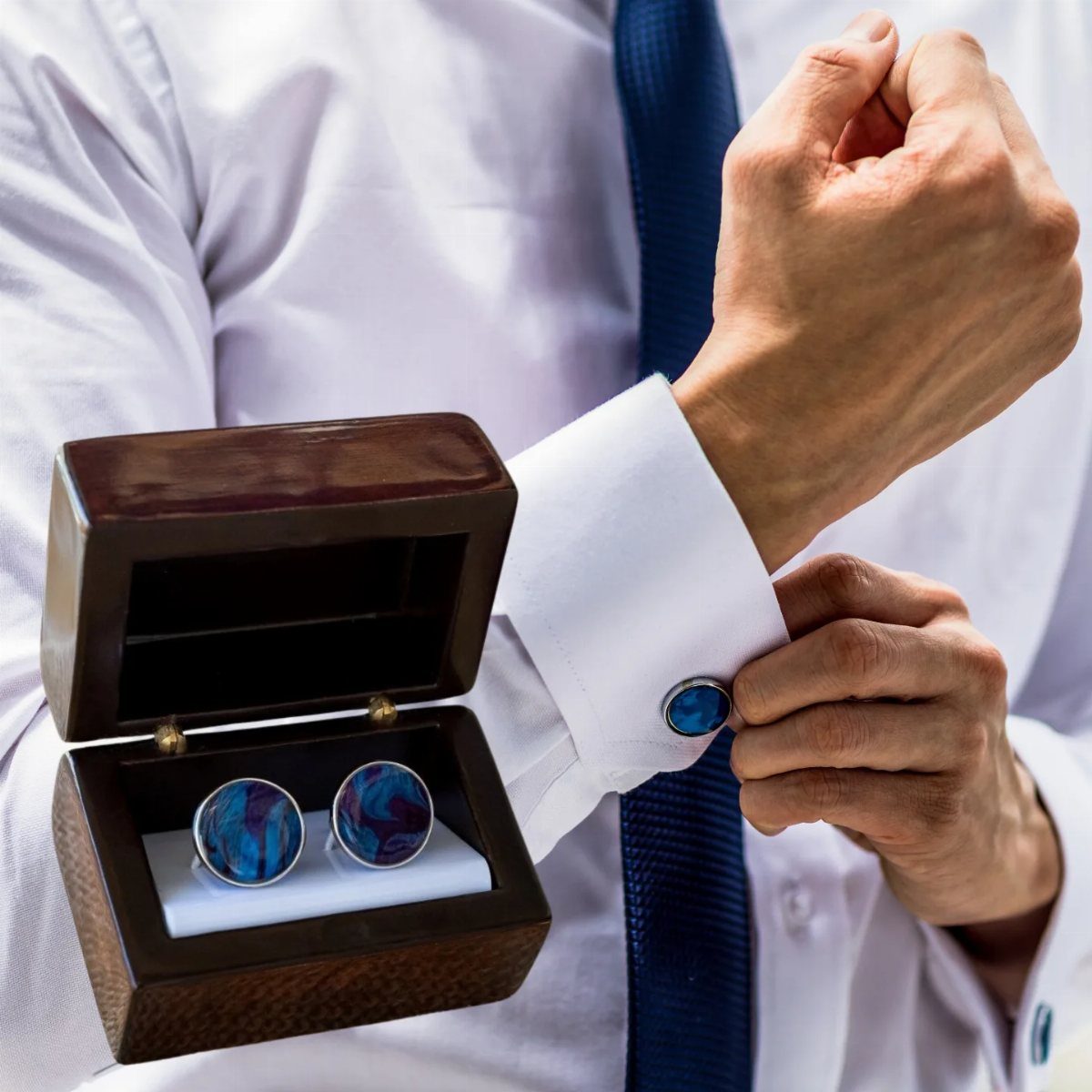
Cufflinks replace the buttons on a French cuff shirt, which means the shirt itself has to cooperate: look for cuffs with no sewn button, just the holes.
The ones with a simple metal backing are faster to fasten than chain-link or silk-knot styles, and they sit flatter under a jacket sleeve.
Color can match your tie or contrast it. Blue enamel or stone inlays lift a white shirt without adding much weight.
3. Chains
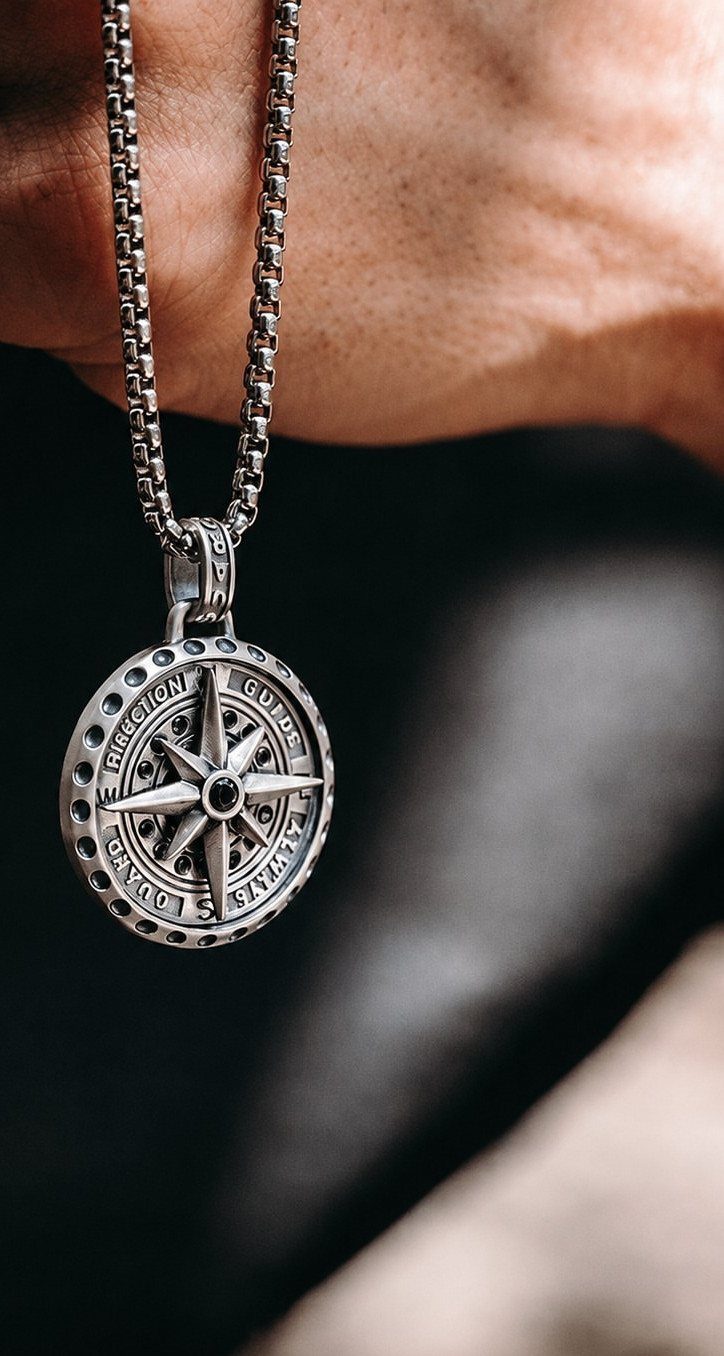
A chain sits at the base of your neck and catches light when your shirt collar opens. Box link and rope link both hold a pendant securely, and either sits flat instead of twisting under a shirt.
Silver suits cooler-toned skin and layers well with black or grey.
Gold warms up against tan, brown or olive. Keep the chain thin enough that the pendant, not the chain itself, does the talking.
4. Gloves
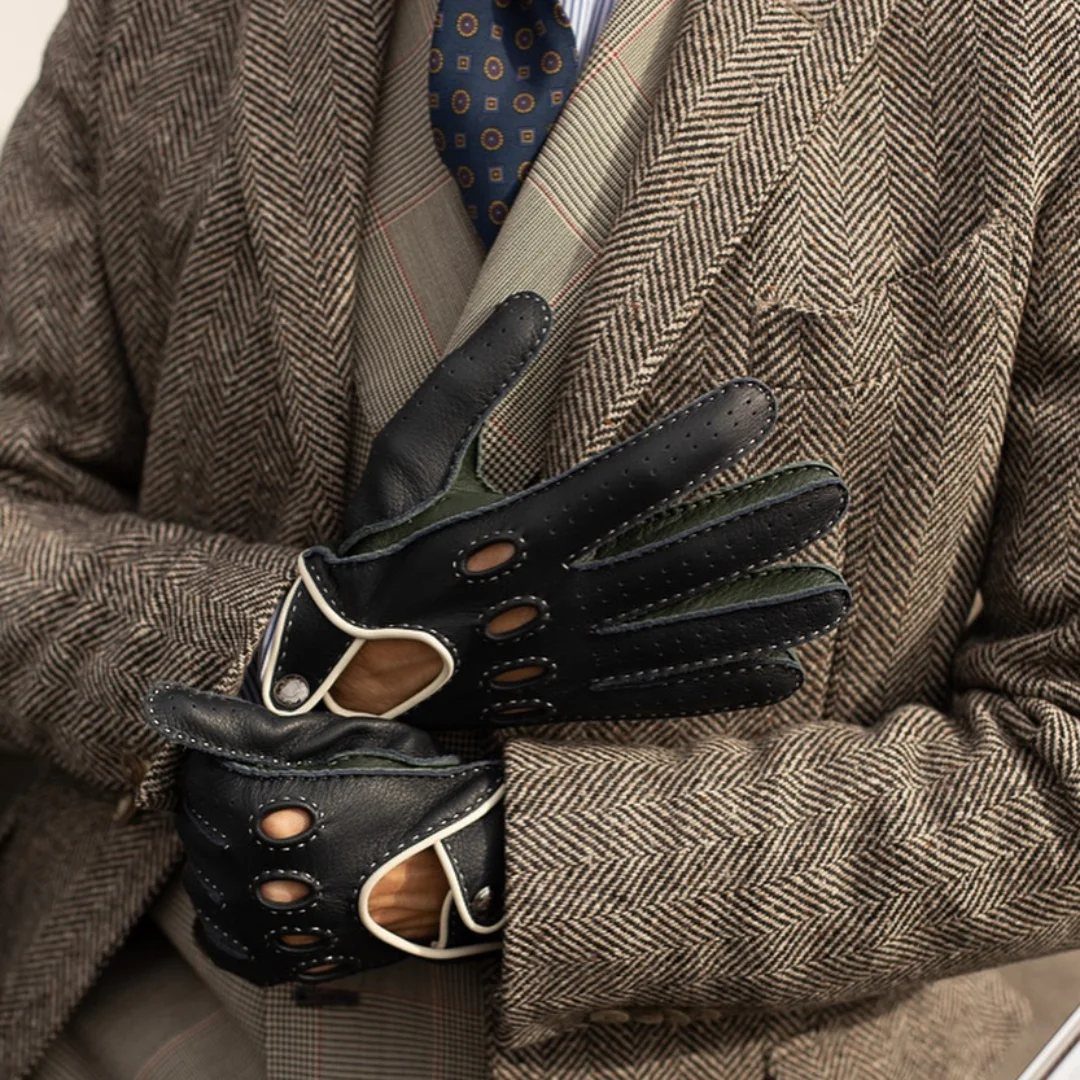
Gloves cover your hands when the temperature drops, and leather holds up longer than knit.
Driving gloves have perforations across the knuckles and fingers for airflow, originally cut for grip on a wheel but now worn casually with tailored coats or blazers.
Black leather works with most outerwear.
Brown or tan softens the look if your jacket runs lighter. Lined versions add warmth, unlined ones give you more control over a phone or keys.
5. Ties
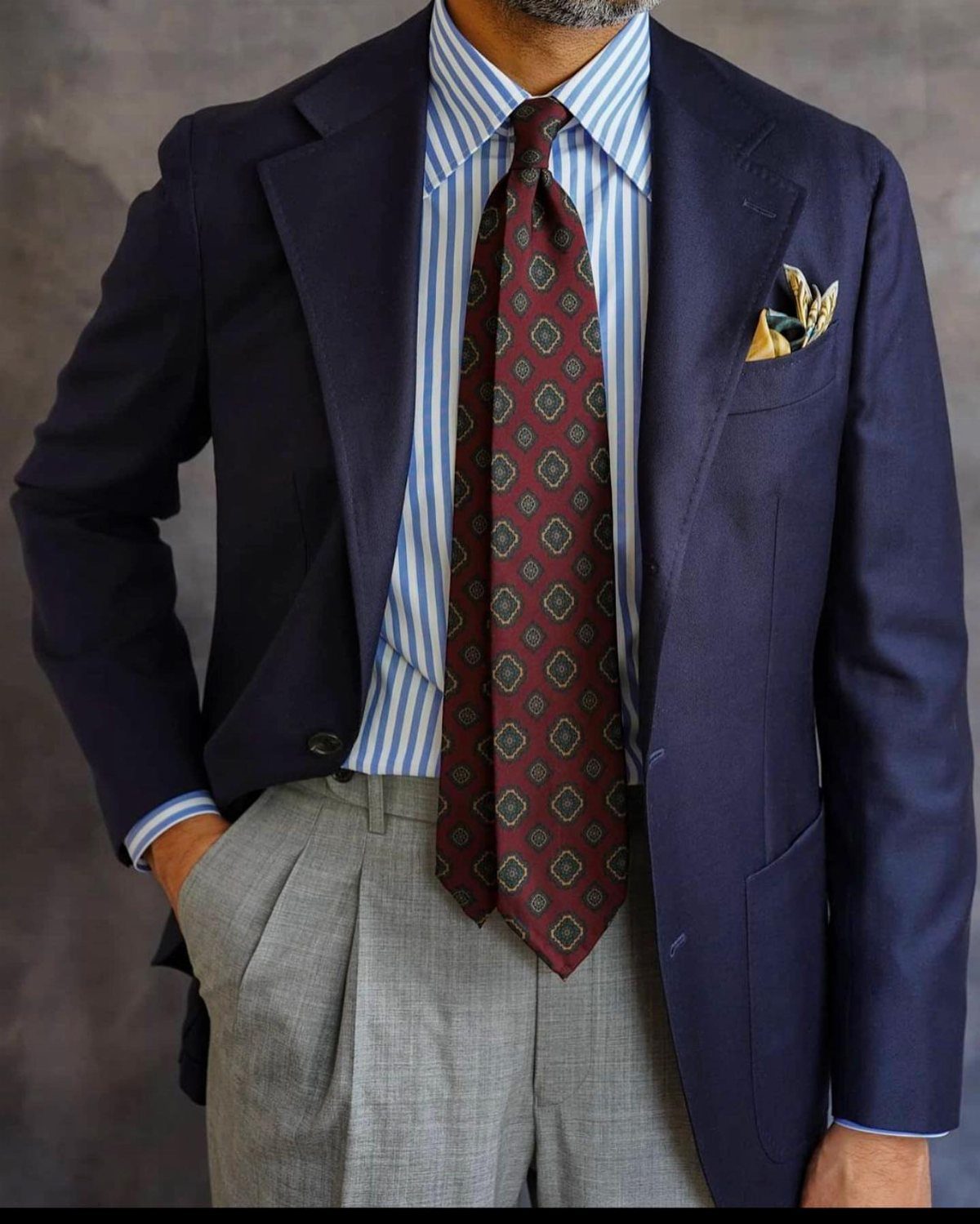
A tie fills the space between your collar and your chest, and the pattern or color you choose sets the mood before you say anything.
Silk holds a dimple better than polyester and drapes without stiffness.
Knit ties flatten the formality slightly if your blazer and shirt already cover the structure. Width should match your lapel: 3 inches for most modern jackets, slightly less if you run slim.
6. Scarves
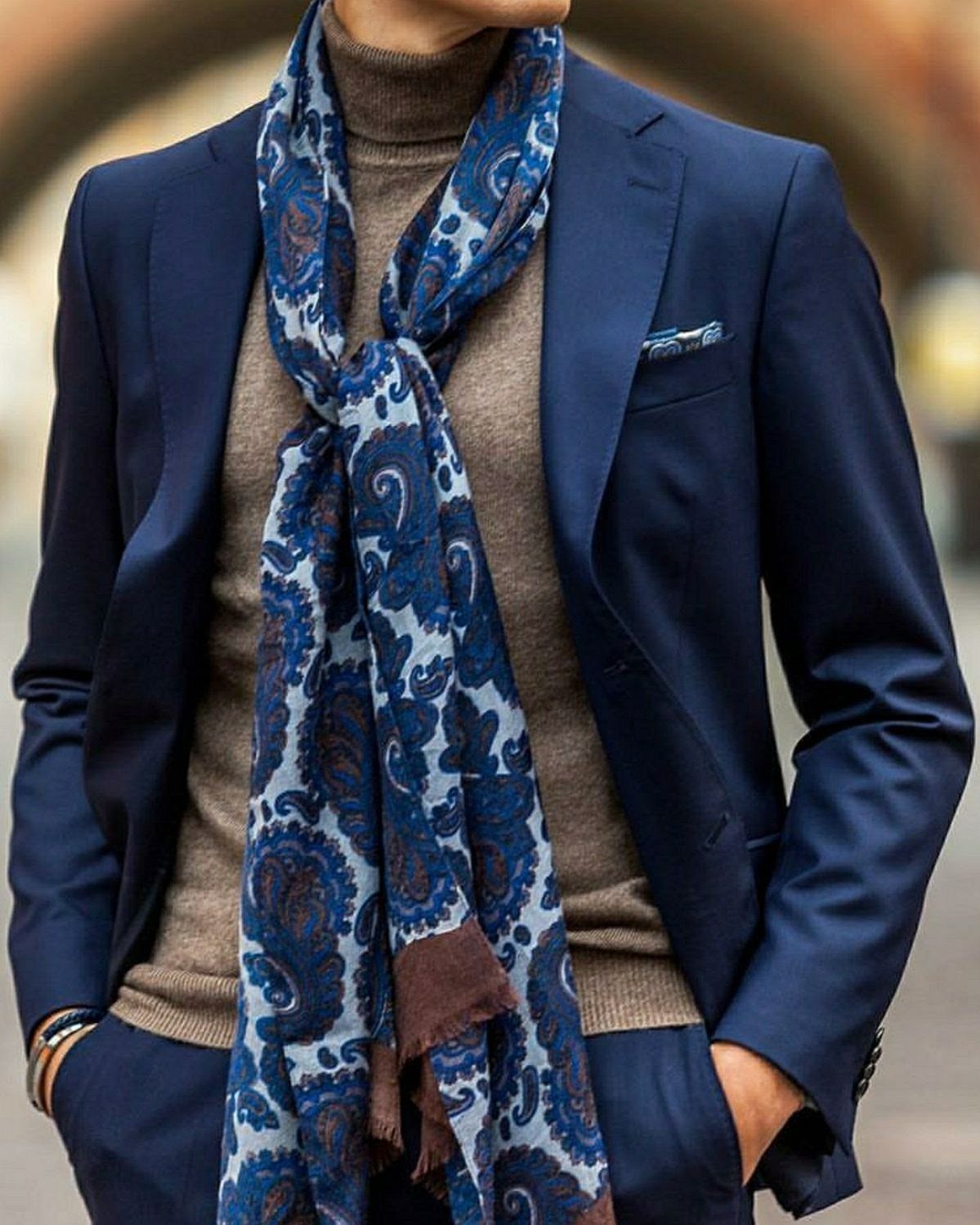
A scarf wraps your neck when a coat alone is not enough, and because it sits inside your collar line, it changes the color closest to your face.
Wool and cashmere both insulate well, though cashmere feels softer and packs thinner under a blazer.
Paisley or geometric prints lift a plain navy or charcoal coat without clashing.
Solid scarves in camel, burgundy or forest green work when your coat already has texture. Fold it once lengthwise and loop the ends through for a clean drape that stays put.
7. Wristwatches
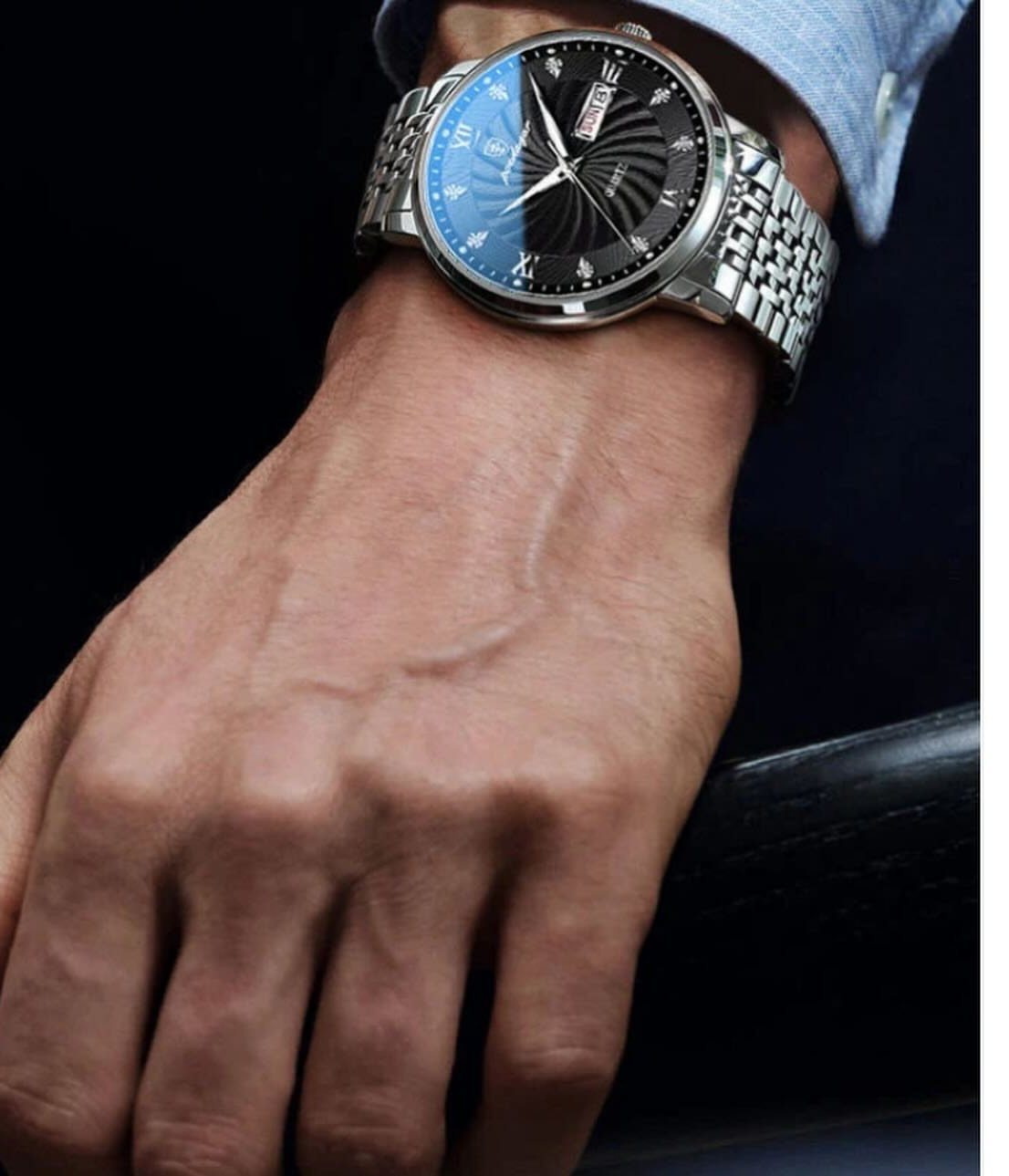
A watch sits on your wrist and tells time without pulling your phone from your pocket.
Metal bracelets in steel or silver match most tailoring and carry weight that feels deliberate. Leather straps soften the look if your suit already runs formal.
Black dials disappear under a dark sleeve and reappear when your cuff pulls back. Keep the case small enough to fit inside your shirt cuff instead of catching on it.
8. Sunglasses

Sunglasses cover your eyes in bright light and sit high enough on your nose that they do not slide when you move.
Darker lenses reduce glare better than lighter tints, and tortoiseshell frames warm up against tan, camel or brown jackets.
Black frames work with most tailoring but flatten contrast if your coat and shirt already run dark.
Metal frames in gold or silver match your watch or ring and sit lighter on your face. Lenses should sit just below your eyebrows without touching your cheeks.
9. Pocket Squares
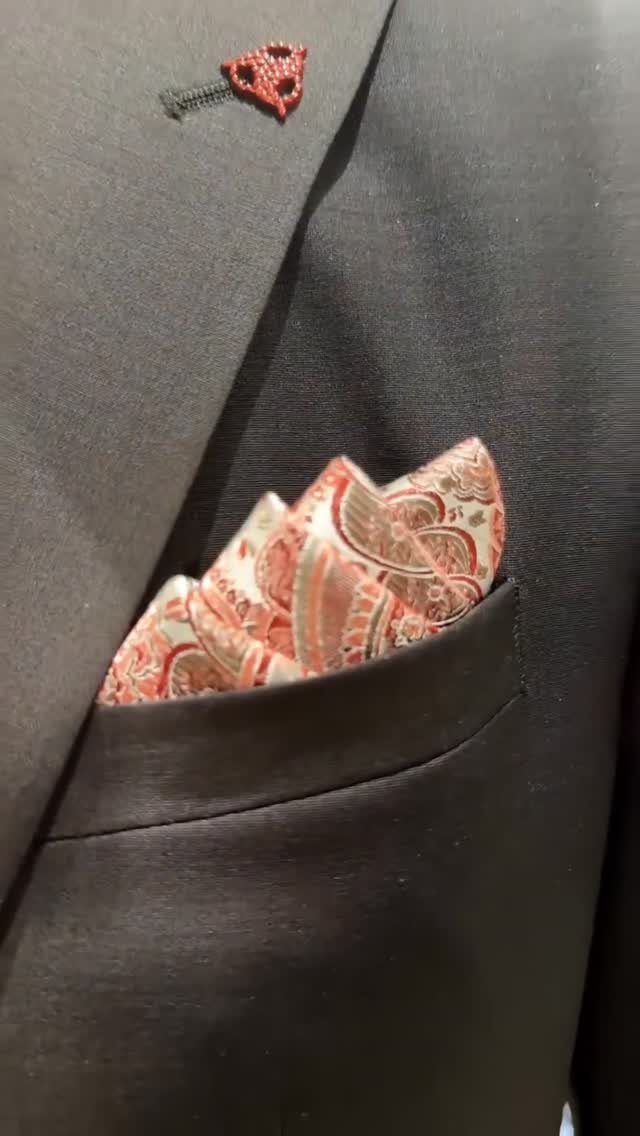
A pocket square fills the chest pocket of your jacket and adds color or pattern closer to your face than your tie can reach.
Paisley or geometric prints work when your tie stays solid, and a solid square balances a patterned tie.
Fold it once or twice so the edge sits just above the pocket line, or stuff it loosely for texture that moves with your jacket.
Linen holds a sharp fold, silk softens it. Match one color in your tie or shirt, or contrast both if the rest of your outfit stays neutral.
10. Bracelets
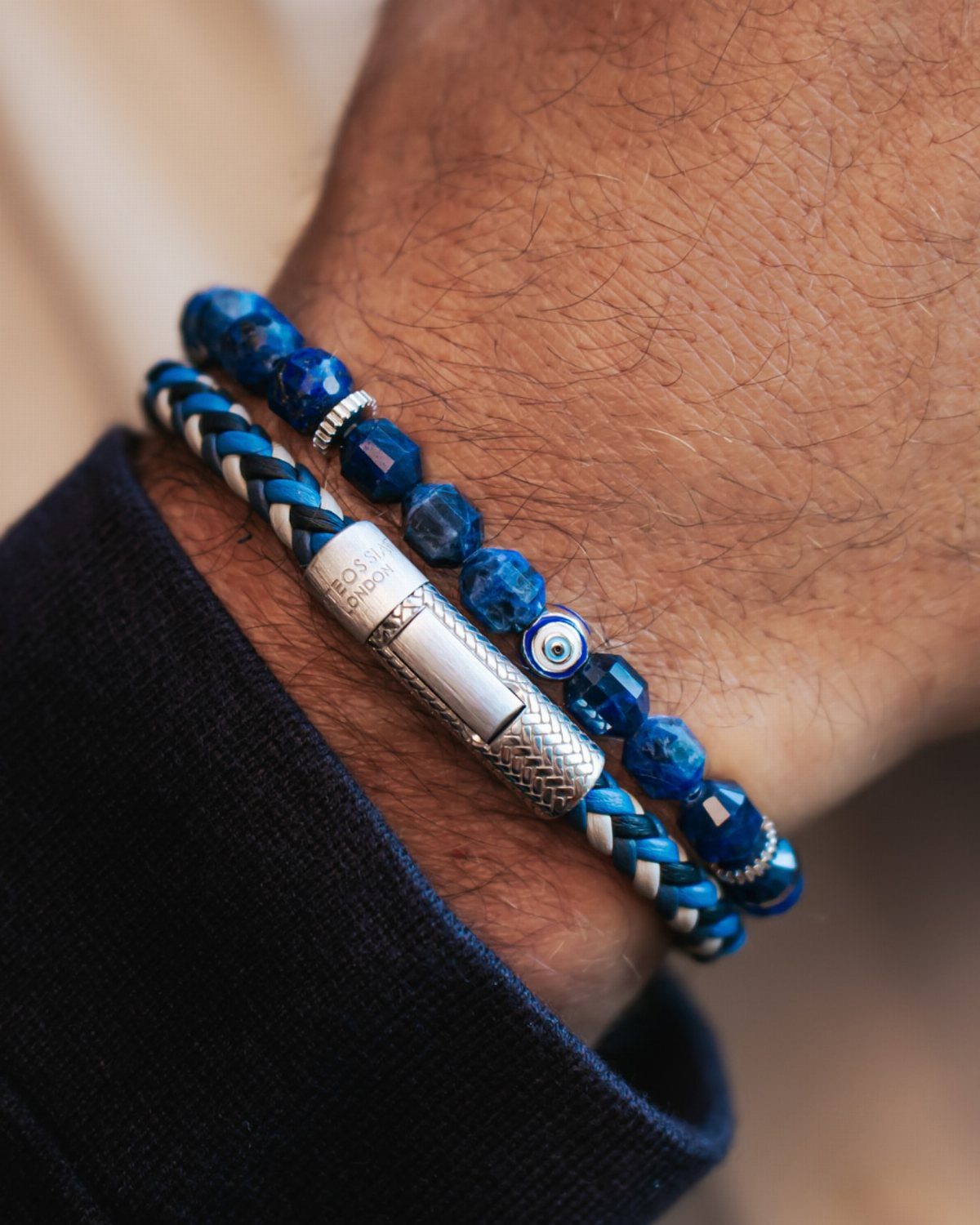
Bracelets sit below your watch or on the opposite wrist, and beaded styles stack without tangling the way metal chains can.
Blue or dark stone beads suit navy, grey or black shirts, and leather braids in matching tones keep the wrist from reading too heavy.
Start with one and add a second if the first feels thin.
Metal clasps or closures should match your watch or ring so the metals do not compete. Keep the fit loose enough that the bracelet moves when your wrist does.
11. Leather Belts
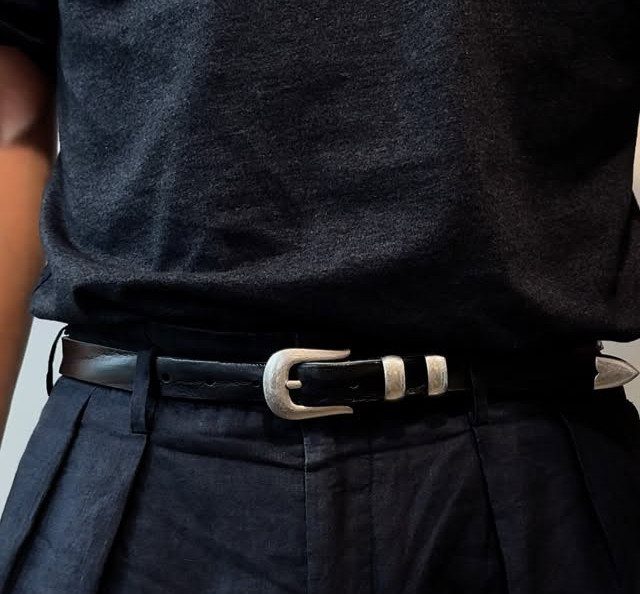
A belt loops through your trousers and holds them at your waist, and leather outlasts canvas or woven fabric. Brown leather warms up against khaki, tan or olive trousers, while black works with grey, navy or black.
The buckle should match the metal on your watch or shoes.
Silver-toned buckles suit black or dark brown leather, brass or gold tones lift lighter brown. Width should match your trouser loops: narrower for dress trousers, slightly wider for jeans or chinos with larger belt loops.
12. Baseball Caps
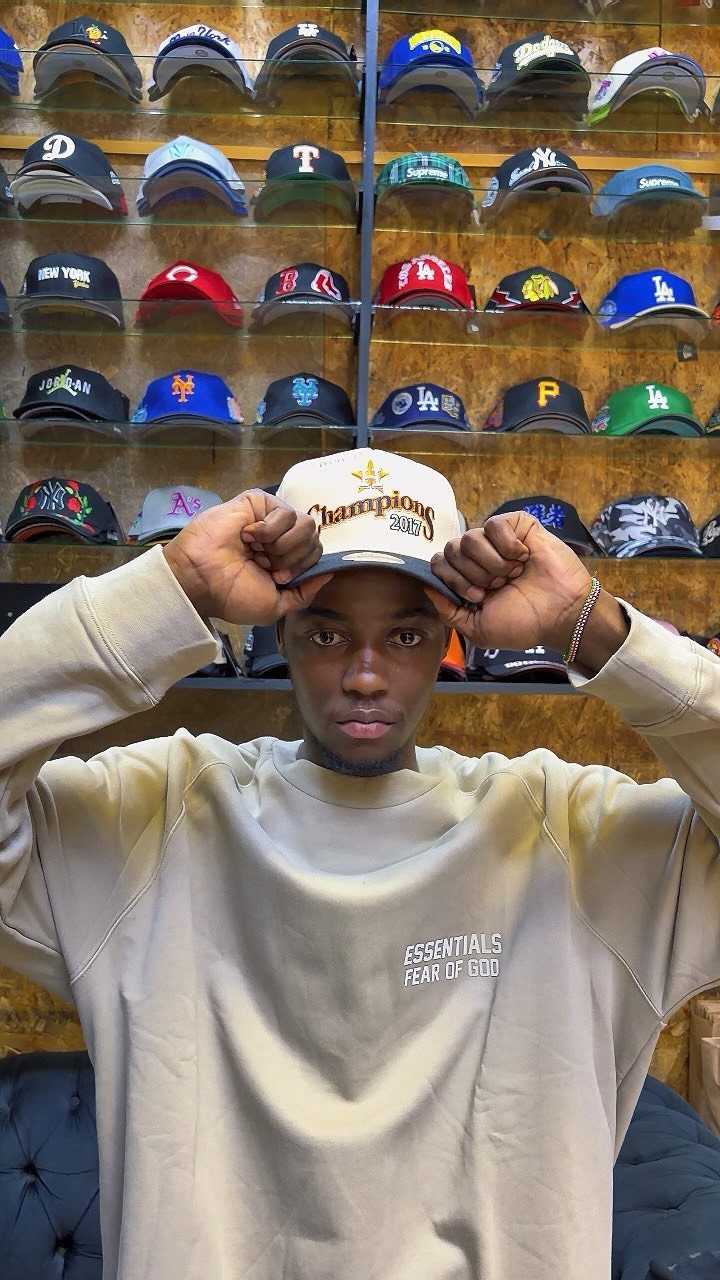
A baseball cap covers your head in casual settings where a fedora or brimmed hat would overcomplicate the outfit. Cotton twill holds its shape better than mesh-back styles, and a curved brim looks less aggressive than a flat one.
White or neutral caps lift a dark sweatshirt or jacket without introducing pattern.
Logos or text keep the cap informal, so save it for weekends or errands rather than anything close to tailoring. Adjust the back strap so the cap sits just above your eyebrows without sliding forward.
Caring for Accessories
Metal accessories stay brighter when you polish them every few weeks with a cleaner made for the metal. Sterling silver benefits from regular wear, which slows tarnish, but store it away from moisture when you are not using it.
Watches need a quick wipe after each wear to clear oils and dust from the case and band.
If a mechanical watch starts running fast or slow, service it before the timing drifts further. Leaving a problem unaddressed can wear the movement down faster than normal use would.
Leather belts and gloves last longer when you let them air out between wears instead of folding them damp into a drawer. Conditioning leather once or twice a year keeps it from cracking, especially if you live somewhere dry.
Mixing Accessories
Colors can repeat across both, but identical patterns read like a matched set rather than a choice.
A silk tie sits better with a plain shirt.
A narrow tie under a wide lapel looks unfinished, and a wide tie with a slim lapel crowds the space between your collar and chest.
Layering Accessories
Layering chains works when you vary the length so each one sits at a different point on your chest. 2 chains at the same length tangle and read as clutter instead of depth.
Bracelets stack better when they vary in thickness or material.
If your outfit already carries pattern or color, keep layered accessories simple. A rope chain and a Cuban chain both in the same metal add depth without introducing new tones that pull attention away from your shirt or jacket.