Men’s footwear splits into formal shoes like black cap-toe oxfords for interviews and weddings, casual options like loafers and boat shoes for weekends, and boots that work across dress codes or handle weather.
The setting decides the shoe: oxfords stay on the formal side of the calendar, while moccasins, boat shoes and sneakers belong to casual situations where comfort and ease matter more than polish.
Suede holds up better than most men expect, shedding light rain and lifting dirt with a brush, which makes it a practical choice for boots and sneakers worn with jeans and chinos.
1. The Loafer
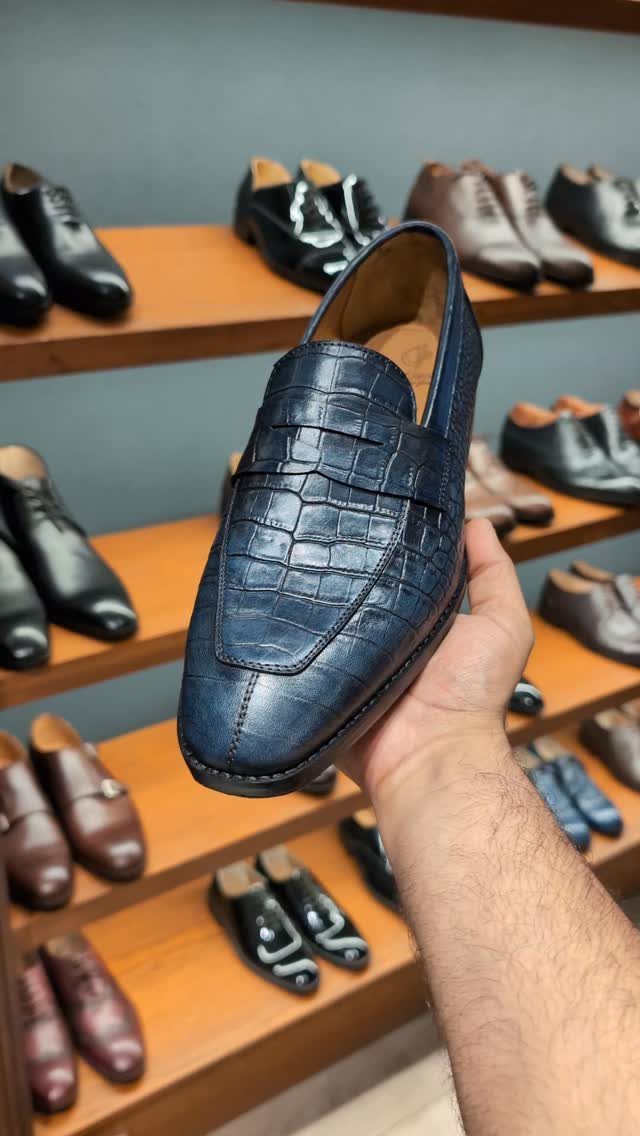
A slip-on shoe with no laces, built on a low heel and a clean profile. The loafer bridges the gap between sneakers and dress shoes: formal enough for business casual, comfortable enough to wear all day.
Leather is the standard material.
Suede softens the look for weekends, while polished calfskin keeps it sharp for the office. Crocodile embossing adds texture without crossing into costume territory.
Pair them with chinos, dark denim, or wool trousers. Skip athletic socks; go bare or use no-show liners.
2. Chelsea Boot
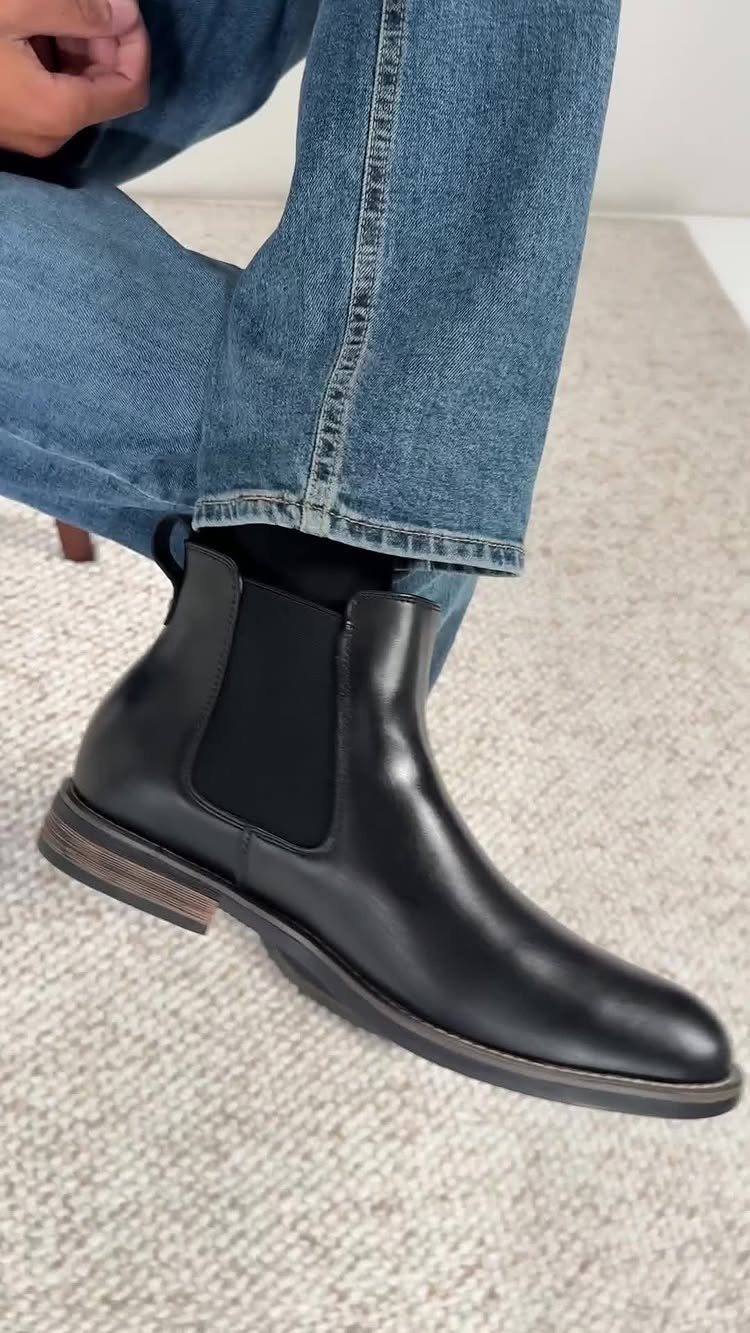
A slip-on boot with elastic side panels, cut above the ankle. The Chelsea boot handles rain and cold better than loafers while staying sleek enough to wear under slim trousers.
Black leather works year-round and pairs with nearly everything.
Brown or tan suede leans more casual. The elastic panels make them faster to pull on than lace-up boots, which matters on cold mornings.
The shape looks best when the shaft fits close to your ankle.
Too loose and the boot slouches; too tight and the elastic puckers. Wear them with tapered jeans or wool pants that break just above the boot.
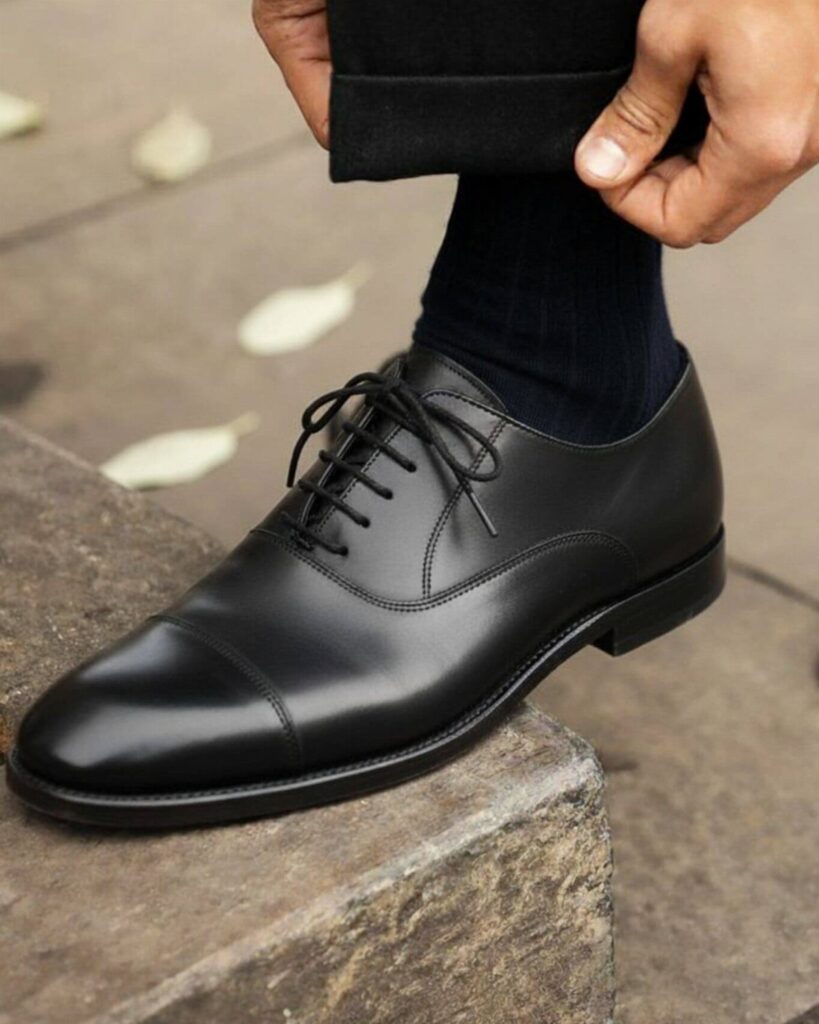
3. Black Cap-toe Oxford
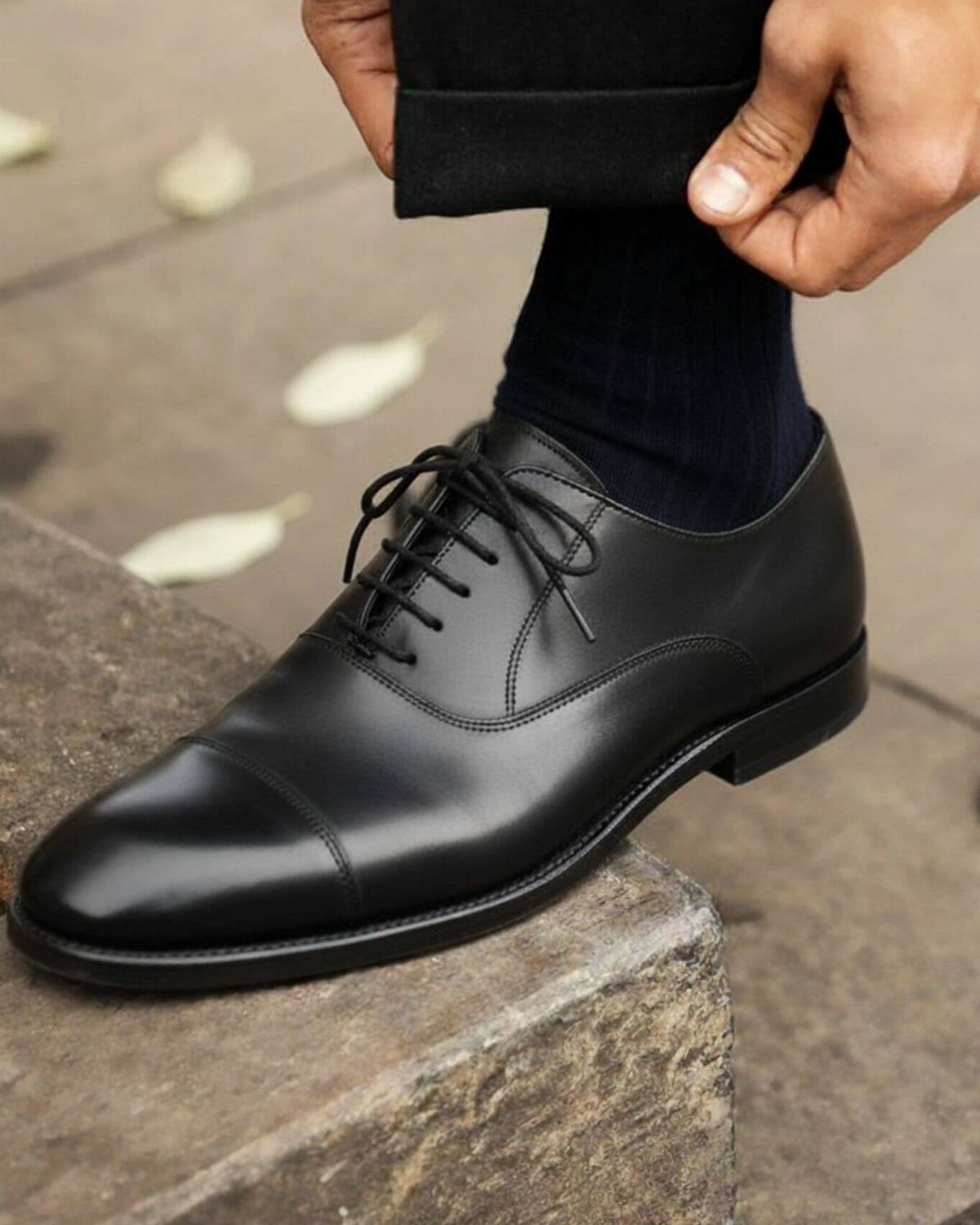
The most formal shoe a man wears outside of black tie.
A cap-toe oxford has a stitched line across the toe and closed lacing, which sits flush under the vamp. That structure keeps the silhouette clean and serious.
Black leather is the only choice here.
Brown dials the formality down too far. The cap-toe adds a touch of detail without breaking the shoe’s restraint, which is why it works for interviews, weddings, and any situation where you need to look polished.
Wear them with a suit or dress trousers. Keep the leather conditioned and the toe cap free of scuffs.
4. Casual Derby
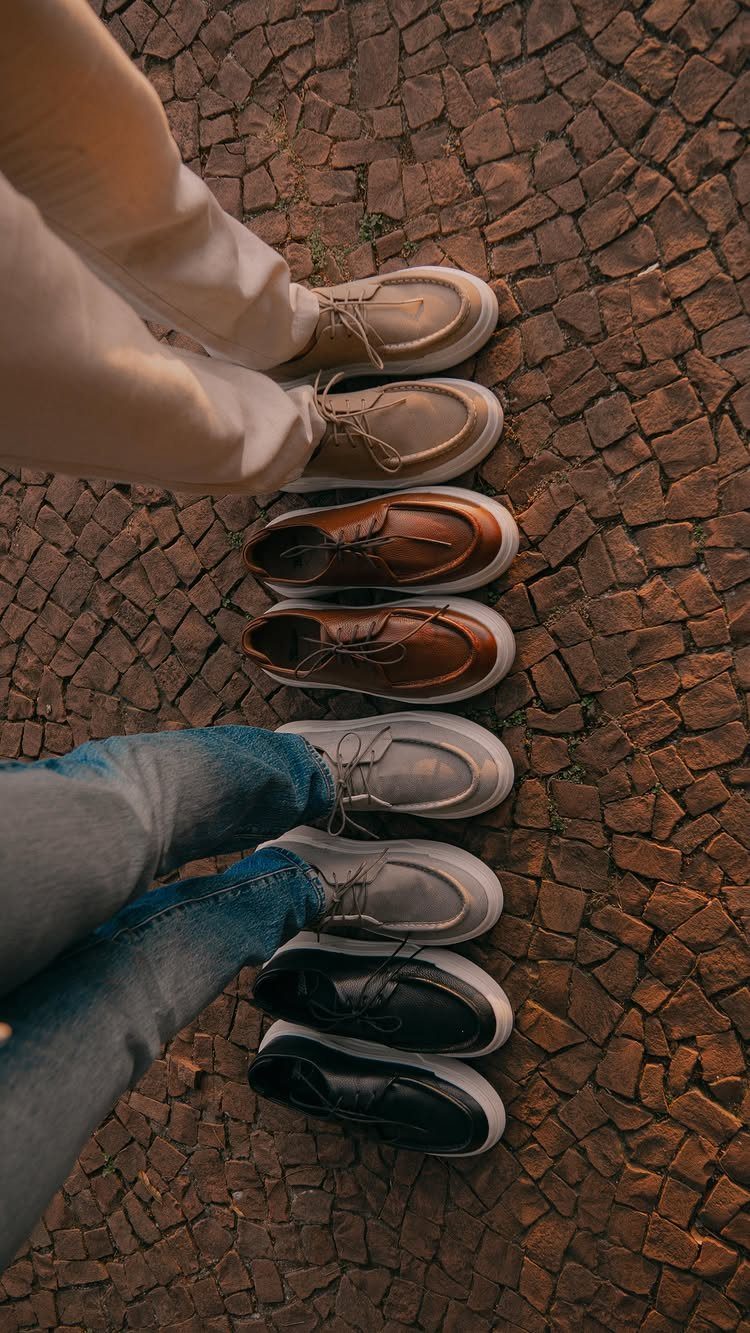
A derby has open lacing, where the eyelets sit on flaps stitched over the vamp.
That makes the shoe more forgiving across the instep and less rigid than an oxford. Suede and unpolished leather drop the formality several notches.
Open lacing means you can wear heavier socks without the shoe biting into your ankle.
5. Boat Shoes
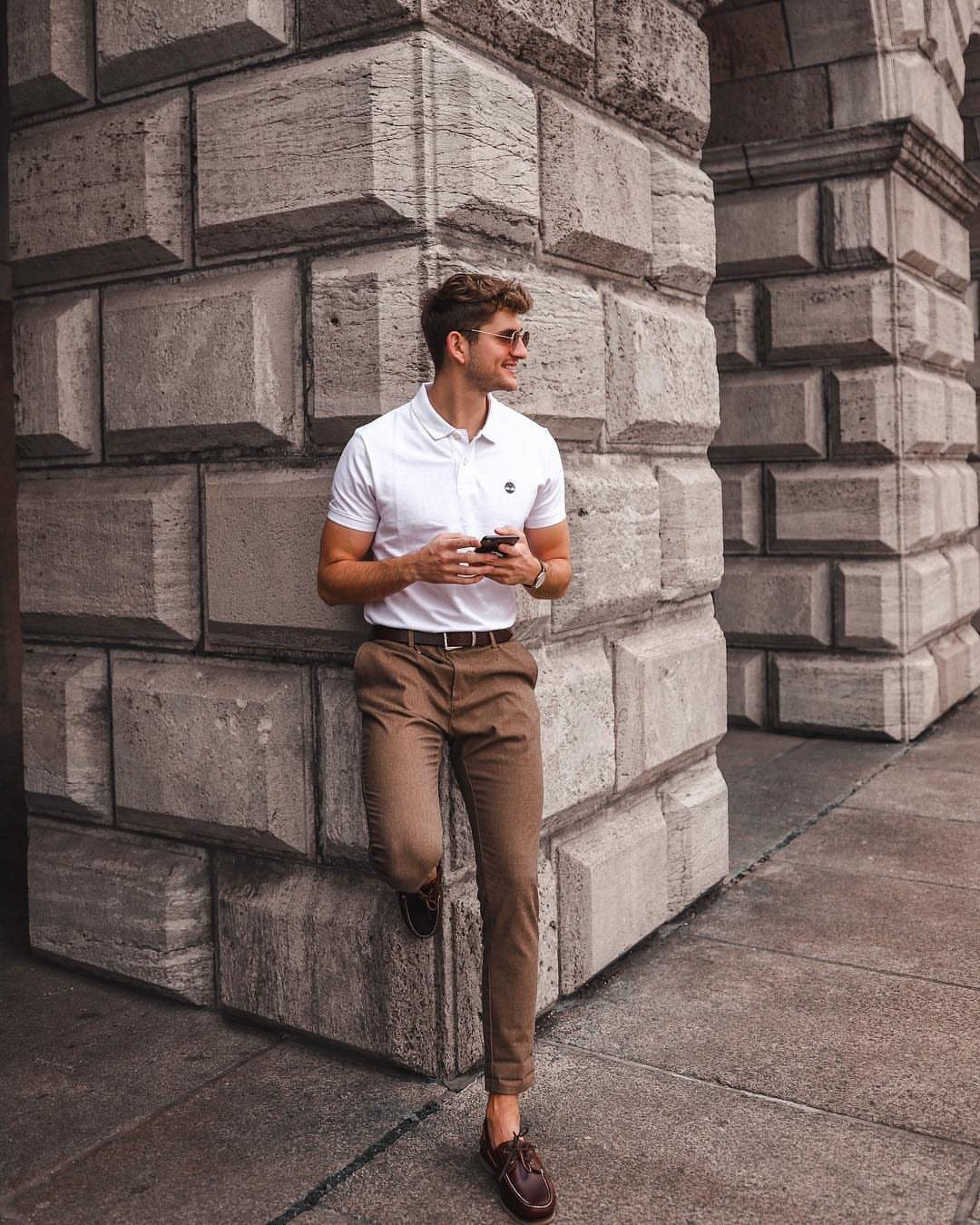
A moccasin-style shoe with leather laces wrapped around the heel and collar, originally made for grip on wet decks. Boat shoes handle summer heat better than leather sneakers and look more intentional than flip-flops.
The rubber sole provides traction but stays flat and flexible. Wear them sockless or with no-show liners; visible athletic socks kill the look.
Khakis and a polo shirt are the natural pairing.
Shorts and rolled chinos both fit the same relaxed register. The preppy associations are strong, so if that style does not fit you, skip them.
6. Hiking Boots
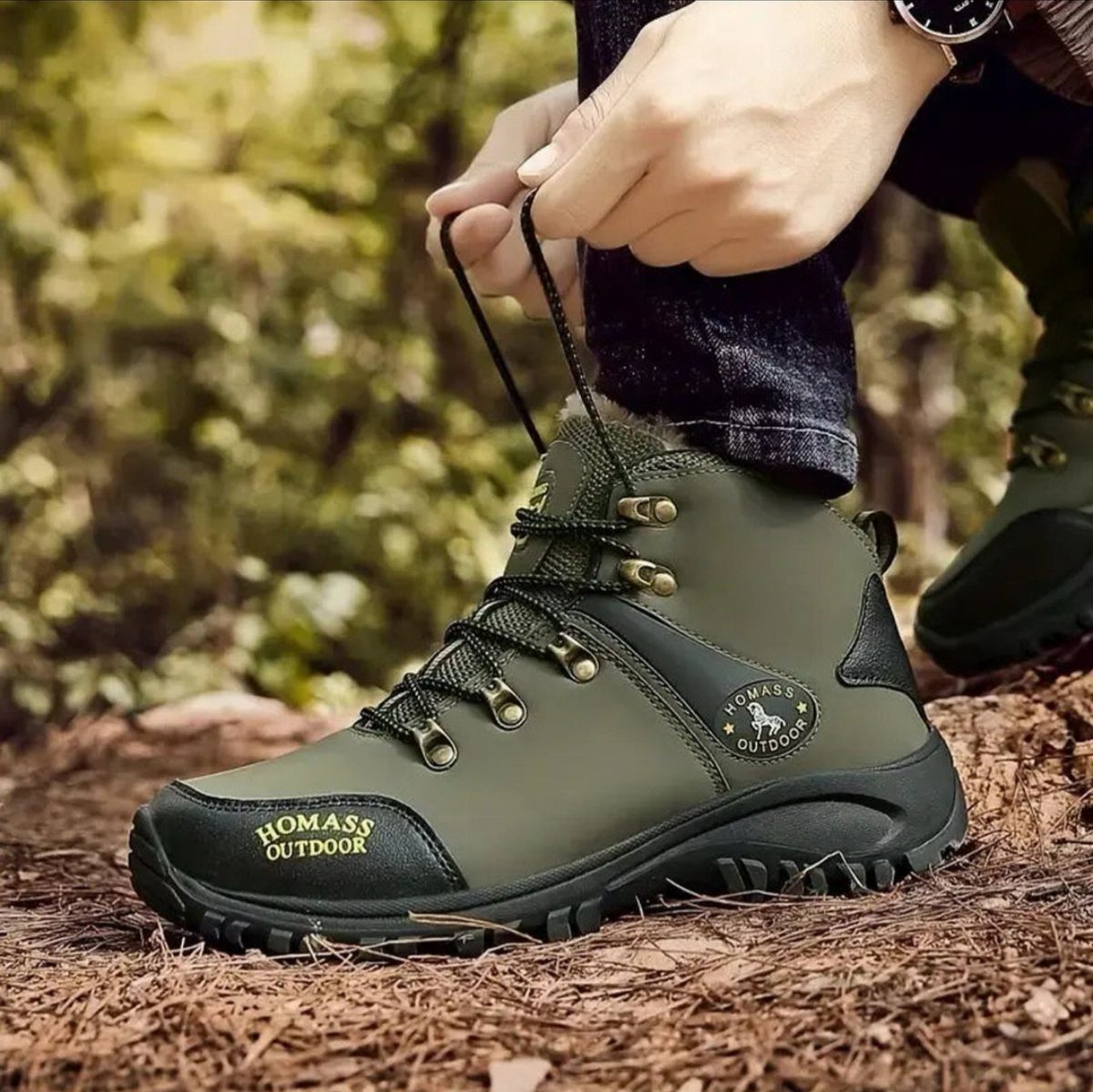
A lace-up boot built for trails, with a thick sole, reinforced toe, and ankle support. Hiking boots prioritize function over appearance, which makes them harder to wear in town but unmatched for actual outdoor use.
Olive, brown, and black are the common colors.
The sole is either rubber or a Vibram compound, both grippier than anything meant for pavement. Leather or synthetic uppers handle water and abrasion better than canvas.
Wear them with dark jeans or cargo pants when hiking or camping. They look out of place with anything dressy, so keep them for situations where traction and durability matter more than style.
7. The Sneaker
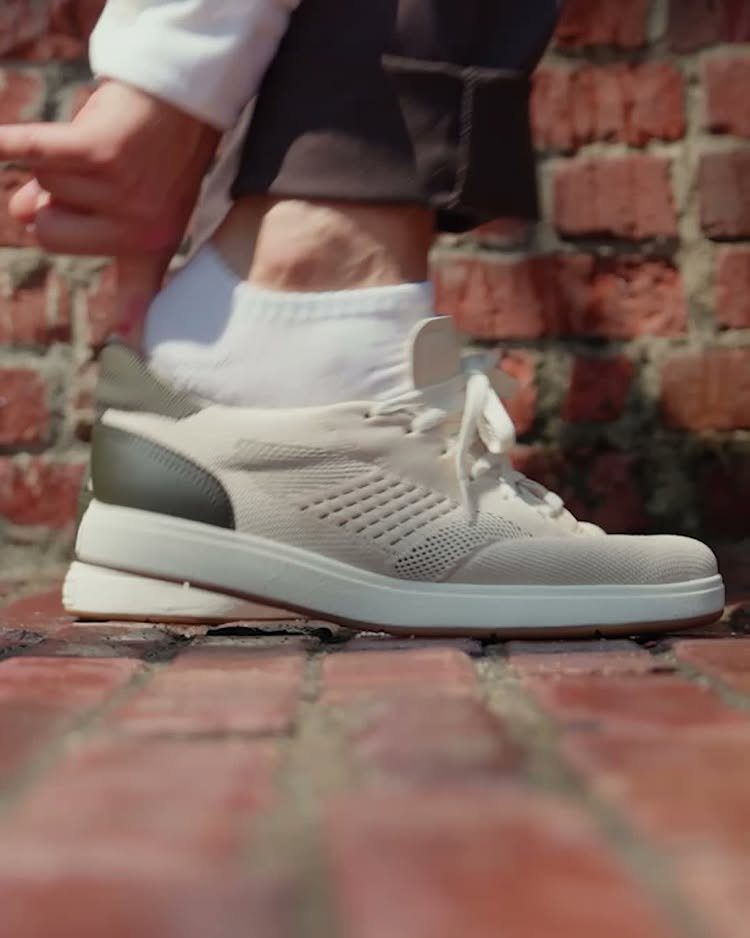
Canvas, leather, or suede uppers on a rubber sole. Sneakers handle everything from errands to casual Fridays, and the range of styles means you can find one that fits your wardrobe without leaning into athletic gear.
Neutral tones like beige, olive, grey, and white pair with more than bright colorways.
A low-profile silhouette keeps the shoe from overwhelming your trousers. Leather ages better than canvas but costs more upfront.
Clean them regularly; scuffed sneakers read as sloppy, not relaxed.
8. Suede Footwear
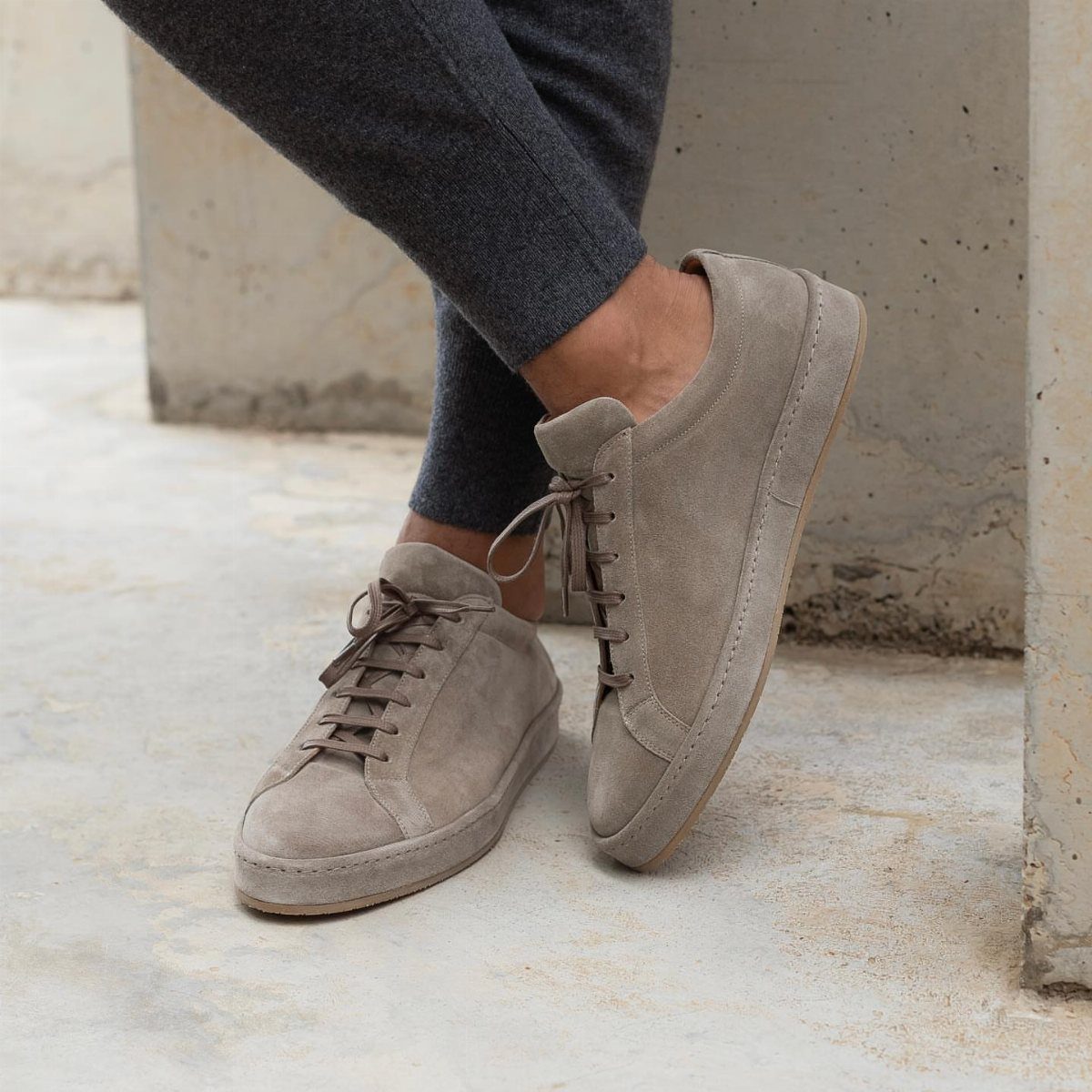
Suede holds up better than most people expect.
The nap sheds light rain, and a suede brush lifts dirt without damaging the surface. Water-repellent spray adds another layer of protection without changing the texture.
The matte finish reads as more casual than polished leather, which makes suede sneakers and boots easier to wear with jeans and chinos. Grey, tan, and olive are the most flexible colors.
Let them dry naturally if they get soaked. Stuff them with newspaper to hold the shape.
9. The Outdoor Sandal
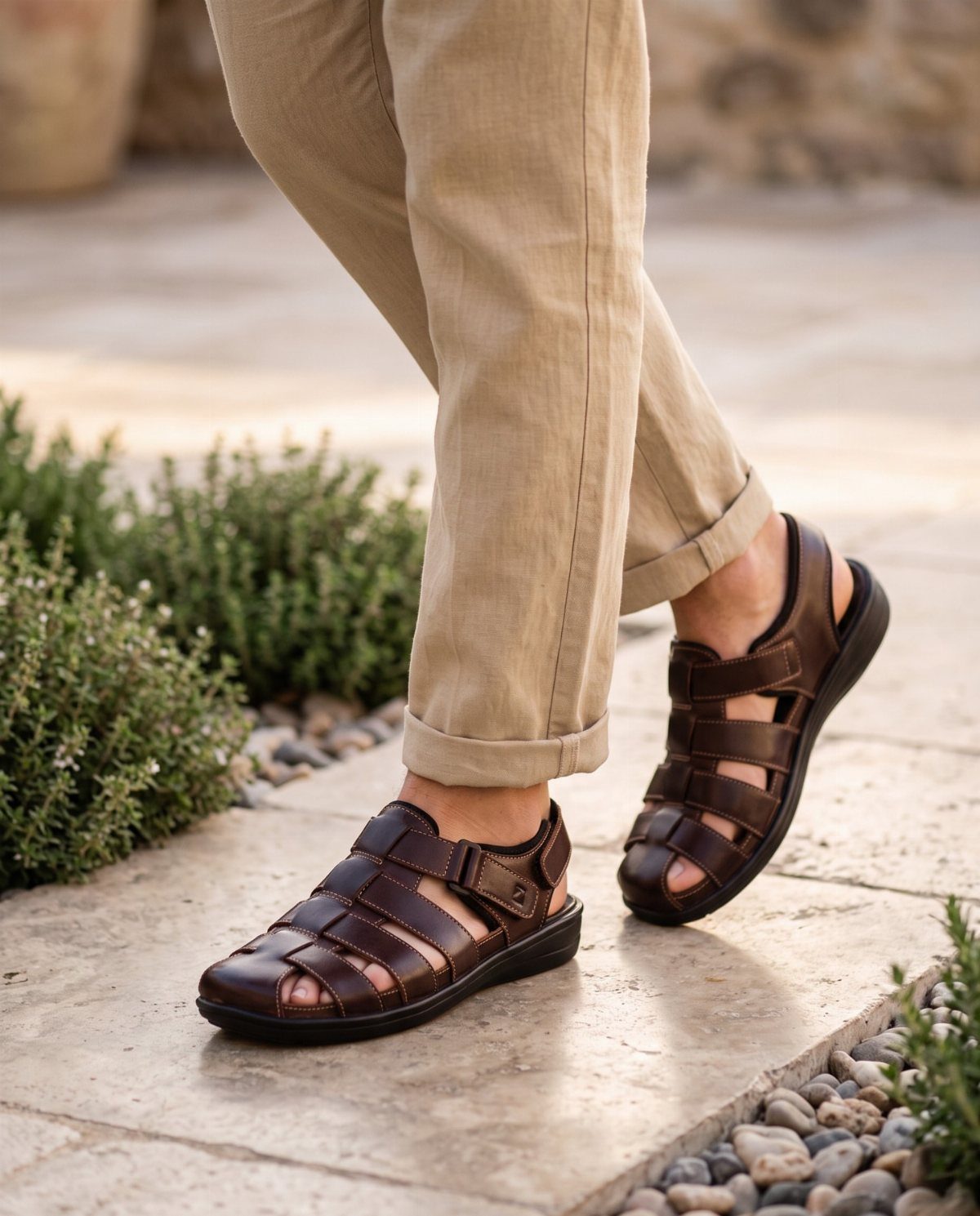
Straps and an open sole, built for summer heat and easy on and off. Outdoor sandals handle humid days better than closed shoes, and the rubber sole grips better than flip-flops on uneven ground.
Leather straps last longer than synthetic webbing and soften with wear. Keep the fit snug across the instep; loose straps let your foot slide forward, which throws off your gait.
Socks are optional, though some men prefer a low-cut pair for longer walks.
10. Chukka Boot
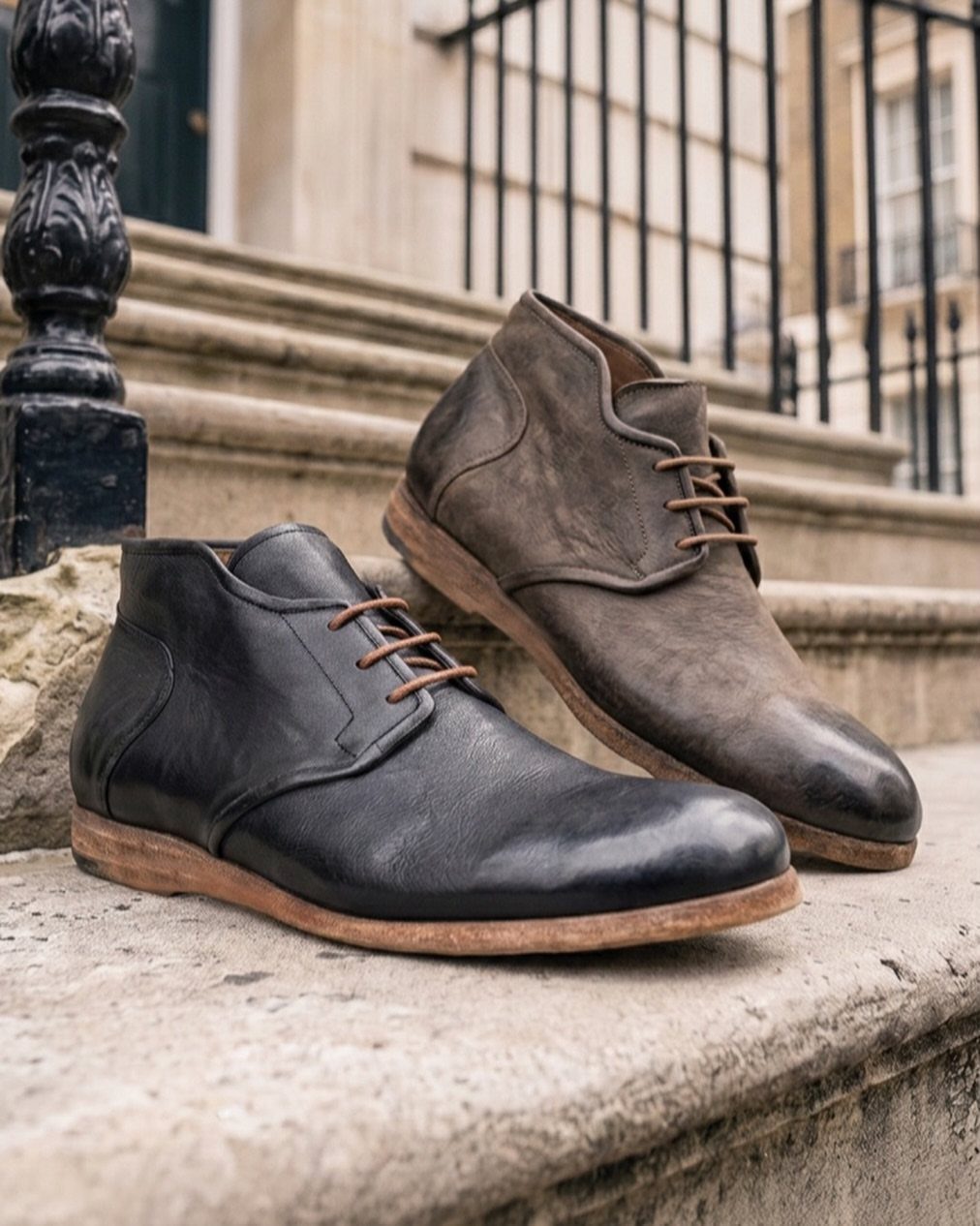
A 2 or 3 eyelet boot that sits just above the ankle. The chukka is lighter than a work boot but more structured than a sneaker, which puts it in the middle ground between casual and smart.
Leather holds up better in wet weather. The low shaft means it works under most trousers without adding bulk at the ankle.
Chukka boots pair well with blazers but stay too casual for a full suit.
11. Brogue Boot
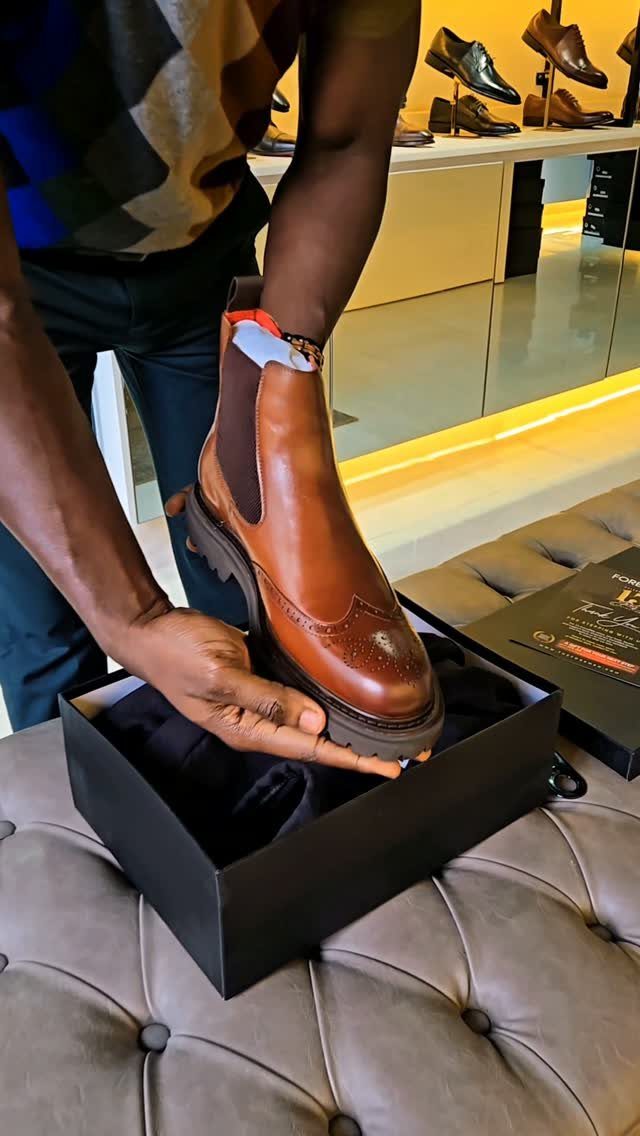
A boot with perforations along the seams and toe cap, originally punched to let water drain from hunting boots. The broguing adds visual detail without changing the boot’s function.
The perforations make the boot harder to waterproof, so keep them for dry days. The added texture dresses up dark jeans and keeps the boot from looking too plain with wool trousers.
Polish the leather regularly to keep the perforations from collecting dirt.
12. Moccasins
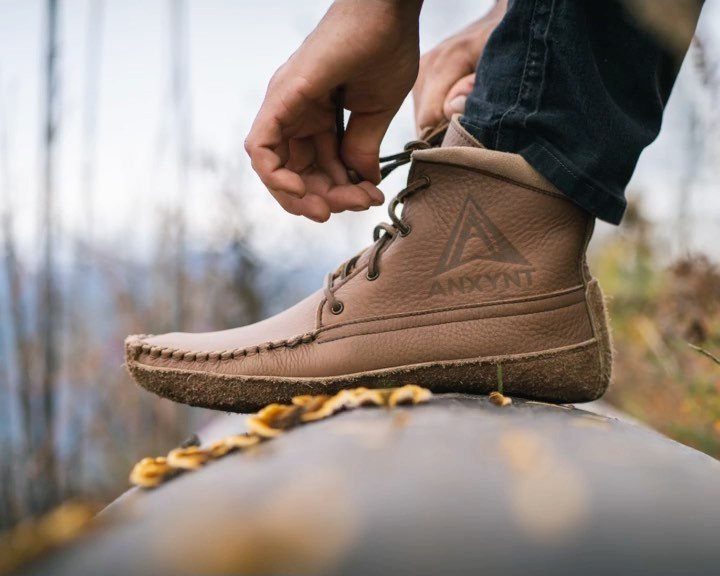
A shoe sewn from a single piece of leather, wrapped around the foot and stitched at the top.
Moccasins are lighter and less structured than loafers, which makes them better for warm weather but less supportive for long days on your feet.
The sole is either thin rubber or leather, both flexible enough to feel close to barefoot. Some styles add laces around the ankle for a tighter fit.
Moccasins look best in casual settings, not at the office.
Choosing the Right Shoe
Match the shoe to the setting first. An interview or wedding calls for oxfords, while boat shoes and moccasins stay on the weekend side of the calendar.
Bean boots and Doc Martens solve specific problems but need the right context; pair them with workwear or streetwear, not a blazer.
Comfort matters more than most men admit.
A shoe that fits well across the instep and heel keeps your stride even and prevents blisters after a full day. Leather molds to your foot over time, while synthetic uppers stay rigid.
Neutral colors stretch further.
Black, brown, grey, and tan each work with multiple outfits, which means fewer pairs sitting unused. A single pair of black oxfords and one pair of brown suede boots cover most situations without filling your closet.
Chuck Taylors belong at the gym, not a formal event. Espadrilles stay at the beach.
Footwear Maintenance Tips
Brush suede after each wear to lift dirt before it sets into the nap.
A suede brush costs less than replacing the shoes. Water-repellent spray helps, but let wet suede dry naturally; heat cracks the leather.
Conditioner penetrates deeper than polish and prevents cracking along flex points. Wipe off excess before it stains your trousers.
Store shoes with cedar shoe trees to hold their shape and absorb moisture.
Cardboard or plastic traps humidity and encourages mold. Keep them out of direct sunlight, which fades leather and dries it out faster than wear does.
Clean sneakers by hand with a damp cloth and mild soap. Machine washing breaks down glue and warps the sole.
Footwear Color Coordination
Black shoes pair with charcoal, navy, and black trousers.
Brown works with khaki, olive, grey, and lighter blues. Matching the belt to your shoes keeps the outfit consistent without requiring exact dye lots.
Olive pairs well with earth tones and sits comfortably in the neutral range.
White sneakers match nearly anything but show dirt faster than darker colors. Beige hides scuffs better and still reads as neutral.
Avoid matching your shoes to a single accent color in your outfit. The shoe should work with the trousers first, then the rest of the outfit.
Frequently Asked Questions
What are some stylish shoes for men?
For formal events, black cap-toe oxfords remain the standard; loafers cover most business casual situations; Chelsea boots handle everything in between and look sharp under tailored trousers.
Neutral-toned sneakers in beige, grey, or white pair with most casual outfits without leaning athletic. Chukka boots sit between casual and smart, while suede adds texture that dresses up dark jeans without crossing into costume territory.
What do dress shoes say about a man’s style?
Dress shoes project refinement and professionalism. Black cap-toe oxfords signal seriousness and polish for interviews and weddings, while their closed lacing and clean silhouette keep the look restrained.
The choice to maintain conditioned leather and scuff-free toe caps shows attention to detail, which carries weight in formal and business settings.
Are Derby shoes more casual than Oxfords?
Yes. Open lacing on a derby makes it less rigid and more forgiving across the instep than an oxford’s closed structure.
The open lacing and heavier silhouette already lean casual, and choosing suede or rougher finishes pushes them further into everyday territory.
Do boots ever look stylish in formal menswear?
Their narrow profile and clean lines let them sit comfortably under dress trousers, moving between smart and casual depending on whether you choose polished or suede leather.
Black leather stretches across 3 seasons and matches most tailoring, giving you ankle coverage that still reads as sharp rather than heavy.
They sit comfortably next to a blazer but feel too relaxed beside a suit jacket, landing them firmly in smart casual rather than anything more polished.