Fit separates an outfit that looks intentional from one that reads as accidental.
Chelsea boots add less visual weight than leather lace-ups, while a light-colored sport jacket feels less formal than navy or charcoal. An all-black fitted outfit reads as one continuous line, while oversized wide-leg trousers add volume below the waist.
1. Chelsea Boots with Jeans
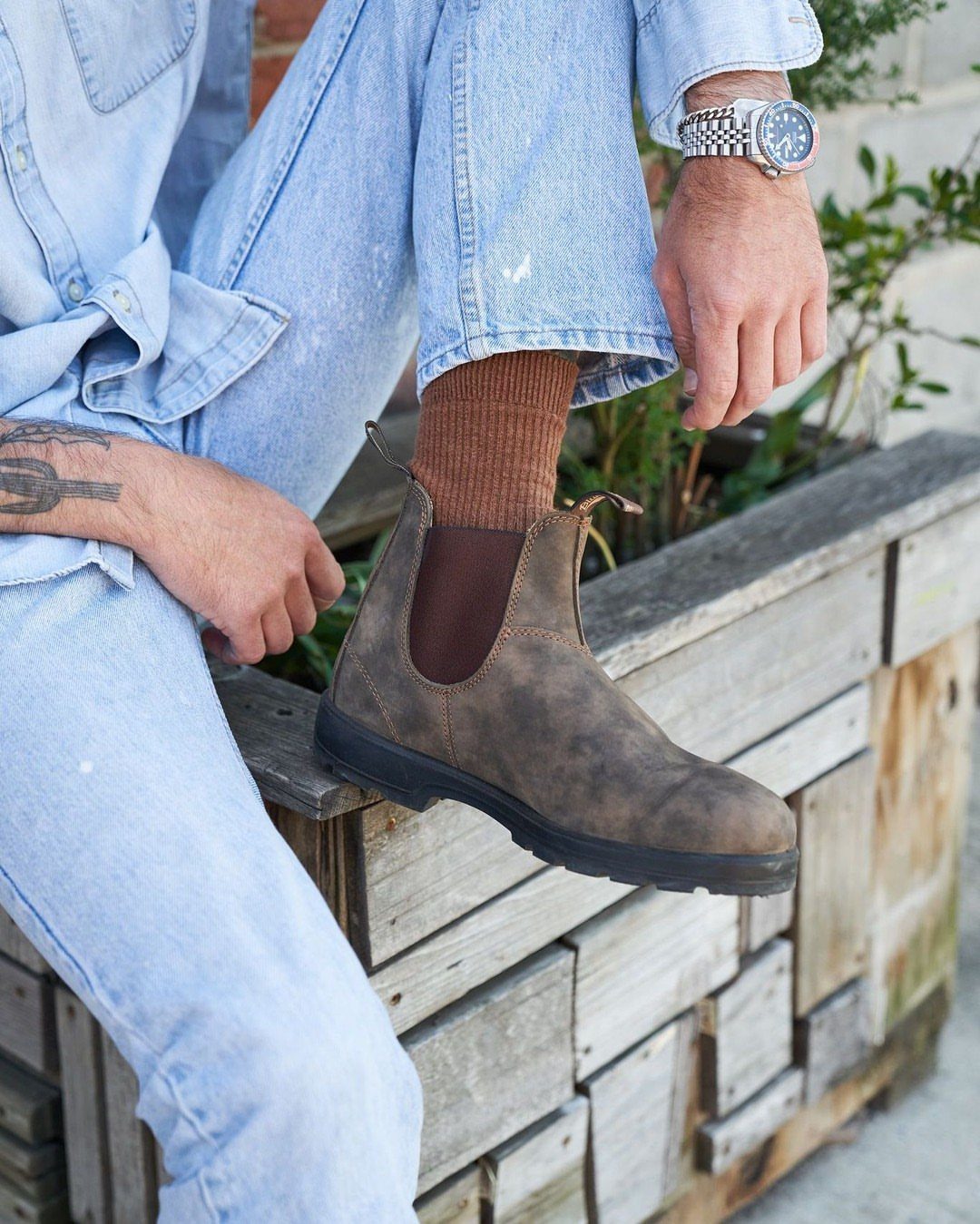
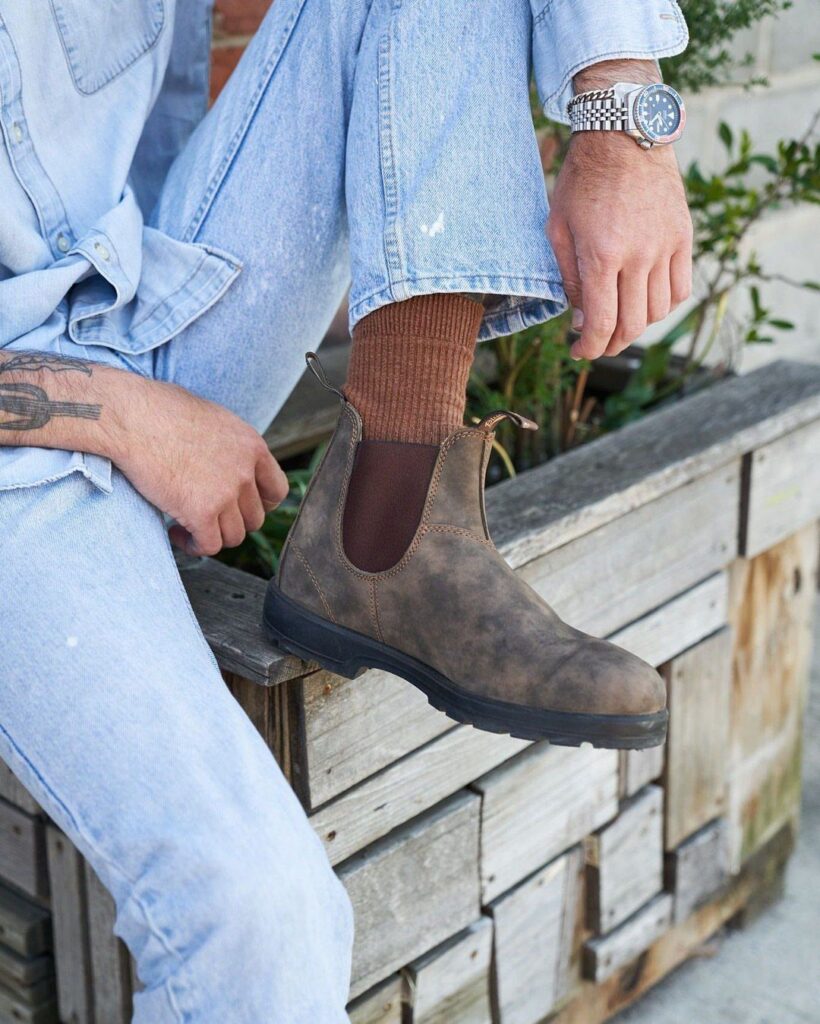
Chelsea boots bridge the gap between casual and formal better than most footwear. The elastic side panels let you slip them on without laces, and the sleek profile keeps jeans from looking too workwear-heavy.
Brown leather softens the look more than black would. Light denim gives the boots room to stand out, and matching your socks to the leather instead of the jeans ties the outfit together at the ankle.
The combination works for dinner, drinks, or a date without needing to change shoes.
2. Well-Maintained Shoes
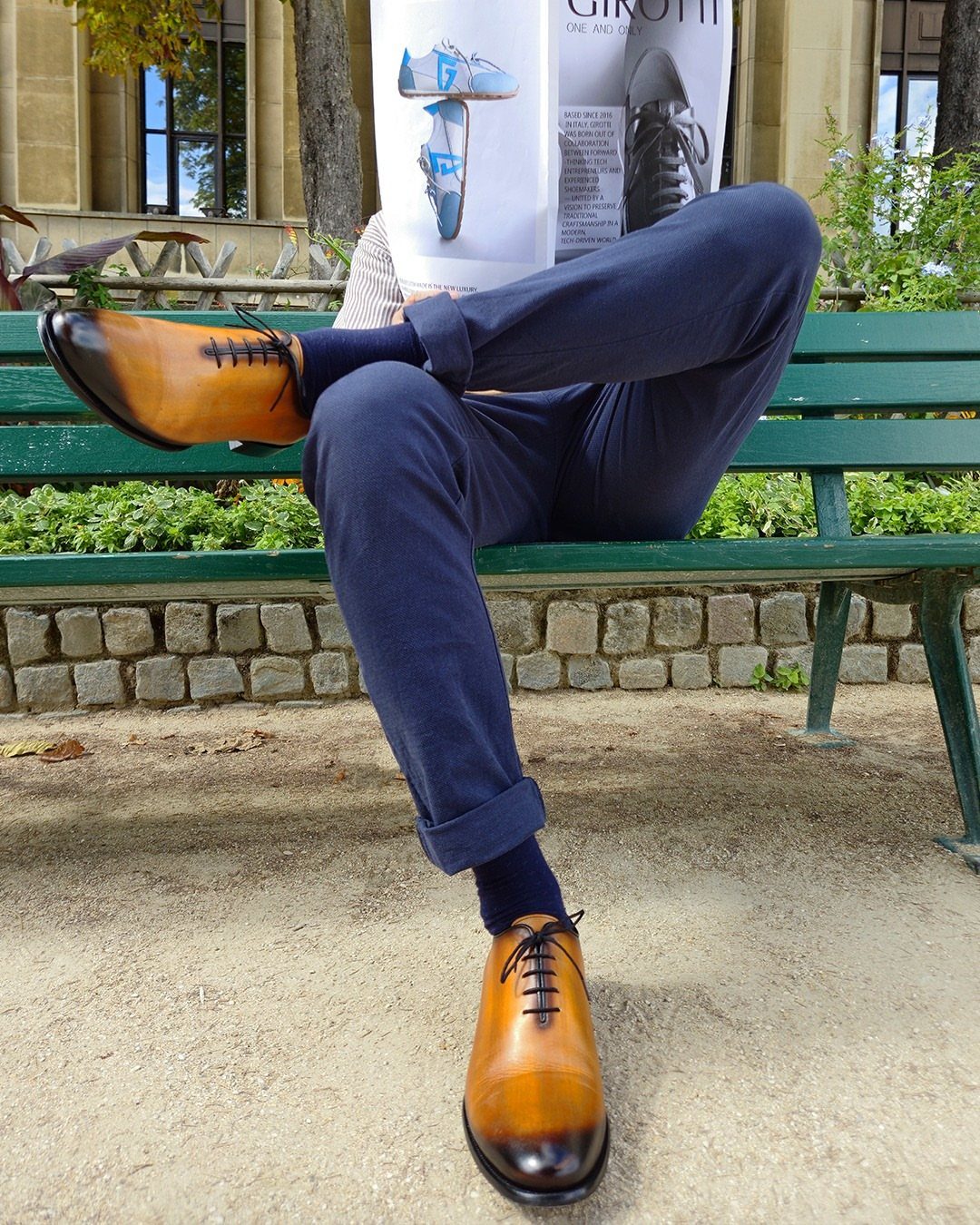
Polished shoes do more for an outfit than most men expect. Scuffs and dull leather pull attention down for the wrong reasons; a clean shine does the opposite.
The contrast between the warm leather and the cool fabric is sharper when the shoes are buffed.
Maintenance takes a few minutes: wipe dust off after each wear, condition the leather every month, and polish when the surface starts to look flat. Shoe trees help the leather hold its shape between wears.
3. Light-Colored Sport Jackets
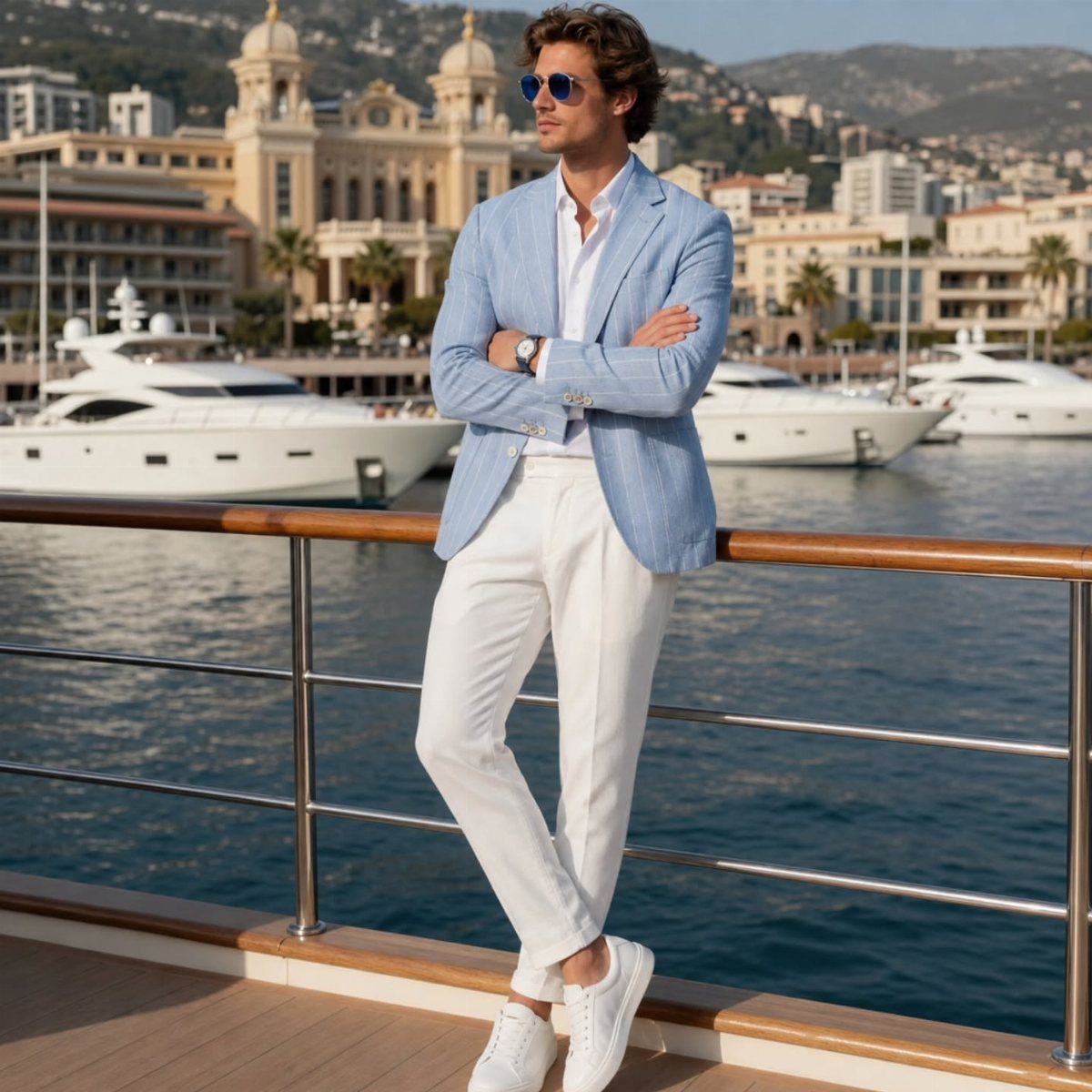
Light blue sport jackets feel less heavy than navy or charcoal, especially in warm weather. The color reflects more light and reads as approachable rather than corporate.
The jacket adds structure without formality, and the monochrome base lets the blue jacket carry the outfit.
Linen or cotton blends breathe better than wool when you’re wearing a jacket in heat. Fit should be trim without pulling at the chest or shoulders.
4. Close-Cropped Facial Hair
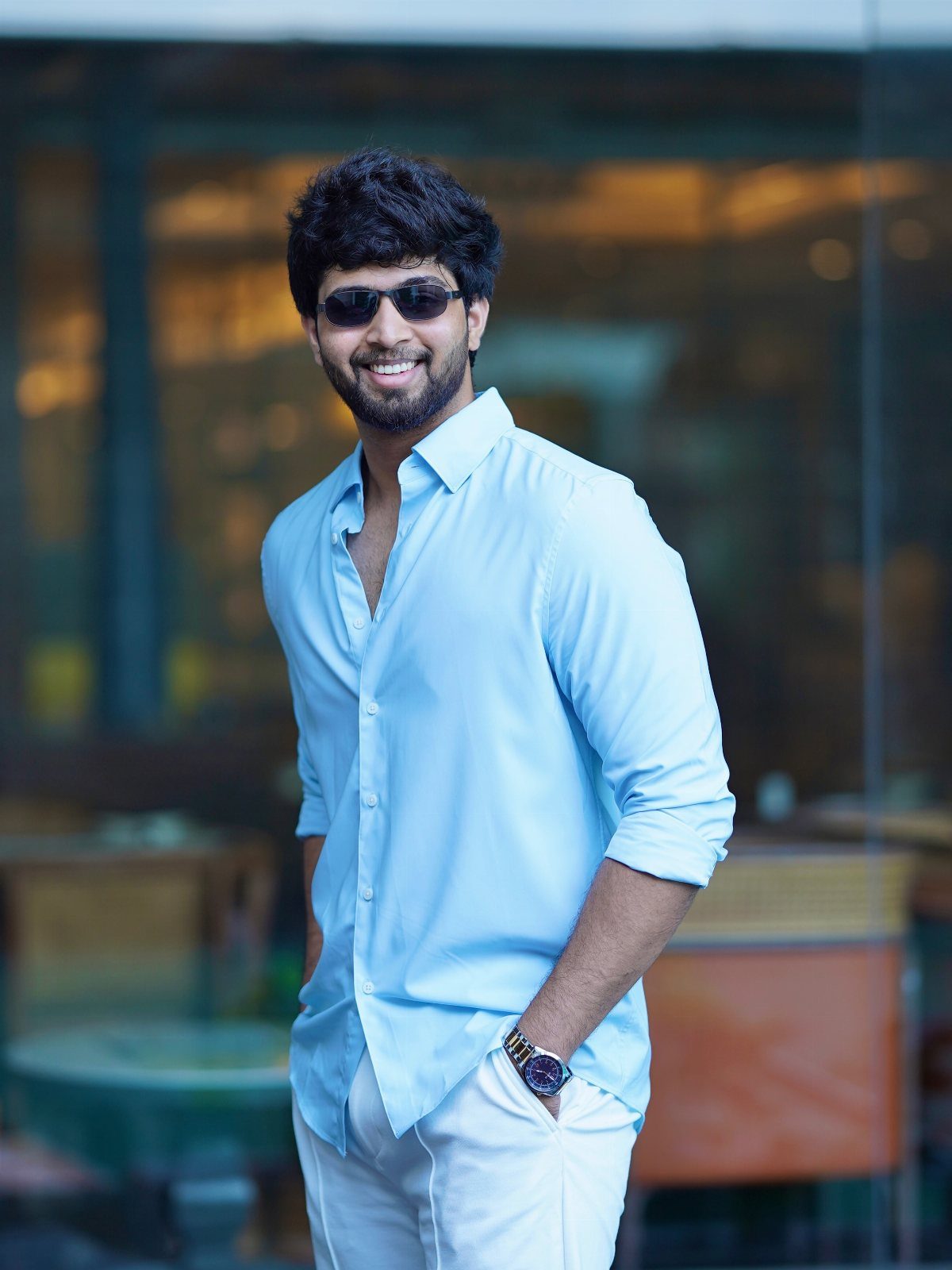
A trimmed beard defines the jawline without adding bulk. Close-cropped facial hair frames the face more deliberately than a clean shave, and it signals that grooming is intentional rather than accidental.
The length here stays short enough that individual hairs aren’t visible from a few feet away. A trimmer held at short stubble length, run every few days along the neck and cheeks, keeps the line clean.
5. Hats
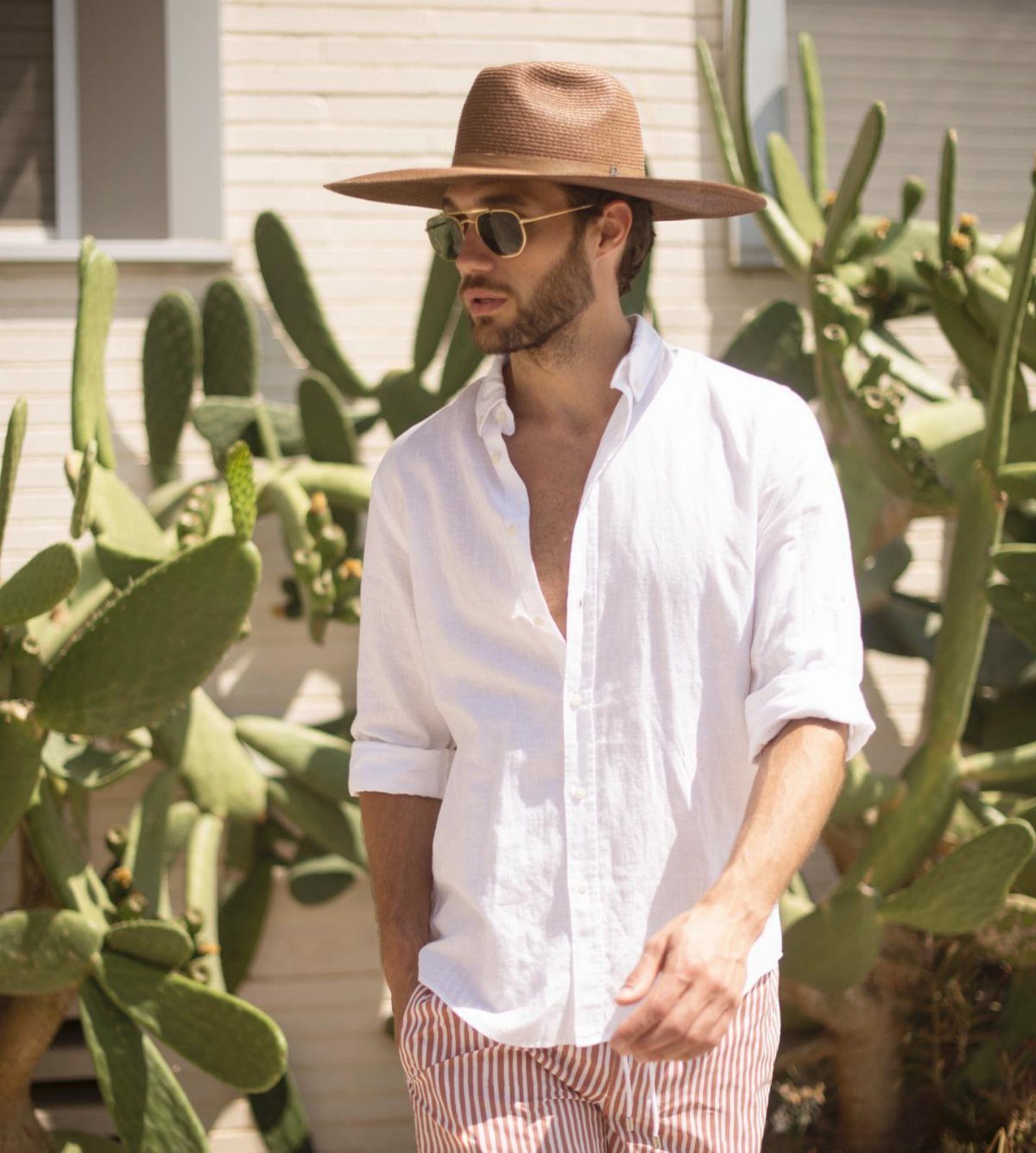
A wide-brimmed straw hat changes the proportions of an outfit by adding height and shadow. It works best in bright sun, where the brim keeps glare off your face and balances out loose, flowing clothes.
The brim should be wide enough to shade your eyes but not so wide that it catches wind or bumps doorways.
6. Oversized Wide-Leg Trousers
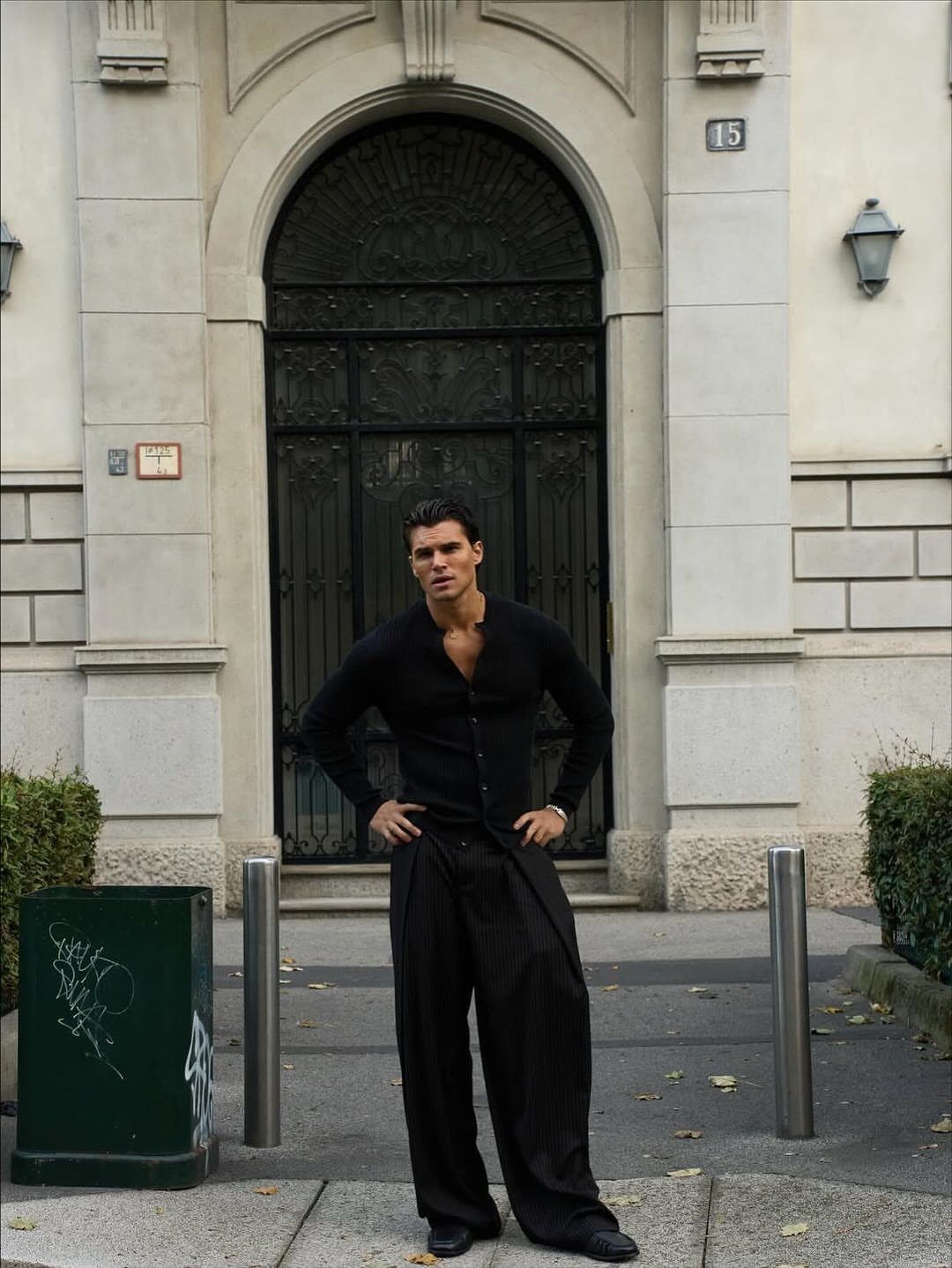
Wide-leg trousers shift the silhouette by adding volume below the waist while keeping the top half fitted. The contrast between a tight black shirt and oversized trousers creates a shape that feels current without requiring patterns or color.
The trousers here drape straight from the hip rather than tapering at the ankle. That length works best when the hem sits just above the shoe or breaks slightly at the front.
Fit matters more than fabric: if the waist is too loose, the trousers will bunch instead of drape. A belt or adjustable waistband keeps the proportions clean.
7. Leather Lace-Up Boots
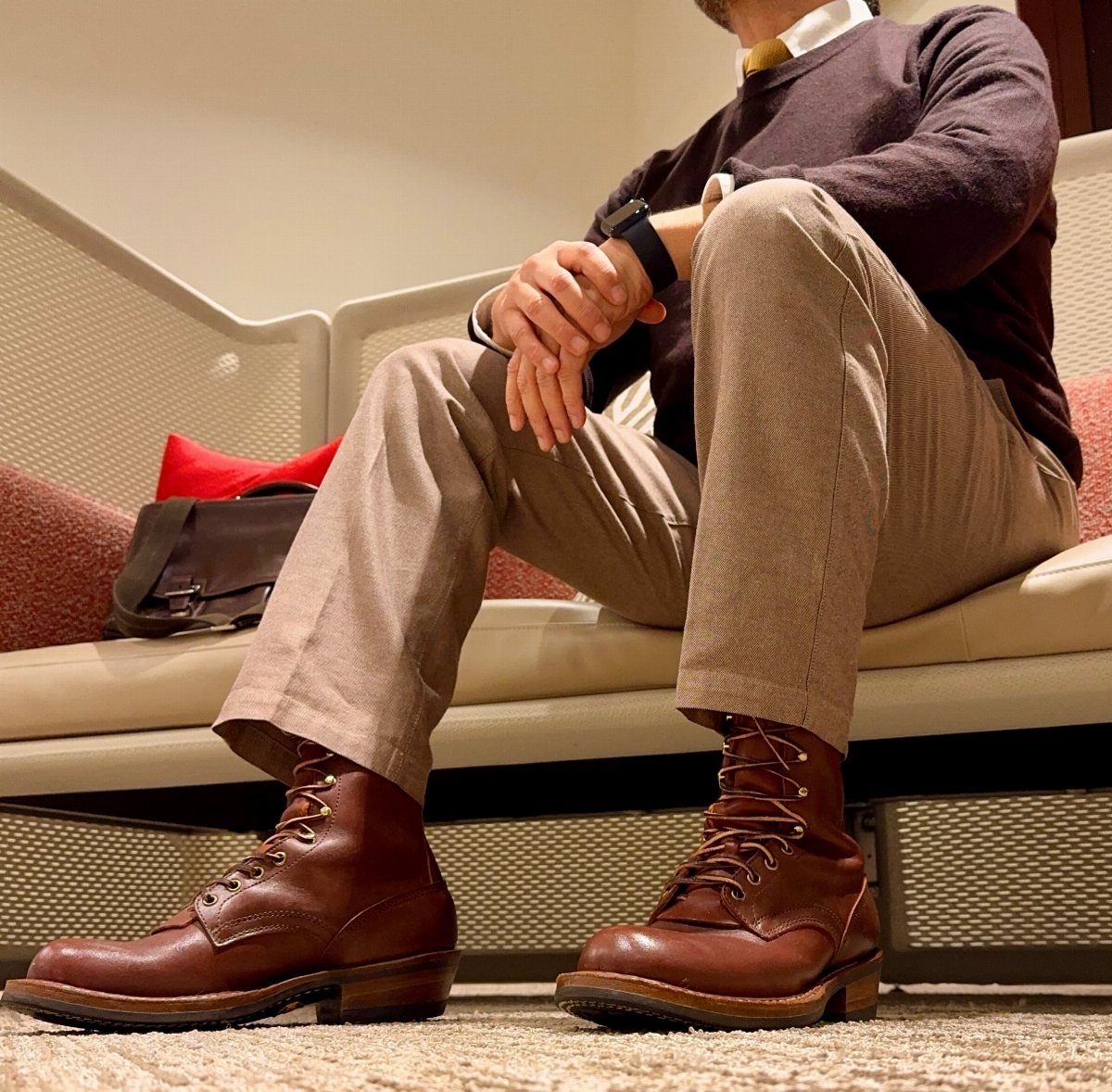
Brown leather lace-up boots carry more weight than Chelsea boots but less bulk than work boots. The lacing lets you adjust fit across the instep, and the chunkier sole gives the boot presence without reading as heavy-duty footwear.
Pairing them with tan or khaki trousers keeps the color palette warm and neutral. A dark knit sweater on top balances the lighter trousers and grounds the boots without competing with them.
The look works for cooler weather when you want something sturdier than a dress shoe but cleaner than a hiking boot.
8. All-Black Fitted Outfit
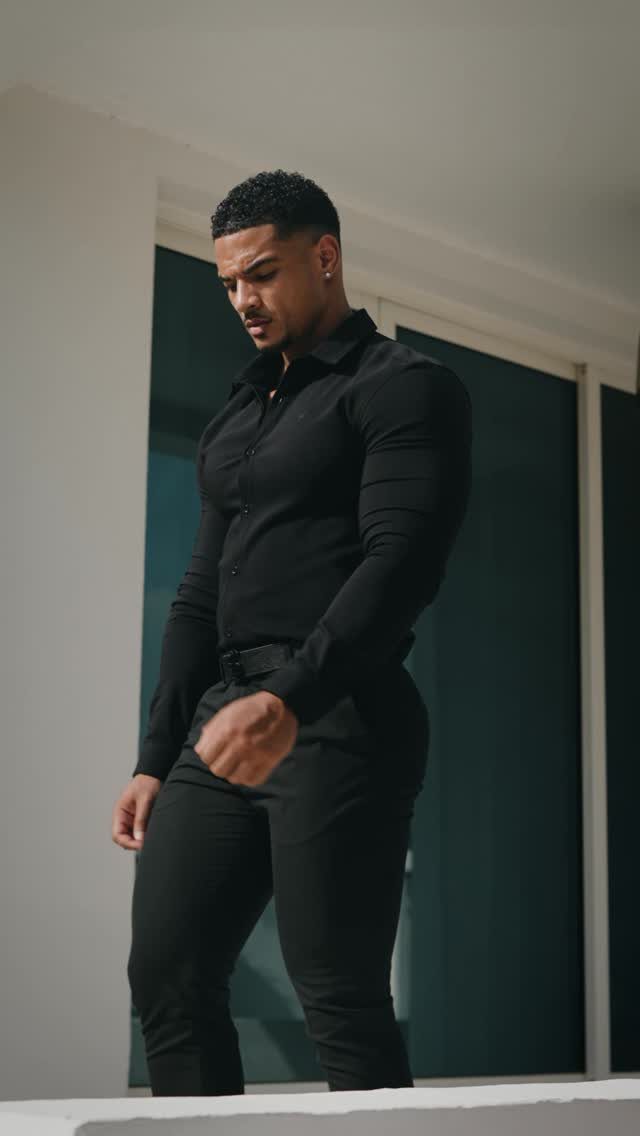
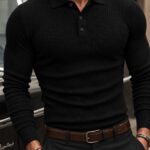
Fitted black on black removes pattern and color as variables, so fit becomes the only thing the eye registers. A long-sleeved button-down in black paired with black trousers reads as one continuous line rather than separate pieces.
Loose fabric breaks the silhouette and adds bulk where the outfit depends on none.
Cotton blends hold their shape better than pure cotton through a full day.
9. Double-Breasted Pinstripe Suit
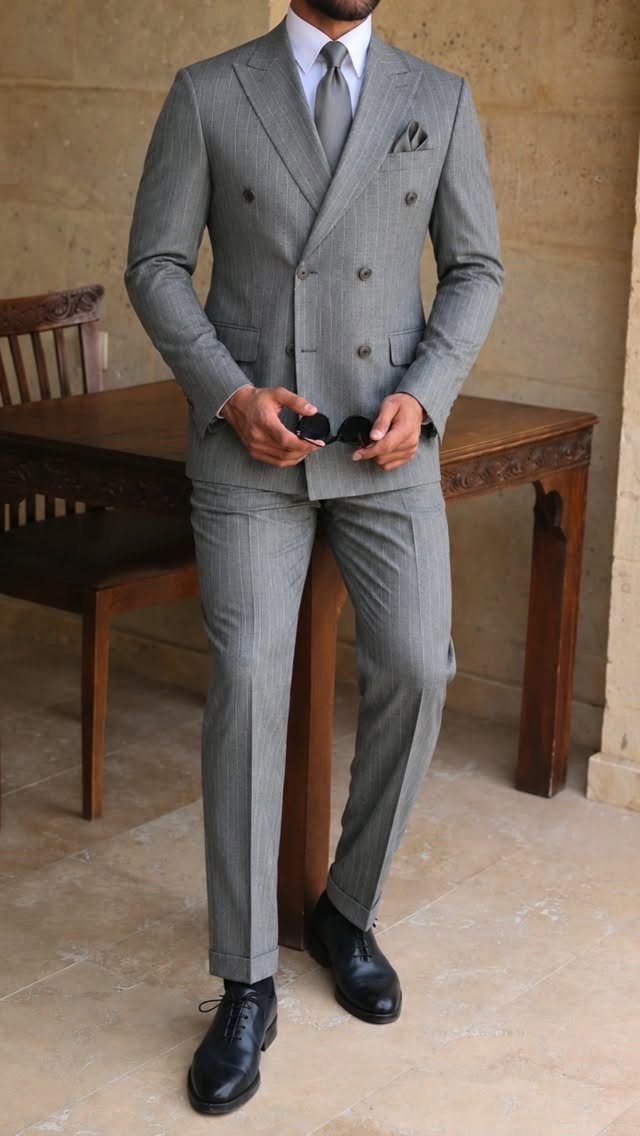
Pinstripes add vertical rhythm to a suit without changing its formality. The double-breasted cut places the buttons off-center, which widens the chest visually and gives the jacket more structure than a single-breasted version.
Grey pinstripes soften the look compared to navy or charcoal. A white shirt and grey tie keep the palette narrow, so the pinstripe becomes the focal point rather than competing with other colors.
The jacket should button without pulling across the stomach. Double-breasted cuts sit higher on the torso, so the trousers need to meet the jacket at the natural waist rather than sitting low on the hips.
10. Black Suit with Blue Shirt

A light blue shirt breaks up an all-black suit without softening it too much. The blue keeps the outfit formal but adds contrast where black on black would flatten into one tone.
The shirt here is a standard spread collar, which sits cleaner under a suit jacket than a button-down collar. A black tie brings the blue back toward the suit’s formality rather than leaving it too bright against the black.
Fit on the jacket matters more in a dark suit because shadows show pulling or excess fabric more clearly. The shoulders should sit flat, and the jacket should close without tugging at the button.
11. Blazer with Casual T-Shirt
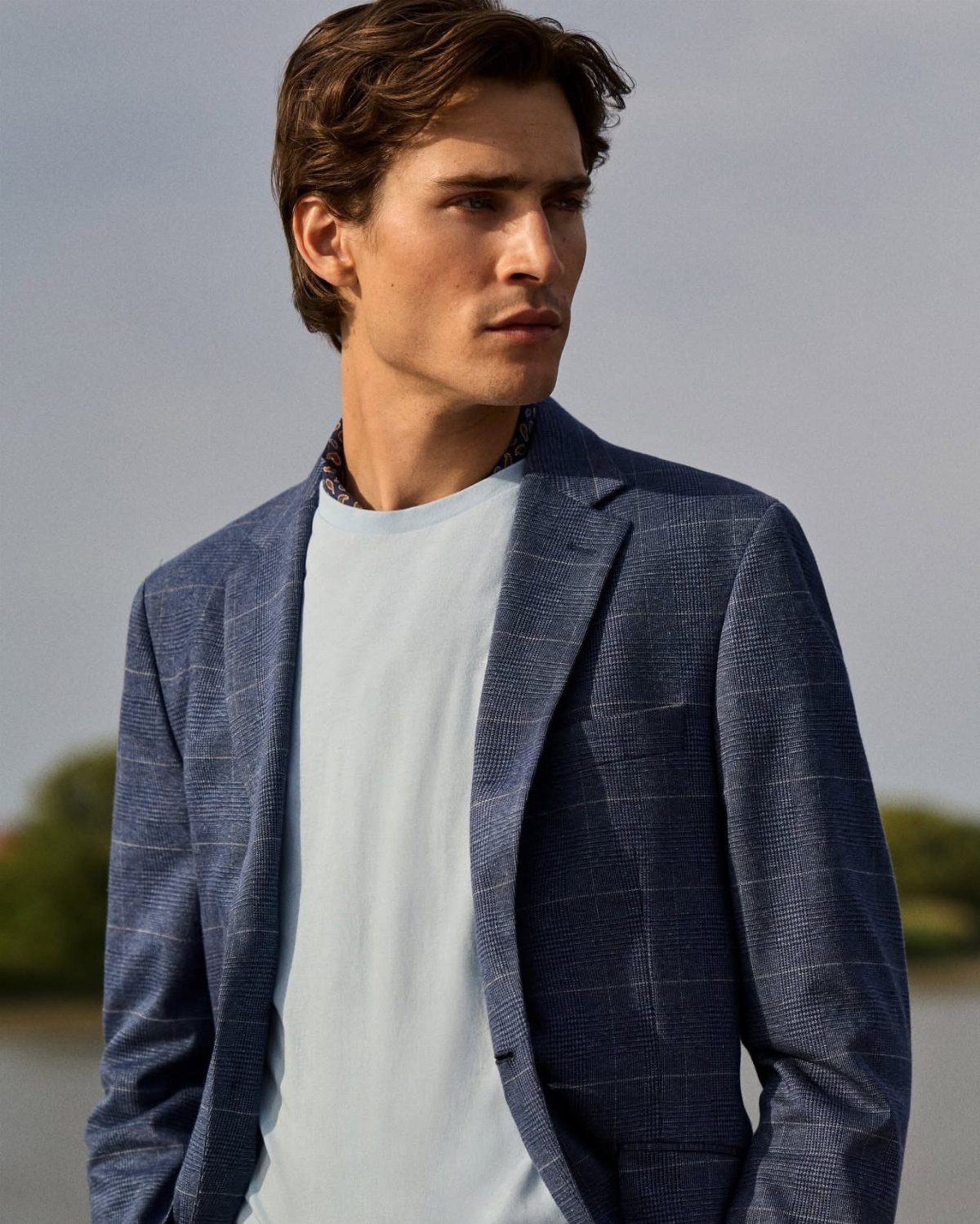
A blazer over a t-shirt drops formality without losing structure. The textured fabric here gives the blazer visual weight, so it reads as intentional rather than mismatched against a casual shirt.
The blue tones stay close enough that the outfit feels cohesive. A crewneck t-shirt keeps the neckline simple, and matching the t-shirt color loosely to the blazer avoids harsh contrast at the chest.
Fit on the blazer should be trim enough that the t-shirt doesn’t bunch underneath. A relaxed cut on the t-shirt works better than a tight athletic fit, which can pull or ride up under the jacket.
Importance of Fit
Fit decides whether an outfit reads as intentional or accidental. Clothes that pull at the chest, bunch at the waist, or pool at the ankle draw attention to the fit itself rather than the person wearing them.
Well-fitted pieces sit flat across the shoulders, follow the body’s line without excess fabric, and end at the right length.
Jeans should end near the top of the shoe, not dragging on the ground. Shirts should taper enough that fabric doesn’t billow at the sides or gather when you move.
A t-shirt that sits correctly at the shoulder and hem looks better than a dress shirt that’s too large in the arms or bunches at the waist.
Tailoring adjusts fit when off-the-rack sizing misses. Hemming trousers, taking in a waist, or shortening sleeves costs less than replacing the piece and fixes most fit problems that stop an outfit from working.
Frequently Asked Questions
What are the hottest men’s clothes right now?
Light-colored sport jackets and Chelsea boots are among the strongest pieces at the moment.
The jacket adds structure without corporate weight, while Chelsea boots bridge casual and formal without the bulk of laces. Both work across different settings and pair easily with what most men already own.
What is trendy for men right now?
Neutral palettes and versatile layering pieces are replacing rigid formality.
Comfort and individuality matter more than logos, and relaxed tailoring in natural fabrics gives men room to build a style that reflects who they are rather than copying a magazine spread.
Focus on pieces that mix well rather than chasing seasonal trends.