Men’s fashion in 1988 split wider than it does now.
The divide came down to context: denim jackets and graphic tees for casual days, navy blazers and button-downs for dates or campus, leather and ripped jeans for rock shows, puffer jackets and bomber styles bridging formal and street.
1. Denim Jackets
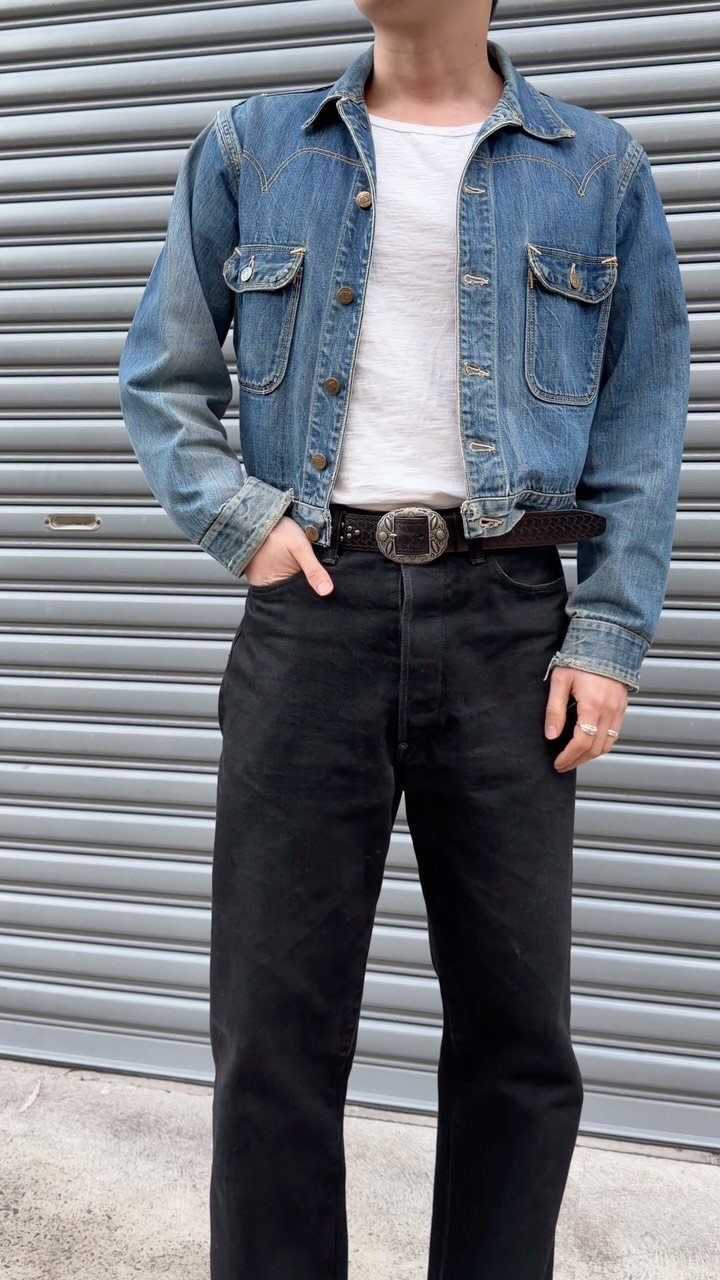
A medium-blue denim jacket worn loose over a white tee and dark jeans is one of the simplest ways to add structure without weight. The fit here sits just below the waist and leaves room to move.
Pair it with high-waisted black jeans and a wide belt, the way this one does with a western buckle, and you get a look that works for casual days or weekend errands.
The jacket layers well in spring and fall and holds up season after season. Keep the wash medium, not too light or too dark, and it stays easy to match with most colors you already own.
2. Graphic T-Shirts
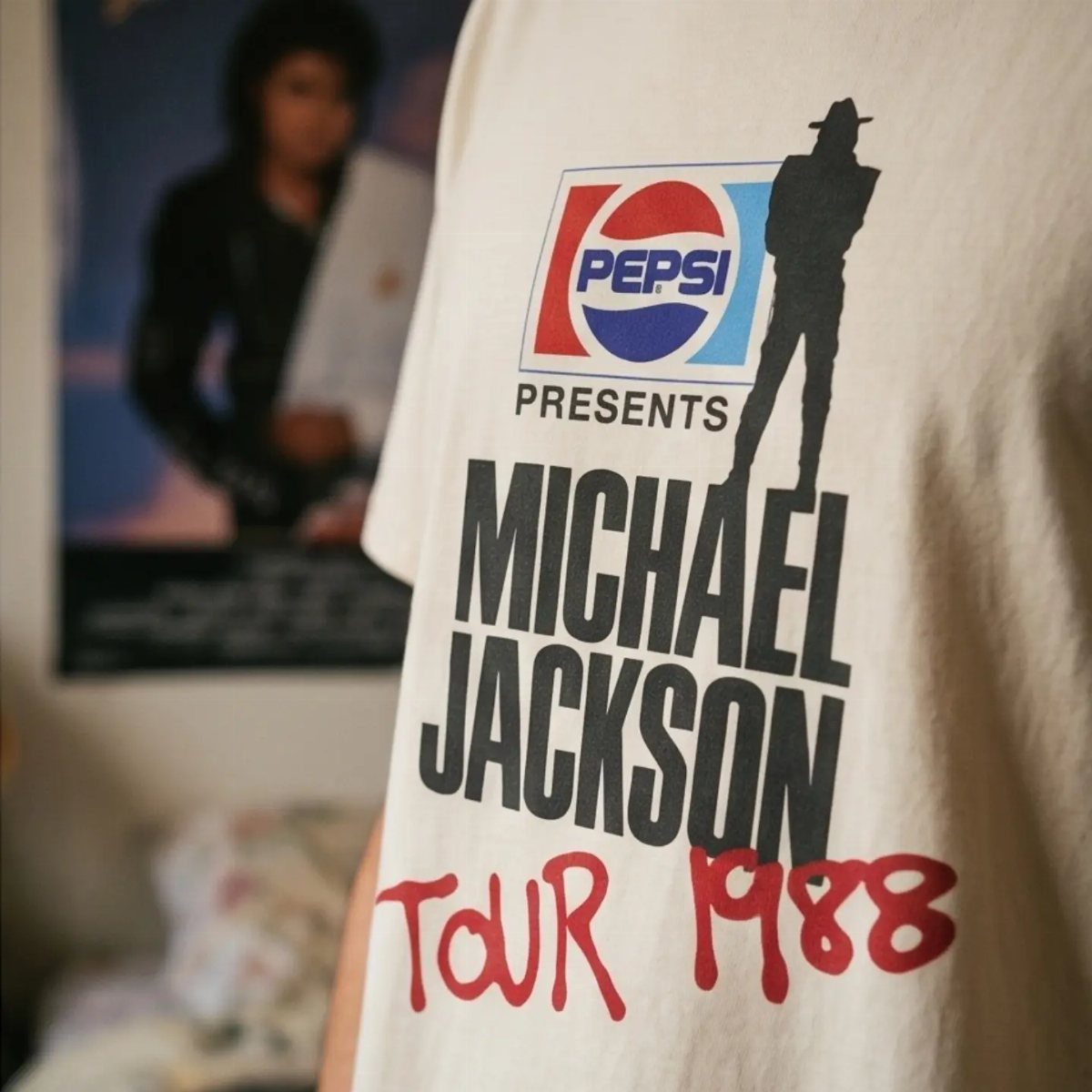
Concert tees and logo shirts put a date stamp on an outfit, and in 1988 that meant bold graphics and sponsors right on the chest.
White keeps the graphic readable and pairs easily with jeans or shorts. Black or charcoal works the same way for hiding wear.
The style still shows up in vintage shops and reprints, and it gives a plain outfit some personality without changing much else. Look for shirts with clean printing and a slightly worn feel, not stiff new replicas.
3. Acid Wash Jeans
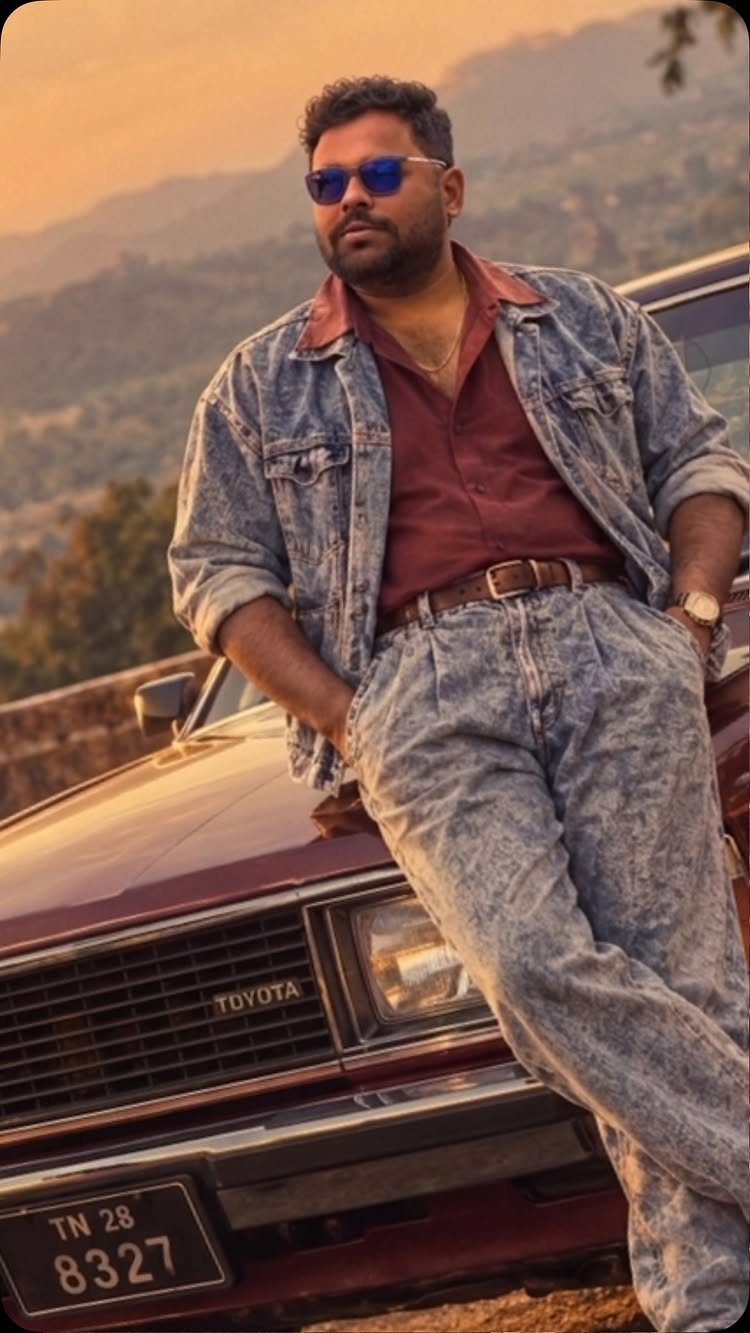
Acid wash gives denim an uneven, bleached-out pattern that was everywhere in the late 80s. This version goes all in: matching jacket and jeans in the same mottled blue-grey finish.
The double-denim look works best when the washes match closely, the way this set does, and you break it up with a bright or neutral top. Here, a red shirt does that job.
The treatment softens the fabric and makes it lighter in weight than raw denim, so it layers well in warm weather.
If you try it now, keep the fit slim and the rest of your outfit simple, since the texture pulls focus on its own.
4. The Mullet
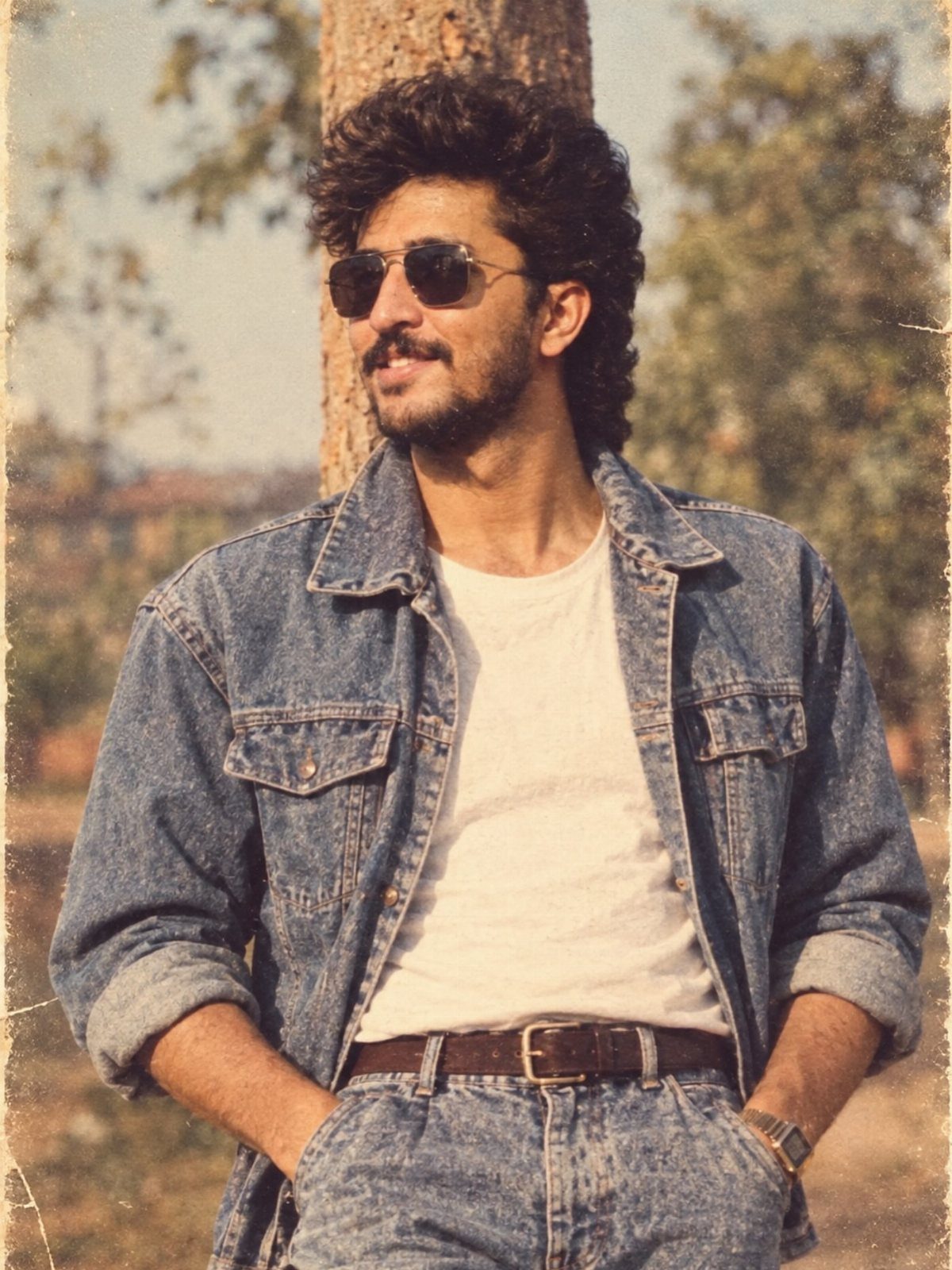
Short in front, long in back. The mullet was the haircut of choice for rock fans, athletes, and anyone who wanted to split the difference between clean-cut and rebellious.
The style reads loud now, but in 1988 it was standard issue across most of the country.
The era without the commitment lives in a modern shag or textured crop that keeps some length in back without the hard line. The attitude matters more than the exact cut.
5. 80s Rock Fashion
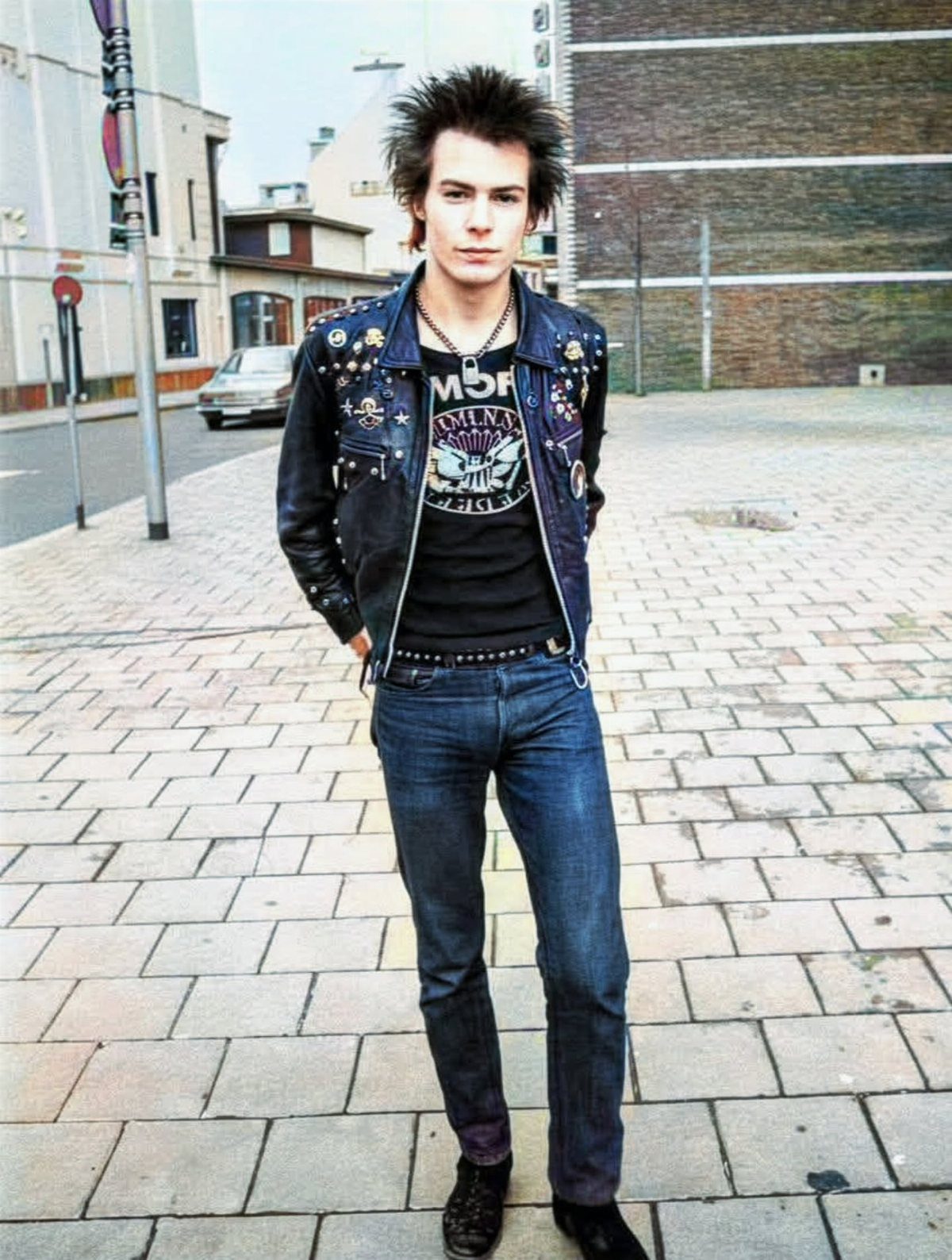
Studded leather, torn denim, and spiky hair made up the uniform for fans of Mötley Crüe, Guns N’ Roses, and other hard rock acts.
This look is all edge: a black jacket covered in metal studs over a graphic tee and ripped jeans.
The hair is gelled into sharp points, and the whole outfit runs dark except for the studs and the print on the shirt.
It takes confidence to pull off, and it reads best when you commit fully rather than mixing in safe pieces.
The jacket is the anchor. Leather works better than denim here because it holds the studs and keeps the silhouette sharp.
6. Hip-Hop Style
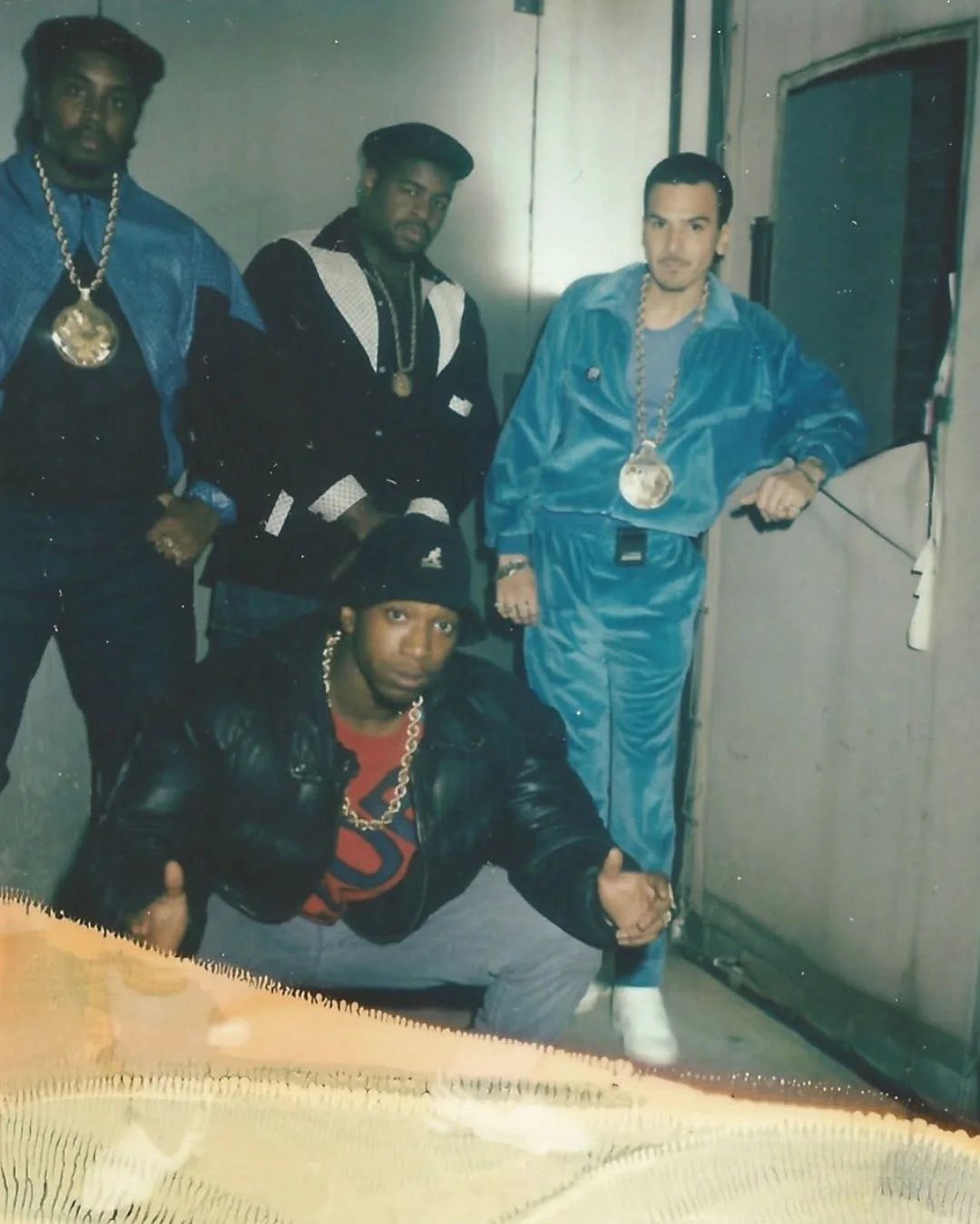
Oversized track jackets, heavy gold chains, and layered streetwear defined the hip-hop look coming out of New York in the mid to late 80s. This group shows the full spread: puffer vests, wide-leg pants, and rope chains stacked thick.
The fit is deliberately loose, and the brands mattered. Adidas, Kangol, and Puma were staples, along with leather and nylon in bold colors or two-tone combinations.
The chains are statement pieces, worn long and layered over the jacket or hoodie. This style built a visual language that separated hip-hop fashion from everything else happening at the time, and it still influences streetwear today.
7. Classic Preppy Blazer Look
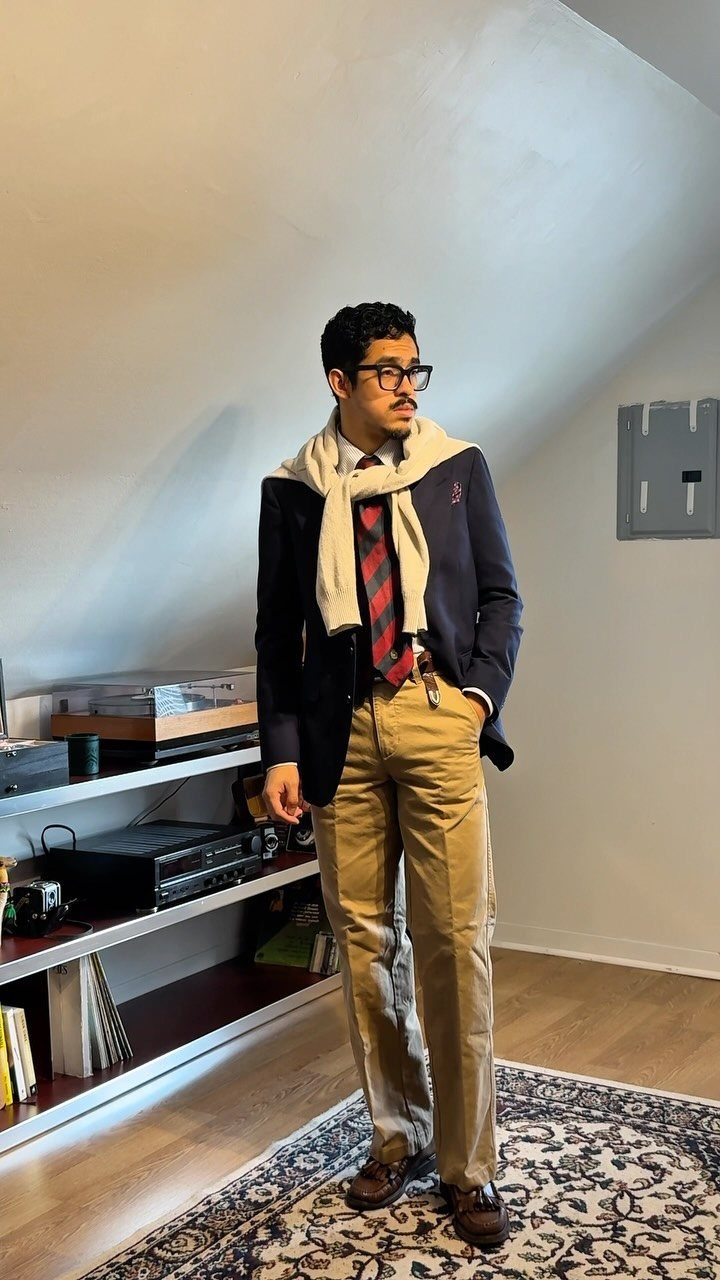
Navy blazer, striped tie, khakis, and a sweater tied over the shoulders made up the preppy uniform on Ivy League campuses and in ads for Ralph Lauren throughout the 80s.
The blazer sits structured but not stiff, and the khakis keep the look grounded without dressing it up past casual.
The sweater over the shoulders is the signature move: it adds a layer without bulk and signals prep style more clearly than any other piece.
Wear the tie knotted at the collar with the sweater draped loose, sleeves crossed in front. The whole thing works for dates or daytime events when you want to look put together without a full suit.
8. Casual Preppy Button-Down
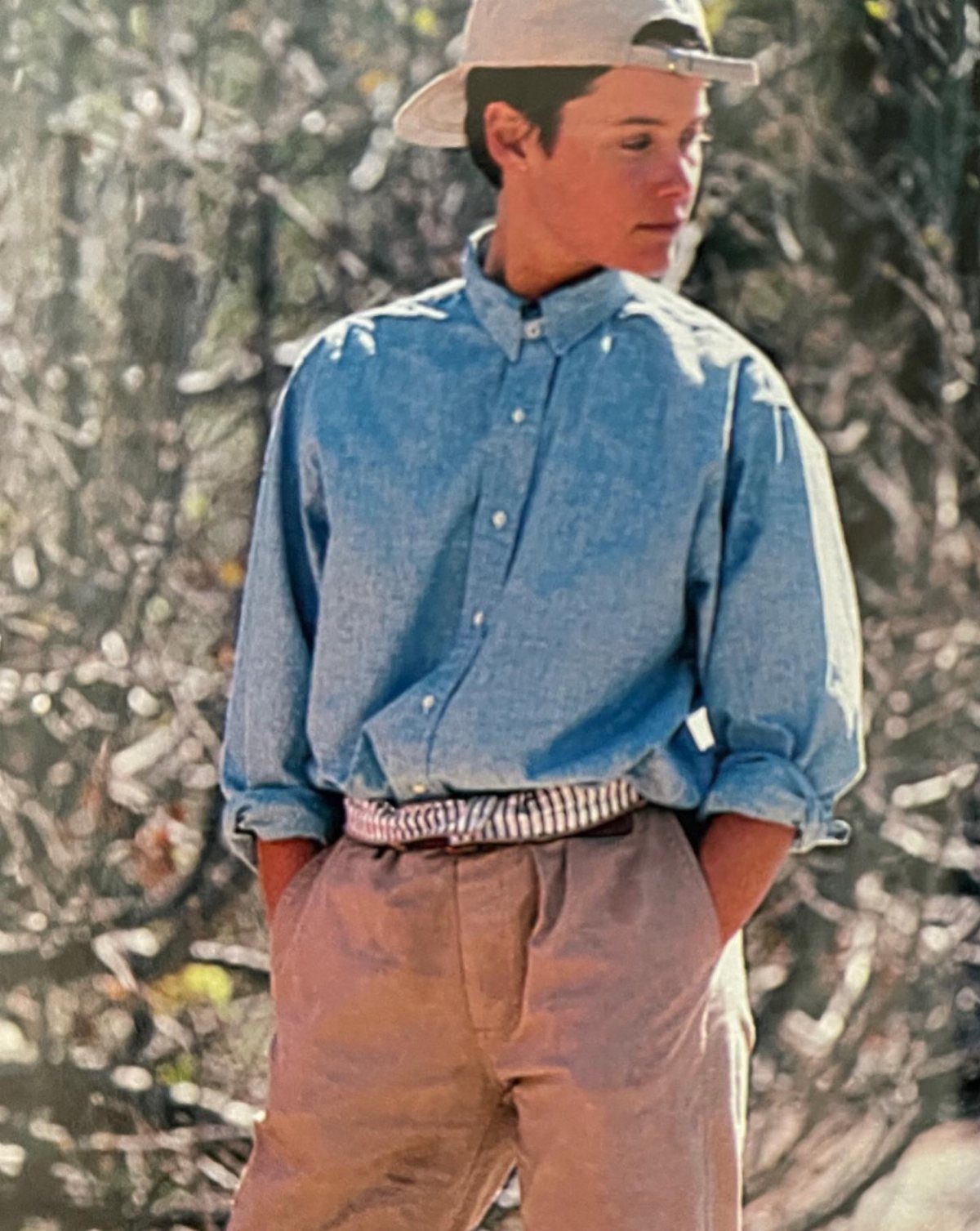
Oxford cloth in light blue, tucked into tan trousers with a canvas belt, gives you a clean baseline for weekends or casual Fridays.
The fabric breathes well and softens with wear, so it feels less formal than a dress shirt even when buttoned to the collar.
The striped belt and baseball cap lower the formality and keep it from reading too dressed up. This version skips the tie and leaves the collar open, which works better for outdoors or errands than sitting in an office.
A light-blue button-down pairs with almost any neutral trouser you own, and the fit stays easy if you buy one size up in the chest.
9. Late 80s Puffer Jackets
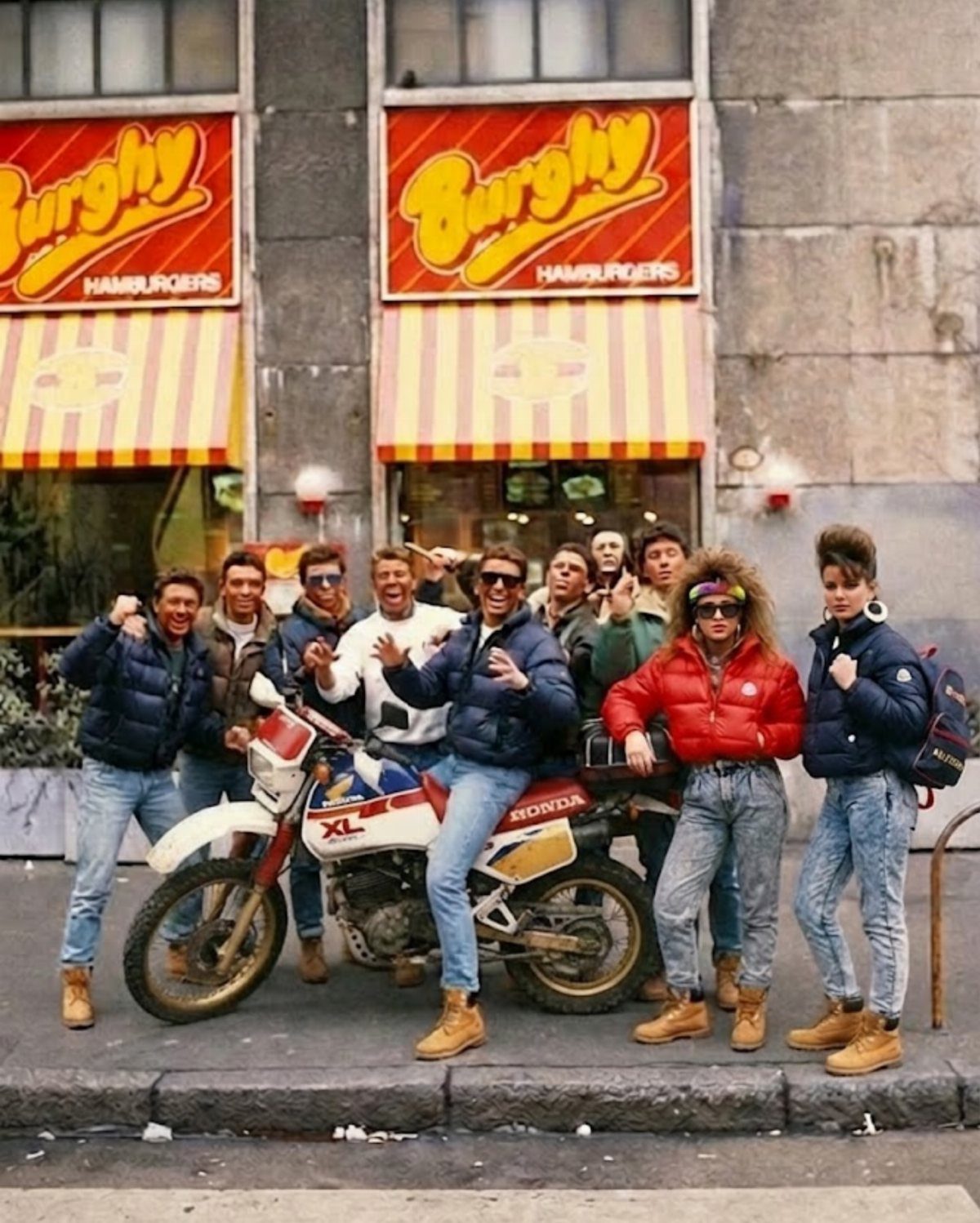
Bright puffer jackets in red, blue, yellow, and green became the go-to for warmth without weight in the late 80s. Nylon shell, synthetic fill, and a boxy fit that left room for layers underneath.
Pair it with light-wash denim and boots, the way this group does, and you get a silhouette that reads casual and functional at once.
The color is what makes the jacket work: solid and saturated, not muted or broken up with panels.
These jackets compress small and pack easily, so they work for travel or commuting. Look for one with a high collar and a full-zip front, and size up if you plan to layer a sweater under it.
10. Bomber Jacket with Pleated Trousers
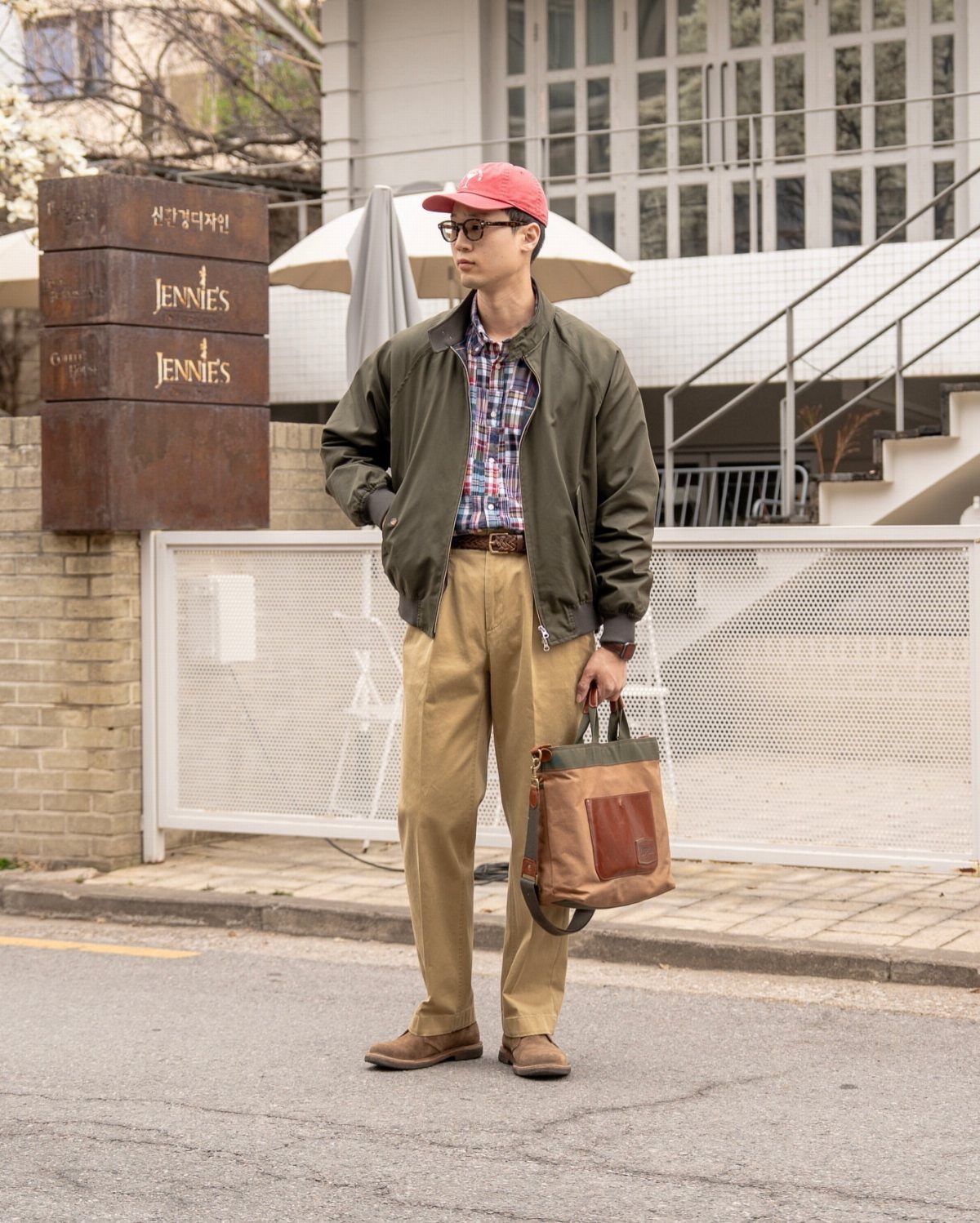
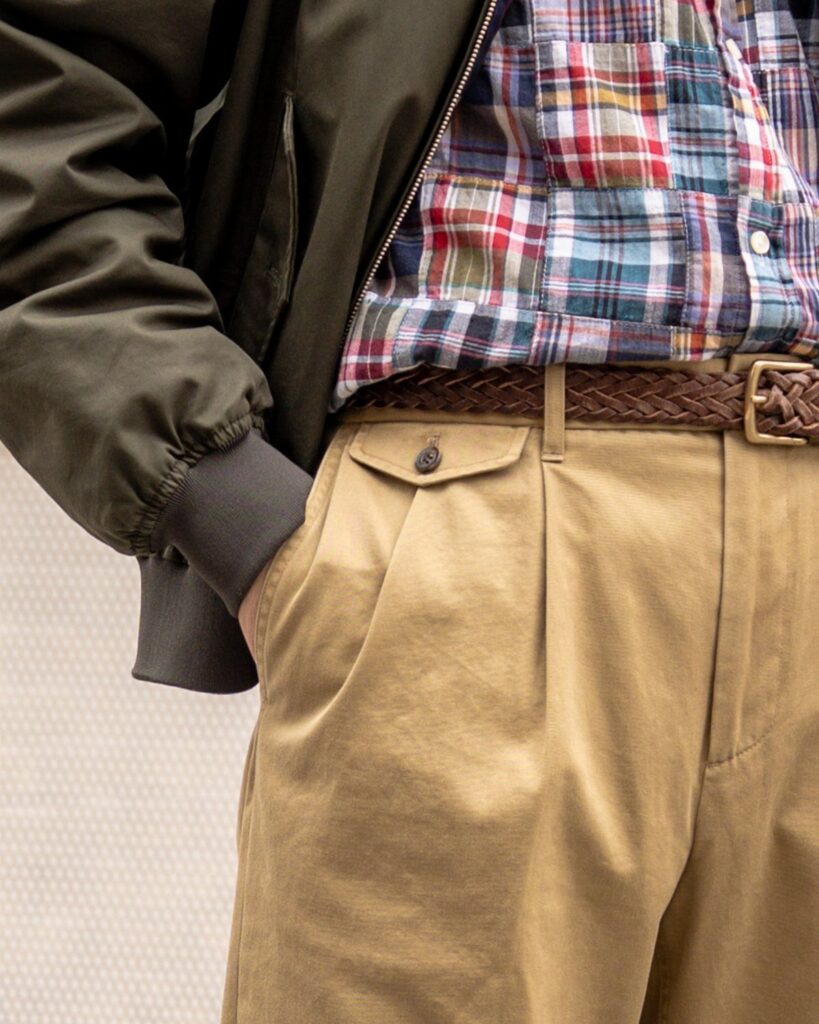
An olive bomber over a plaid flannel and pleated khakis mixes military shape with workwear texture. The bomber keeps the torso clean and stops at the waist, which balances the volume in the pleated trousers below.
Pleats add room through the hips and taper toward the ankle, so they suit men with larger thighs or anyone who prefers a looser fit than flat-front pants allow.
The plaid shirt under the jacket adds pattern without competing with the silhouette.
Keep the bomber fitted at the shoulders and the sleeves at wrist length. The cap and bag here are optional, the jacket and trousers do the work.
11. Leather Jacket and Ripped Jeans
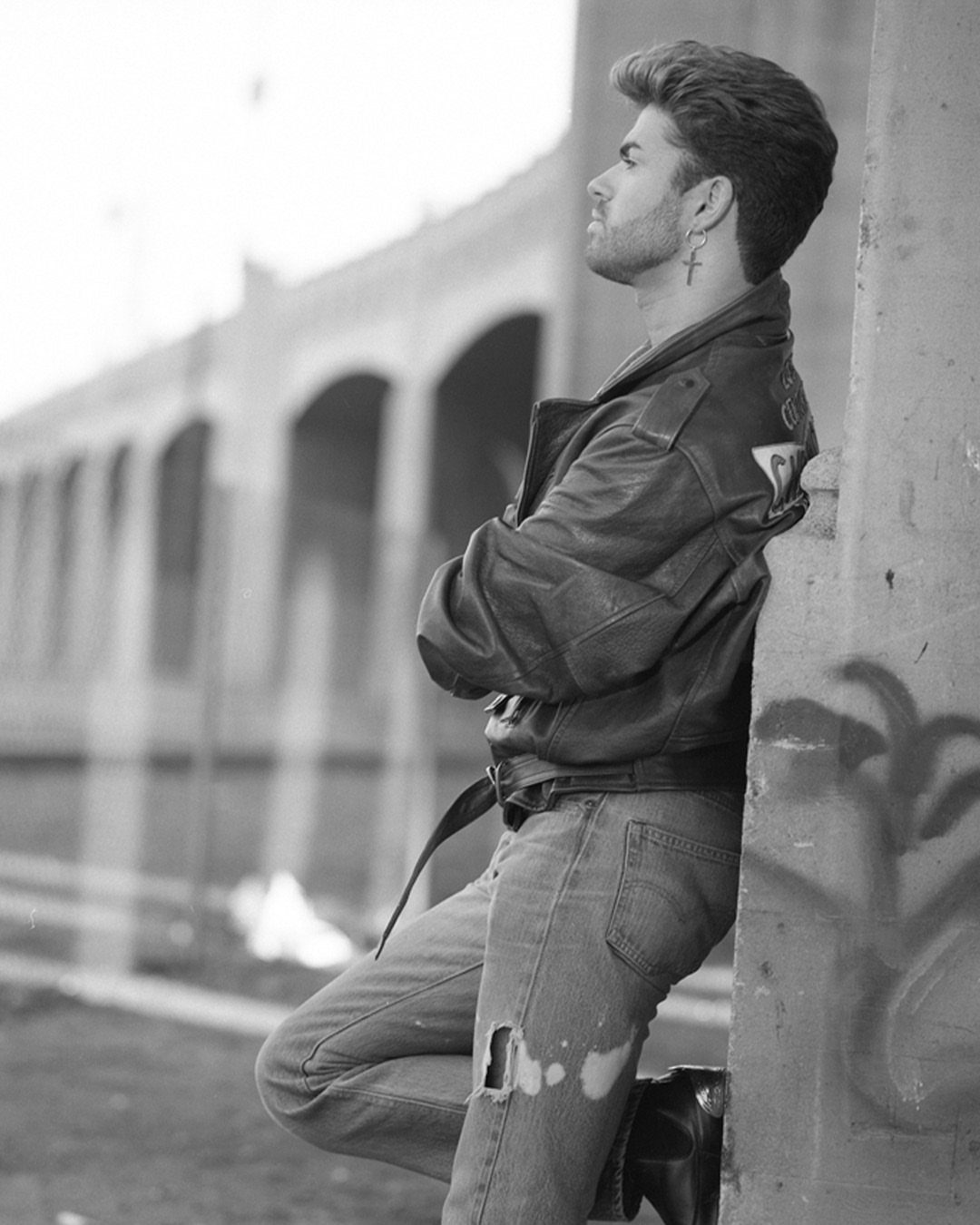
Black leather over ripped denim is about as direct as style gets.
The jacket fits snug to the body and stops at the hip, and the jeans are torn at the knees with a straight leg that stacks slightly at the ankle.
The pompadour and cross earring push the look further into rebellious territory, but the core is the jacket and jeans. Leather holds its shape and wears in slowly, so it stays sharp after years of use.
Keep accessories minimal and let the clothes carry most of the weight.
12. Layered Crewneck Sweater Look
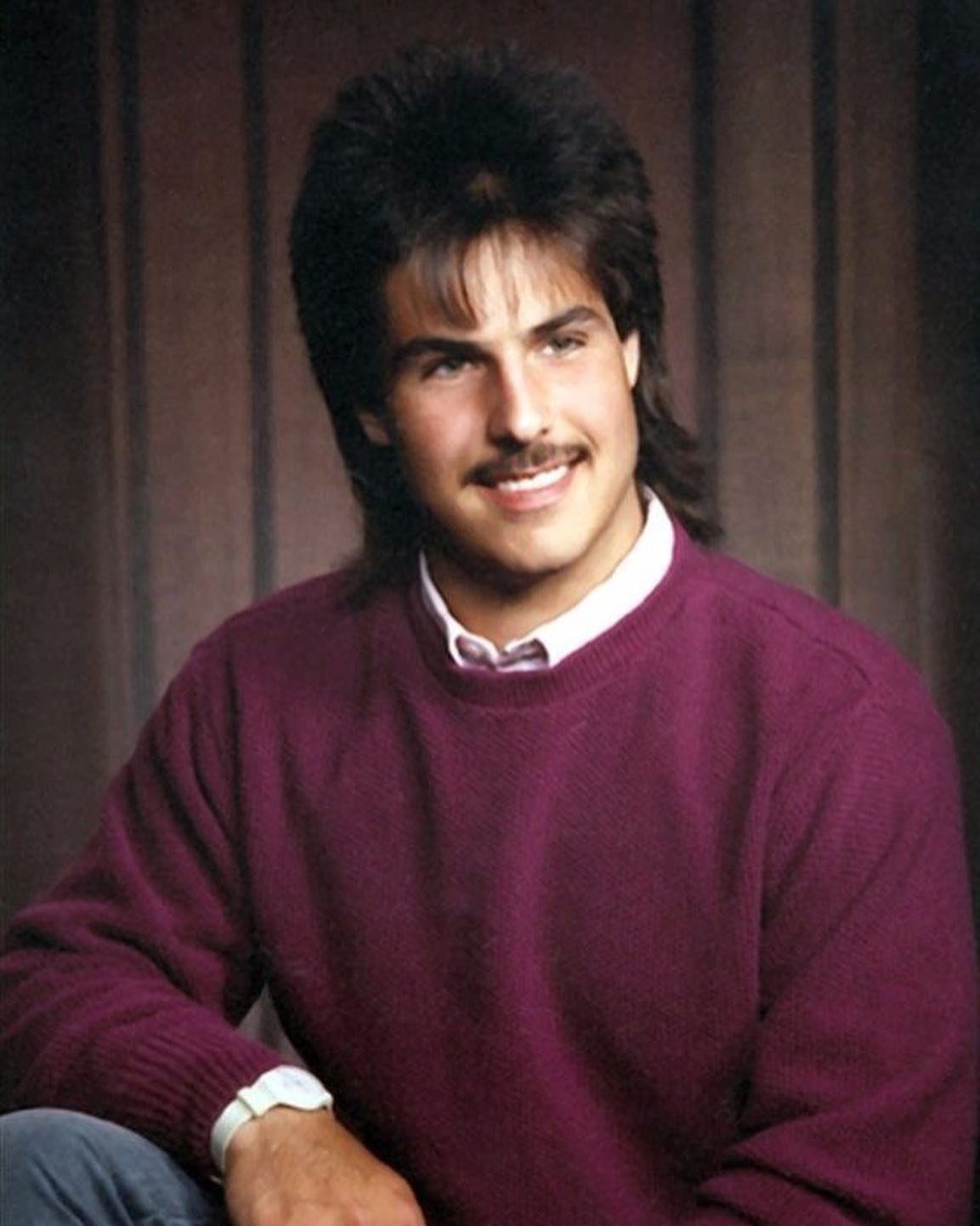
A crewneck sweater layered over a collared shirt puts color and texture on top without covering the collar or cuffs. Purple reads bold here, and the white shirt underneath keeps it from feeling too heavy.
The collar sits outside the neckline and the cuffs show past the sleeves, which gives the layering structure and keeps both pieces visible. The watch adds a practical detail that fits the era.
This layering works with any solid crewneck and any button-down in a lighter shade. Keep the sweater fitted to the body so it doesn’t bunch when you sit, and leave the shirt collar flat rather than popped.
Casual Vs. Formal Wear
The split ran wider in 1988 than it does now.
Formal menswear held onto the structured blazer, wool trousers, and oxford shirts that anchored preppy and Ivy League style, while casual looks pulled from athletic wear, denim, and street culture in ways that felt new at the time.
Cable TV made that divide visible. MTV brought music videos into homes starting in 1981, and by the middle of the decade casual style had absorbed influences from basketball courts, rock concerts, and hip-hop crews.
Sweatshirts, high-top sneakers, and varsity jackets moved from functional gear to everyday clothing, fitted at the waist and cut roomy from shoulder to hip.
Denim shifted too. The tighter cuts from the 70s gave way to baggy, high-waisted fits that showed up in music videos and teen movies alike.
The everyday look was no longer just a dressed-down version of formal wear; it had its own shape and its own references.
Influence of Pop Culture
Movies and music videos put outfits in front of millions of people who wanted to copy them.
They built entire looks around characters and performers, and those looks stuck. Back to the Future released in 1985, Top Gun in 1986, and both films put specific pieces into circulation: denim jackets, bomber jackets, aviator sunglasses, high-waisted jeans.
Miami Vice started airing in 1984 and made pastel suits and unstructured blazers feel current in a way formal menswear had not for years.
MTV launched in 1981 and gave musicians a visual platform that reached further than concerts or album covers ever had. What a performer wore in a music video became part of the song itself.
Pop culture from the 80s still influences how we dress now, more than any other decade.
Media set in that period or inspired by it continues to pull from the same references, which keeps the style in rotation rather than letting it settle into pure nostalgia.
Materials and Fabrics
Cotton, wool, and silk were the base fabrics, chosen for comfort and how they held up over time.
Oxford cloth in button-down shirts softened with wear and breathed well enough for layering. Wool gave structure to blazers and sweaters without stiffness, and silk showed up in ties and occasionally in shirts for formal occasions.
Sweaters were layered over button-downs more often than worn alone. Crewnecks, V-necks, and cardigans in solid colors worked best, since patterns competed with the shirt underneath.
Synthetic fills and nylon shells made puffer jackets lighter and easier to pack than down, and they dried faster when wet.
Frequently Asked Questions
What should a man wear to an 80s party?
A denim jacket over a graphic tee with acid wash or light-wash jeans gives you the core casual look from the decade.
Add a bomber jacket or windbreaker in a bright color if you want the athletic angle, or go full edge with a studded leather jacket and ripped jeans for the rock look.
High-top sneakers or boots finish it, and a mullet or spiked hair sells the era if you commit to it.
What was the fashion in 1988?
Casual style in 1988 mixed denim jackets, graphic tees, and acid wash jeans with athletic pieces like puffer jackets and track suits in bright colors.
The preppy uniform centered on blazers, chinos, and button-downs, and the knotted sweater remained the signal accessory. Rock and hip-hop influence brought studded leather, ripped jeans, oversized fits, and heavy gold chains into everyday wear.