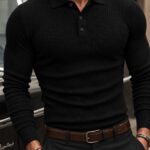
Men’s fashion in 1996 split between the loose silhouettes that defined the decade and the sharp tailoring that dressed up hip-hop and R&B style.
The choice depends on whether you’re pulling from streetwear or suiting: baggy jeans and graphic tees if the former, double-breasted blazers with wide ties if the latter.
Accessories leaned into proportion: chunky chains, backward caps, and watches worn over the cuff.
1. Tracksuits
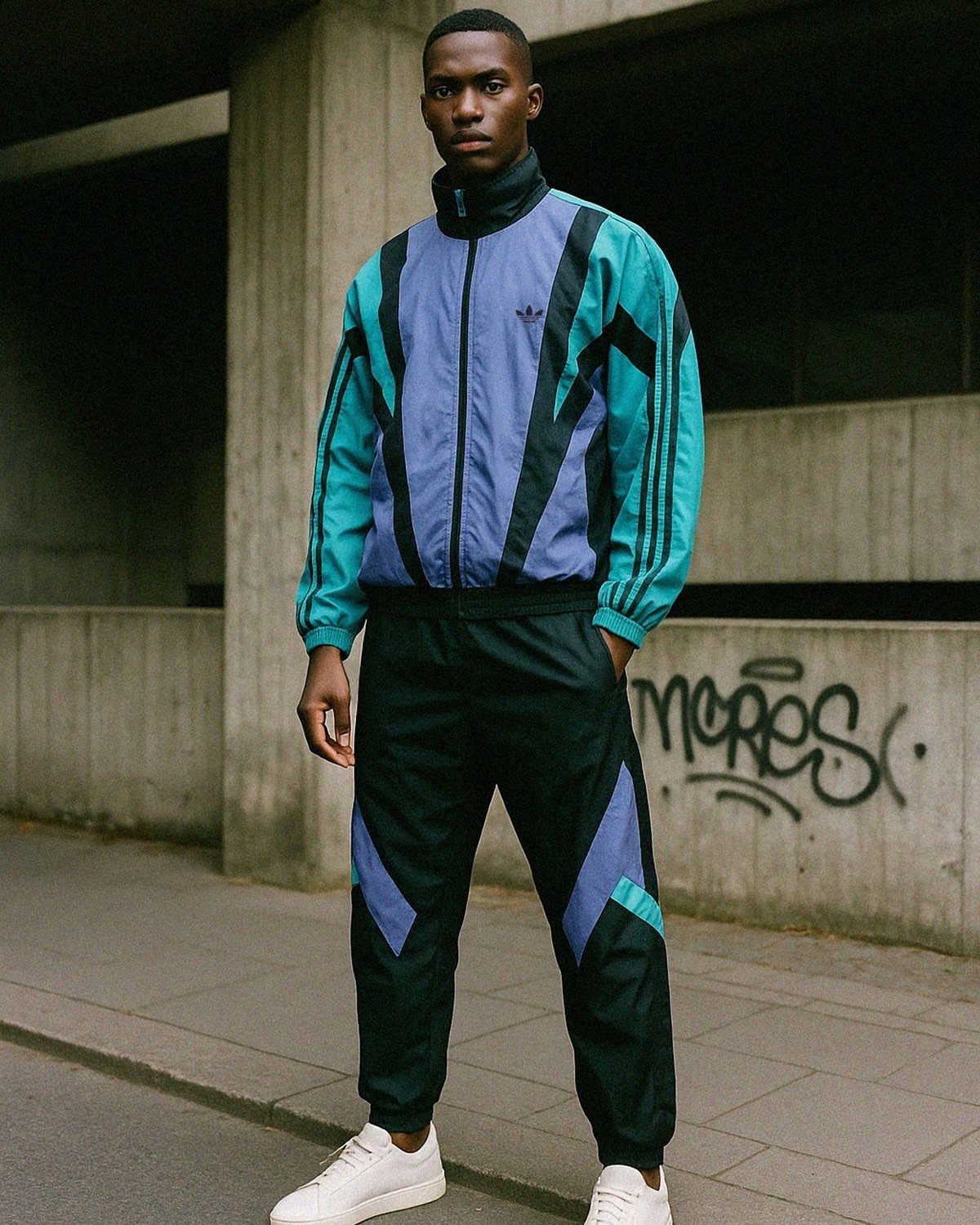
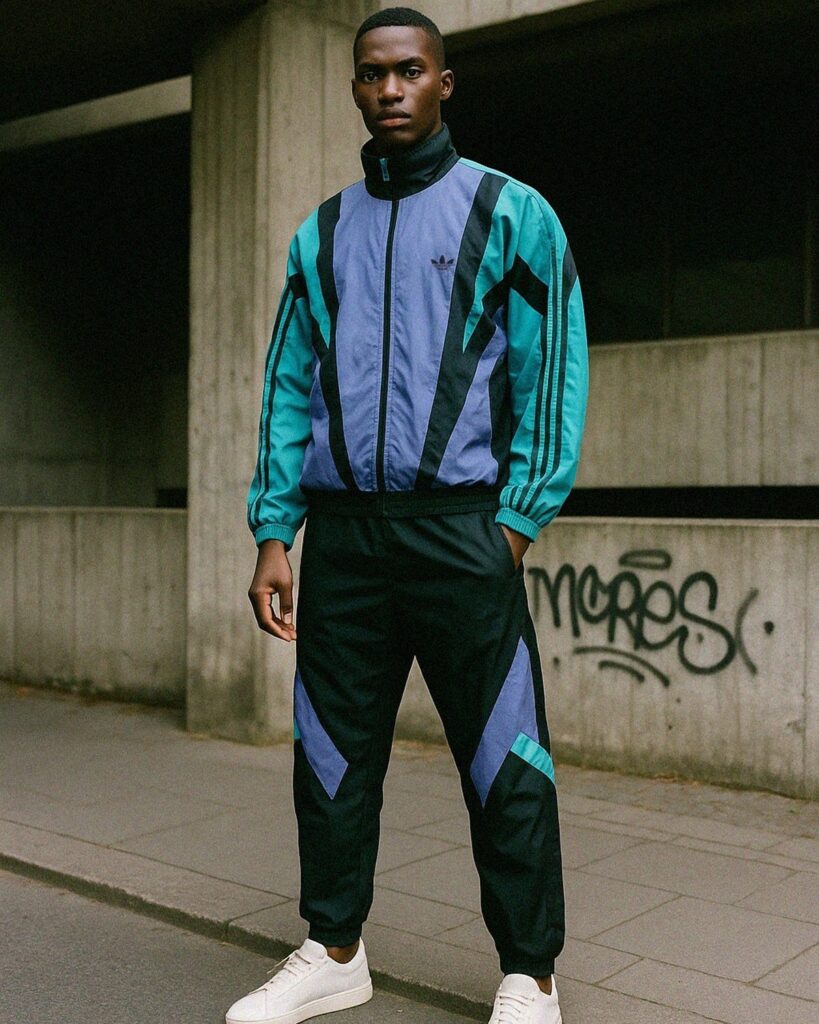
The tracksuit made the jump from gym to street in the mid-90s, worn as a complete set rather than mixing pieces.
Color blocking in bright or retro shades works better than plain navy or grey; the visible blue and teal combination here feels more period than a single solid.
Adidas, Fila and Champion all made sets like this, and the vintage market has plenty of them.
Fit was loose but not huge, closer to relaxed than baggy. White sneakers keep it clean.
2. Boxy Jackets and Huge Ties
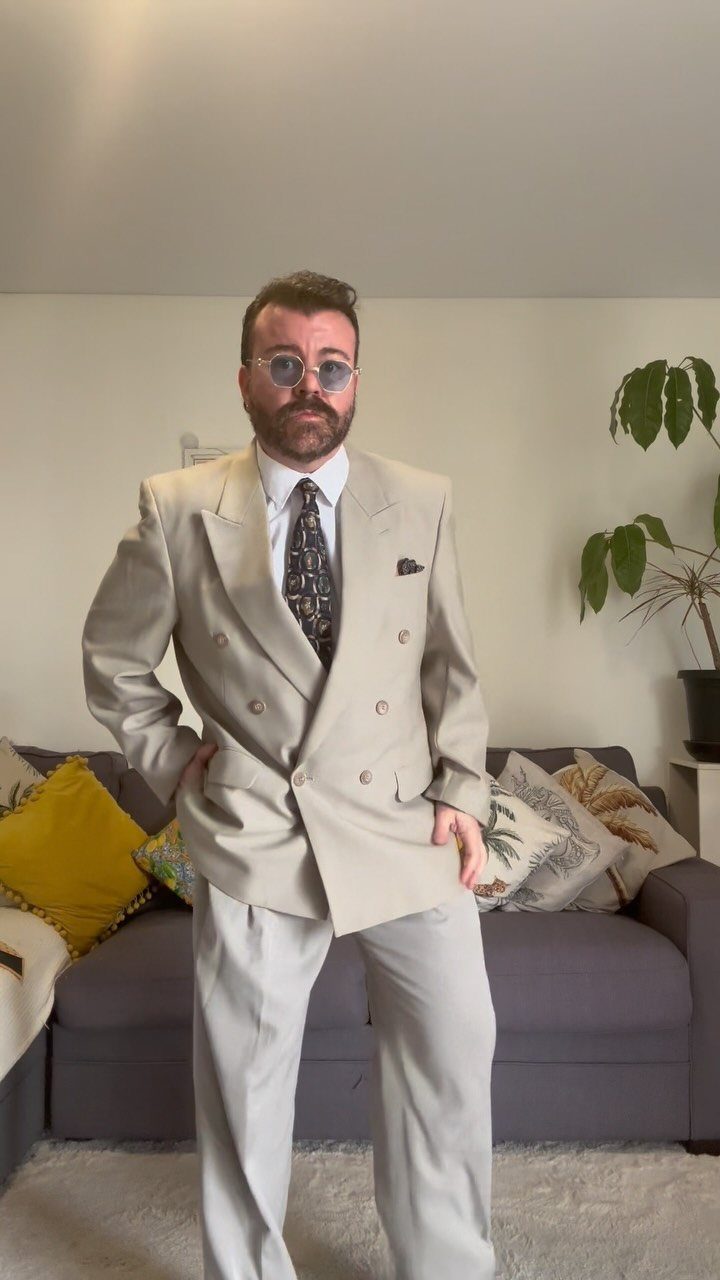
Big jackets and wide ties defined 90s business dressing, a swing away from the narrow 80s silhouette. Jackets sat boxy with broader, softer shoulders, and ties ran wide, knotted small in a four-in-hand.
The proportions work together: a huge tie under a slim modern jacket looks out of balance.
If you’re pulling this off now, commit to both pieces or skip it entirely. Double-breasted styles in lighter colors like beige or tan feel more 90s than charcoal.
Outside of Armani’s lock on red-carpet black tie, the ’90s were an era of extreme suiting plurality. From single-breasted and shiny to double-breasted and pinstriped, provided it was sufficiently boxy and broad in the shoulders, it was in play.
— GQ
3. Baggy Jeans
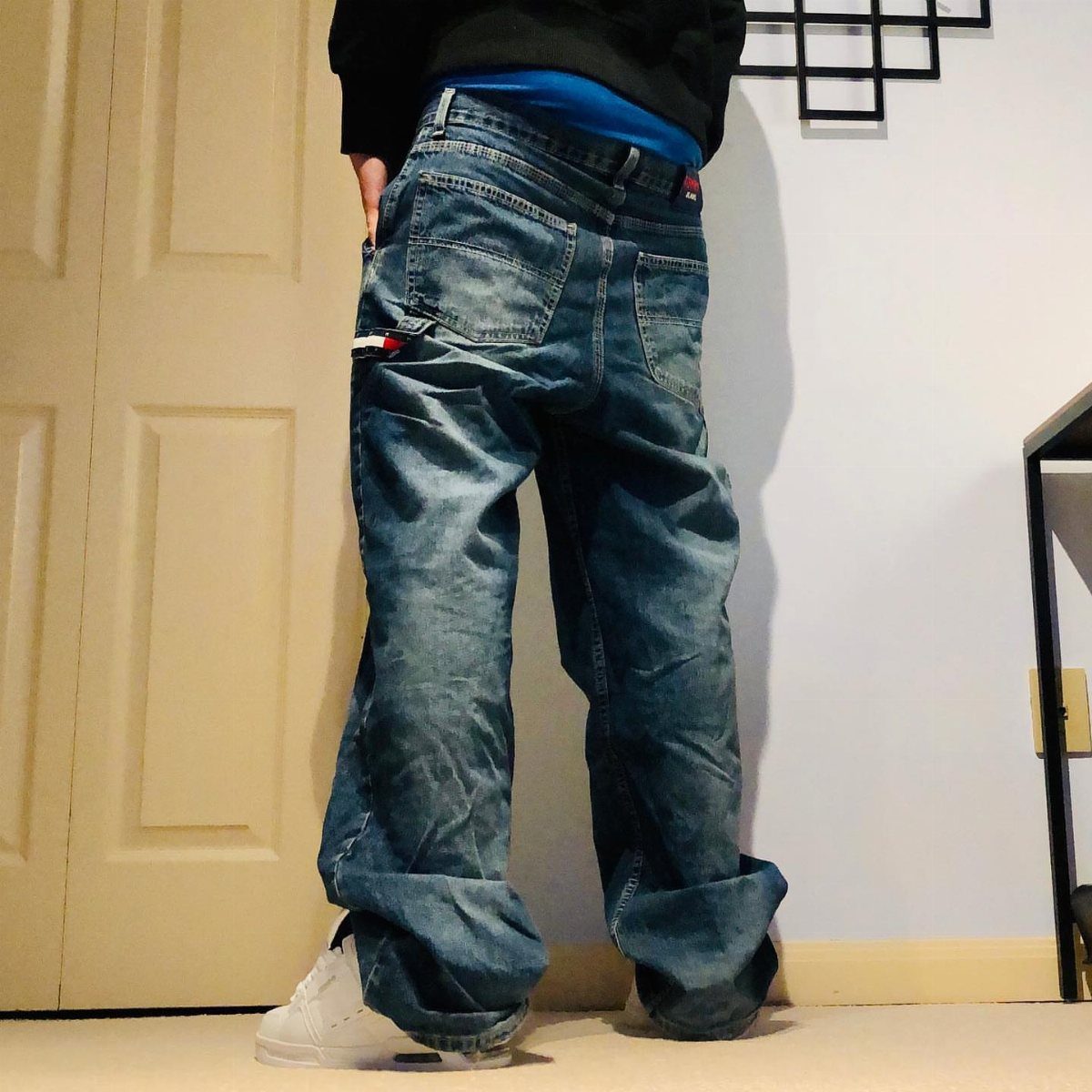
Baggy jeans sat low on the hips and broke heavily over sneakers, with a relaxed taper or straight leg that pooled at the ankle. The fit was loose through the seat and thigh but stopped short of skater-wide.
Levi’s 560 and workwear brands like Carhartt and Dickies captured this silhouette.
Length matters more than you’d think: too short and they read modern slim, too long and they look unintentional. A full break works best.
4. Graphic Print T-shirts
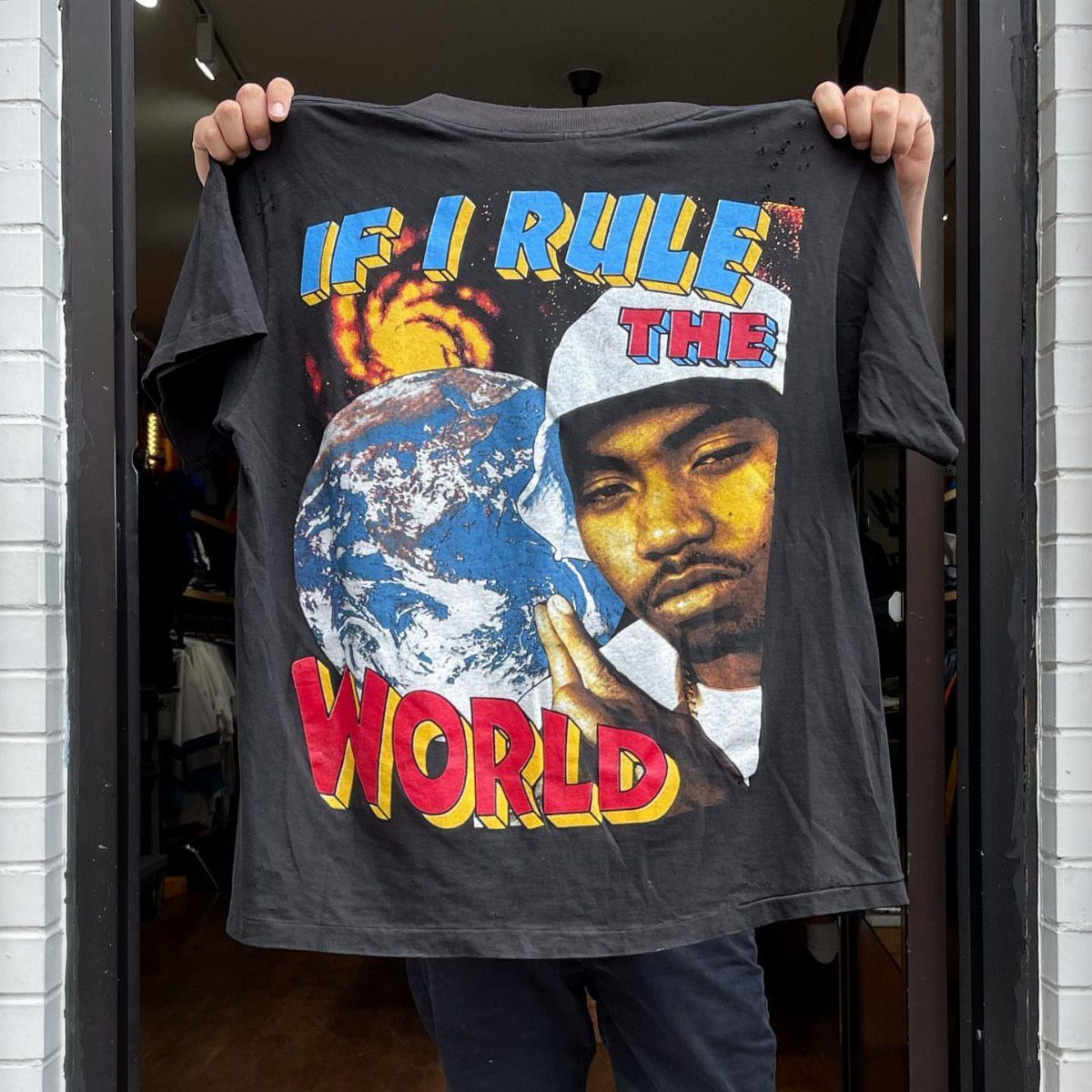
Graphic tees in the 90s carried album art, movie stills, sports figures or bold slogans, printed large across the chest or back. The designs leaned maximalist, with photography, typography and illustration layered together.
Black tees showed prints most clearly, though white and heather grey were common.
Sizing ran true to slightly oversized, not the balloon cuts you’d see in streetwear. Hip-hop and sports culture drove a lot of the imagery, but band tees and bootleg movie prints circulated just as widely.
5. Windbreakers
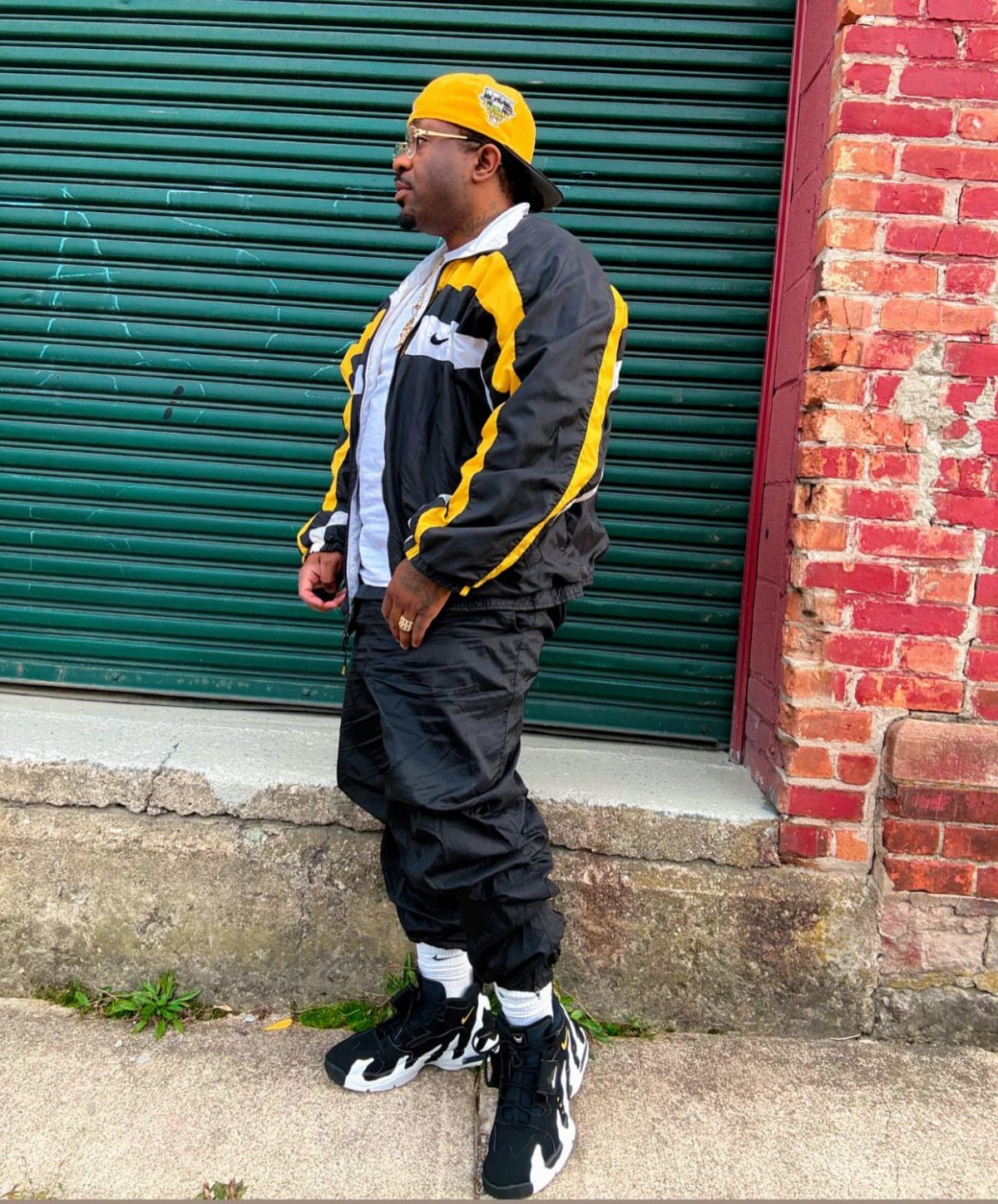
Windbreakers were thin nylon shells, often color-blocked in 2 or 3 shades, worn as an outer layer over hoodies or tees. They packed down small and worked for spring or fall, not winter.
Matching sets with joggers or track pants were common.
Half-zip pullover styles competed with full-zip jackets; both had elastic cuffs and a drawstring hem. Nike, Starter and Tommy Hilfiger all made versions like this, and the vintage pieces hold up if the nylon hasn’t cracked.
6. Turtlenecks
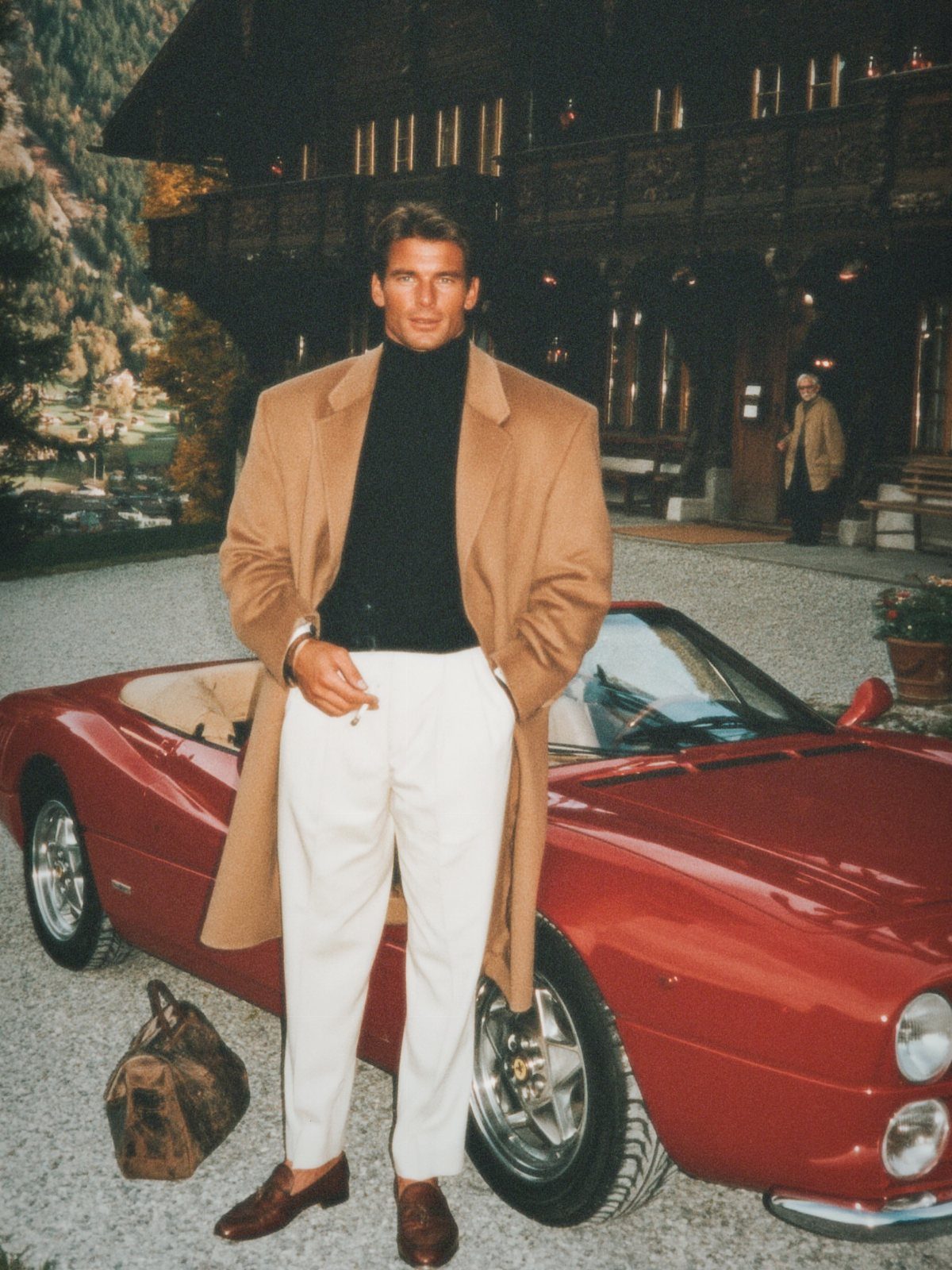
A black turtleneck under a blazer or overcoat became a polished alternative to dress shirts in the 90s, worn by architects, creatives and anyone pulling off smart casual before the term existed.
Fit was slim but not tight, sitting close without clinging. Wool or cotton blends worked better than synthetics, which showed sweat too quickly.
The look reads formal enough for most business casual settings but skips the stiffness of a collar and tie. Paired with tailored trousers or dark jeans, it still holds up.
7. Cargo Pants
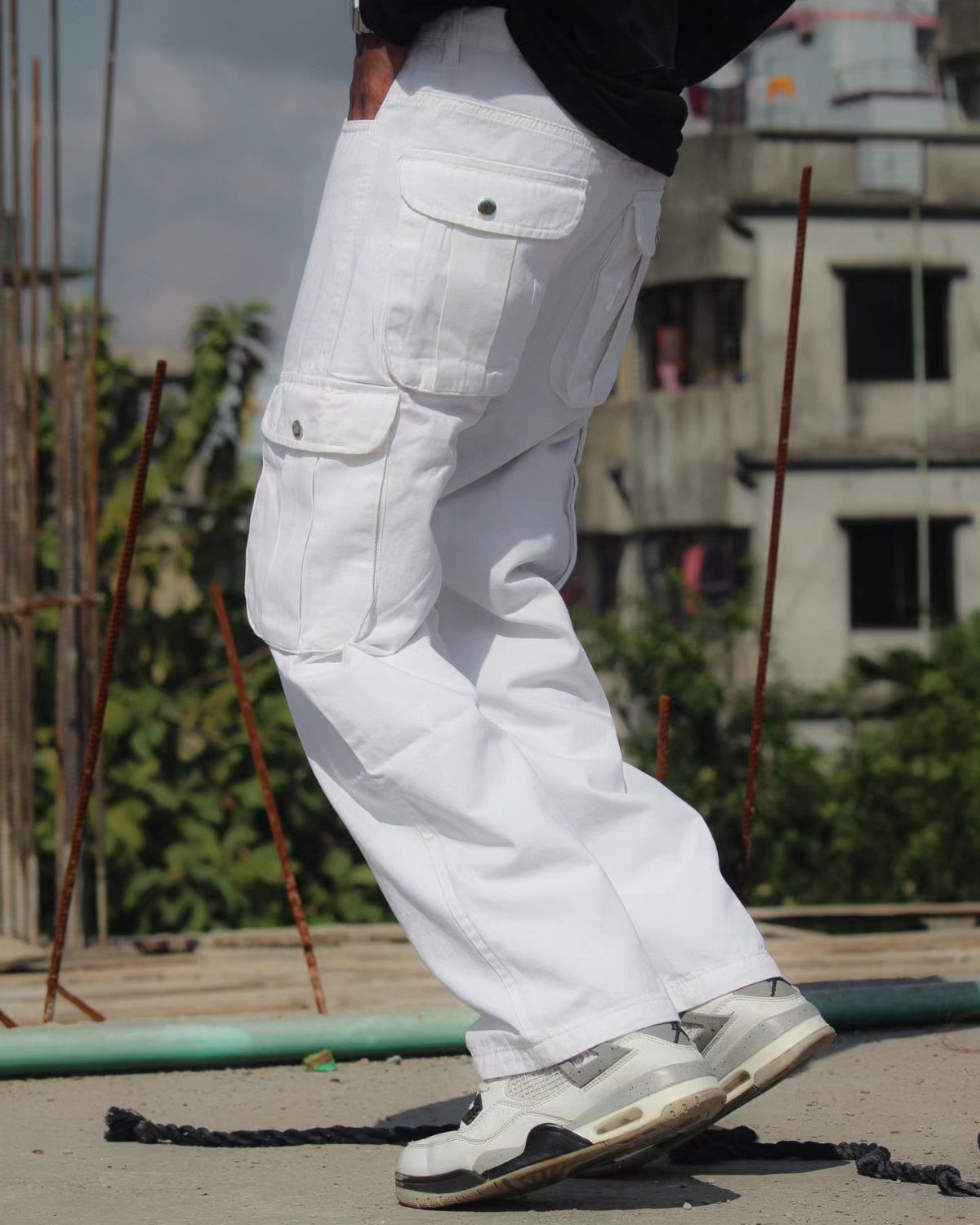
Cargo pants add pockets to the thigh and sometimes the knee, worn loose through the leg with a mid or low rise. The silhouette in 1996 sat relaxed but not ballooning, closer to skater cuts than military surplus.
White or khaki show up most often in 90s photos, though olive and black were just as common.
Pair them with a fitted tee or tank to balance the volume below the waist. The pockets should lie flat when empty; if they flare out, size down.
8. Layered Long-Sleeve T-Shirt
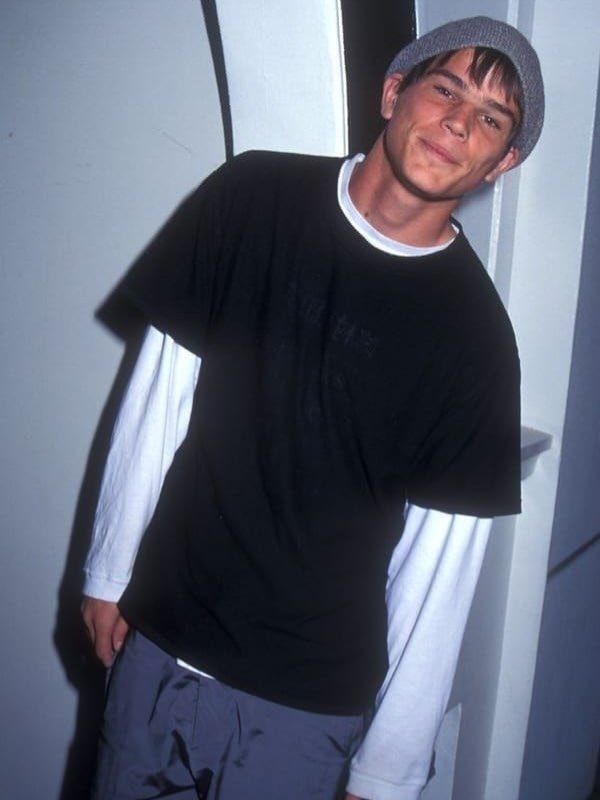
Layering a short-sleeve tee over a long-sleeve shirt became a casual uniform in the 90s, combining 2 plain pieces into something with more depth. The sleeves underneath extend past the outer tee, usually in white or a contrasting color.
Black over white remains the easiest combination, but reversing it or using grey and navy adds range without complexity.
Both pieces should fit close to true size; oversizing the outer tee turns it into a different look entirely. The nylon pants and beanie complete the era’s relaxed aesthetic.
9. Double Denim
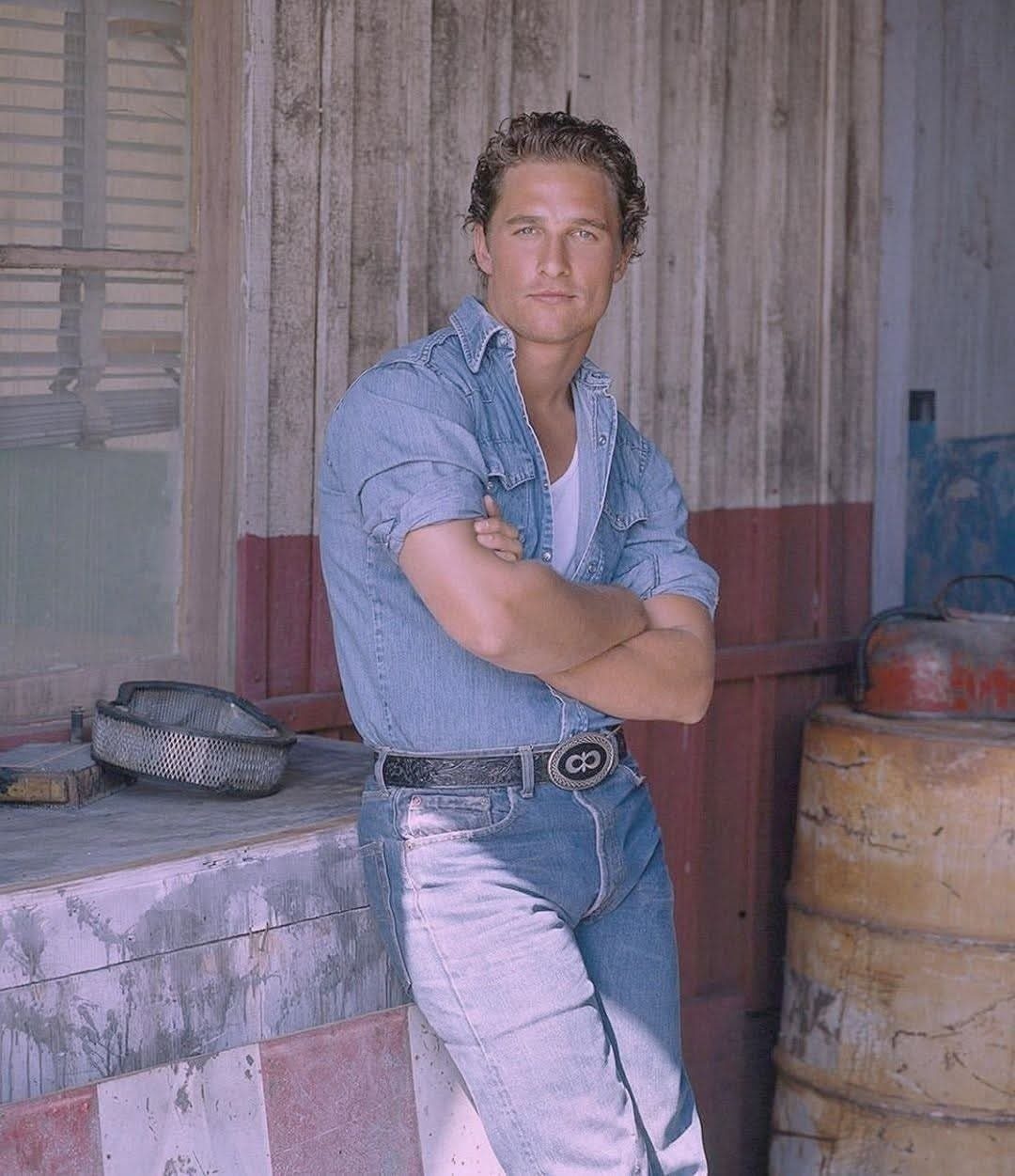
Matching denim shirt and jeans in similar washes became acceptable in the 90s after years of being considered a mistake.
The key was keeping both pieces in the same blue family, medium to dark, rather than mixing light and dark or adding contrast washes.
A white tee underneath breaks up the denim and gives the eye a place to rest. Fit matters: if both pieces run oversized, the look reads costumey.
One piece fitted and one relaxed works better. The silver buckle adds a small accent without pulling focus.
10. Oversized Striped Polo
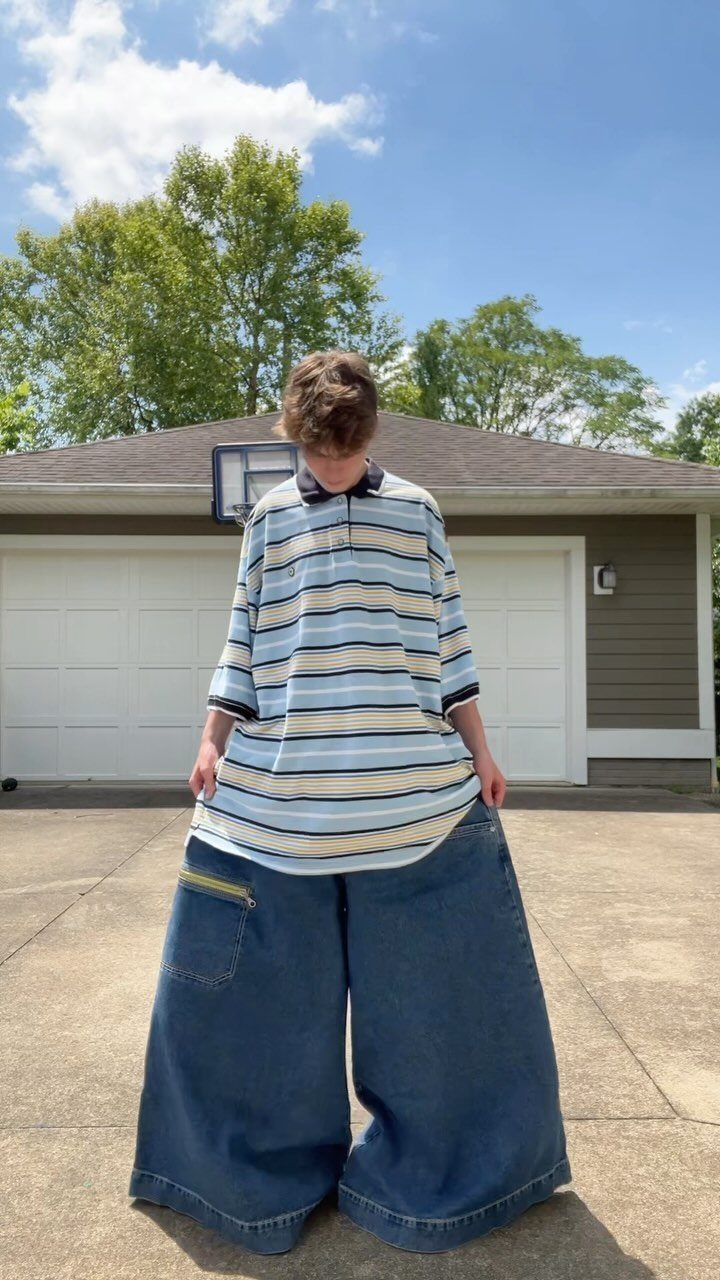
Horizontal stripes in bold colors ran across oversized polos in the 90s, worn untucked with the widest jeans you could find. The fit was huge, dropping past the hips and sitting boxy across the chest and waist.
Pairing an oversized top with ultra-wide jeans commits fully to the era’s proportions. Sizing down on either piece pulls it toward modern streetwear instead.
The stripe pattern should be high contrast, not tonal, to match the period. Sneakers disappear under jeans this wide, so white or bright colors help them show.
11. Open Flannel Shirt
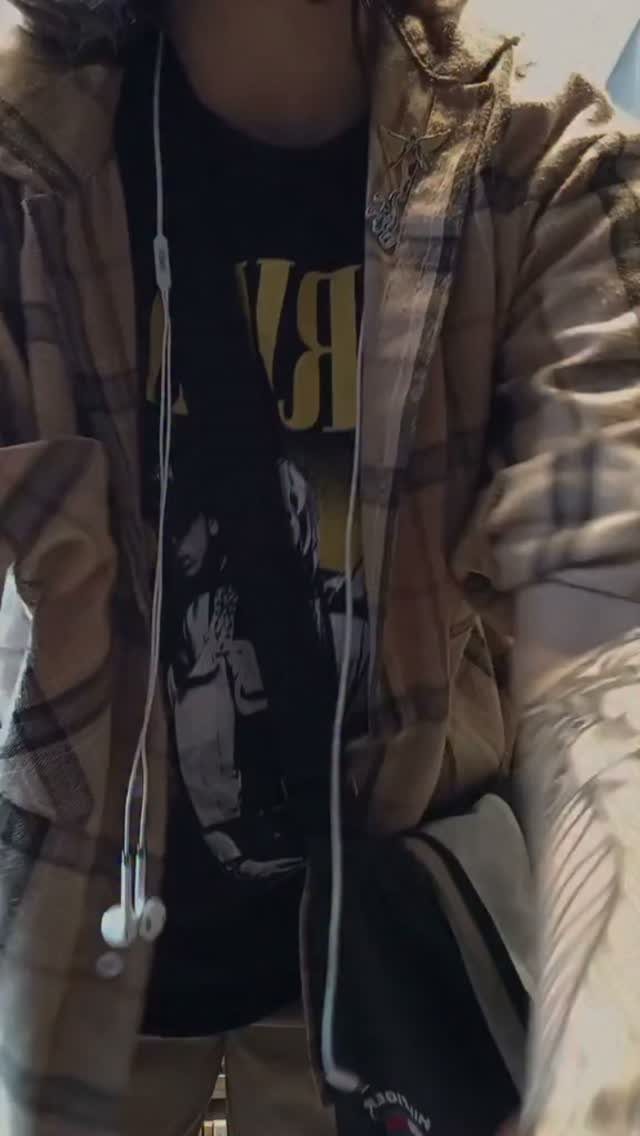
An unbuttoned flannel over a graphic tee became the simplest layering move of the decade, adding texture and color without requiring much thought. Brown, tan or muted plaids feel more 90s than bright lumberjack checks.
The flannel should fit relaxed in the shoulder but not hang past mid-thigh. Sleeves can be rolled or left long.
The black tee underneath keeps the focus on the pattern rather than competing with it. This works over most casual shirts and remains one of the easiest ways to add a layer.
12. Double-Breasted Blazer with Gold Jewelry
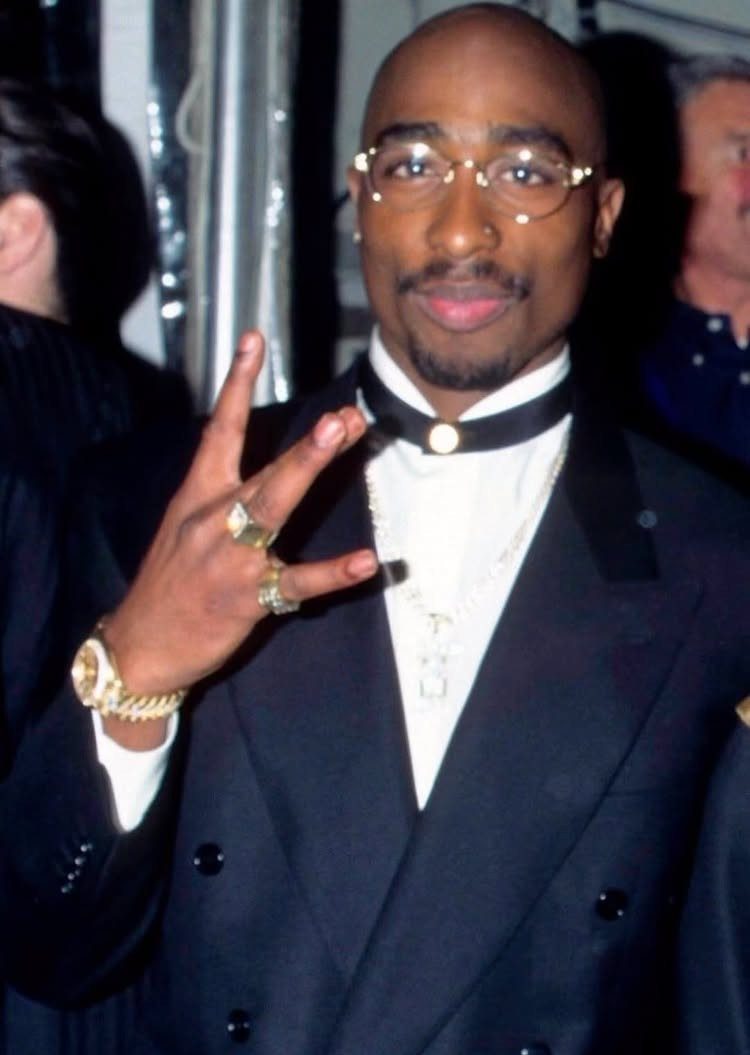
A tailored double-breasted blazer in black, worn over a white shirt and stacked with gold chains, rings and a watch, combines formal tailoring with hip-hop jewelry culture.
The contrast between sharp structure and visible wealth defined 90s red carpet and music video style.
Gold should be layered but not covering every surface. Multiple chains in different lengths work better than one heavy piece.
The blazer needs to fit well in the shoulders; oversized tailoring here looks unfinished rather than intentional. Black chokers or leather cord necklaces were part of the same moment and add another texture.
Mixing Styles
The decade pulled from multiple subcultures at once, and mixing them was normal rather than risky.
A flannel shirt borrowed from grunge could sit over a graphic tee that came straight out of hip-hop, paired with baggy jeans that worked for either.
Bright colors and playful prints arrived as grunge commercialized and post-grunge opened up the palette.
Plaid stayed, but the mood shifted lighter. Pop and punk influences blended into mainstream dressing, and even rap style loosened up: Tupac wore ruby shirts and denim overalls.
The tail end of the decade brought futurism, split between the dark minimalism of The Matrix and the metallic shine of Y2K.
Bond shifted from British gentleman to global dealmaker, and the tailoring followed. Big fashion brands became household names, recognized by people who never thought much about clothes.
Accessorizing
Sunglasses ran to extremes: oval Oakleys, color-tinted lenses and frames that sat somewhere between futuristic and freaky. Red carpet photos from the decade show just how wide the range went, and the shapes worked because everything else stayed simple.
Flat-brimmed caps, often worn backward or to the side, appeared across streetwear and casual dressing. They came from sports and hip-hop culture but spread quickly.
Freestyling accessories meant pulling from whatever subculture or trend felt right that day.
The decade encouraged mixing rather than matching, so a preppy outfit could pick up a hip-hop influenced cap, or a grunge flannel could pair with sunglasses borrowed from rave culture.
Casual Vs. Formal
Everyday dressing mixed casual staples without leaning fully into any one style.
Bowling shirts, motorcycle jackets, overalls and layered pieces like shirt jackets over crewnecks or open button-ups over tees all qualified as casual.
Even preppy style loosened up: turtlenecks layered under cardigans, crew socks worn with loafers and jeans, baggy sweater vests.
Formal tailoring stayed boxy and relaxed, closer to the business looks already covered in the list than to anything stiff or narrow.
Frequently Asked Questions
How did people dress in 1996?
Baggy jeans, graphic tees and oversized jackets made up the core of men’s dressing in 1996.
Fit ran loose across most pieces, from boxy blazers and wide ties in business settings to relaxed tracksuits and cargo pants in casual wear. Layering was common, mixing flannel shirts over long-sleeve tees or pairing windbreakers with joggers.
What shirts did men wear in the 90s?
Flannel shirts worn open over graphic tees, oversized striped polos and plain tees layered under short-sleeve shirts defined casual shirt choices.
A turtleneck under a blazer gave you the formality of a collared shirt without the bulk of a tie. The graphics themselves favored music, athletes and text large enough to read from across a room.
What did guys wear in the year 2000?
Late 90s style carried into 2000, blending metallic accents and frosted aesthetics with darker, tech-driven looks inspired by The Matrix.
Retro-futurism brought silver and gold flared pants and frosted-tip hair, while leather jackets and dark sunglasses became the uniform for anyone chasing a hacker vibe.