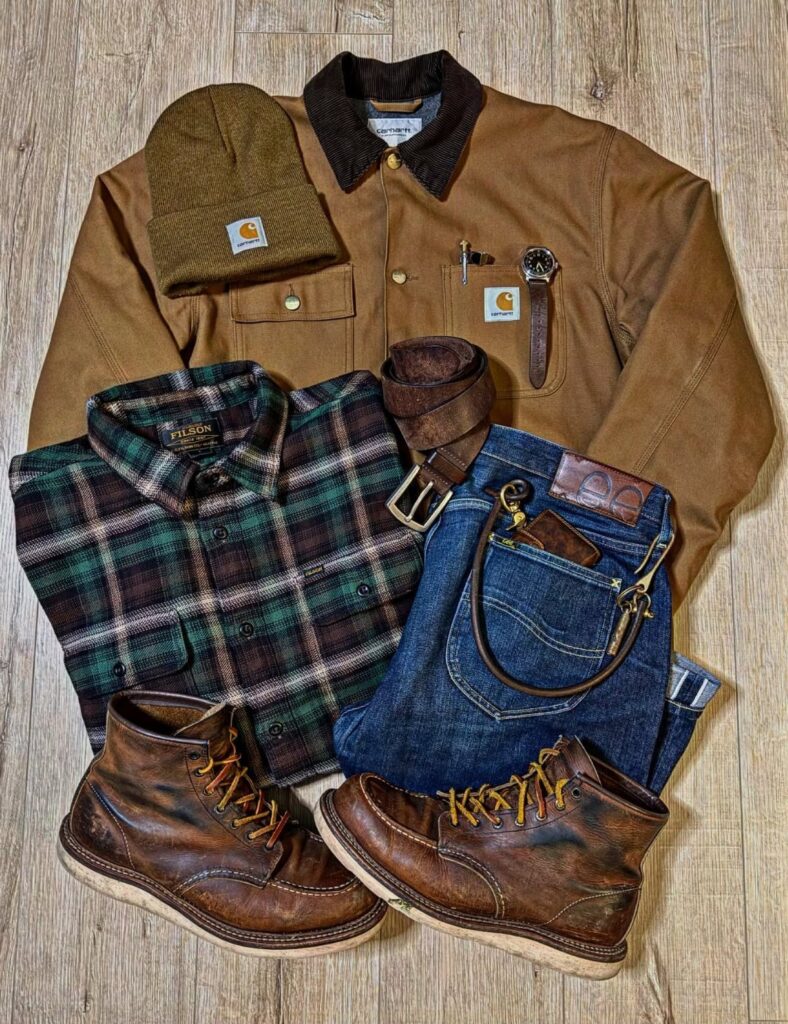
American style runs from Carhartt’s heavy duck canvas, cut boxy enough to layer underneath, through Brooks Brothers’ structured tailoring and Ralph Lauren’s prep, to Todd Snyder’s detailed overcoats.
The right brand depends on your priorities: workwear built to last, clean basics that layer well, or tailored pieces that stay sharp for years.
1. Carhartt Work Clothing
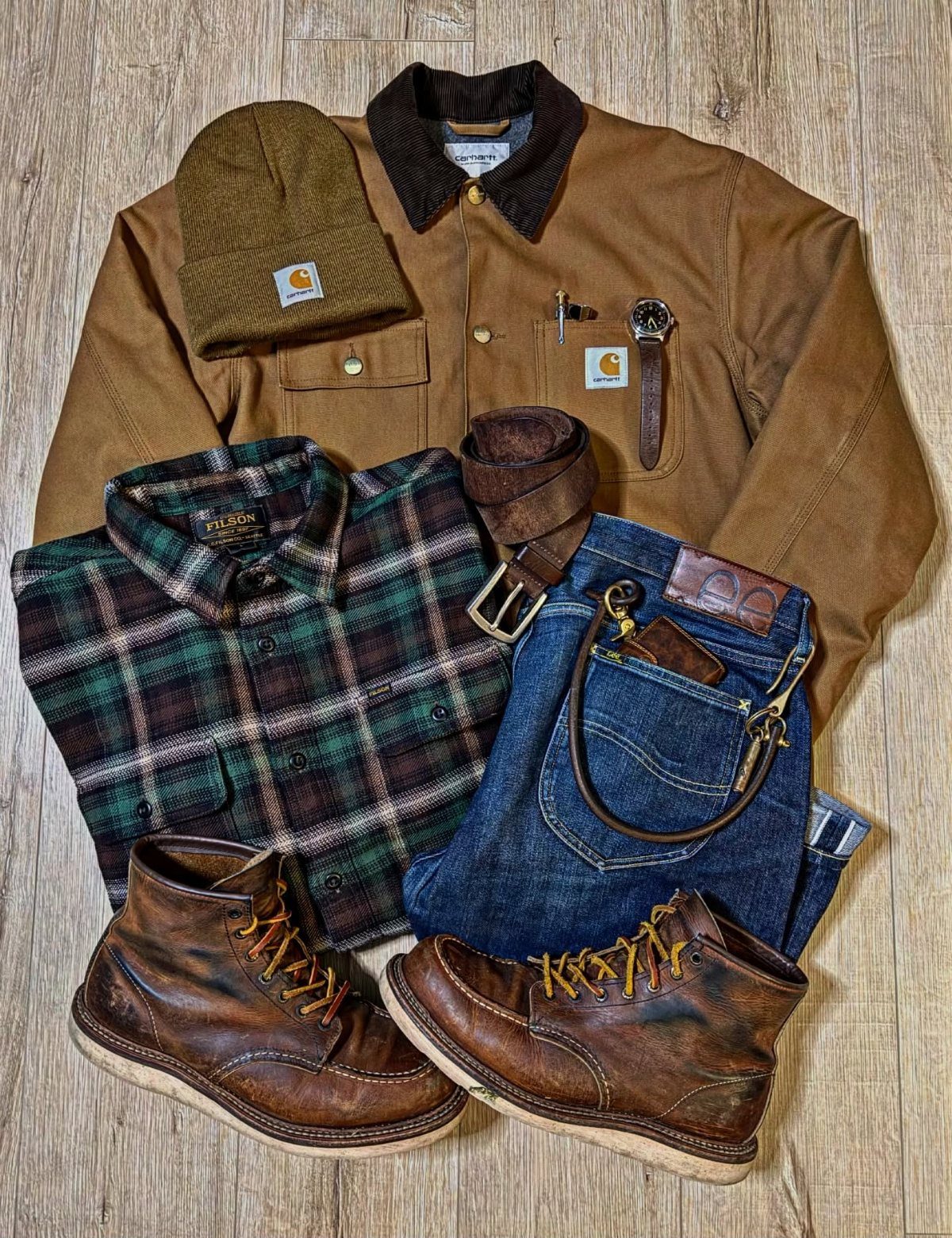
Carhartt built its reputation on workwear that lasts: heavy duck canvas jackets, reinforced at the seams, cut to move in.
The weight of the fabric matters.
Carhartt’s duck canvas holds its shape through years of use, and the fit runs boxy enough to layer underneath. If you need clothing that takes a beating and still looks right, this is where I’d start.
2. Buck Mason Tees and Jeans
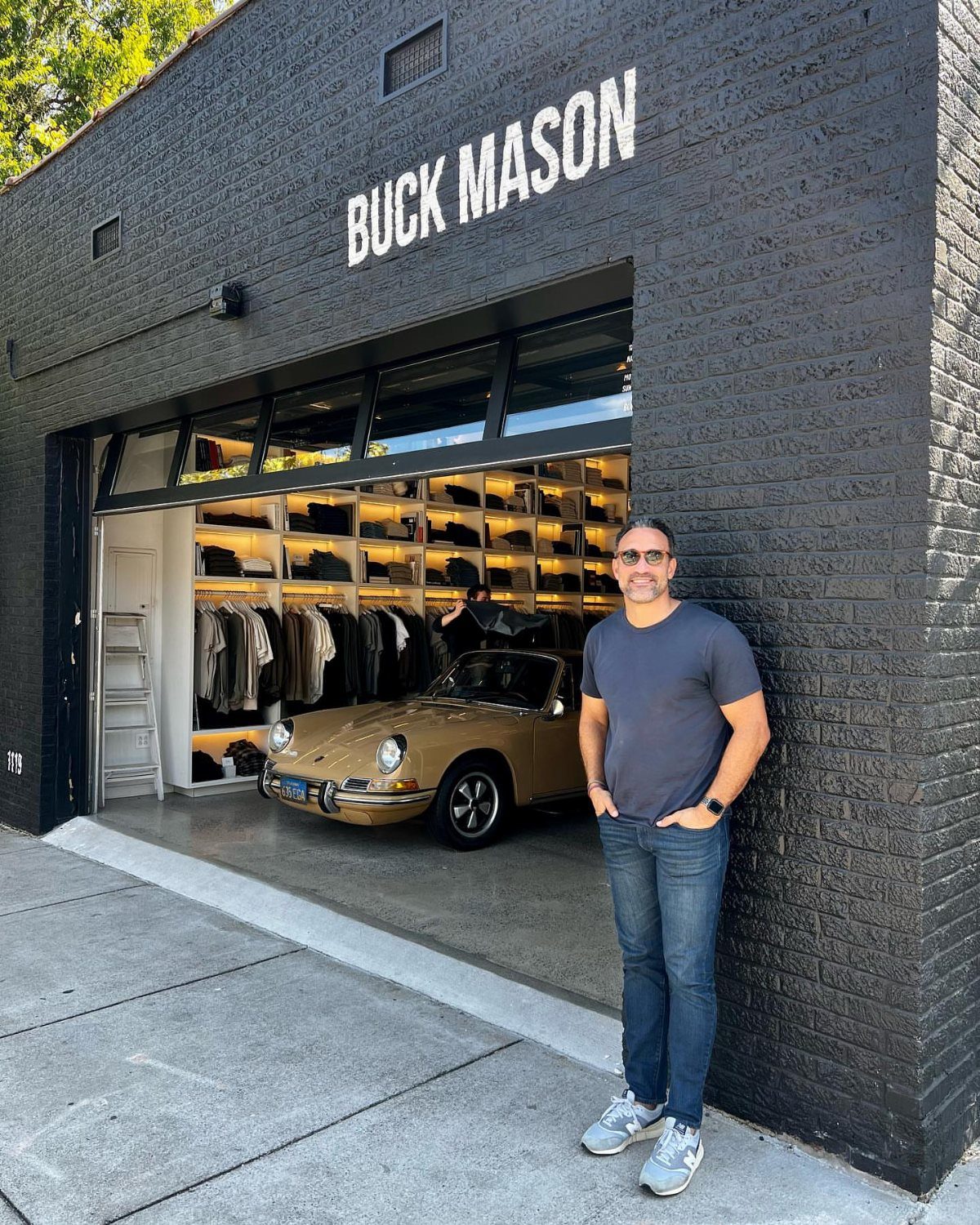
Buck Mason keeps it simple: tees cut from heavy cotton, jeans that fit clean through the leg, and nothing trying too hard.
The grey tee and blue jeans here are exactly what the brand does best, and the fit looks dialed in without any fuss.
Their curve-stitch tees run thick enough to hold structure but not stiff.
Jeans come in straight and slim cuts, and both work for the guy who wants a good fit without spending an afternoon in a dressing room. I’d buy multiples of the tee.
3. Brooks Brothers Tailored Menswear
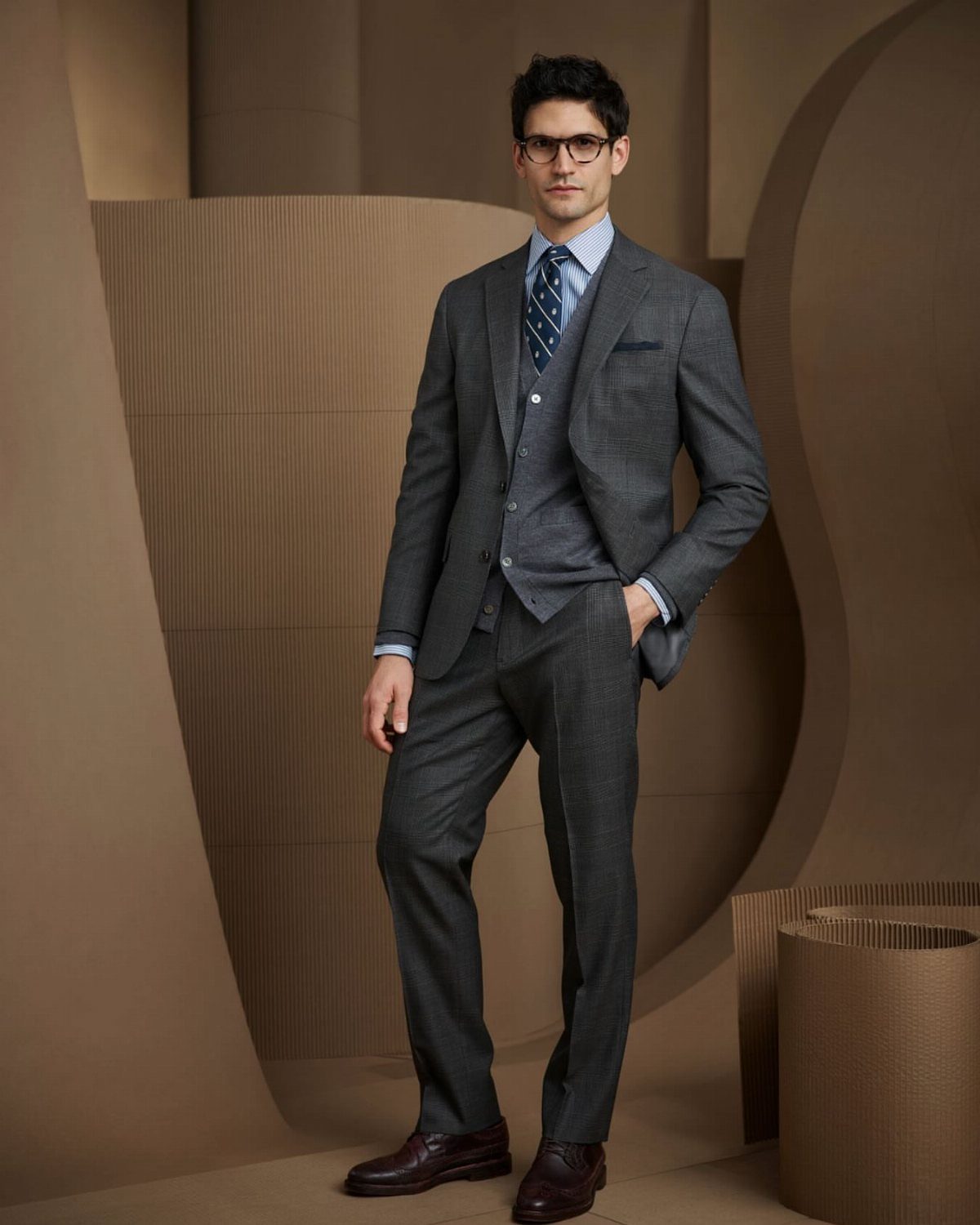
Brooks Brothers has been making tailored menswear since 1818: structured jackets, matching vests, trousers that break clean over the shoe. This is American tailoring at its most traditional.
The fit runs classic, meaning it sits on the shoulder and tapers gently through the waist without hugging. A suit for work or formal events that won’t look dated anytime soon.
4. Ralph Lauren
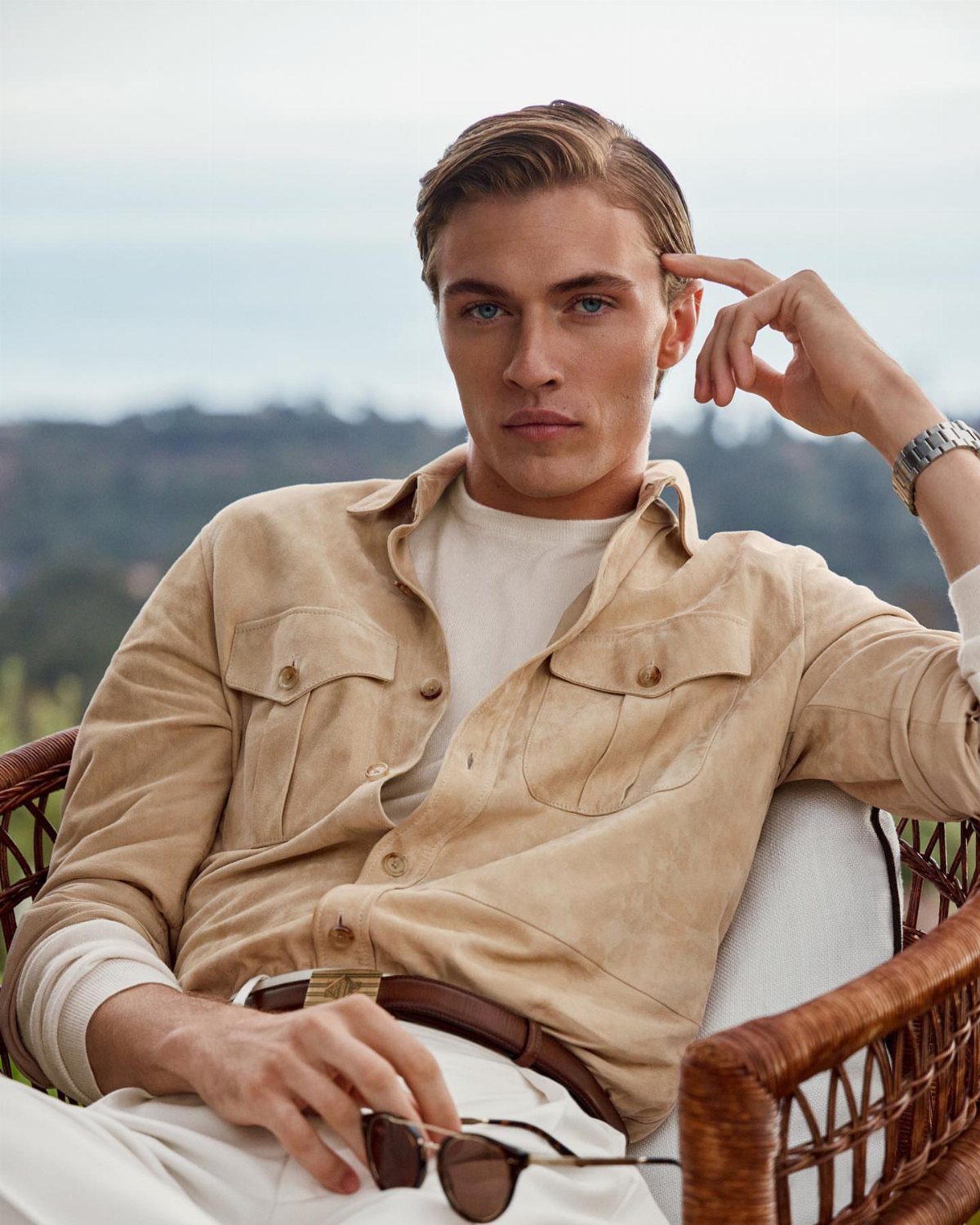
Ralph Lauren takes American prep and refines it: the tan overshirt and white trousers here are relaxed but still put together, the kind of outfit that works for a summer dinner or a casual Friday without looking like you just rolled out of bed.
The overshirt looks like suede or a textured cotton, layered over a white tee and paired with trousers that stay light enough for warm weather.
I like how much cleaner white trousers read than jeans in this context, and the tan adds warmth without feeling too casual.
From classic chinos to crewneck sweaters, everything at Alex Mill has a relaxed ease that’s seen it succeed even more in 2026. The brand’s overall aesthetic leans preppy, but there’s a deep love for hard-wearing vintage staples like beefy flannels and sturdy outerwear.
— GQ
5. Patagonia
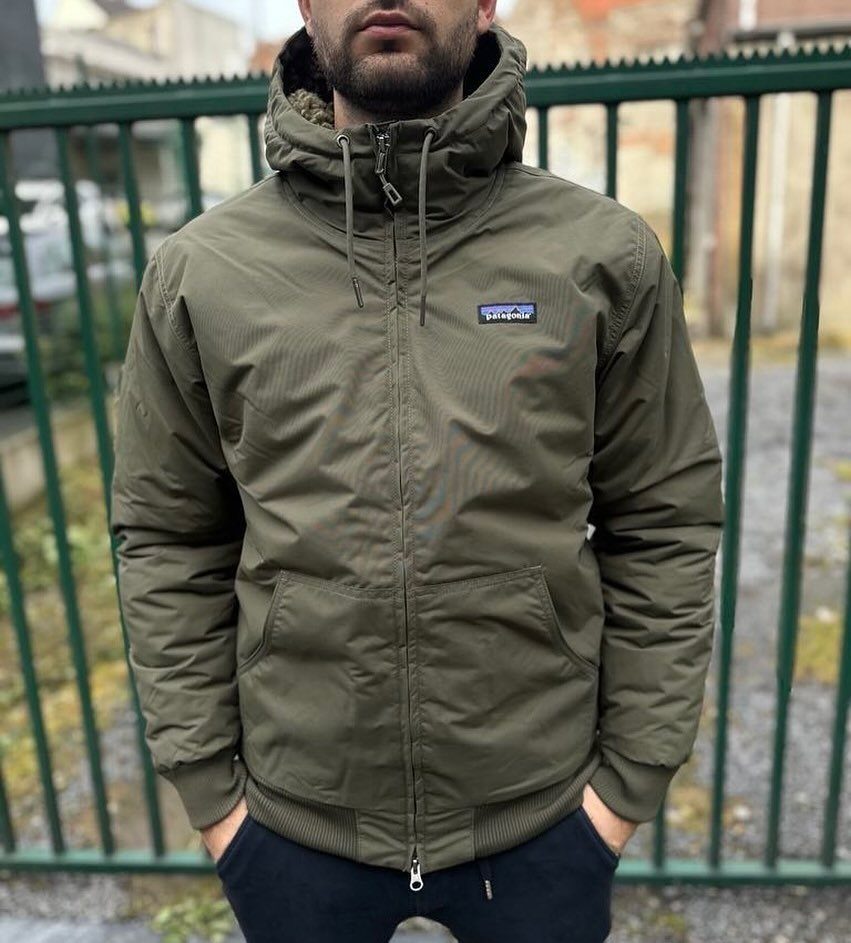
Patagonia makes outdoor clothing that holds up in actual weather, and the olive hooded jacket here is a solid example: water-resistant, built to layer, and designed to last decades rather than seasons.
The brand also repairs what you buy, which cuts down on replacement costs.
The fit runs generous enough to layer a fleece or a sweater underneath, and the olive works with just about everything.
If you spend time outside or just want a jacket that performs in rain and wind, Patagonia is one of the few brands I’d trust without question.
6. Todd Snyder
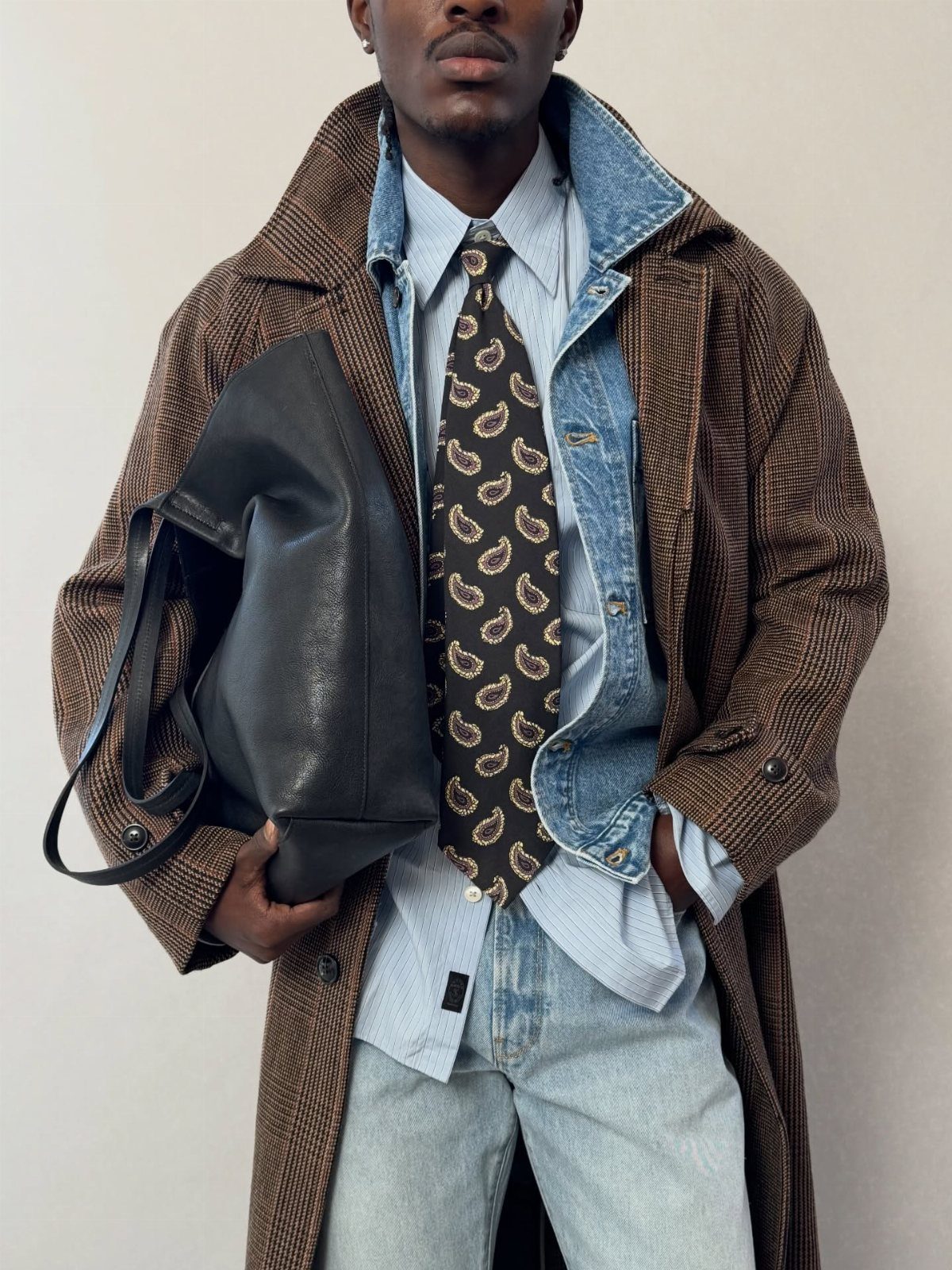
The overcoat drives the look, long enough to balance the proportions and detailed enough to hold interest.
Each piece reads as distinct but not competing. I’d swap the light-wash jeans for something darker to let the coat and tie stand out more, but the approach works for menswear that feels considered without being stiff.
Fit Options for Different Body Types
Athletic fits add room through the chest and taper through the waist, built for guys who need width up top.
Regular fits run straighter from chest to hem and work when you don’t want fabric pulling or excess fabric bunching at the sides.
Slim cuts narrow through the torso and sleeves, best for leaner builds that can wear a closer fit without strain.
The right fit depends on where your body carries width. If your shoulders are broader than your waist, an athletic cut keeps the shirt from pulling at the buttons.
If you’re more even from chest to waist, regular fits look cleaner. Slim works when you want a tailored line and the fabric sits flat without tugging.
Most brands size these cuts consistently within their own range, so once you find your fit, reordering gets easier.
Sustainability in Fashion
Organic cotton uses less water and avoids synthetic pesticides, which matters when you’re buying multiples of the same tee or jean.
Recycled polyester pulls material from plastic waste and cuts down on new petroleum-based fibers, common in technical outerwear that needs to shed water.
Repair programs extend the life of a jacket or pair of trousers past the first tear or blown seam, and some brands cover repairs for the original owner at no charge. That shifts the cost per wear down over time.
Transparent supply chains let you see where a garment was sewn and under what labor standards, which separates brands that audit their factories from those that don’t publish the information.
Quality Vs. Price
A jacket that holds up costs less per wear than one that falls apart, even when the upfront price runs higher.
Heavy duck canvas holds its shape and resists tearing better than lightweight twill, and reinforced seams add years before you need a repair.
Thicker cotton tees hold structure through dozens of washes without stretching out at the neck or hem. Jeans with a tight weave and bar tacks at the stress points outlast thinner denim that blows out at the pocket or inseam.
The trade-off is the initial spend. Buying fewer pieces at higher quality leaves you with less in the closet but more that actually works, which cuts down on replacements and the time spent shopping for them.
Frequently Asked Questions
What are some popular US brands for men’s clothing?
Carhartt, Brooks Brothers, Ralph Lauren, and Buck Mason all rank high for different reasons.
Carhartt handles workwear that lasts through years of heavy use, Brooks Brothers builds traditional tailored menswear, Ralph Lauren refines American prep, and Buck Mason keeps tees and jeans simple and well-fitted.
What clothing brands are only in the US?
Brooks Brothers and Carhartt are both American brands that started here and built their reputations on US manufacturing traditions. Brooks Brothers has been making tailored menswear since 1818, and Carhartt built its name on workwear that holds up through heavy use.