Color moves through the day: white breeches and dark tailcoats anchor formal evening dress, while tan or cream trousers under brown or navy coats soften the line for daytime wear.
1. Colorful Waistcoats
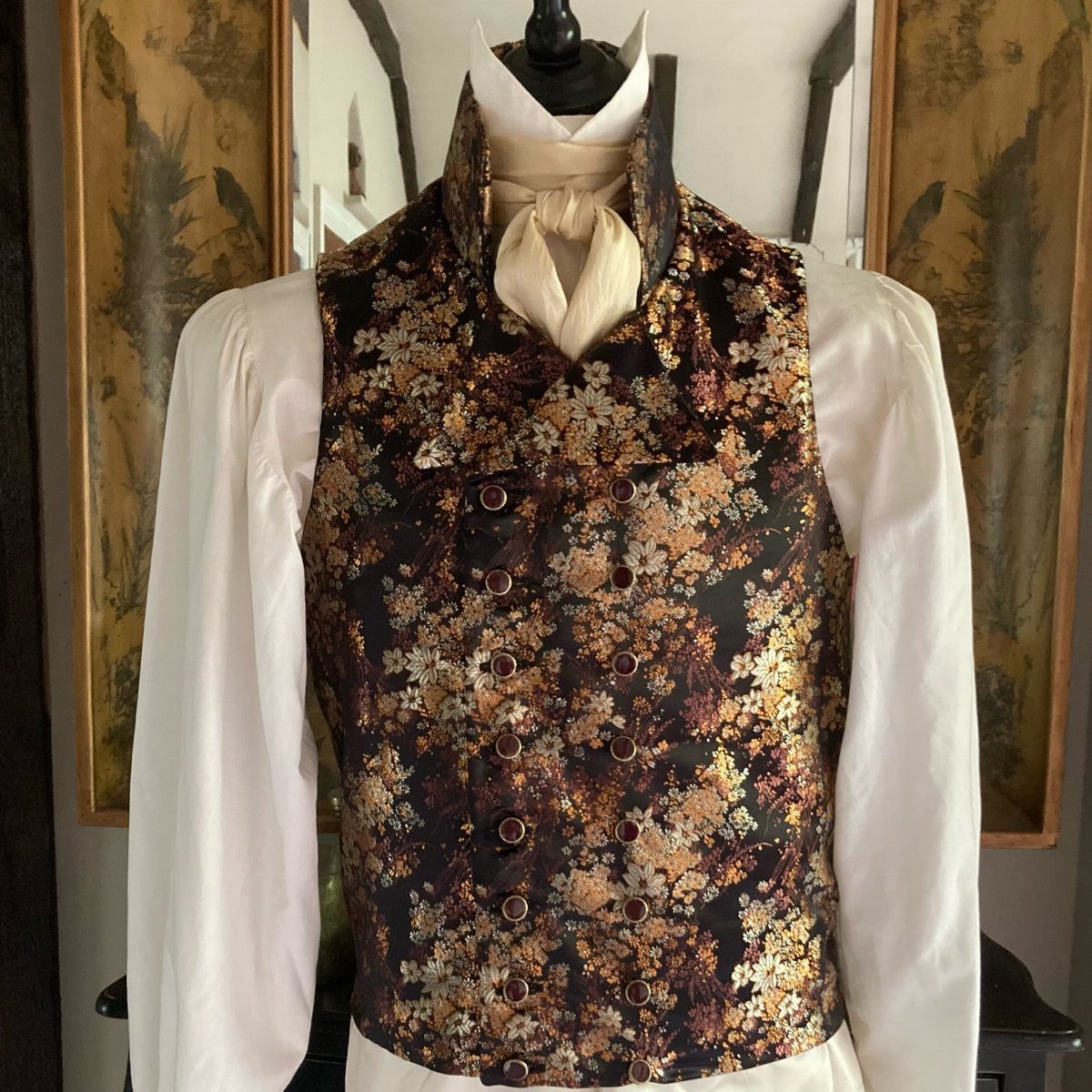
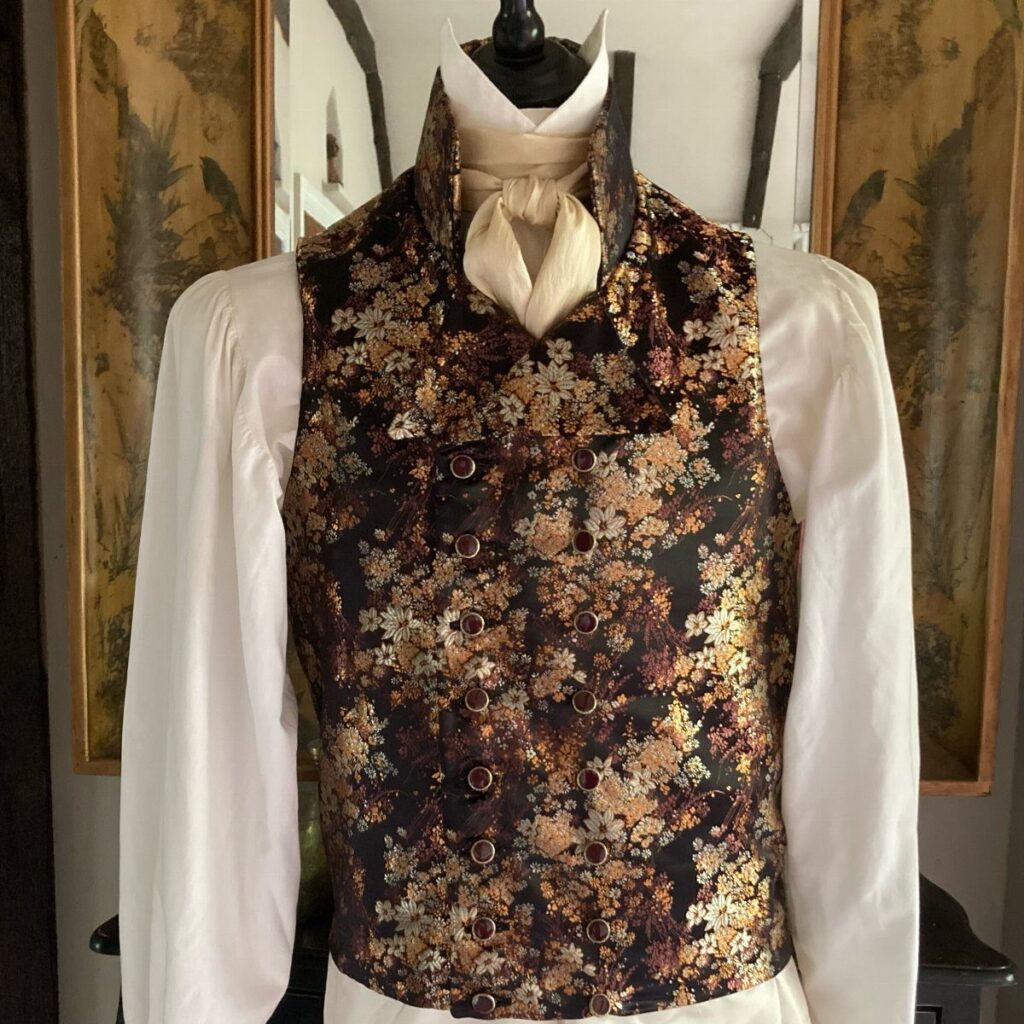
A waistcoat in a bold pattern or saturated color lifts the whole outfit without changing the cut. Florals on a dark ground read formal but stay easy to wear with black or navy tailcoats.
Regency waistcoats sat higher on the torso than modern vests, often ending just below the natural waist. Single-breasted styles like this one fasten with small covered buttons and show more shirt and cravat above.
If you’re building one outfit, start with a solid waistcoat in ivory, buff, or burgundy. Pattern comes second.
2. Tailcoat with Tan Trousers
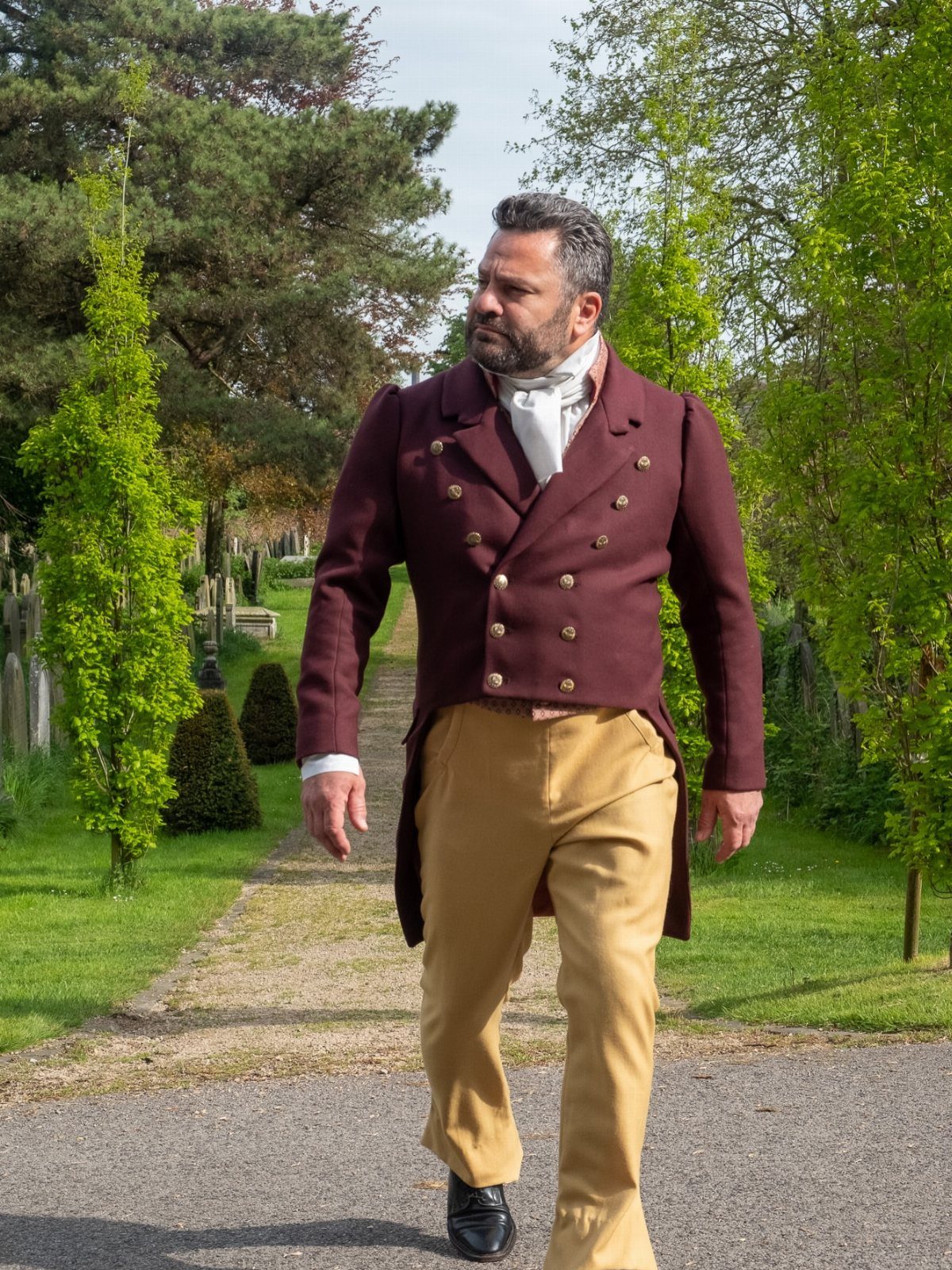
Tan or buff trousers soften the formality of a tailcoat and work better in daylight than white breeches or dark wool. The maroon coat here keeps the pairing grounded without sliding into costume.
Regency trousers were cut high-waisted and close through the leg, closer to modern chinos than suit trousers. They button or tie at the natural waist, sitting just under the waistcoat.
Choose a mid-tone trouser when the tailcoat is saturated. Cream, tan, and stone all balance strong color while staying neutral enough to sit beside it.
3. Tailcoat and White Breeches
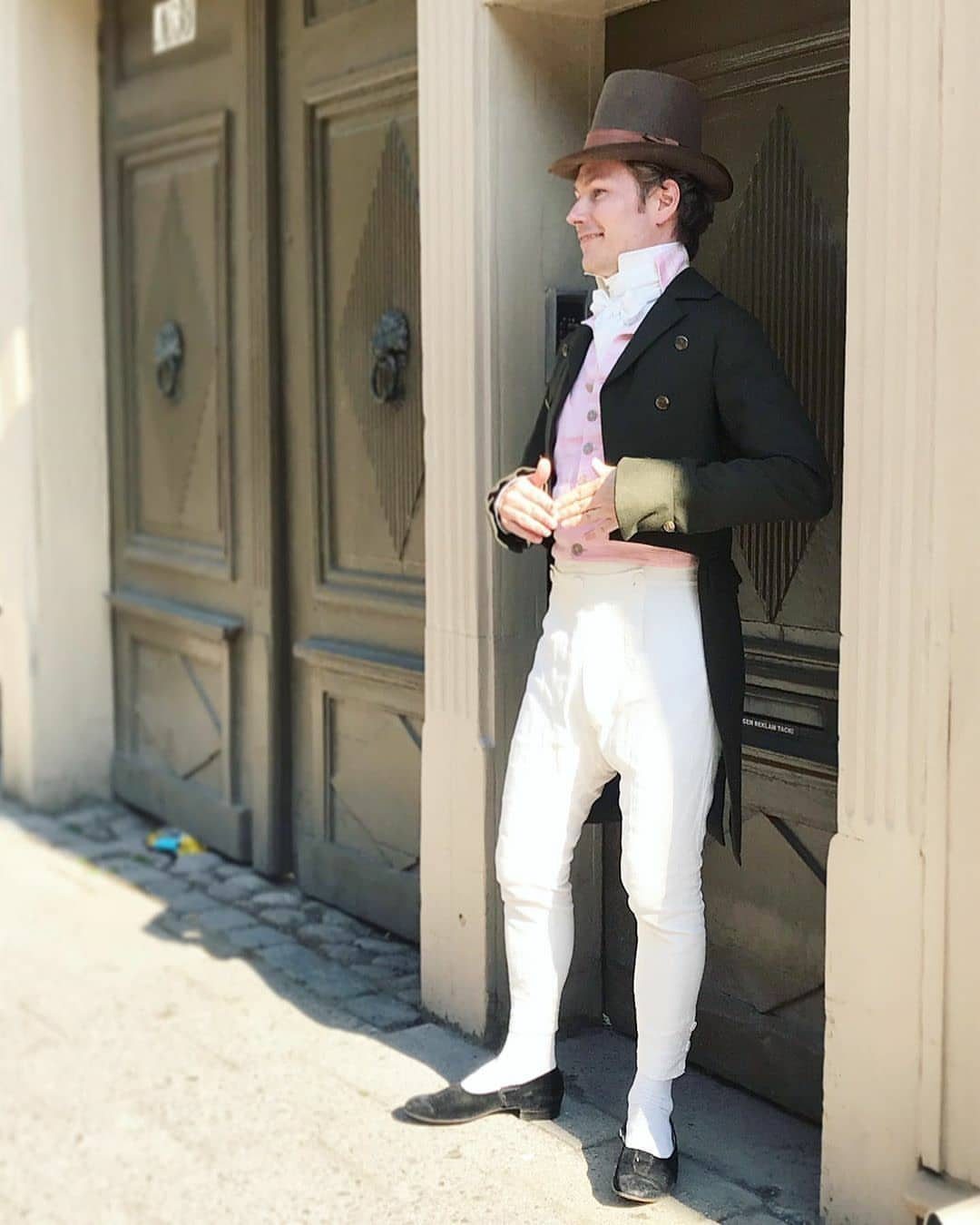
White breeches and a black tailcoat are the most formal version of Regency dress, worn for evening events and formal gatherings. The pink waistcoat adds color without breaking the silhouette.
Breeches end just below the knee and fasten with buttons or ties. They’re worn with tall boots or silk stockings and low shoes, depending on the occasion.
If you’re choosing between breeches and trousers, breeches read more formal and work best indoors or at structured events.
4. Gathered Linen Shirt Cuff
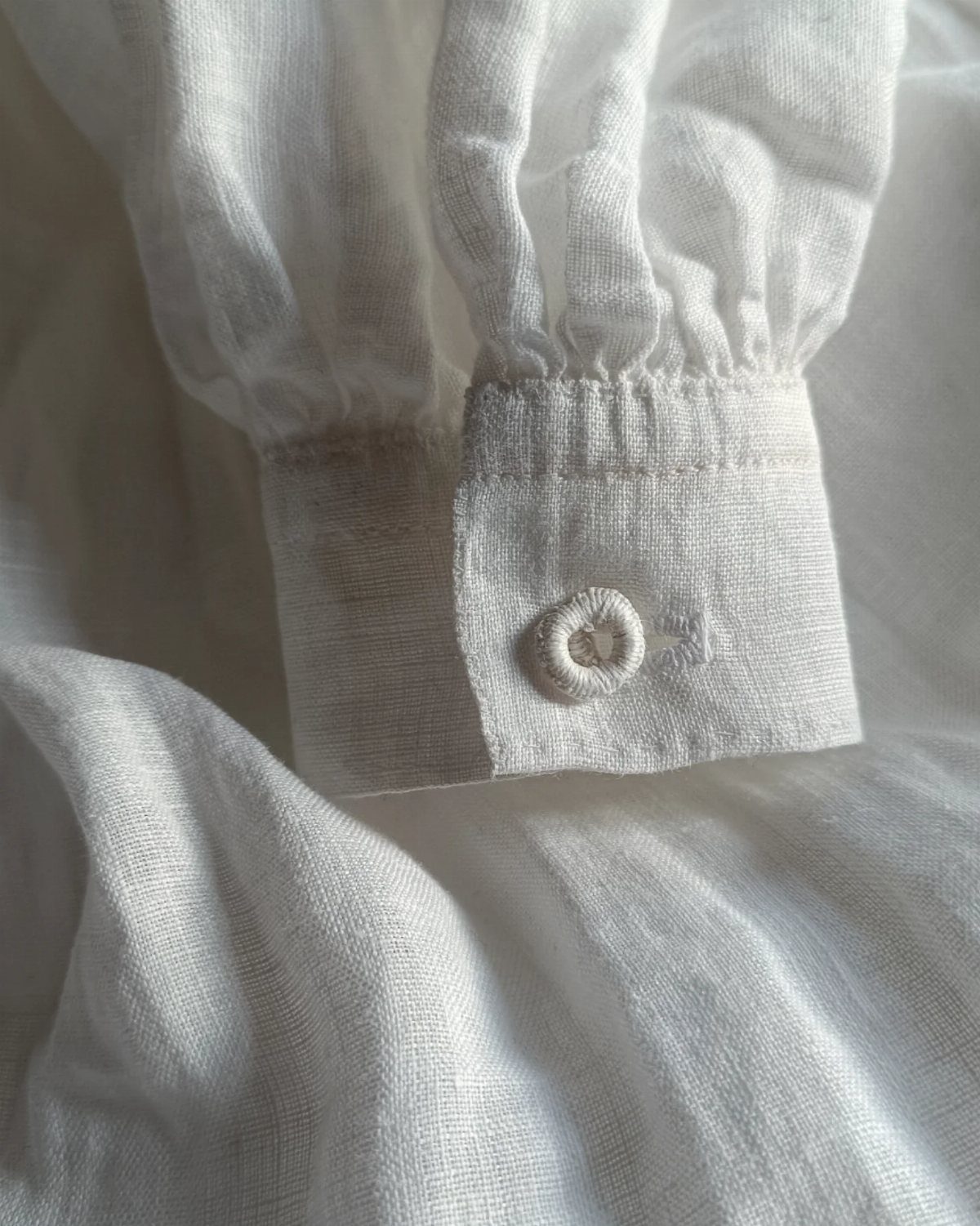
The gathered sleeve and small covered button are period details that separate a reproduction shirt from a modern one adapted for the look. The fullness at the cuff allows the fabric to billow slightly when the coat sleeve moves.
Regency shirts were cut from linen or fine cotton, with high collars and full sleeves gathered into a narrow cuff. The button is usually wrapped in the same fabric rather than bone or shell.
If you’re making or ordering one, ask for a cuff width under an inch and sleeves full enough to gather without bulk.
5. Top Hat and Cane Styling
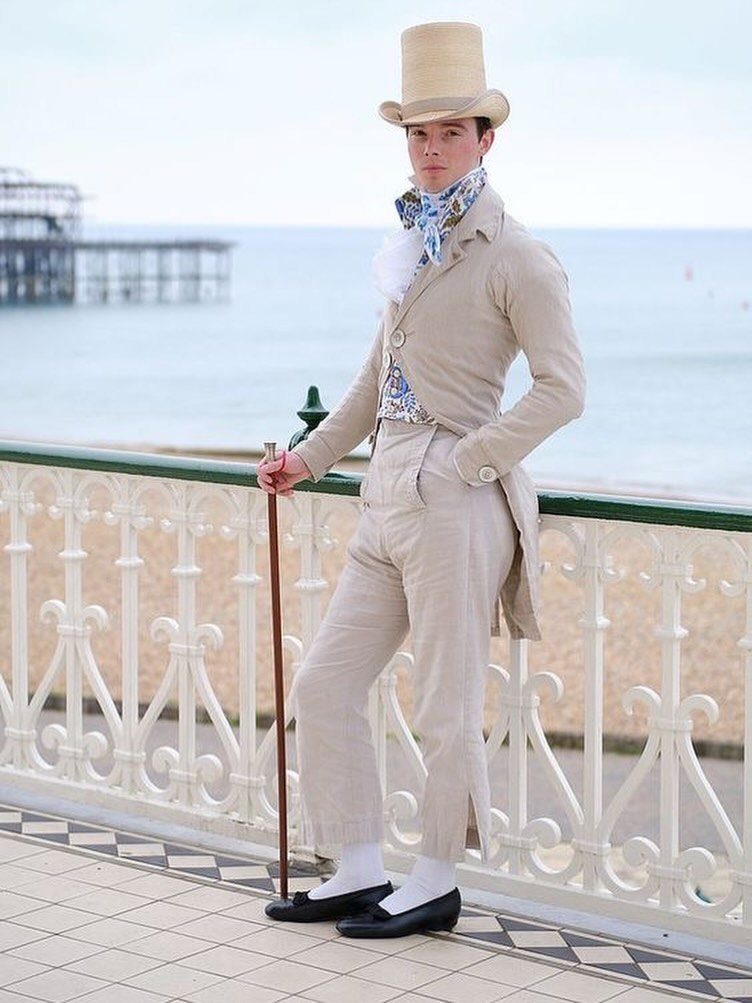
A top hat and cane finish the silhouette and give the outfit proportion outdoors. The cane is functional, not decorative, and the hat adds height without weight.
Regency top hats were taller and narrower than Victorian styles. The cane was carried in the hand, not hooked over the arm, and varied in length from waist to mid-chest depending on preference.
Choose a cane that reaches your hip when the tip touches the ground. A simple wood finish or polished black works with most tailcoats.
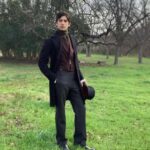
6. Tailcoat with Riding Boots
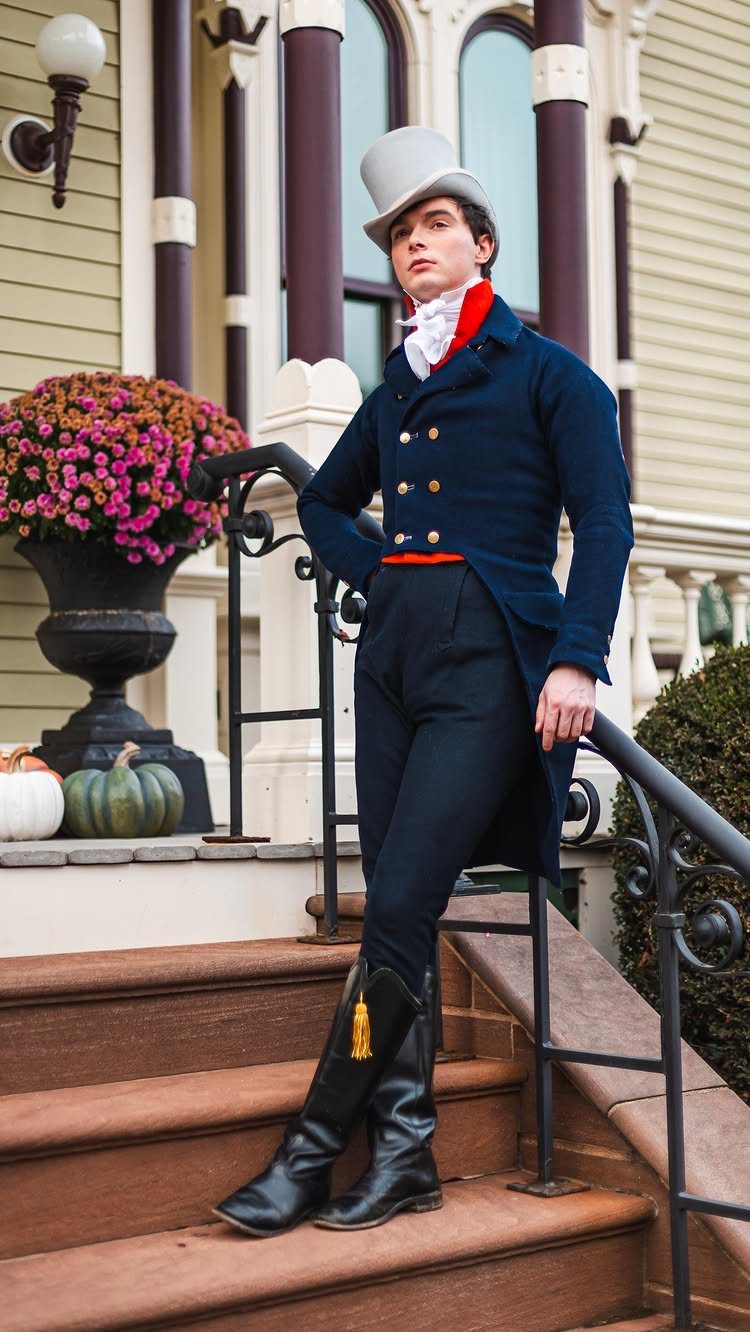
Tall riding boots ground the outfit and add a practical edge that breeches and low shoes don’t. The navy coat and red waistcoat here keep the look sharp without relying on black.
Regency riding boots were cut close to the leg with a slight flare at the top, ending at the knee. They’re polished smooth rather than matte, and tall enough to make a strong vertical line.
If you’re wearing boots, choose a trouser in a neutral tone that tucks cleanly without bulk.
7. Velvet Collar Tailcoat
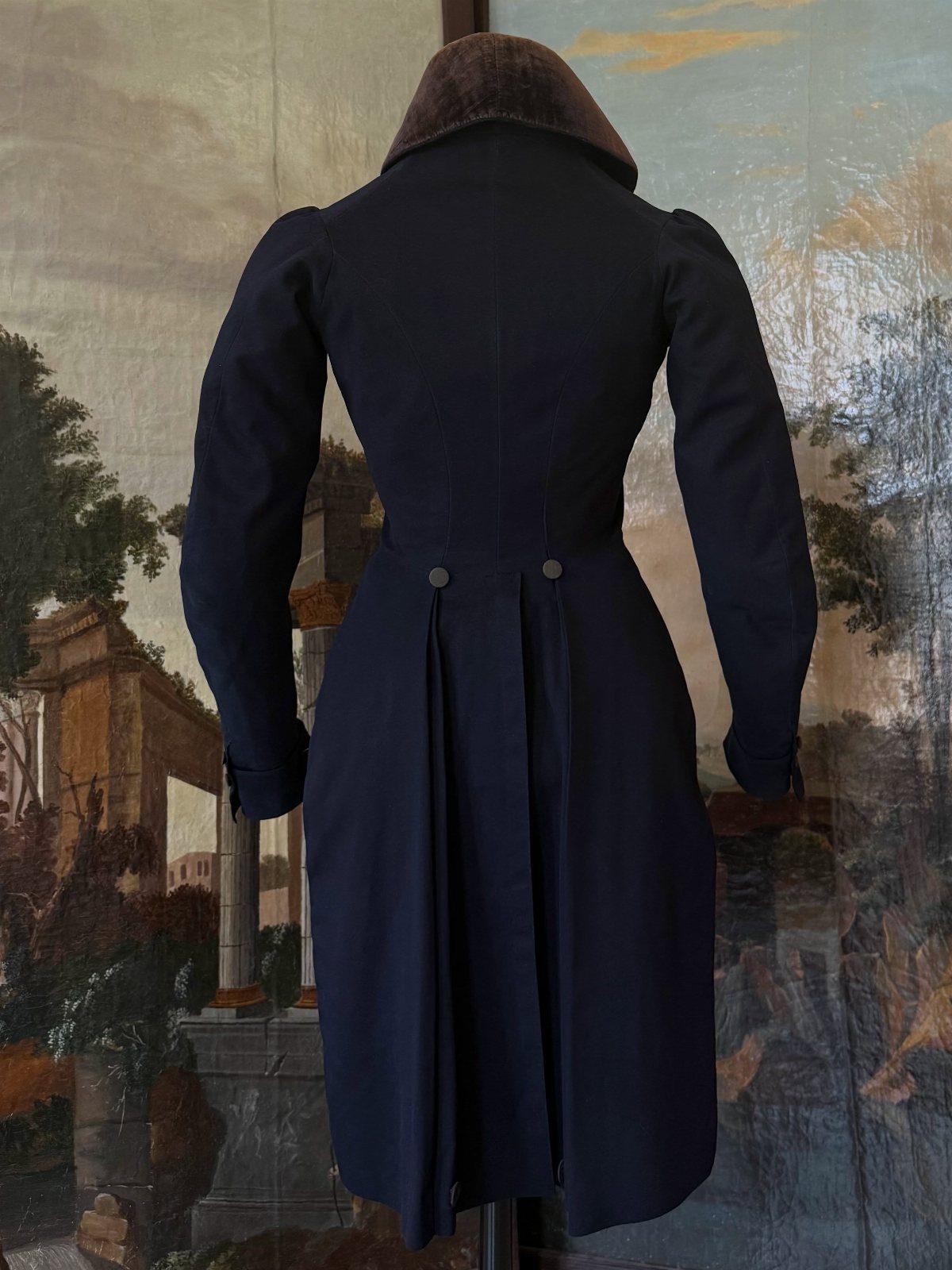
A velvet collar in a contrasting color adds texture and definition without changing the tailcoat’s structure. The brown against dark blue here softens the formality while keeping the silhouette clean.
Velvet collars were common on Regency day coats and riding tailcoats, less so on evening dress. The collar sits flat and extends to the lapel edge, where it meets the wool body.
If you’re adding one, choose a collar color that’s darker or warmer than the coat body. Black velvet on navy or charcoal is safe; brown or burgundy gives more character.
8. Embroidered Velvet Tailcoat
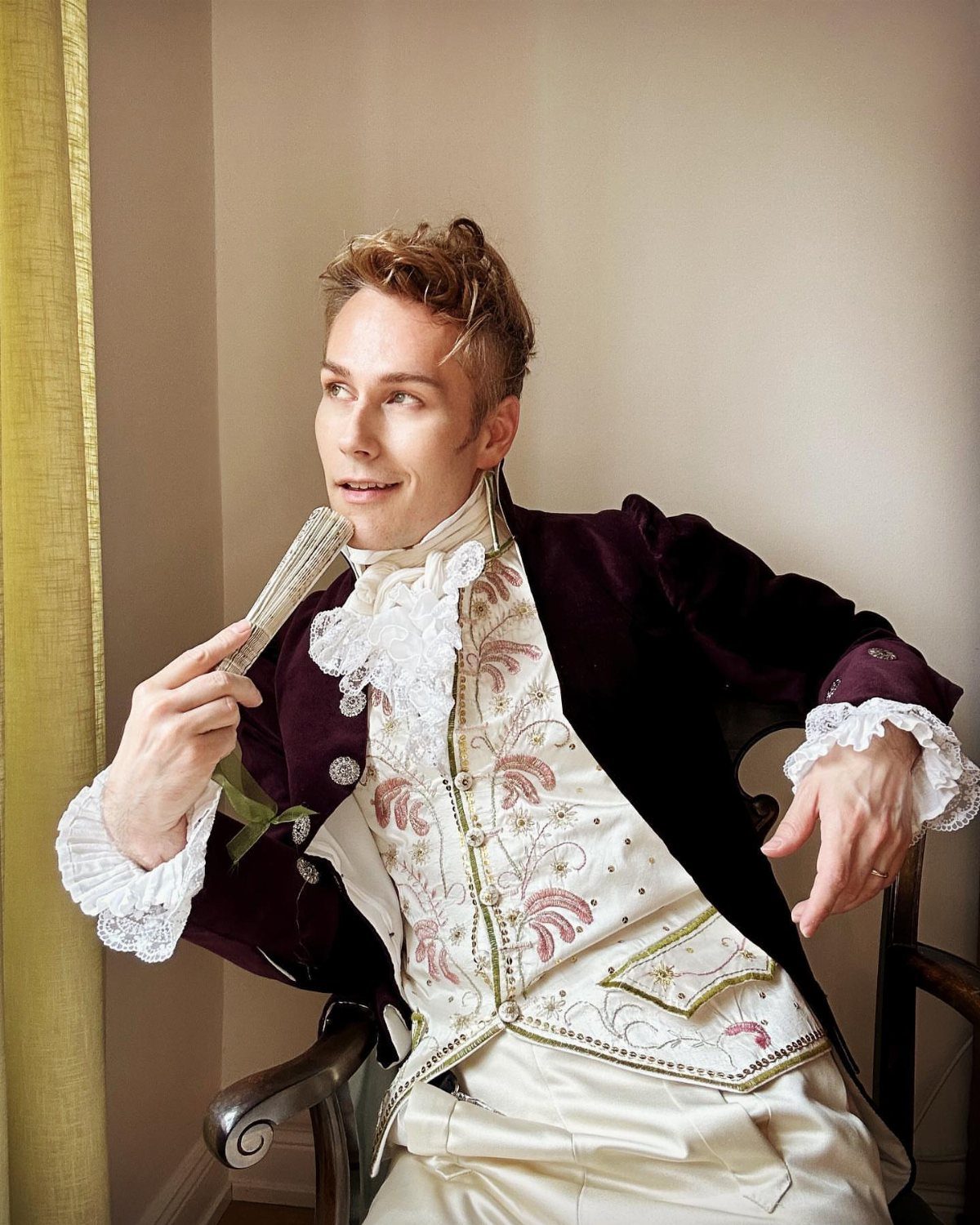
Purple velvet makes a statement that black and navy don’t, and embroidery on the waistcoat reinforces the formality while letting the coat lead. The fan and lace cravat push this into evening dress.
Velvet tailcoats were worn for special occasions, not everyday wear. The pile catches light differently than wool and reads richer in low or indoor lighting.
Pair a velvet coat with a waistcoat that matches its level of finish. A plain cotton waistcoat under embroidered velvet leaves the outfit unbalanced.
9. Tailcoat with Cream Trousers
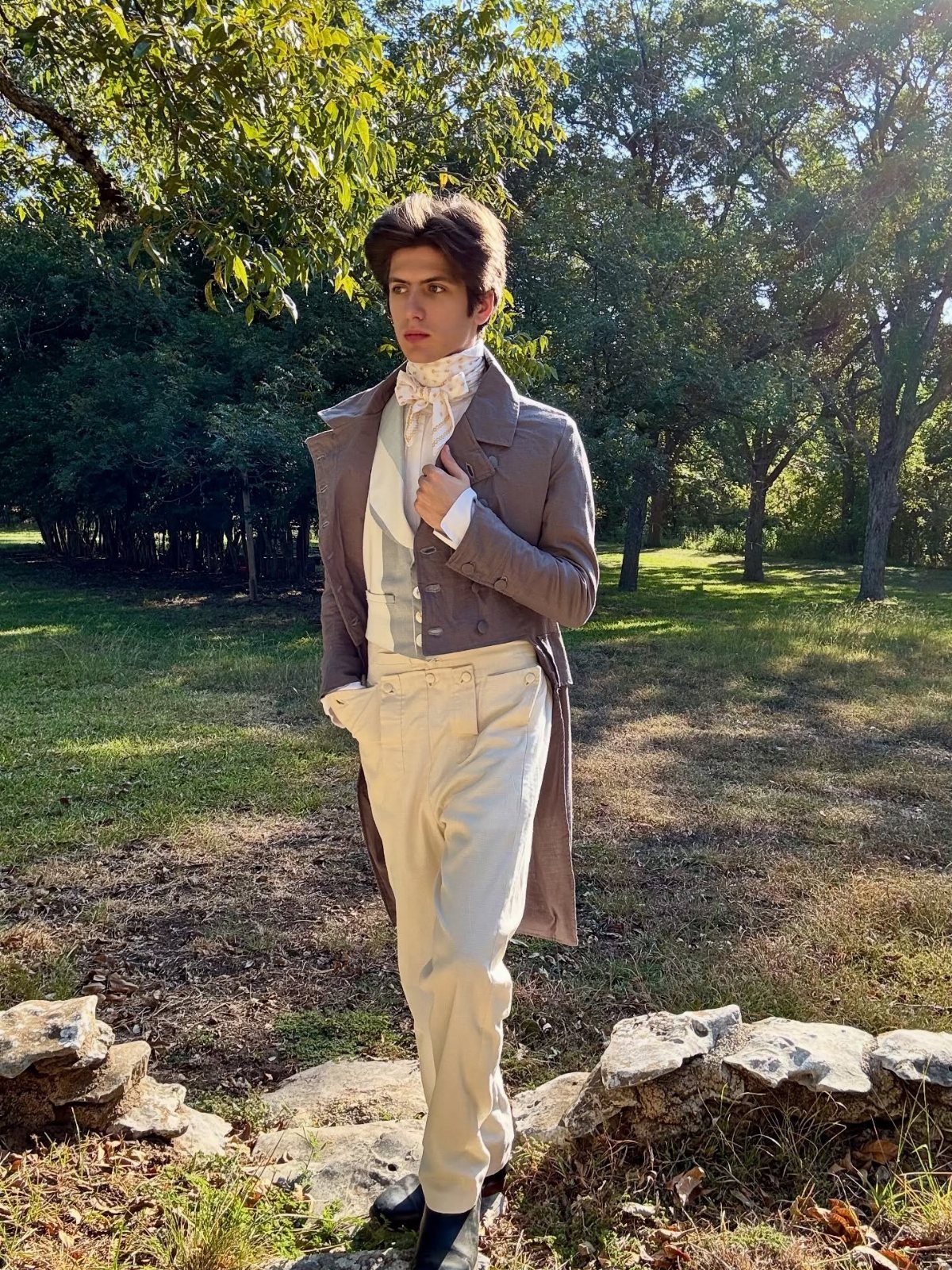
Cream trousers sit between the starkness of white breeches and the weight of dark wool, and they work well with brown or tan tailcoats that would look too soft with black trousers.
The white waistcoat and cravat keep the upper half formal while the cream below adds warmth. Brown leather boots or shoes finish the palette without breaking it.
Cream trousers hold the outfit together better than white and read less formal than dark trousers.
10. Floral Patterned Cravat
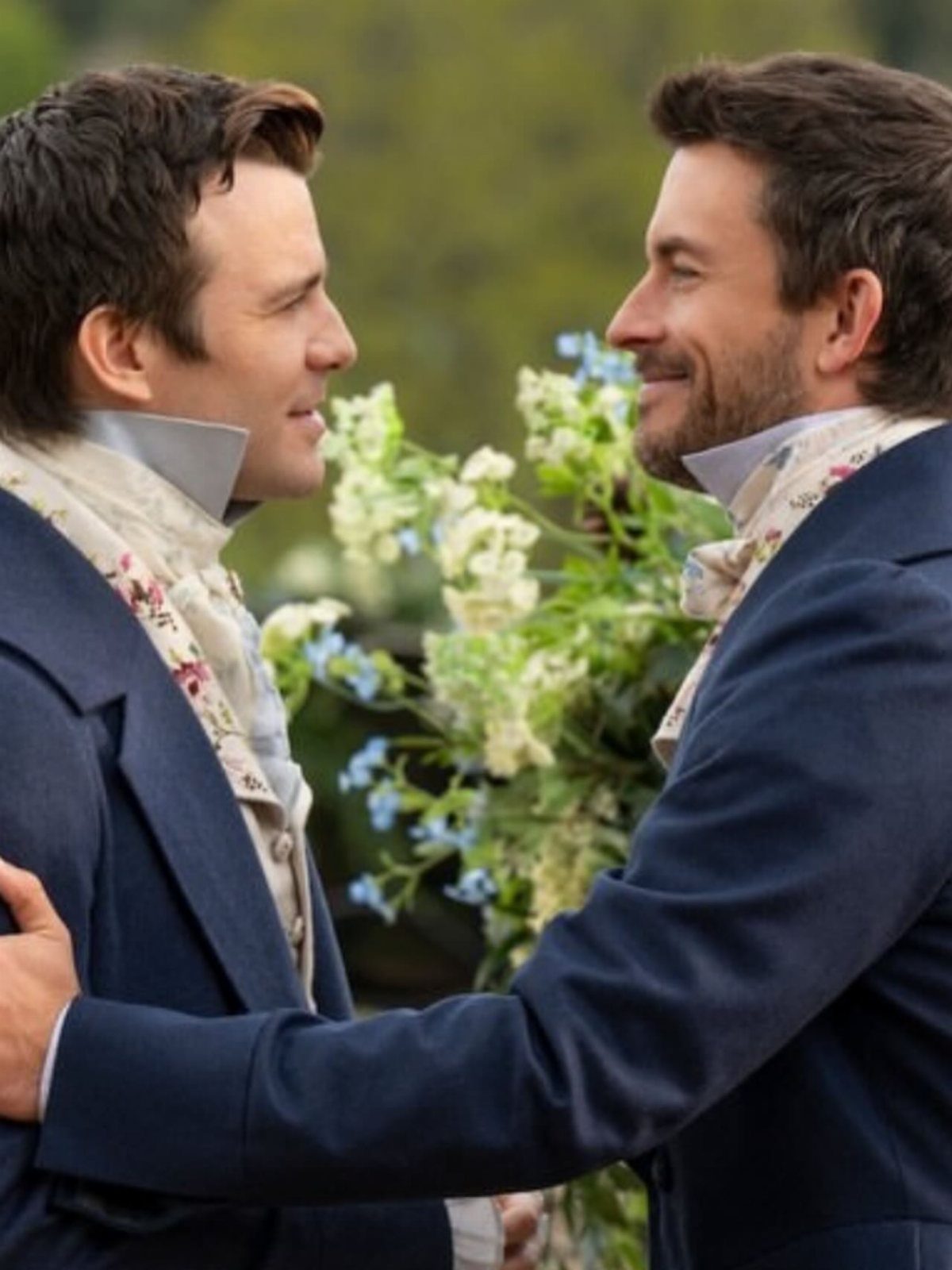
A floral cravat pulls color into the neckline and gives the outfit a focal point above the waistcoat. The pattern here is small enough to sit beside a solid coat without overwhelming the proportions.
Regency cravats were tied high around the collar and knotted at the front, with the ends tucked into the waistcoat or left loose depending on the formality. A patterned cravat works best with a solid waistcoat and coat.
If you’re choosing pattern, keep the scale small and the ground color close to the shirt. Large florals compete with the coat.
11. Gold-Embroidered Evening Tailcoat
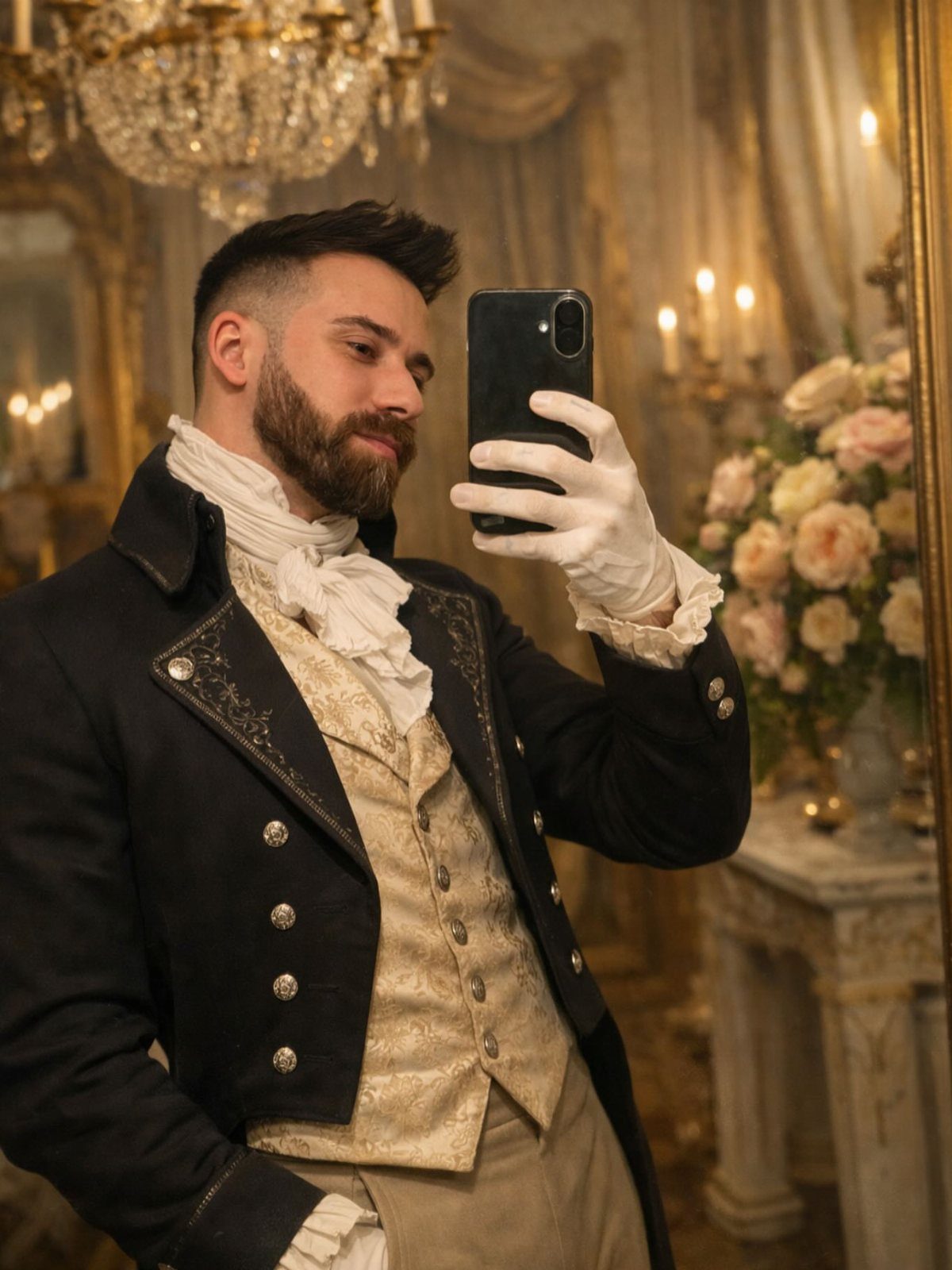
Gold embroidery and brocade move this into evening dress, where the tailcoat commands attention instead of staying neutral. The white gloves add formality and complete the look.
Embroidered tailcoats were worn for balls and formal gatherings, where candlelight brought out the metalwork. The embroidery usually runs along the collar, cuffs, and front edges, not across the whole coat.
If you’re building one, keep the embroidery to the edges. Full coverage reads theatrical rather than formal.
12. Regency Greatcoat Ensemble
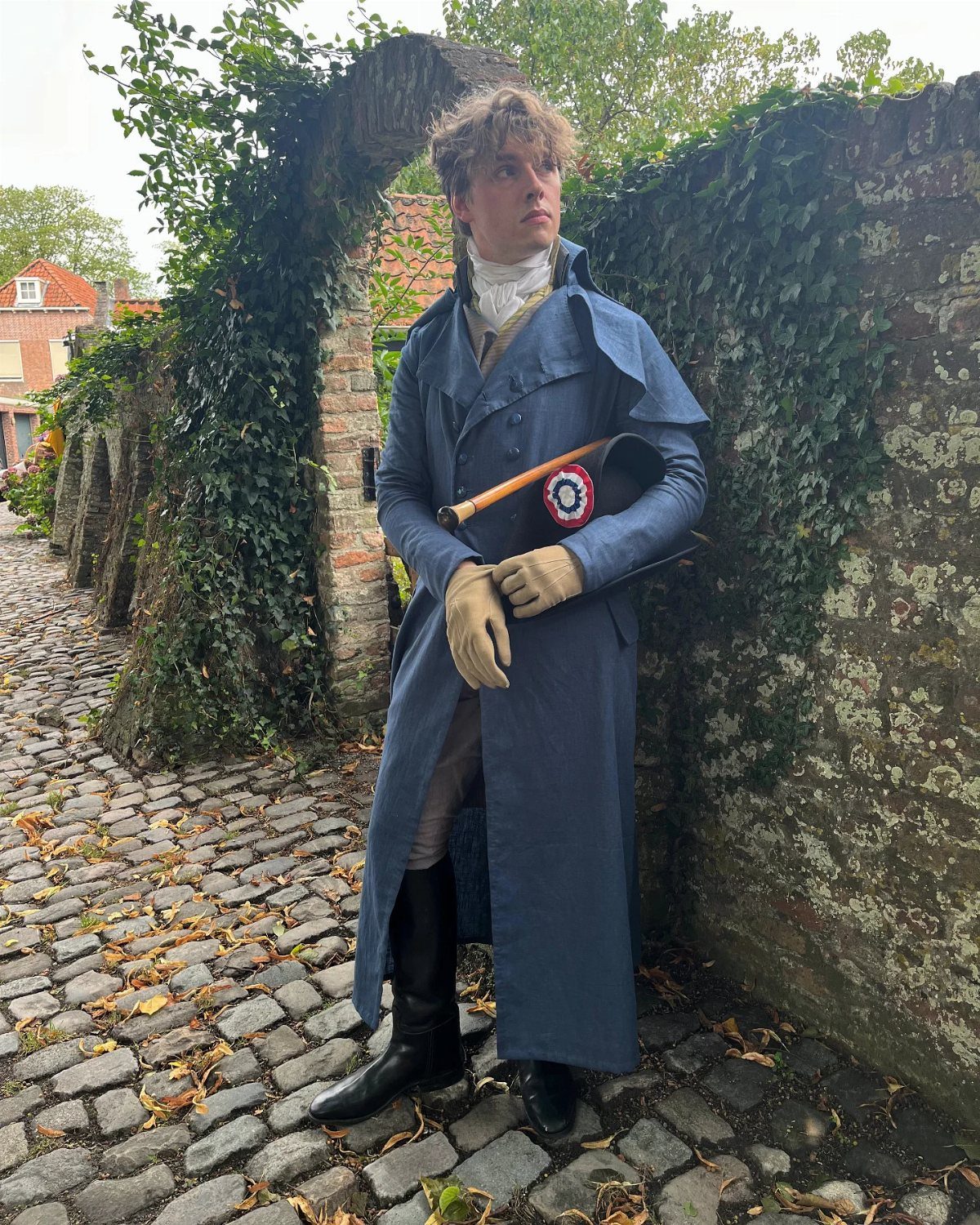
The greatcoat extends the silhouette and covers the tailcoat without hiding it, since the coat is left open at the front. Riding boots and tan gloves keep the outfit grounded and practical.
Regency greatcoats were cut long, often to mid-calf, with wide lapels and multiple capes across the shoulders. They were worn outdoors over day or evening dress and removed indoors.
Choose a greatcoat that’s slightly darker than the tailcoat underneath. A blue coat over blue tailcoat works; a lighter coat over dark tailcoat reverses the visual weight.
Dressing for Events
Day events allow more color and texture than evening dress. A blue or brown tailcoat with tan trousers and a patterned === SECTION 1 ===
Morning visits and afternoon walks called for day dress: a tailcoat in blue, brown, or green over tan or buff trousers, with a simple waistcoat and plain cravat.
The outfit stayed polished but restrained, with riding boots if you were moving between outdoor activities.
Evening events raised the bar.
Indoor gatherings allowed more color in the waistcoat and coat, since candlelight brought out saturated tones better than daylight. Outdoor events in full sun favored neutral trousers and less contrast overall.
A cotton waistcoat works for day dress; silk or embroidered styles belong at evening functions.
Historical Influences
The French Revolution made extravagance dangerous. Silks in vivid colors and elaborate embroidery marked you as aristocratic, which in France between 1789 and the early 1800s could get you killed.
Fine textiles were also harder to find, so men turned to wool and simpler cuts in darker, more neutral tones.
Military dress added structure.
Napoleonic uniforms from 1803 to 1815 brought braid, frogging, and high boots into civilian style. Pantaloons tucked into Hessian or Wellington boots became standard, borrowing directly from what soldiers wore in the field.
English tailors shaped the final look. Their skill with wool suiting and attention to fit moved menswear toward the clean, fitted silhouette that replaced the powdered-wig formality of earlier decades.
Fashion Icons
Beau Brummel made fit and fabric the measure of a well-dressed man.
Instead of relying on embroidery or bright color, he wore impeccably tailored wool in subdued tones and let the quality of the cloth and the precision of the cut do the work.
His influence moved style away from decoration and toward restraint.
English tailors built their reputation on wool suiting and fit, and Brummel’s preference for their work made that approach fashionable across England and France.
The look he popularized was rooted in English country dress, which had been worn in smaller circles since the 1780s but became the dominant style for men by the early 1800s.
Menswear split from womenswear for the first time in fabric and decoration, and the principles that emerged still define how men dress.