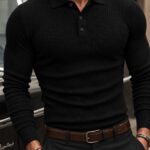
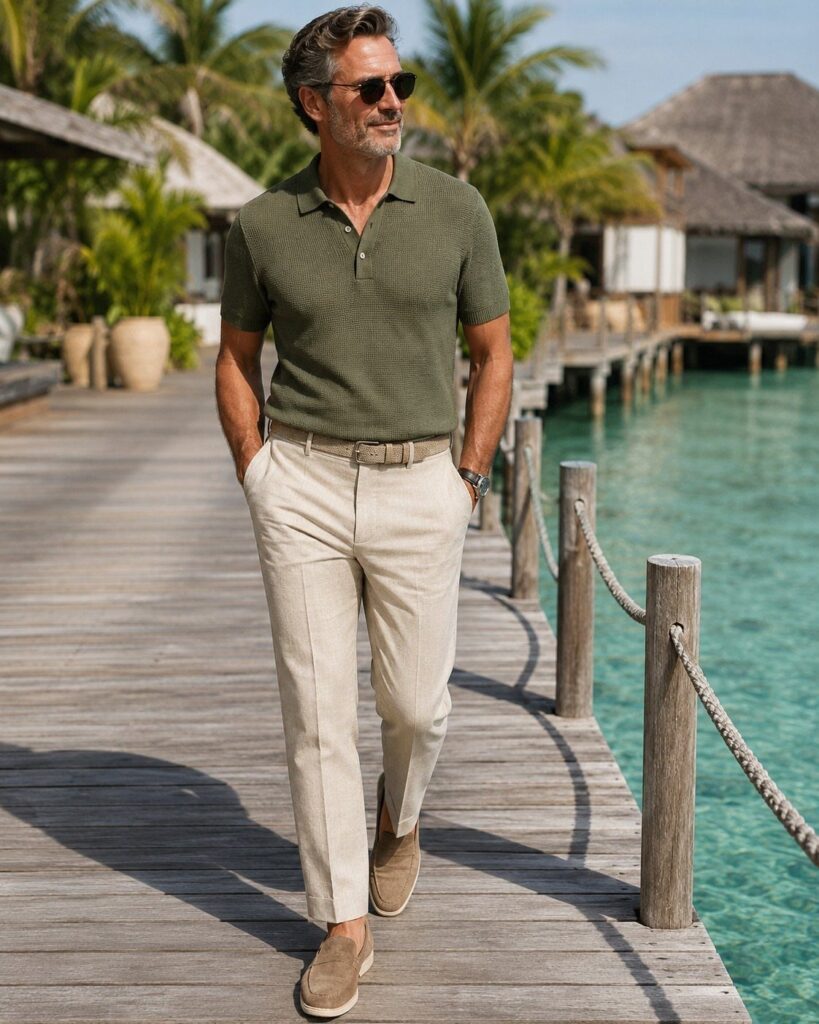
Light colors reflect more heat than dark ones, linen breathes better than cotton, and unlined jackets stay cooler than those with synthetic linings.
The right choice depends on where you’ll be: suede derbies work in offices where sneakers would read too casual, espadrilles suit the beach, and loafers bridge both.
A lightweight suit in cream or beige holds structure when shorts feel wrong for the event, while a tucked tee with tailored trousers or even a tank top works for casual settings that still call for a waistline.
1. Linen and Poplin with Suede Derbies
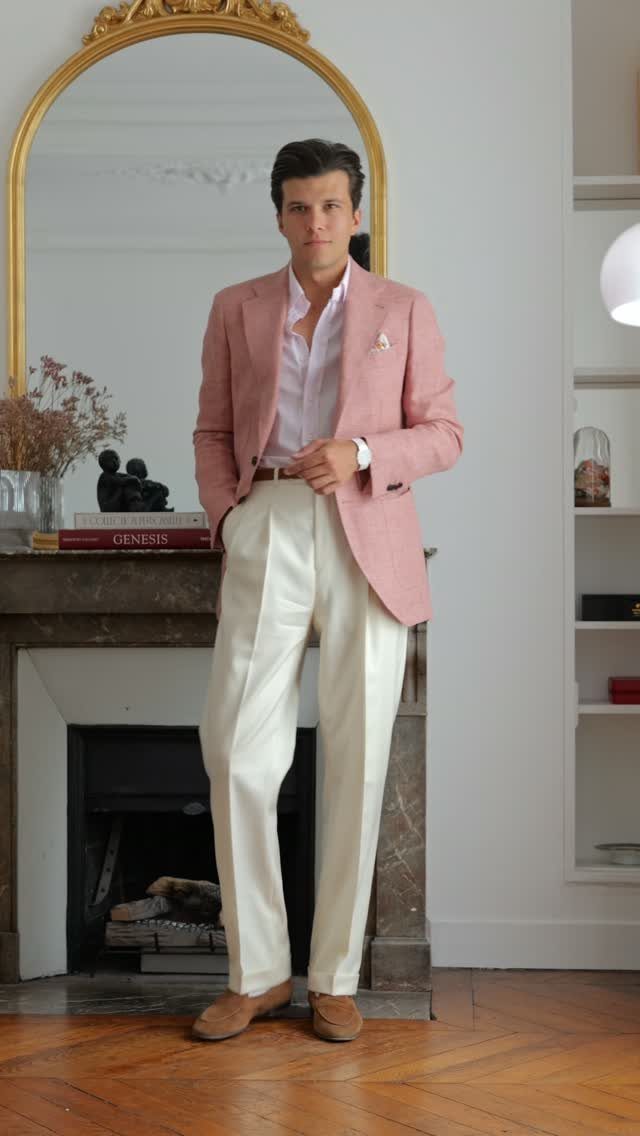
A linen blazer keeps you cool when cotton or wool would feel heavy, and the texture gives it a relaxed feel that pairs well with tailored trousers in warm weather. The pink here adds contrast without going loud.
Suede derbies ground the outfit.
They read dressier than sneakers but stay softer than polished leather, which suits the unstructured look of linen. Brown or tan works with most light neutral trousers.
If the blazer wrinkles, that’s normal with linen. Press it before you go out or accept the texture as part of the fabric.
2. Shorts and Shirt
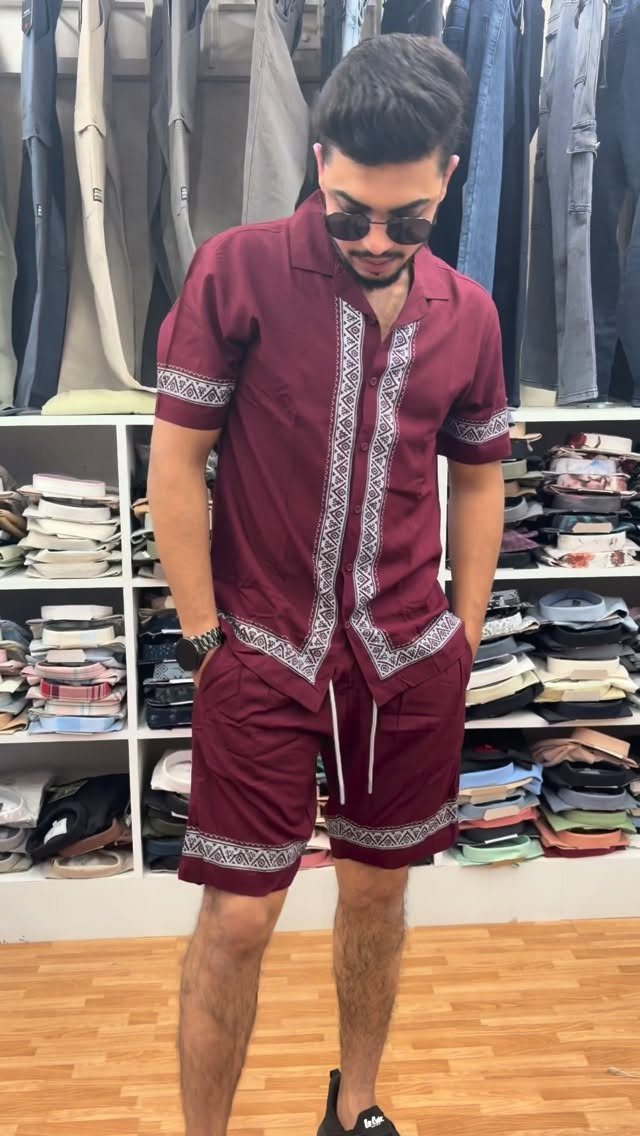
A matching shirt and shorts set simplifies getting dressed when the temperature climbs. The maroon fabric here has a small repeating pattern that breaks up the surface without pulling focus, and short sleeves keep it from feeling too formal.
The cut matters more than the pattern.
Shorts should end just above the knee, and the shirt should fit close enough that it doesn’t balloon when you move. A looser fit works if the fabric is lightweight.
This works for casual events where jeans would feel too heavy. Swap the set for separates if you want more flexibility in color or fit.
3. Lightweight Performance Polo
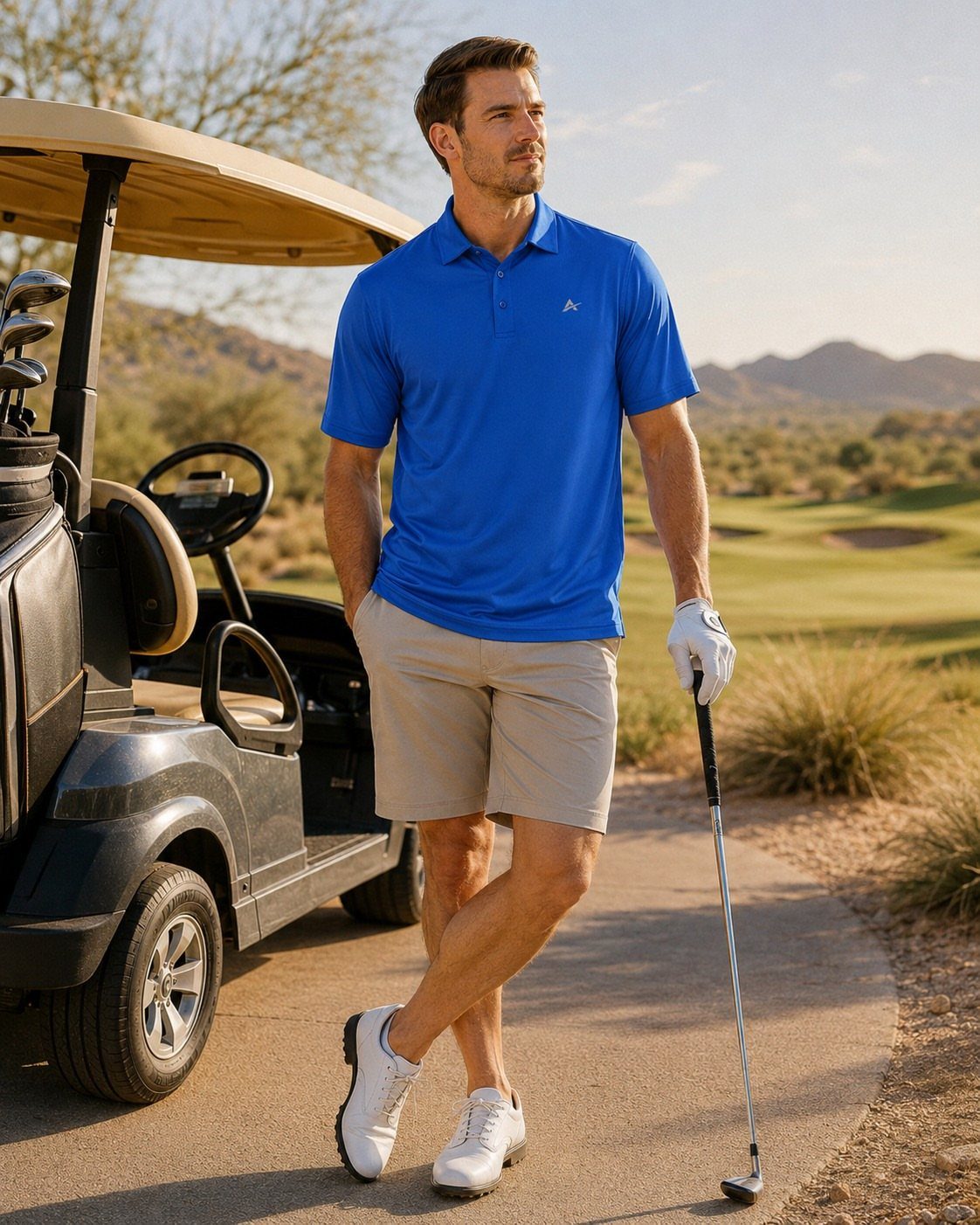
Performance polos use synthetic blends that wick moisture and dry faster than cotton, which makes them practical for golf or any outdoor activity in heat. Blue pairs with khaki, grey, or navy shorts without fighting for attention.
Fit separates a good polo from one that looks like a uniform.
The sleeves should end mid-bicep, and the body should follow your torso without clinging. A knit collar holds its shape better than a thin one.
Cotton pique polos breathe well and feel less technical if you prefer natural fabrics. They take longer to dry but have more texture.
4. Minimal White Sneakers
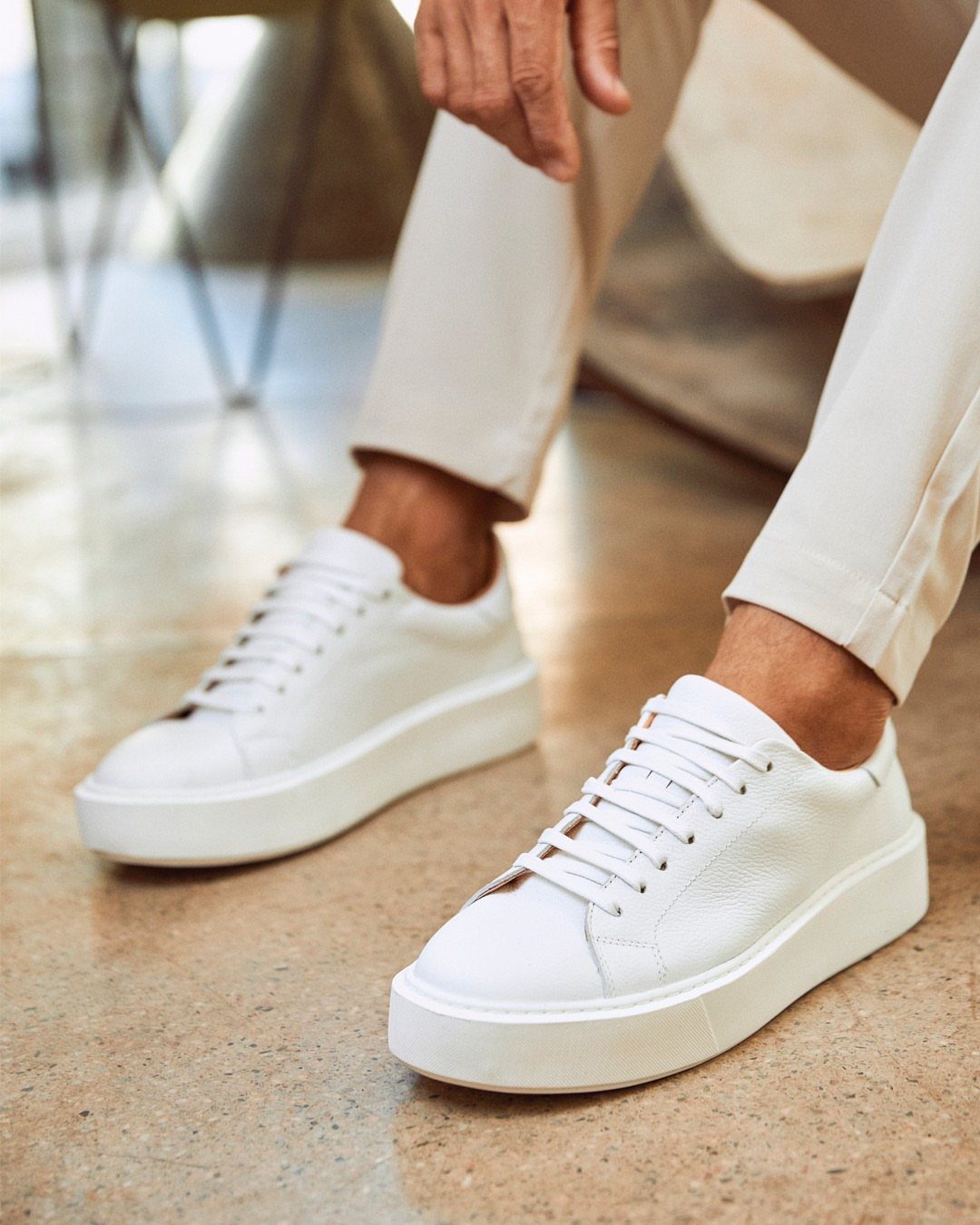
White leather sneakers go with nearly everything in warm weather, from shorts to tailored trousers, and they stay cleaner looking than canvas.
The thick sole here adds height without looking chunky, and the minimal design keeps them from competing with the rest of the outfit.
Leather lasts longer than canvas and resists stains better, but it needs a wipe-down after a few wears. A Magic Eraser or leather cleaner takes care of scuff marks on the rubber sole and upper.
Avoid overly detailed sneakers with logos or contrast stitching if you want them to work across different looks. Plain white is the most flexible.
5. Tucked Tee with Tailored Trousers
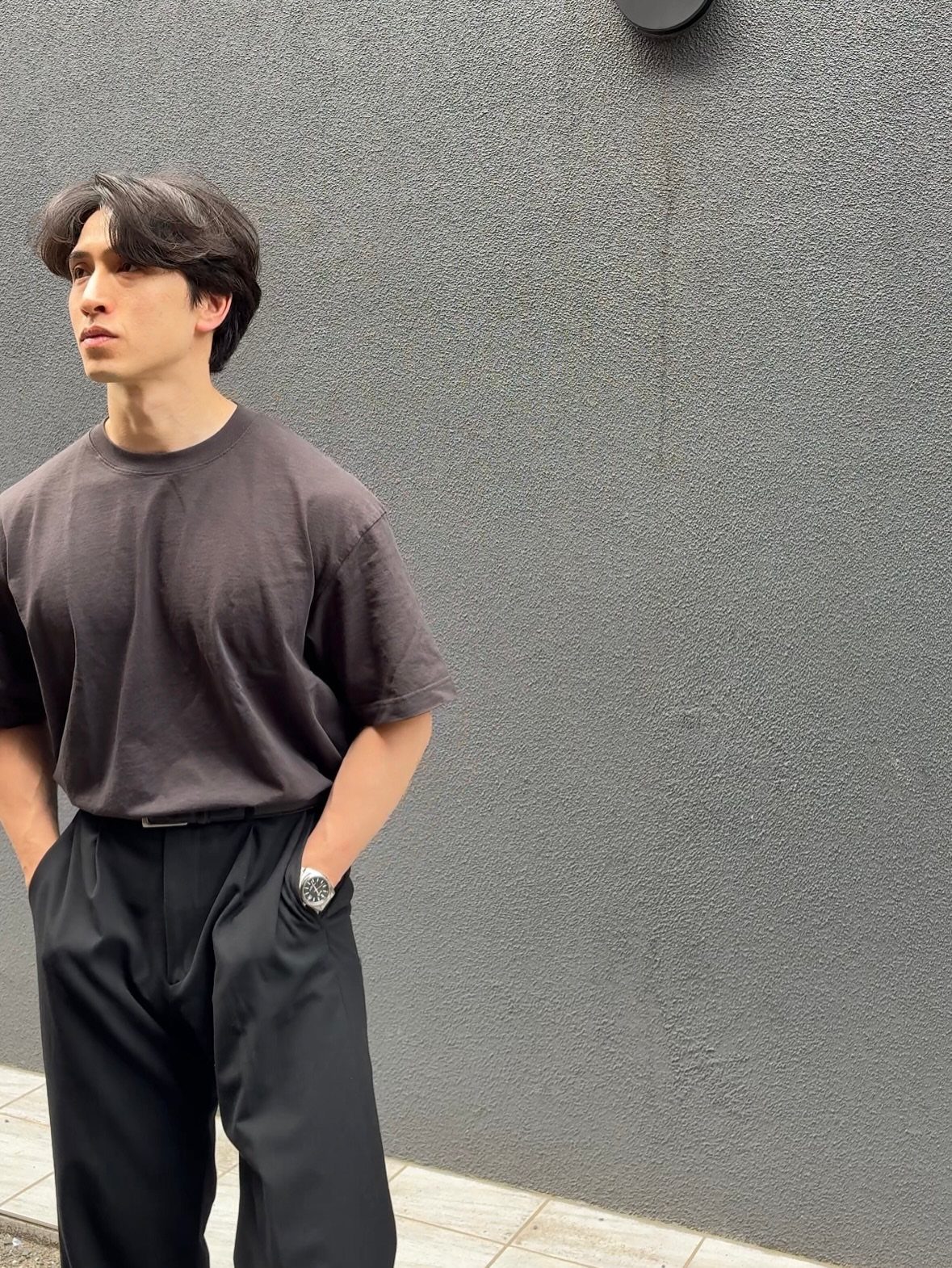
Tucking a t-shirt into tailored trousers takes a casual piece and makes it look intentional. Dark grey against black trousers keeps contrast alive, and tucking the shirt in marks the waist instead of letting fabric fall straight down.
The t-shirt should fit slim enough that it doesn’t bunch at the sides when tucked. A slightly heavier cotton holds the tuck better than a thin one, and a crew neck works for most builds.
This works best with trousers that sit at the natural waist. A lower rise leaves less fabric to tuck and the shirt tends to pull out when you move.
6. Everyday Tees
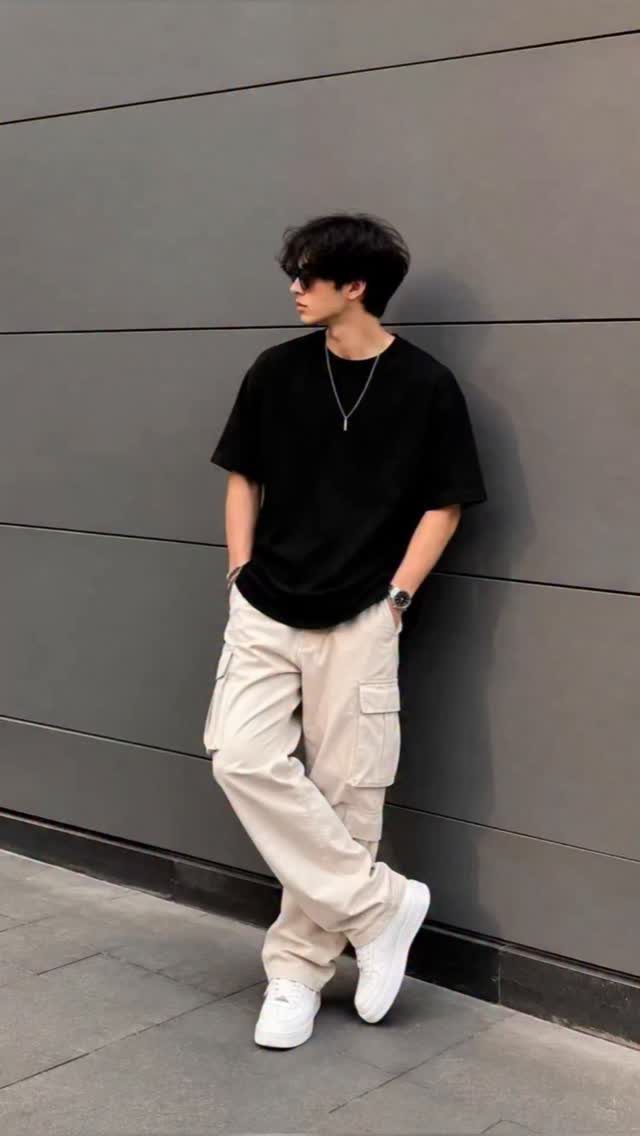
A lightweight t-shirt in a neutral color is the simplest warm-weather piece.
Cotton or a cotton-linen blend breathes better than synthetic fabrics. The weight should feel light when you hold it but still have enough structure that it doesn’t cling or wrinkle immediately.
Cargo pants add pockets and texture without needing a belt. If you prefer chinos, keep them in a lighter color so the black t-shirt doesn’t look too stark.
7. Short-Sleeved Button-Downs
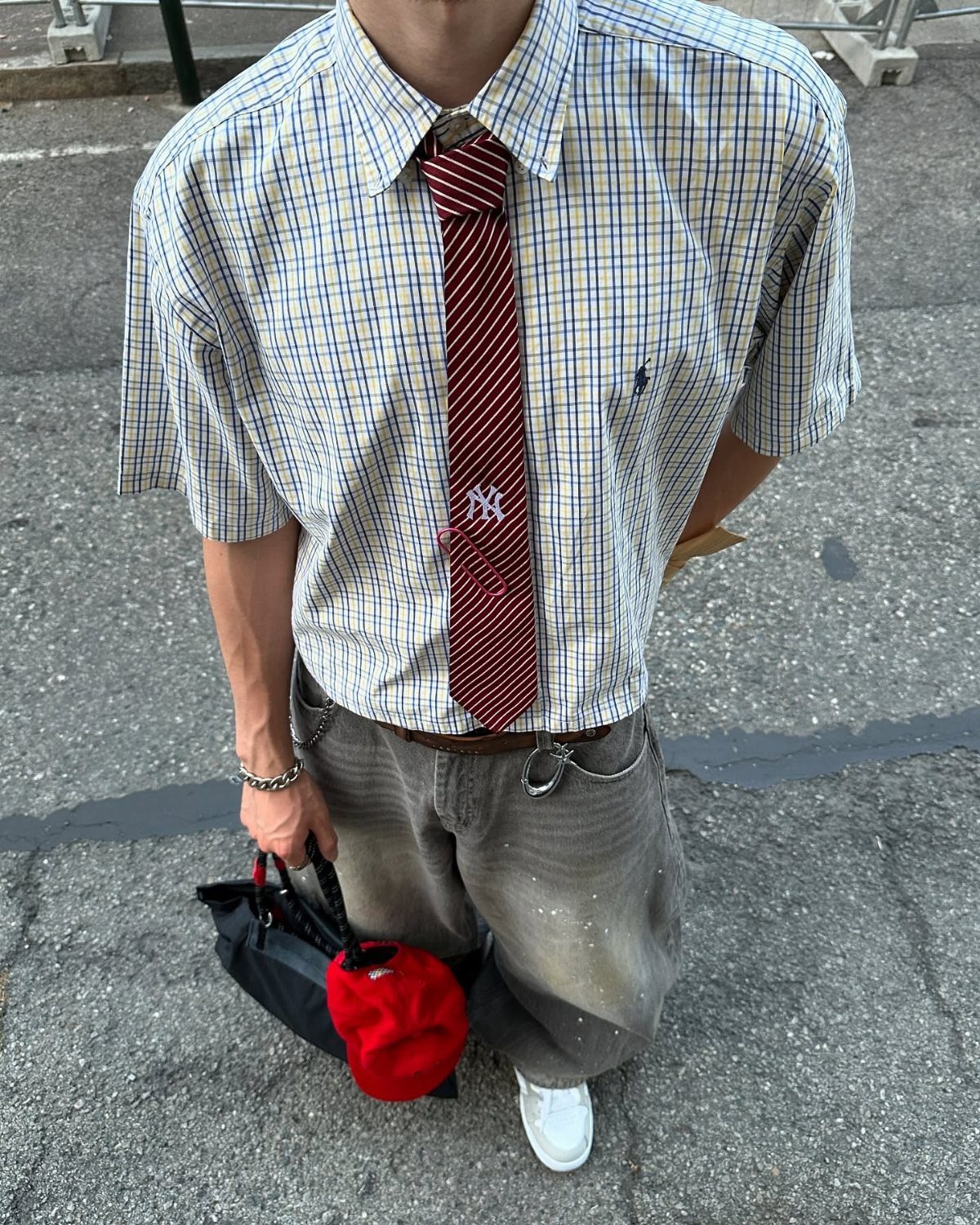
Short-sleeved button-downs work when the heat makes long sleeves impractical but a t-shirt feels too casual. The plaid adds pattern without volume, and the tie brings it into business casual range.
The shirt should sit close at the shoulders and chest without pulling, and sleeves should end mid-bicep. A slim fit holds the tuck better if you wear it with trousers.
This works for offices that require a collar but have no air conditioning. Skip the tie if the dress code allows it.
8. Lighter Colors
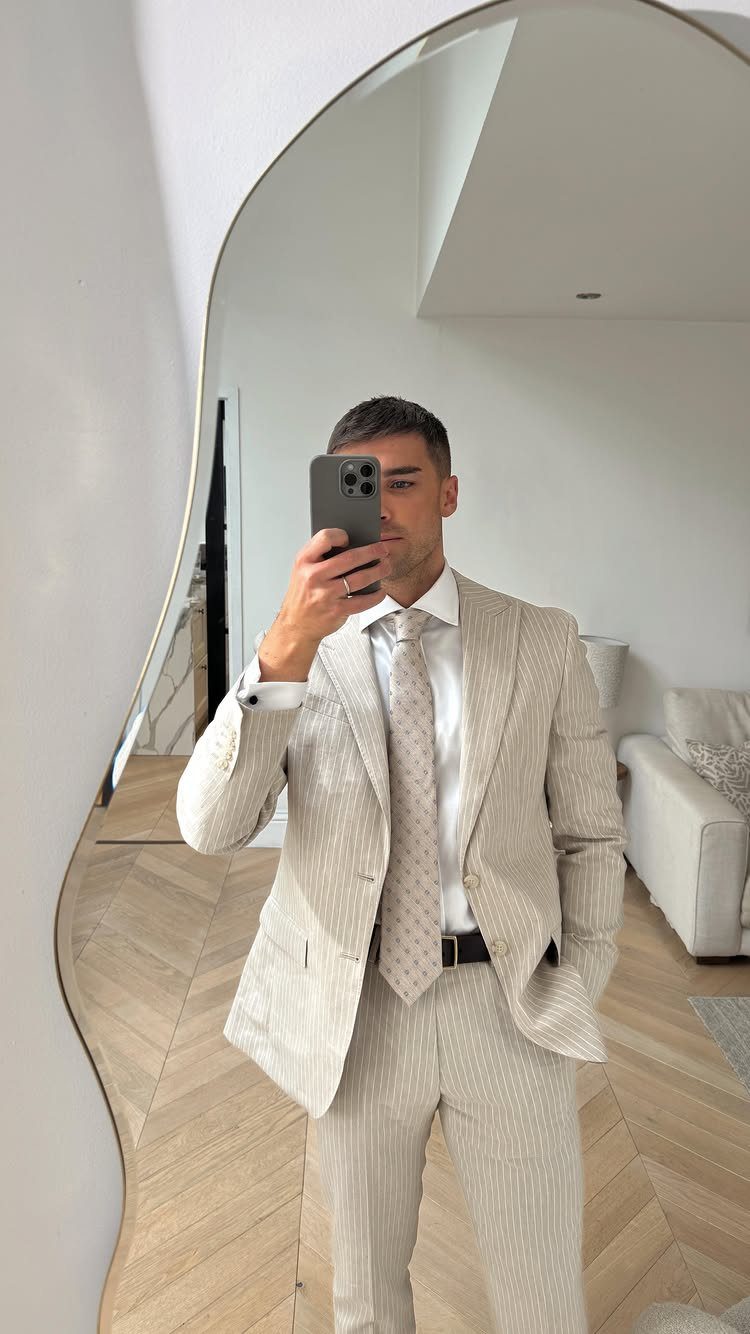
Light colors reflect heat instead of absorbing it, which keeps you cooler when you’re outside. The beige holds any shirt color, and the pinstripe gives the fabric a layered finish without weight.
The looser weave lets air move through the fabric.
Darker colors look sharper in some settings, but they trap more heat. If you need a dark suit, choose the lightest-weight fabric you can find.
9. Panama Hats
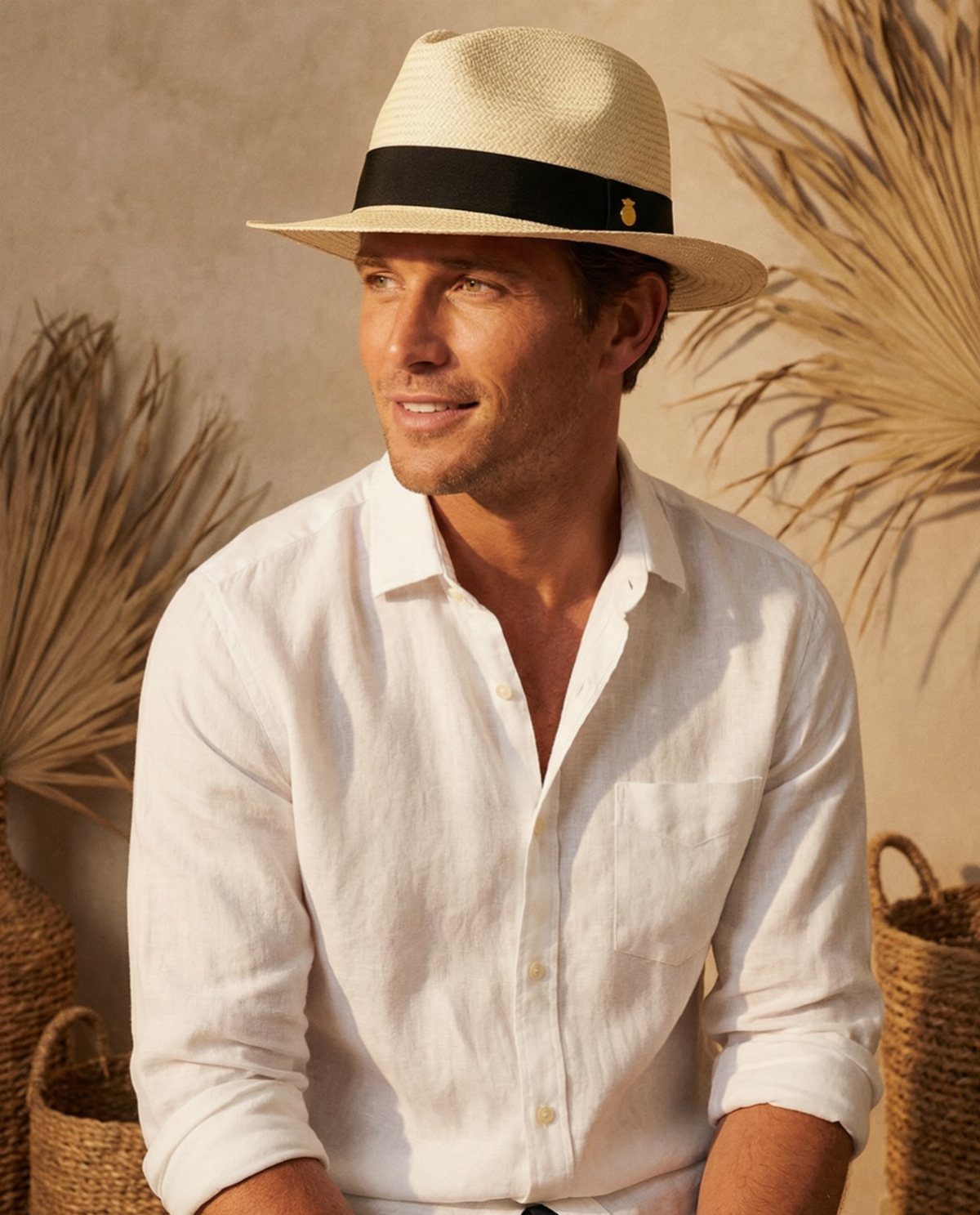
A Panama hat blocks direct sun from your face and neck, which matters when you’re outside for more than a few minutes.
The straw weave lets air through, and the black band adds contrast without competing with the rest of the outfit.
The brim needs width to give real coverage. A wider brim works for the beach; a narrower one suits the city.
Felt hats trap heat and belong in cooler weather. Straw stays cool and dries faster if it gets wet.
10. Lightweight Summer Suits
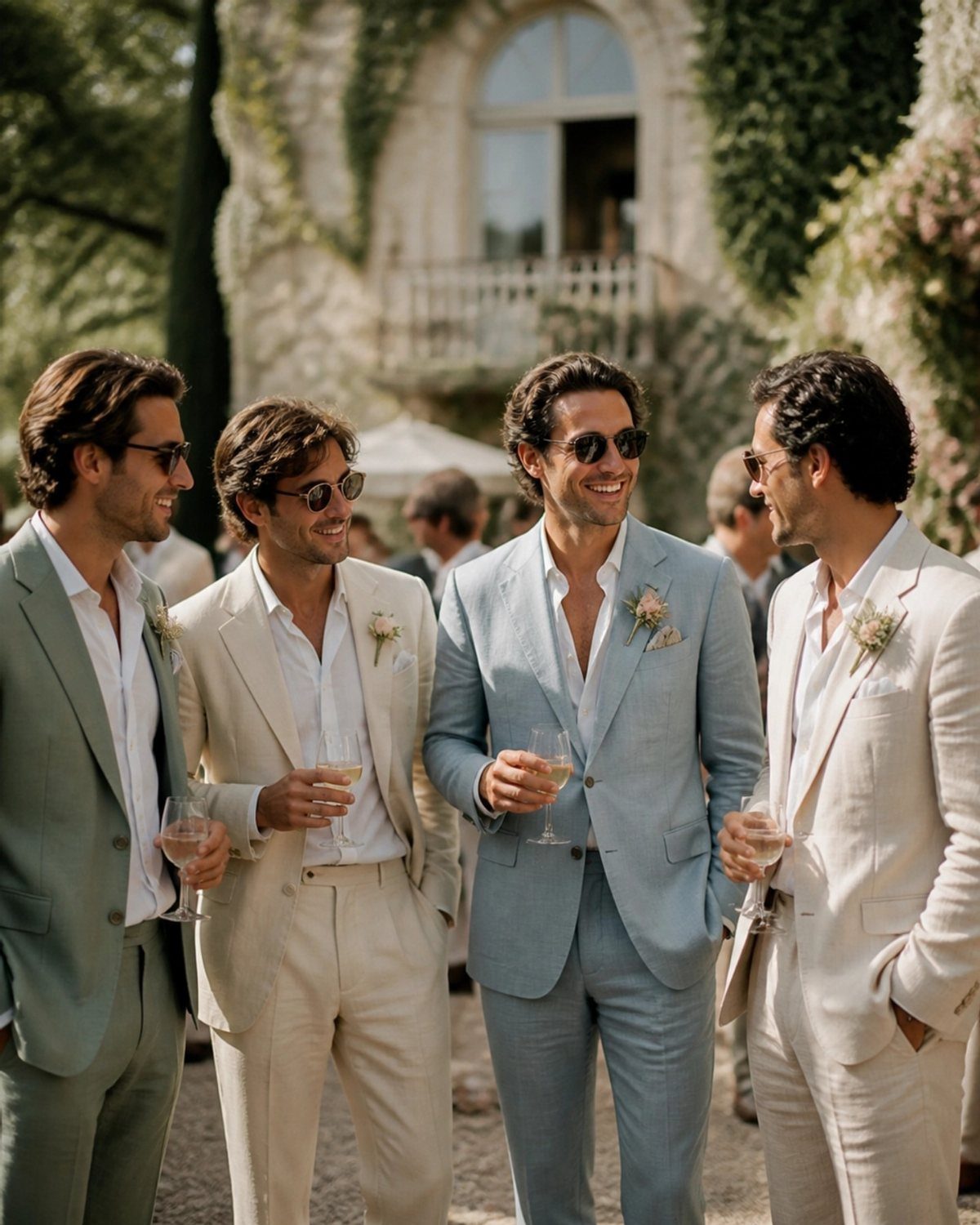
Lightweight suits in cream, beige, or pale grey stay cooler than darker fabrics and give you structure when shorts feel too casual. Close colors stay distinct when the tailoring is sharp, even in full sun.
Wool traps heat unless it’s a very light tropical weave.
This works for weddings, garden parties, or any outdoor event that calls for a jacket. Pair with loafers or suede shoes instead of black leather.
11. Tank Top with Tailored Trousers
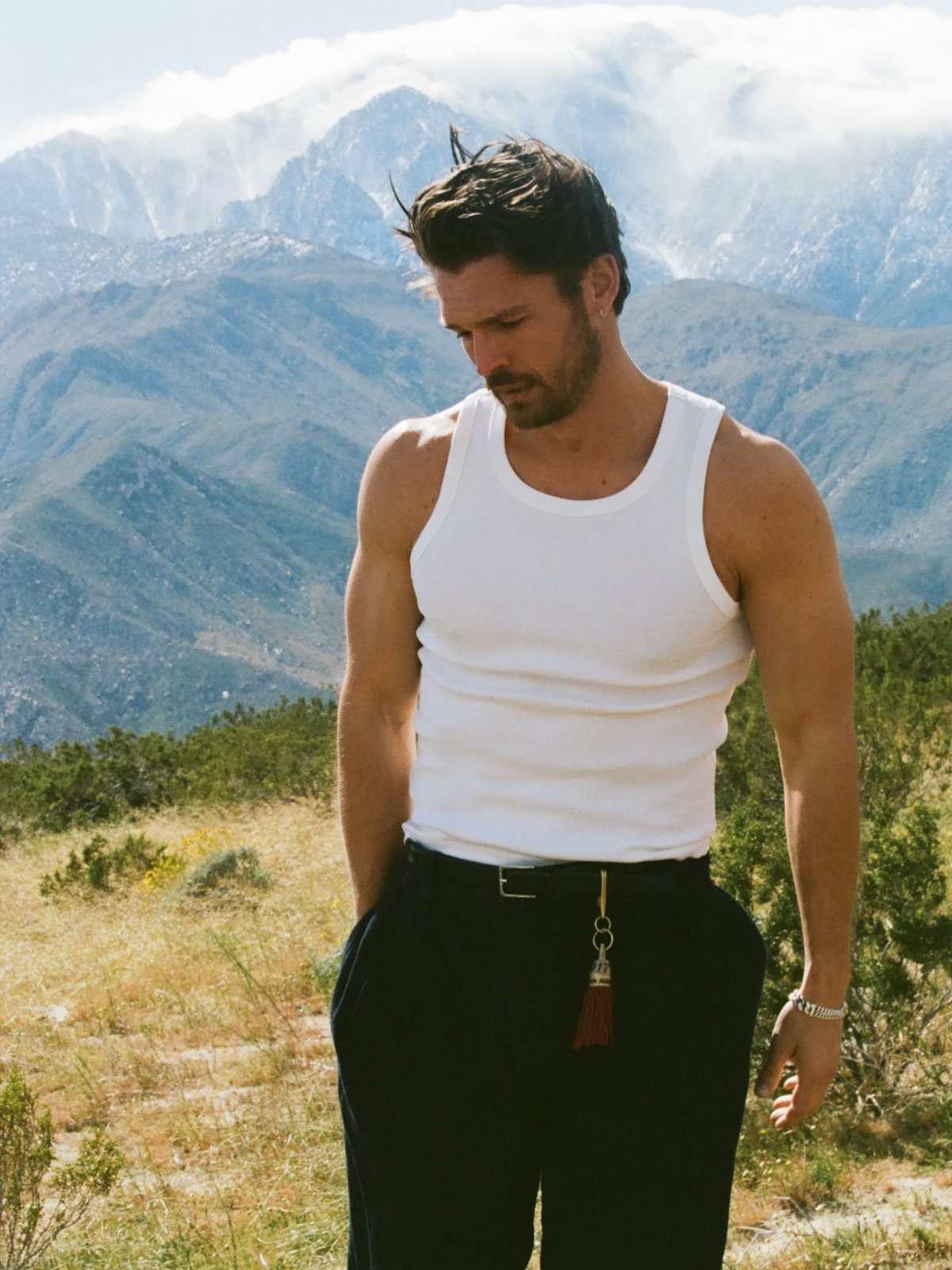
The white tank separates from the dark trousers, and tucking it in marks the waist instead of letting the fabric float.
The tank should fit close enough that it doesn’t billow when tucked.
This works for casual settings where a shirt would feel too formal. Add a belt to finish the waistline.
12. Long-Sleeve Button-Down with Trousers
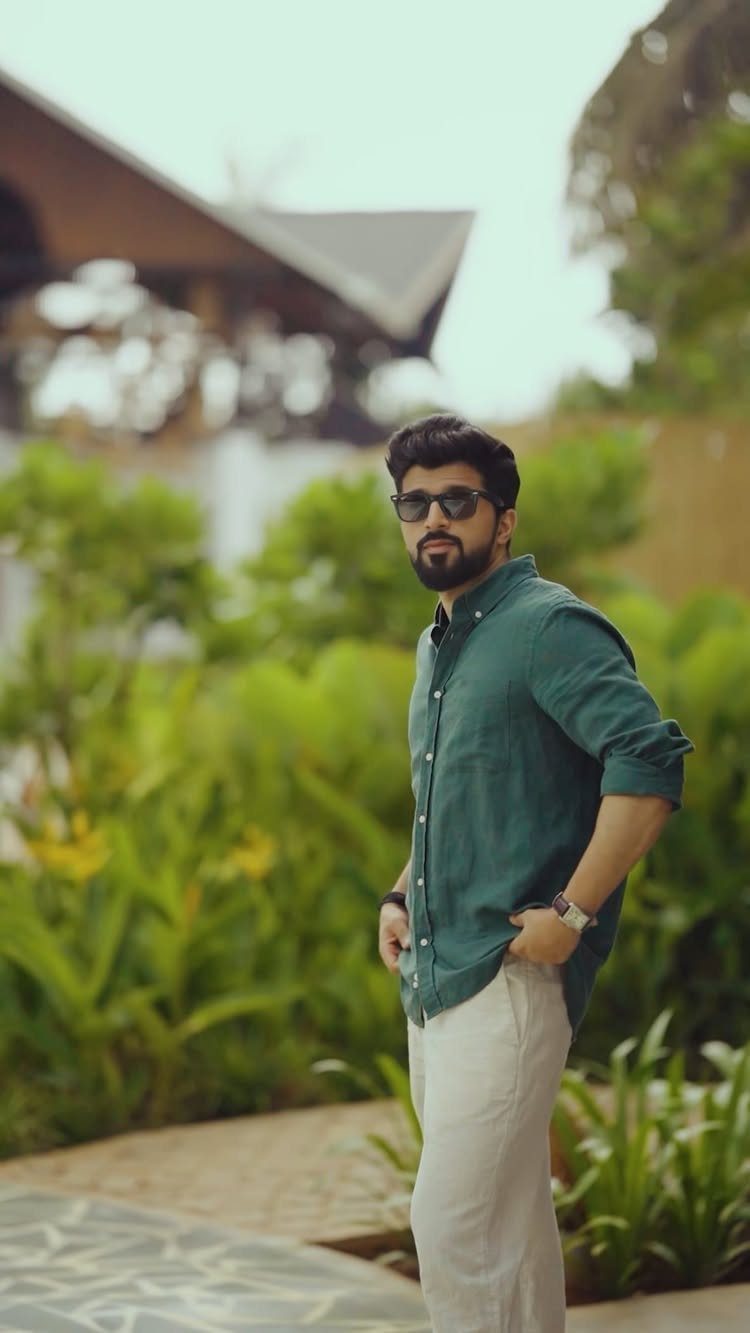
Long sleeves protect your arms from direct sun, which can feel cooler than bare skin when the fabric is lightweight.
The green linen shirt here pairs with light trousers for a relaxed look that still reads as put together, and sunglasses finish the outfit without adding bulk.
Linen breathes better than cotton and dries faster if you sweat. Roll the sleeves to the elbow if you want more airflow without taking the shirt off.
Brown sandals or loafers work with this outfit. White sneakers shift it more casual.
Choosing the Right Fabrics
Fabric weight matters as much as the fiber. Summer-weight cotton has a looser weave that lets air move through, while the same fiber in a tighter weave will hold heat.
Watch for synthetic linings in jackets.
A cotton blazer with a polyester lining still traps body heat, so the outer fabric alone doesn’t tell you how the garment will feel. An unlined or half-lined jacket stays cooler.
Summer Color Palette
Lighter shades of your usual colors work better in warm weather than jumping straight to bright pastels.
A lighter grey, olive, or brown reflects more sunlight than the winter version of the same color, and it keeps your wardrobe consistent without requiring new pieces.
White and beige reflect the most heat.
Light blues and greens come next. All of them pair well with each other, so building outfits gets simpler when most of your warm-weather clothes sit in the same range.
Patterns lighten an outfit visually without changing the base color. A dark shirt with a light pattern reads lighter than solid dark fabric.
Footwear for Summer
Suede derbies and monk straps feel lighter than polished leather because suede is thinner and more flexible. Both work in professional settings where sneakers would look too casual, and they pair well with tailored trousers or chinos.
Espadrilles stay cool because the canvas upper and rope sole both let air through. They work for casual settings but look out of place in an office.
Canvas dries faster but shows dirt more easily.
Loafers in suede or unlined leather stay cooler than lined versions. The lining traps heat the same way a synthetic jacket lining does, so check the interior before you buy.
Heavy shoes make an outfit feel too warm even if the rest of it is lightweight.
Frequently Asked Questions
What are men wearing in summer 2026?
Linen blazers, short-sleeved button-downs, lightweight suits in cream or beige, and matching shirt-and-shorts sets are common in warm weather.
Performance polos and tucked t-shirts with tailored trousers work for casual and business casual settings. Footwear includes white leather sneakers, suede derbies, and loafers.
What should men wear in hot weather?
Wear lightweight fabrics like linen, cotton, or cotton-linen blends that let air move through the weave. Check that jackets are unlined or half-lined, since a synthetic lining traps body heat even when the outer fabric breathes.
Can men wear t-shirts professionally in summer?
A tucked t-shirt with tailored trousers looks intentional if the fit is slim enough to avoid bunching at the sides.
Go for a thicker cotton that stays put when tucked, and wear it with trousers cut to sit where your waist actually bends.
What are the best fabrics for summer?
Cotton and linen breathe better than synthetic fabrics, and cotton-linen blends combine the structure of cotton with the fast-drying quality of linen. Synthetics trap heat against your skin and turn muggy fast.