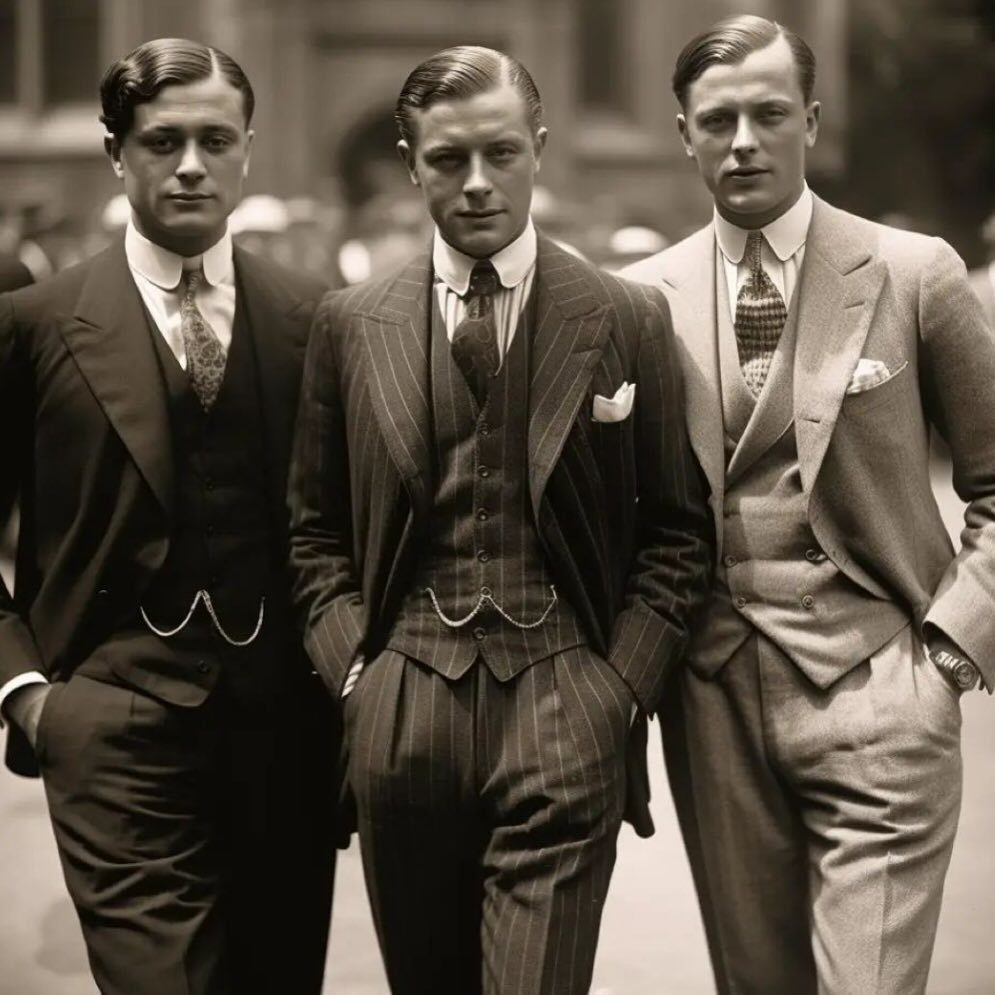
The three-piece suit, morning coat and vintage tuxedo anchor the formal side, while knickerbockers, wide-leg tweed trousers and knit vests carry the decade into relaxed settings.
If you’re dressing for a specific event with a traditional dress code, the morning coat or tuxedo carries the weight you need.
For daily wear, pair high-waisted trousers with suspenders and finish with two-tone brogues or an overcoat and flat cap.
1. Tailored Suits
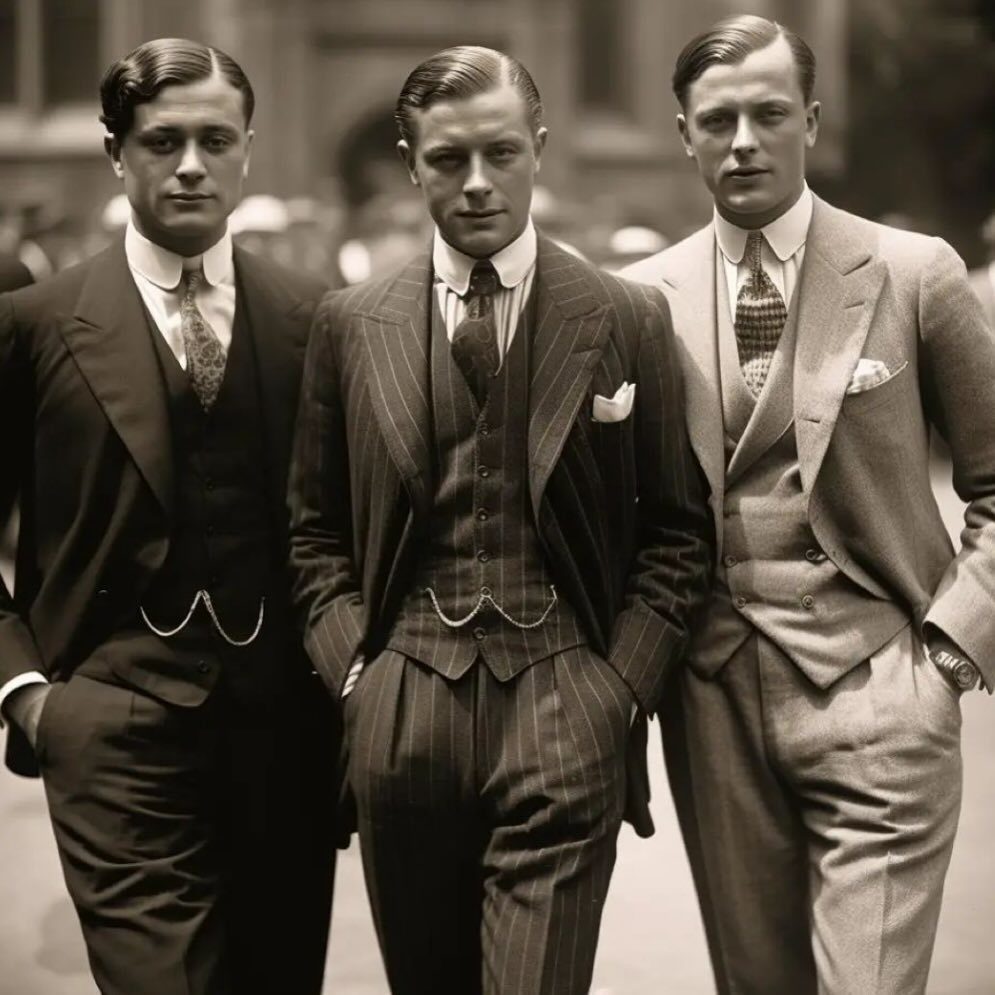
The three-piece suit defines 1920s tailoring: jacket, waistcoat and trousers cut to move together but worn in layers you control.
The fit runs closer to the body than what came before, with higher armholes and a defined waist that flatters most builds without feeling tight.
A pocket square and a tie in complementary tones finish the look without adding much cost. The waistcoat covers your shirt and belt line, so the jacket can stay open when you move.
For work or formal events, this outfit still reads as polished a century later.
2. Blazers and Knickerbockers
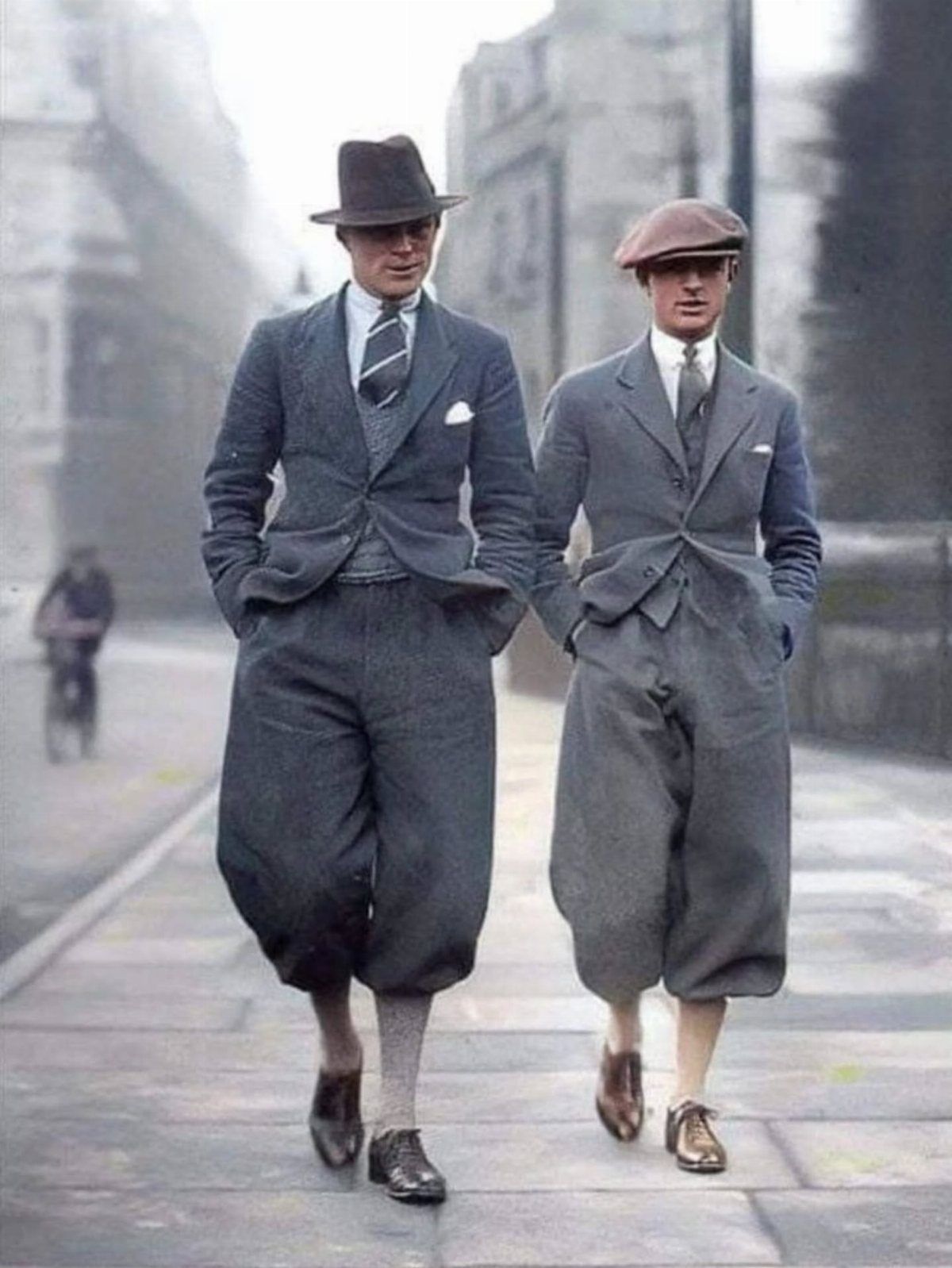
Knickerbockers stop just below the knee and pair with long socks, giving you a sportier silhouette than full-length trousers. The blazer keeps the outfit structured, and a tie balances the casual lower half.
This combination works best if you’re comfortable drawing attention. The shorter trouser line shows more of your leg and shoe, so fit matters at the knee and the sock needs to stay up.
A flat cap or newsboy cap completes the era without requiring much adjustment to how you’d wear a blazer today.
3. Morning Coat Formal Attire
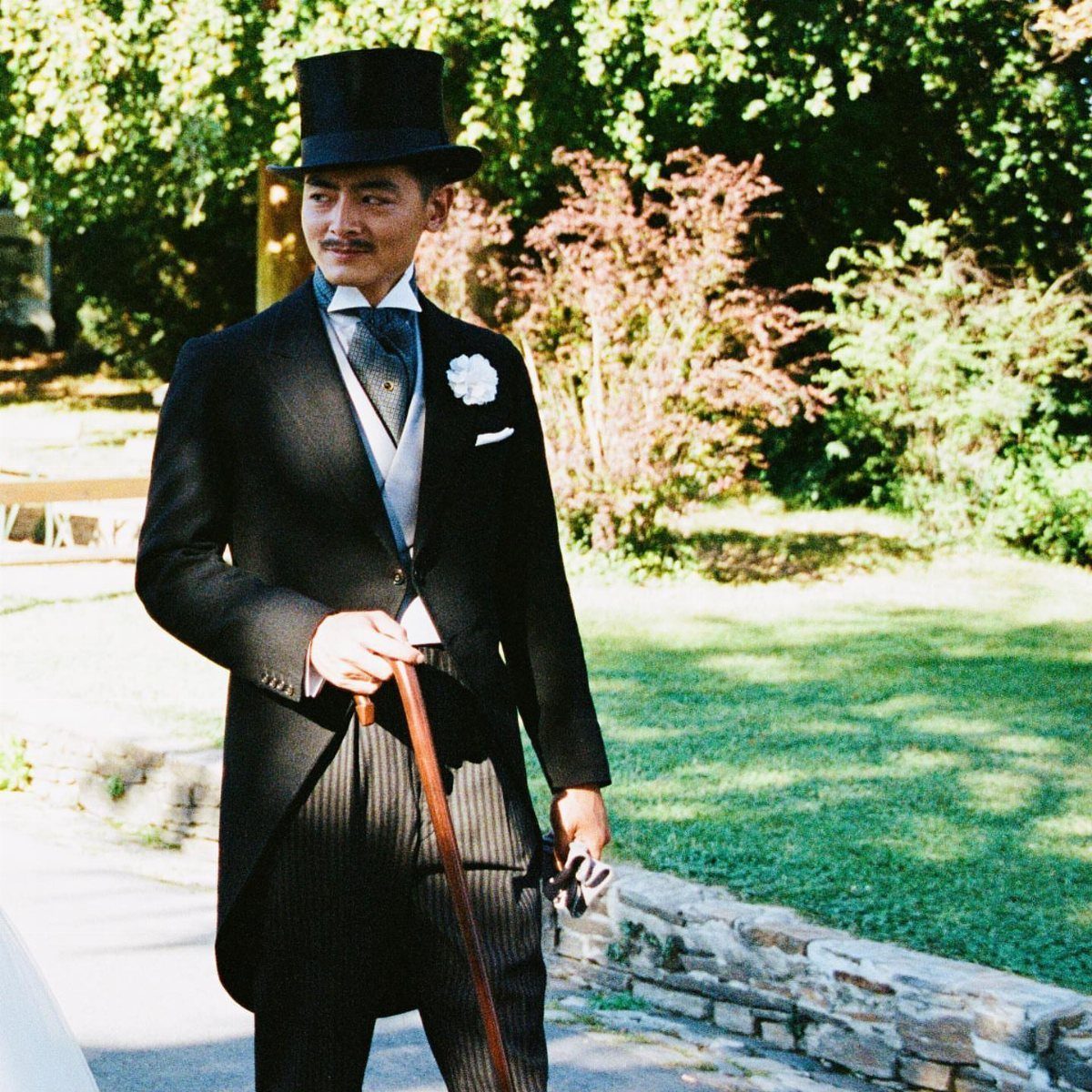
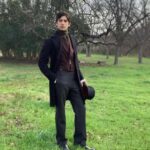
The morning coat is formal daytime wear: a black or grey tailcoat with a cutaway front, worn over a waistcoat and pinstriped trousers. The top hat and cane are part of the original silhouette, not optional accessories.
This outfit suits weddings, garden parties or any event where the dress code is specific and traditional. The coat’s cut elongates your frame, and the high waistcoat keeps the shirt hidden.
You won’t wear this often, but when the occasion calls for it, nothing else carries the same weight.
4. Suspenders and Shirt Styling
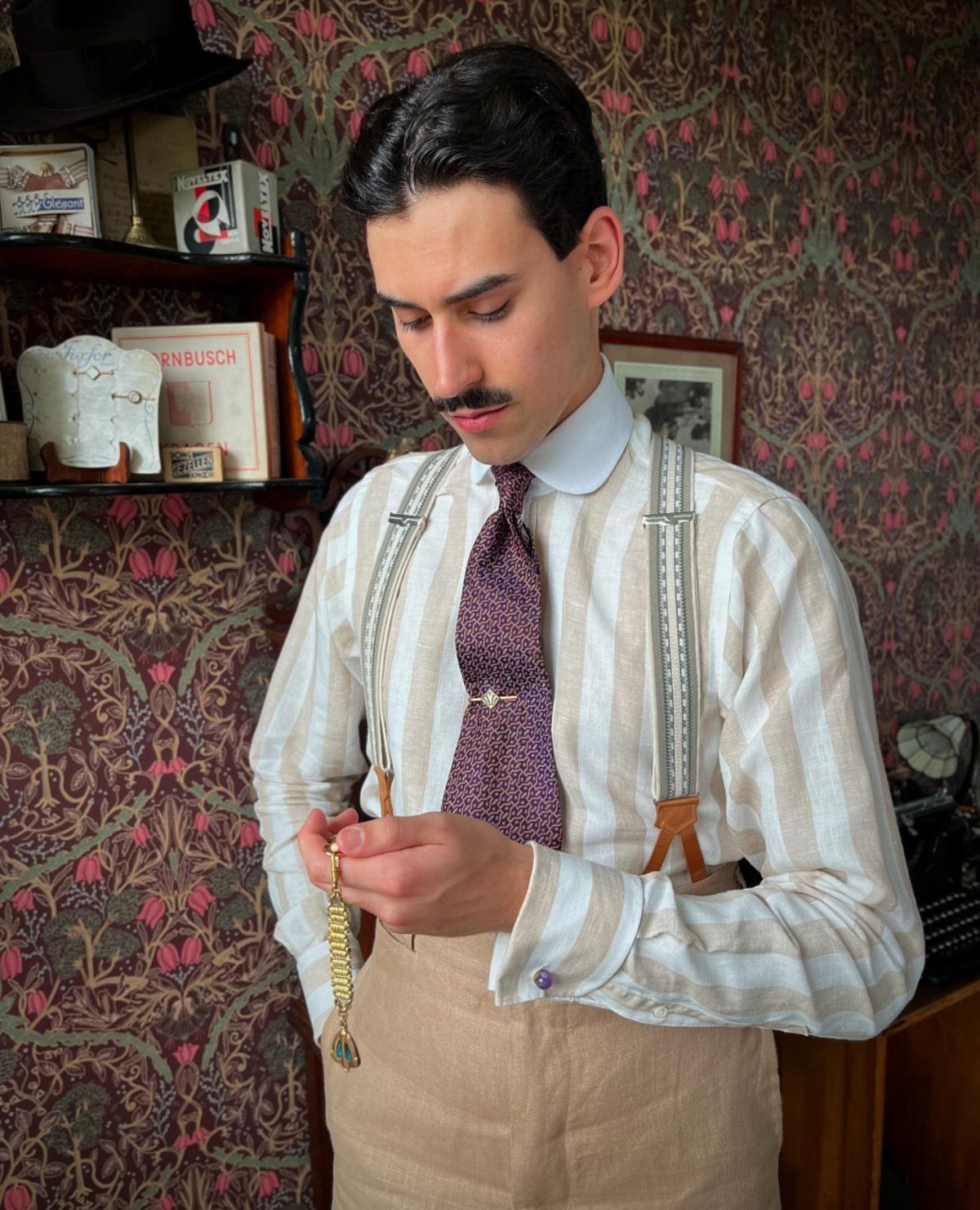
Suspenders hold your trousers at the natural waist and let you skip a belt, which keeps the shirt line clean under a waistcoat or jacket.
The striped shirt and solid tie create contrast without clashing, and the collar should sit high enough to frame the tie knot.
This look makes sense when you’re pulling together a 1920s outfit from what’s already in your closet. Suspenders cost less than a waistcoat and give you the same high-waisted trouser line.
Keep the shirt fitted so the suspenders sit flat under your jacket.
5. Two-Tone Brogues and Oxford Shoes
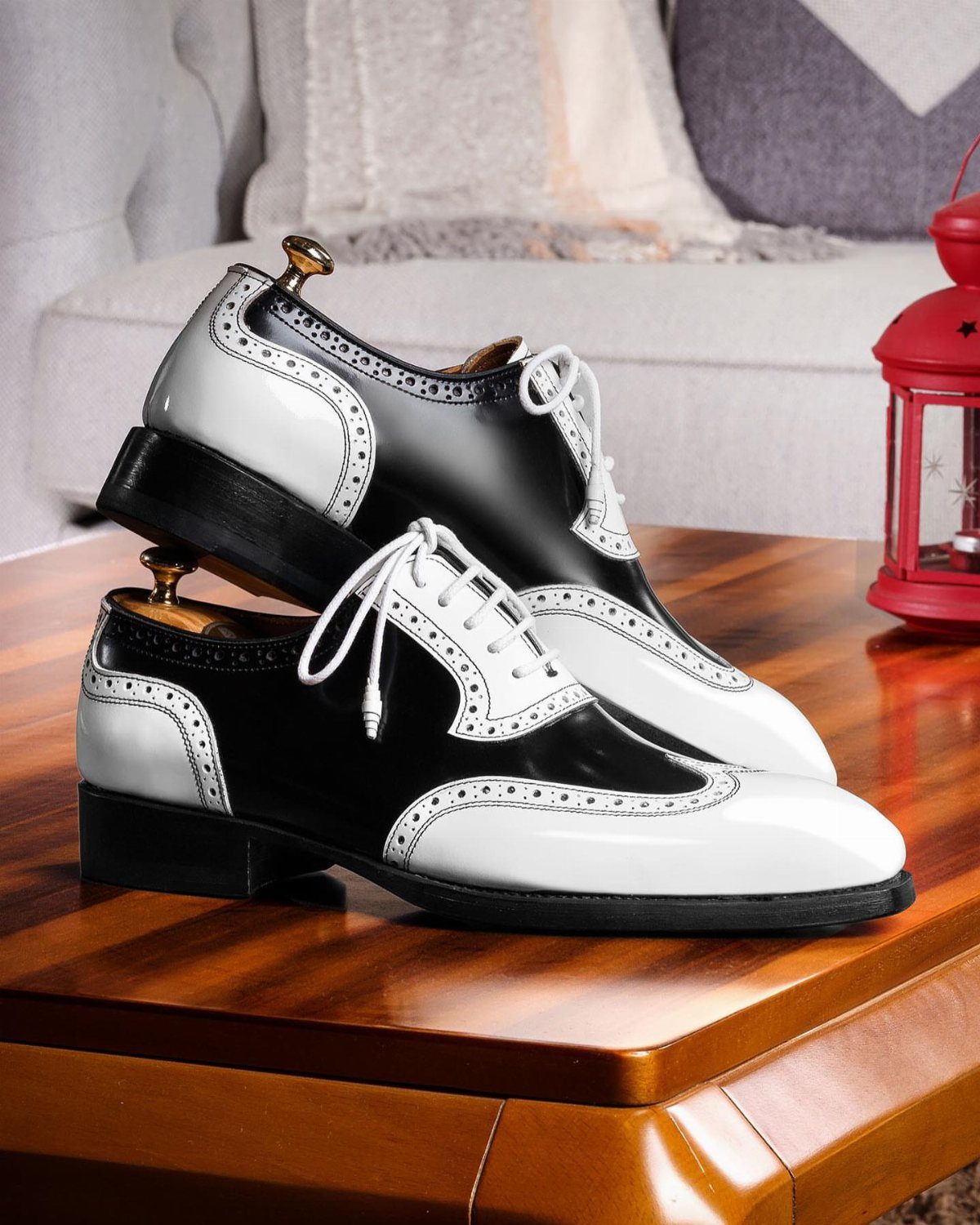
Two-tone brogues combine black and white leather in a wingtip or cap-toe pattern, and they’re the most recognizable shoe of the decade.
The contrast draws attention, so the rest of your outfit should stay simple: solid trousers, a plain shirt, or a neutral suit.
The leather needs to stay polished to maintain the sharp line between colors. Shoe trees keep the leather from creasing and collapsing when you’re not wearing them.
These shoes suit casual and semi-formal events equally well, and they work with grey, brown or navy trousers.
6. Knit Vest Layering
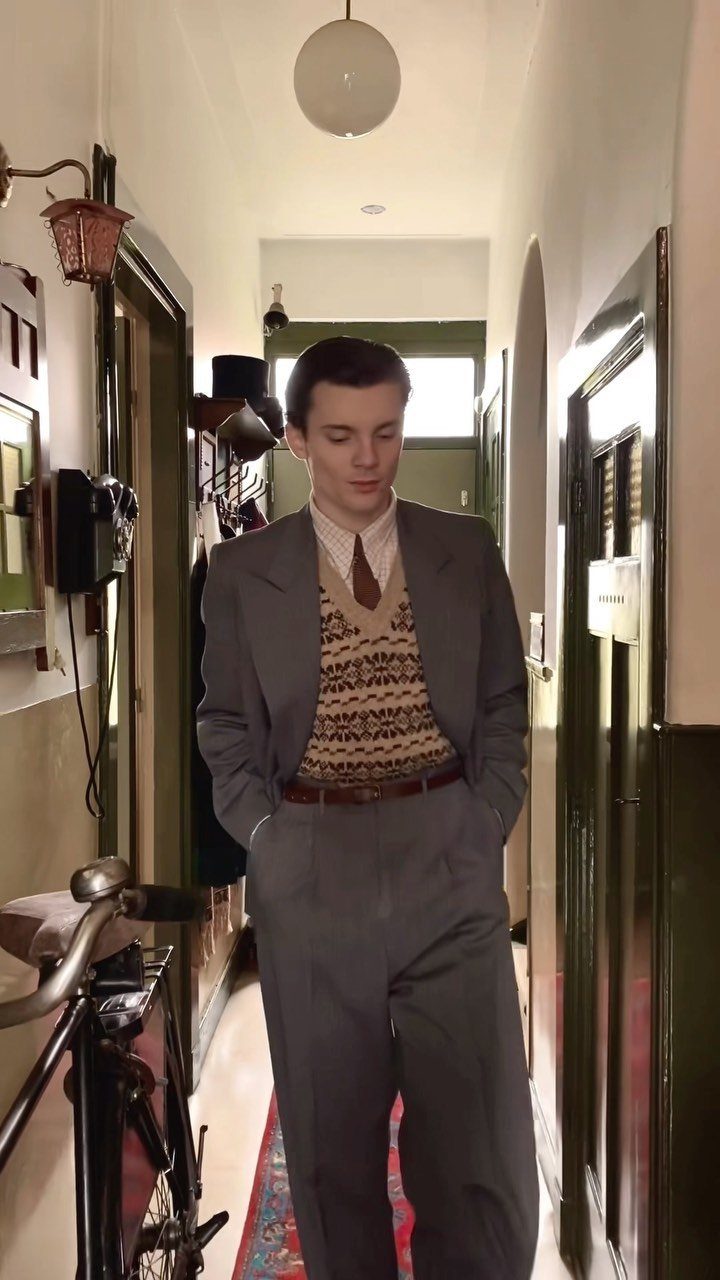
A knit vest layered between your shirt and jacket adds texture and warmth without the formality of a wool waistcoat.
The pattern should contrast with both the shirt and the jacket, and the vest should fit close enough that it doesn’t bunch under the jacket arms.
This layering suits fall and winter, and it works in casual and business settings alike. The knit is softer than a woven waistcoat, so it moves with you and doesn’t hold the same rigid line.
If your jacket stays buttoned, choose a thinner knit to avoid adding bulk at the chest.
7. Vintage Tuxedo
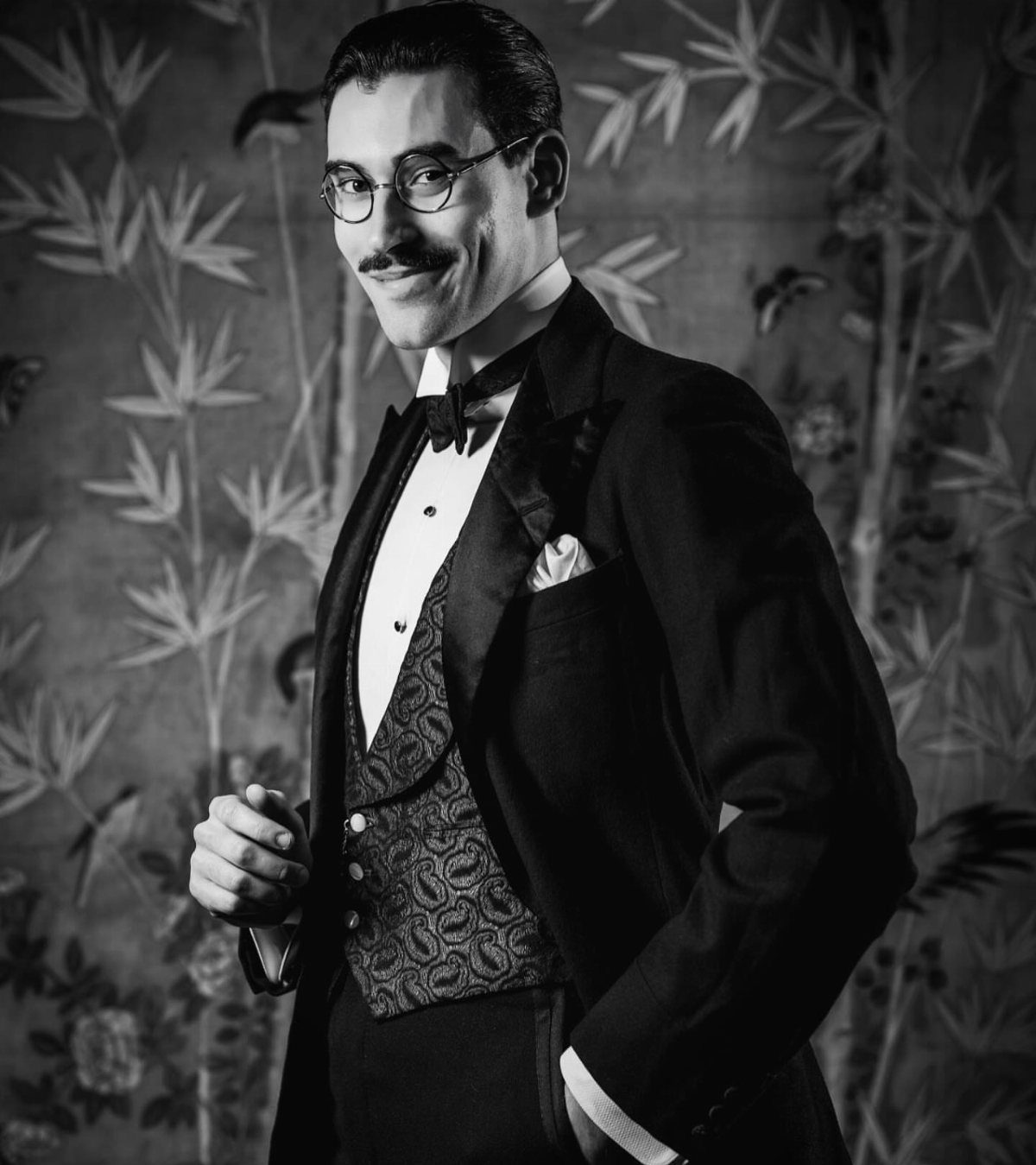
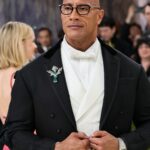
A black tuxedo with a patterned waistcoat gives you the formal silhouette of the 1920s without relying on plain evening wear.
The waistcoat adds pattern and texture where the jacket stays simple, and round glasses complete the period look if your prescription allows it.
The tuxedo itself should fit close at the shoulders and chest, with a single button and satin lapels. Keep the bow tie black and the shirt white to let the waistcoat carry the detail.
This outfit suits formal evening events where you want the era to show without costume.
Neutral tailoring works well for the ’20s theme. Men used to go for the pristine shade to show they had wads of cash, seeing as they’d have to have the staff to keep it clean.Another option is midnight blue.
8. Overcoat and Flat Cap
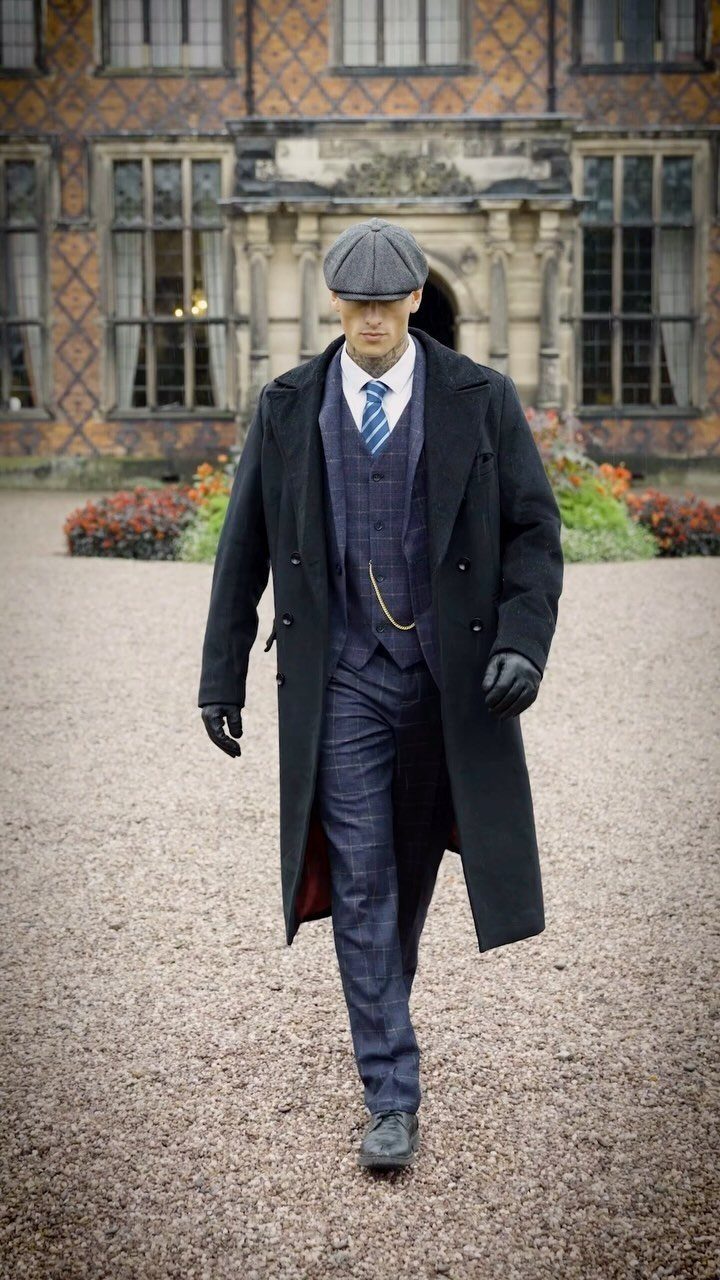
A long wool overcoat worn over a plaid suit gives you layering that works in cold weather without losing the 1920s line.
The flat cap balances the coat’s length and keeps your head covered, and the plaid suit underneath adds pattern without competing with the coat.
The overcoat should hang past your knee and stay open when you walk, so the suit stays visible. Choose a coat in black, charcoal or navy to work with multiple suits.
This combination suits outdoor events and daily wear in fall and winter.
9. Wide-Leg Tweed Trousers
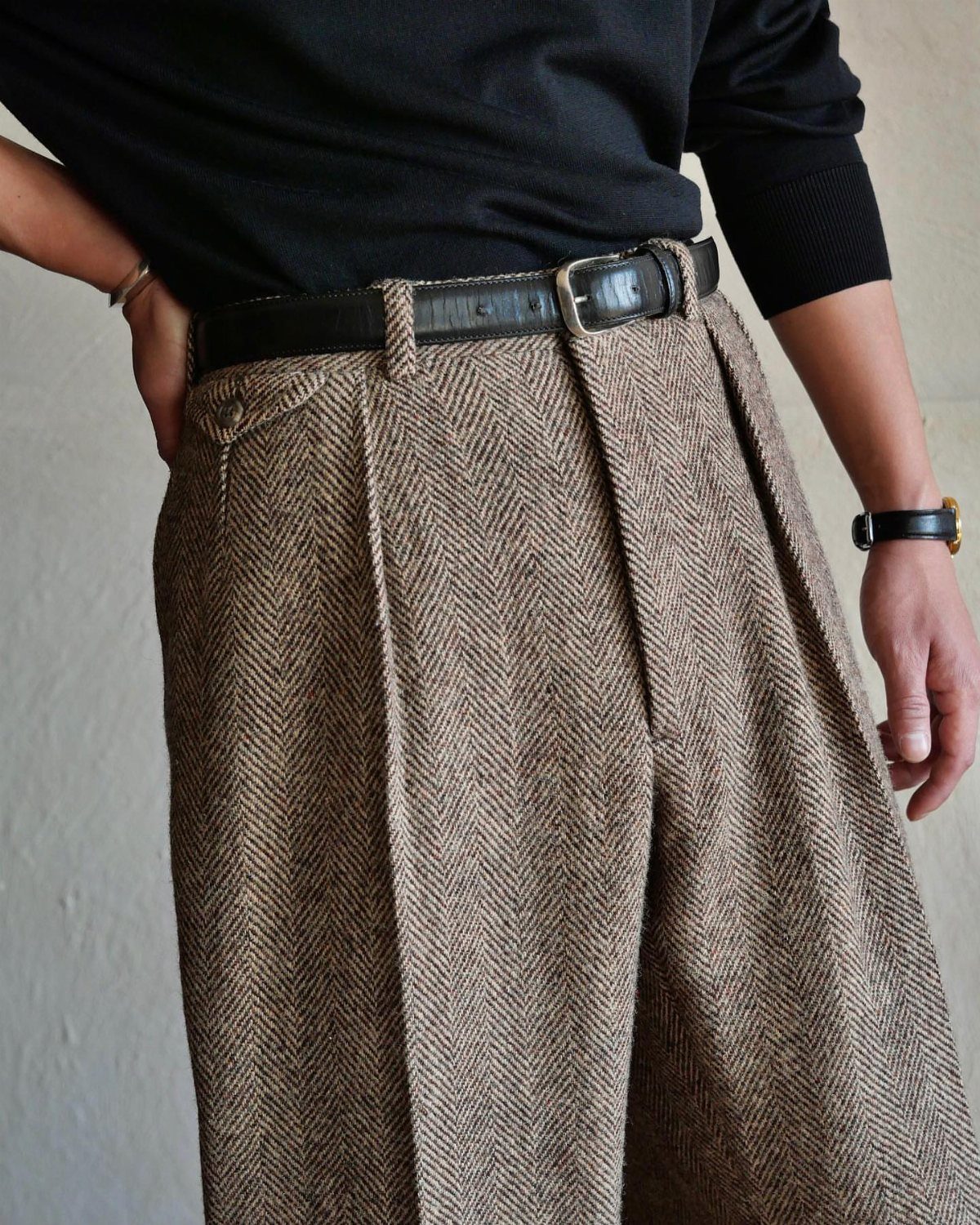
High-waisted tweed trousers with front pleats and a wide leg give you the silhouette of the decade without needing a full suit.
The herringbone pattern adds texture, and the high waist works with suspenders or a belt worn at your natural waistline.
Tuck your shirt in to show where the trousers sit, and keep the top half simple so the trousers carry the vintage detail. The wide leg suits most builds and moves easily when you walk.
A knit vest or blazer on top brings the outfit together.
Modern Interpretations
Contemporary suits can echo the 1920s without reproducing the whole silhouette. Wide lapels and high-waisted trousers bring the proportion back, and you control how much of the era shows by choosing fabrics and colors that still work today.
The jazz suit ran high at the waist and cut narrow from chest to hip, creating an hourglass line that flatters most builds.
Early in the decade, suits stayed slim and simple. By the end, they loosened and picked up more color and pattern.
Pinstripes and micro-patterns appeared often, sometimes borrowed from the style criminals wore.
Blue, grey, brown and white stayed popular. For formal evening events, the tuxedo or three-piece suit remained the standard choice.
Grooming Tips
Hair ran short to medium length, trimmed well above the collar and clear of the ears. Hats covered most men’s hair through the day, leaving grooming visible only at home or in the evening.
A side part or slicked-back style kept hair tidy, and pomade held it in place with a glossy finish. Flyaway or unruly hair was unacceptable, so some product was necessary.
Mustaches appeared occasionally, but only in a short, pencil style. A well-trimmed mustache required weekly trips to the barber, which made it a sign of wealth.
Clean-shaven faces dominated; beards carried a dated or unclean association and turned up mostly on older men. Sideburns stayed short, and the jowled beard style disappeared except among the elderly.
Layering Techniques
A bow tie or ascot adds structure at the collar, and a pocket square fills the jacket’s breast pocket with color or pattern.
The fedora completes the silhouette and adds proportion when you’re wearing multiple layers. Each piece should fit close enough that the layers sit flat and move together, not bunch at the chest or waist.
Start with the shirt, add the vest or jacket, then finish with accessories that contrast in tone or texture. The layering makes the outfit more visually interesting without requiring complicated pieces.
Frequently Asked Questions
What did the guys wear in the 1920s?
Men wore three-piece suits with a jacket, waistcoat and trousers cut close to the body, along with fedoras, bow ties and two-tone brogues.
Jackets tapered in from the chest to a defined waist, then flared slightly over the hip. Navy, charcoal and tan were the most common suit colors, often woven with chalk stripes or Glen plaid.
How to make an outfit look 1920s?
Pair flat-front trousers with a three-piece waistcoat, then finish the collar with a bow tie or four-in-hand knot.
A newsboy cap or fedora balances the vertical line when you’re stacking shirt, vest and jacket. Fit each layer close to the body so nothing rides up or folds over when you sit or move.
What type of accessories did men wear?
Men wore pocket squares, bow ties, suspenders, fedoras and flat caps as standard accessories.
Spectator shoes in black and tan were the signature footwear, while top hats and walking sticks appeared at formal daytime events. Each accessory added structure or contrast without requiring complicated pieces.
Where can I buy 1920s mens fashion?
Look for contemporary suits cut with a higher button stance and wider peaked lapels.
Pick solid flannels or subtle patterns in colors that hold up outside a costume context. Add a flat cap, braces and spectator brogues to pieces you already own.