
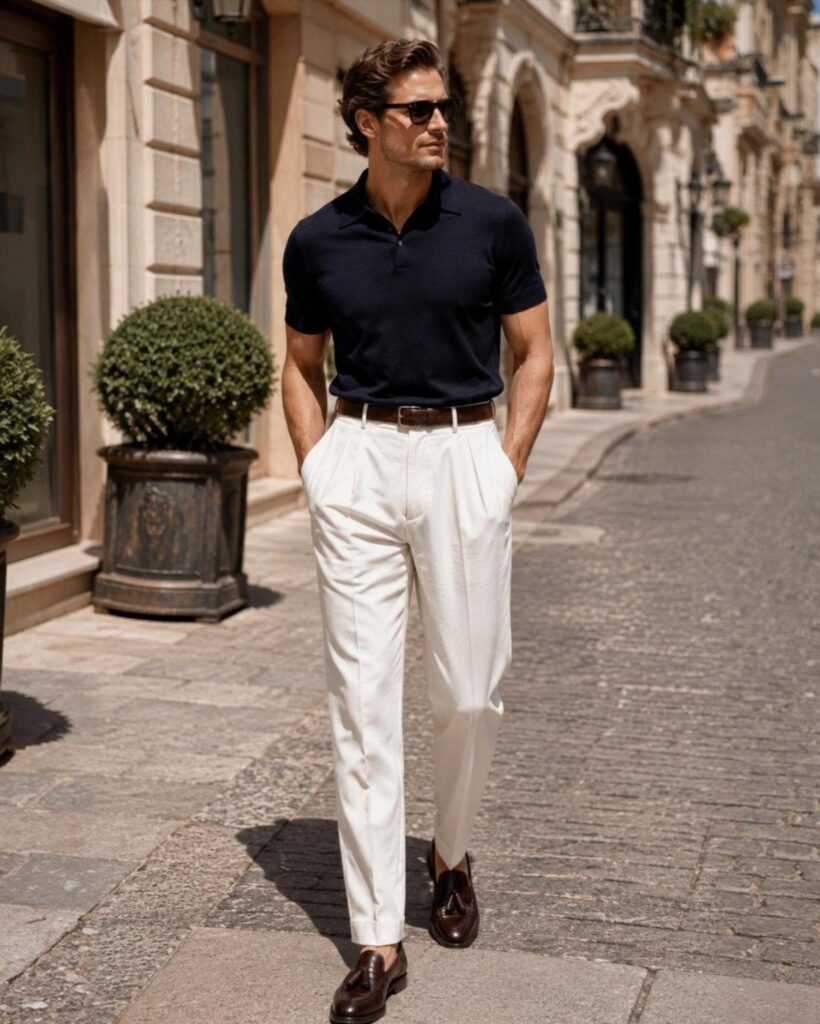
Business casual color combinations range from the high-contrast formality of black and gray to the warm-weather ease of light blue and tan, with options like navy and white or burgundy and navy in between.
The rule that picks one is how far your office sits from formal: observe whether blazers are daily or saved for client meetings, then match that baseline or step one notch in either direction.
1. Navy and White
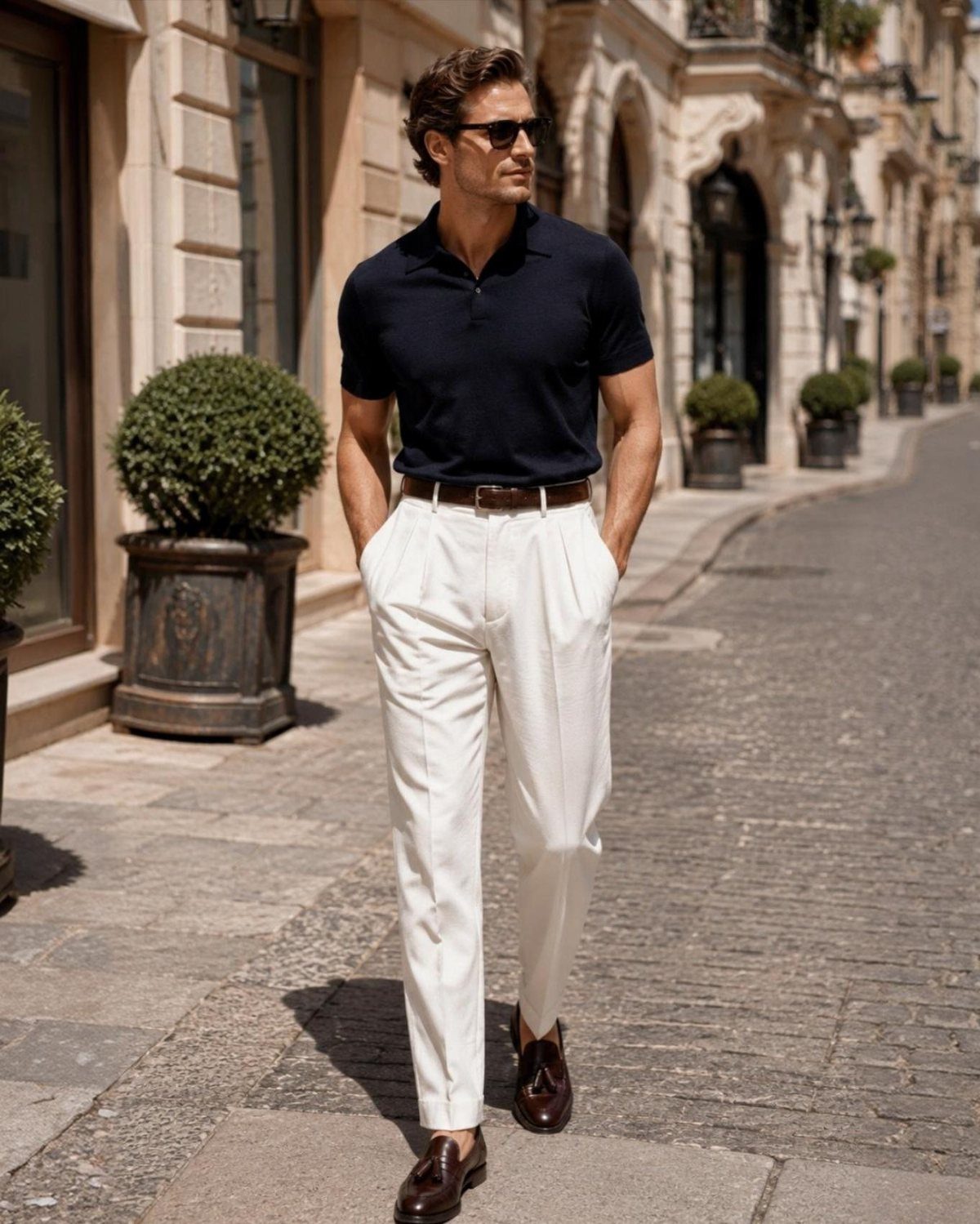
Navy and white gives you a look that reads formal enough for meetings and clean enough for lunch outside the office. The contrast is high but the colors are neutral, so nothing fights for attention.
A navy polo keeps the pairing casual without losing structure.
White trousers lighten the whole outfit and work better in warm weather than heavy chinos. Brown shoes and belt break up the blue-and-white split and add warmth.
This pairing works with button-downs, knits, blazers or just a polo. Keep one navy and one white, and the outfit holds.
2. Brown and Beige
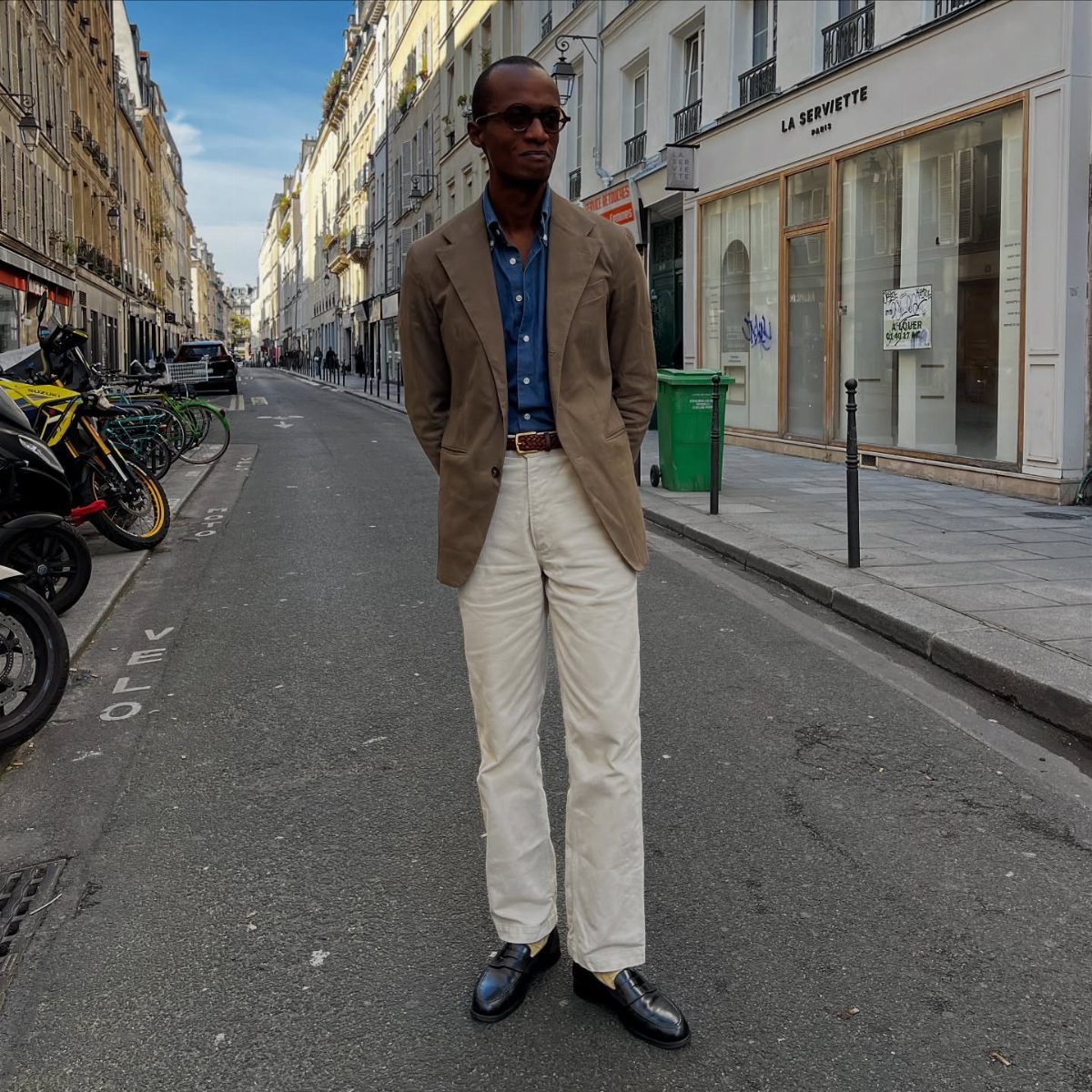
Brown and beige sit close on the color wheel, so the outfit feels cohesive without much effort. Both are warm neutrals that work indoors and out.
A brown blazer over a blue shirt and beige trousers gives you 3 layers of color that don’t clash.
The blue shirt adds contrast without breaking the earthy base. Beige sits a shade or two lighter than khaki and picks up the warmth of brown leather.
This combination works best in fall and spring when the warmth of brown feels right. Skip it in high summer unless the fabrics are linen or cotton.
3. Black and Gray
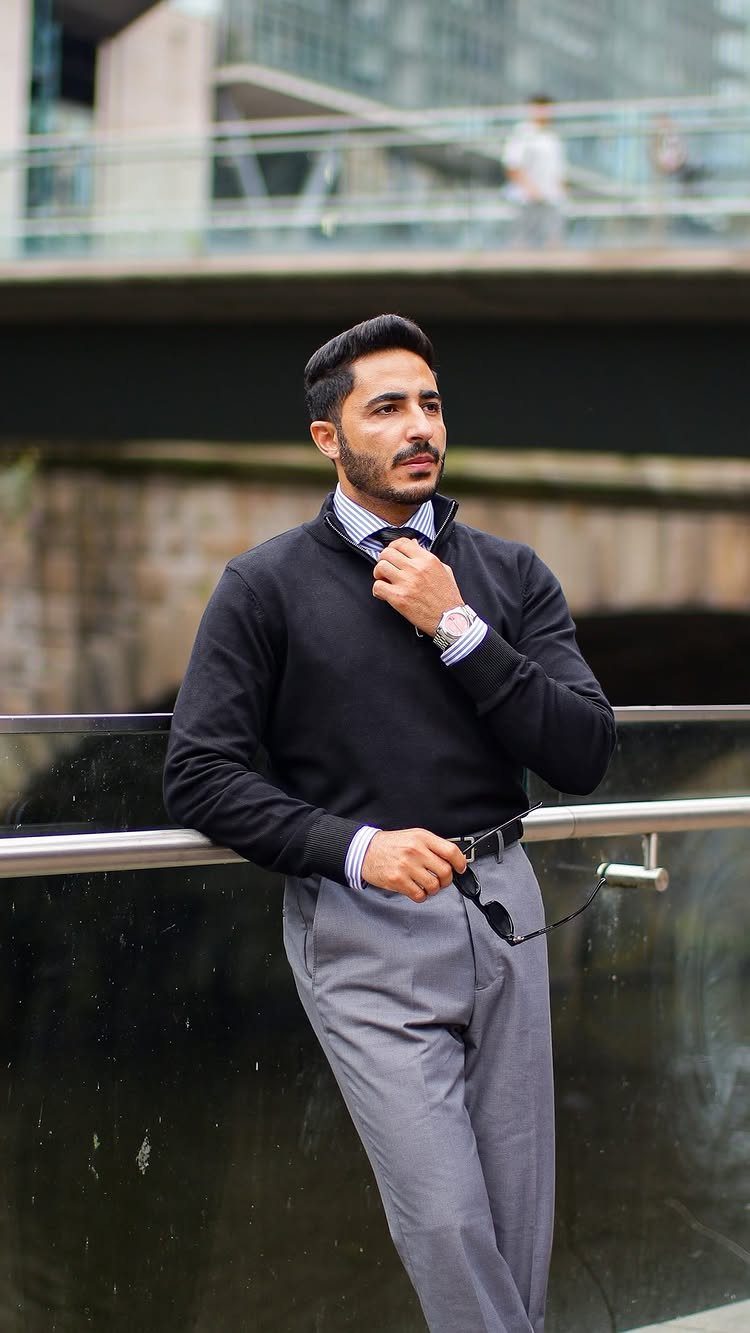
Black and gray keep the palette tight and the look minimal. This pairing works when you want a polished outfit that doesn’t lean formal.
A black sweater over a striped shirt adds texture without color.
Gray trousers anchor the look and stay neutral enough to work with black shoes or brown. The stripe in the shirt breaks up the solid blocks and keeps the outfit from reading too flat.
This combination suits cooler months and works well when your office skews modern. It reads sharper than navy and brown but stops short of a full suit.
4. Light Blue and Tan
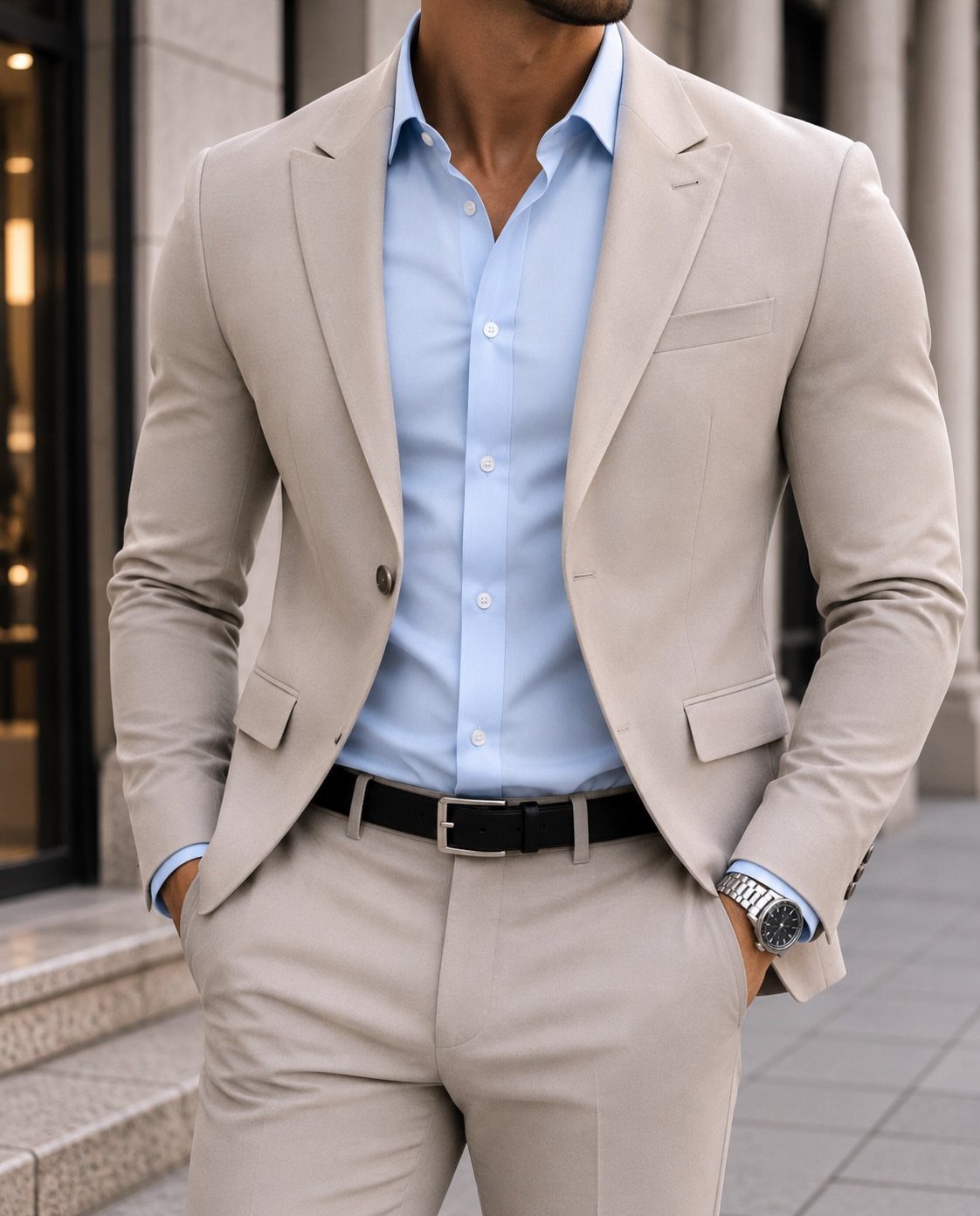
Light blue and tan give you a fresh palette that works in warm weather without looking too casual. The blue stays cool, the tan stays neutral, and together they balance each other.
A tan blazer and matching trousers with a light blue shirt keeps the outfit simple and avoids pattern.
The black belt and shoes add contrast and ground the lighter colors. This look works for meetings, outdoor events or anywhere you need to look put together without a tie.
Tan shows dirt faster than navy or gray, so save it for clean environments.
5. Green and White

Green and white read crisp and seasonal without being loud. Olive or sage green works better than bright green in business casual settings.
An olive blazer over a white shirt keeps the palette simple and the contrast high. The green adds color without reading overly casual, and the white keeps it from feeling heavy.
This combination works when your office allows color and the weather is warm. Skip it in fall and winter when darker tones feel more appropriate.
6. Burgundy and Navy
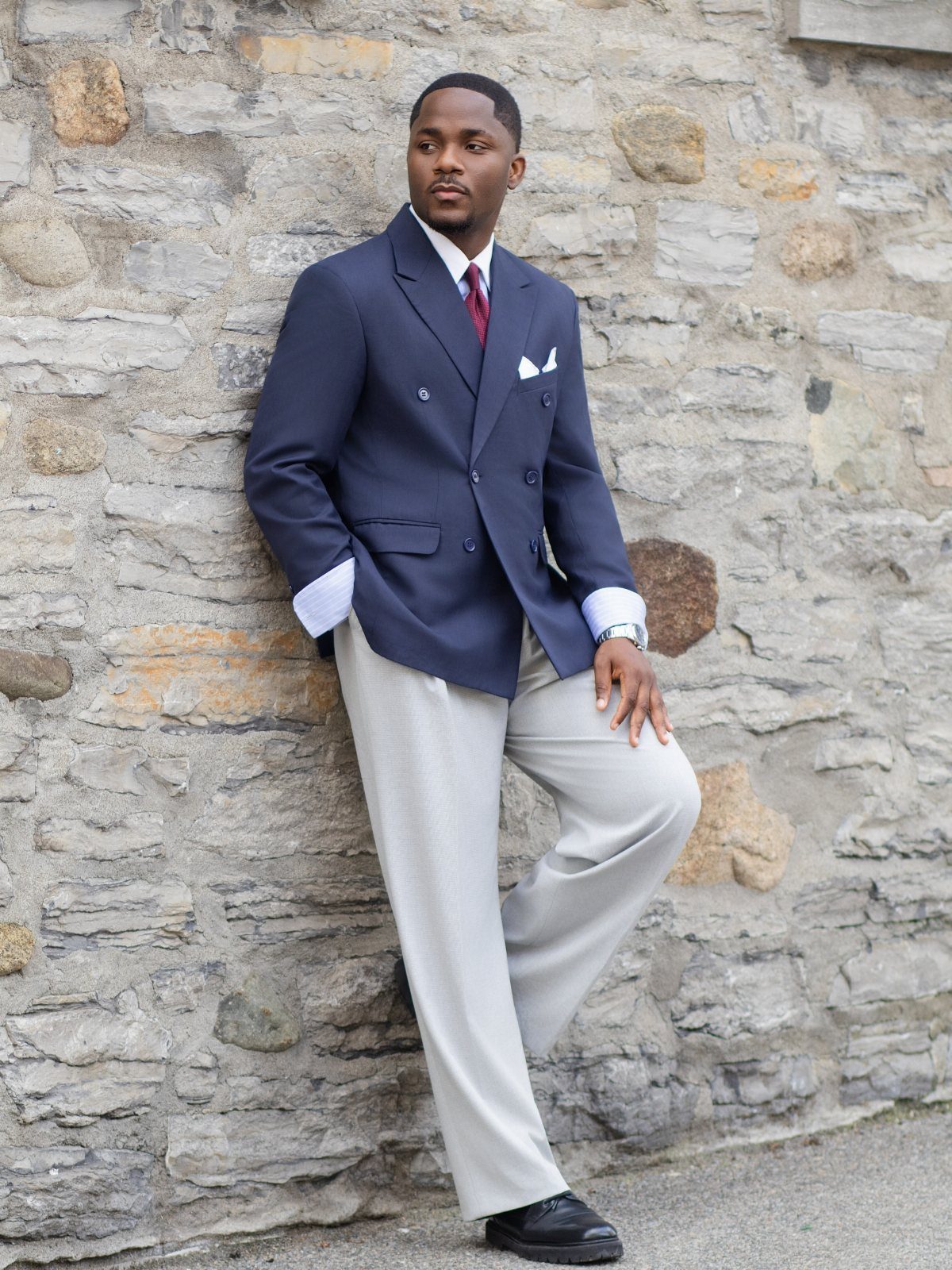
Burgundy and navy sit next to each other in depth but far apart in warmth, so the pairing feels refined without being boring. Both colors are darker than pastels, so the outfit reads formal.
A navy double-breasted jacket, burgundy tie and white shirt gives you 3 colors that hold their own ground.
Light gray trousers keep the bottom half neutral and balance the darker top. The white shirt adds brightness and separates the burgundy from the navy.
This look works in cooler months and suits evening events or formal office settings better than casual Fridays.
7. Gray and Pastels
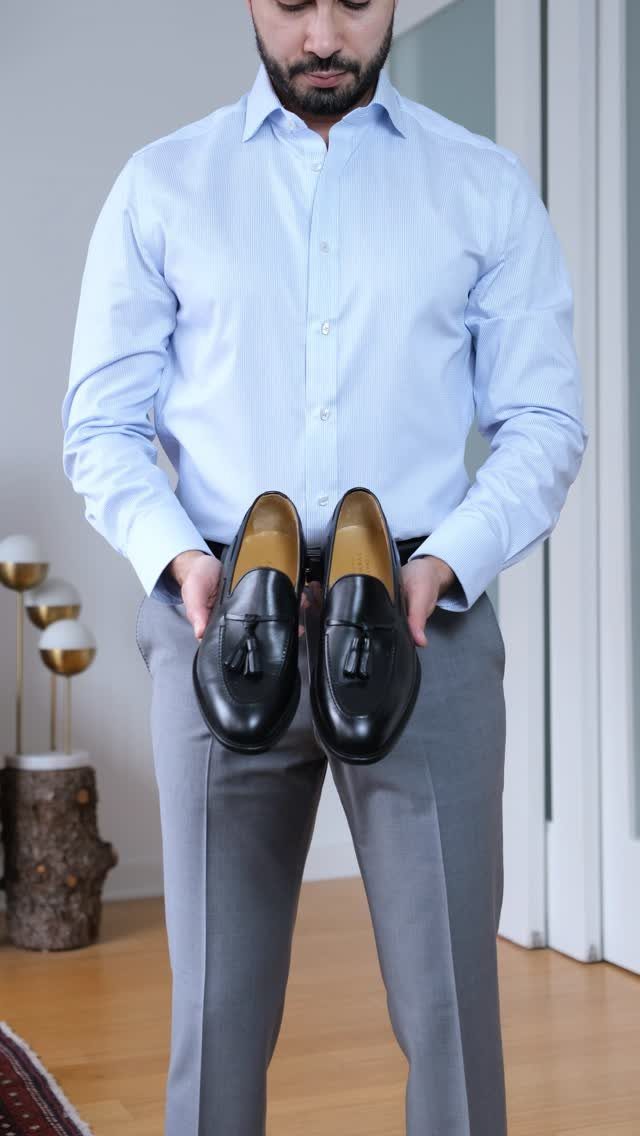
Pale blue against gray keeps the look structured but takes the edge off. The pale blue stays easy on the eye, the gray keeps the base neutral.
Black tassel loafers add a dressy finish and work better here than sneakers or boots. This pairing suits spring and summer when lighter colors feel right and offices allow some flexibility.
Pastel pink or lavender shirts work the same way. Keep the trousers gray and let the shirt carry the color.
8. Brown and Navy
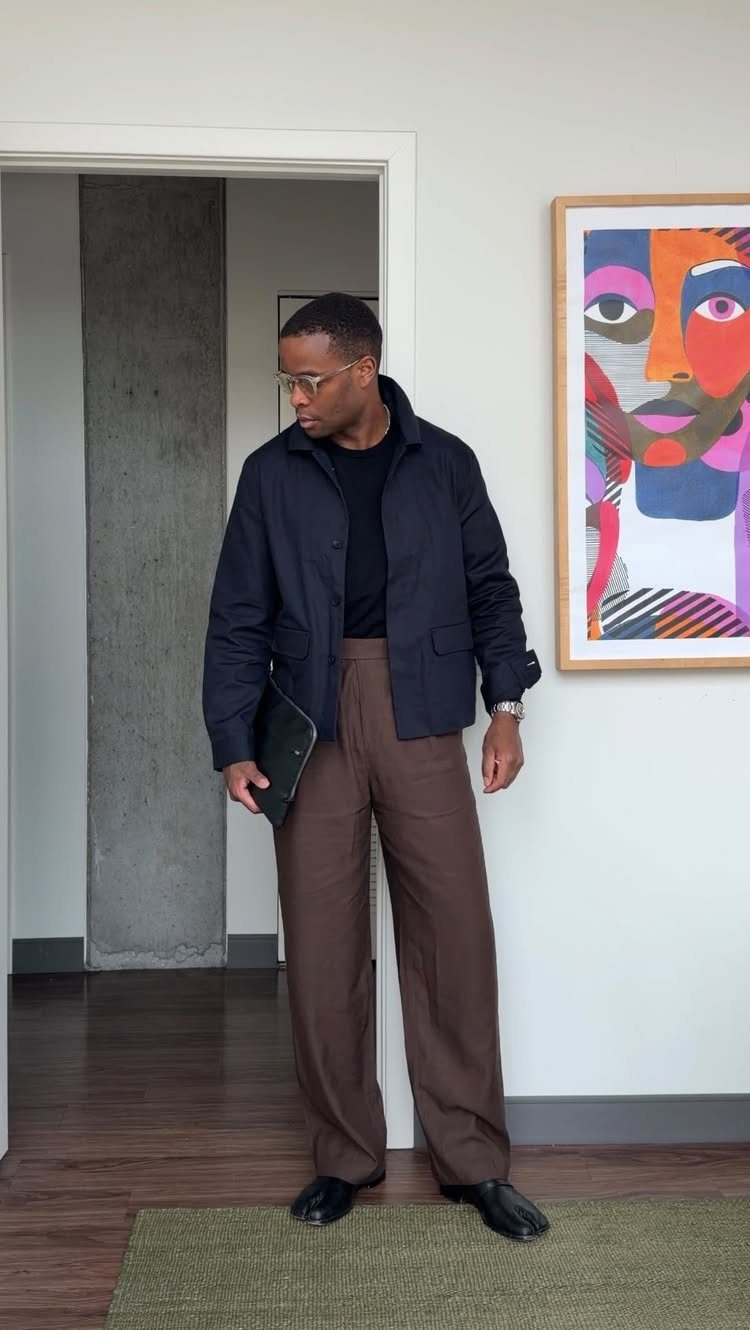
Brown trousers and a navy jacket give you 2 rich colors that stay formal but skip the usual gray-and-navy pairing. A black shirt between them adds depth and keeps the contrast high.
Cold months are when this pairing feels most at home. Brown shoes match the trousers and tie the outfit together.
Navy and brown sit close enough in weight that neither one dominates. The look reads more interesting than navy and gray without adding pattern or extra pieces.
9. Polished, Not Stiff Tailored Pieces
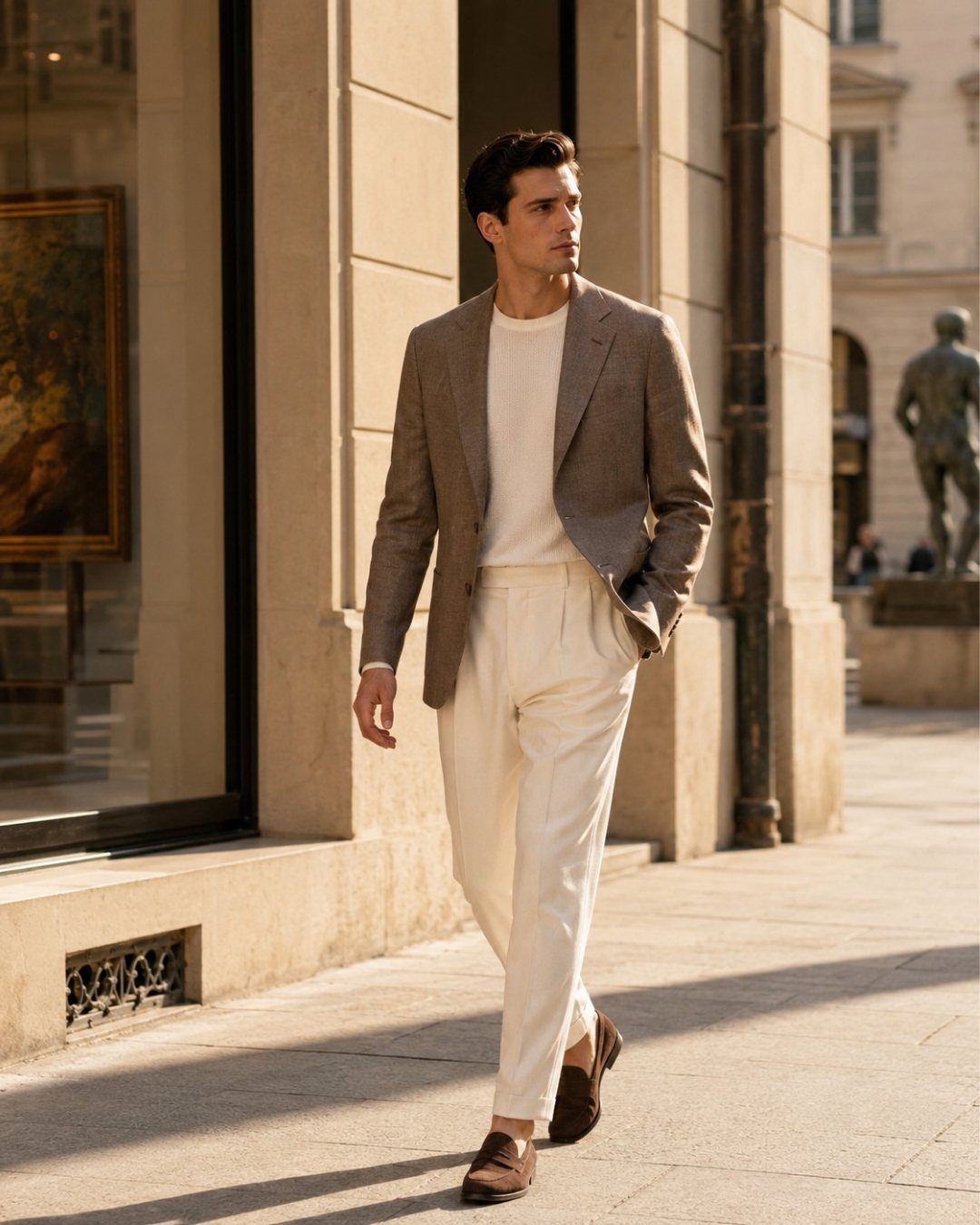
A brown blazer over a white t-shirt and white pleated trousers keeps the structure of tailoring but drops the tie and dress shirt. The pleats add shape without stiffness, and the white stays clean.
Brown leather shoes or loafers finish the look and match the blazer. This outfit works when your office allows casual tops but still expects a jacket.
The blazer does the work of looking formal. The t-shirt keeps it from reading like a meeting.
Understanding Office Culture
Look at what the people around you are wearing before you decide how far to push color. If half the office is already wearing pastels or colored trousers, you have more room.
Pay attention to whether people wear blazers daily or save them for client meetings. That tells you whether a polo and chinos will read as underdressed or just right.
The gap between too formal and too casual is narrow in some offices and wide in others. Observing the average gives you the baseline, then you can adjust one step in either direction depending on your day.
Because business casual doesn’t have to be boring. You should still look like you: Your job is just to find which pieces land on the bullseye in the Venn diagram featuring your job and your sartorial vibe.
— GQ
Fit Is Key
A jacket that pulls across the chest or trousers that bunch at the ankle will undo any color pairing, no matter how careful. Fit matters more than fabric cost or brand.
Get your measurements taken and accept where your shoulders sit and how your waist curves. Off-the-rack pieces often compromise in at least one place, so find a tailor who can take in a waist, shorten sleeves or taper trousers.
Tailoring works on more than suits.
A cheap shirt that fits your chest and arm length will look sharper than an expensive one hanging loose. The investment is small and the difference is immediate.
Capsule Wardrobe
A capsule wardrobe is a small collection of high-quality pieces that work together, so you can mix them into different outfits without planning each one from scratch. Flexibility matters more than how many pieces you own.
Start with core items that pair with multiple colors: navy blazer, gray trousers, white and light blue shirts, brown and black shoes. Each piece should work with at least 3 others.
Building this collection takes time, but once it’s in place you can dress up or down depending on the meeting, the weather or the day.
Add one or two pieces each season and replace items only when they wear out or stop fitting.
Frequently Asked Questions
What colors are good for men’s business casual style?
Navy, gray, beige, brown and tan form the neutral base that works in any office.
Light blue, burgundy, olive green and pastels add color without reading too casual. Stick to 2 or 3 colors per outfit so nothing fights for attention.
What is the 3-color rule for men?
Keep your outfit to 3 colors maximum so the look stays cohesive and intentional.
More than that reads unplanned. Pair 2 neutral colors with 1 accent, or use 3 neutrals with varying depth.
What is business casual?
Business casual is professional dress that’s more relaxed than a suit but more structured than weekend clothes.
It typically means a blazer or polo with chinos or dress trousers and leather shoes. The exact line varies by industry, so look at what others in your office wear.
What should I avoid in business casual?
Skip shorts, hoodies and sneakers in most business casual settings. Keep it simple: fitted chinos, a collared shirt, and proper leather footwear.