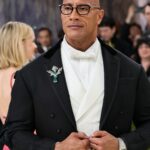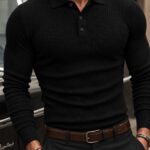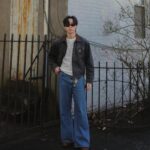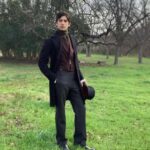
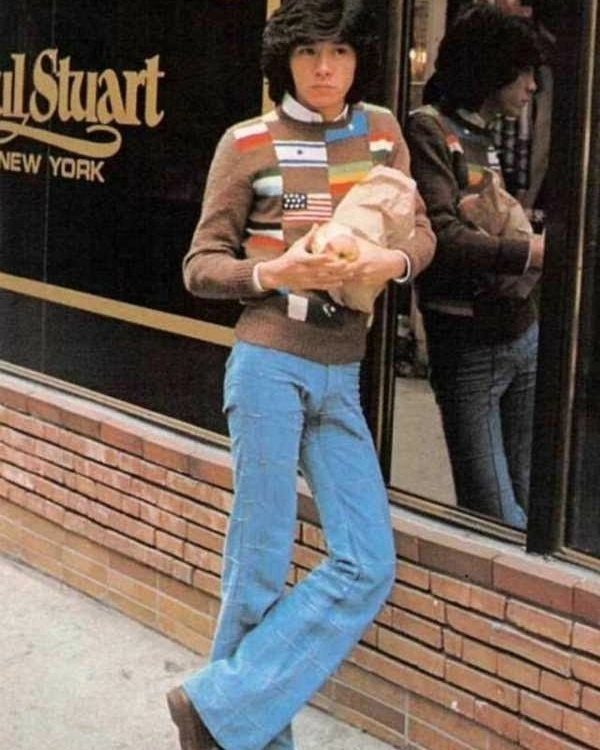
The decade’s silhouettes range from fitted bell-bottoms that require a snug thigh to faux-fur coats that fall to mid-thigh and oversized sunglasses that shift the proportions of the whole face.
Your frame decides which shapes flatter: wide collars and flared hems suit a fitted build, while structured shoulders in a safari jacket or checkered blazer add width to most body types.
1. Shirts with Wide, Unbuttoned Collars
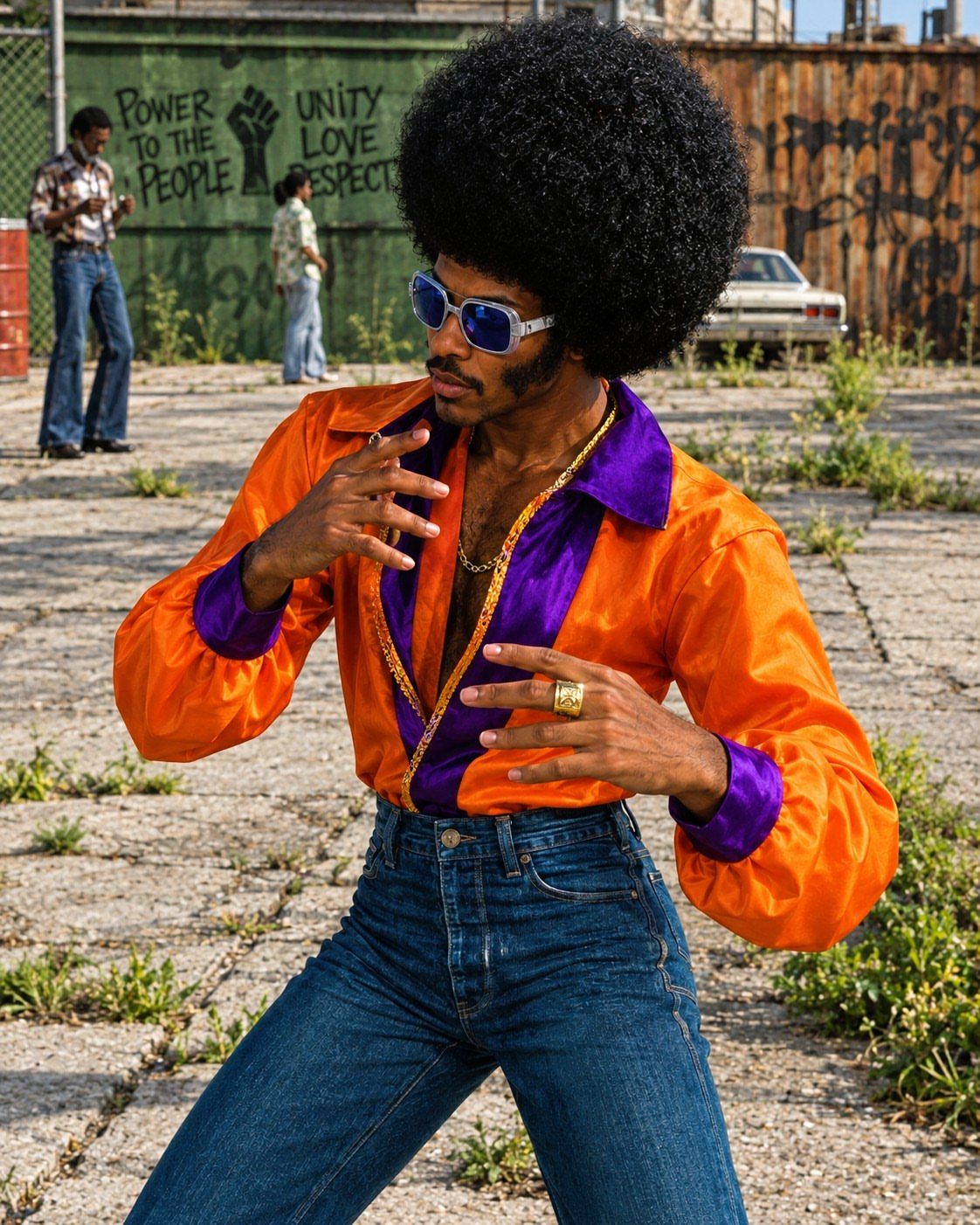
The collar spreads wide across the chest, sitting flat and open rather than folded close to the neck. Leaving the top few buttons undone lets the collar frame the torso and keeps the silhouette relaxed.
This works best over a fitted build.
The width emphasizes shoulder and chest, so a narrow frame can look swallowed. A chain or pendant fills the open collar without competing with it.
Pair it with high-waisted trousers to balance the open neckline and keep proportions clean.
2. Denim Flared Trousers
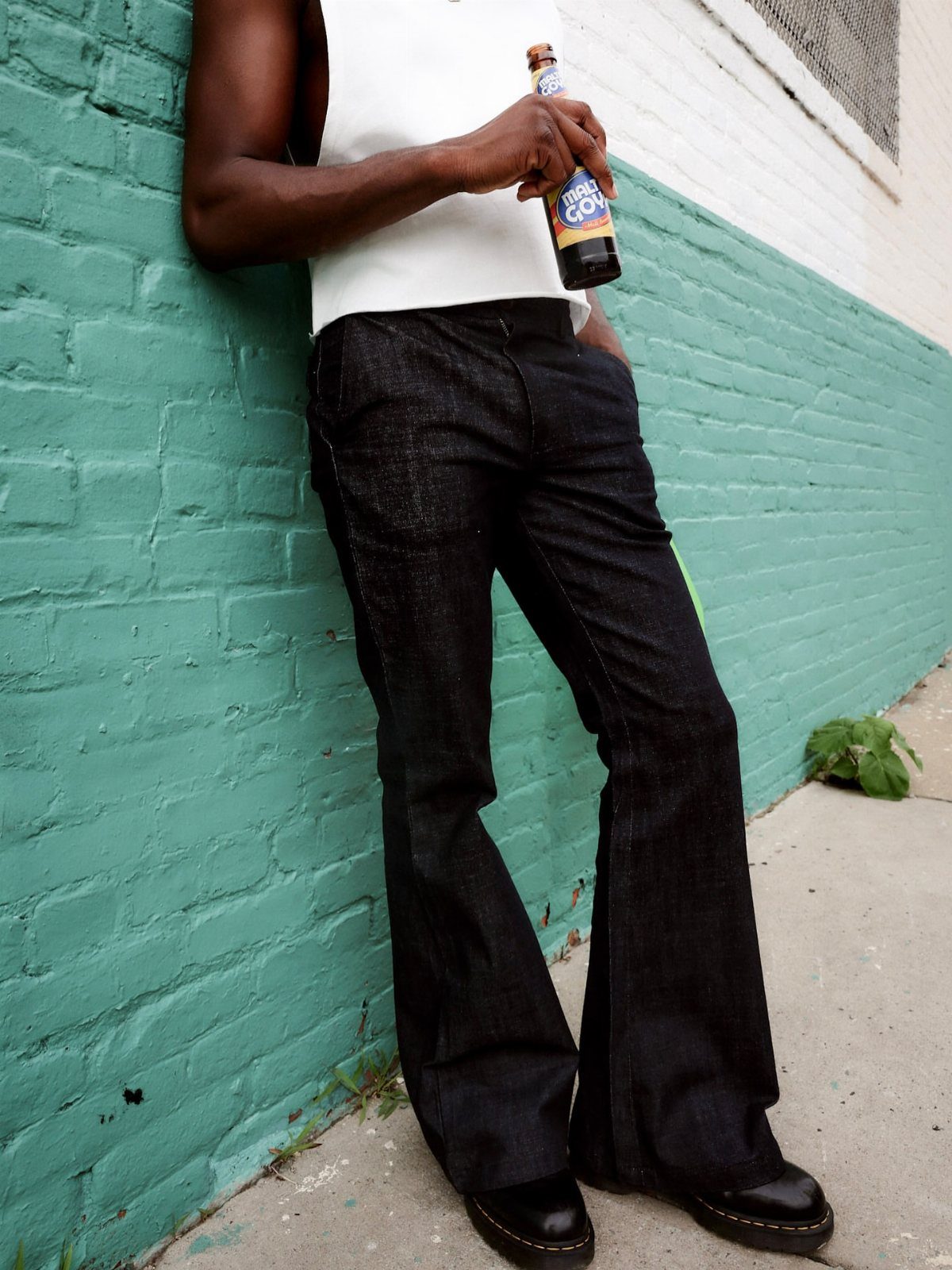
The flare starts at the knee and widens steadily to the hem, where the denim skims the top of the shoe. Dark indigo keeps the look grounded and pairs easily with most colors above the waist.
Fit matters more here than with straight-leg denim.
The thigh and knee should be snug enough that the flare reads as deliberate, not loose everywhere. A rise that sits at or slightly above the natural waist keeps the leg line long.
Wear them with a slim or fitted top. A wide hem needs a counterpoint.
3. Bell-bottom Pants
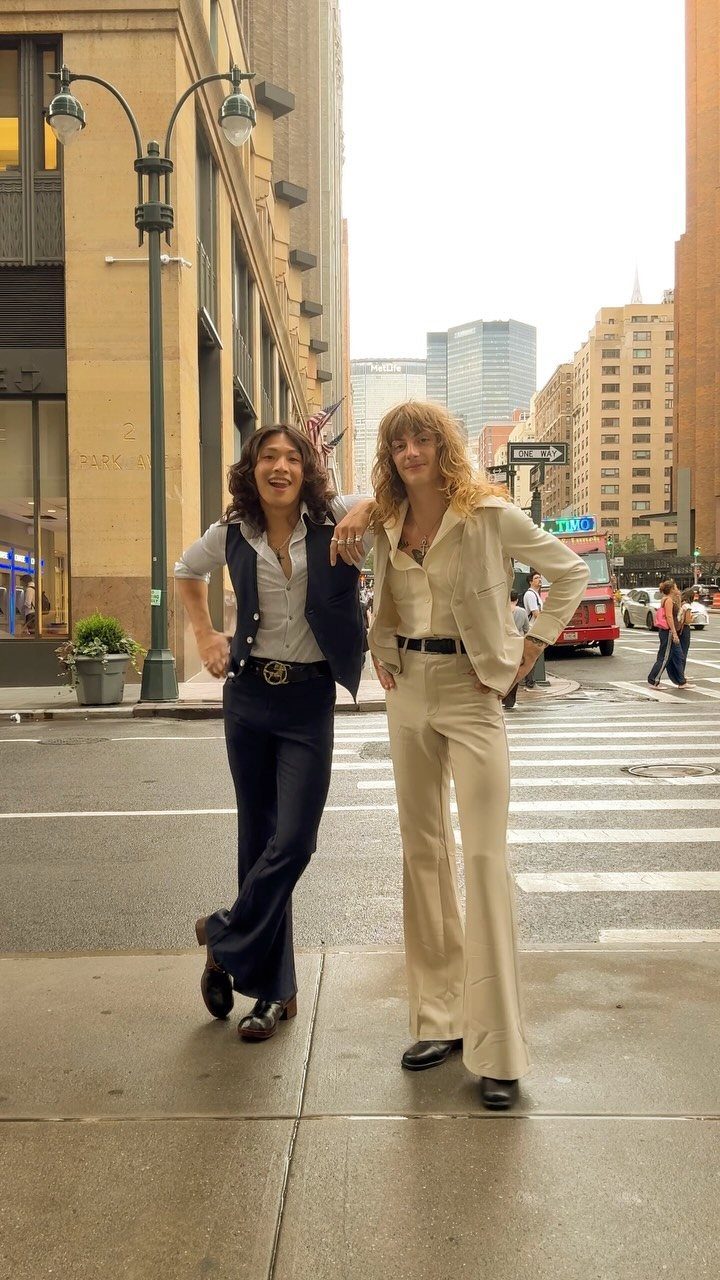
Bell-bottoms flare more dramatically than most 70s trousers, opening wide below the knee. The shape balances a fitted jacket or shirt and works with boots or platform shoes that can handle the volume at the ankle.
Choose a fabric with some weight so the flare holds its shape. Lightweight material collapses and loses the silhouette.
These suit a taller frame best. The exaggerated flare shortens the leg visually, and a shorter inseam makes the proportion harder to pull off.
4. Sweaters and Knitwear
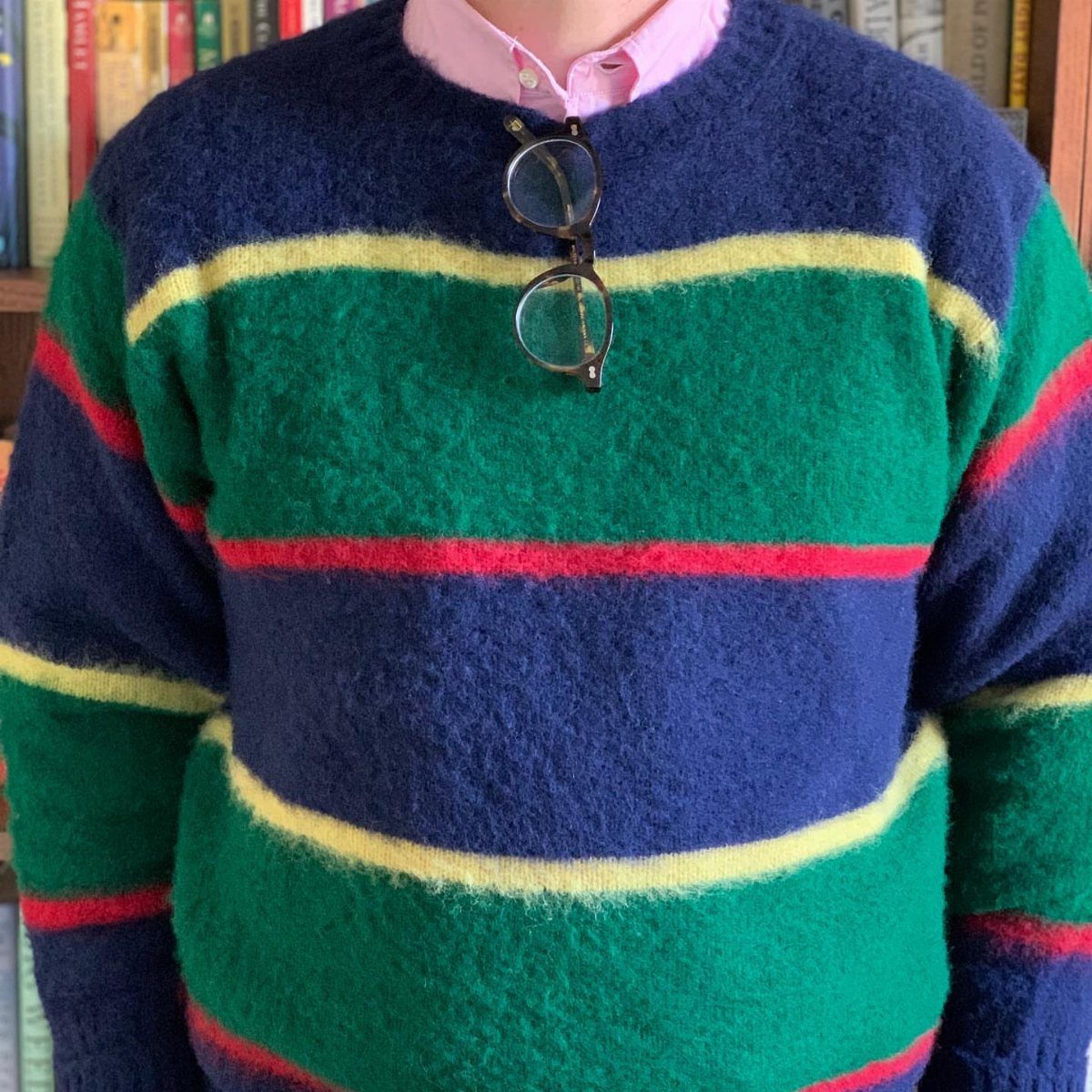
Stripes in multiple colors running horizontally across the body define this approach to knitwear. The pattern is bold and reads from a distance, so the rest of the outfit stays simple.
Layering a collared shirt underneath adds structure and keeps the look from feeling too casual. The collar points frame the neckline and give the sweater something to sit against.
This works when the stripes are evenly spaced and the colors share similar saturation. Mismatched brightness levels look accidental rather than intentional.
5. Oversized Sunglasses
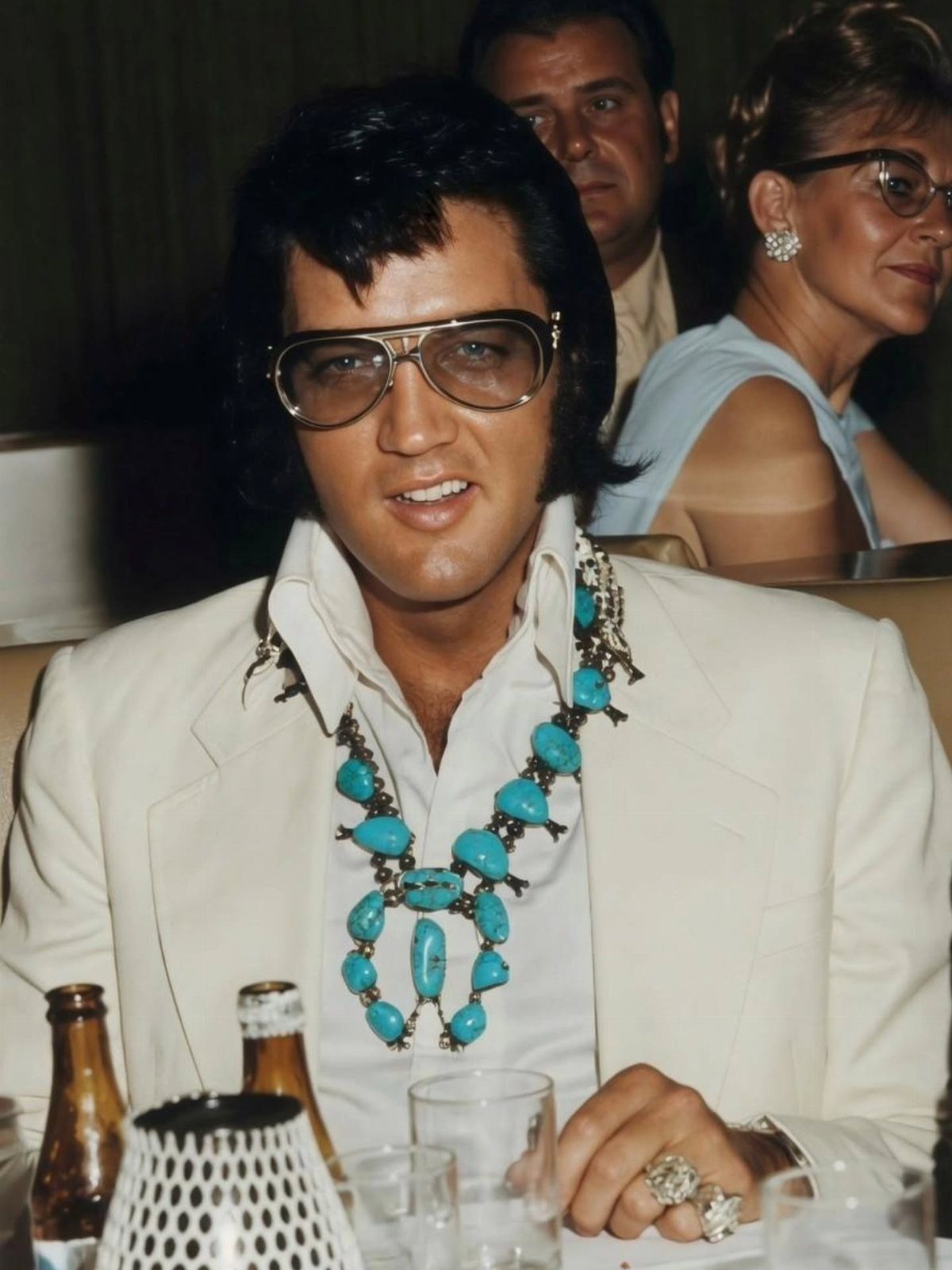
Frames that cover more than half the face define oversized sunglasses from this era. The lenses sit large and often tinted, and the arms are wide enough to read from the side.
These suit a strong or angular face. A rounder face can look dominated by the frame size, so try them on rather than ordering blind.
Gold or tortoiseshell frames feel more authentic to the period than black plastic. Pair them with a collar or lapel wide enough to match the scale.
6. Statement Faux-Fur Coat
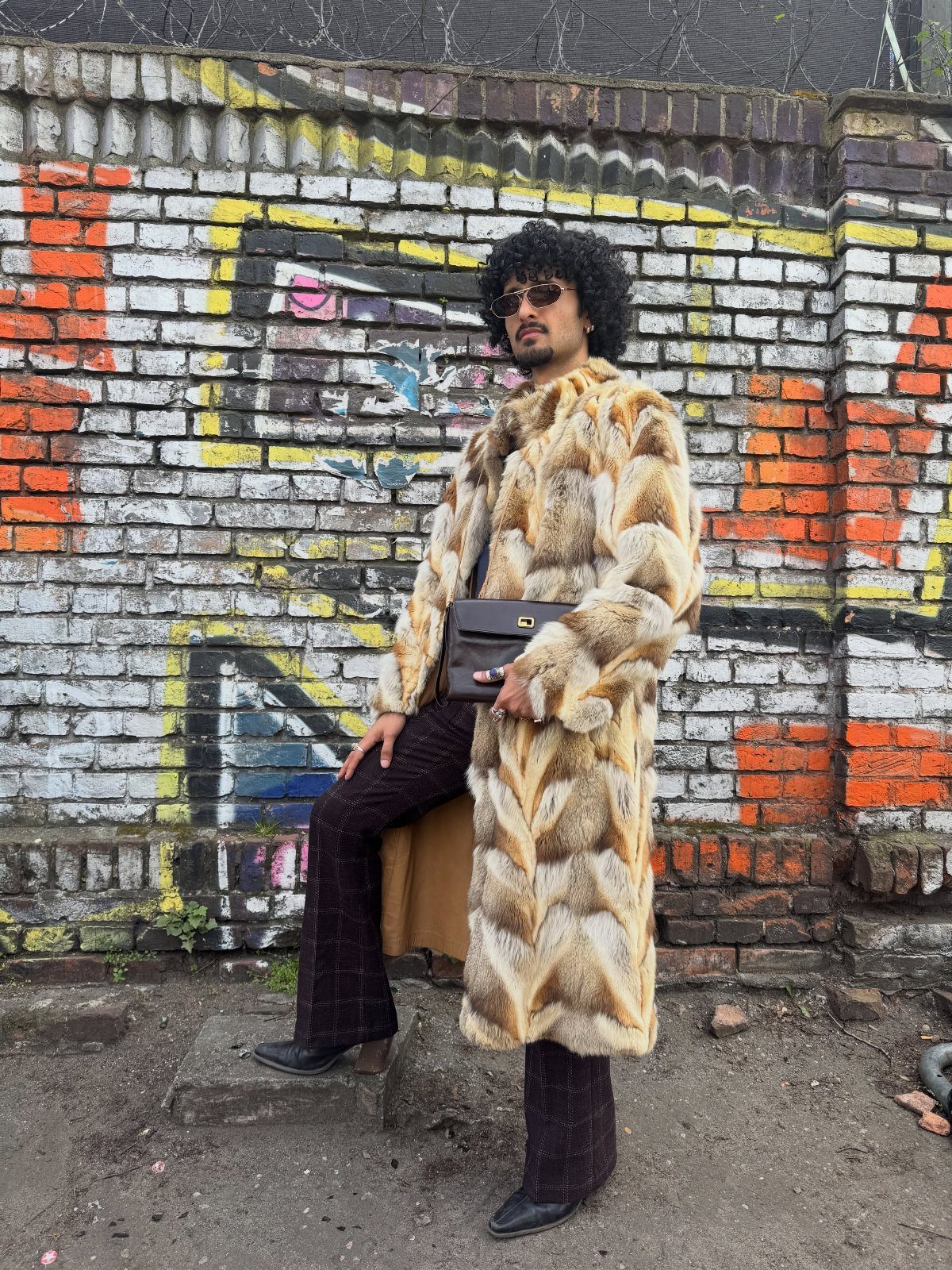
A faux-fur coat in a bold pattern or long pile reads as the centerpiece of the outfit, so everything else steps back.
The length falls below the hip, often to mid-thigh, and the fit is loose enough to layer over a sweater or blazer.
This works best in cooler weather where the coat makes sense functionally, not just visually. In mild temperatures it looks like costume rather than clothing.
Keep the trousers slim or flared but not wide. Too much volume below competes with the coat and loses the shape.
7. Embroidered Western Jackets
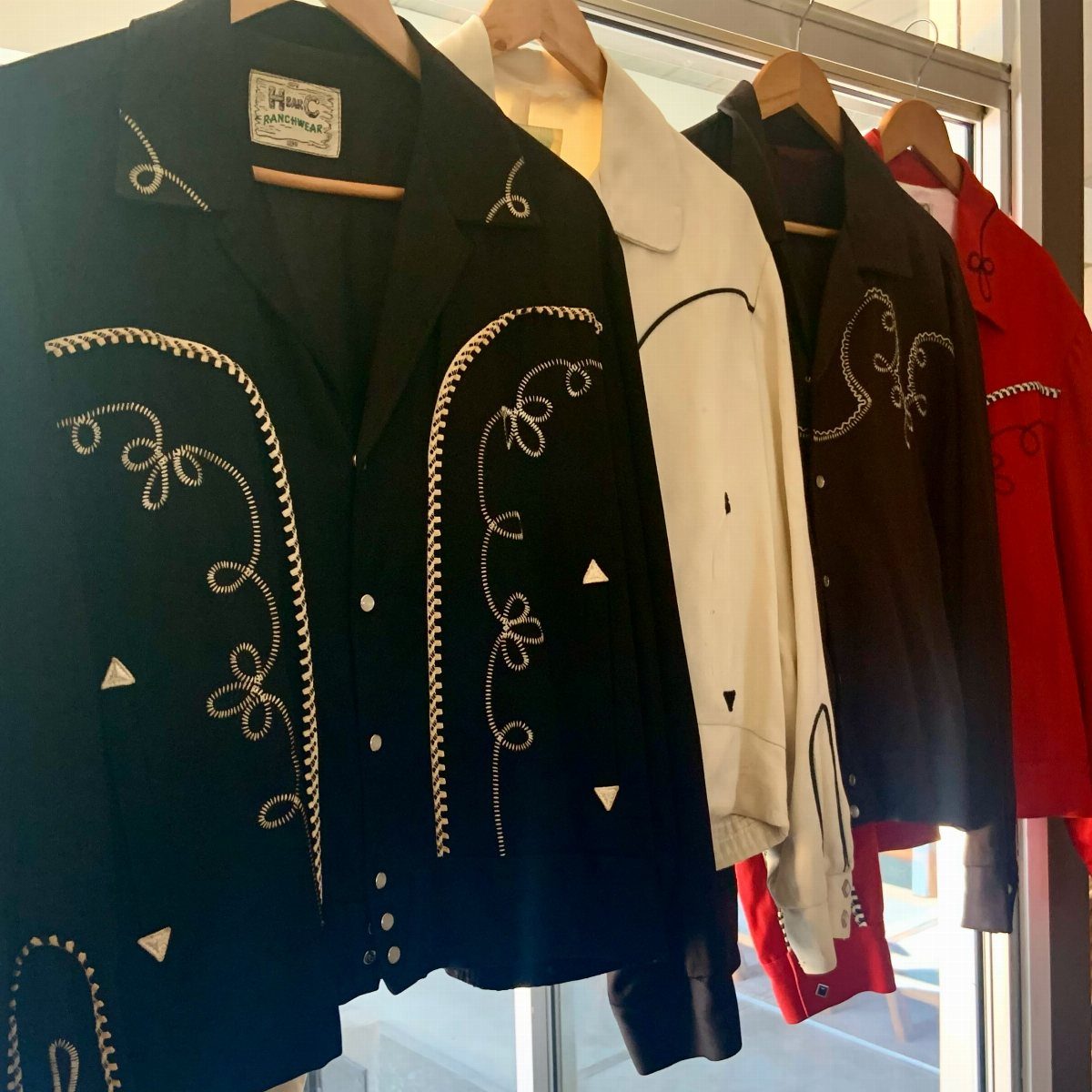
Embroidery runs across the chest and yoke in patterns that catch light and break up a solid field of color. The stitching sits raised, often in contrasting thread, and the collar spreads wide enough to frame the detail.
Black or brown grounds make the embroidery stand out more than lighter bases. The fit should be close through the shoulders so the decoration reads cleanly rather than pulling or bunching.
This pairs best with plain trousers and minimal accessories. The jacket is the focal point.
8. Vintage Safari Jacket
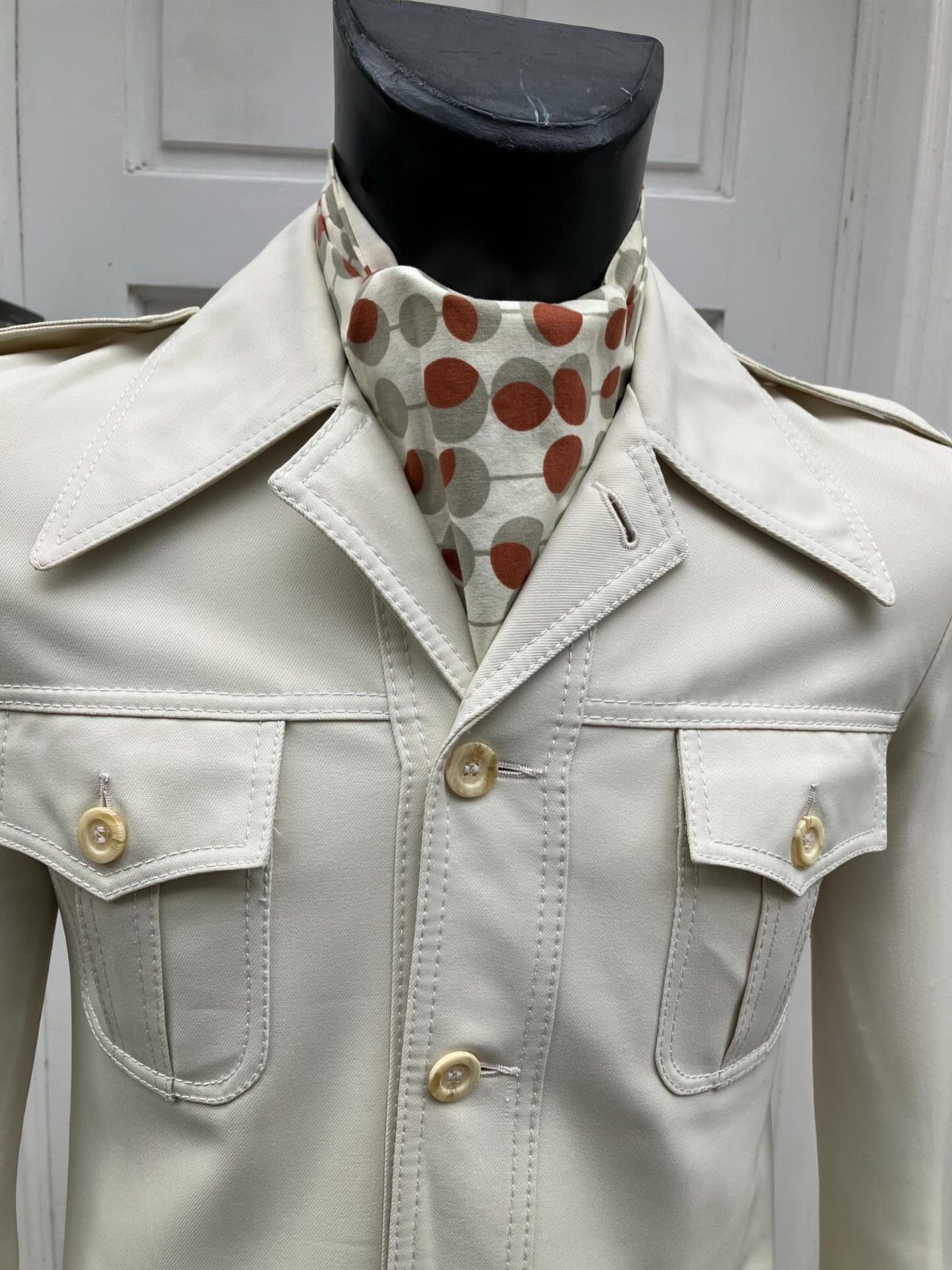
The safari jacket sits structured but light, with patch pockets and a belt at the waist that cinches the silhouette. Cream or khaki tones keep it neutral enough to layer over patterned shirts or a cravat without competing.
The wide collar allows room for a tied scarf or cravat at the neck, which adds color and fills the open space below the chin. Choose one pattern between the two, not both.
Pair it with slim trousers in a darker shade. The jacket’s boxy cut needs a counterpoint at the leg.
9. Checkered Blazer with Wide Tie
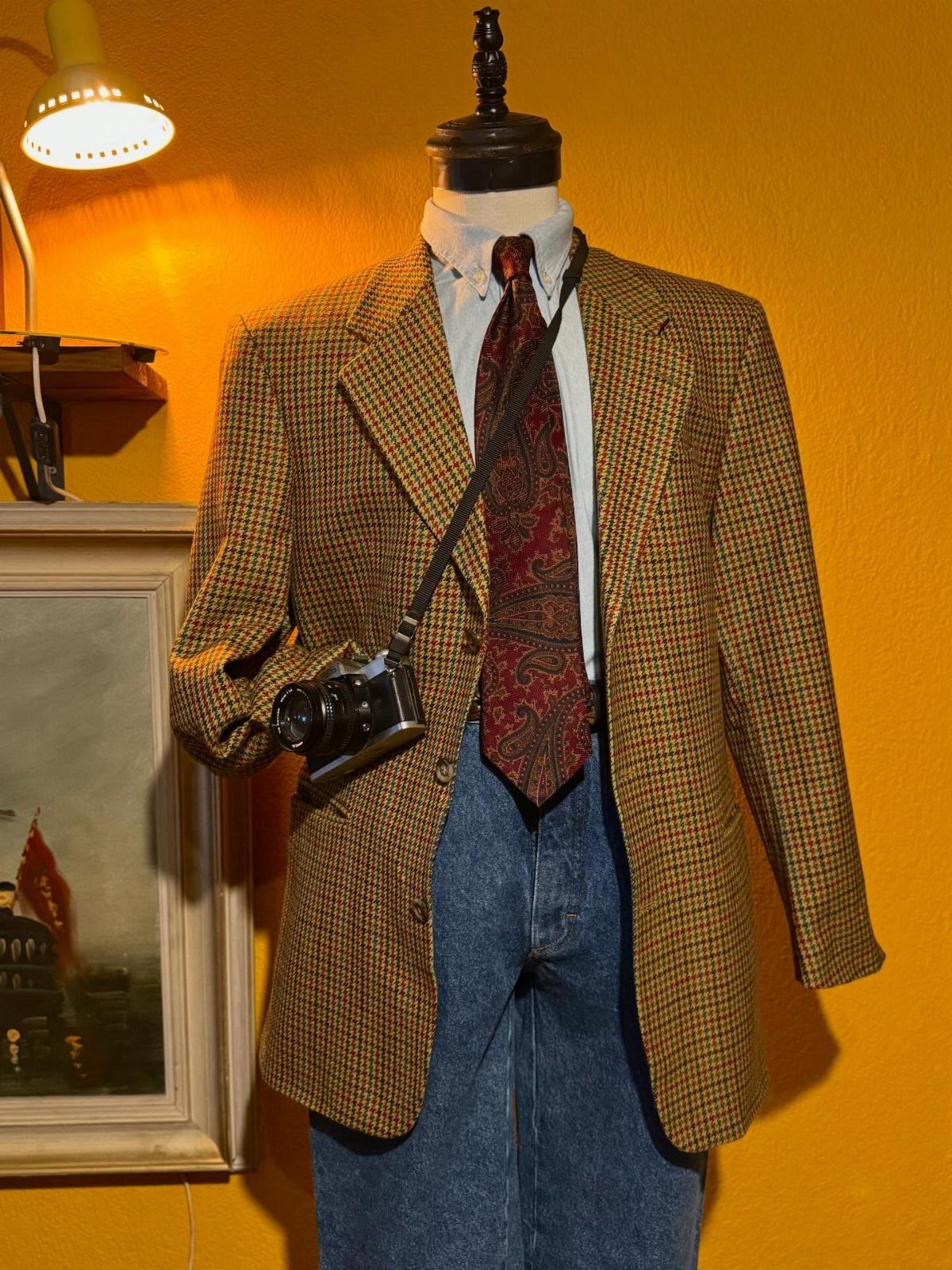
A checkered blazer in brown or rust tones anchors the outfit and reads as tailored without feeling formal. The pattern should be bold enough to see from across a room but not so large that it distorts at the seams.
A wide tie in a solid or small pattern adds a second layer of color without clashing. The tie should end at the belt line, not above or below it.
Too much pattern between the top and bottom loses focus.
10. Classic Brown Leather Jacket
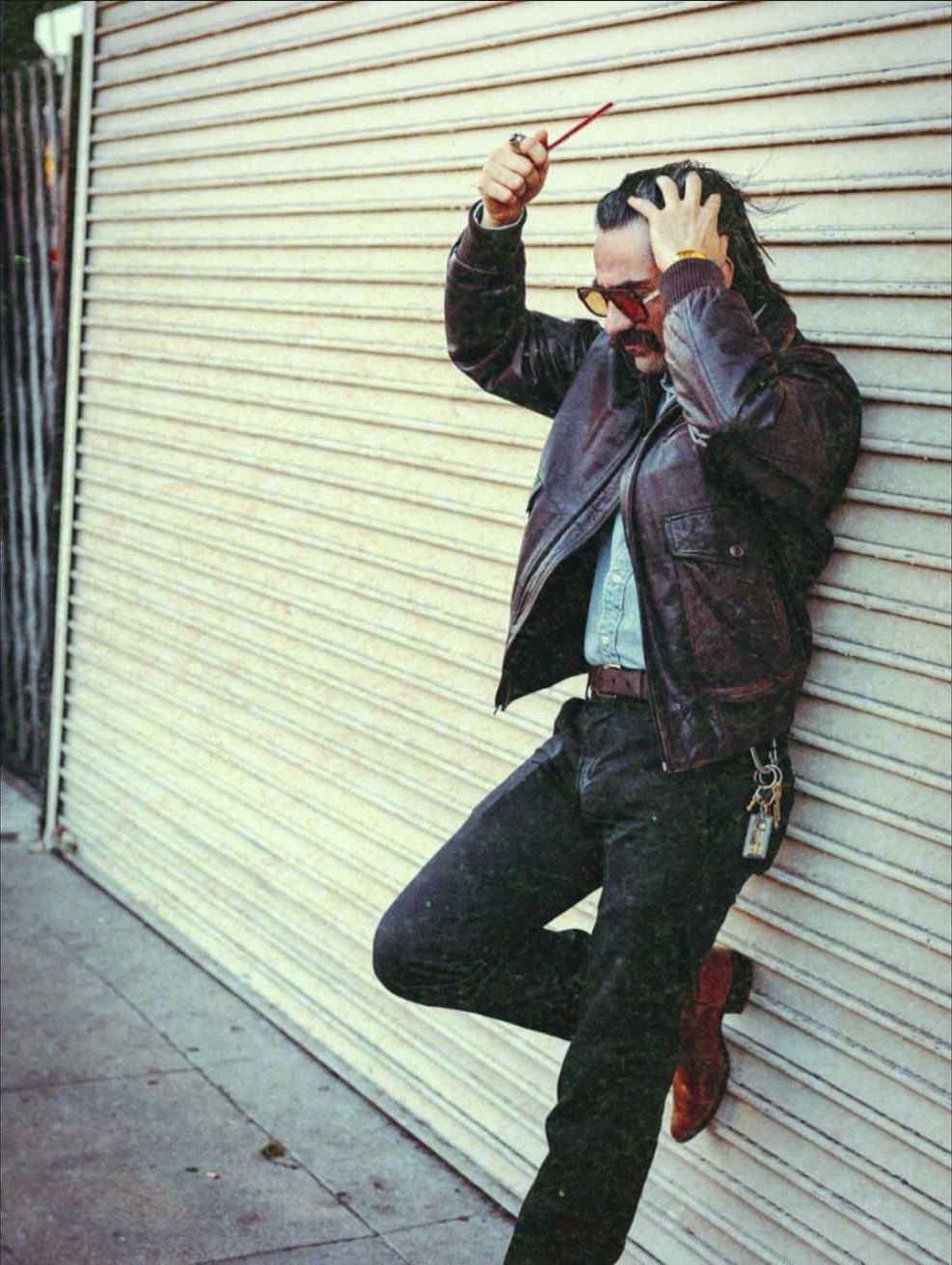
Brown leather softens with wear and develops a patina that reads as age rather than damage. The jacket should fit close at the shoulders and allow room to layer a shirt underneath without pulling.
A collared shirt in light blue or cream balances the darker leather and keeps the look from going too monochrome. Leave the collar open or wear it buttoned, depending on the setting.
This works with most body types. The structured shoulders add width, and the length at the hip keeps proportions even.
Influence of Music and Cinema
Bowie moved through personas that each carried their own wardrobe. Ziggy Stardust brought glitter and futuristic cuts that leaned androgynous and theatrical.
The Thin White Duke pulled back to tailored suits that felt restrained but still distinct. Both used makeup and print in ways menswear rarely allowed at the time.
His influence shows in how 70s style accepted ambiguity.
The decade made room for metallic fabrics, bold color blocking, and silhouettes that borrowed from both sides of the aisle. That openness didn’t come from nowhere: performers like Bowie treated clothing as part of the act, and audiences followed.
Cinema reinforced what music started.
Characters on screen wore wide lapels, leather, and pattern mixing that looked deliberate rather than accidental. The visual medium made the details legible, and men adopted what they saw.
The 1970s fashion scene was also heavily influenced by music, cinema, and socio-political movements, making it one of the most eclectic and experimental periods in men’s fashion history.
Casualization of Fashion
Denim moved beyond workwear and into the wardrobe as a baseline. Jeans, jackets, vests, and shirts all appeared in the same indigo twill, often layered together in ways that would have read as too casual a decade earlier.
Designer labels like Gloria Vanderbilt and Calvin Klein turned jeans into something you bought for the name, not just the function.
The t-shirt stopped being an undershirt.
Graphic prints, slogans, and band logos turned it into a canvas for affiliation and opinion. Worn alone or under an open shirt, it became part of the outfit rather than what sat beneath it.
Tracksuits crossed over from the gym into daily wear as fitness became mainstream and athletes gained visibility as style figures.
Synthetic fabrics like polyester and nylon made lightweight, low-maintenance pieces possible, from windbreakers to knit tops that didn’t wrinkle or fade as quickly as natural fibers.
Cultural Influences
Civil rights movements and environmental awareness both left marks on how men dressed.
Activism showed up in printed slogans, earth tones borrowed from counterculture, and a broader rejection of rigid dress codes that had long separated class and race. Clothing became a signal of where you stood.
Natural fibers and handmade details gained favor among those aligned with environmental causes.
The aesthetic favored unfinished edges, raw denim, and workwear silhouettes that suggested utility over decoration. It was a reaction to synthetic overproduction and the corporate sameness of the previous decade.
These movements didn’t create a single uniform, but they shifted what was acceptable. The result was a wider range of acceptable dress for work, social settings, and public life.
Frequently Asked Questions
How did men dress up in the 1970s?
Men wore wide-collared shirts left partially unbuttoned, flared or bell-bottom trousers, and bold patterned blazers in checks or stripes.
Platform shoes, oversized sunglasses, and statement pieces like faux-fur coats or embroidered western jackets completed dressier looks. The silhouette favored open necklines, high waists, and dramatic leg flares that balanced fitted tops.
What did men wear to Studio 54?
Shiny fabrics, flared trousers, and platform shoes defined disco dressing at Studio 54.
Men paired fitted shirts with bold patterns or wide collars with high-waisted pants that flared at the ankle. The look leaned toward pieces that caught light and moved well on the dance floor.
Who were the fashion icons of the 70s?
Bowie moved between extremes, glitter and platforms for Ziggy Stardust, then pale shirts and waistcoats when he became the Thin White Duke.
Films fed the trend back to the street: wide lapels, leather jackets and clashing prints moved from the screen into regular rotation.