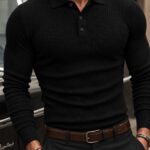

Classic men’s casual pieces span oxford cloth button-downs and fisherman’s sweaters to leather jackets and suede derbies, each one sitting cleanly between the formality of suiting and the slackness of athletic wear.
The choice depends on how much structure you need: tailored blazers and leather shoes give you the most, heavyweight flannel and dark denim sit in the middle, and textured knits over a tee land at the informal end without appearing lazy.
1. Oxford Shirt

An oxford cloth button-down in stripe or solid color pairs with chinos, dark denim or tailored trousers and moves between lunch and evening without the fuss.
The fabric has a slight texture that reads less formal than poplin but holds shape better than jersey, and the button-down collar sits cleanly under a sweater or worn open on its own.
Fit through the shoulder and chest matters more than sleeve length, which you can roll.
Light blue and white stripe are the safest buys; both work with navy, olive, tan and grey.
2. The Fisherman’s Sweater
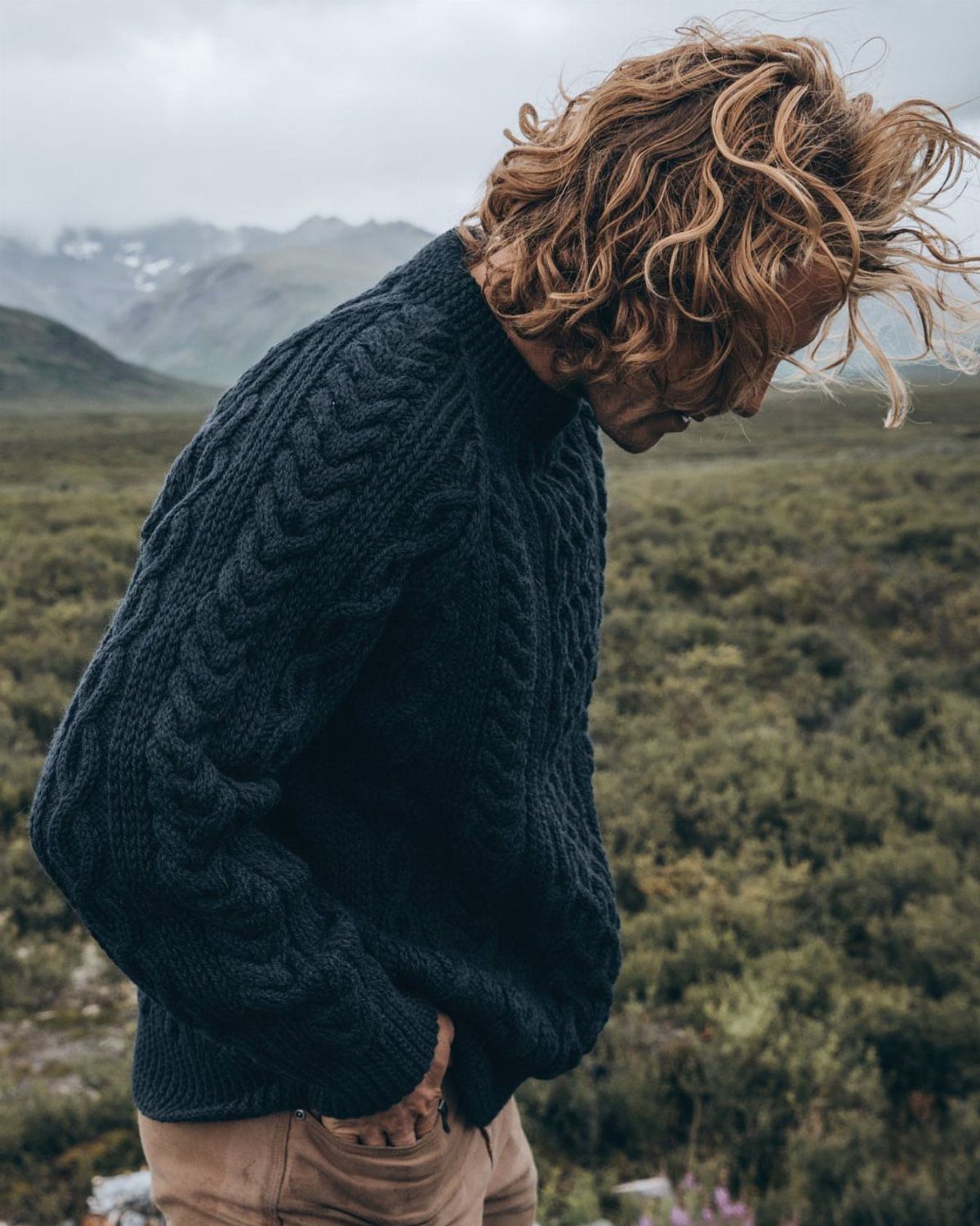
A cable-knit sweater in wool gives you the structure of a jacket without the formality, and the texture photographs better than flat jersey.
Irish fisherman sweaters were originally knit in unscoured wool that kept its natural lanolin, which shed water.
Modern versions in merino or lambswool are softer but lack that weight. If you want something closer to the original, look for Aran knits from Ireland or thick-gauge cable knits from Scottish mills.
Navy and cream are the most common colors. Both layer over an oxford shirt or tee and sit well with denim or moleskin trousers.
3. Blazer
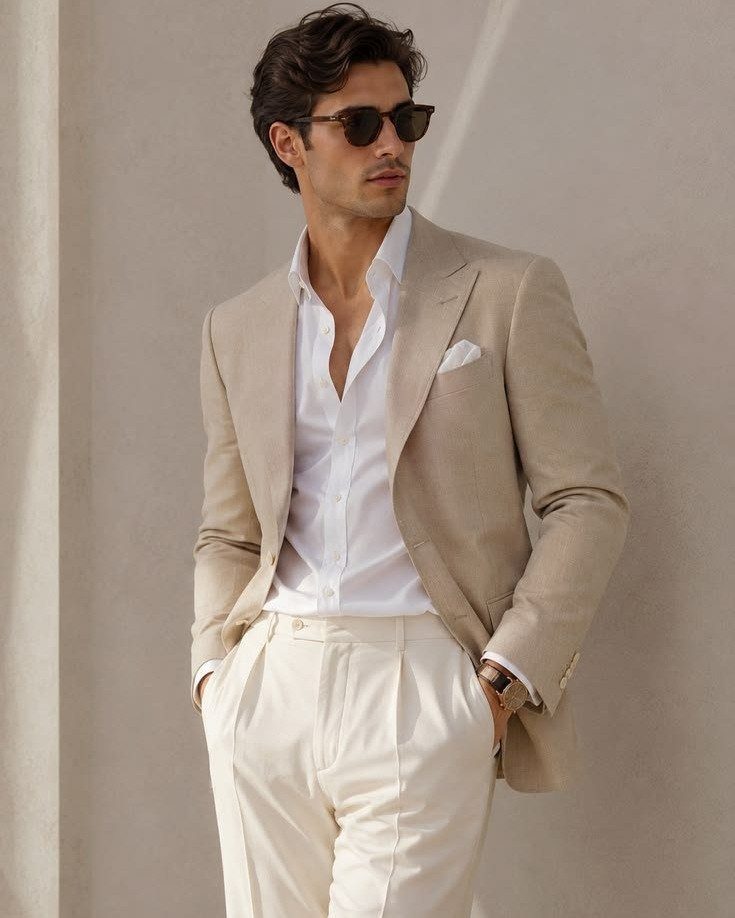
A blazer in cotton, linen or unstructured wool lets you dress up a tee or dress down a dress shirt, and the tailored shoulder changes the read completely.
Beige, tan and navy are the 3 colors that pair with nearly everything you already own.
Patch pockets and softer construction keep it from looking like orphaned suiting. Single-breasted with 2 buttons is the most flexible cut.
The fit should allow a sweater underneath without pulling at the button. If the shoulders sit past your natural shoulder point or the waist buttons strain, size down or have it taken in.
4. Fit Matters
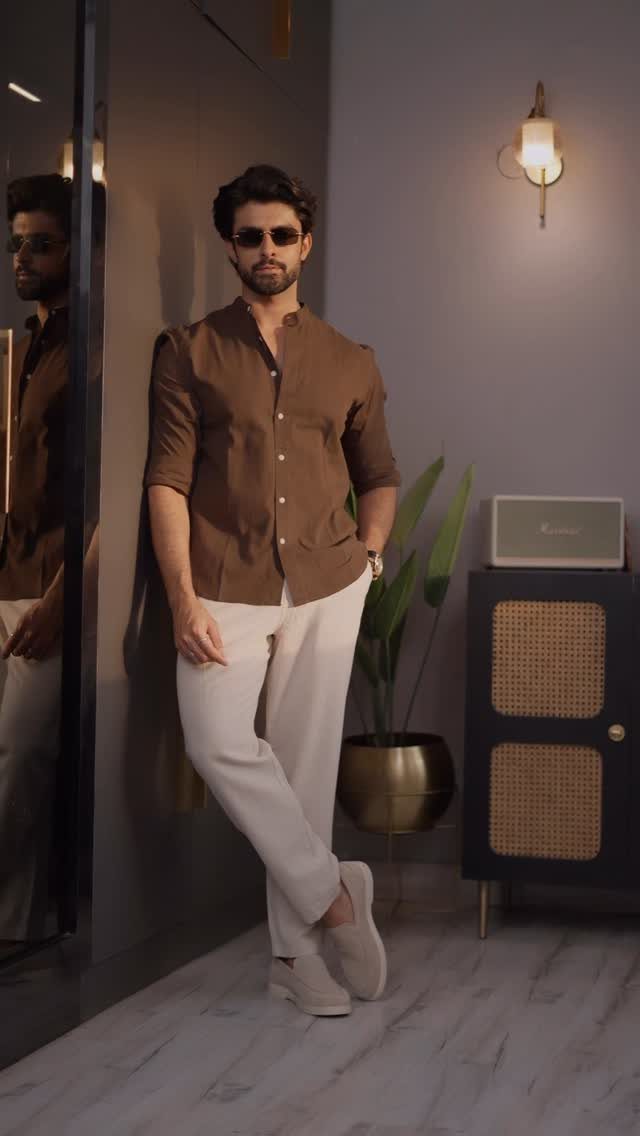
Clothes that fit your actual frame will always look better than expensive pieces that pull, bunch or hang loose in the wrong places.
Shoulders should end where your shoulder ends, not drape past it. Sleeves on a shirt or jacket should hit at your wrist bone, and trouser hems should rest on your shoe with one break or none.
A tailor can shorten sleeves and hems, take in a waist, and taper legs for a reasonable fix.
If something fits well in the shoulders and chest, the rest can usually be adjusted. If it doesn’t, move on.
5. Flannel Shirts
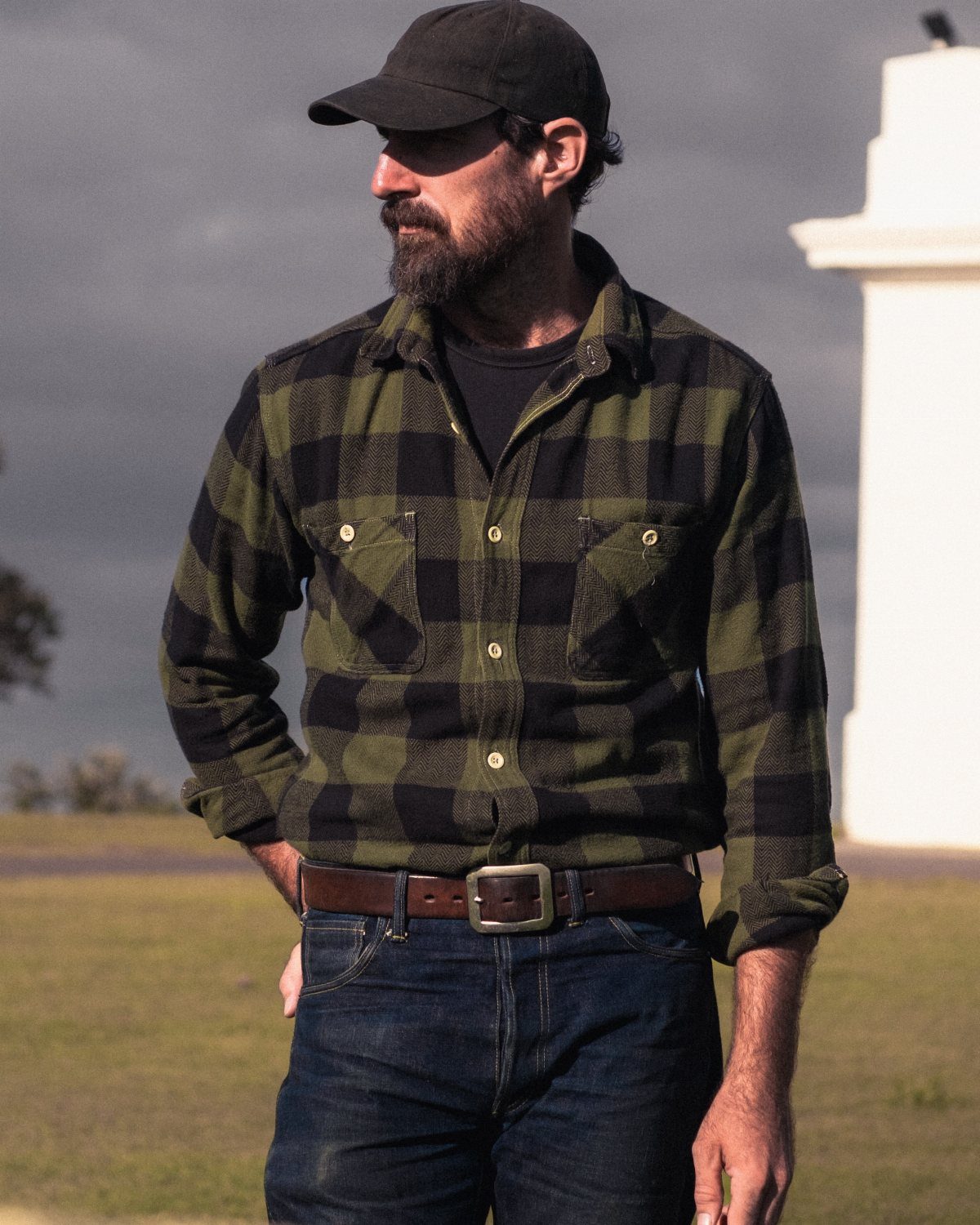
Flannel shirts in heavyweight wool or cotton give you an outer layer that works over a tee or henley when a jacket feels like too much.
The fabric was originally a coarse wool worn by Welsh farmers in the 1500s, and the modern versions still carry that workwear weight.
Heavier flannels hold their shape better and last longer than the thinner versions sold as casual dress shirts.
Green, black, grey and burgundy checks pair cleanly with dark denim or canvas pants.
6. Denim
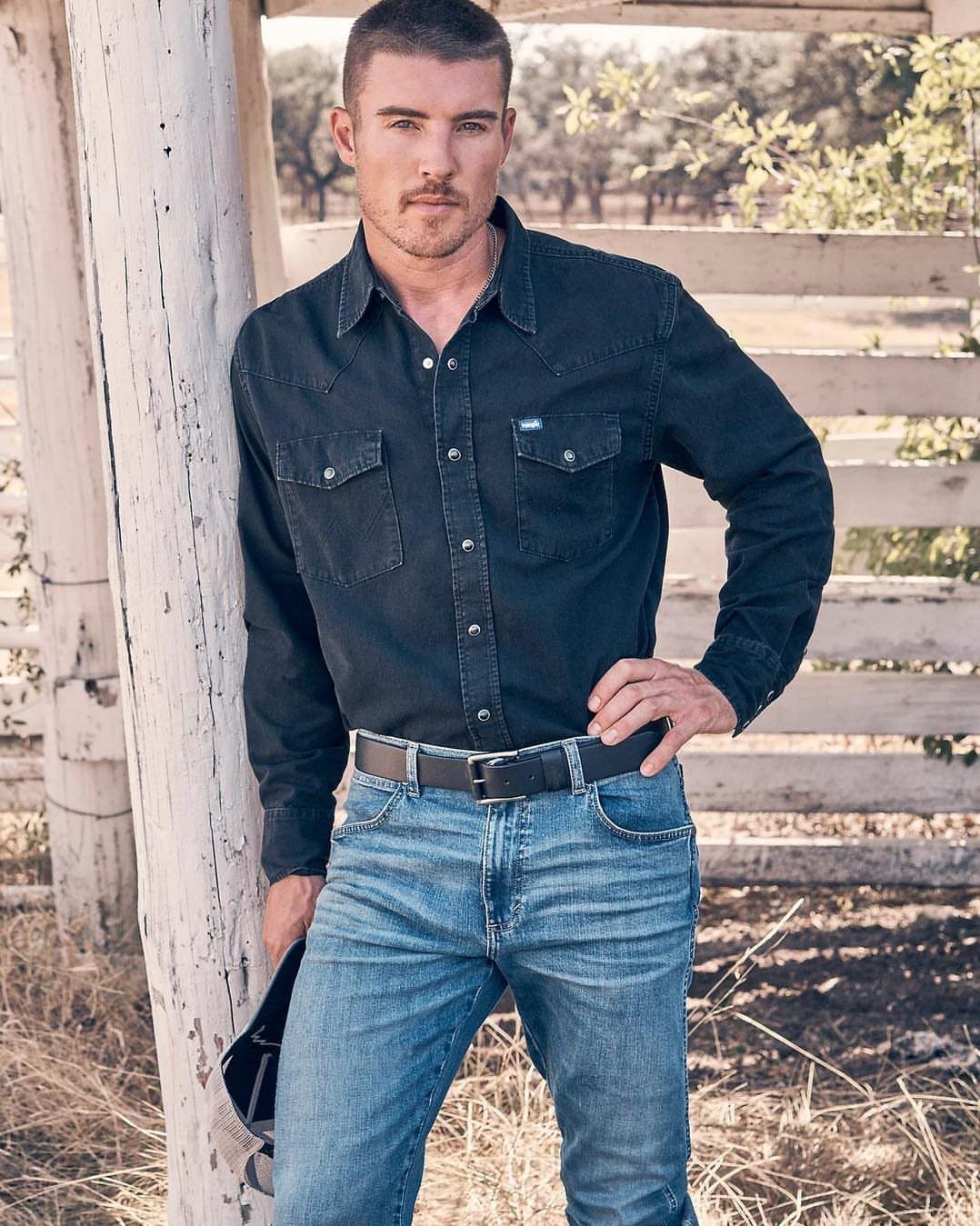
Jeans in a straight or slim cut are the most reliable casual trouser you can own, and raw or selvedge denim ages better than pre-distressed fabric.
Dark indigo with minimal fading works with nearly any top and reads smarter than light wash.
A mid-rise that sits at your natural waist avoids the bunching you get with low-rise cuts, and a hem that breaks once or not at all keeps the line clean.
Fit matters more than brand. The waist should sit flat without a belt pulling it tight, and the thighs should allow movement without excess fabric.
7. Leather Jackets
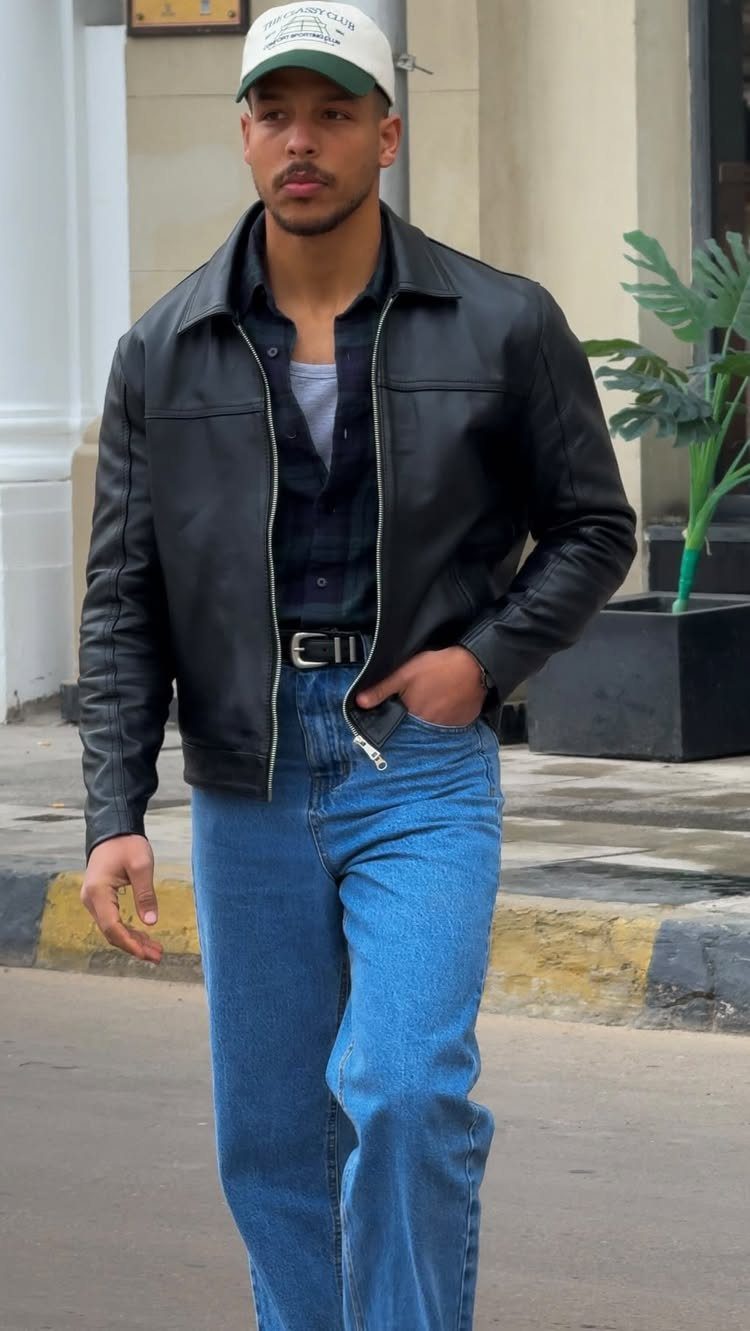
A black leather jacket layers over a shirt or sweater and pairs with jeans, chinos or dark trousers without looking out of place.
The cut should fit close through the shoulders and chest but allow a thin layer underneath. Length matters: the hem should hit at your hip bone, not past it.
Black is the most reliable color and works with nearly everything you own.
8. Suede Derby
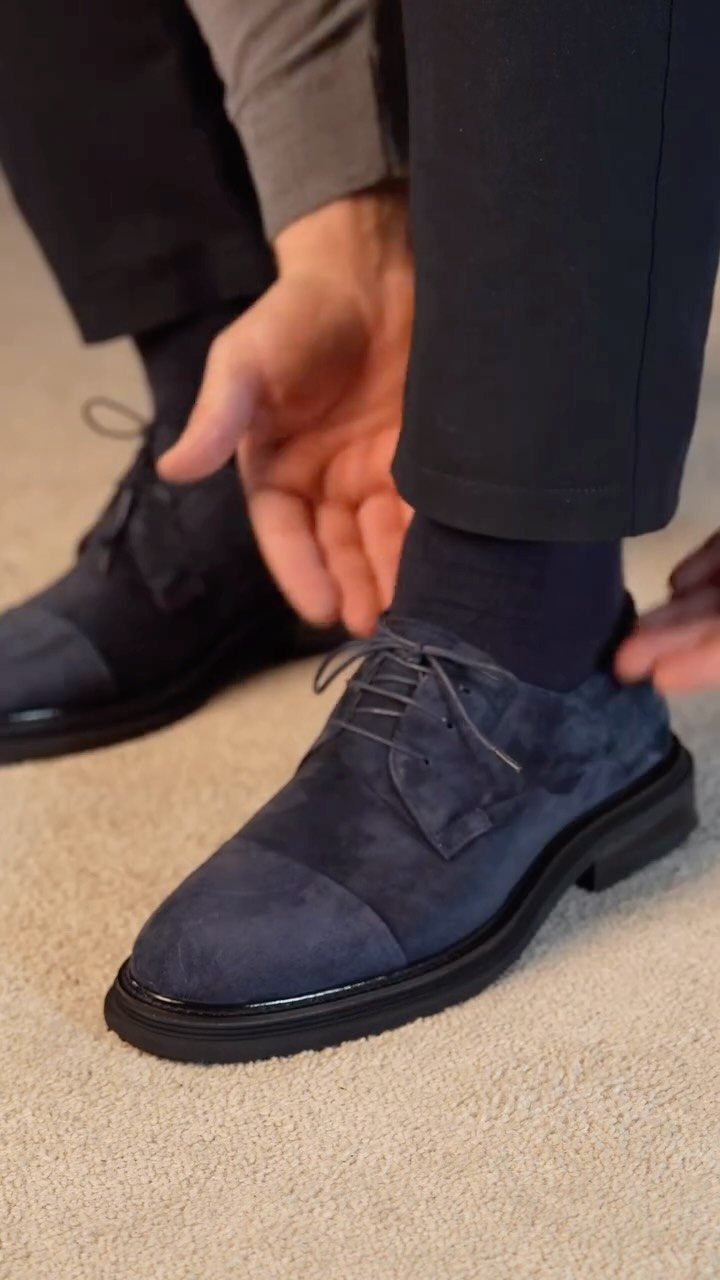
The Derby’s open lacing sits lower and less formal than an Oxford, and suede softens it further while keeping more structure than a sneaker.
Navy, brown and grey are the colors that pair cleanly with chinos, wool trousers or dark denim. The suede texture adds visual interest without pattern, and it wears in better than it wears out.
A rubber sole gives you more grip than leather and reads slightly more casual.
9. Black Tops with Lighter Pants
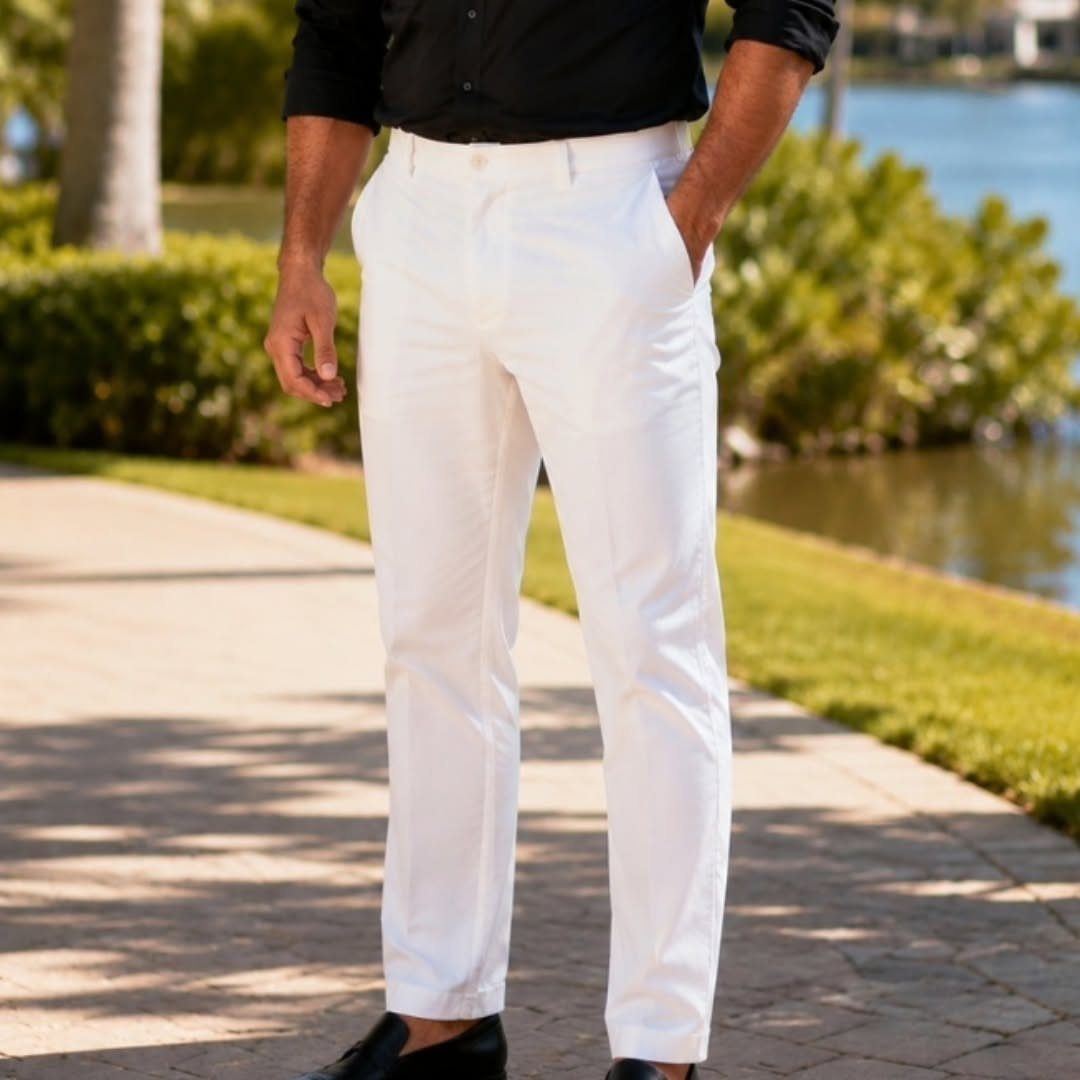
Black on top with white, beige or light grey trousers gives you high contrast without the formality of matching jacket and trousers.
The pairing works because the dark color anchors the outfit and makes lighter bottoms feel intentional rather than washed out. A black button-down, polo or tee all do the job.
Fit still matters: the trousers should sit at your natural waist and the shirt should not billow at the hem.
10. Smart Casual Essentials

Button-down shirts, chinos and leather shoes cover most smart casual situations when you pair them cleanly.
Maroon, navy and olive shirts give you more range than white or light blue alone, and beige, grey or navy trousers work with all three. Leather derbies or loafers finish the look without tipping formal.
Keep the fit close but not tight, and skip logos or loud patterns.
Think of the smart casual dress code as a contemporary extension of your classic smart wardrobe.
— Esquire
Importance of Casual Style
Casual style has become the default in most social and professional settings, and knowing how to wear it well gives you more freedom without the appearance that you stopped trying.
The shift away from strict dress codes means you can move through your day in clothes that fit the situation without carrying a change of outfit.
A well-chosen casual wardrobe lets you meet friends, run errands, and show up to most workplaces in the same piece without looking out of place.
Casual covers a wide range, and not all of it reads well. A coherent outfit built from simple pieces that fit will always look better than expensive items thrown together without thought.
When to Wear Casual Style
Casual style works in most modern settings, but reading the room matters more than following a fixed rule.
Most offices, social events, and public spaces now accept casual dress, but the level of formality shifts depending on context.
The line between casual and sloppy sits at fit and coherence.
Mastering Casual Style
Building a casual wardrobe around a small set of staples that pair well with each other makes getting dressed faster and gives you more range from fewer pieces.
Start with neutral colors like navy, grey, tan and olive, which work together without needing to match exactly.
A few shirts, trousers, and one or two outer layers in those tones will give you dozens of combinations that look intentional rather than accidental.
Fit and fabric quality matter more than variety. 3 shirts that fit well and hold their shape will serve you better than 10 that pull or sag, and you will wear them more often because they already work.
Frequently Asked Questions
How to dress casual but classy for guys?
Build outfits from staples that fit well and pair cleanly: an oxford shirt or cable-knit sweater with chinos or dark denim, finished with suede derbies or a blazer when you need more polish.
Stick to navy, grey, tan and olive because they sit together naturally, and pay more attention to how a piece fits than which label made it.
The shoulder seam lands at the edge of your shoulder, the sleeve stops at your wrist bone, and trousers break once on the shoe or not at all.
What is smart casual?
Smart casual sits between formal and fully relaxed: polished enough to show effort, but not as strict as suiting.
An oxford shirt, chinos and leather shoes handle most of it, and you can layer a blazer or sweater when the setting calls for more.
The goal is to look intentional rather than accidental, with clothes that fit your frame and pair coherently.
Can you wear jeans as part of smart casual?
Yes, but stick to dark indigo with minimal fading and skip any distressing or loud details. Sit the waist where your waist actually is, and let the hem break once or stop short.
How should a 50 year old man dress casually?
The same staples work across ages: an oxford shirt, cable-knit sweater, dark denim or chinos, and a blazer or leather jacket when you need an outer layer.
Fit matters more than trying to dress younger or older, so shoulders should sit at your natural shoulder point and trousers should rest cleanly at your shoe.
Navy, grey, tan and olive do more together than anything bright or branded, and they age better too.