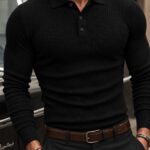
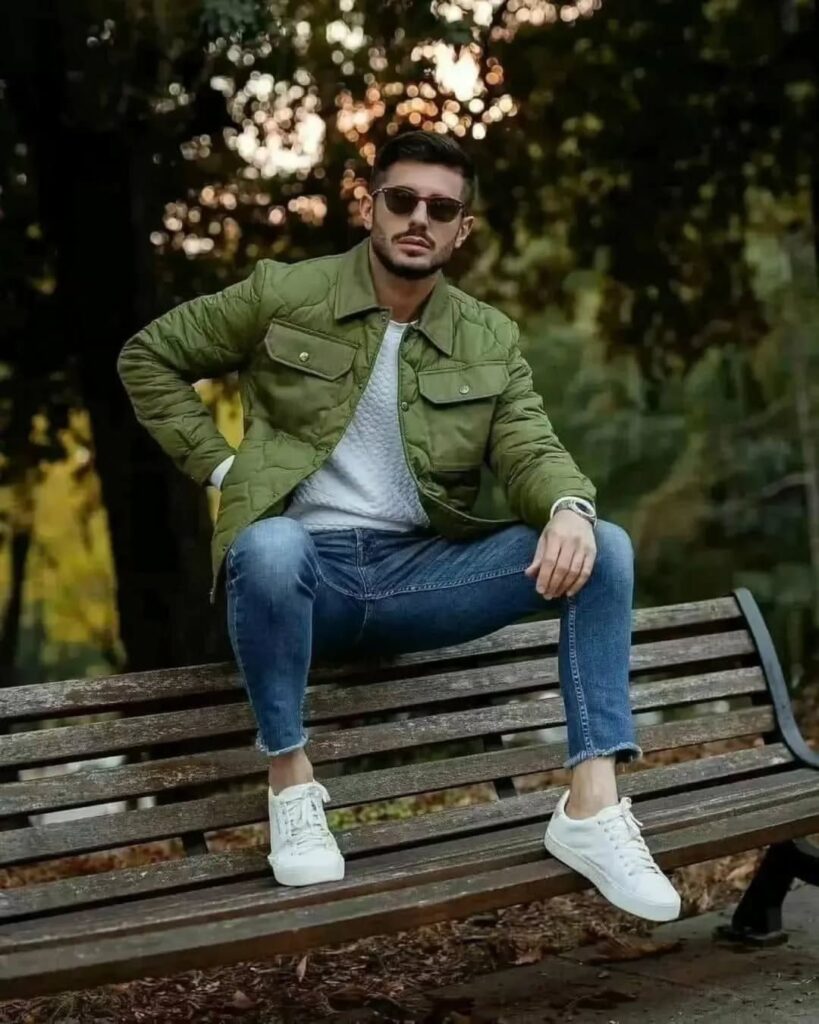
Casual chic for men sits between a plain tee and a full suit, covering everything from a polo with dark jeans to a quarter-zip with light trousers or a grey plaid blazer over an open-collar shirt.
The setting decides which end of that range you need: coffee or casual Fridays call for a fitted polo and white sneakers, while dinners or client meetings in creative industries ask for a blazer and leather shoes.
A knit vest over a white tee adds texture without bulk in warm weather, and an open button-down layered the same way keeps the placket visible without adding a full jacket.
1. THE POLO
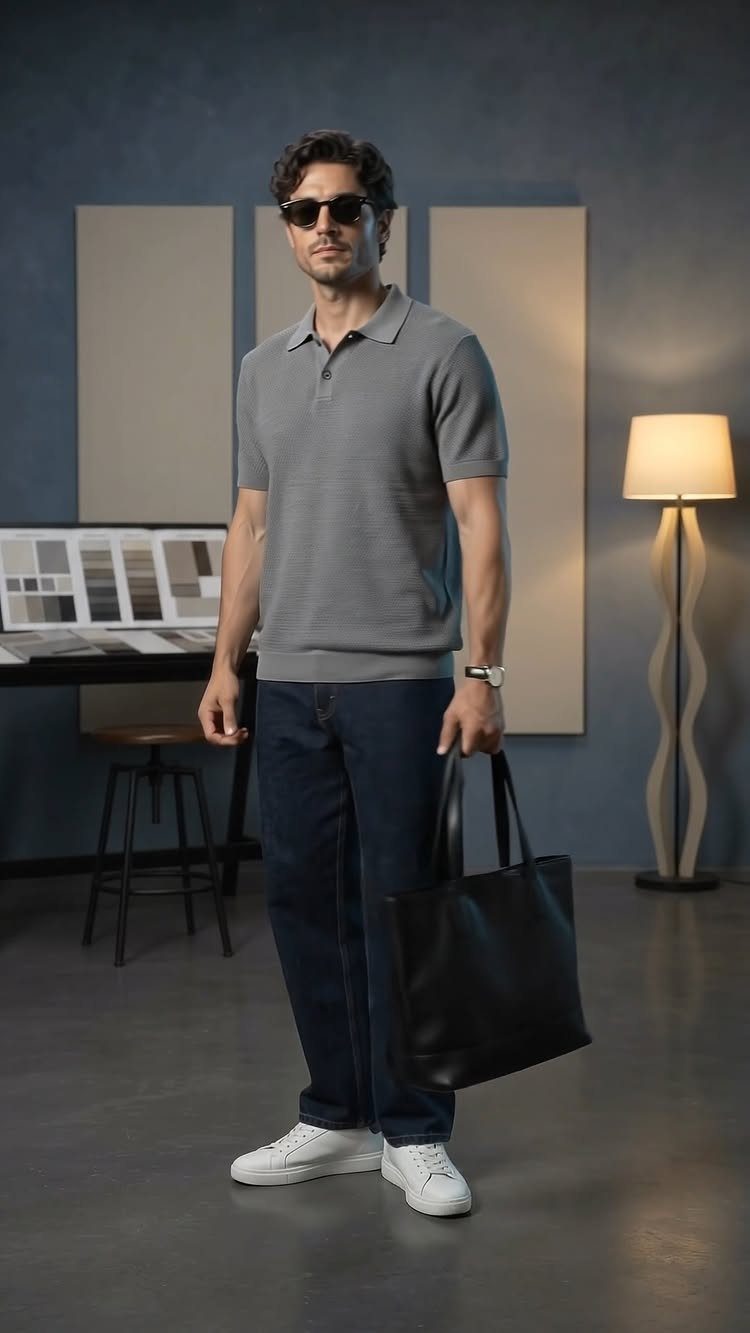
A polo shirt bridges the gap between a casual tee and a button-down, making it one of the simplest upgrades you can make. Stick with solid colors in grey, navy, or black for maximum versatility.
The fit matters more than most people think.
Look for a polo that sits close to your body without pulling across the chest or stomach. Sleeves should end mid-bicep, not halfway to your elbow.
Dark jeans or chinos and white sneakers give you a clean, put-together outfit for coffee, casual Fridays, or weekend plans. A black tote bag keeps the outfit practical without making it too formal.
2. The Classic
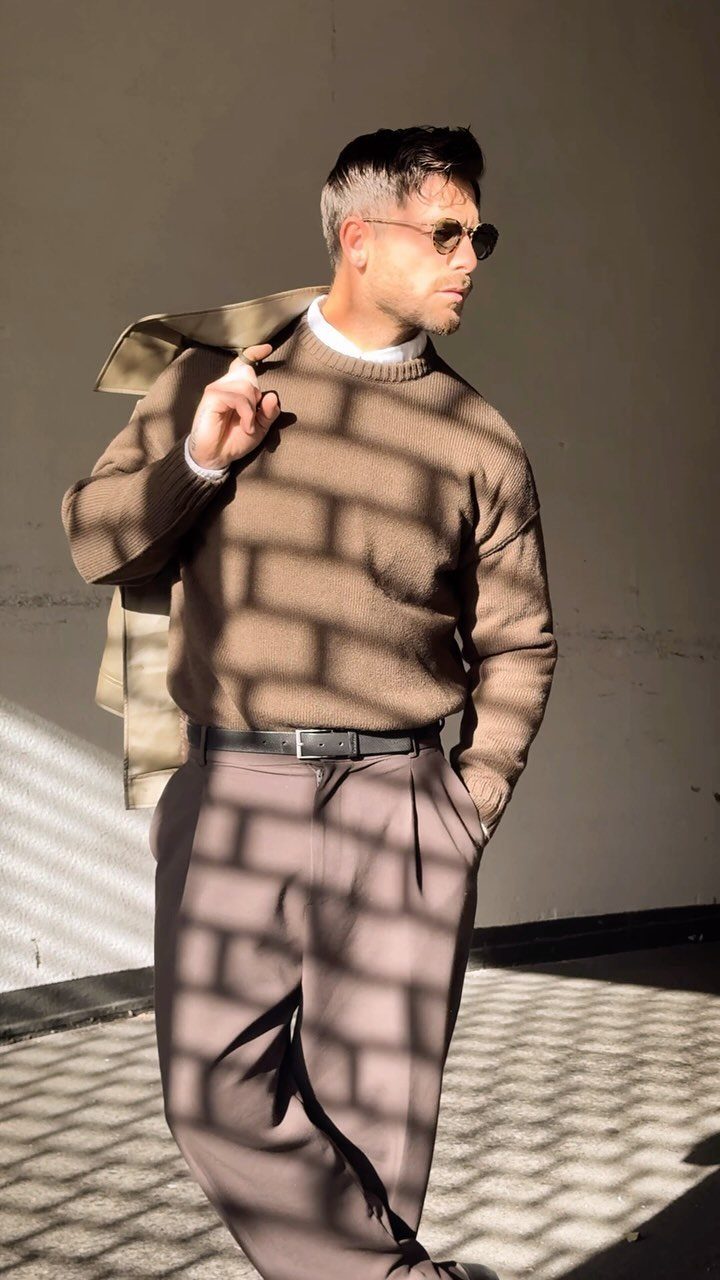
A brown sweater and matching trousers create a tonal look that feels polished without trying too hard. The formula works because the pieces share a color family but differ enough in texture to avoid looking like a suit.
Layer a beige or tan coat over your shoulder when you need an extra piece but don’t want to commit to wearing it. This keeps the outfit from feeling too buttoned-up while still looking intentional.
Sunglasses finish the look and add a bit of edge to an otherwise simple outfit.
3. Layering Techniques
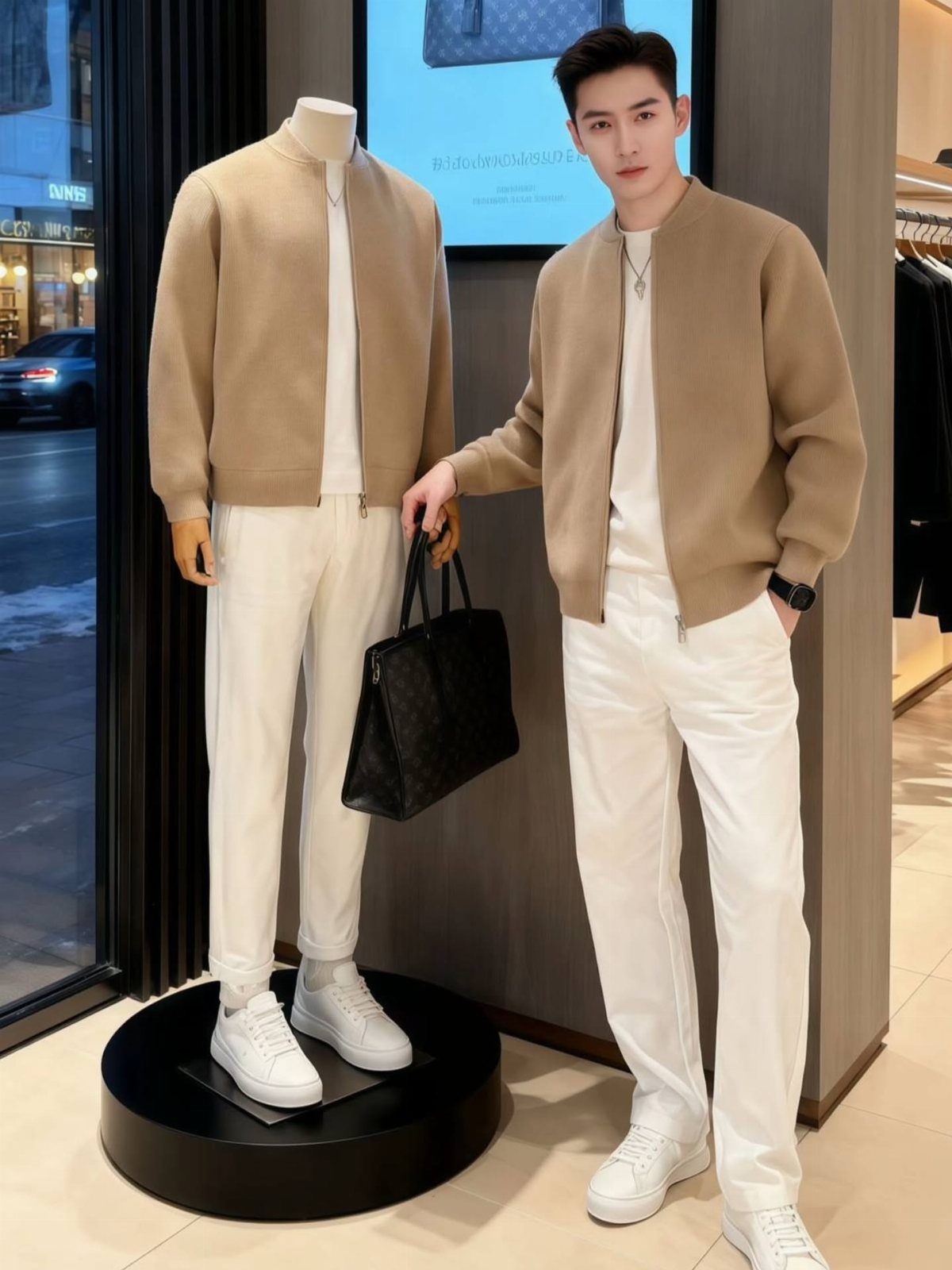
The jacket gives the outfit shape and makes the white-on-white base feel deliberate instead of underdressed. Choose a jacket in a neutral like tan, olive, or navy that pairs with most of what you already own.
White sneakers keep the look from tipping too formal. If you want more contrast, swap the white trousers for dark denim or grey chinos.
4. Smart Casual Definition
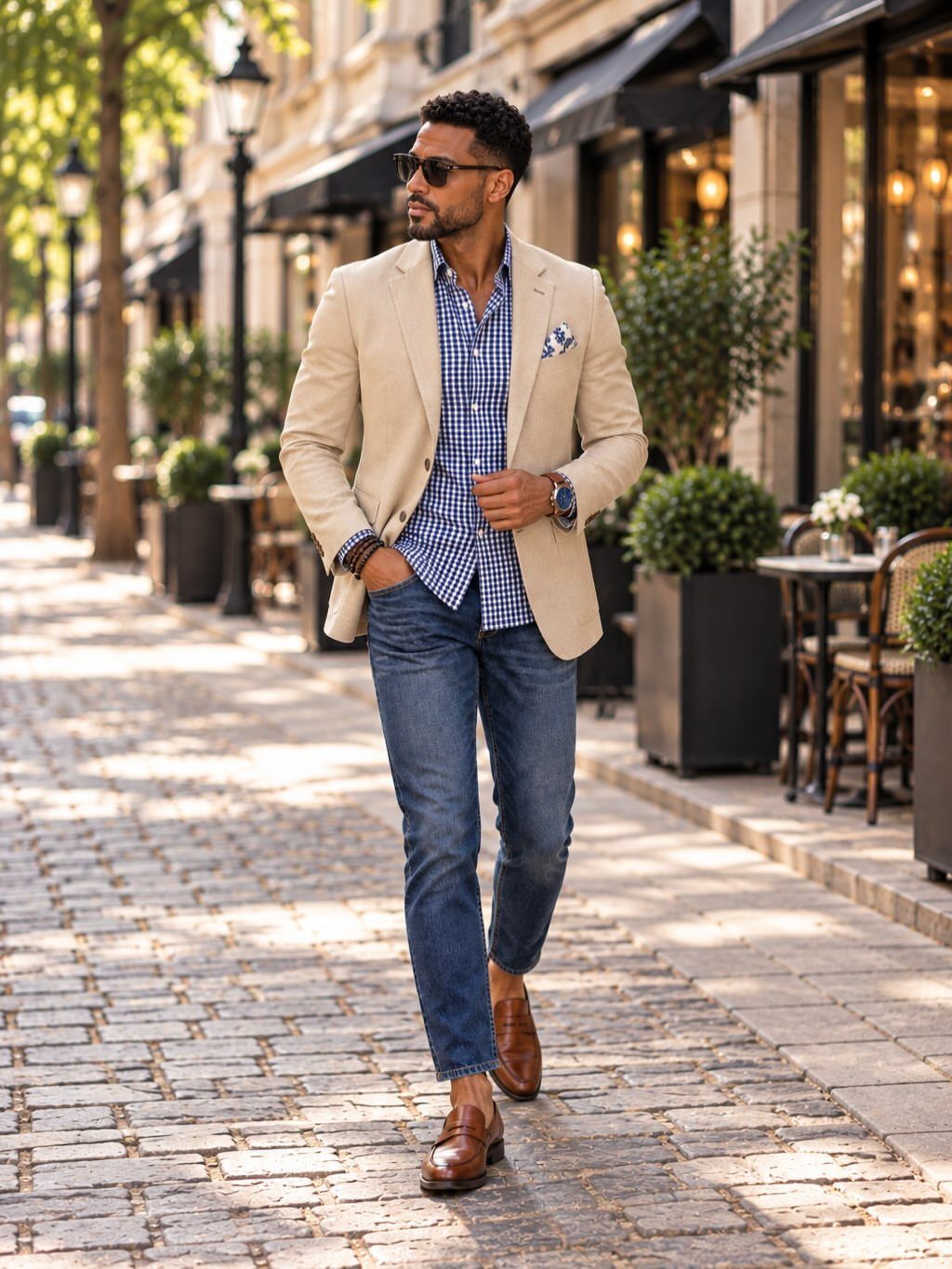
Smart casual means pairing a blazer or sport coat with jeans instead of dress trousers. A tan blazer, blue checkered shirt, and dark jeans hit that balance by mixing tailored pieces with casual ones.
Your casual pieces need to be in good shape.
Dark, well-fitted jeans work here; baggy or heavily distressed ones don’t. Brown leather shoes stop the outfit from reading too casual.
This outfit works for dinners, date nights, or any situation where you want to look sharp but a full suit feels out of place.
5. Accessorizing Tips
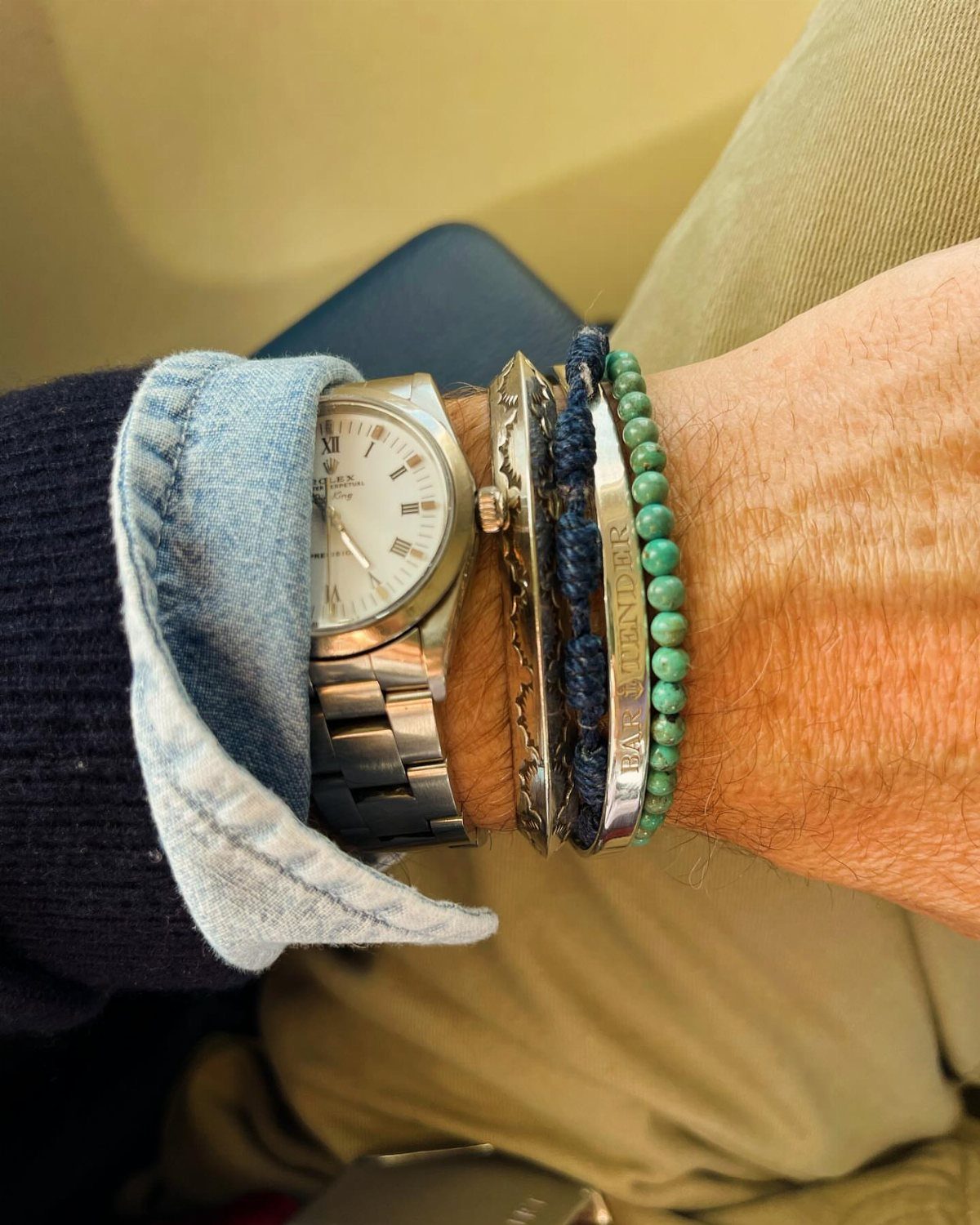
A watch, metal cuff, cord bracelet, and beaded bracelet add personality to a simple outfit without changing the clothes themselves. Layering multiple bracelets on one wrist creates visual interest and gives the impression that you put thought into the outfit.
Mix materials and textures: metal, cord, and beads all sit differently on your wrist and catch light in their own way. Keep the colors restrained if you’re wearing multiple pieces at once.
Accessories work best when the rest of your outfit is simple. A solid shirt and neutral pants give bracelets space to stand out without competing for attention.
6. Business Casual Definition
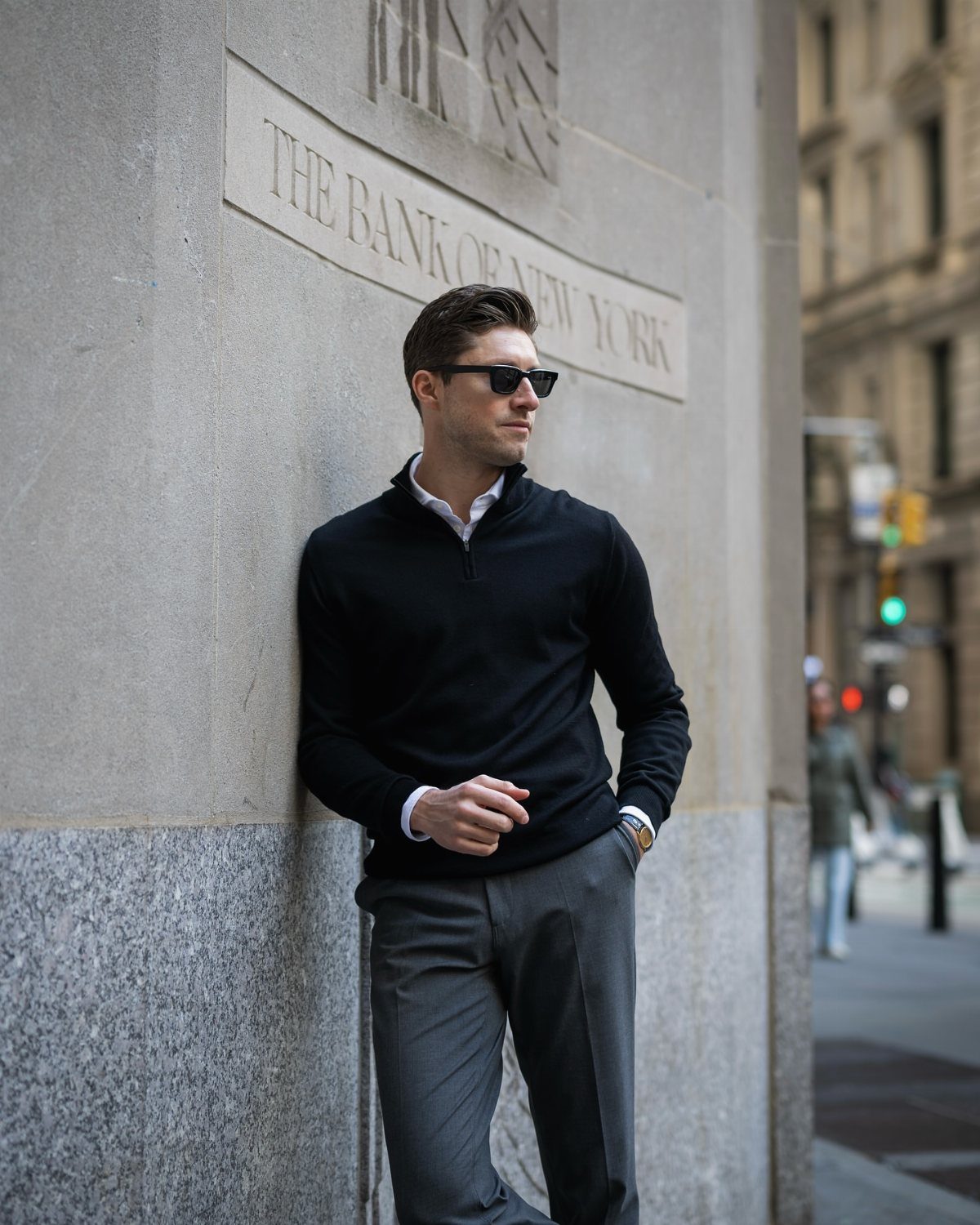
Business casual lands between a full suit and jeans.
The collar visible under the sweater keeps the outfit from looking too casual, while the quarter-zip is less formal than a blazer. Grey trousers instead of khakis make the look feel more refined.
This outfit works in most office settings that don’t require a tie, and it transitions well if you have plans after work. Swap the quarter-zip for a blazer if you need to dress it up further.
7. Power Casual Overview
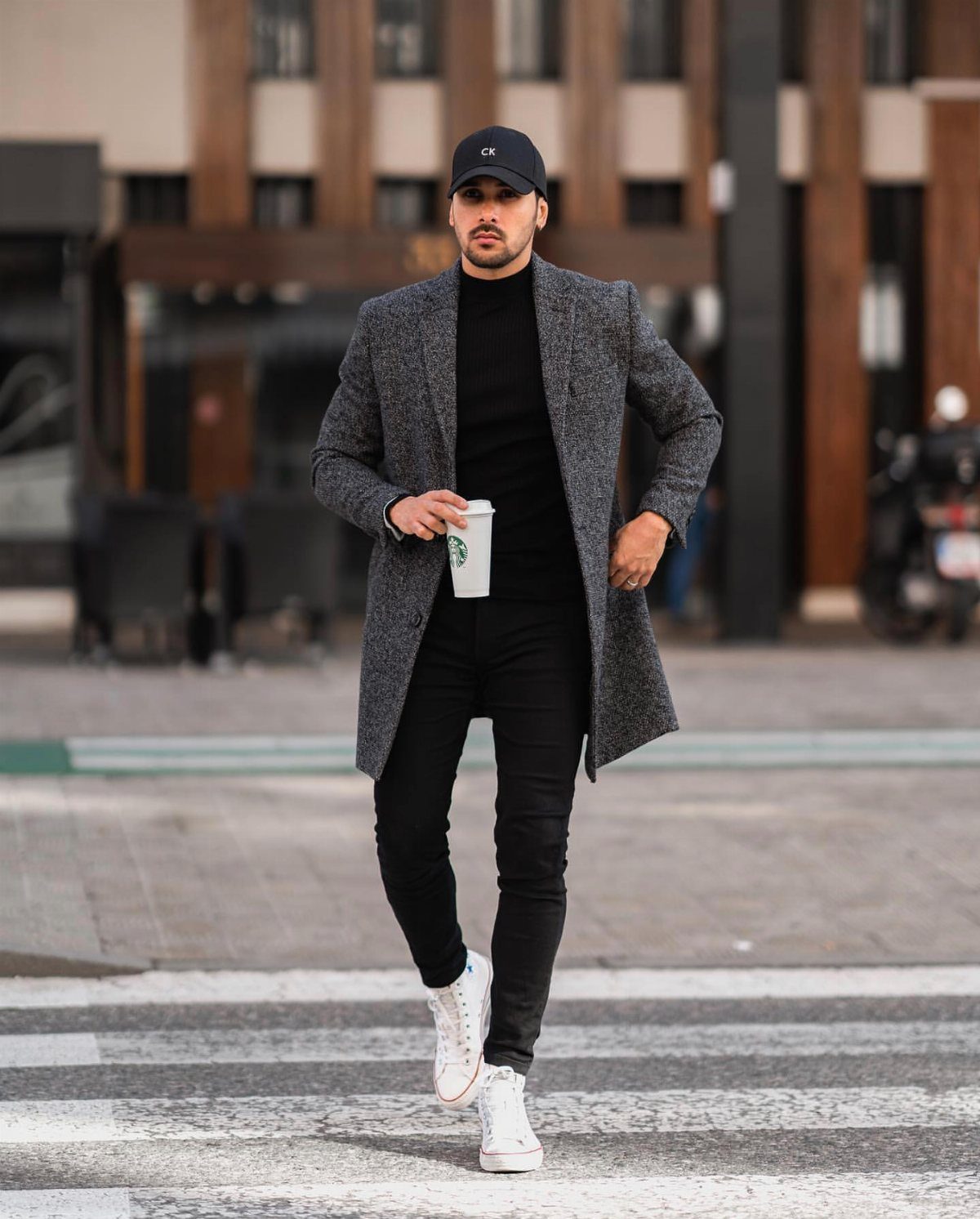
A blazer over a black turtleneck gives you structure and warmth without the formality of a dress shirt. The grey-on-black combination reads as intentional but not overdone.
White sneakers soften the outfit and keep it from feeling like workwear. Black trousers and a baseball cap move the look away from business casual and into something more relaxed.
This outfit works for weekend errands, casual meetings, or anywhere you want to look pulled together without a tie or dress shoes.
8. Navy Jacket and Striped Shirt
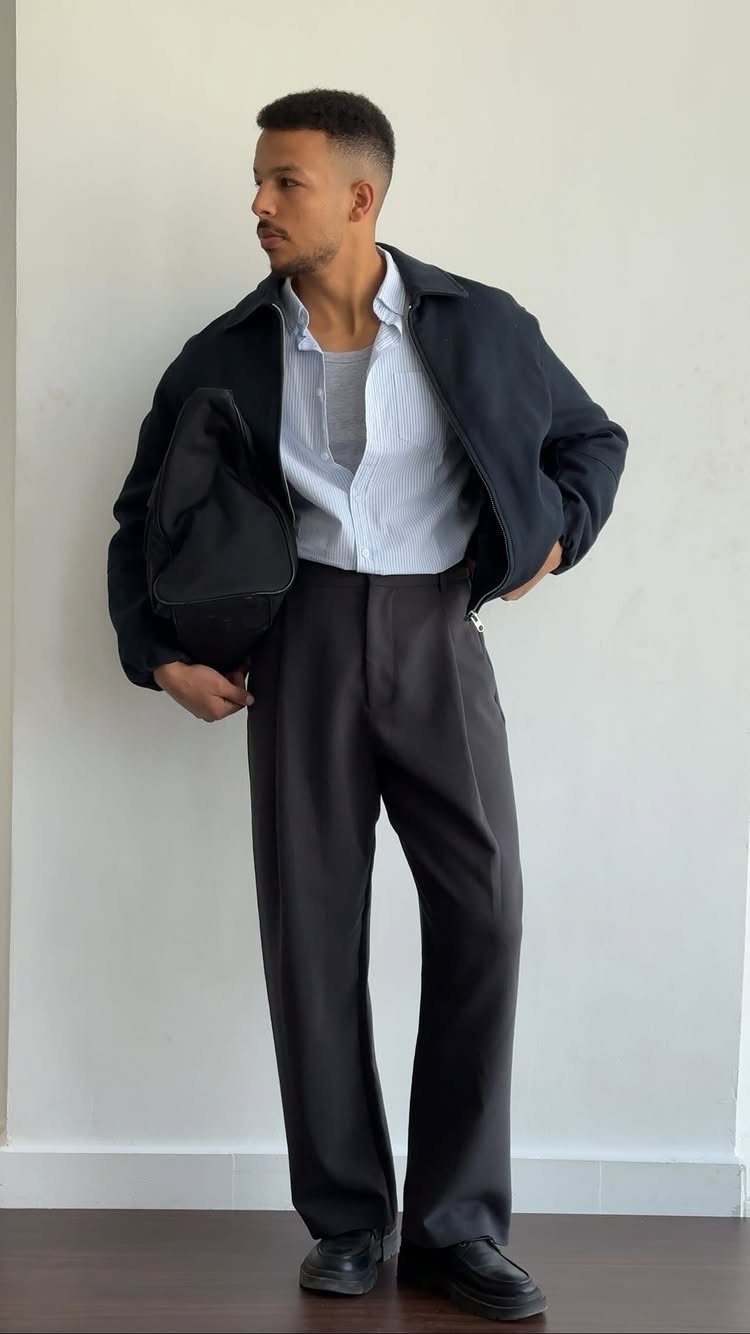
Stripes under a solid jacket add visual interest without needing additional accessories. A navy jacket over a striped button-down keeps the focus on proportion and structure rather than bold color choices.
Wide-leg trousers balance the fitted jacket and make the outfit feel current. If you don’t own wide-leg pants yet, straight-leg trousers in grey or beige work just as well.
Black dress shoes add enough formality to balance the relaxed fit. It fits dinners, gallery openings, or any occasion a notch below a suit.
9. Knit Vest Over White Tee
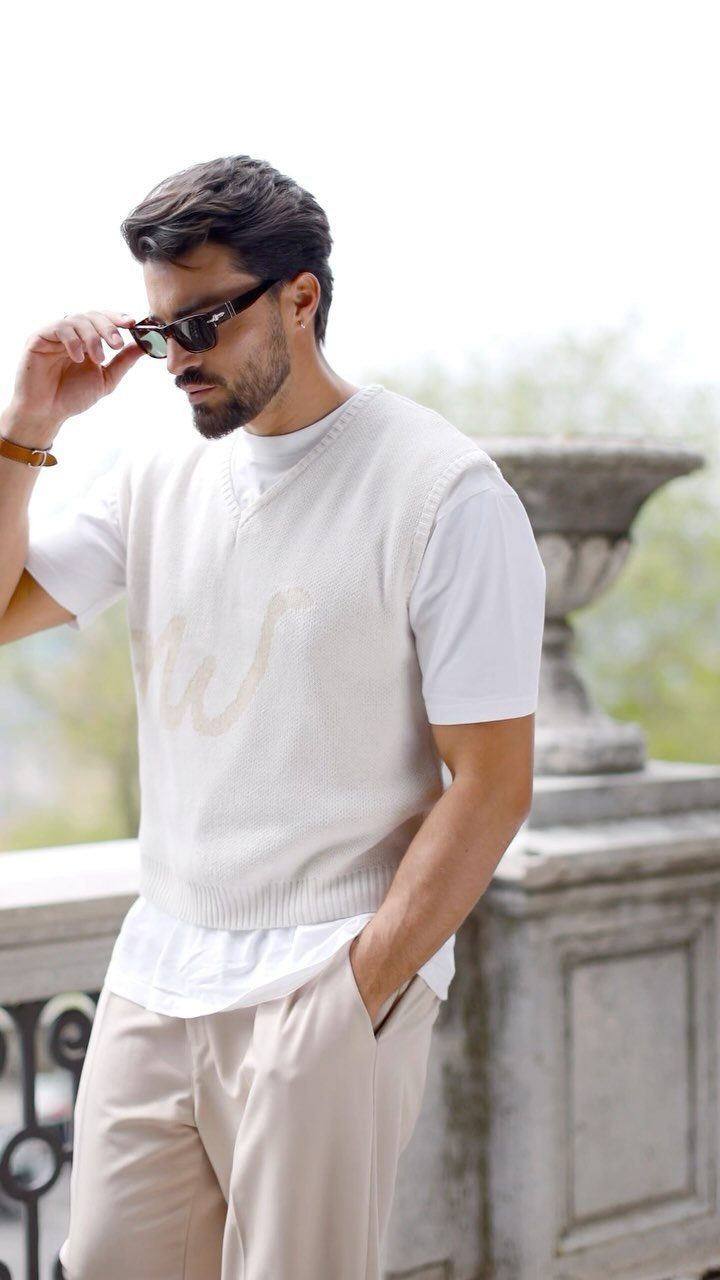
A knit vest over a plain white tee layers texture without adding bulk. The vest gives the outfit structure and makes a simple tee look more intentional.
Beige or cream tones keep the look soft and approachable. Matching the vest and trousers in similar neutral shades creates a tonal outfit that feels cohesive without being matchy.
A knit vest layered over a white tee works for outdoor lunches, weekend travel, or any warm-weather setting where you want to look considered.
10. Black Overshirt with White Tee
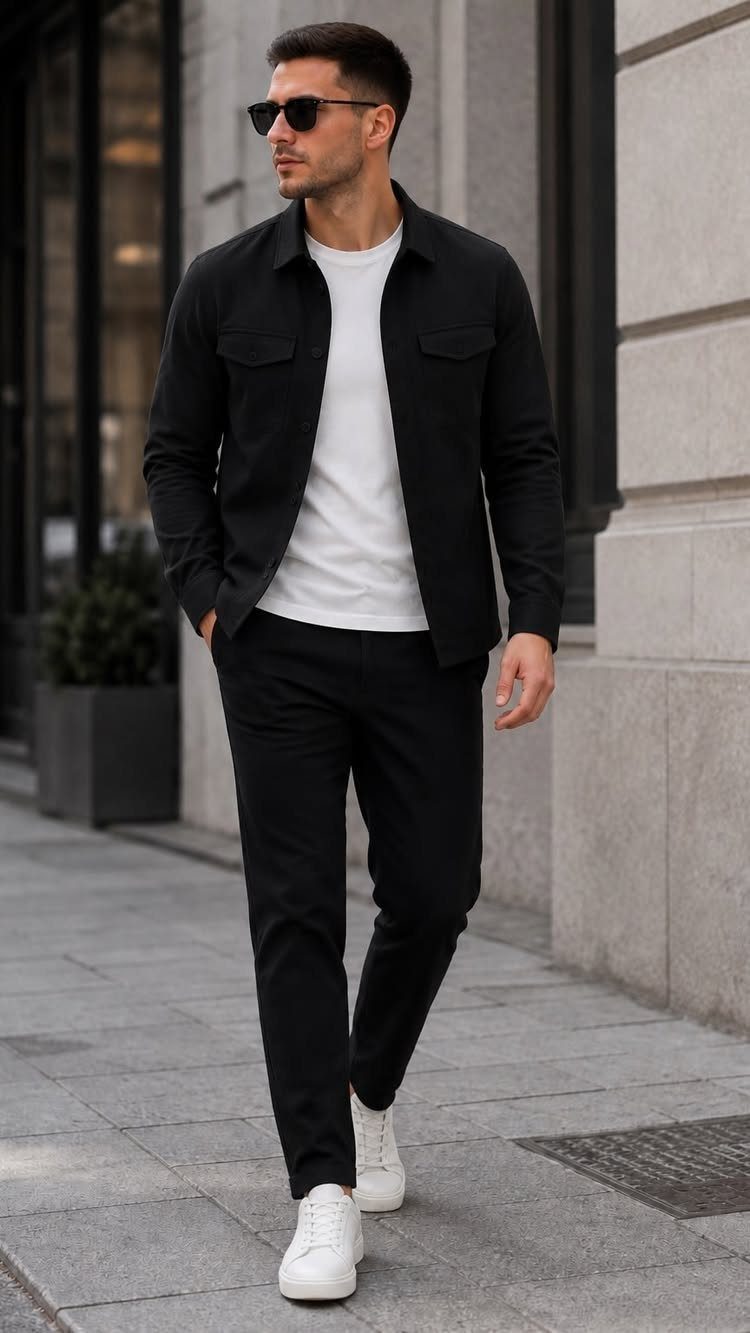
An overshirt worn unbuttoned over a white tee gives you the structure of a jacket without the formality. Black on white is the simplest high-contrast combination you can build, and it works because the pieces are so clean.
Black trousers and white sneakers hold the look to a tight palette. The overshirt should fit loosely enough to layer comfortably but not so wide that it looks oversized.
This outfit works for casual Fridays, coffee runs, or anything where you want to look put-together without dress shoes or a blazer.
11. Grey Plaid Blazer Outfit
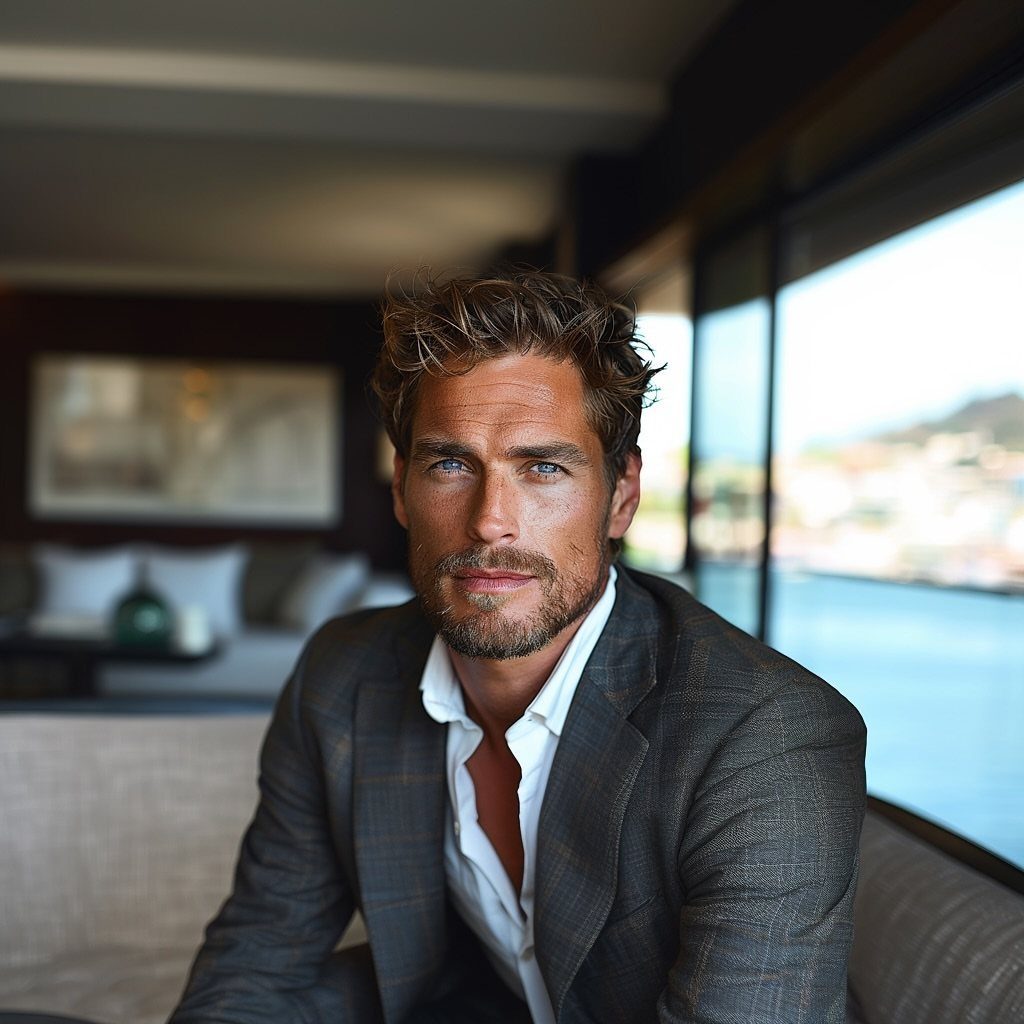
A plaid blazer in grey or charcoal adds pattern without the loudness of bolder prints. A white open-collar shirt beneath it relaxes the tailoring and skips the tie entirely.
The open collar keeps the outfit from feeling too formal. If you want more structure, a navy or light blue shirt works just as well under a grey plaid blazer.
This outfit suits dinners, client meetings in creative industries, or any setting where you want to look polished but not stiff.
12. Quarter-Zip Sweater and Trousers
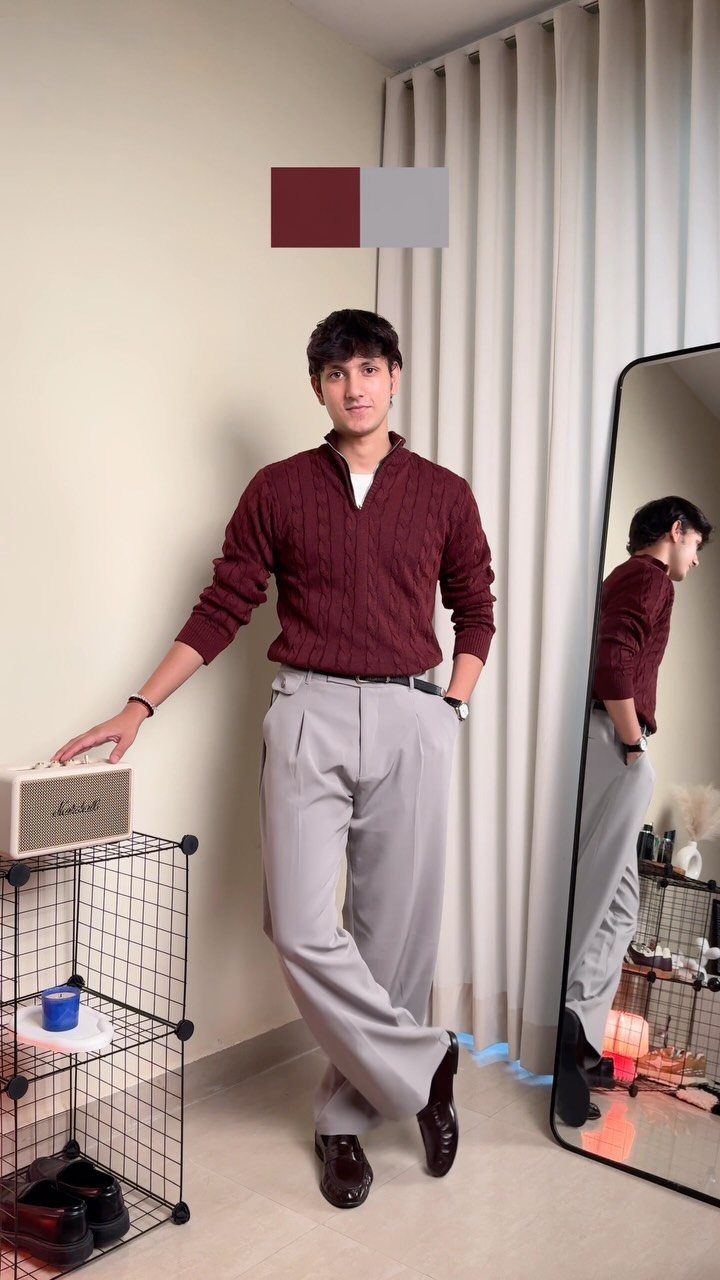
Pleated trousers paired with a ribbed quarter-zip sweater give you texture and movement in an otherwise simple outfit. The maroon sweater adds color without straying too far from neutrals.
Layering a white tee under the quarter-zip adds contrast at the neckline and keeps the outfit from looking too monochrome. Grey pleated trousers work with most sweater colors and give the outfit a more tailored shape than flat-front pants.
13. White Henley with Navy Trousers
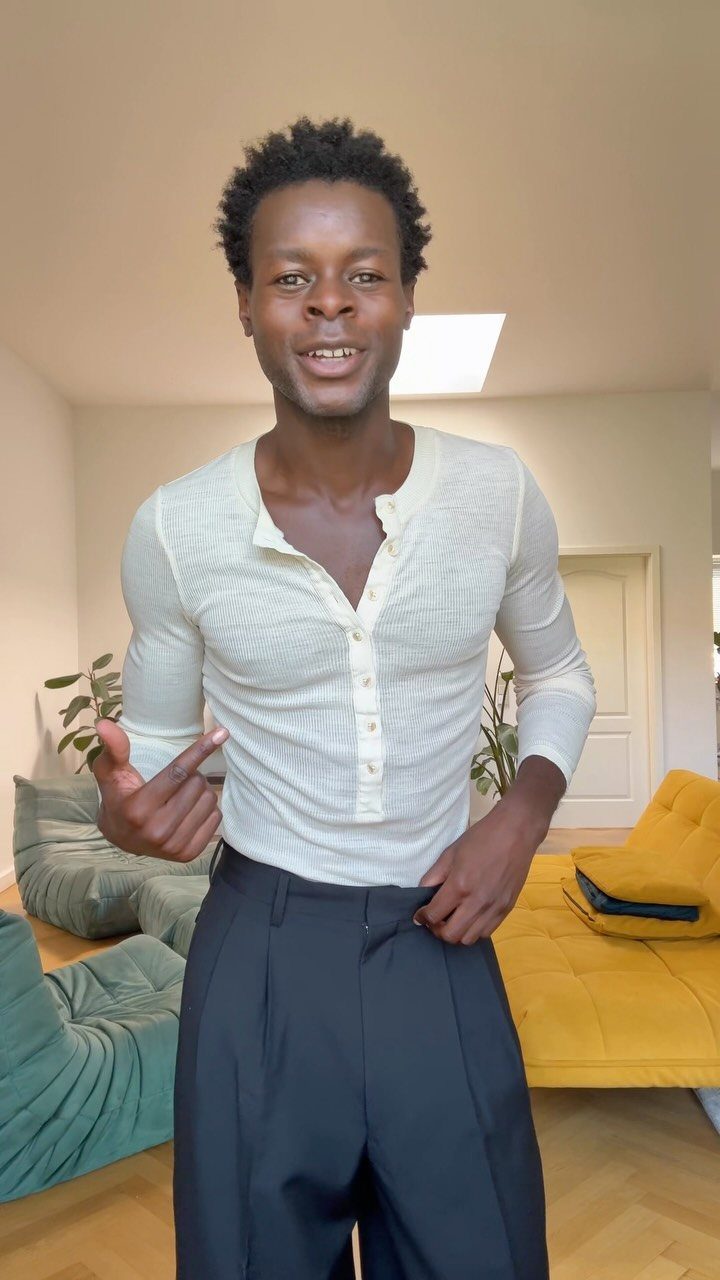
A long-sleeved henley tucked into navy trousers splits the difference between a tee and a button-down. The henley’s placket gives you a bit more structure than a plain crew neck, but you skip the formality of a collar.
Tucking the shirt in keeps the proportions clean and makes the outfit feel deliberate. Leave it untucked and it reads more casual, closer to weekend wear.
Navy trousers work with nearly anything in your closet and sit just formal enough for casual Fridays or daytime plans. White sneakers keep it relaxed.
14. Sweater Draped Over the Shoulders
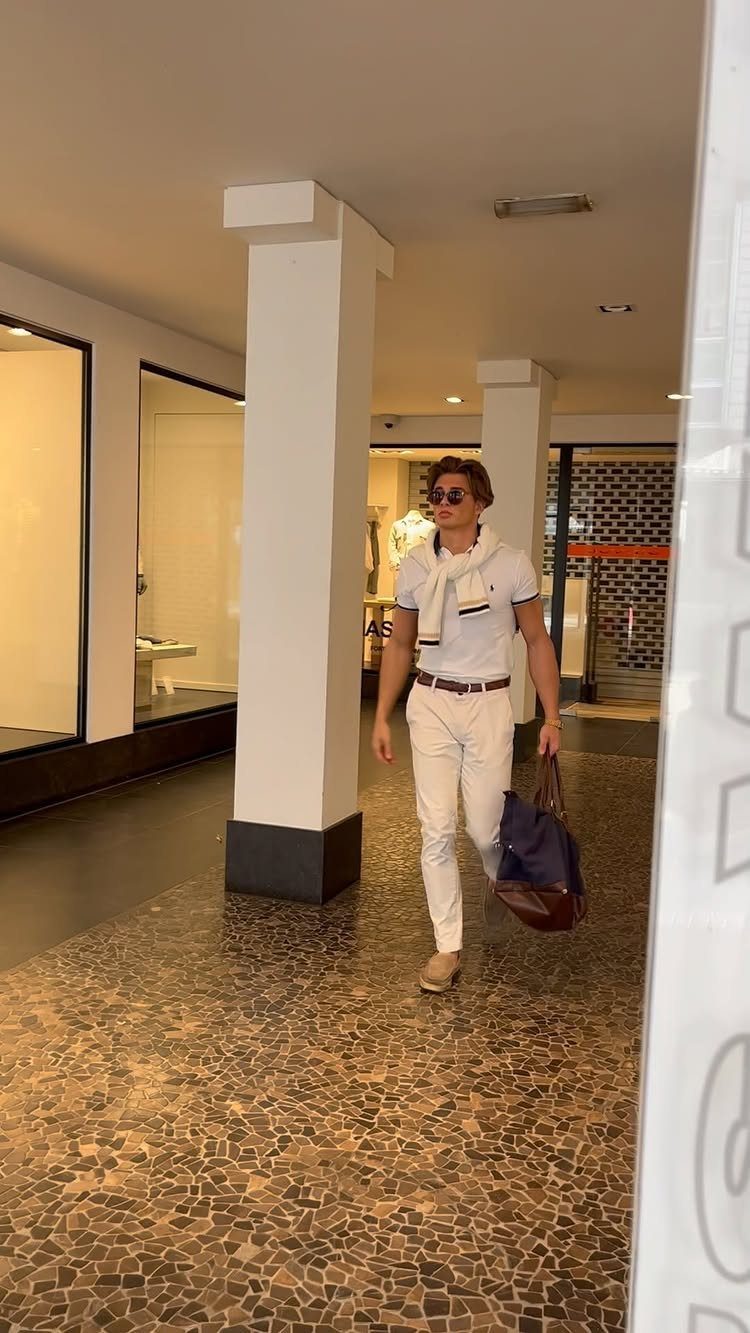
Draping a sweater over your shoulders adds a layer without committing to wearing it. The sweater arms tied loosely at your chest keep the look intentional rather than accidental.
A light-colored sweater over a white shirt and white trousers keeps the outfit in one tonal family. The monochrome base makes the draped sweater feel like part of the outfit instead of an afterthought.
This works best in mild weather when you might need the sweater later but don’t want to carry it. Choose a lightweight knit that drapes without bulk.
15. Open Button-Down Over White Tee
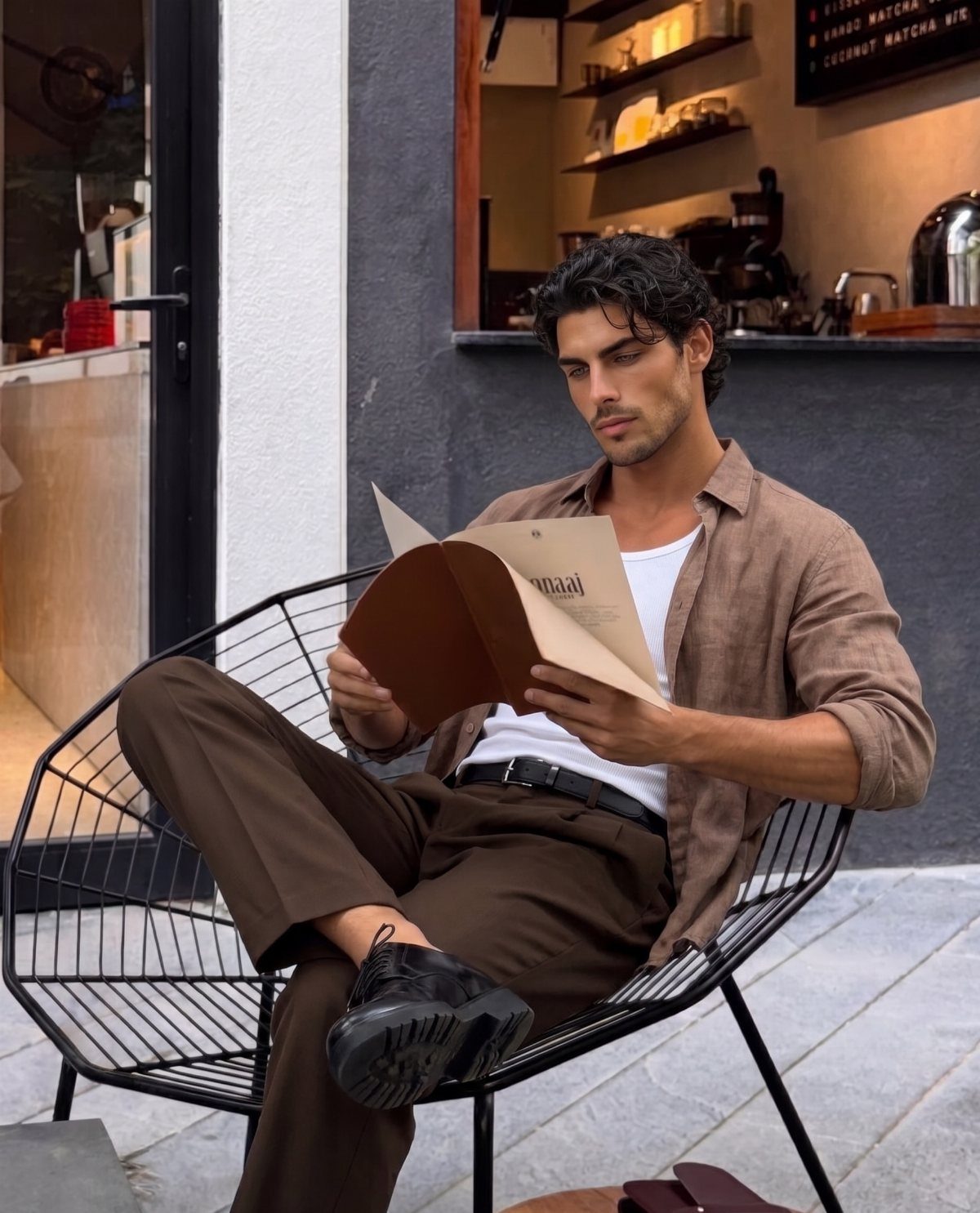
An open button-down over a white tee layers 2 simple pieces into something more finished. The brown-on-brown palette holds the look together without a single jarring break.
The button-down worn open gives you structure without the heat or formality of wearing it buttoned. A plain white tee underneath keeps the focus on the layers rather than competing prints or colors.
It fits anywhere a polo would, but reads slightly more finished.
16. Quarter-Zip with Light Jeans
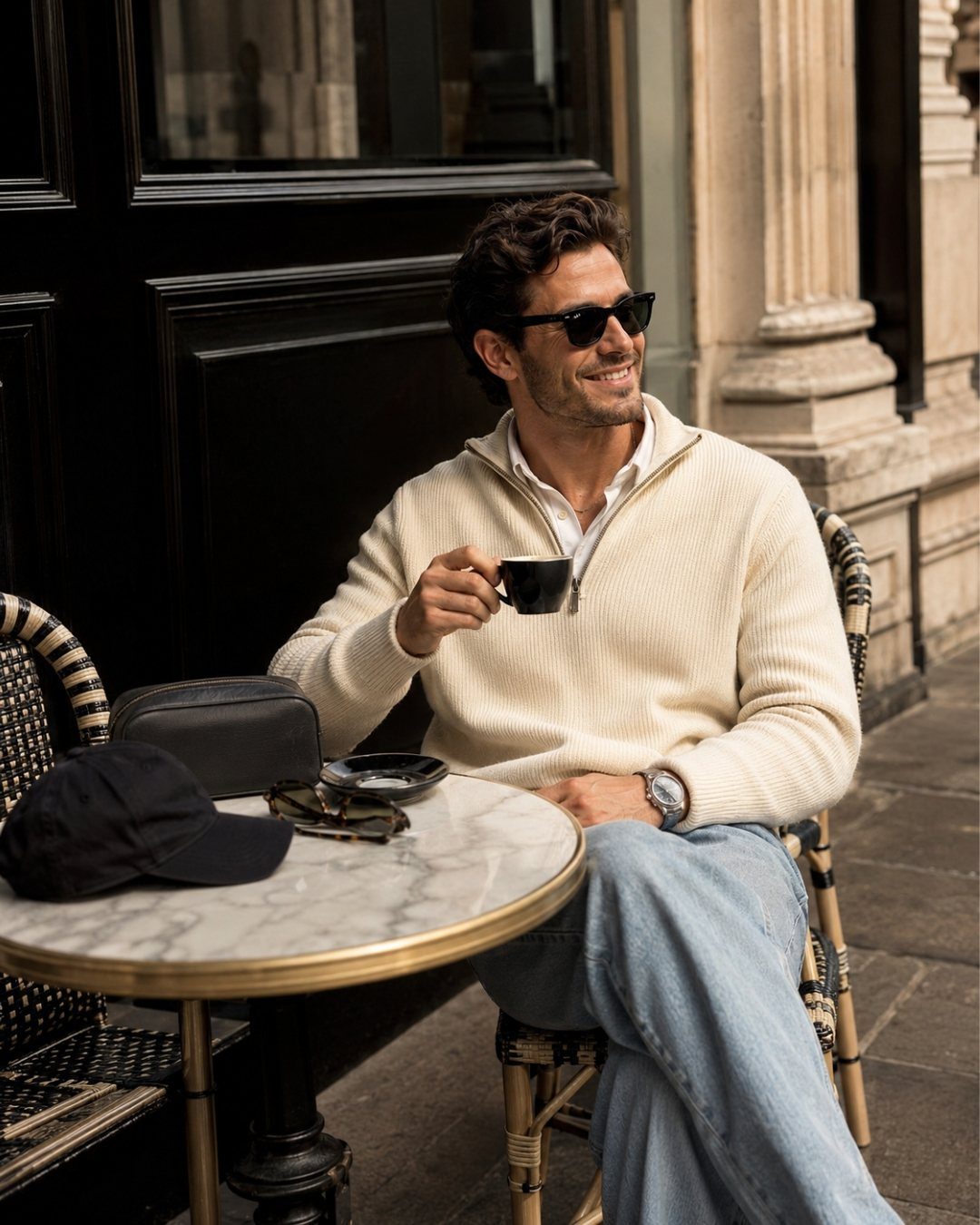
Light-wash jeans paired with a cream quarter-zip give you contrast without reaching for bold colors. The sweater adds texture and keeps the outfit from looking too plain, while the jeans stay casual enough for daytime plans.
The cream and light blue combination works because the tones sit close enough to feel cohesive but differ enough to avoid washing out.
It handles anything short of a dinner date or client meeting.
When to Wear Casual Styles
Casual styles fit most settings outside formal business environments or black-tie events.
The line between casual and smart casual sits at effort and structure. Casual means jeans and a tee with no particular thought behind it.
When you’re unsure, err toward slightly more formal.
A button-down shirt instead of a tee or leather shoes instead of sneakers takes 30 seconds to change but reads completely different. Showing up slightly overdressed is easier to adjust than arriving underdressed with no fix available.
Leave the real casual pieces for home office days or catching up with friends over a beer. Anywhere you meet someone for the first time or represent yourself professionally calls for at least one formal element in the outfit.
Importance of Casual Style
Casual menswear has moved from weekend-only clothing to the default in most industries. This shift gives you more freedom in how you dress day to day, but quality still separates an intentional outfit from one that looks careless.
The difference shows in fit, fabric, and whether the pieces look like they belong together or were grabbed at random.
Not all casual outfits hold the same standard.
A white tee and jeans can look sharp or sloppy depending on fit and condition. Casual style done well keeps the relaxed feel but adds enough structure to avoid looking like you didn’t try.
This doesn’t mean abandoning tailored clothing.
Suits and sport coats still have their place. A strong casual wardrobe just fills the much larger portion of your week when formal clothing doesn’t fit the setting.
Dressing for Your Environment
Your workplace or event sets the standard, not a universal rule. Look at what most people around you wear and aim for that average or slightly above it.
In tech, business casual skews heavily toward the casual end. Academia and finance lean closer to a suit without the tie.
If you’re unsure, ask HR or a manager directly what they expect. Frame it as wanting to represent the company well and they’ll give you a straight answer.
Pay attention to whether most people wear sport coats and button-downs or jeans and sweaters. That tells you whether your office sits on the business side or the casual side of the spectrum.
Once you know where your environment sits, dress one step more formal than the average if you want to stand out positively. One step less formal and you risk looking careless.
Frequently Asked Questions
What is smart casual attire?
Smart casual mixes tailored pieces with relaxed ones to land between business casual and everyday wear.
A blazer with jeans instead of dress trousers, or a quarter-zip sweater with grey trousers instead of a full suit, hits that balance. The outfit feels put-together without requiring a tie or formal shoes.
Can you give me some examples of business casual clothing for men?
Business casual pairs a quarter-zip sweater or button-down shirt with grey or khaki trousers, skipping the tie entirely.
A collar visible under the sweater keeps the outfit from reading too casual, while leather shoes instead of sneakers add enough formality for most office settings. This outfit transitions well from work to after-hours plans.
Do I need a tie for business casual?
No, business casual skips the tie.
A button-down shirt or quarter-zip sweater with trousers gives you enough structure without one. If you want to dress it up further, a blazer over the shirt adds formality without reaching for a tie.