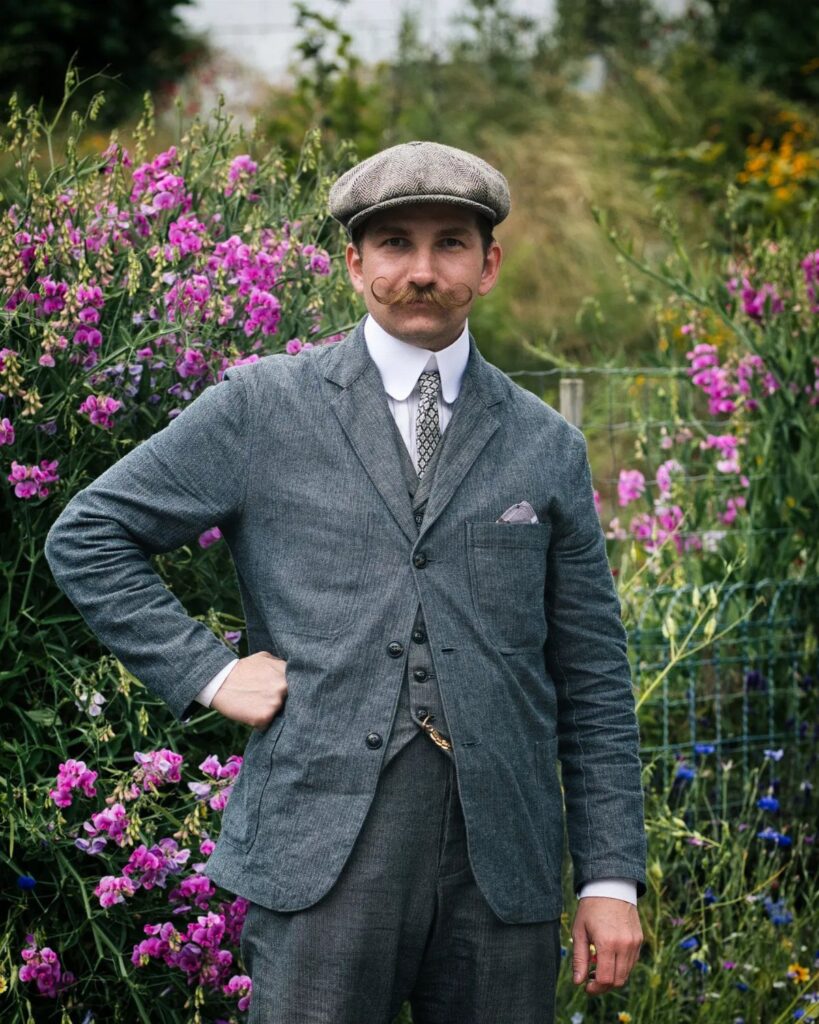
Men’s fashion in the 1880s ran from the practical three-piece lounge suit in grey tweed for everyday town wear to the knee-length frock coat and top hat for formal daytime events.
The Norfolk jacket with its box pleats and belt works for shooting and outdoor pursuits, the smoking jacket in velvet protects your formal wear indoors, and the morning coat with cutaway front signals formal city occasions.
The Inverness coat carries a capelet over the shoulders that sheds rain and moves on its own.
1. Three-Piece Lounge Suits
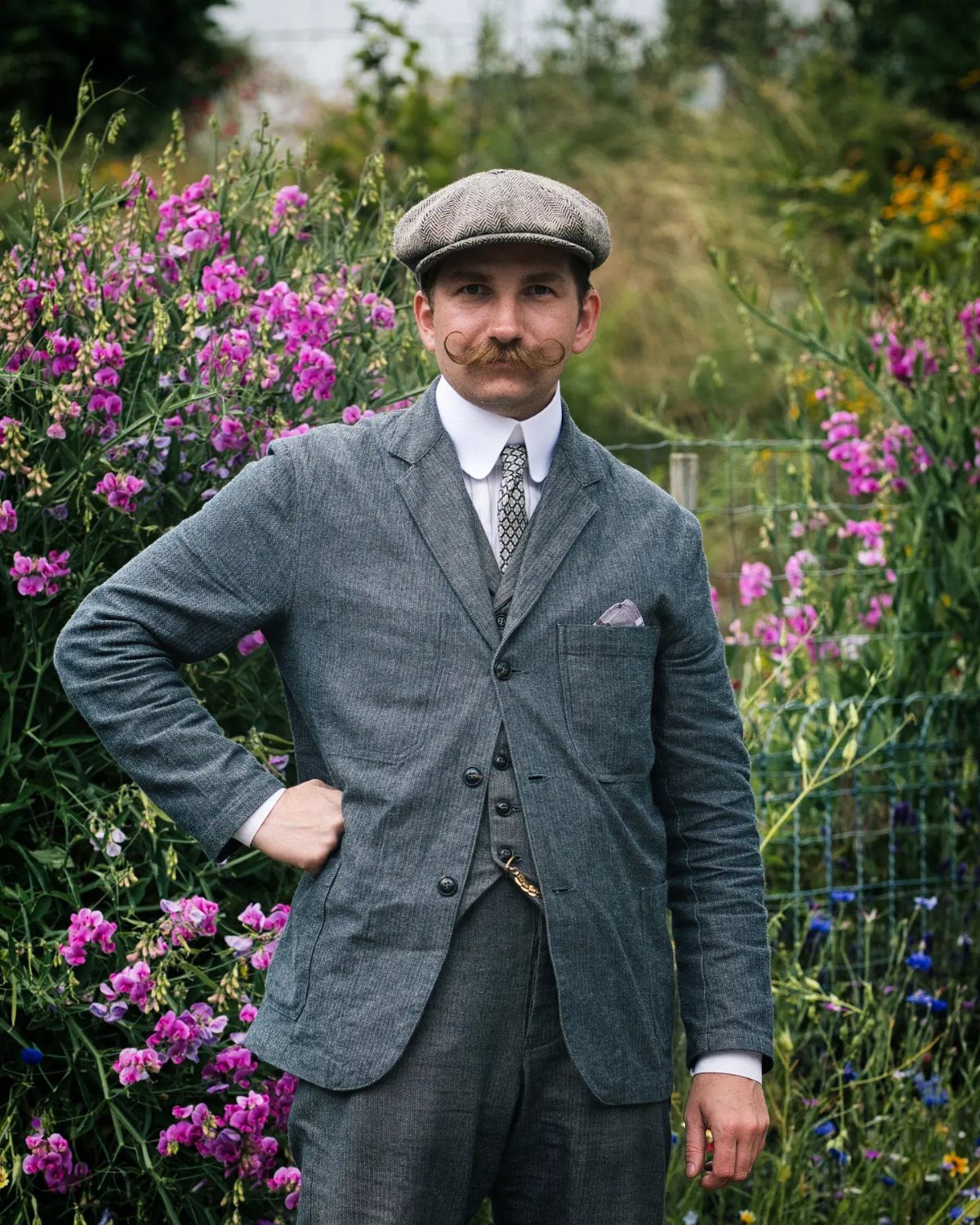
The three-piece suit became everyday town wear by the 1880s, pairing a jacket, waistcoat and matching trousers in wool or tweed.
Grey tweed reads quieter than brown and fits cold weather well. The waistcoat sits under the jacket and covers the shirt, so you button two or three of its lower buttons and leave the bottom one open.
A flat cap and tie finish the outfit without adding formal weight. The whole suit moves as one unit, and the waistcoat keeps the silhouette clean when you take the jacket off.
2. Norfolk Jackets
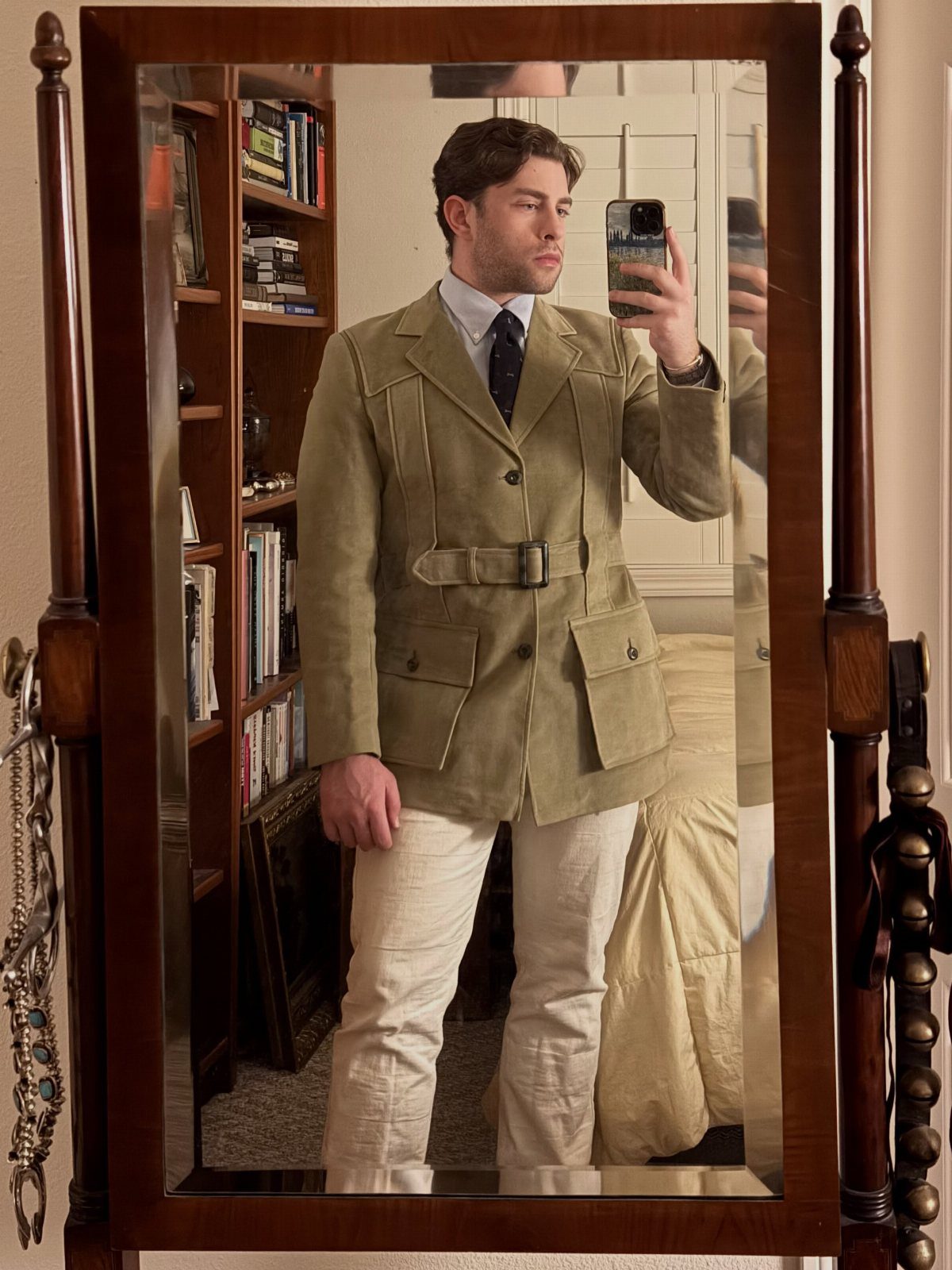
A Norfolk jacket is a belted country coat with box pleats at the back and a loose cut through the chest, worn for shooting and outdoor work in the 1880s.
Olive or tan tweed keeps the coat practical, and the belt cinches at the waist over the pleats.
The jacket sits shorter than a frock coat and moves freely, so it works for active outdoor wear without looking too casual for town.
3. Smoking Jackets
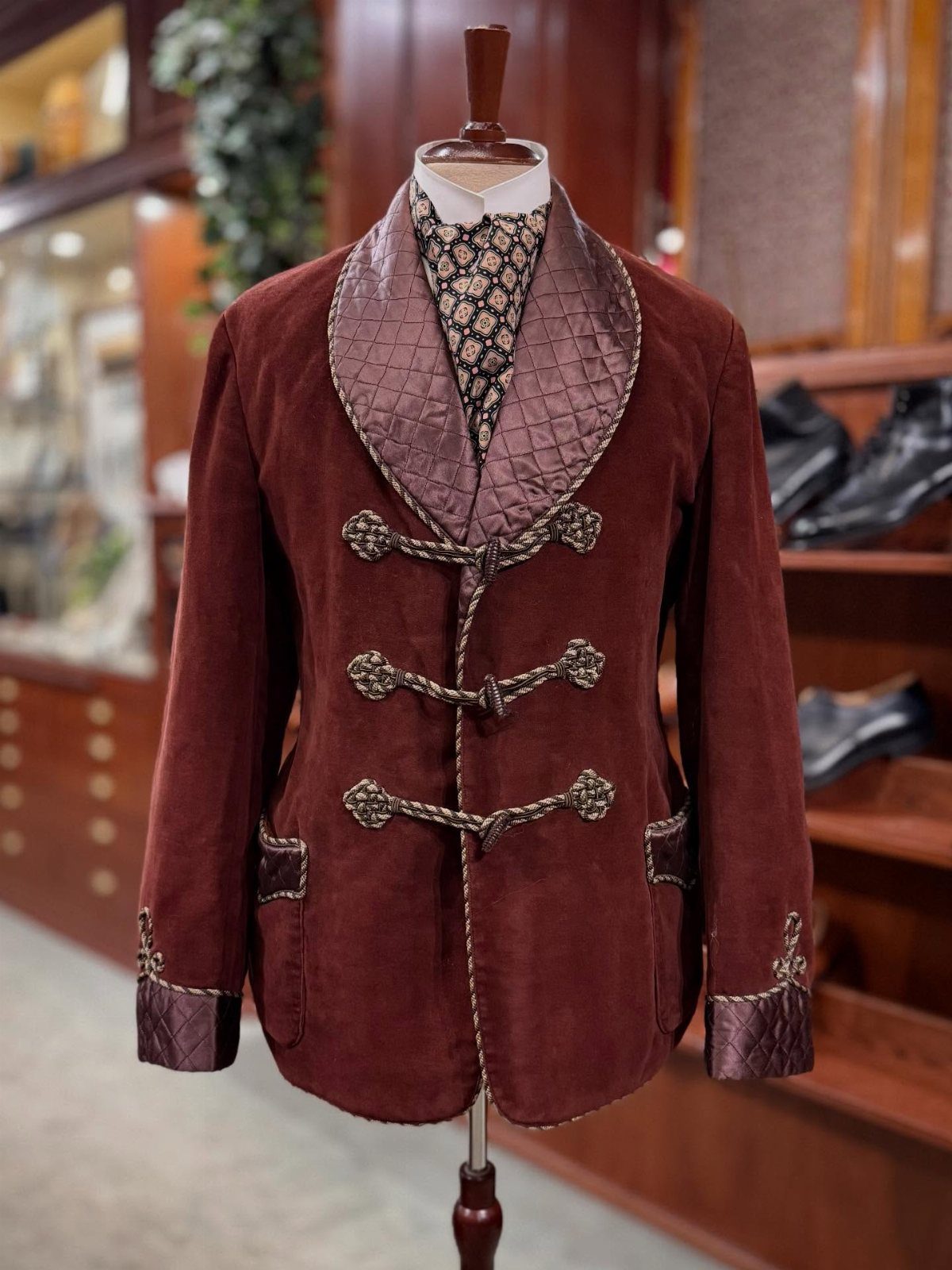
A smoking jacket is a short velvet coat with a quilted shawl collar, worn at home in the evening to keep tobacco smoke off your formal clothes.
Maroon or burgundy velvet reads richer than black, and the shawl collar sits soft against the neck. Braided cord closures replace buttons and give the jacket an easy, relaxed line.
The quilted collar adds texture and keeps the jacket from looking flat. It pairs with plain trousers and stays indoors, not for the street.
4. Patterned Waistcoat with Pocket Watch
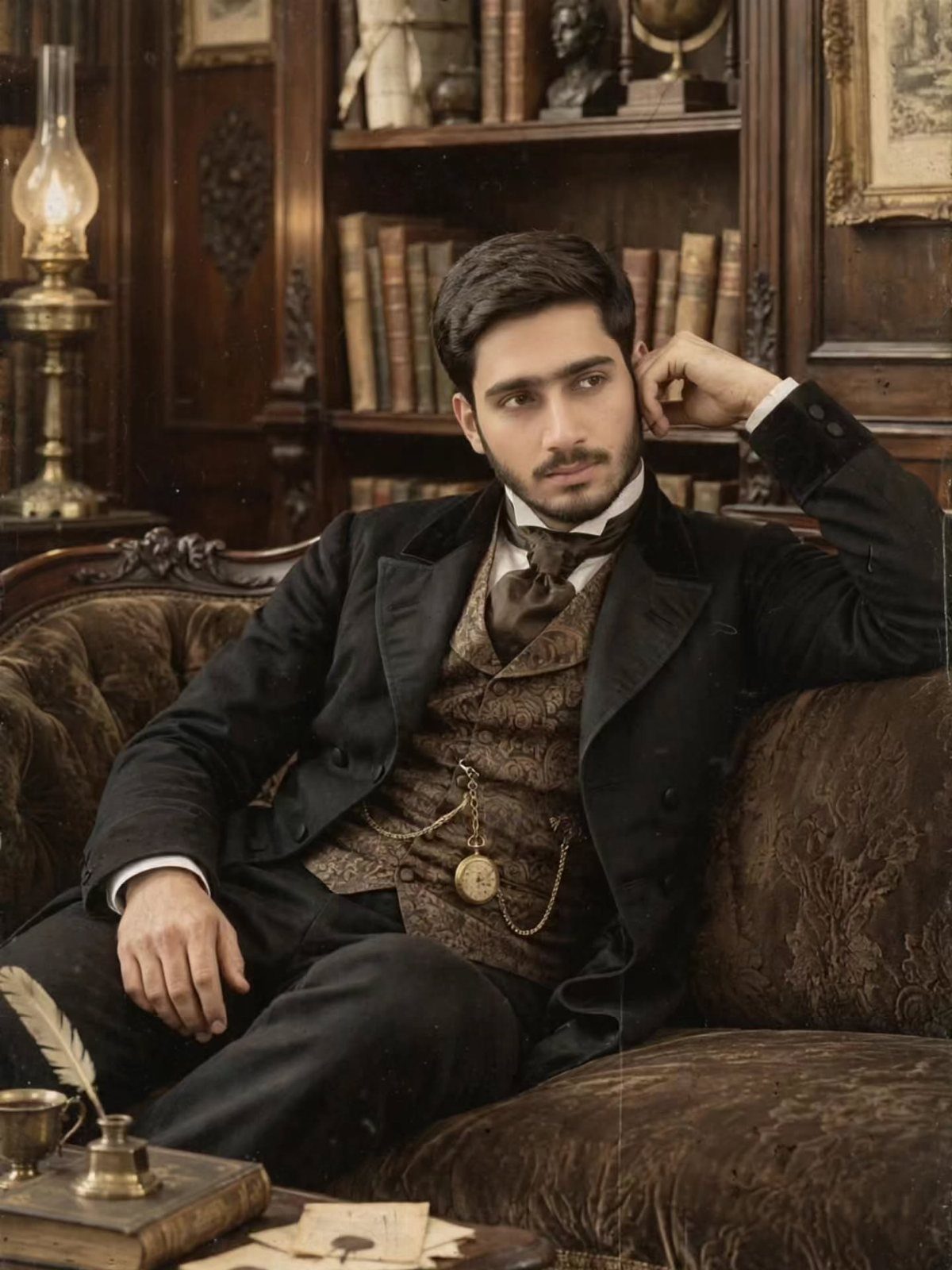
A patterned waistcoat over a white shirt and under a dark jacket gives you color and detail without adding much.
The waistcoat sits high on the chest, and a pocket watch on an Albert chain runs from the waistcoat pocket across the front.
Brown or gold patterns in silk or wool read warmer than plain black. The cravat ties at the neck and keeps the collar upright.
The chain sits visible across the waistcoat and marks the outfit as formal without requiring a frock coat.
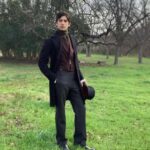
5. Victorian Frock Coat Ensemble
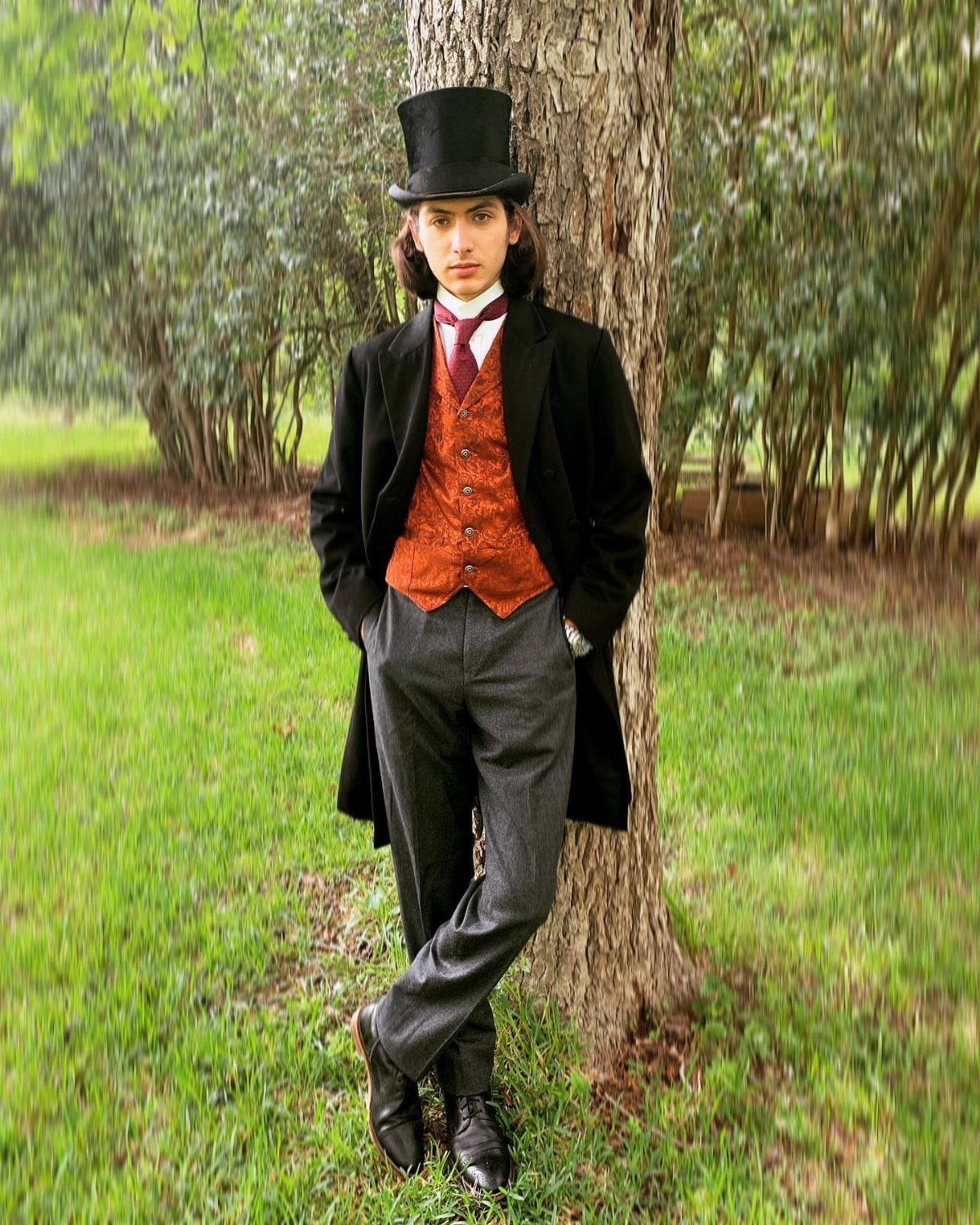
A frock coat is a long, fitted coat with a knee-length skirt, worn for formal daytime events in the 1880s.
The coat closes high on the chest and sits over a patterned waistcoat, trousers in grey or tan, and a top hat.
An orange or gold waistcoat under a black frock coat adds color at the center of the outfit. The red tie sits under a high collar, and the coat’s length keeps the silhouette formal.
The top hat finishes the look and marks it as city wear, not country.
The dress coat was gradually replaced by the frock coat that was in turn edged out by the more fashionable jacket after 1870. Thus the development of the men’s suit, as it is ultimately still worn today, was complete.
6. Formal Morning Coat Outfit
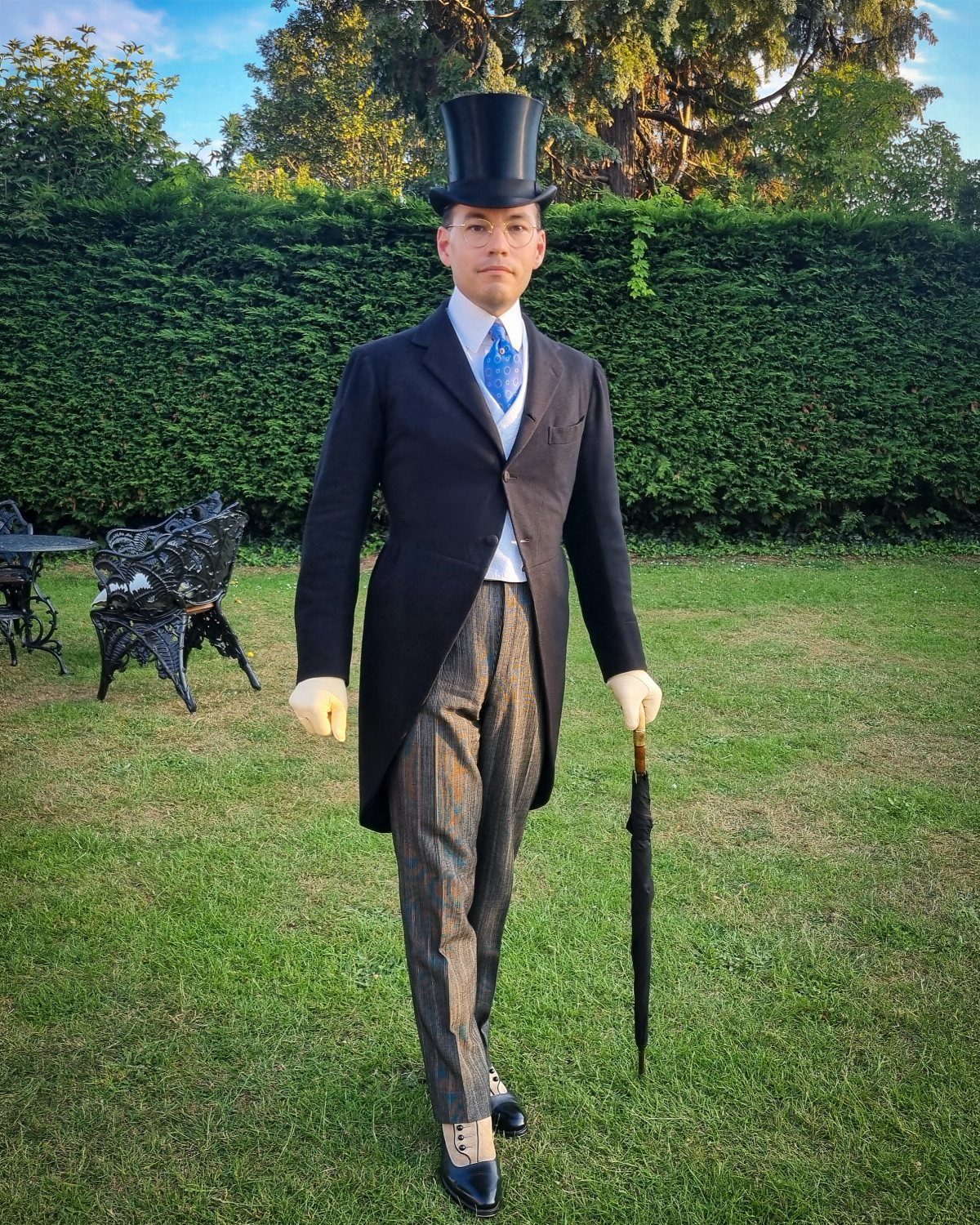
A morning coat is a formal daytime coat with a cutaway front and long tails, worn with striped trousers, a top hat, white gloves and a high collar.
Black wool for the coat and grey pinstripe trousers keep the outfit sharp. The coat sits open at the front and the tails hang to the back of the knee.
White gloves and a top hat mark the outfit as formal, and the striped trousers contrast the solid coat without breaking the silhouette. An umbrella fits the period and adds a finishing detail.
7. Double-Breasted Charcoal Wool Suit
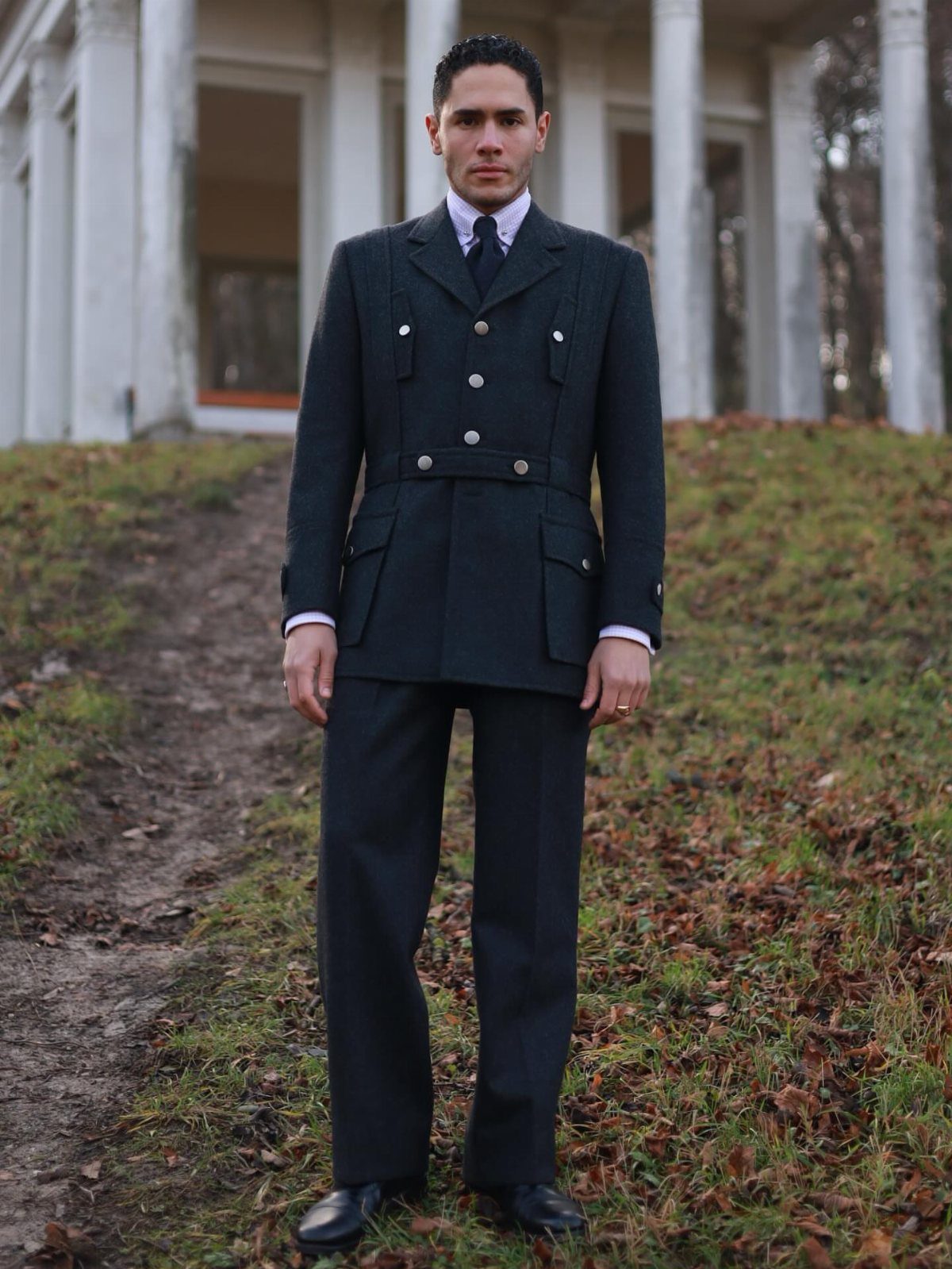
A double-breasted suit in charcoal grey wool keeps the formality of the 1880s without needing a frock coat. The jacket closes with 2 columns of buttons and sits over a white shirt and tie.
Charcoal reads sharper than brown and works for business or formal town wear. The double-breasted front adds width to the chest and keeps the jacket structured when you button it.
Match the trousers to the jacket and keep the shirt plain. The suit holds its shape through the day and suits cooler weather.
8. Fur-Collared Overcoat with Top Hat
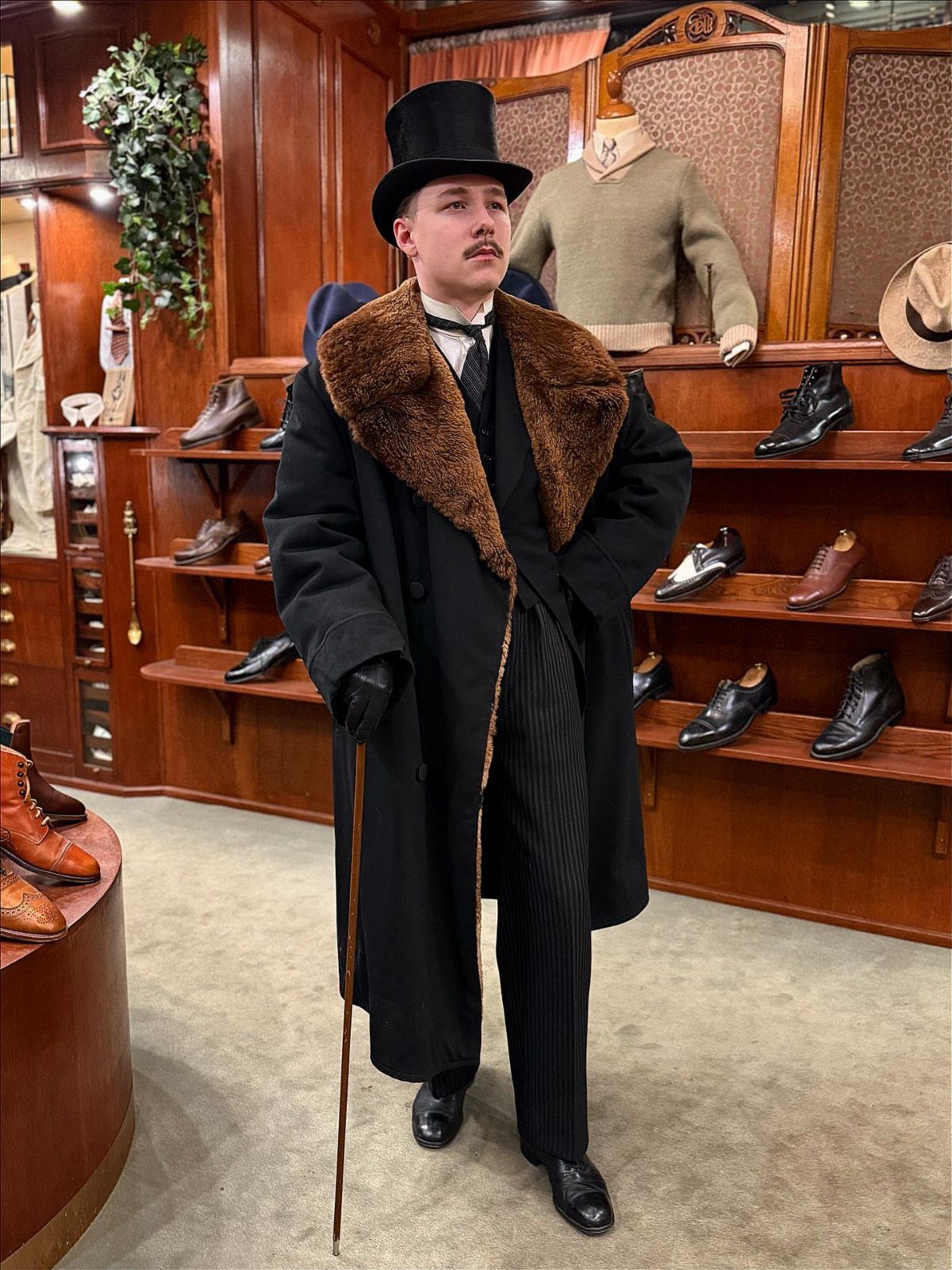
A long overcoat with a heavy fur collar over pinstriped trousers and a top hat turns cold-weather dressing formal. The coat sits over your suit and the fur collar frames the face.
Dark wool for the coat and a natural fur collar in brown or grey keep the look clean.
The fur adds warmth and weight, so the coat works for winter but reads too heavy for mild weather. Button the coat high to keep the collar upright.
9. Victorian Inverness or Capelet Coat
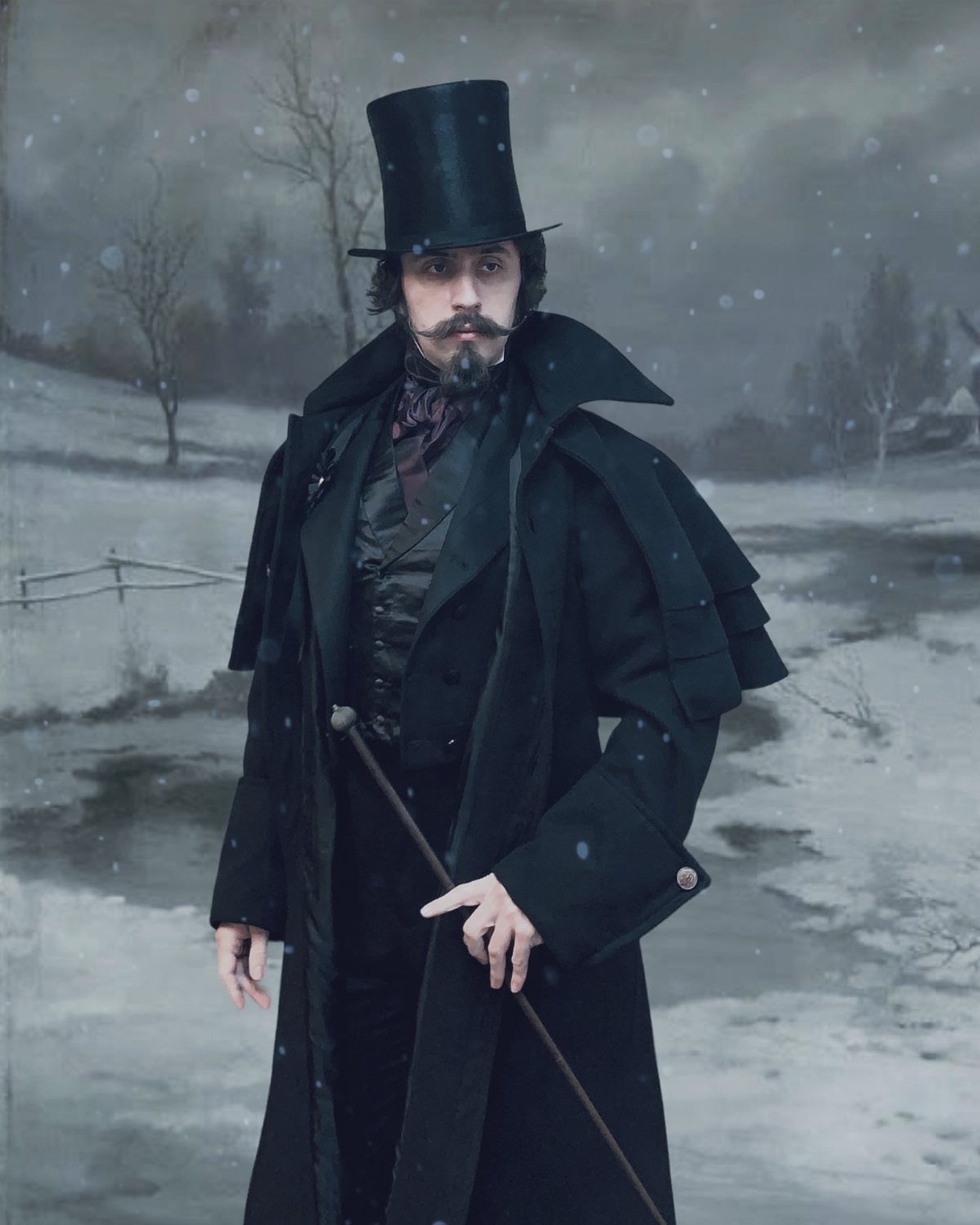
An Inverness coat has an attached shoulder capelet that sits over the sleeves and keeps rain off your arms. The coat runs full length and pairs with a top hat and walking stick for outdoor formal wear.
Black wool for the coat and capelet reads formal and hides weather marks. The capelet moves separately from the coat and gives you coverage without adding a second layer underneath.
The coat works for wet or cold weather and looks correct with formal daytime dress. The capelet keeps the silhouette wide at the shoulders, so it suits taller frames better than short ones.
Frequently Asked Questions
What did people wear in the late 1800s?
Men wore three-piece lounge suits in wool or tweed for everyday town wear, with a jacket, waistcoat and matching trousers.
Formal daytime events called for a frock coat or morning coat with a top hat, while country wear included belted Norfolk jackets in olive or tan tweed.
Evening dress meant a black tailcoat, matching waistcoat, dark trousers, white dress shirt and white silk bow tie.
What are some examples of modern Victorian fashion for men?
A three-piece suit in grey tweed with a flat cap and tie gives you the 1880s silhouette without full formal dress.
A double-breasted charcoal wool suit keeps the structured Victorian look in a wearable form, and a velvet smoking jacket in maroon or burgundy with a shawl collar works for evening wear at home.