Structured tailoring sat alongside rebellious counterculture, from slim Italian suits and fedoras to bell bottoms and denim worn with a tie.
I break the decade into tailored pieces like suits and fedoras, then casual options like knit polos and bell bottoms, followed by fit details and grooming choices.
Pairing a turtleneck with tailored trousers or throwing a leather jacket over a patterned shirt called for different commitment levels, but fit stayed deliberate either way.
1. Turtleneck Sweaters
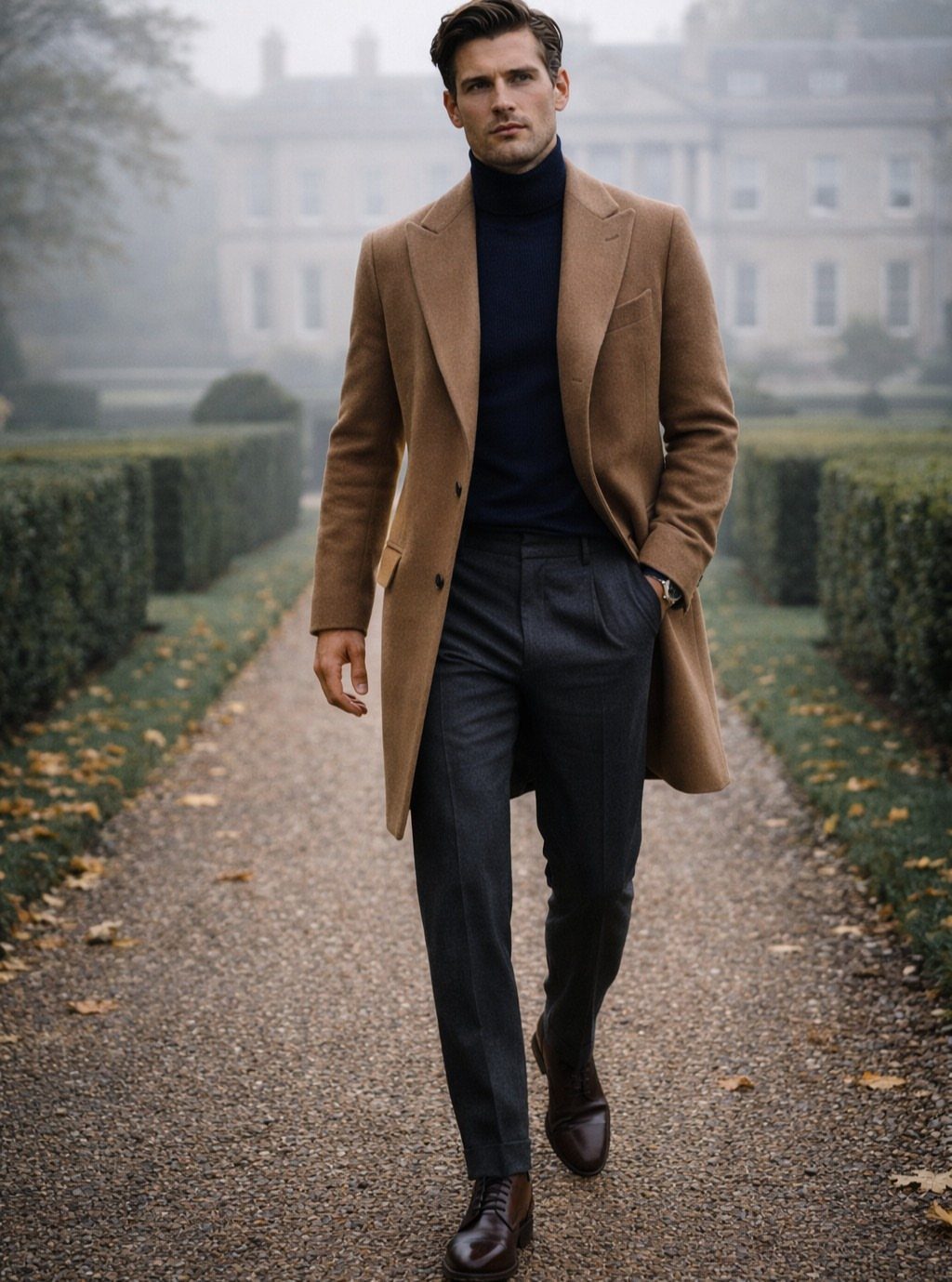
The turtleneck anchors this look with clean lines and no collar to manage. Navy holds up against the camel coat, and the whole outfit reads formal enough for dinner without requiring a tie.
Pair a fitted turtleneck with tailored trousers and an overcoat in a contrasting warm tone.
The fit matters more than the weight: slim through the body but not tight, sleeves ending at the wrist bone. Grey, charcoal and camel make the easiest rotations when you want several coats to work with one sweater.
2. Hippie Shirts
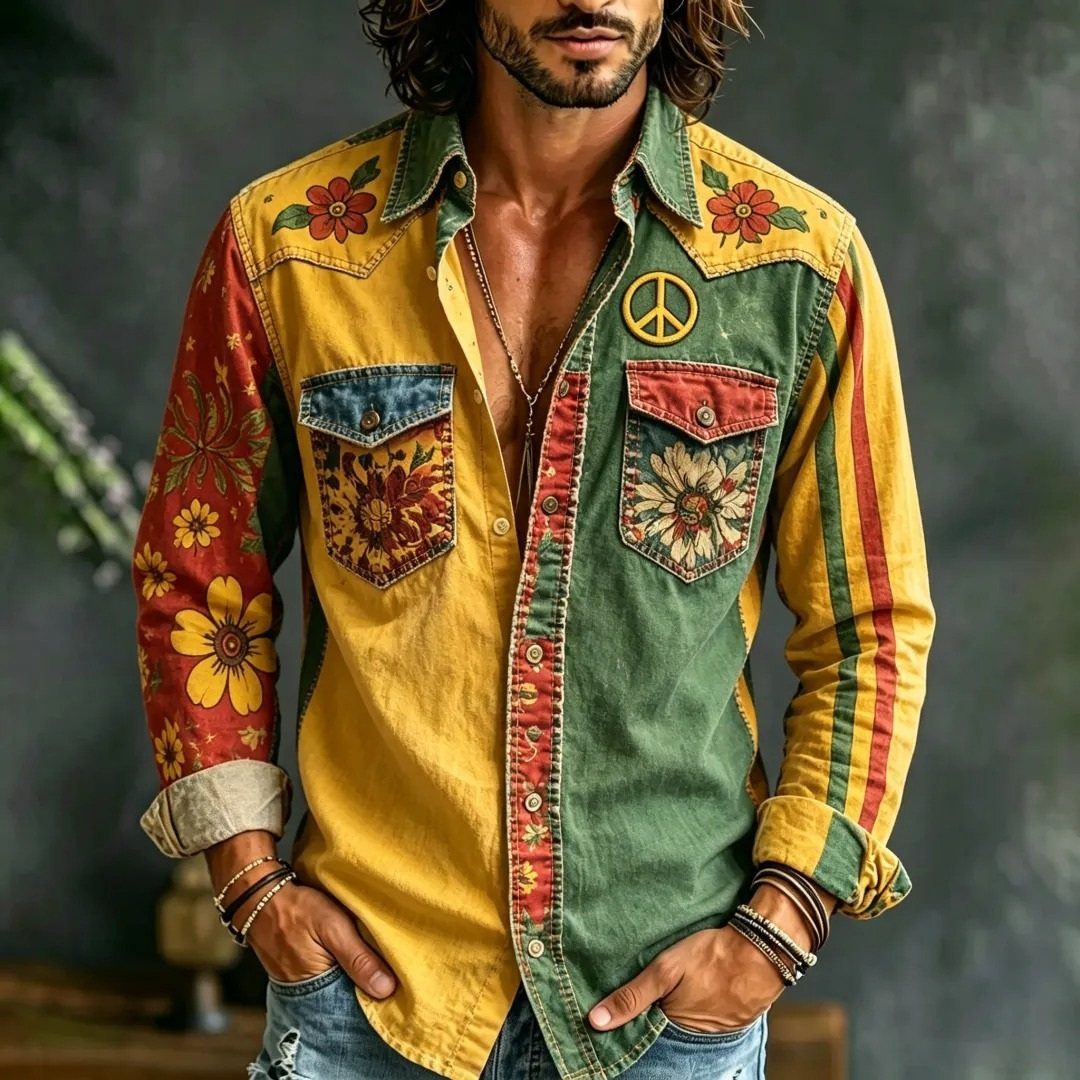
Floral prints in saturated colors marked a deliberate shift from conservative dress. The peace sign patch and embroidered details signal countercultural affiliation without subtlety.
This works best if you commit to the full aesthetic: worn denim, longer hair, visible age on the fabric. A single bright shirt paired with otherwise restrained pieces tends to look costumed rather than intentional.
The fit here is loose through the body with a straight hem, which keeps the pattern from feeling compressed. Look for cotton or rayon blends that let the shirt move.
3. Button-Down Shirts
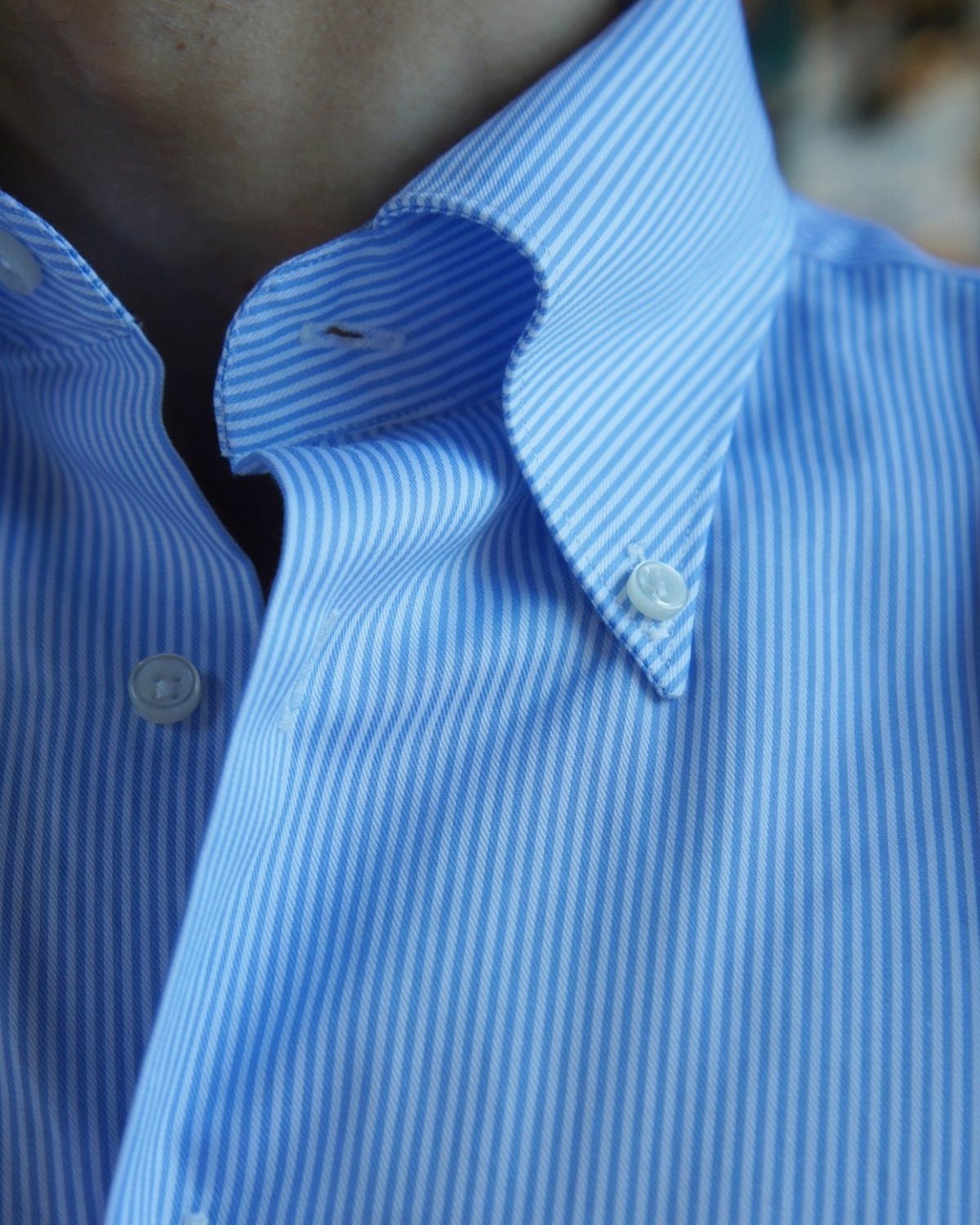
A pinstripe button-down in blue and white stays readable at arm’s length and pairs with nearly every blazer or sweater you own.
The collar buttons down, which keeps the points flat whether you wear a tie or leave the neck open.
Oxford cloth holds its shape through multiple wears and softens with age rather than looking worn out. Fit the shoulders first: the seam should end where your shoulder does, not drape past it.
Slim fits work if your build supports them, but a straight cut through the body is easier to layer and still looks sharp tucked or untucked.
4. Tailored Suits
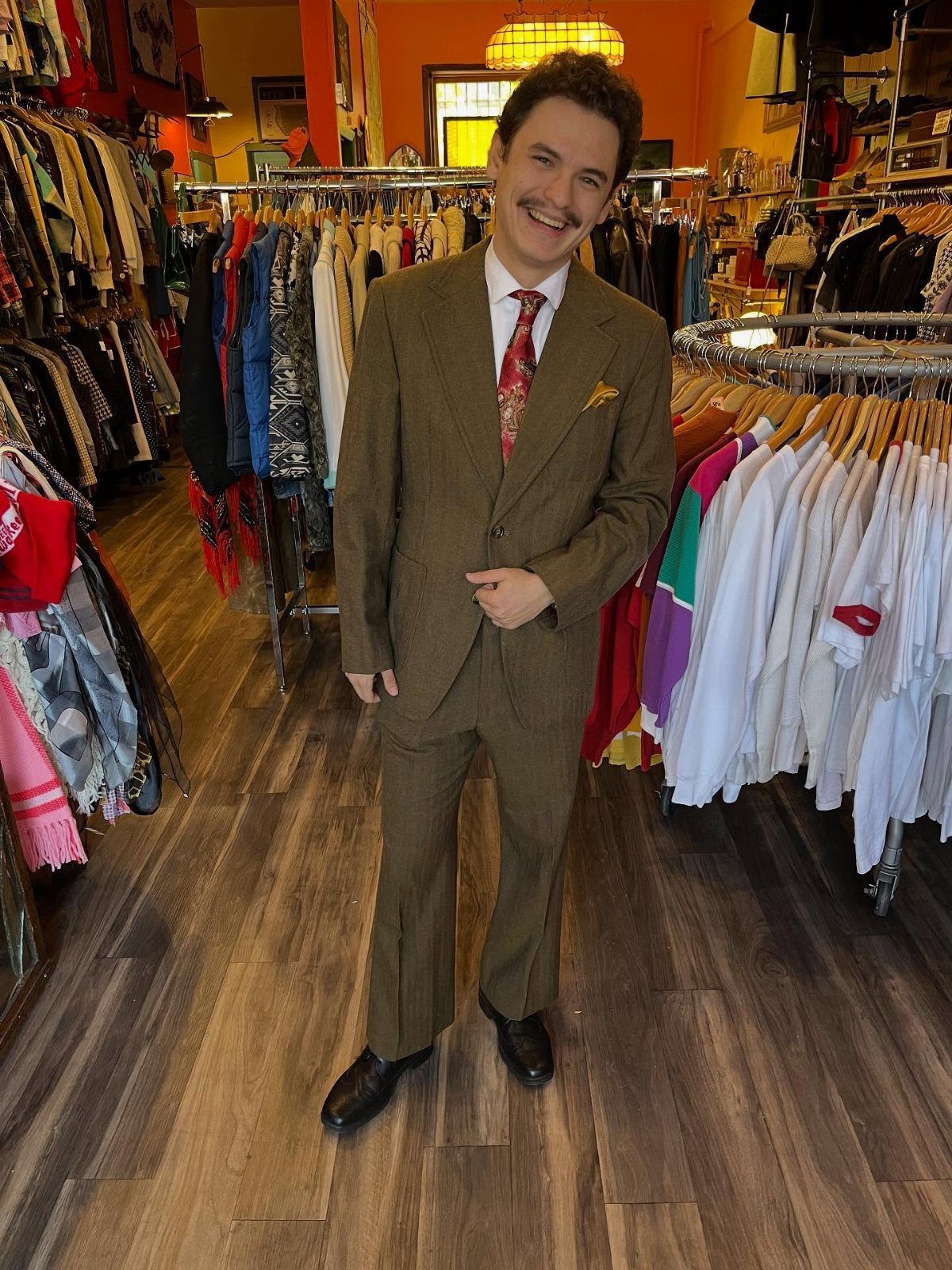
The brown suit narrows at the waist and through the leg, a silhouette that defined the decade and still holds up when the proportions are right. The lapels here stay slim, which balances the narrow trouser without looking pinched.
Get the jacket fitted through the chest and shoulders, then taper the trousers to end at the shoe with minimal break.
A red tie adds contrast without requiring pattern, and black shoes ground the look. Wear this to work or formal events where you want to stand out without dressing louder than the room.
5. Mod-Style Sunglasses
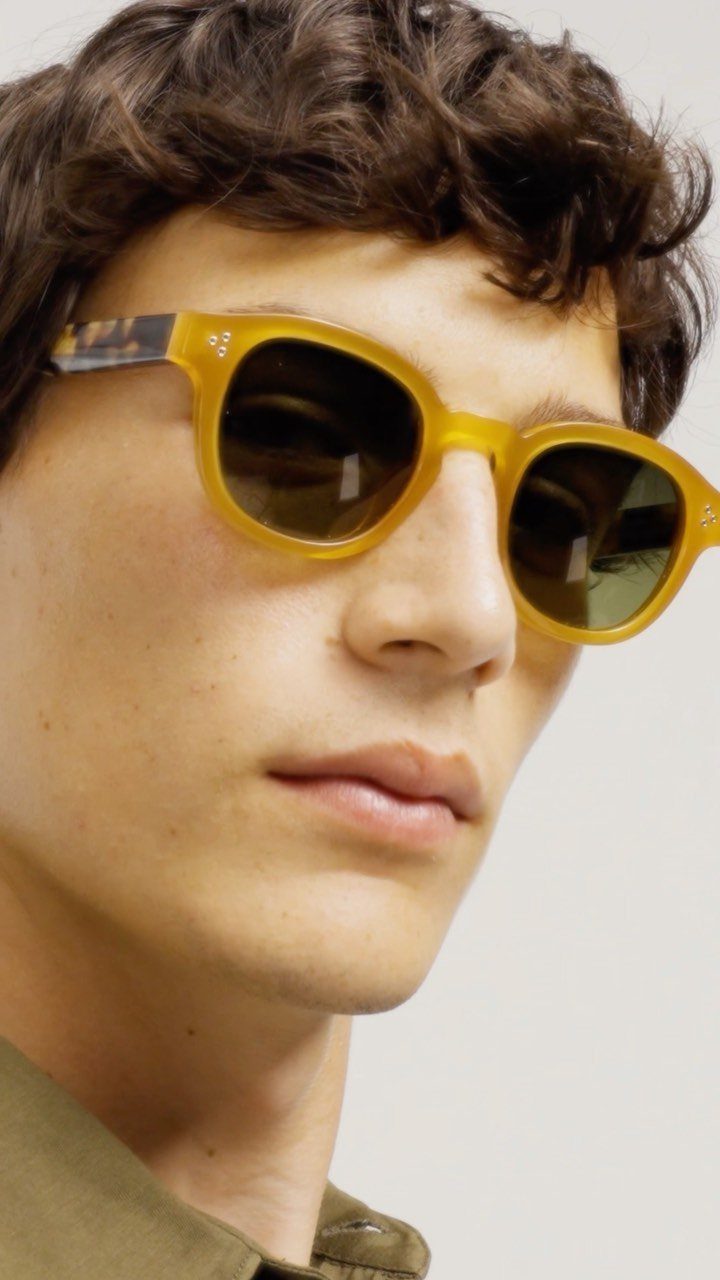
Bold frames in saturated colors, often with rounded or squared shapes, defined the mod aesthetic. Yellow, white and tortoiseshell were common choices, sized large enough to make a statement but proportioned to the face.
The frames credited here draw from mid-century silhouettes, which means thicker acetate and pronounced angles or curves.
Pair them with simple clothing so the sunglasses carry the visual weight: solid knits, plain shirts, minimal accessories. They read best on faces with balanced proportions; if your features are already angular, rounded frames soften the overall look.
6. Bell Bottom Pants
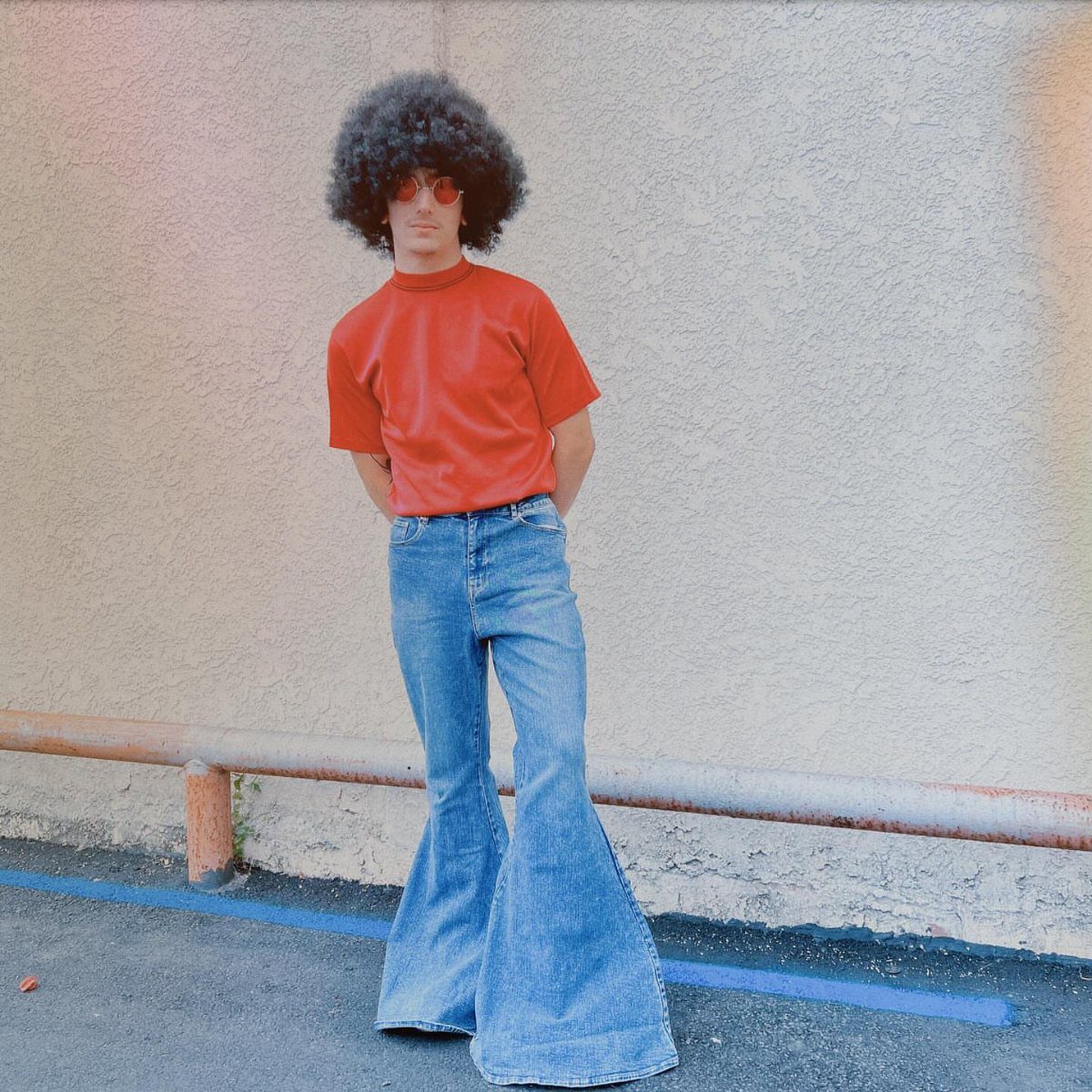
Bell bottoms flare from the knee down, widening to cover most of the shoe. The effect elongates the leg and balances broader shoulders or a wider torso.
Denim versions work best in medium to dark washes, which keeps the volume from overwhelming the outfit. Pair them with fitted shirts or tees so the silhouette stays legible.
The flare should start partway down the leg and widen gradually: too abrupt and it looks theatrical. Wear shoes with some height or a thicker sole to keep the hem from dragging.
7. Mid-Century Casual Outfits
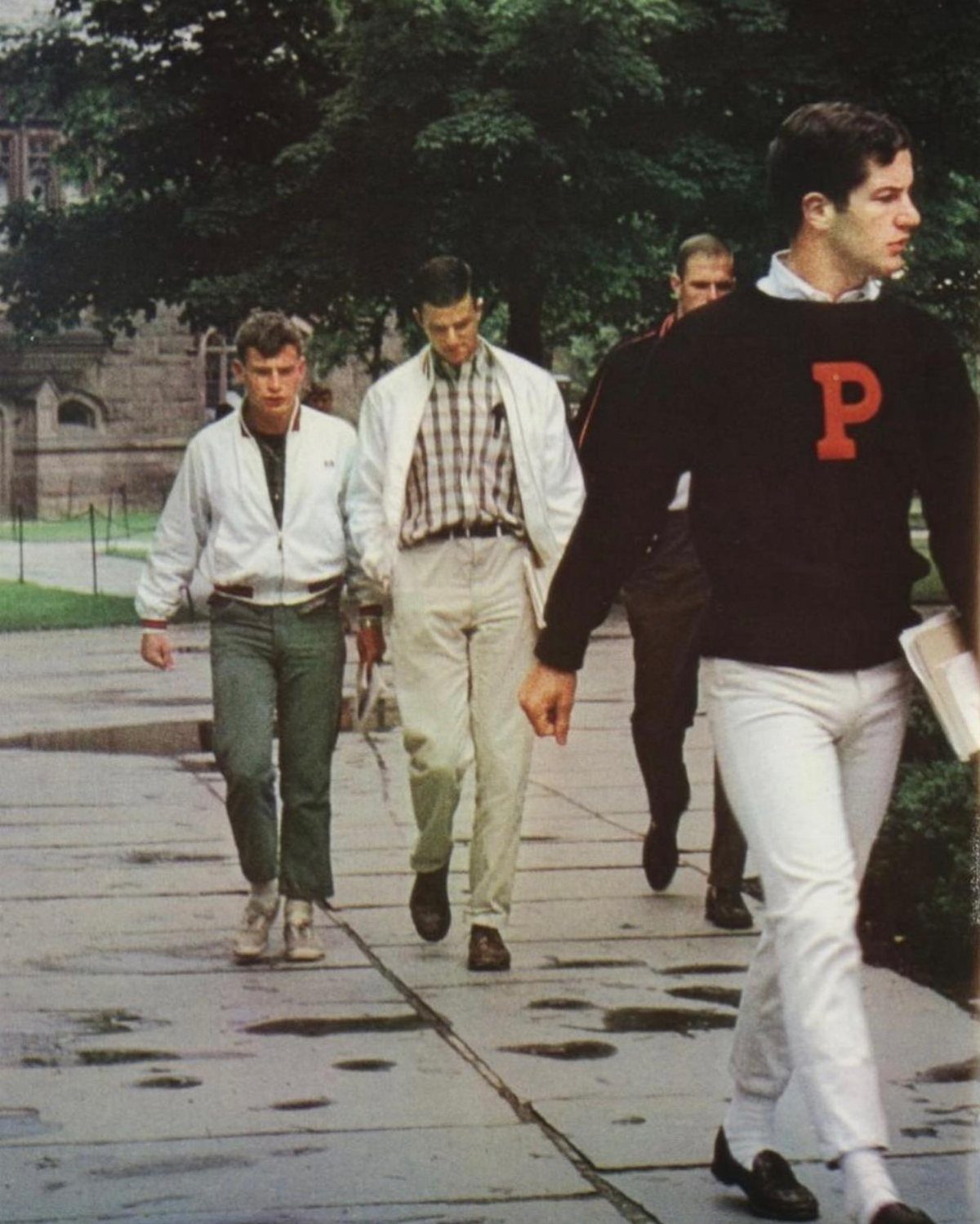
Letterman sweaters and light jackets over tailored trousers built a dressed-up casual look that worked for campus or weekend social events. The pieces stay structured without requiring ties or dress shoes.
Fit the trousers slim through the leg and pair them with knitwear that ends at the hip.
The letterman sweater adds visual interest through contrast sleeves or large letters, but a plain crew neck works just as well for rotation across multiple outfits. Keep shoes simple: loafers or clean sneakers in neutral tones.
8. Vintage Knit Polo Shirts
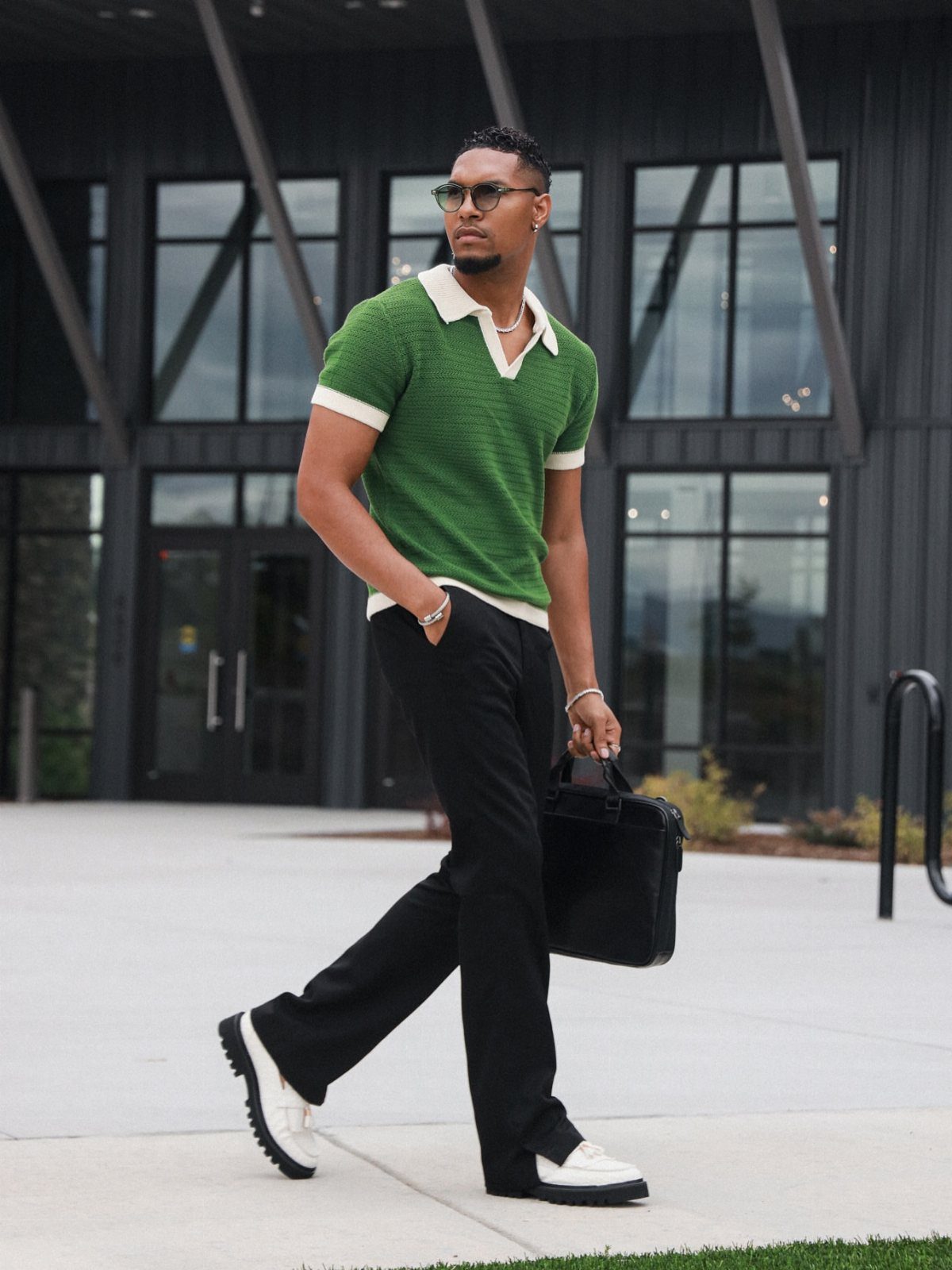
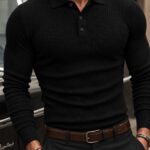
Textured knit polos in saturated colors replace the smoothness of standard cotton with visible stitching and a heavier hand. Green, mustard and burnt orange were common choices, all substantial enough to work as outerwear in mild weather.
The collar here stays short and the fit runs closer to the body than camp collar shirts from the same period.
Pair it with darker trousers so the color registers first. A briefcase or structured bag reinforces the professional edge this look carries despite the casual fabric.
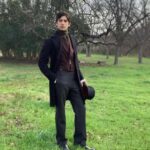
9. Fedora Hats
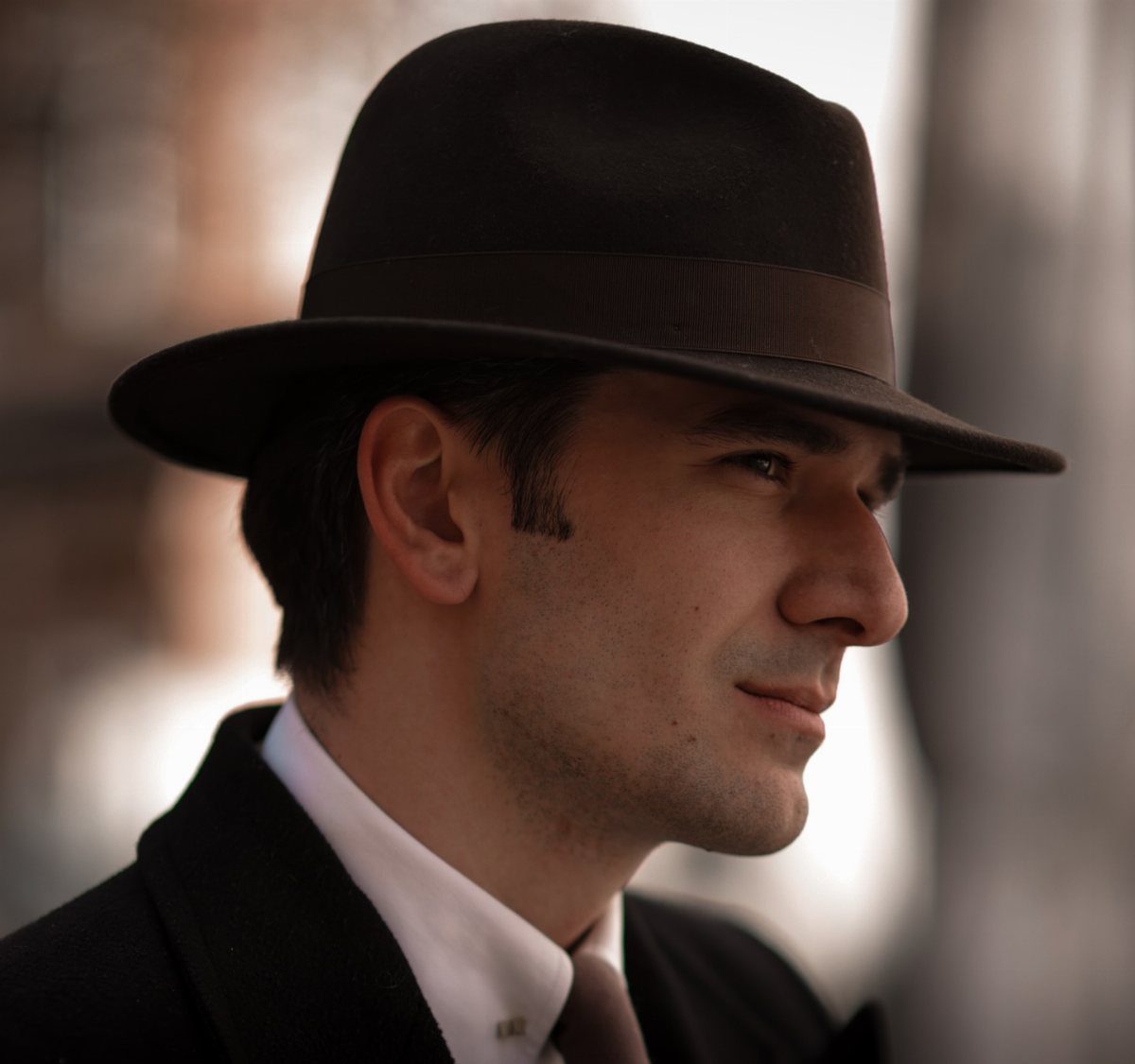
A felt fedora in brown or charcoal adds formality without changing the rest of the outfit. The crown sits higher than a trilby and the brim runs wider, which balances broader shoulders or a larger frame.
Size it so the band sits just above your ears without pressing down.
Pair it with tailored suits or overcoats in similar tones: brown fedoras work with camel, tan and chocolate, while grey or black versions match charcoal and navy. Avoid wearing it indoors, which reads as affected rather than considered.
10. Denim Jacket with Tie
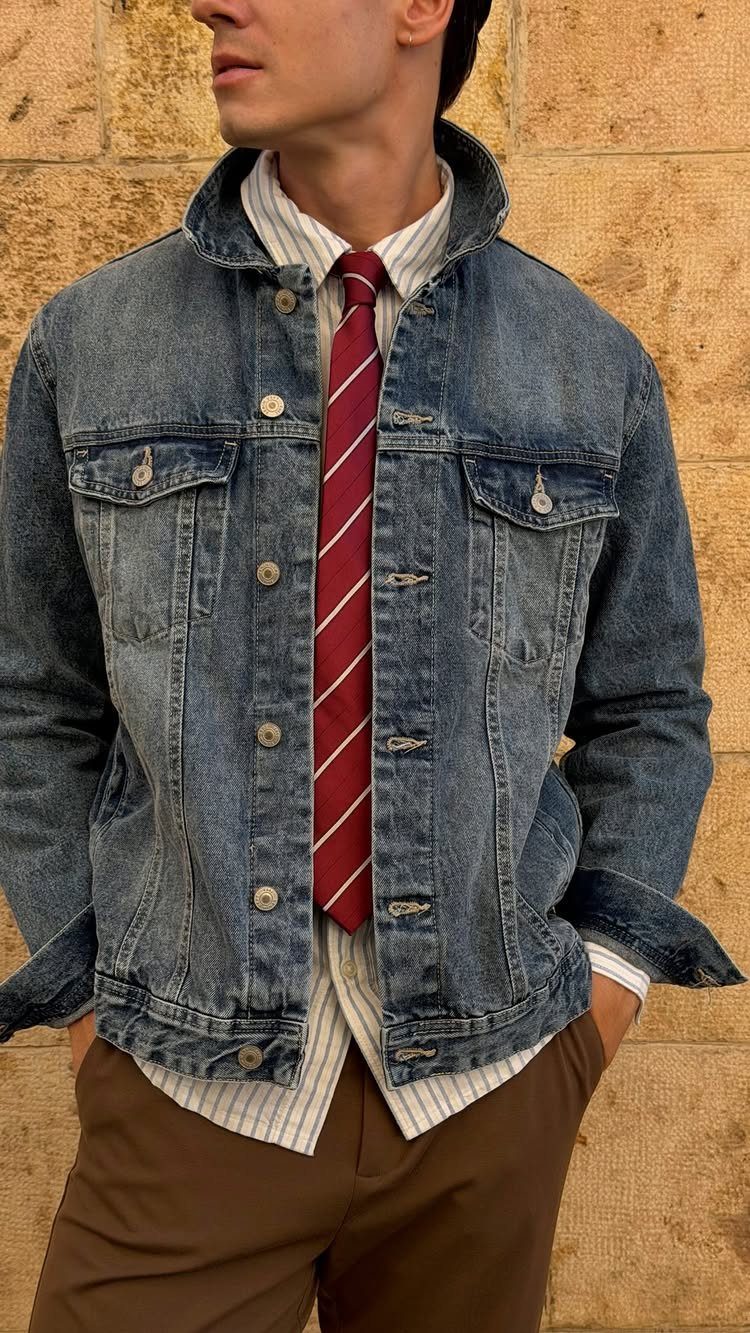
Pairing a denim jacket with a tie mixes formality and workwear in a way that requires confidence to carry.
The striped shirt and red tie here keep the look from sliding into pure casual, while brown trousers warm up the blue denim.
Fit the jacket close through the shoulders so it sits over the shirt without bunching.
The tie should be narrow to match the proportions of the jacket’s collar. This works best for informal gatherings or creative workplaces where a full suit reads too stiff.
11. Harrington Jacket with Plaid Lining
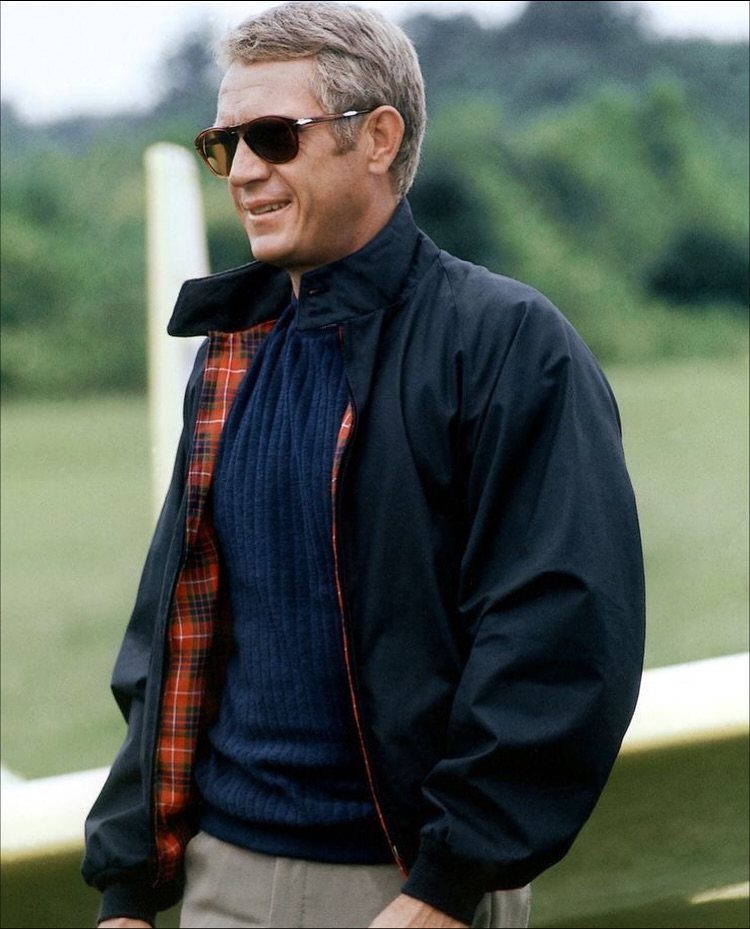
The Harrington jacket zips up the front and features a plaid or tartan lining visible at the collar and cuffs.
Navy, tan and olive shells were standard, paired with red, orange or yellow plaid that shows when the collar flips up.
The fit ends at the waist with elastic cuffs and hem, which gives it a clean silhouette over sweaters or shirts.
Pair it with jeans or chinos in neutral tones so the plaid carries the visual weight. This jacket moves between casual and semi-formal settings depending on what you wear underneath.
12. Vintage Leather Jacket
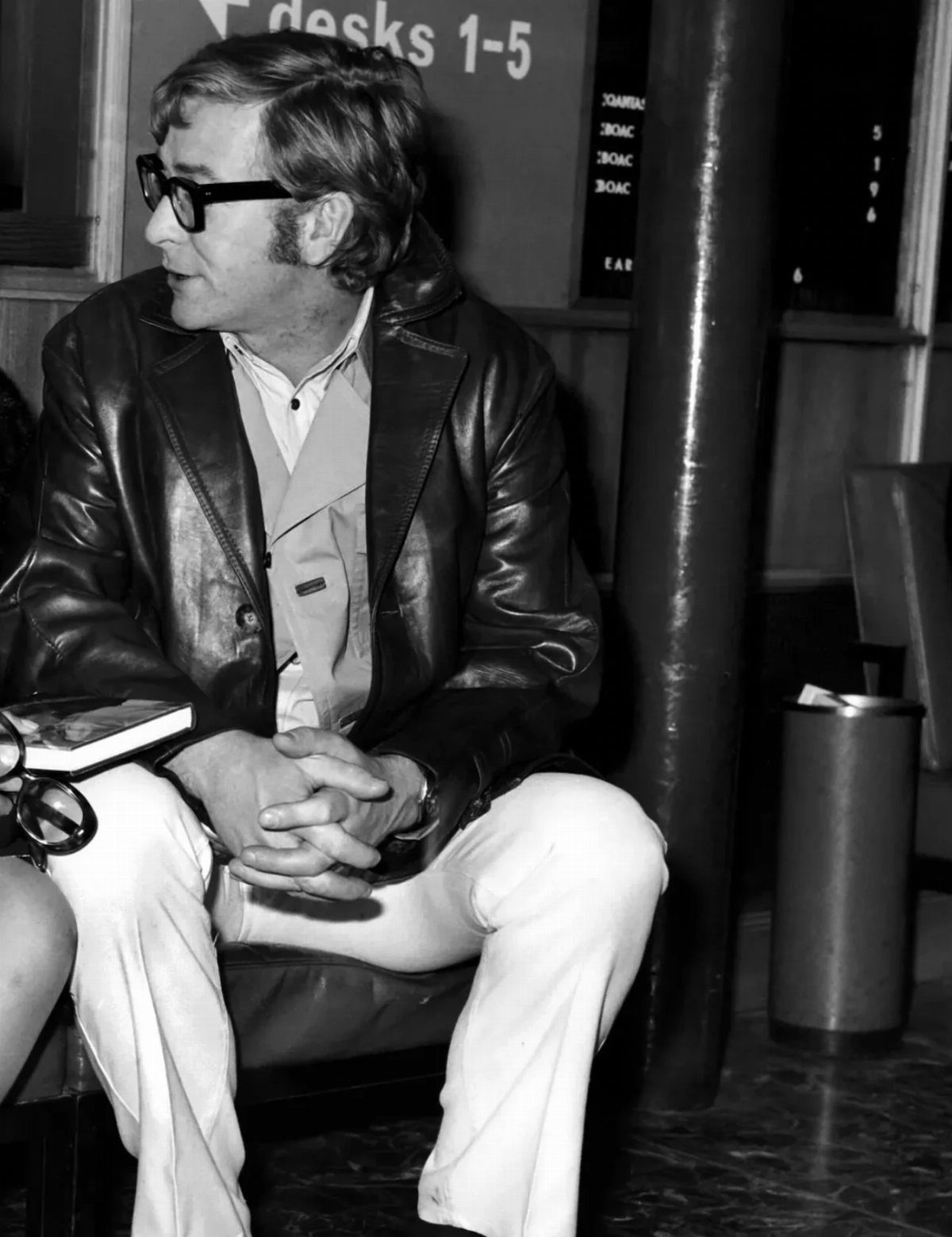
A black leather jacket with a straight zip and minimal hardware reads more restrained than biker styles from the same period. White or light trousers create sharp contrast and keep the overall look from turning too dark.
Fit it close through the chest and shoulders but with enough room to layer a shirt underneath.
Leather softens and molds to your frame over time, so buy it snug rather than loose. Pair it with collared shirts for a polished edge or plain tees for weekend wear.
13. Patterned Trousers with Blazer
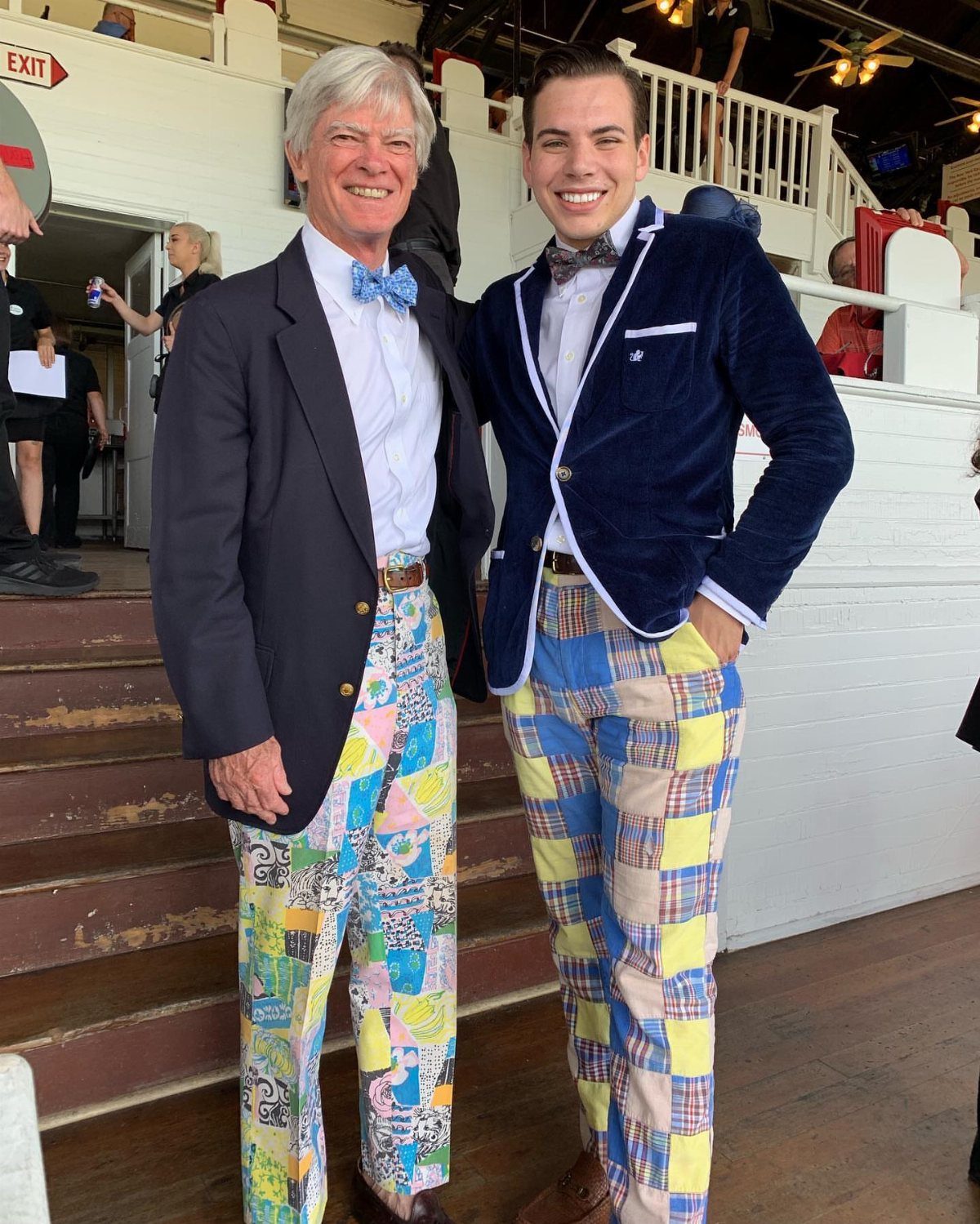
Plaid or check trousers shift the visual weight below the waist, which lets you keep the jacket simple. The patterns here run bold enough to register from across a room but stay grounded by the solid blazers.
Match the blazer to one color already in the trousers: if the plaid includes navy, wear a navy jacket. Fit both pieces close through the body so the pattern stays legible rather than bunching at the waist.
Brown or tan leather shoes work with most plaid combinations. Save this for social events or casual Fridays where a plain suit feels too formal.
Silhouette and Fit of Clothing
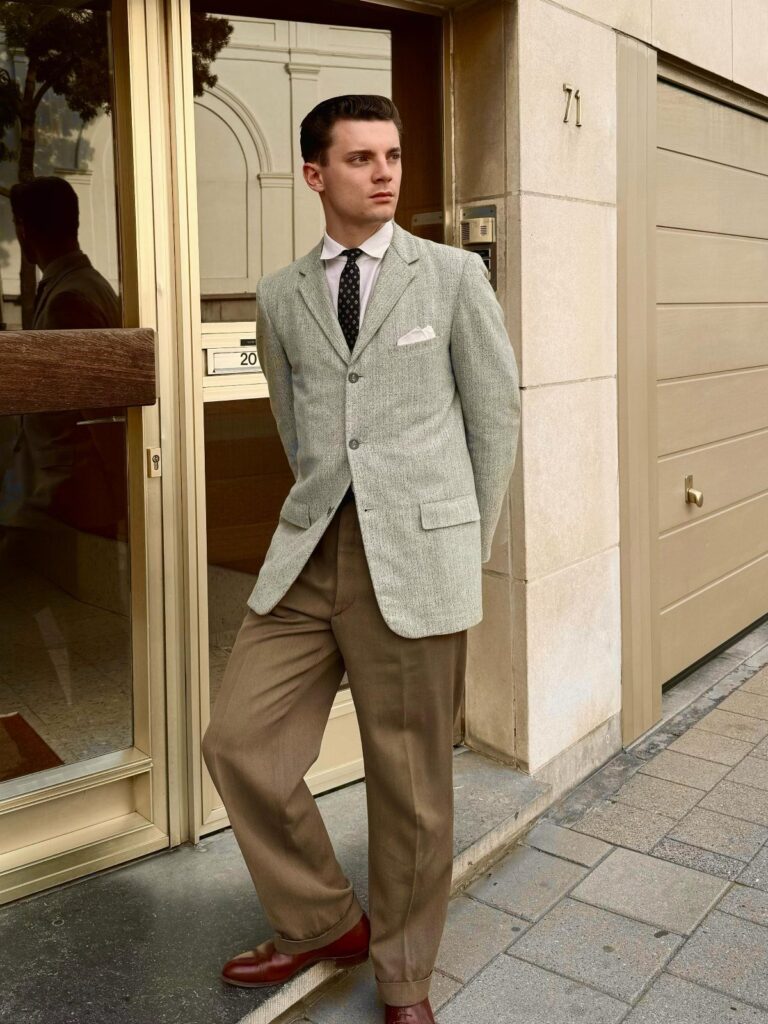
Italian cuts dominated the decade, offering sharp tailoring that emphasized a streamlined profile. The silhouette ran slim through the chest and tapered through the leg, creating clean vertical lines that read as polished without feeling stiff.
Trousers sit high, right where the torso meets the hips, then taper down to the ankle with almost no fabric pooling at the shoe.
Structured shirts hold their shape through the day and layer cleanly under jackets without bunching at the armhole.
The tailored approach works across formality levels. A slim-cut suit handles work or evening events, while fitted trousers paired with a turtleneck or polo keep the same proportions for casual settings.
Every piece in the outfit should share that fitted, deliberate look rather than mixing loose and tight.
Fabrics Used
Polyester and rayon became common for their wrinkle resistance and easy care, which made them practical for travel or long days where a pressed look mattered.
Velvet added texture to jackets and trousers, creating visual weight without requiring pattern. The fabric carries formality, and darker tones like burgundy, navy or forest green suit it better than lighter shades.
Mixing fabrics across an outfit lets you balance texture and function. A wool blazer over a cotton shirt keeps the look grounded, while a velvet jacket paired with cotton or wool trousers adds contrast without feeling mismatched.
Hairstyles and Grooming
Side-parted hair defined the polished aesthetic, combed neatly and held in place with pomade or gel. The part sat high and the hair stayed close to the head, which complemented the tailored clothing and clean lines that marked the decade.
The Beatles shifted the standard as the decade progressed, moving from short, controlled cuts to longer hair that signaled a break from conservative norms.
Men who followed that shift grew their hair out, sometimes keeping the back short while letting the front lengthen and sweeping it away from the face with oil or gel.
Both approaches work with fitted clothing, but the shorter, side-parted version reads more formal and pairs better with suits and structured pieces.