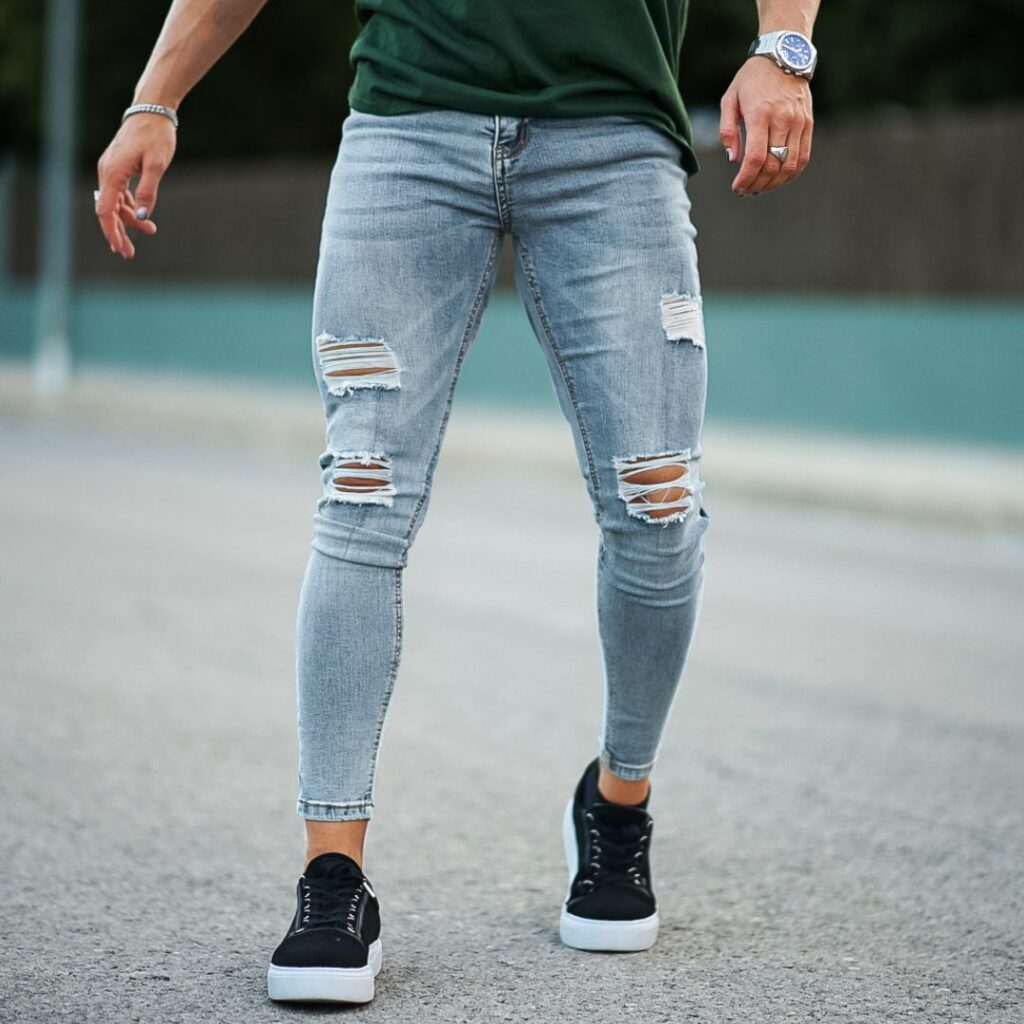
Skinny pants, double-breasted blazers and long trench coats covered the range in 2012, from slim-cut denim that defined everyday wear to structured outerwear that anchored formal silhouettes.
Your build decides which ideas hold up: skinny pants work best on slim frames, while longer coats suit taller builds and can shorten the leg line on shorter men.
1. Skinny Pants
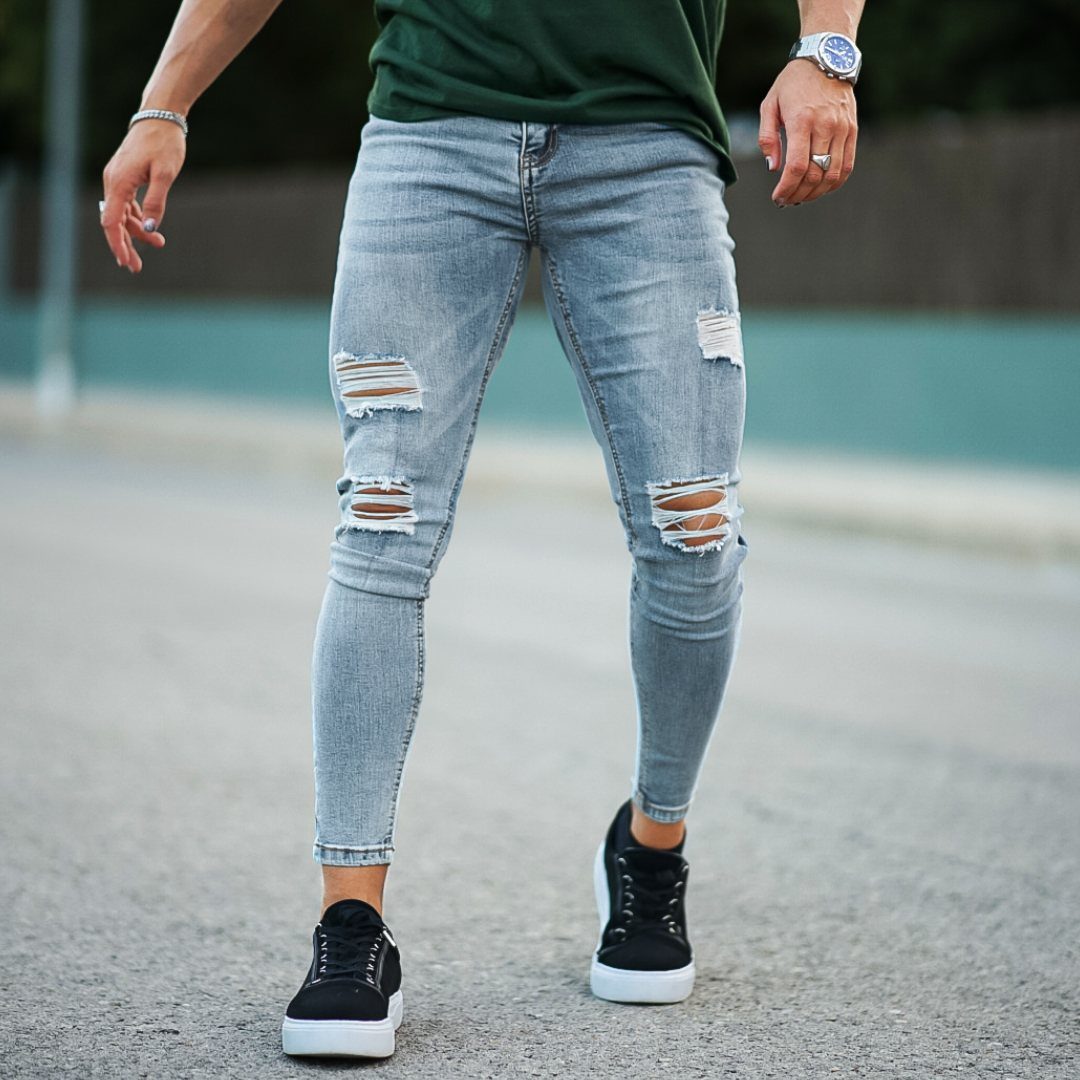
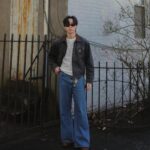
Skinny jeans in light wash denim sit close to the leg from hip to ankle, the fit that defined casual menswear through that period. Pair them with a solid tee and low-profile sneakers for a clean, modern silhouette.
The fit works best on slim builds. If your thighs carry more muscle or mass, the tension across the front can pull awkwardly and the leg opening may feel tight around boots or chunkier shoes.
Distressing at the knees softens the look and breaks up solid color. Keep the rest simple so the jeans stay the focus.
2. Layering with Jackets, Cardigans, and Scarves
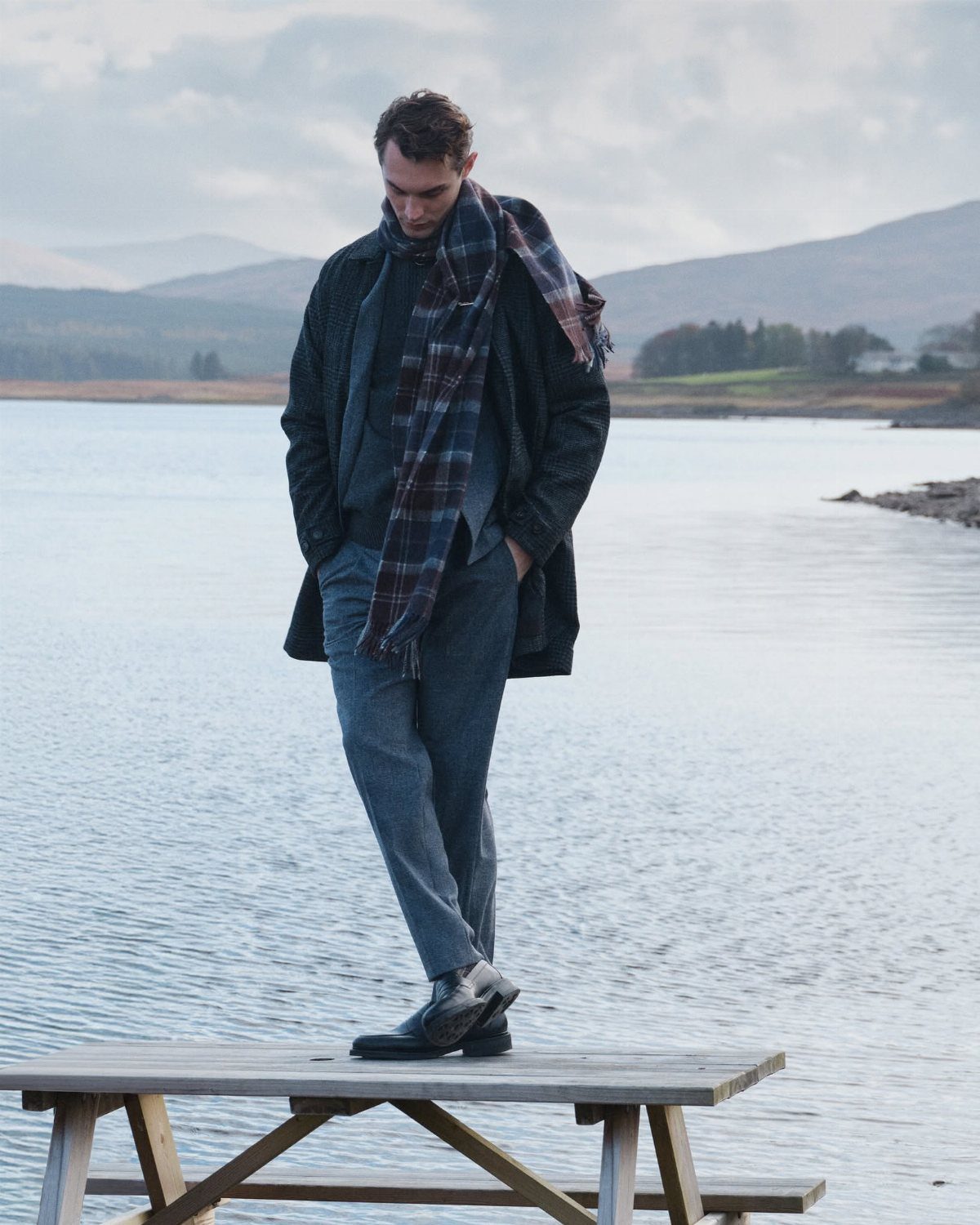
Cold weather lets you stack texture and weight without looking overdone. A dark wool jacket over a knit cardigan, finished with a plaid scarf, gives you 3 layers that work as a unit.
The cardigan sits under the jacket and adds warmth without bulk. Choose one in a neutral tone so it reads as part of the base rather than competing with the scarf.
The scarf is where pattern comes in: tartan or windowpane check in colors that echo the jacket or trousers ties the outfit together.
Keep the outer layer structured. A blazer or field jacket holds the silhouette better than something soft.
3. Double-Breasted Blazers
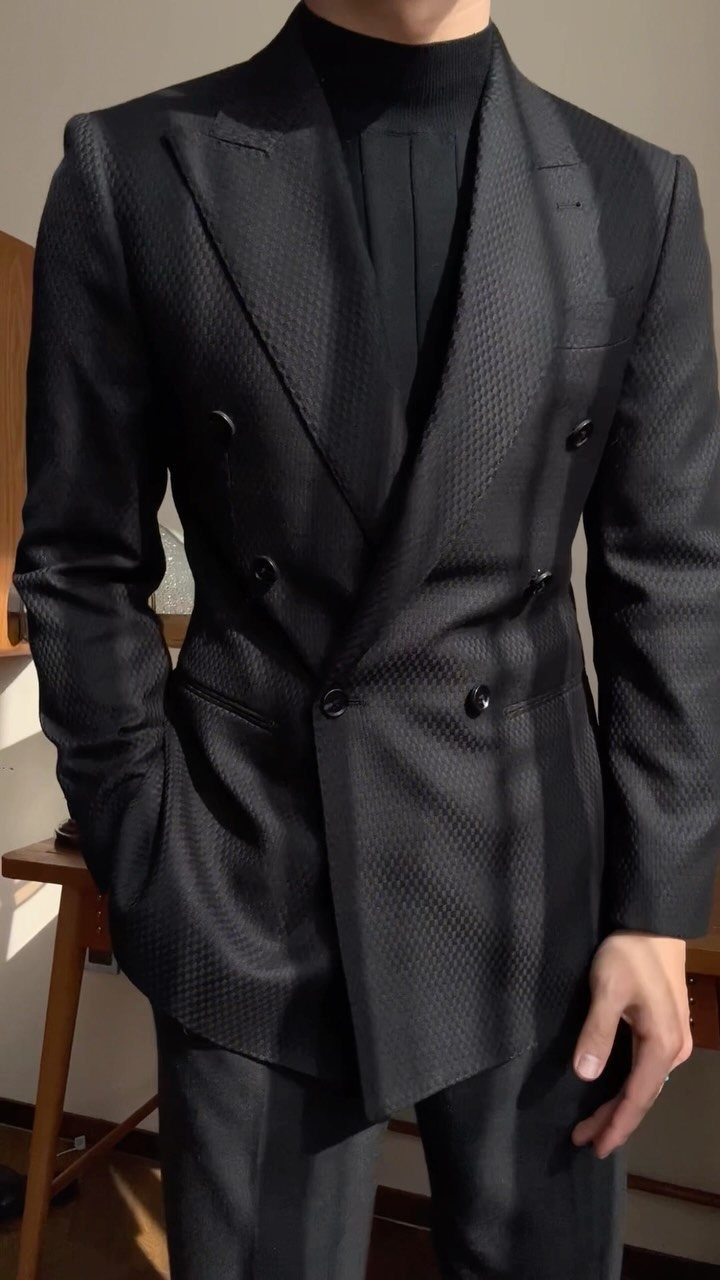
A double-breasted blazer fastens with 2 columns of buttons and creates a structured, formal silhouette.
The style reads formal, so save it for evenings or polished daytime events.
Worn with matching trousers, it functions as a suit. With contrasting chinos or denim, it loosens slightly but still carries more weight than a single-breasted blazer.
Fit matters here more than elsewhere.
Too loose and the front gapes; too tight and the button stance pulls. A tailor can adjust the waist suppression to match your build.
4. Suspenders
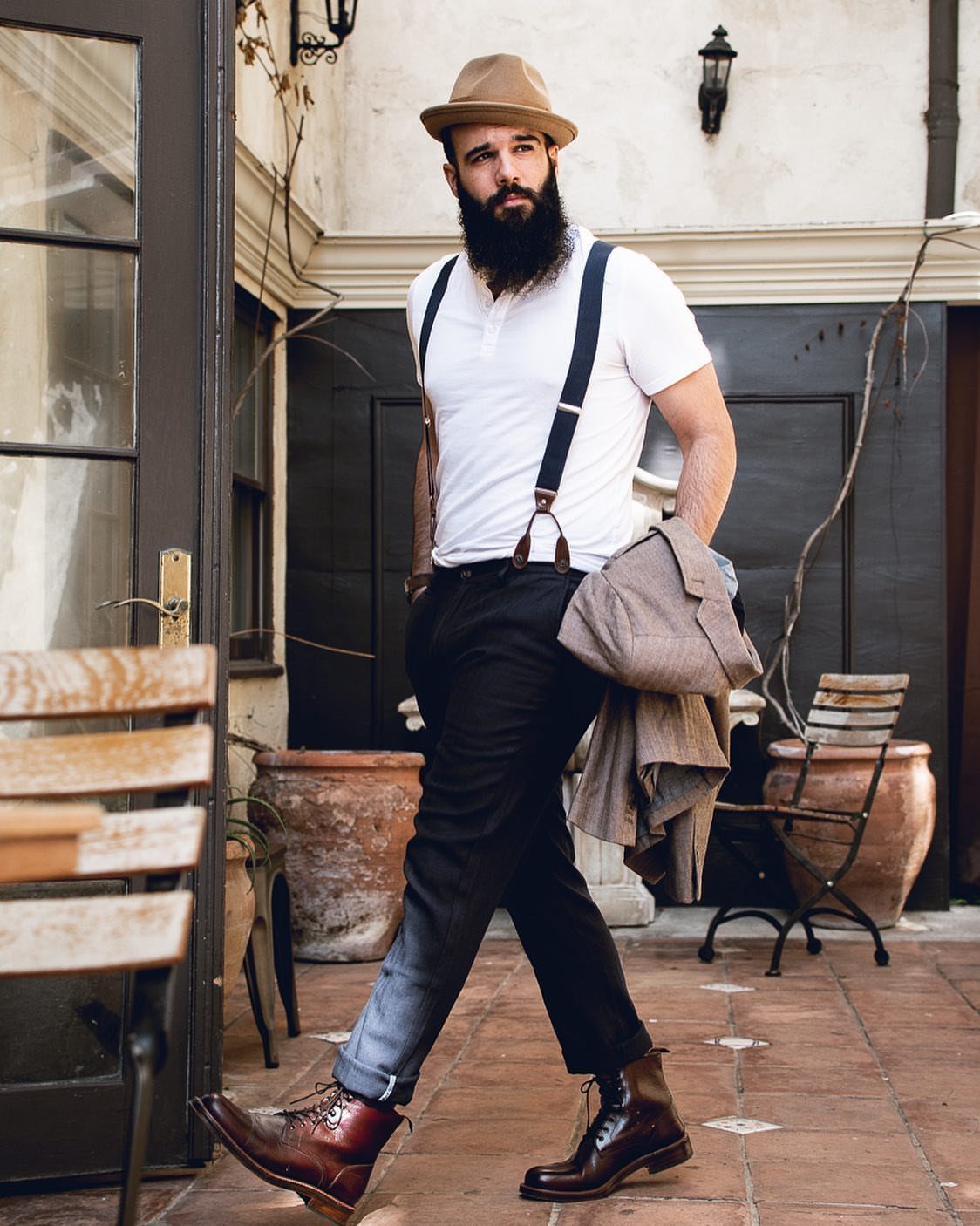
Suspenders hold trousers at the waist without a belt, attaching with clips or buttons sewn inside the waistband.
Button attachment is cleaner and more secure, but most off-the-rack trousers do not include the buttons. Clip-on suspenders work immediately, though they can slip under tension or mark delicate fabric.
Wear them snug enough to support the trousers without lifting them too high.
The waistband should sit at your natural waist, not below it. Skip the belt entirely; wearing both at once crowds the waistline and serves no purpose.
5. Loafers, Suede Shoes, and Stylish Boots
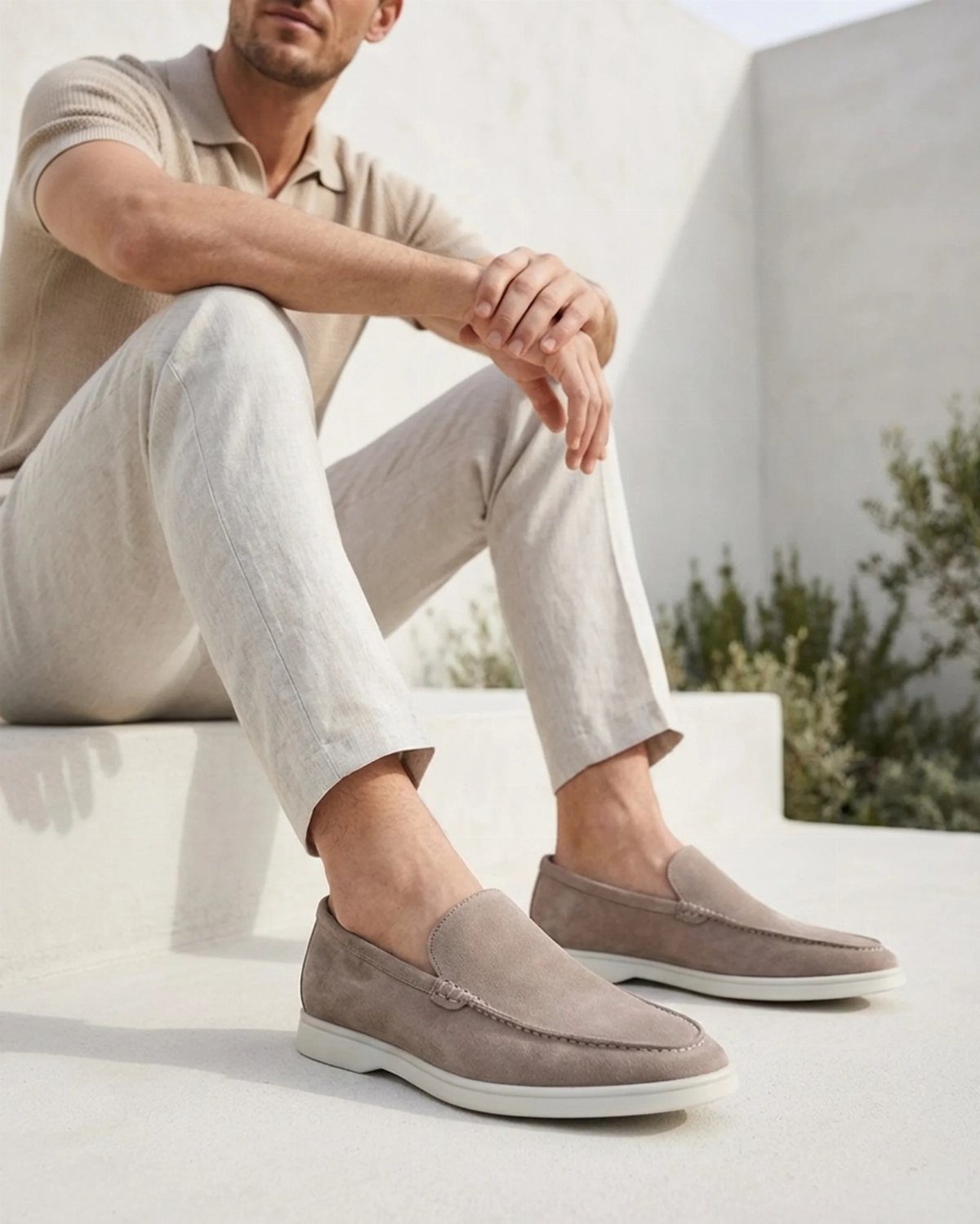
Suede loafers in brown or grey anchor smart casual outfits without the formality of leather oxfords. Slip them on with chinos or linen trousers, and the outfit reads polished but relaxed.
Suede works best in dry weather.
Water stains the nap and changes the color, and while a suede brush can lift most marks, repeated soaking shortens the material’s life. Keep a leather or rubber-soled alternative for rain.
Match the shoe color to your belt if you wear one.
Brown suede pairs with tan or cognac leather; grey suede with charcoal or black. The loafer silhouette keeps the leg line long, so avoid trousers that pool at the ankle.
6. Long Trench Coats
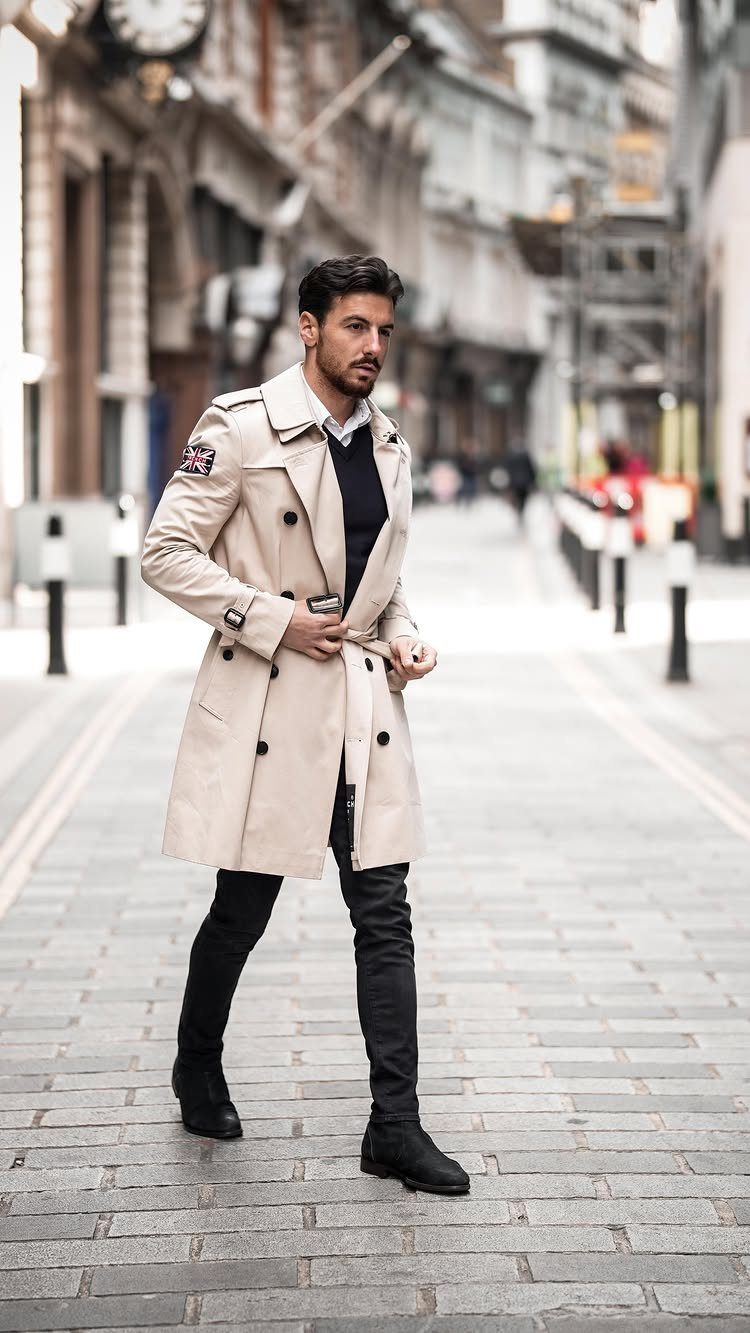
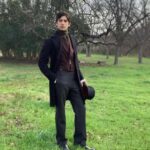
A trench coat that falls below the knee covers most of your outfit and anchors your silhouette in a single vertical line.
The length suits taller frames best. On shorter builds, a coat that extends past mid-thigh can shorten your legs visually, so consider stopping the hem closer to the thigh instead.
Fit through the shoulders and chest matters more than waist suppression. The coat should move with you when you walk, not pull or bind across the back.
7. Argyle Sweater with Trousers
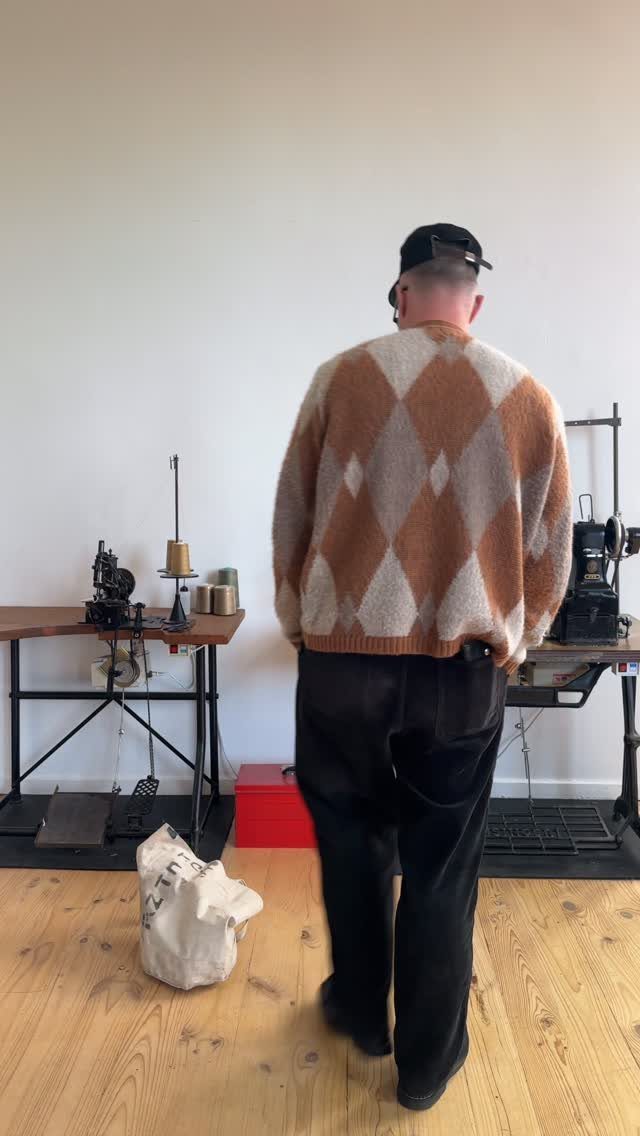
Argyle sweaters put geometric diamonds across the chest and sleeves, the pattern that swings between preppy and dated depending on how you wear it. Stick with neutral trousers and shoes so the sweater holds the focus.
Black trousers ground the look and let the knit sit front. Brown and beige tones in the argyle warm the palette without competing for attention.
The pattern works best in fine-gauge wool or cotton. Heavier knits can make the diamonds look chunky, and the silhouette reads bulkier than a solid sweater in the same weight.
8. Layered Long-Sleeve Polo
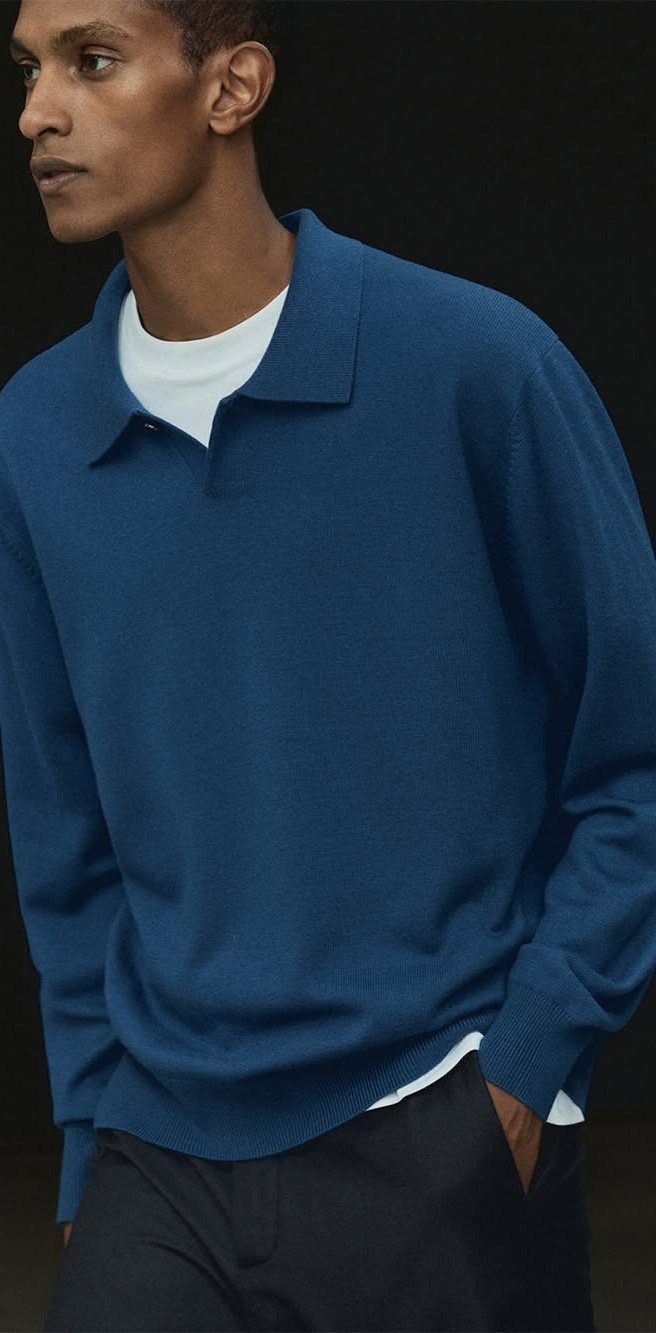
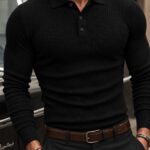
A long-sleeved polo layered over a white crewneck tee gives you 2 necklines and 2 textures without adding real bulk. The polo sits on top, the tee shows at the neckline and sleeves.
The white base adds contrast and stops a colored polo from feeling heavy. Blue over white is the simplest version; darker tones like navy or charcoal work the same way.
Fit the polo close but not tight. If it pulls across the chest or shoulders, the tee underneath bunches and the layers lose their shape.