Country fashion moves between statement belt buckles and cowboy boots on one end and a suede jacket over dark jeans on the other.
One western piece at a time reads sharper than adding the hat, boots, buckle and vest all at once.
1. Cowboy Boots
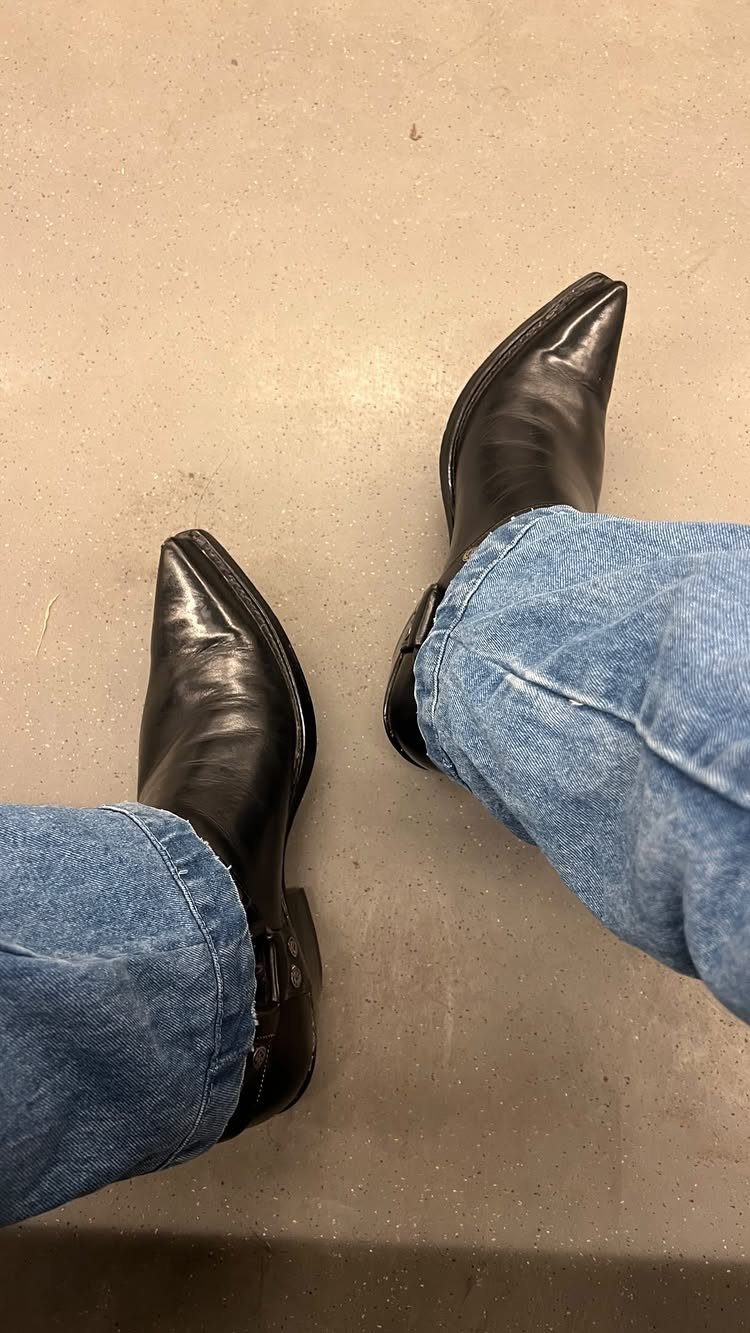
Cowboy boots anchor everything here, and black leather is the easiest pair to start with. The pointed toe and stacked heel give you a little height, and they work under straight or slightly bootcut jeans.
If you’re new to boots, let the shaft break in over a few wears.
Stiff leather softens with time, and the fit improves once the boot molds to your calf. Black pairs down better than tan when you’re building a rotation.
2. Pearl Snap Shirts
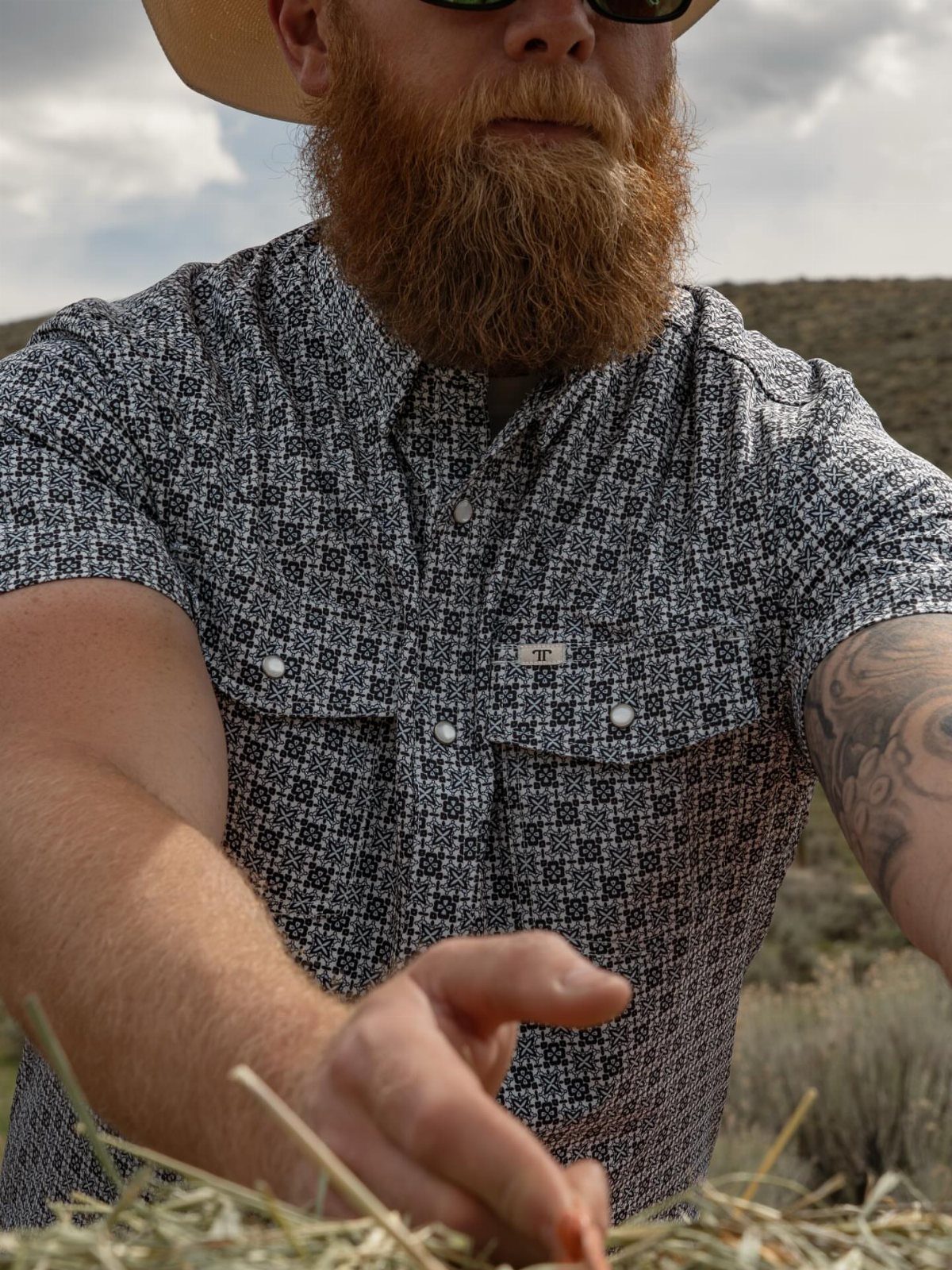
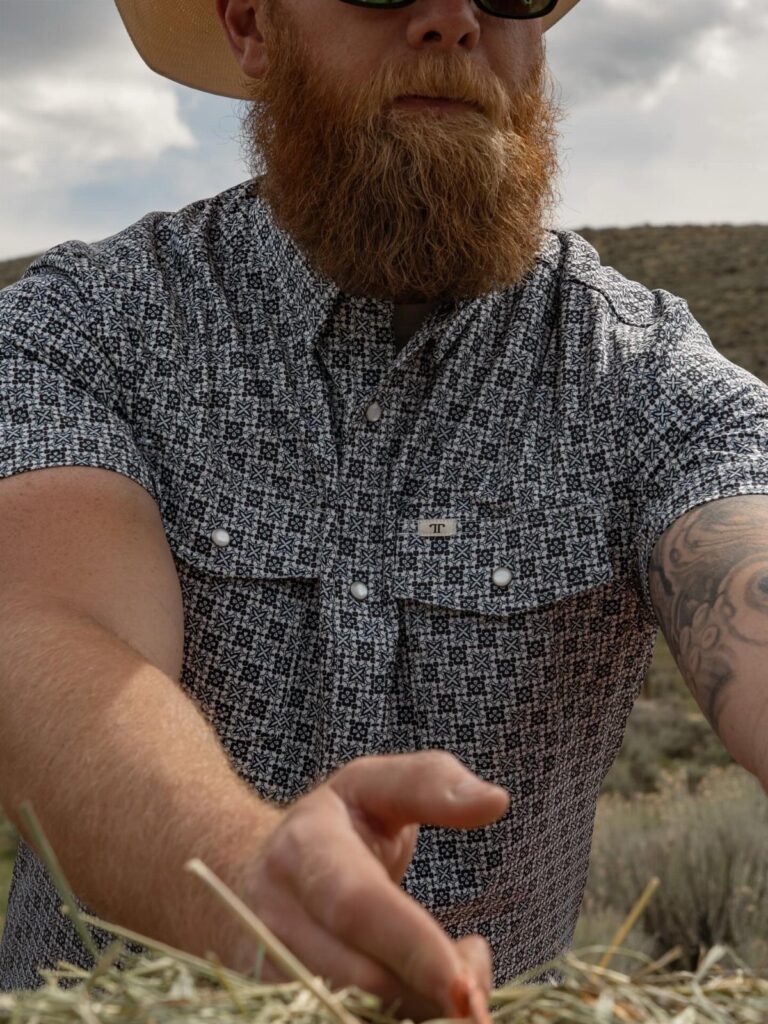
Pearl snaps close faster than buttons and sit flat under a jacket, which is why ranch hands prefer them.
The shirt itself can run plain or patterned, short sleeves work in summer, and the snaps give you the western detail without committing to full rodeo gear.
I like a fitted cut through the body.
Boxy pearl snaps read costume unless you’re actually working cattle. Pair it with denim or chinos, and skip the bolo tie until you know what you’re doing.
3. Plaid Western Shirts
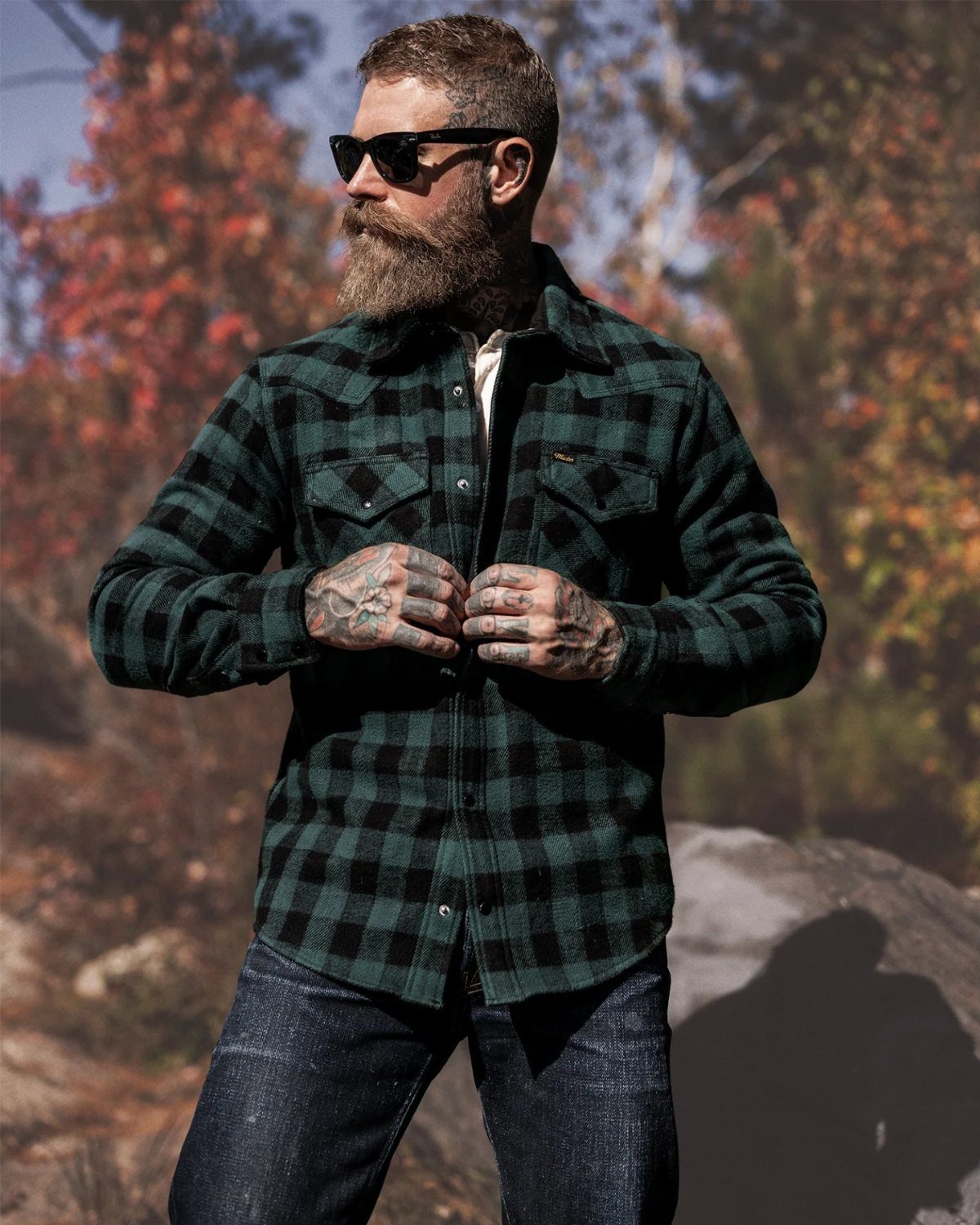
Plaid shows up in every decade of western style, and green or brown checks feel more grounded than red. The shirt usually has snap closures, pointed yokes and flap pockets, all of which separate it from a standard flannel.
Dark jeans keep the look from tipping into lumberjack territory.
I’d wear this with boots and a belt, nothing else competing. The plaid does the work, so everything else stays simple.
4. Vintage Denim
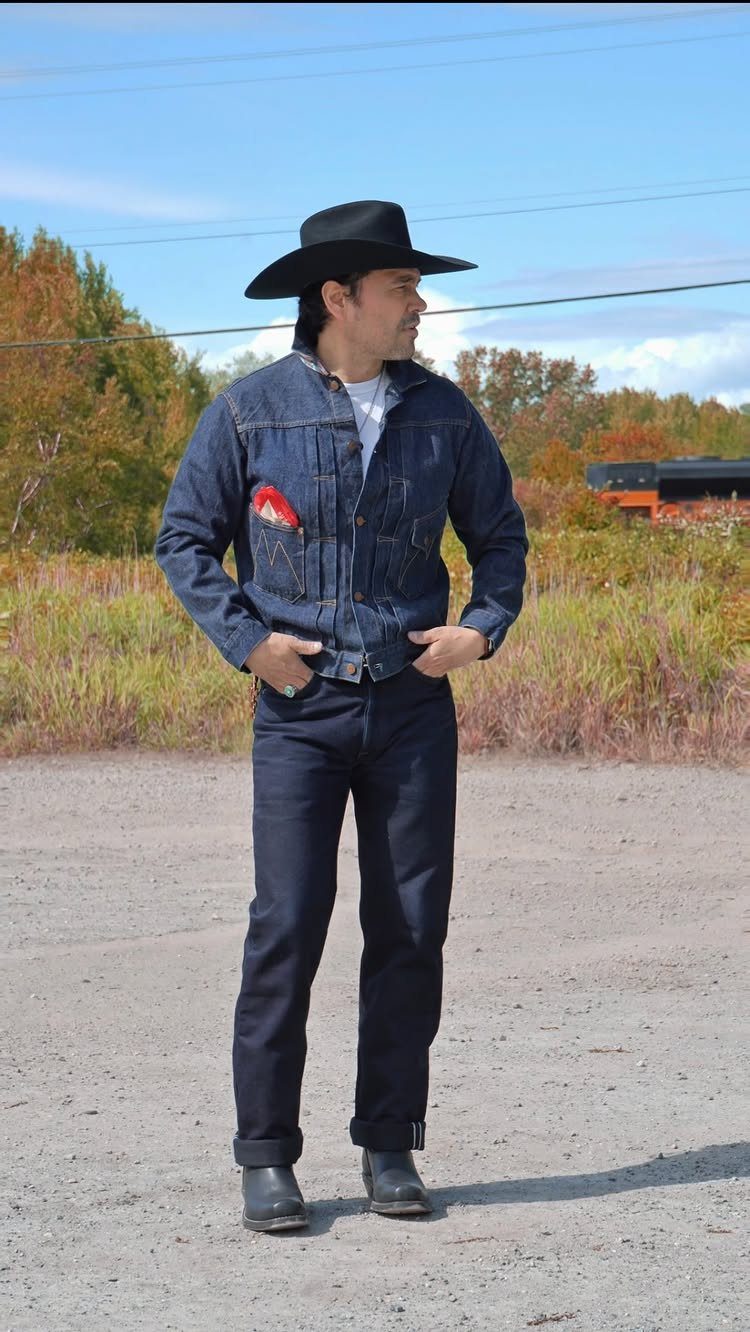
Vintage denim means thicker fabric, higher rises and cuts that actually last. A denim jacket over jeans only works when the shades differ: one dark, one light, or at least a full wash apart.
The black hat adds the western angle.
Without it, this reads as standard Americana, which is fine but not the same thing. If you’re after the full country look, the hat or the boots need to show up somewhere.
5. Earth-Tone Styling
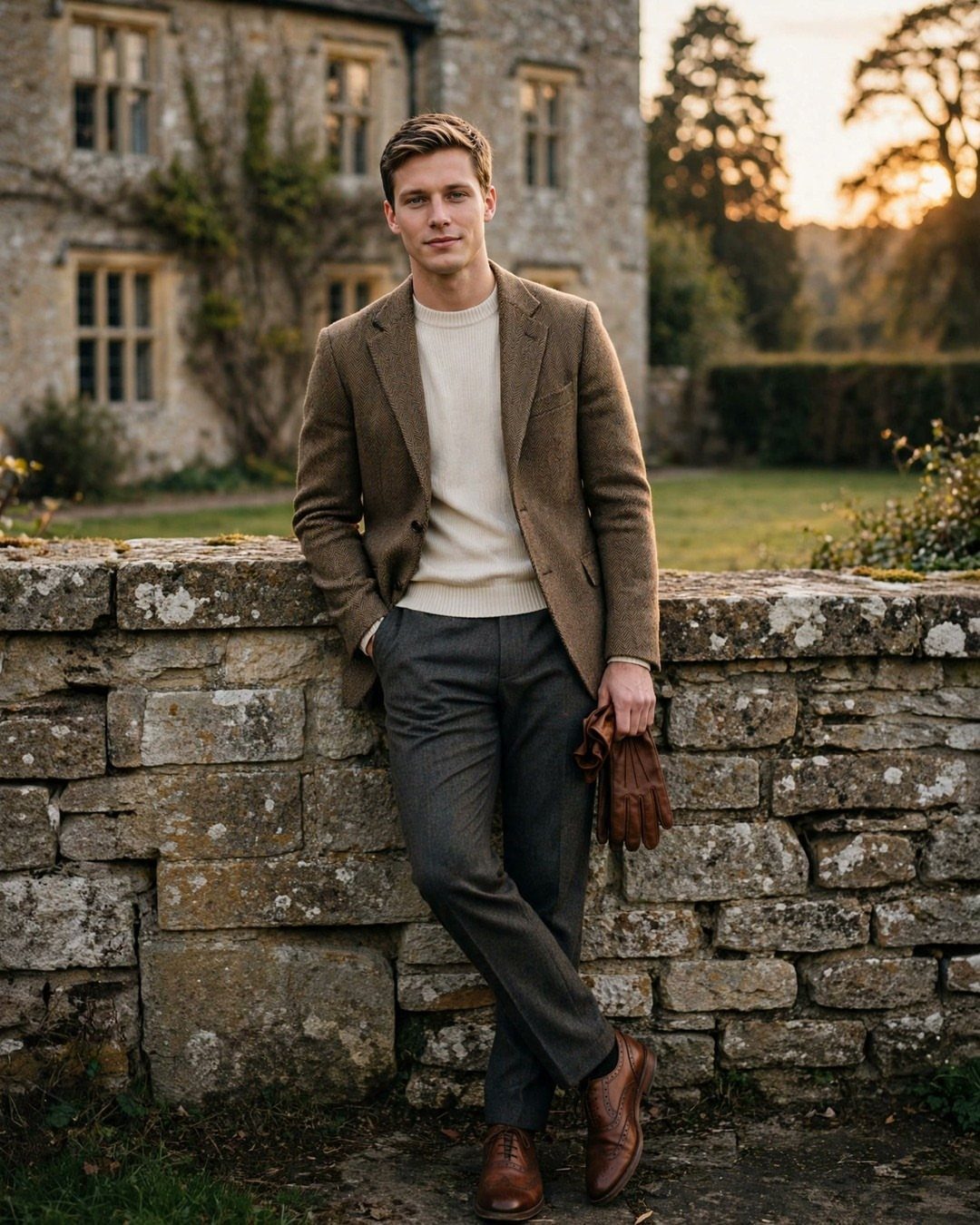
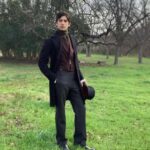
Earth tones pull from the actual landscape: browns, tans, creams and greys that layer without clashing. A brown blazer over a cream knit gives you the palette and reads as natural rather than deliberate.
This works for men who want the country feel in a dressier setting. Swap the blazer for suede if you want more texture.
6. Cowboy Hats
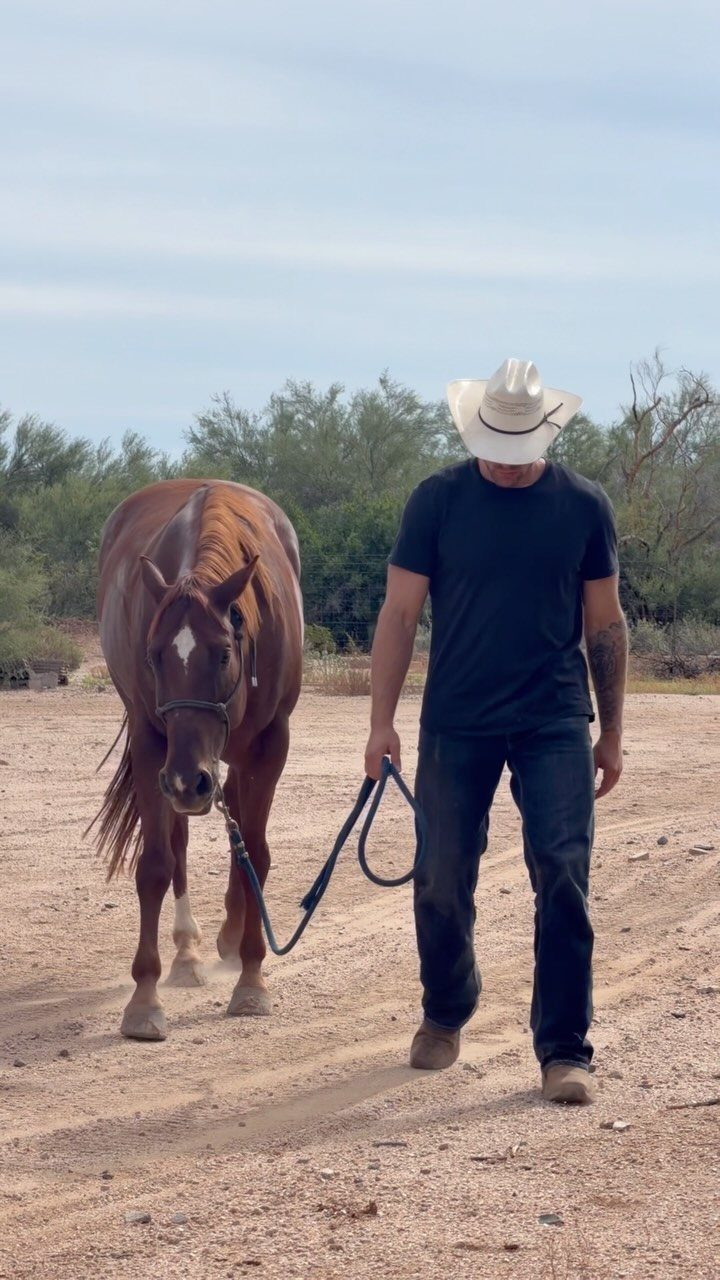
A cowboy hat changes how people read what you’re wearing. Jeans and a black tee are basic until you add the brim, and then it’s clearly western.
Felt hats suit cooler months, straw works in summer. The crown height and brim width vary by style, but a shorter crown looks better on most men than the tall cattleman shape.
If you’re not used to hats, start with a neutral felt and wear it enough that it stops feeling like a costume.
7. Suede Jacket
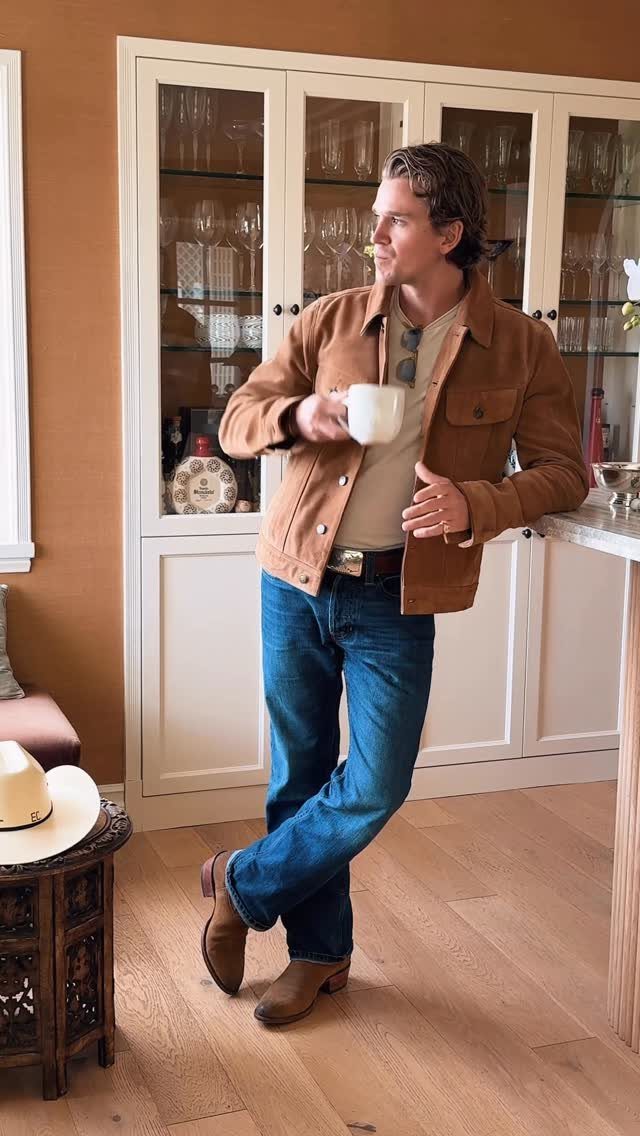
Suede adds texture without pattern, and brown works over anything you’d pair with denim. The trucker cut keeps it casual, with a shorter body that sits just below the belt.
Suede marks easily, so this isn’t the jacket for rain or mud.
Brush it after wear and store it on a hanger. I’d choose this over leather when the outfit needs warmth without the shine.
8. Bootcut Jeans
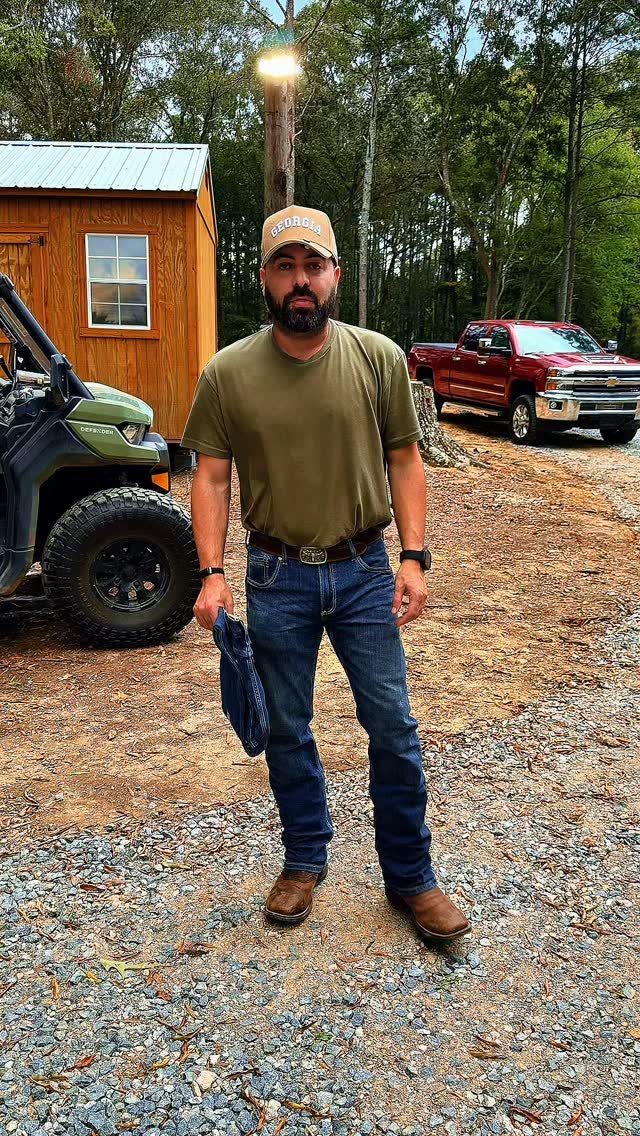
The slight flare from knee to hem lets the jeans sit over boot shafts instead of bunching at the ankle. That’s the whole reason bootcut exists, and it still makes sense if you’re wearing boots most days.
Straight fits are easier to find now, but bootcut balances the profile when you’ve got a pointed toe and stacked heel adding bulk below the calf.
9. Statement Western Belt Buckles
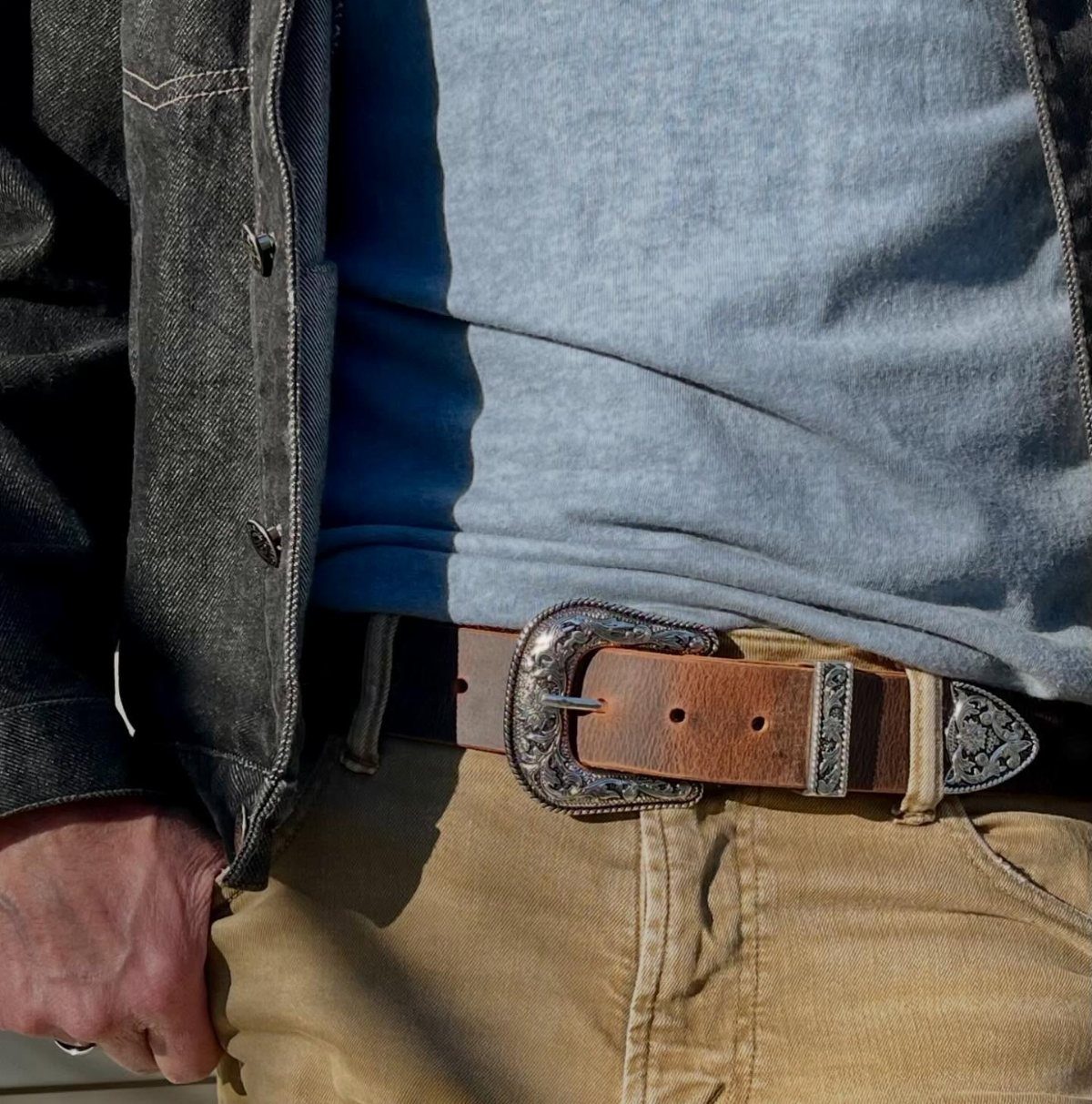
A large buckle shifts the detail from your shirt or jacket down to your waist. Silver catches light, so the buckle reads even against a neutral backdrop.
If you’re wearing one, keep the rest simple.
Brown leather belt, no competing hardware, and a shirt that tucks. The buckle should be the only thing doing that much work.
10. Western Vests
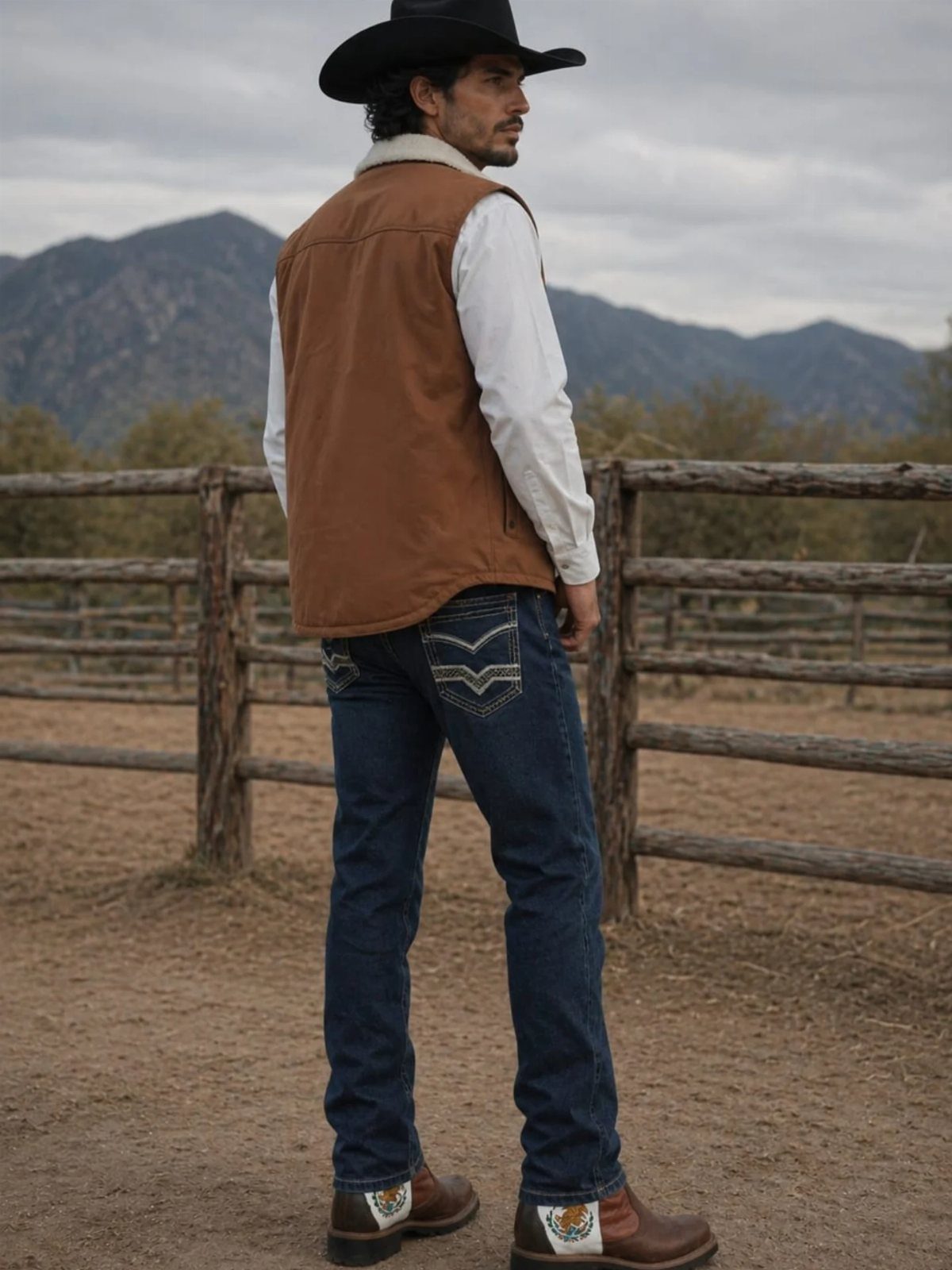
A vest adds a layer between your shirt and jacket, or replaces the jacket entirely when it’s too warm for one. Brown suede or leather keeps it grounded, and the shorter length doesn’t interfere with your belt line.
The vest reads western when the hat or boots are already there; on its own it looks unfinished.
11. Casual Denim Jackets
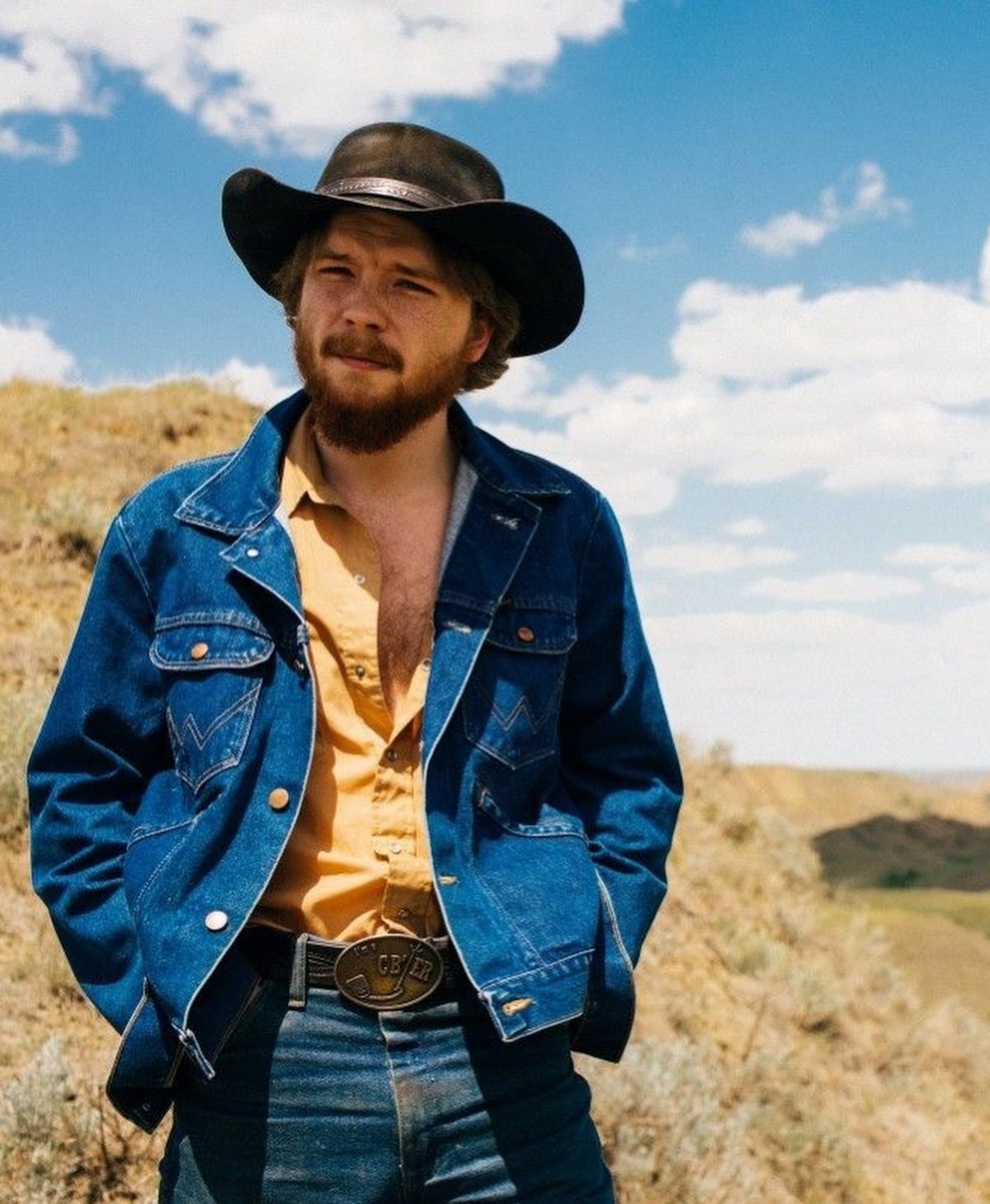
A denim trucker over a button-down is standard Americana, but the hat pulls it into western territory. Medium or light wash works better than dark when you’re already wearing jeans below.
The fit should be close through the body. Oversized denim jackets lose shape fast, and you want the yellow shirt to show at the placket and cuffs.
Mixing Western with Modern
Start with one piece and build from there.
A pearl snap shirt goes over your existing jeans, boots replace sneakers under straight chinos, and a suede jacket layers over what you already own. The rest of your outfit stays neutral: dark denim, plain tees, solid knits.
The pieces work because they carry their own detail.
Mixing a single western piece with modern clothes works better than stacking several at once. A black cowboy hat over jeans and a grey sweater reads clearly without the buckle, the bolo, or the full ranchwear set.
Western style collapses when every piece announces itself.
If the boots, the buckle, the hat and the yokes all appear at once, the outfit tips into costume. Pick the piece that fits the setting and let the rest of your wardrobe fill in around it.
Fit and Comfort
A western shirt that hangs loose through the body looks like you borrowed it, and jeans bunched at the ankle undo the clean line boots are supposed to give you.
Fit still decides whether the outfit works, even when the pieces themselves are right.
Garments cut for function used to fit closer than you might expect.
Ranch clothing moved with the body rather than against it, which means structure through the shoulders and enough room through the chest and waist to sit, bend and ride without pulling.
Too tight and the snaps gap; too loose and the shirt balloons over your belt.
Bootcut jeans should break once over the boot shaft, not pool around your heel. Jackets stop at the hip, and vests end above the belt line so the buckle still shows.
Avoiding Over-Accessorizing
Western style carries its detail in the garment, not in what you add to it.
The snaps, the yokes, the stitching and the buckle are already there. Piling on more pieces turns the outfit into a checklist instead of clothes that work together.
If the buckle is large, the rest stays plain.
If the hat is felt and shaped, skip the turquoise jewelry. One or two pieces signal the style; five pieces compete for attention and none of them win.
The simpler versions hold up better.
A brown leather belt without tooling, a silver buckle without stones, and boots in black or tan rather than full exotic skin give you the look without demanding that every other piece match their intensity.
Frequently Asked Questions
What is Modern Cowboy Style?
Modern cowboy style takes recognizable western pieces like boots, pearl snaps and suede jackets and wears them with your existing wardrobe instead of full ranchwear sets.
The pieces carry their own detail, so balance matters more than volume. A single western piece over neutral basics reads clearly without tipping into costume.
How to Build a Western Wardrobe?
Start with black cowboy boots and a pearl snap shirt, both of which layer over what you already own. Add dark jeans in a straight or bootcut, then a brown suede jacket or leather belt once the basics are working.
Building one piece at a time keeps the style grounded instead of stacking too much western detail in a single outfit.
What are the trends in Western wear for 2026?
Animal prints like snakeskin and leopard are showing up in western collections, linked to the broader westerncore trend.
Vests are being styled as standalone pieces or layered over long sleeves, and double-breasted jackets remain relevant in both fitted and oversized cuts.
Animal prints and bedazzled details bring runway edge to western staples, while vests and double-breasted jackets get styled in new ways.