
A navy blazer over khakis works in most offices, while a tan suit needs tight tailoring because lighter fabric shows every wrinkle.
The choice comes down to how formal your workplace is and how much contrast you want: navy with brown shoes is warmer than charcoal with black, and dropping the tie softens a suit without losing its structure.
Performance fabrics with stretch have moved into business casual wardrobes since return-to-office rules relaxed, sitting somewhere between formal pants and athleisure but still pairing cleanly with a blazer.
1. Blazers & Jackets

A blazer over khakis and a white shirt is the simplest way to look intentional without putting on a full suit.
The structure comes from the jacket: it squares the shoulders and draws a clean line from lapel to hem, even when the shirt and trousers stay relaxed.
Navy works because it pairs with almost anything in your closet. Khaki, grey, or olive trousers all fit underneath, and the jacket moves easily from office to dinner.
The fit matters more than the fabric here. A blazer that pulls across the chest or hangs too long reads as borrowed, not casual.
2. Tailored Clothing
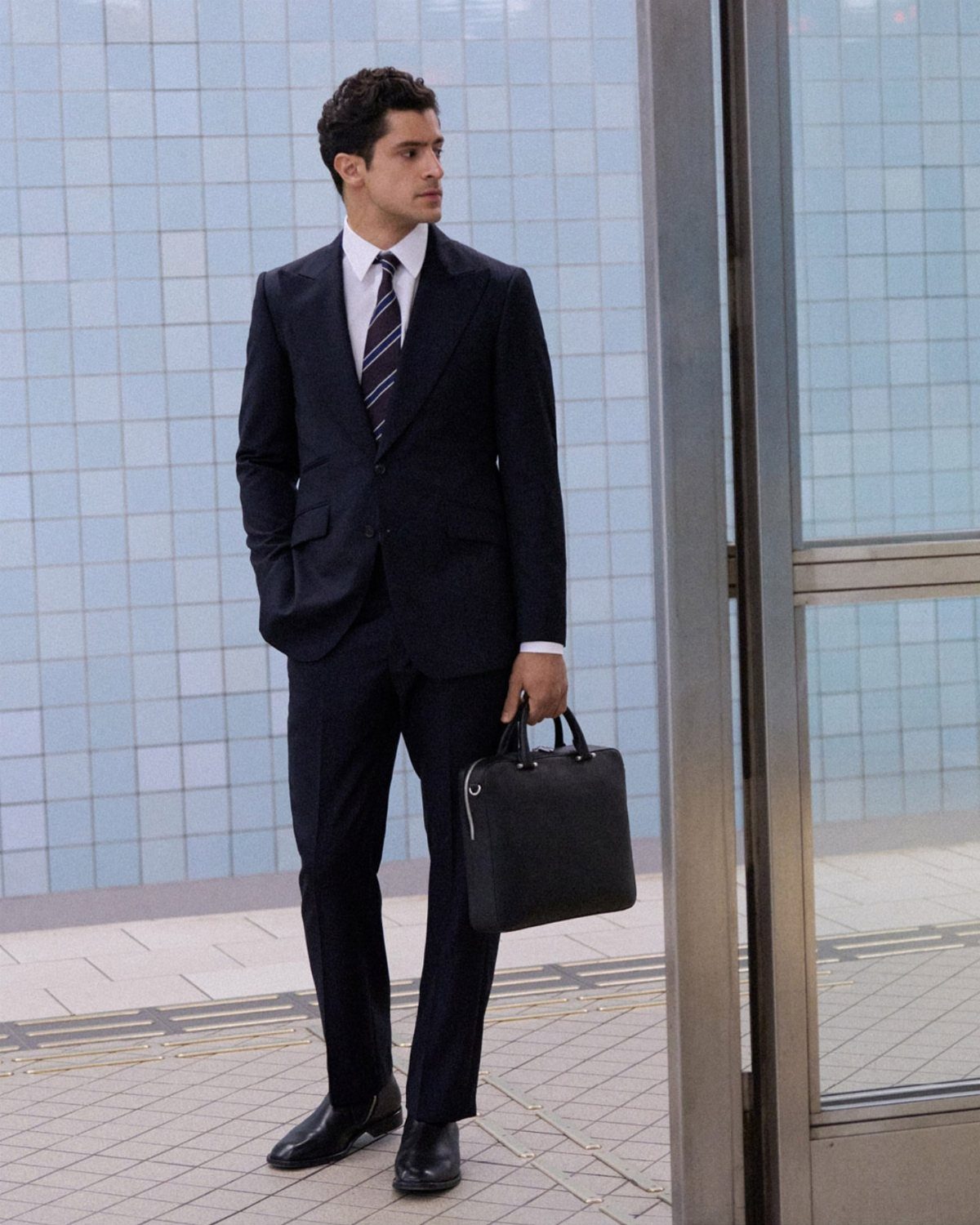
Tailored clothing fits your body instead of a size chart. A suit cut this way follows the line of your shoulder, nips at the waist, and breaks cleanly at the shoe without bunching or pooling.
The visible difference is how the jacket sits when you move.
Off-the-rack suits often gap at the collar or pull across the back when you reach forward. A tailored piece holds its shape because it was built around your measurements.
If full bespoke is out of reach, many suit brands offer made-to-measure at a lower price. You pick the fabric and style, they adjust the pattern to your body, and the result splits the difference between custom and stock.
3. Watch and Leather Belt
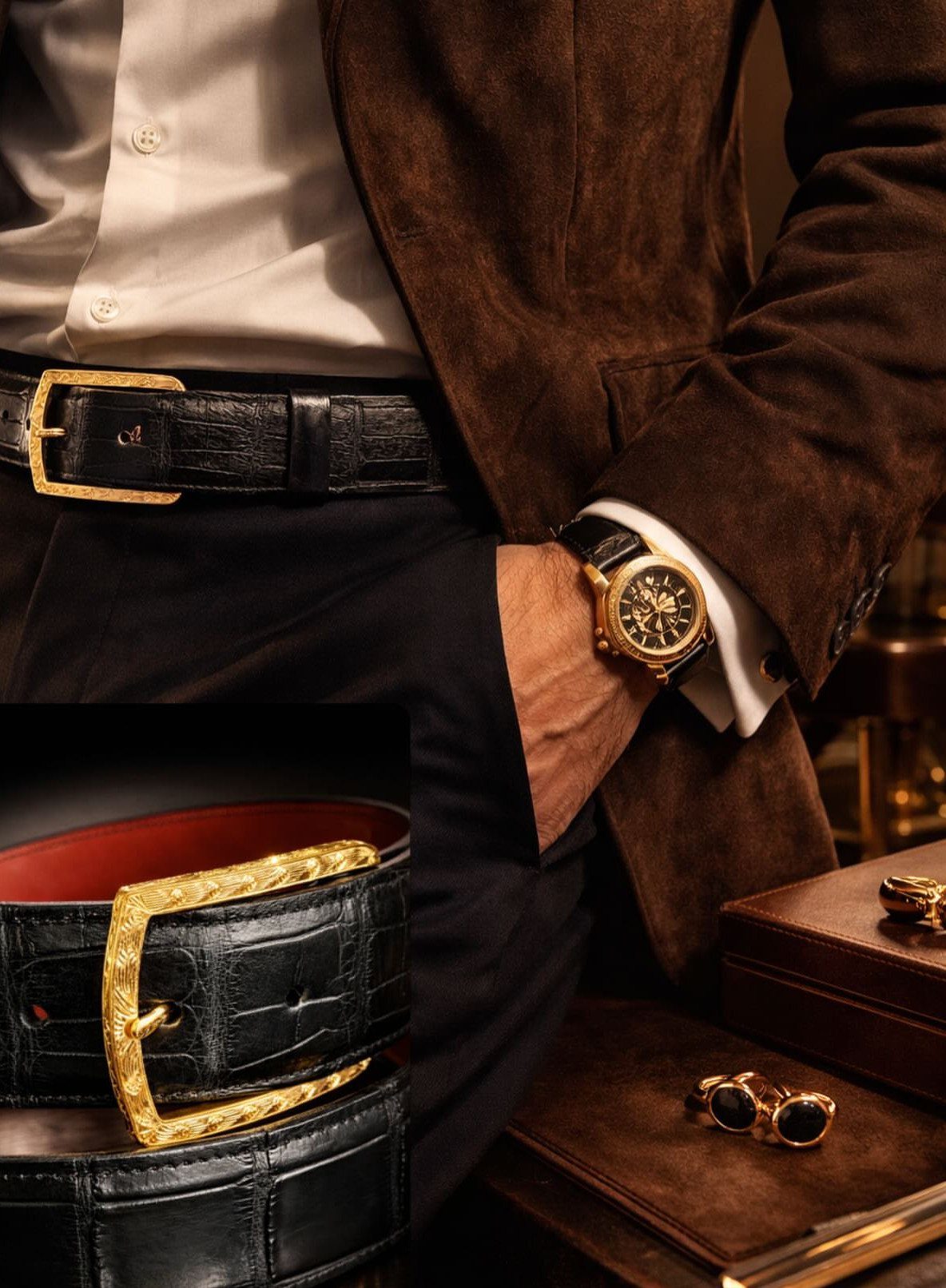
A watch and a leather belt are the only accessories most men wear every day, so they carry weight.
When both are in the same finish, gold buckle with gold case or silver with silver, the outfit reads as considered rather than accidental.
The belt here is crocodile-embossed leather, which brings in texture without requiring exotic leather.
Black works with charcoal, navy, and grey suiting. Brown or tan would pair better with lighter fabrics or warmer tones.
A good leather belt lasts years if the leather is full-grain and the buckle is solid metal, not plated.
4. Versatile Wardrobe
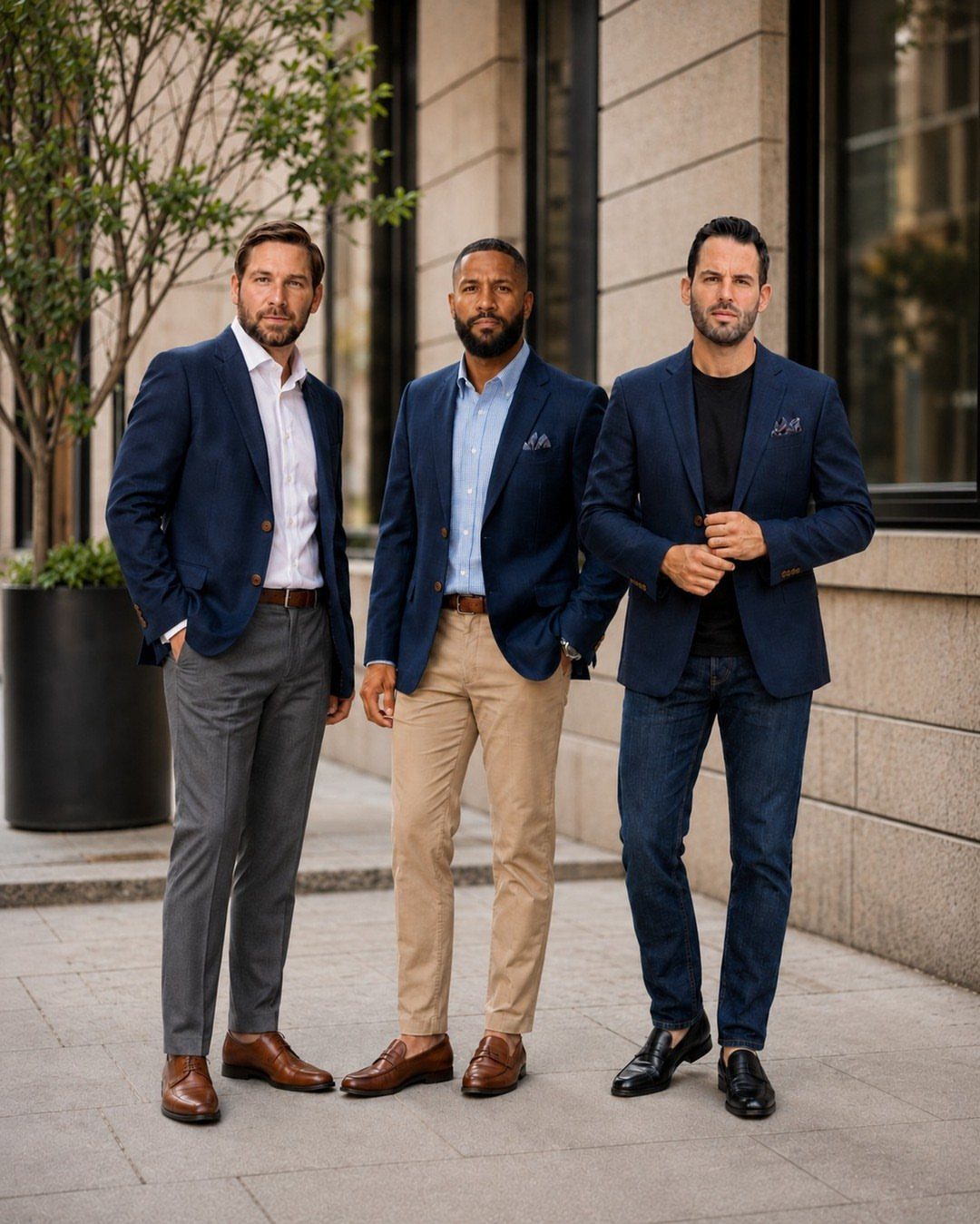
A versatile wardrobe is built from pieces that work in multiple combinations. One navy blazer pairs with grey trousers, khakis, or denim, and each pairing looks like a separate outfit.
Keep the colors neutral and the fits consistent.
If the blazer is slim, the trousers should be too. If one piece is oversized, the other needs to balance it, not fight it.
This approach costs less over time because you’re not buying single-use outfits. A few jackets and a few trousers give you plenty of looks, and all of them look intentional.
5. Polo Shirts and Knitwear
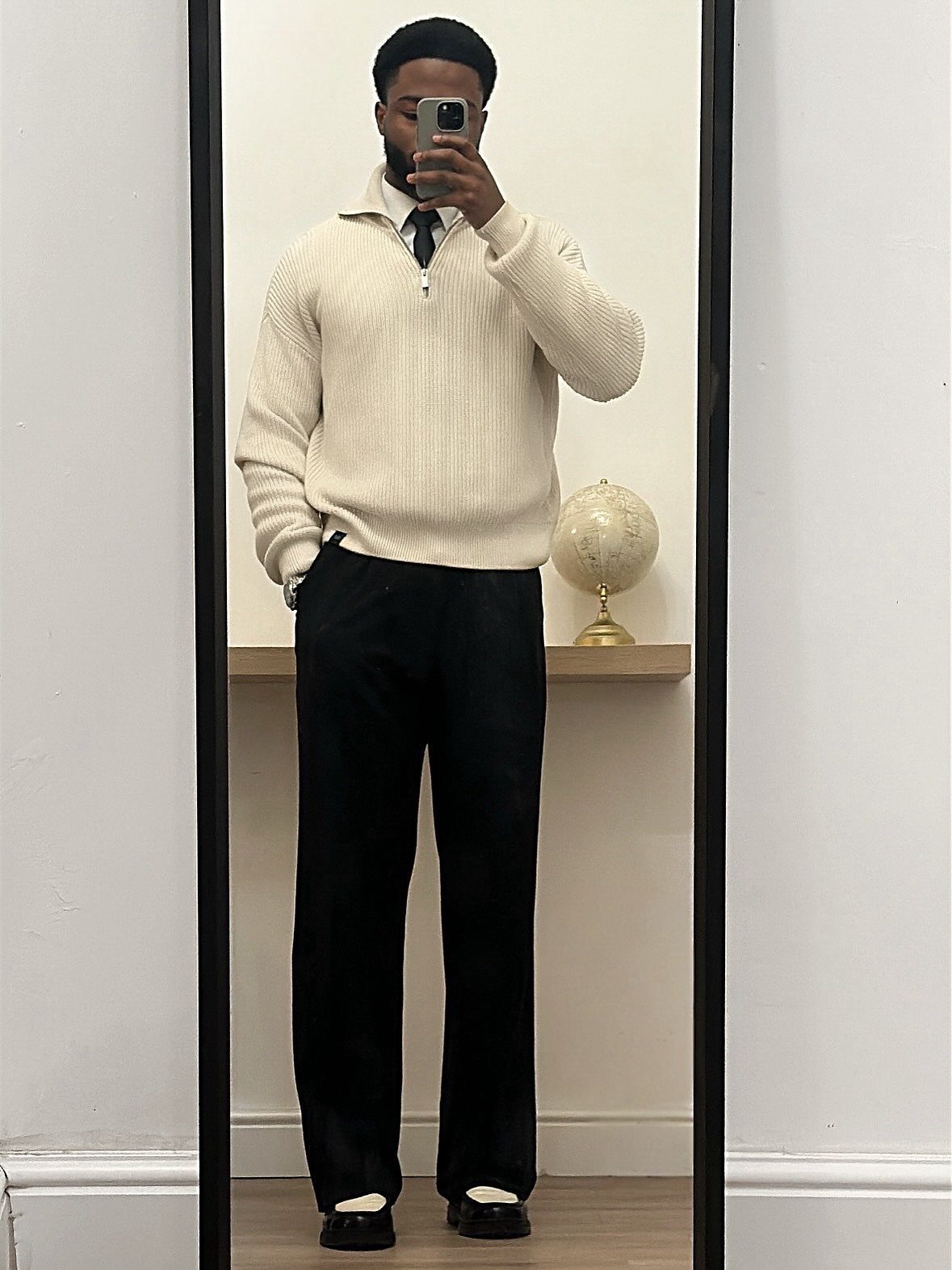
Knitwear over a shirt and tie softens the formality without losing the structure. The quarter-zip sits between a sweater and a cardigan: it covers the tie knot and adds warmth, but the collar and tie still show at the neck.
Cream, oatmeal, or light grey knitwear pairs well with darker trousers and doesn’t compete with the shirt or tie. The ribbed texture adds visual interest without pattern.
A polo shirt works the same way in warmer weather. It keeps the collar but drops the tie, and the knit fabric reads as less formal than woven cotton.
6. Pinstripe Suit with Tie
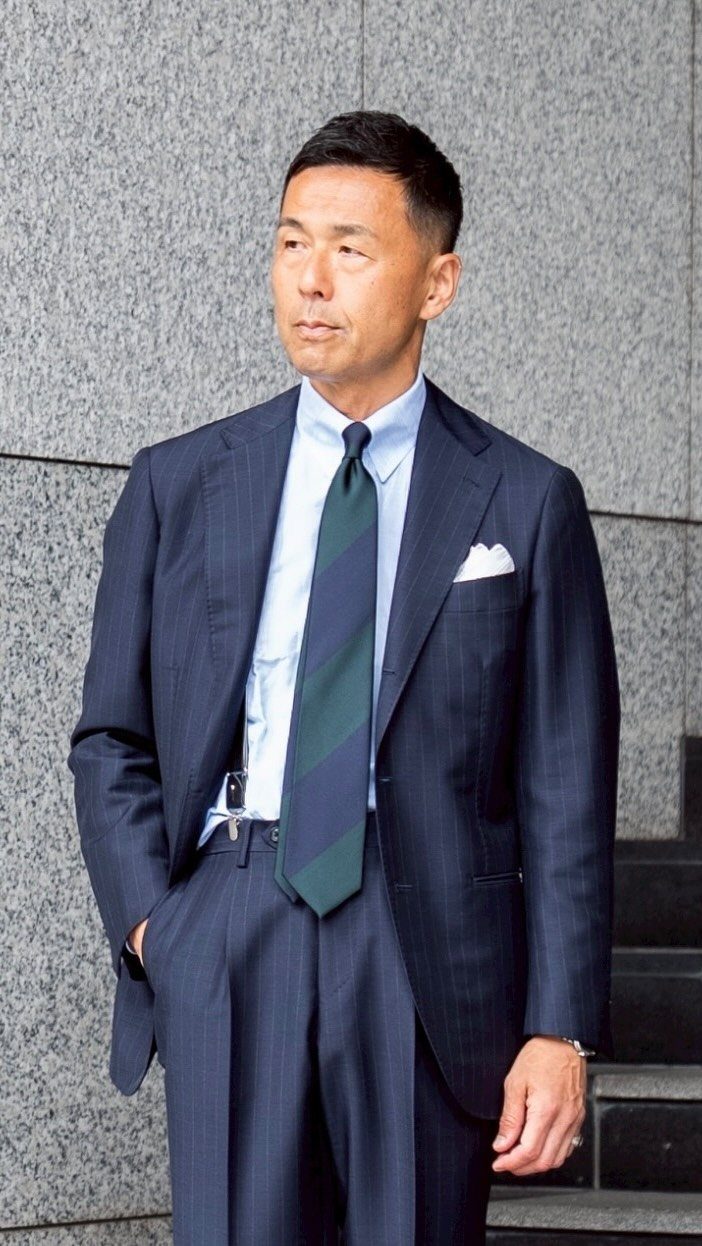
Pinstripes add pattern to a suit without changing its formality. The vertical lines create the illusion of height, which is why they’ve been a staple in business dressing for decades.
Navy with thin white or light blue stripes is the most common version, and it pairs cleanly with solid shirts and striped ties. The tie here picks up the stripe spacing, which keeps the patterns from clashing.
A white pocket square finishes the look without adding color. Linen is the standard fabric for pocket squares because it holds a fold and stays crisp through the day.
7. Casual Cardigan and Chinos
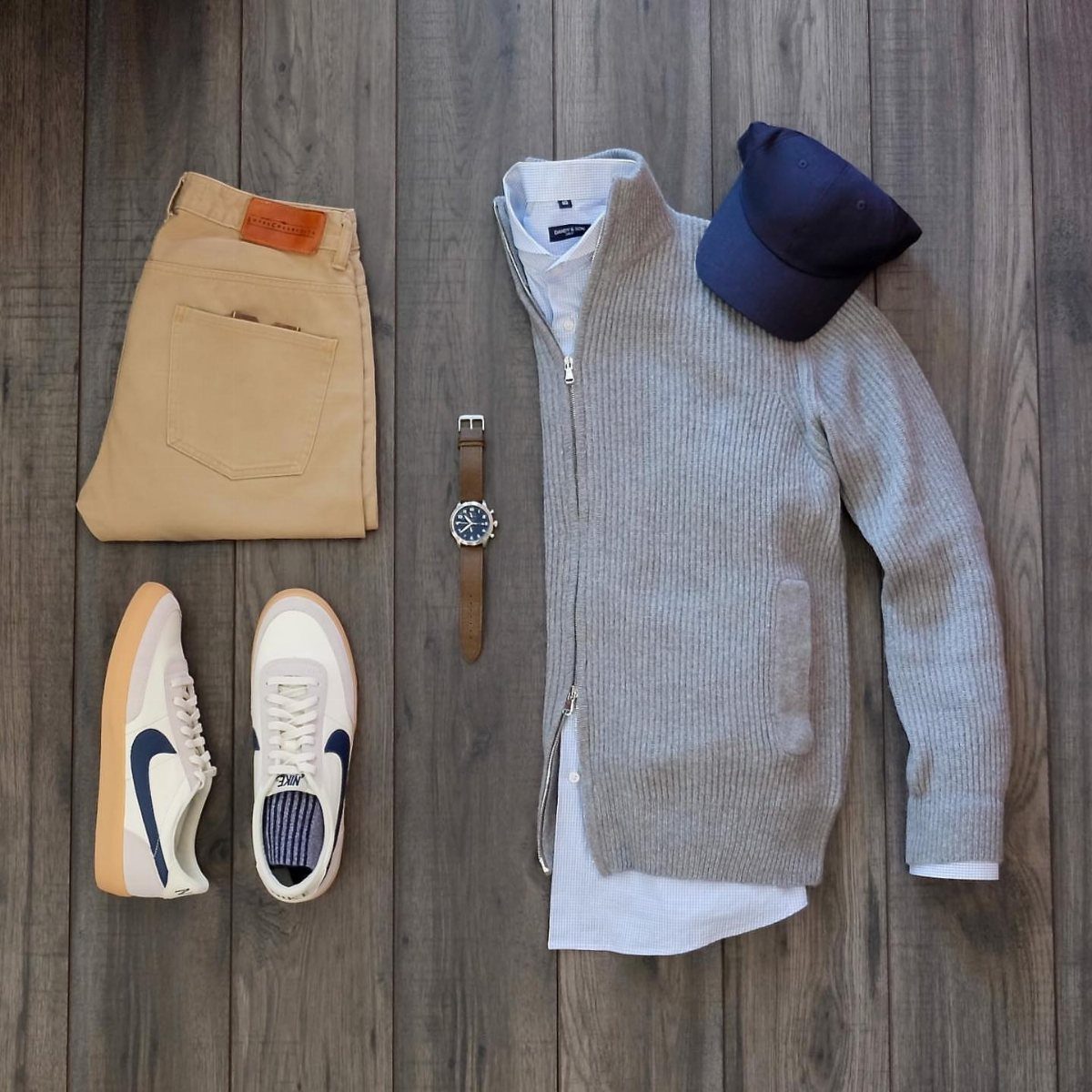
A cardigan over a button-down shirt keeps the collar and the structure but drops the formality of a blazer. The zip-up style here is faster to put on and sits flatter under a coat if you need one later.
Tan chinos and white sneakers take this firmly into casual territory.
The sneakers work because the rest of the outfit is clean and fitted. If the trousers were loose or the cardigan oversized, the sneakers would read as sloppy instead of relaxed.
Light blue and grey are neutral enough to wear often without looking repetitive.
8. Navy Suit with Tie
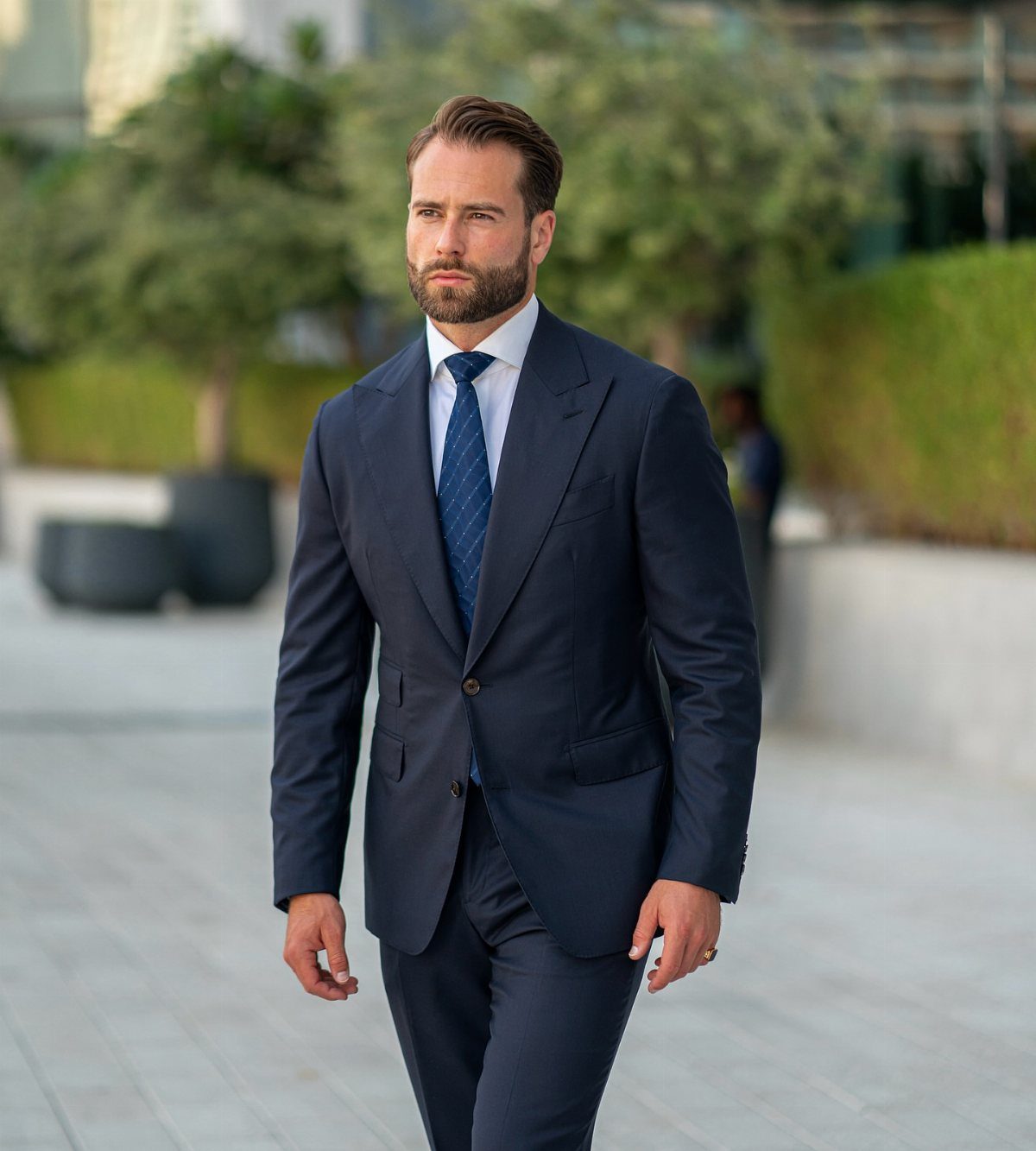
A navy suit with a tie is the most reliable option in business dressing. The color works across seasons, the tie signals formality, and the outfit requires no guesswork.
Matching the tie to the suit in tone holds everything together. A lighter blue tie against navy creates contrast without introducing a new color family.
The fit here is trim but not tight.
The jacket follows the body without excess fabric, and the trousers break once at the shoe. That fit works for most builds and reads as current without dating quickly.
9. Suit Without a Tie
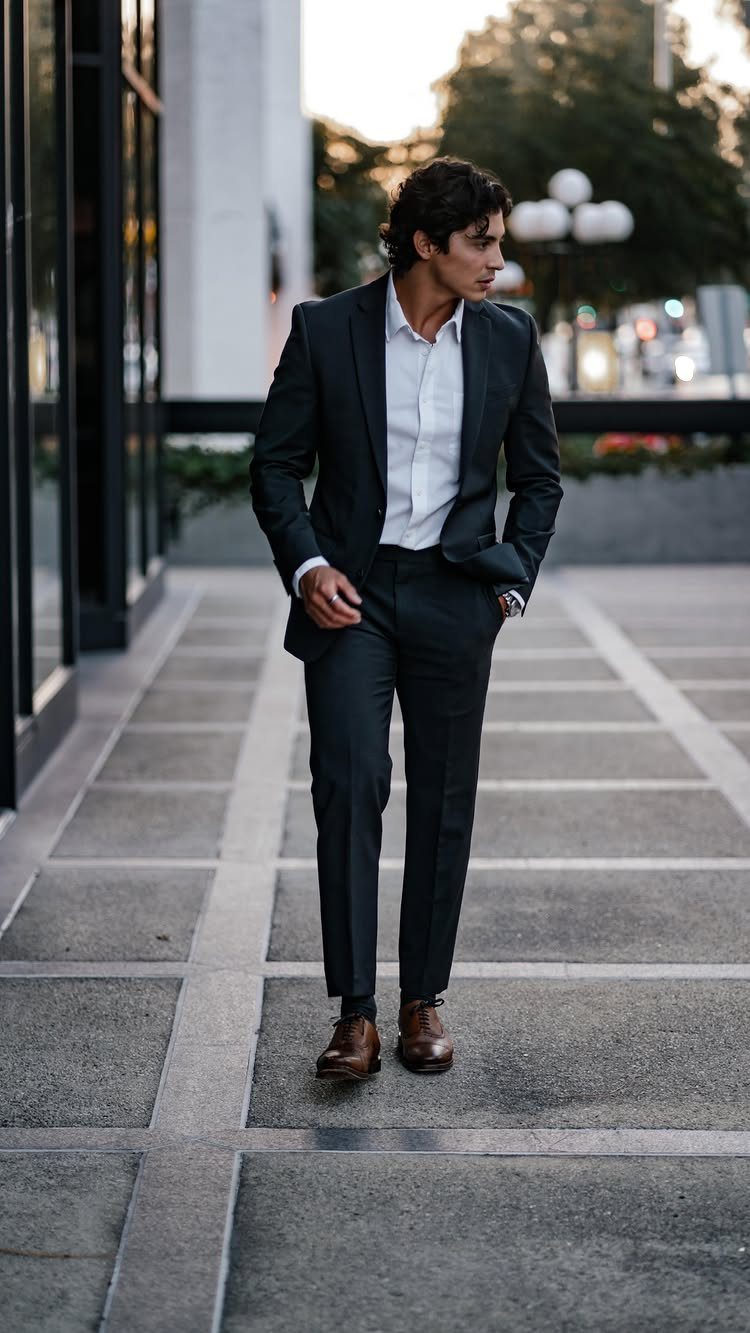
Dropping the tie softens a suit without losing its shape. The open collar shows more of the shirt and brings the formality down, but the tailored jacket and trousers still separate this from casual wear.
Brown shoes and a charcoal suit is a warmer combination than black shoes would be. The contrast stops it feeling too uniform.
The slim fit here only works if the jacket doesn’t pull when you sit or move. If it does, size up or choose a regular fit instead.
10. Tan Suit with Tie
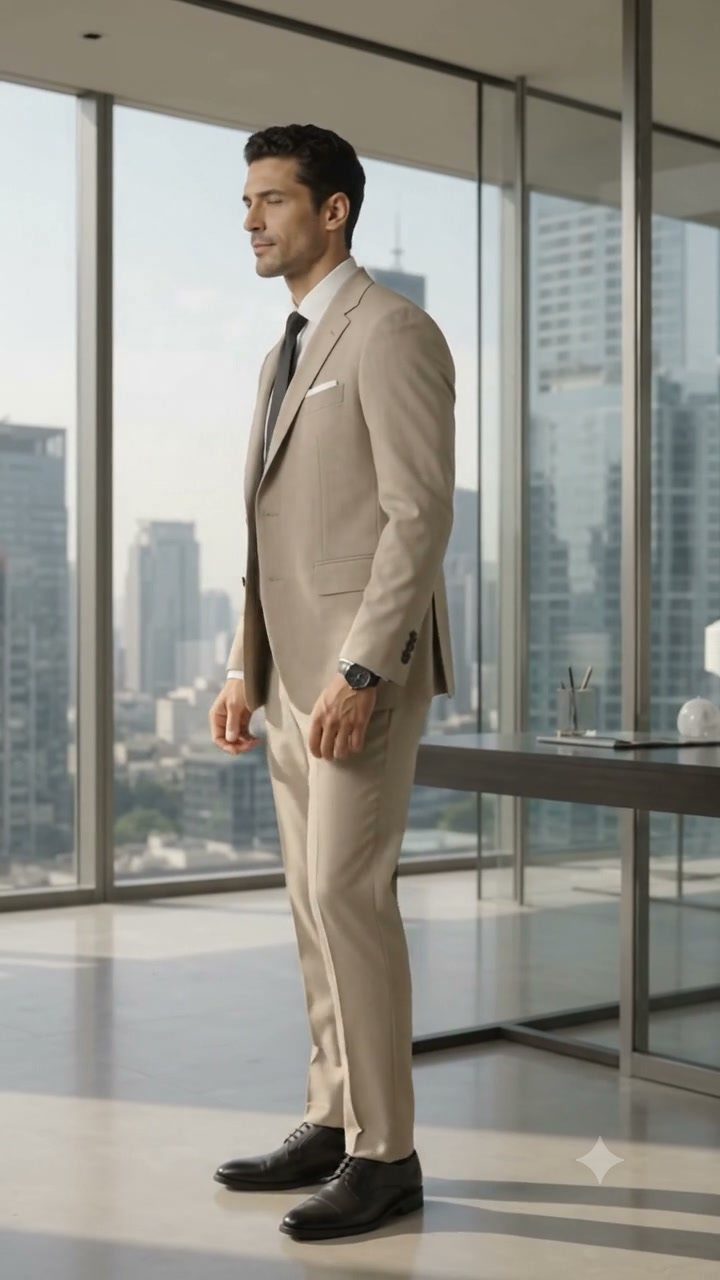
A tan suit stands out in a sea of navy and charcoal, but it only works if the fabric and fit are clean. Tan shows wrinkles and fit issues more than darker colors, so the tailoring has to be tight.
The white shirt and dark tie keep the look grounded. Black shoes match the tie and add contrast against the lighter fabric.
Tan suits read as warmer and less formal than darker options, which makes them better for daytime meetings or events in spring and summer.
11. Navy Suit with Black Shirt
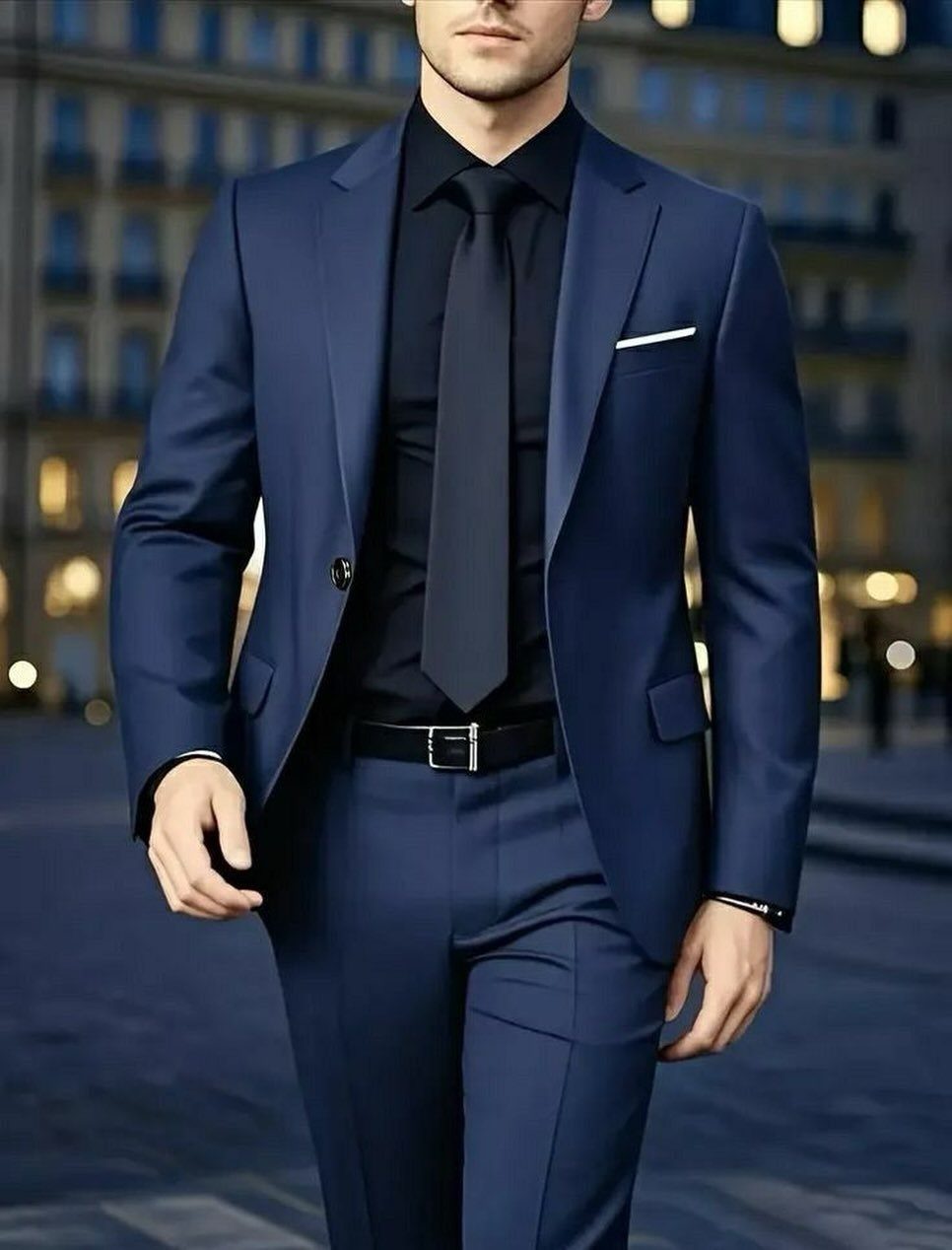
A black shirt under a navy suit is a high-contrast look that skews formal and modern at the same time. The monochrome shirt and tie simplify the outfit, and the navy jacket keeps it from reading as too stark.
This combination works best at night or in creative industries where traditional suiting feels too stiff. In conservative offices, a black shirt can read as trying too hard.
The slim fit amplifies the modern feel. A looser cut would soften the contrast and make the black shirt look less intentional.
Importance of Fit
Fit decides whether an outfit reads as sharp or sloppy, even when the pieces themselves are good. A chest that strains or trousers that puddle will undo the rest.
Tailoring solves this. The difference shows when you move: tailored clothing holds its shape instead of gaping or bunching.
The investment pays off in wear. A tailored suit works across multiple days with small changes to the shirt or tie, which cuts down on decision fatigue and gives you a reliable base to build from.
You can start with one good suit and rotate the rest of the outfit around it.
Relaxed Dress Codes
Return-to-office mandates brought dress codes back into focus, but most companies relaxed the rules after remote work normalized comfort.
Employees pushed back on stiff formal wear, and many offices now allow lighter fabrics and stretchier materials in place of traditional suiting.
Trousers made from performance fabrics have moved into business casual wardrobes. These sit somewhere between formal pants and athleisure: they hold a crease and pair with a blazer, but the stretch makes them easier to wear through a full day.
The shift gave men more room for personal expression. A dress code that once required a tie now leaves space for knitwear, open collars, and textured fabrics that still look intentional.
More men are opting to incorporate lighter and stretchy materials into their office wardrobes, like Lululemon’s ABC trousers, rather than formal pants, said Kyle Pretzlaff, a marketing manager and plus-size fashion content creator with nearly 200,000 followers on TikTok, where he shares style advice for men.
Layering for Comfort
Layering gives you flexibility when the temperature shifts between morning commute and afternoon meetings. A sweater or cardigan over a shirt adds warmth without requiring a coat, and you can pull it off if the room heats up.
Wool sweaters, tweed blazers, and heavier trousers work in cooler climates. Darker colors like charcoal, navy, and forest green absorb less visual weight and pair easily with lighter shirts underneath.
Each layer needs to stay fitted.
An oversized sweater over a slim shirt creates bulk instead of structure, and the outfit loses its shape. When the base layer fits cleanly, the next one sits on top without bunching or pulling.
Frequently Asked Questions
What is smart business attire male?
The fit matters more than the label: a suit or shirt cut to your proportions rather than pulled from a rack.
That structure is what makes the difference, lifting the shoulder line and holding shape through the torso. Navy suits, white shirts, and leather dress shoes form the foundation because they work across seasons and pair with almost anything.
Do I need a tie for business casual?
A tie is optional for business casual.
The collar stays crisp, the silhouette holds, and you’ve dialed back one degree without looking incomplete. Most offices now allow collared shirts worn alone, though keeping a plain tie on hand covers you for meetings or events that require one.
Are jeans business casual?
Jeans generally do not count as business casual, though a few offices with relaxed dress codes may allow dark, well-fitted denim paired with a blazer.
Business casual sits between formal suiting and true casual wear, built from chinos, dress trousers, and blazers rather than denim. If the dress code feels unclear, khakis or grey trousers with a collared shirt are the safer choice.
What is the dress code for elegant business attire?
Elegant business attire means matched suits in dark, solid colors or pinstripes, paired with a white dress shirt and black leather oxfords. Navy and charcoal suits are the most formal options and work across seasons without looking out of place.
Lighter grey or brown suits are acceptable for daytime events, but the darker colors read as more formal and are the safer choice when the invitation specifies business dress.