A capsule wardrobe of 5 to 7 neutral pieces covers business casual and weekend plans without rebuilding the outfit each time, and layering pieces keep it working across seasons.
The choice comes down to where you spend most of your week: office settings lean on tailored trousers and knit polos, while looser schedules favor layering pieces and monochromatic knitwear that simplify morning decisions.
Dark indigo baggy jeans returned in 2026 and pair well with fitted tops, but tailored fits still hold if the proportions match the rest of your wardrobe.
1. Capsule Wardrobe
A capsule wardrobe strips your choices down to pieces that work together no matter how you pair them.
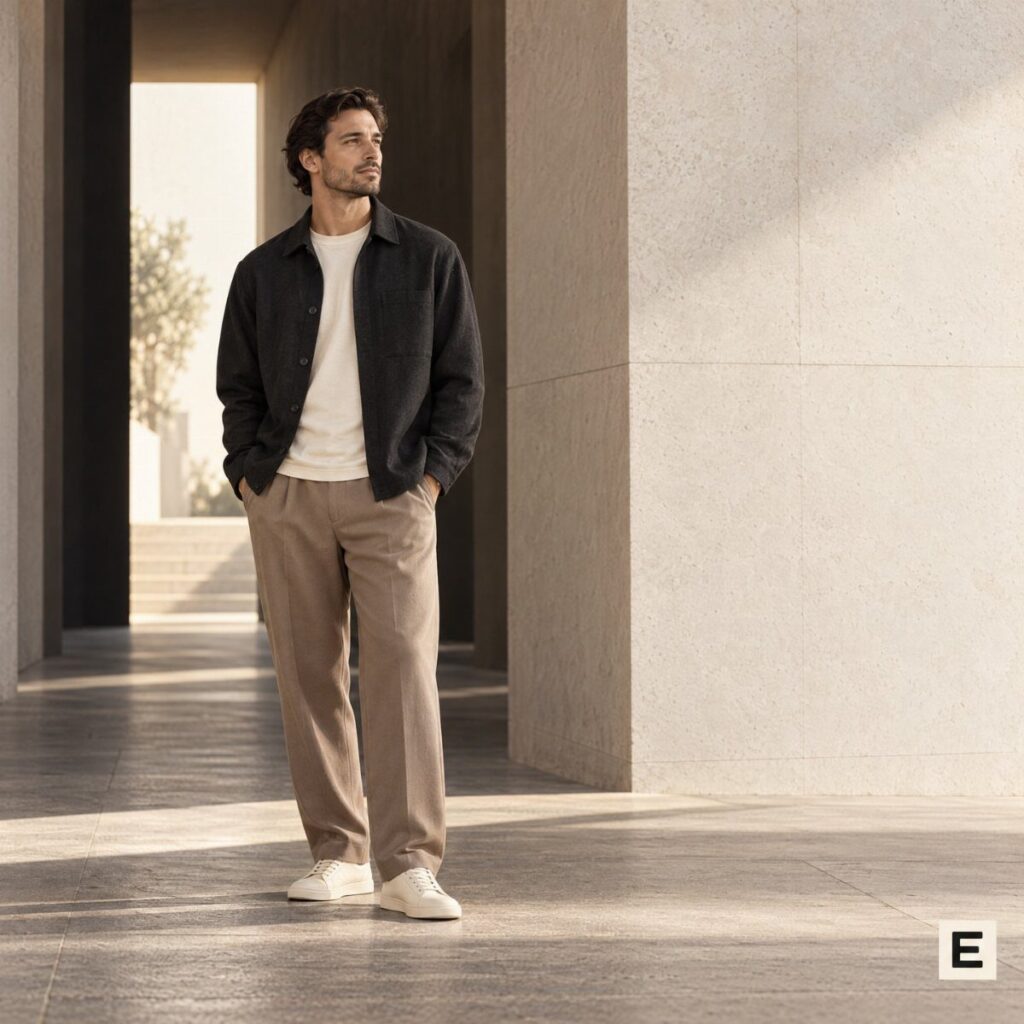
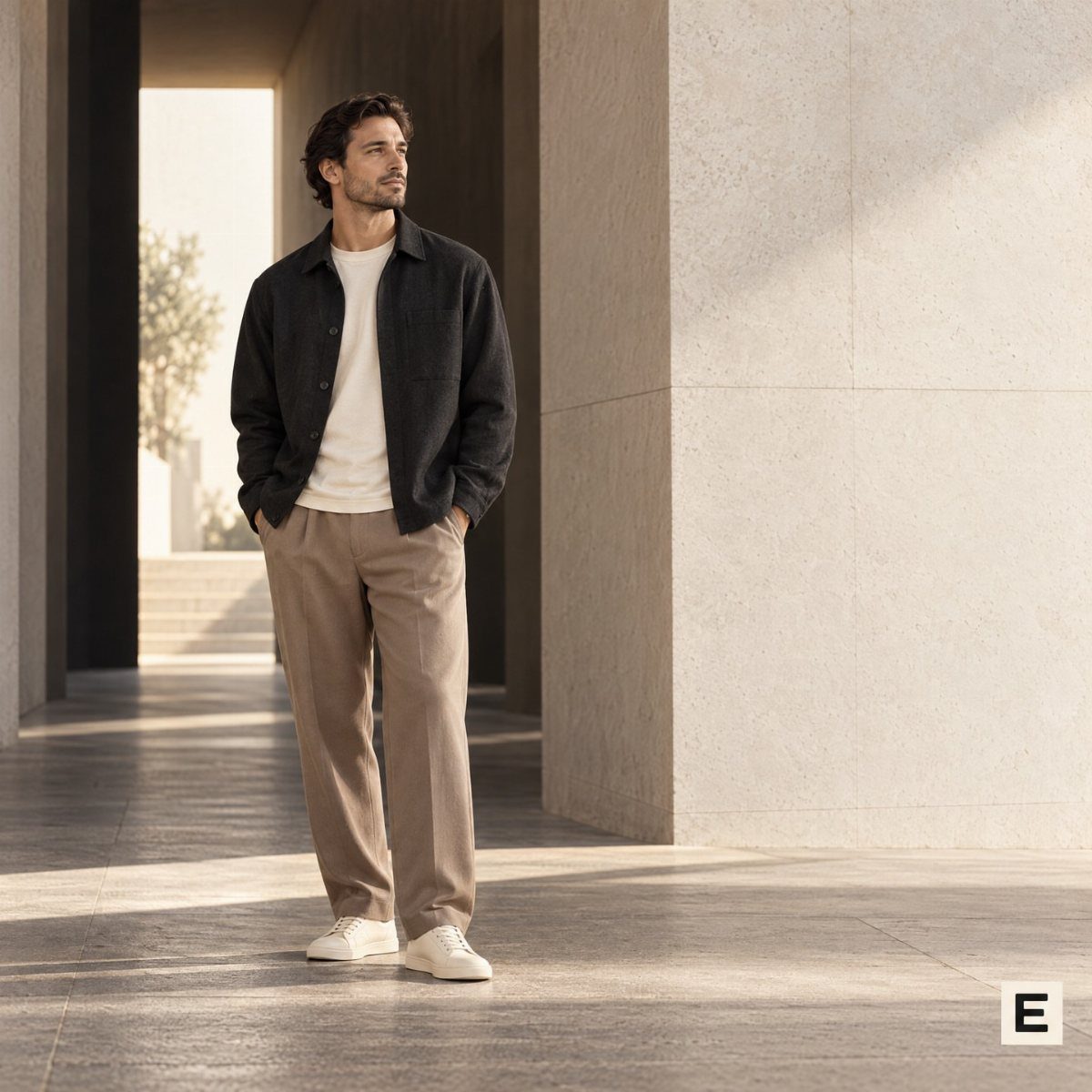
The overshirt acts as a light jacket, the white tee keeps things simple underneath, and the tan trousers bridge casual and polished without trying too hard.
White sneakers finish it off and match almost anything else you add later. You avoid decision fatigue because every piece already fits the same palette and level of formality.
Add one or two accent colors if you want, but the core stays flexible.
2. Tailored Fit
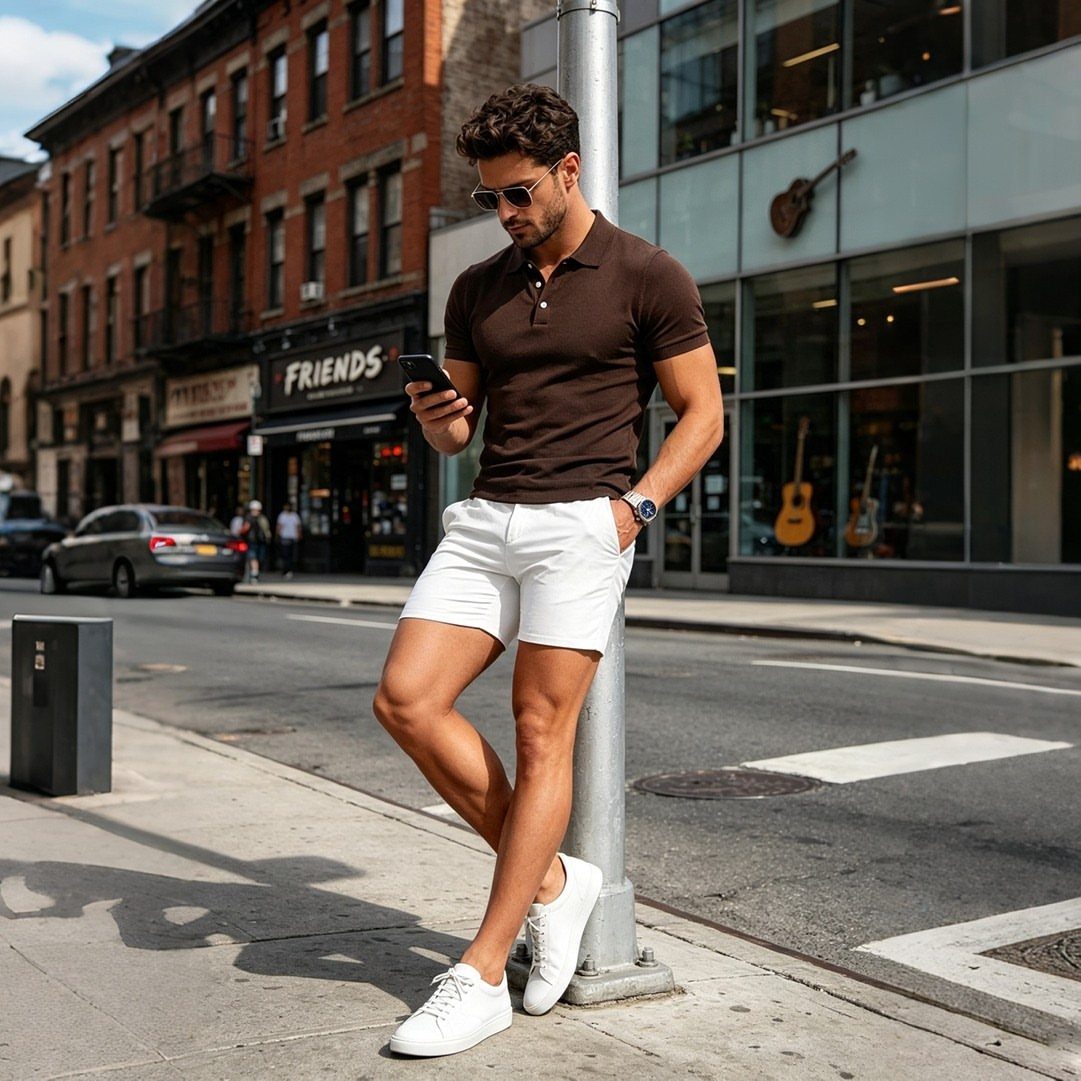
Fit decides whether an outfit looks deliberate or borrowed. The brown polo follows the shoulders and chest without pulling, and the white shorts sit at the right length to keep the proportions clean.
If your build leans athletic, a closer cut through the body makes sense. Slimmer frames do better with a closer fit so the fabric doesn’t hang loose at the sides.
Tailored fit means the garment matches your actual shape, not a generic size chart. Try things on and check how the seams land, especially at the shoulder.
3. Business Casual Essentials
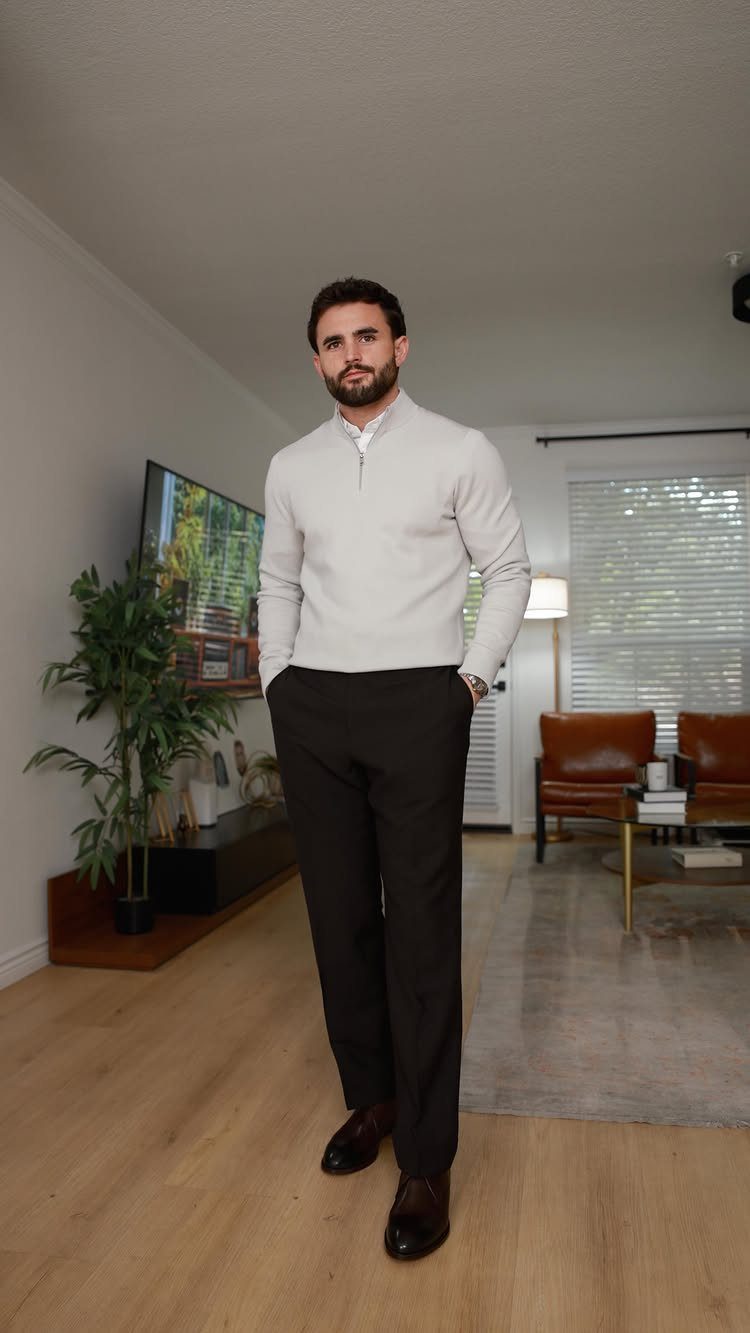
Business casual lives in the space between a suit and jeans. The quarter-zip sweater works because it keeps a collar-free neckline tidy, and the dark trousers ground the outfit without needing a blazer.
Brown dress shoes give just enough formality to keep it office-appropriate. Swap the sweater for a button-down if your workplace leans stricter, or for a merino crewneck if it’s more relaxed.
Grey, navy and tan rotate easily, and a single pair of leather shoes covers most of it.
4. Layering Pieces
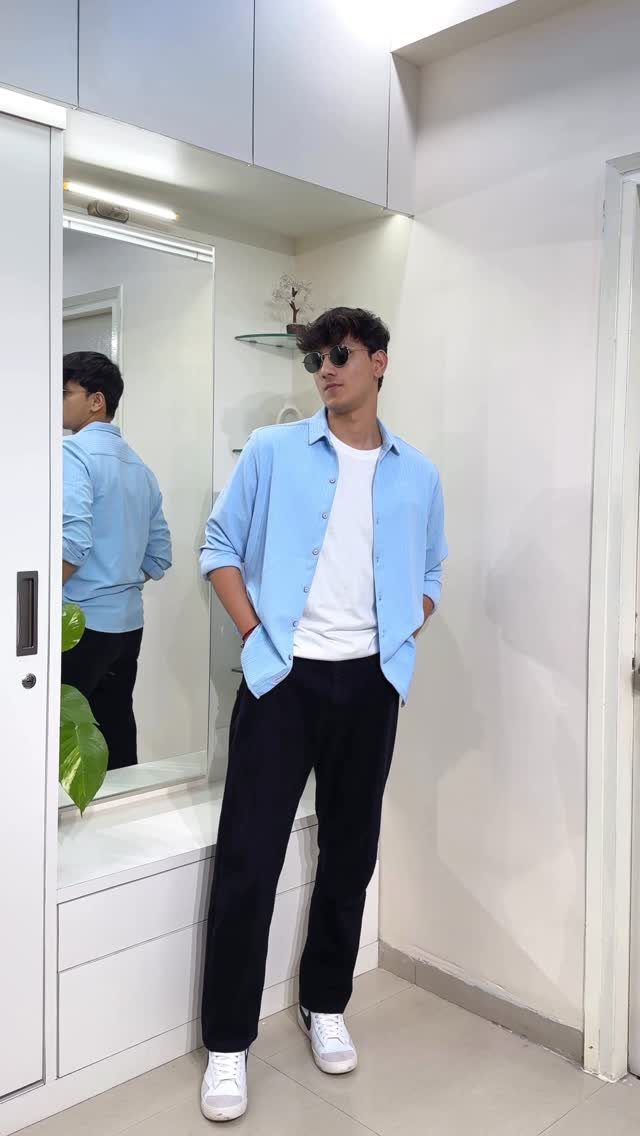
Layering adds depth to an outfit and gives you options when the temperature shifts. The light blue shirt stays unbuttoned over a white tee, which makes it more finished than the tee alone without going formal.
You can peel the outer shirt off if it gets warm, and the outfit still holds together.
Start with one layer over a tee or henley. Keep the outer piece lighter in weight than a jacket but structured enough to keep its shape.
5. Athleisure Wear
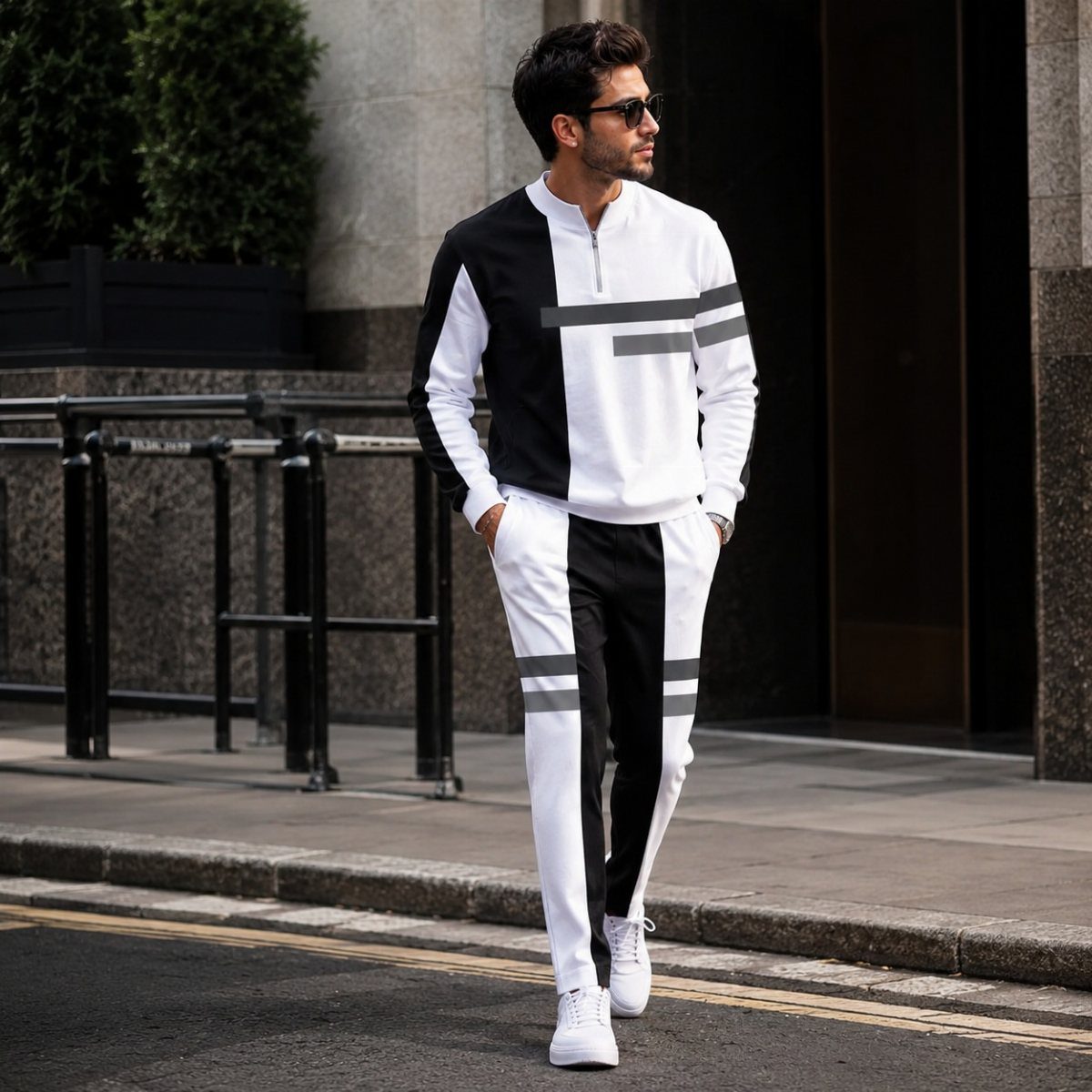
Athleisure borrows the fit and fabric of workout gear but wears like streetwear.
It works for errands, travel or casual meetups where comfort matters but you still want to look put together.
Stick to solid blocks of color rather than loud patterns, and make sure the fit stays close enough that it reads as intentional, not gym surplus.
6. Knit Polo and Neutral Trousers
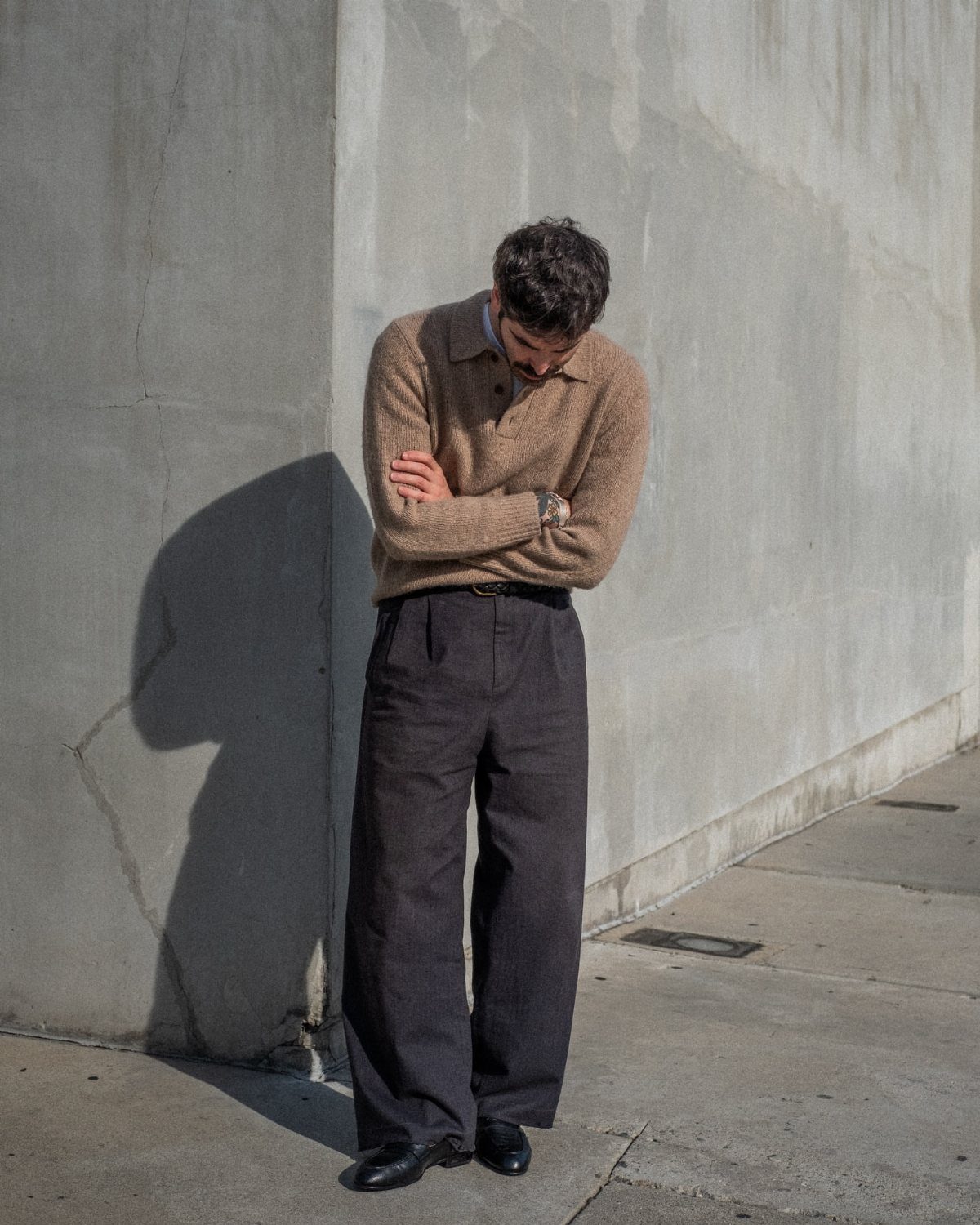
A knit polo brings texture and structure without the formality of a woven shirt. The brown knit pairs with wide-leg grey trousers, which balance the fitted top and give the outfit a slightly retro silhouette.
The knit keeps its form better than jersey cotton, so it looks sharp without needing to be tucked. Black shoes keep the palette tight and work with both the brown and the grey.
Look for a polo in merino or cotton knit with a ribbed texture. The wide trouser leg adds breathing room, but the knit polo keeps the top half clean.
7. Monochromatic Knitwear and Slacks
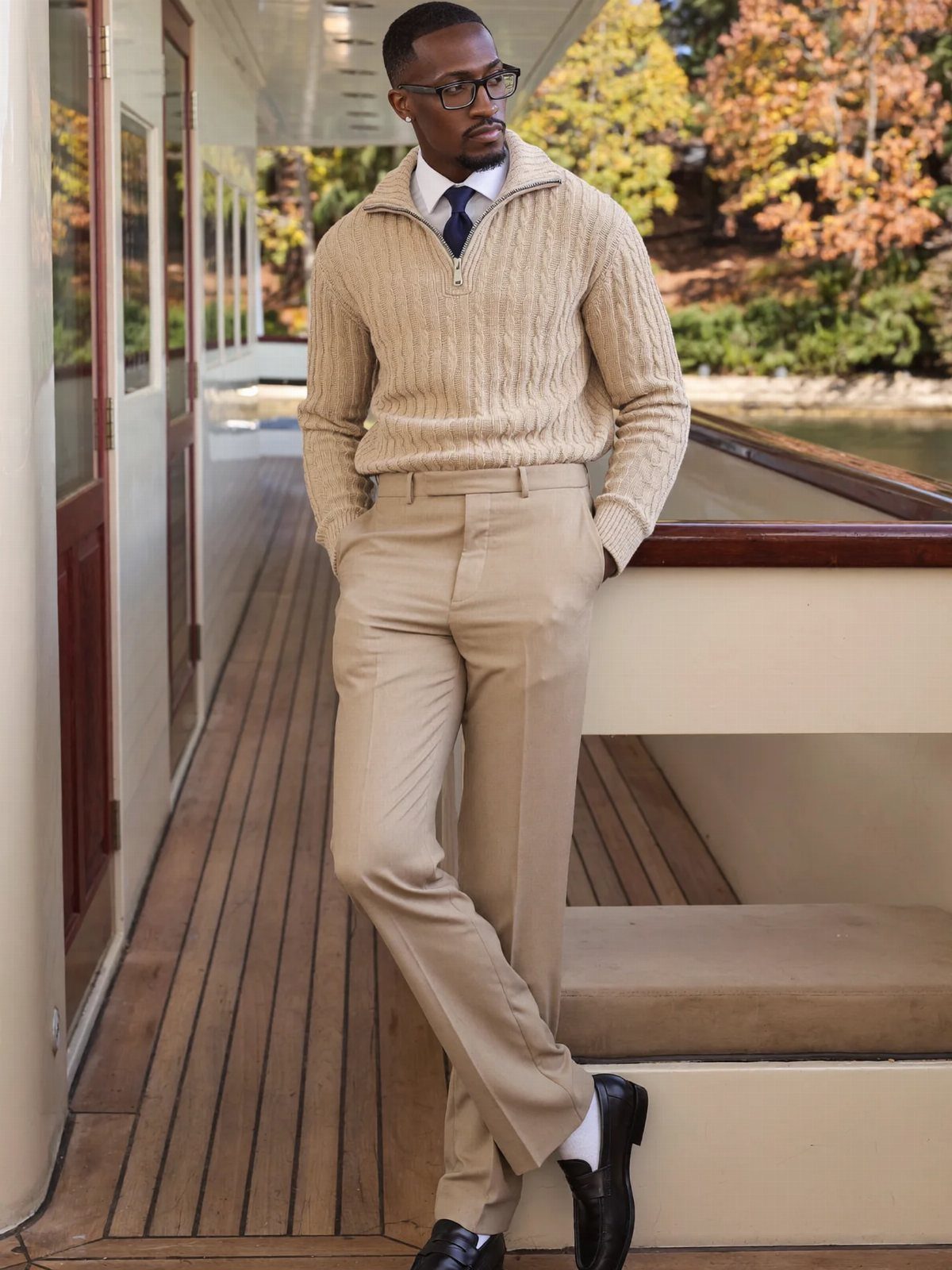
Matching the sweater to the trousers in the same shade simplifies the outfit and keeps the eye moving in one clean line.
Beige works because it stays neutral without looking washed out, and the ribbed knit adds enough texture that the single color doesn’t flatten.
Black loafers anchor the palette and give the outfit a defined edge at the foot. You could swap in brown shoes if you want more warmth, but black keeps it sharper.
Stick to one tone from collar to ankle, then break it with the shoes.
8. Minimalist Dark Shirt and Chinos
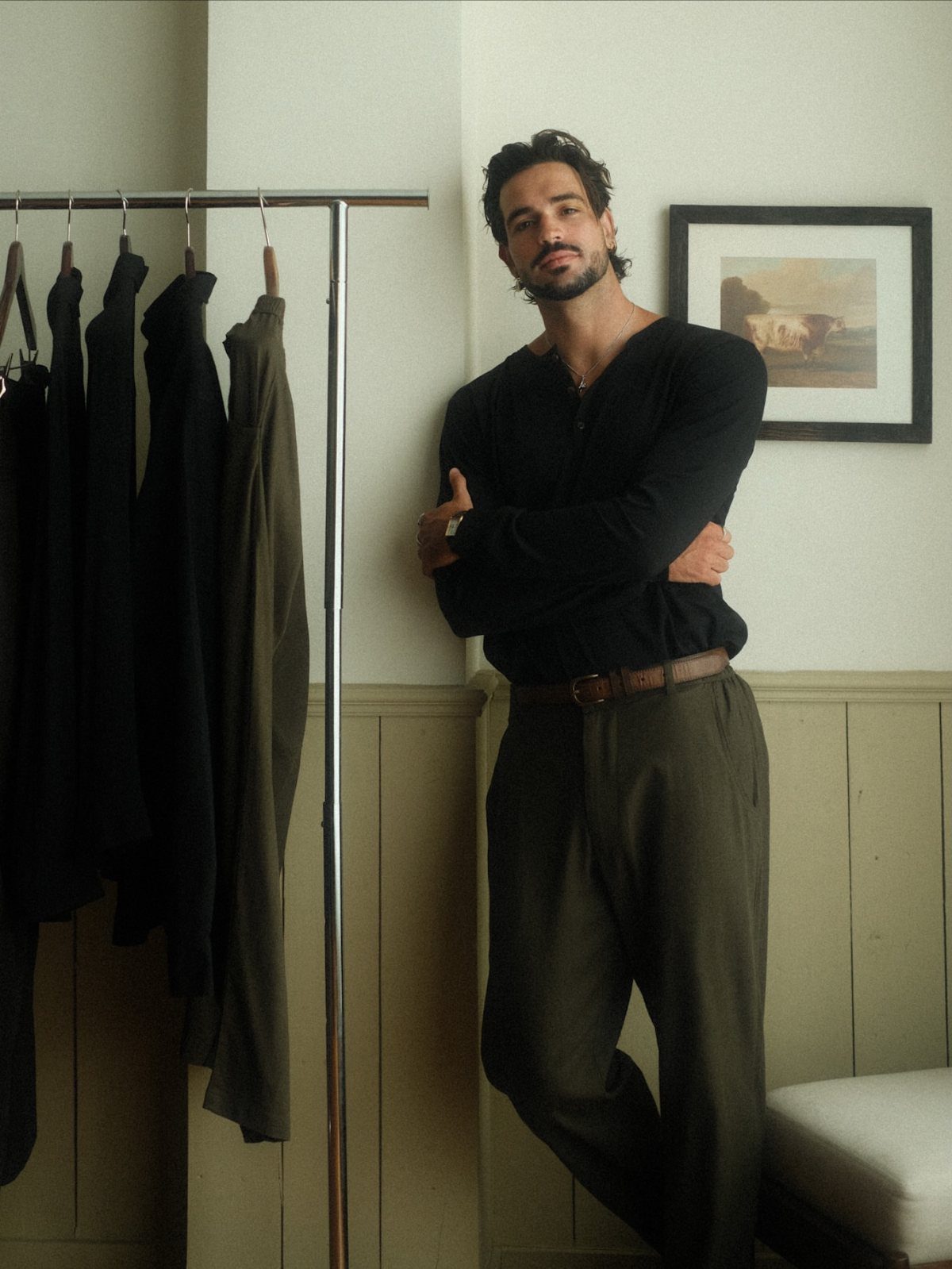
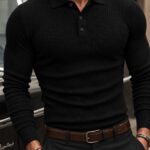
A black shirt paired with olive trousers keeps the palette dark but avoids looking too uniform.
The olive brings warmth without needing brighter colors, and the black stays versatile enough to work with grey, navy or tan on a different day.
Long sleeves make it more finished than a tee, but the lack of collar keeps it casual. This sits between a dress shirt and athletic gear, so it works for weekend plans or relaxed work settings.
Keep the fit clean through the shoulders and chest. Loose fabric at the sides breaks the line.
Building a Wardrobe
Start with the pieces that carry you through the most days.
A pair of dark jeans, one button-down in white or light blue, a crewneck sweater in grey or navy, and a pair of leather shoes in brown or black give you enough range to dress for work, dinner or travel without rebuilding the outfit from scratch each time.
Buy fewer things and wear them more. Three well-fitted shirts you actually reach for beat six that hang untouched because the fit or fabric feels off.
Quality shows up in how long something lasts, not in the label.
Fashion Trends
Baggy jeans came back in 2026, particularly in dark indigo washes.
The fit sits wider through the leg than the slim and skinny cuts that dominated the last decade, and it pairs well with fitted tops or tucked shirts to keep the silhouette balanced.
Tailored fits still hold, especially for trousers and outerwear.
The difference now is that tailored doesn’t default to slim. A jacket cut closer through the shoulders can still have room in the body, and trousers with a clean taper don’t need to cling at the thigh.
Both directions work if the proportions match your other pieces.
Shopping Tips
Look at how a brand constructs the garment before you check the price.
Reinforced seams, finished edges, and natural fibers like cotton, wool or linen tend to hold up better than synthetic blends that pill or lose shape after a few washes.
Sustainability shows up in durability and in how a company sources its materials. Brands that publish their supply chain or use organic and recycled fabrics usually take every other step seriously too.
Buy one good piece instead of three that fall apart. You’ll spend less over time and keep your closet cleaner.
Frequently Asked Questions
What are some popular male clothing brands?
Patagonia, Carhartt WIP, and Todd Snyder rank among the most recognized names for men’s clothing in the US.
Ralph Lauren and Levi’s hold strong positions across categories, while Buck Mason and Rhone lead in the direct-to-consumer space for quality and customer loyalty.
What is my men’s fashion style?
Your style depends on how you balance formality and comfort across the situations you dress for most often. If you wear dark trousers and knit polos regularly, you lean toward smart casual.
Where can I buy high end men’s clothing?
Focus on brands that publish their supply chain and use natural fibers like cotton, wool, or linen instead of synthetic blends.
Quality shows up in reinforced seams, finished edges, and how well the garment survives repeated wear without sagging or losing structure. Spending more on one well-constructed piece beats buying several that fall apart quickly.