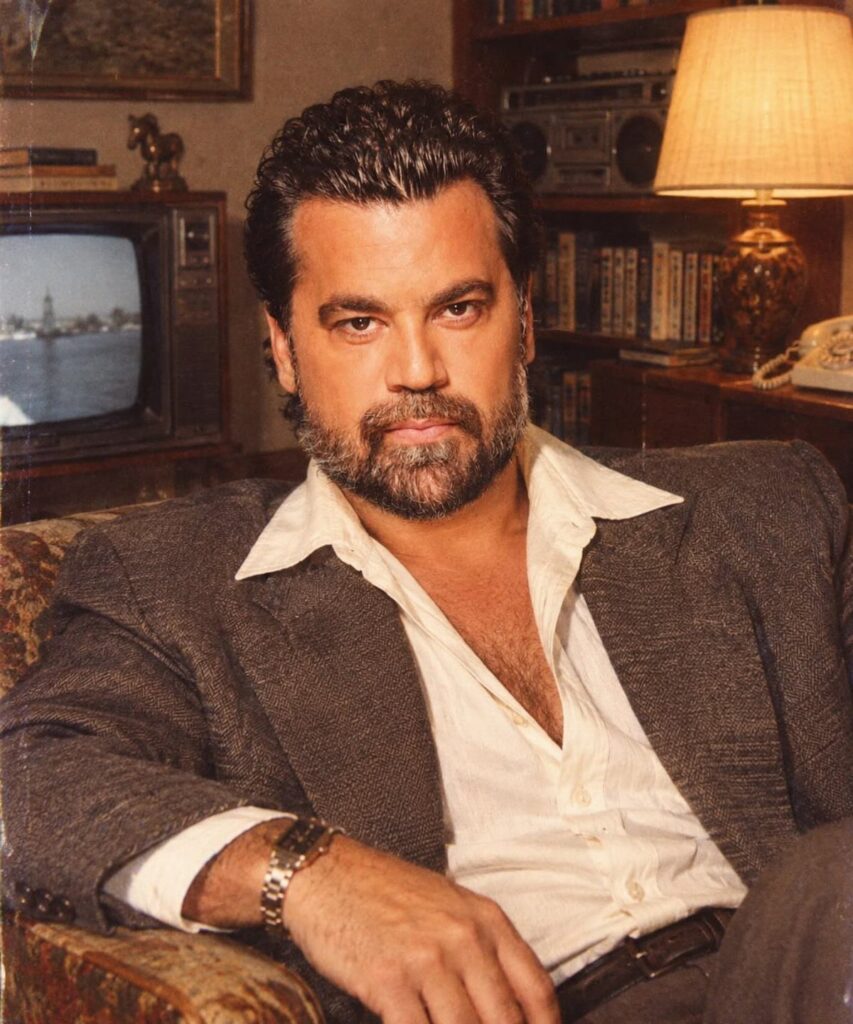
The decade pushed casual and formal in opposite directions at once: oversized suits borrowed their loose cut from sportswear, tracksuits moved from the gym to the street, and high-waisted jeans appeared under both graphic tees and patterned dress shirts.
Pick based on how much contrast you want between the pieces. A turquoise blazer over floral print competes loudly, while a velvet jacket over a white shirt lets one texture dominate.
Color-blocking divided windbreakers into panels of teal, red and navy, neon showed up in electric blue and fluorescent pink, and bold bright blazers in Miami pastels defined early ’80s sportswear before the look had a category.
1. Oversized Suits
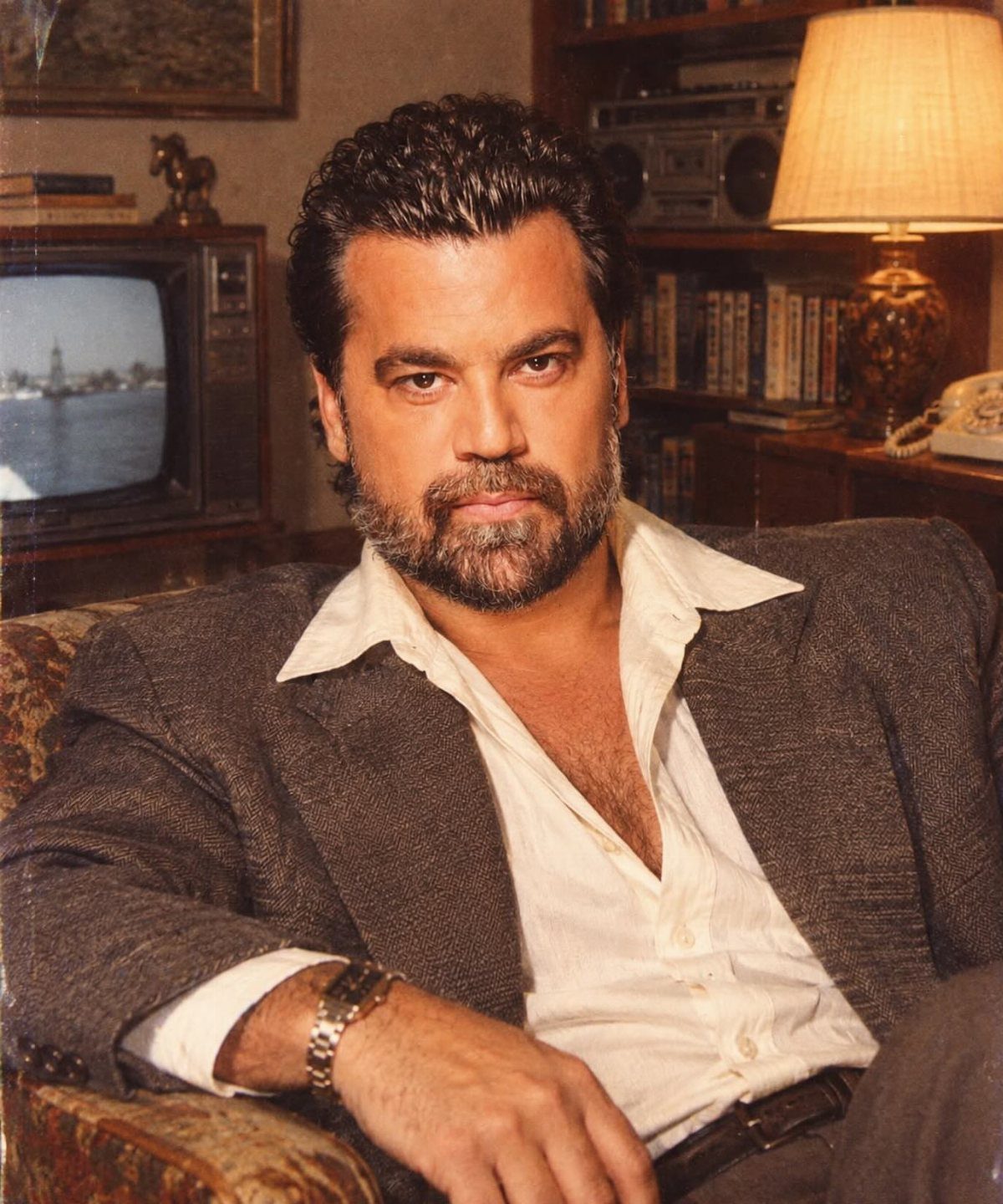
The blazer hangs past the hip, the shoulders extend beyond the natural line, and the sleeve breaks high on the wrist. That proportioned looseness is what made the look work in 1981, and it still reads as period-correct now.
Pair a grey or charcoal suit jacket with a white or cream shirt underneath, keeping the collar simple and the fit equally relaxed from shoulder to waist. Let the jacket dominate without cinching or tucking anything in.
For the full effect, match the trousers to the jacket and size up one from your usual fit.
2. Tracksuits
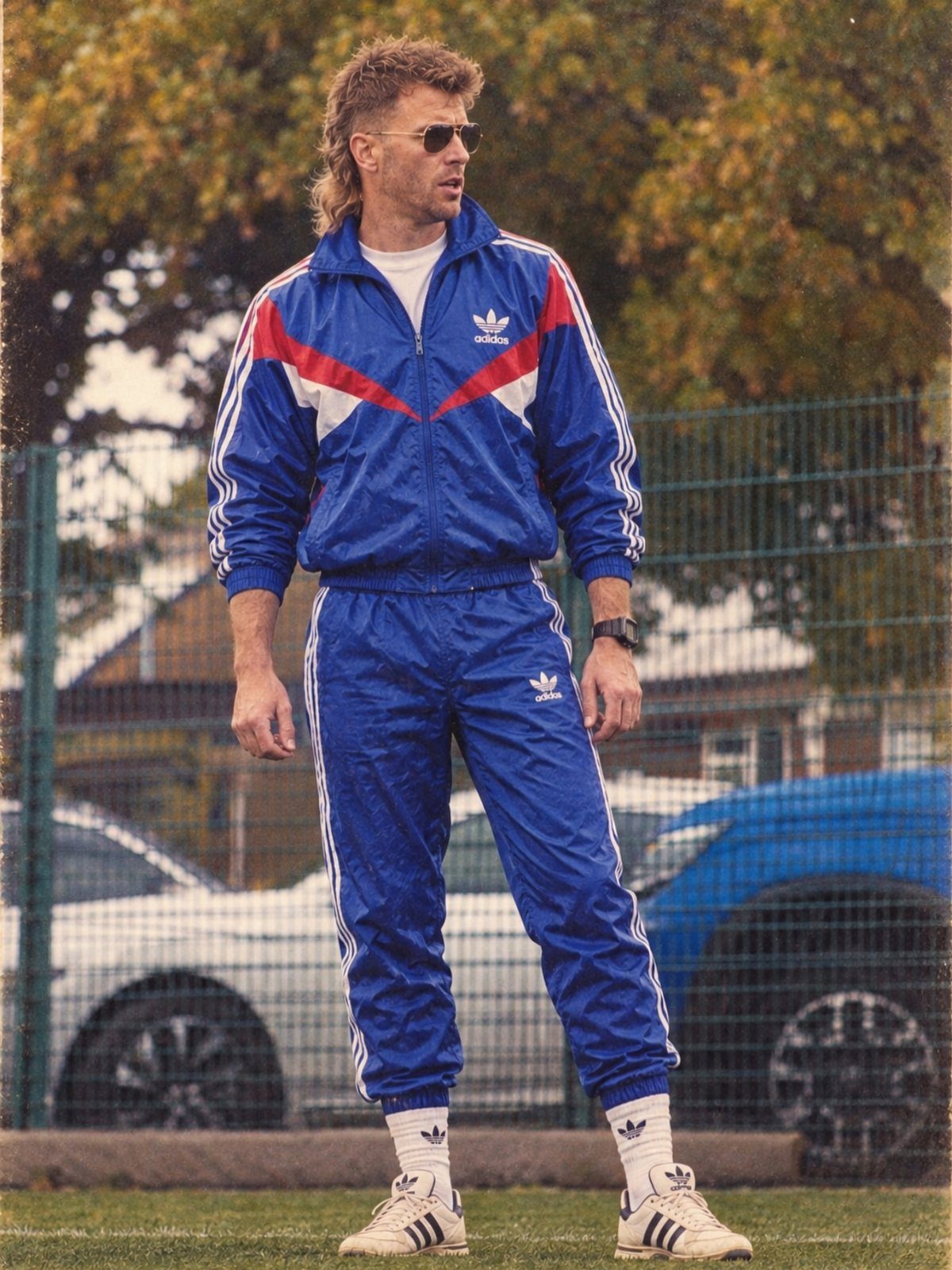
A tracksuit in 1981 meant Adidas, Puma or Fila, worn as a full matching set rather than separated into gym clothes. The appeal was athletic branding treated as streetwear before that category had a name.
Look for color-blocked nylon in blue, red, white or green, with the brand’s stripe running down the sleeve and leg. White sneakers finish it, and the fit should be straight rather than tapered.
The outfit works best when you commit to the full suit instead of mixing pieces. Everything else stays simple.
3. Hawaiian Shirts
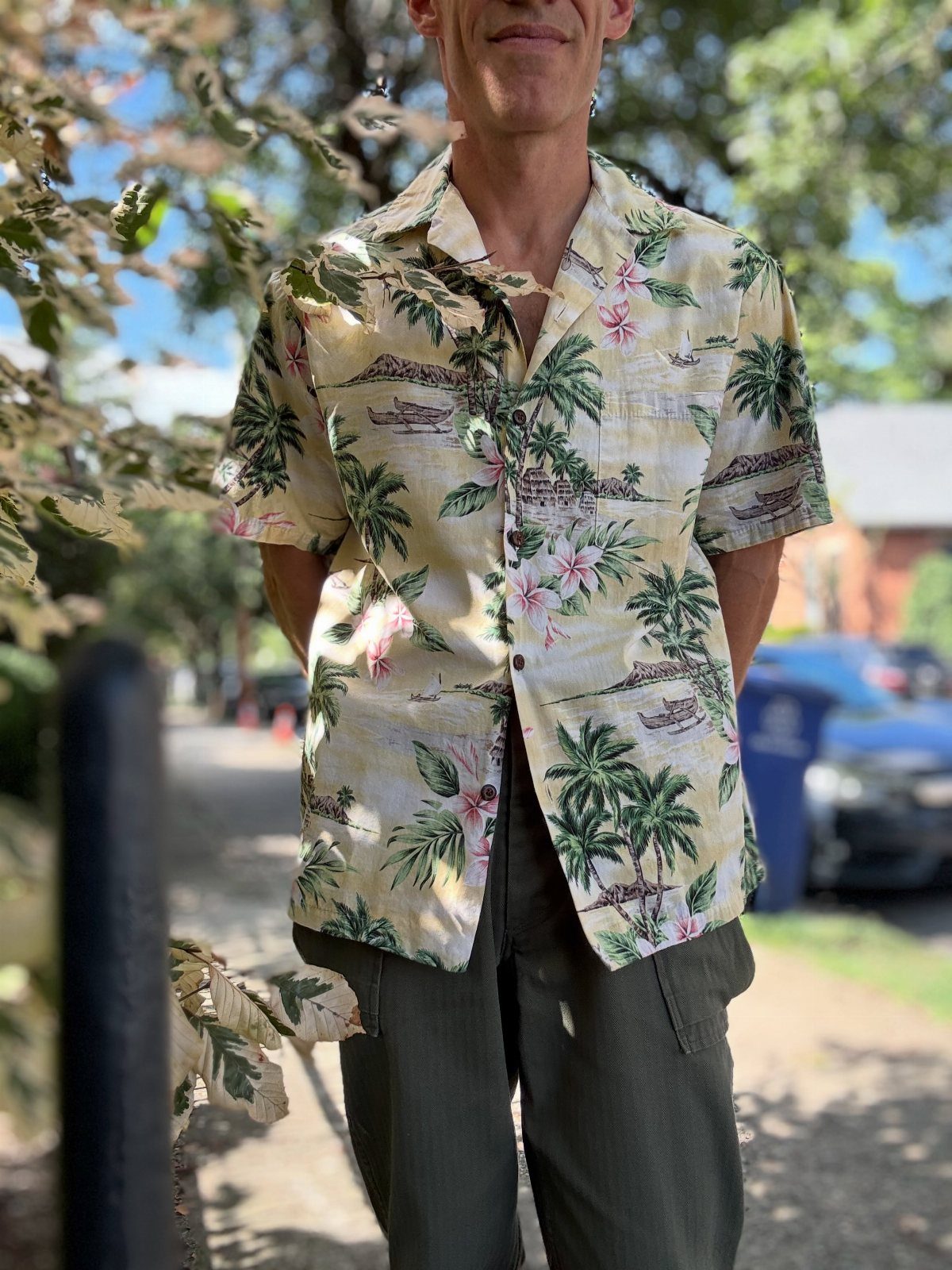
A short-sleeved button-up covered in palm trees, florals or tropical scenes, worn untucked over chinos or cotton trousers. The prints were bold and the colors ran warm: yellow, coral, teal, rust.
Pair it with olive, tan or off-white trousers and keep the shoes casual.
Loafers or canvas sneakers both work. The shirt should fit loose from shoulder to hem without ballooning.
I’d keep accessories minimal here. The print does the work.
4. Double Denim
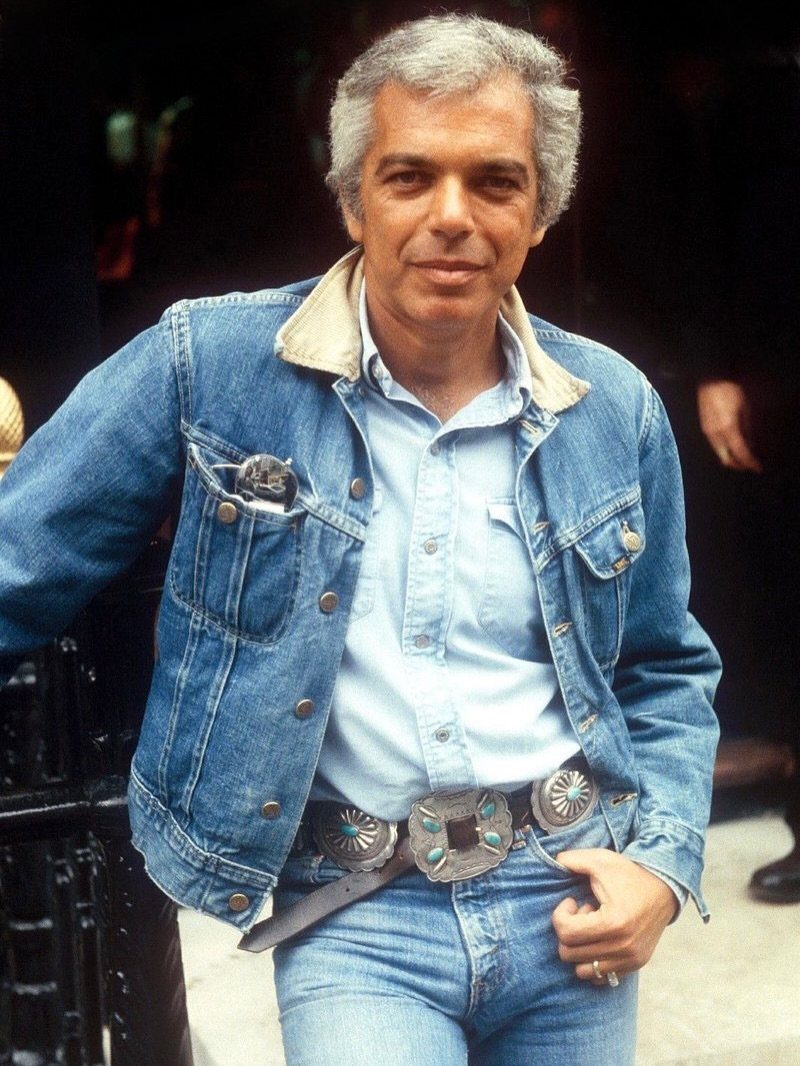
Wear a denim jacket over denim jeans in slightly different washes so it reads as layers, not a matching set.
The jacket in this case is medium blue, the jeans a shade lighter, and the shirt underneath breaks up the denim with a softer blue chambray.
The belt buckle adds a Western detail that was common in 1981, particularly in silver or turquoise. Keep the jacket unsnapped and the jeans straight-leg or slightly bootcut.
If the washes are too close, add contrast with a white tee or a patterned shirt underneath.
5. Acid-Wash Denim
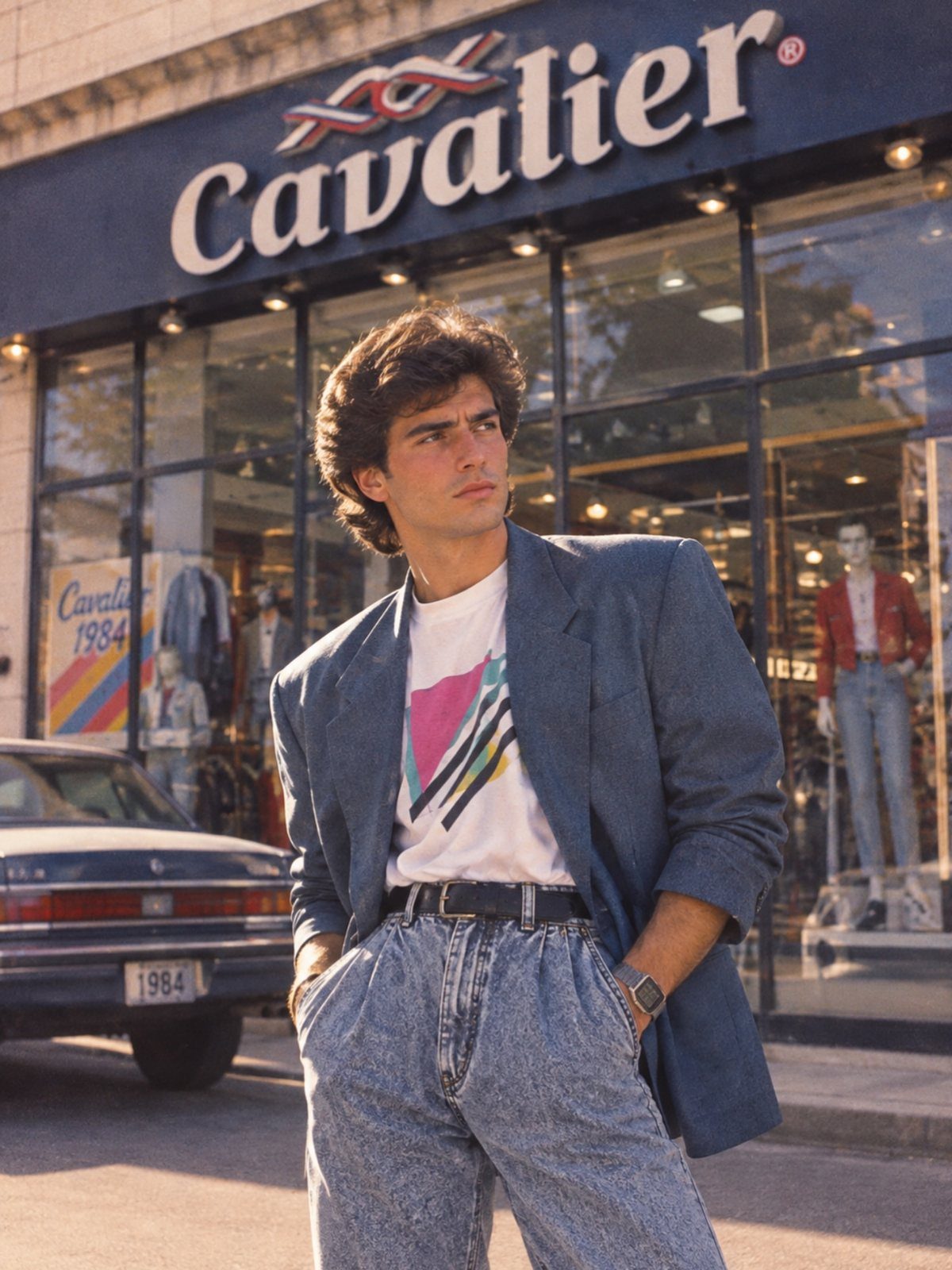
Acid-wash denim has that pale, streaky finish that looks like bleach was splattered unevenly across the fabric. Pairing it with an oversized blazer gave the jeans a dressier frame.
The blazer should be roomy in the upper body, and the jeans can run straight or slightly tapered.
I’d keep the top half simple so the jeans stand out. A plain shirt or tee works better than competing patterns.
6. Preppy Layered Blazer Outfit
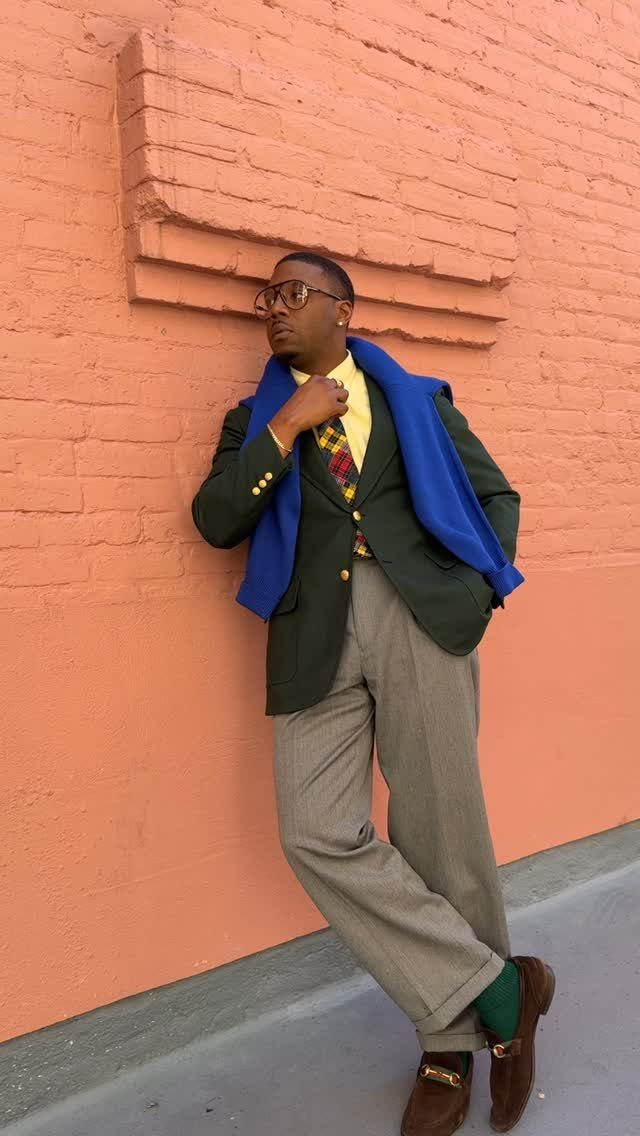
This is preppy layering taken seriously: a green blazer over a yellow shirt, patterned tie, and a blue sweater draped over the shoulders, paired with grey trousers. The look depends on mixing colors that contrast without clashing.
The blazer should fit structured but not tight, and the sweater needs sleeves long enough to tie loosely across the chest. The tie adds formality, but the drape keeps it from reading as business wear.
If you skip the tie, the look softens into casual layering. With it, you get the full Ivy League effect.
7. Brown Velvet Blazer Look
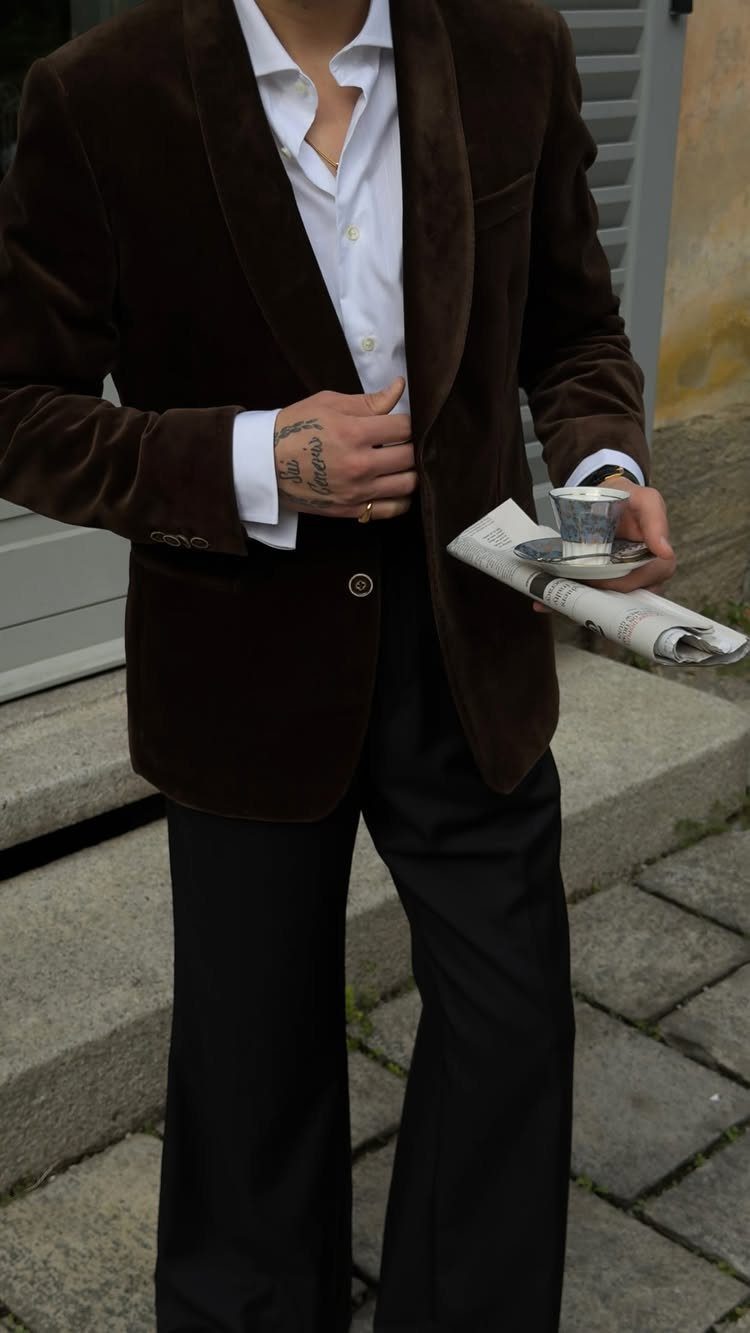
Velvet adds texture and formality at once, and in brown it reads warmer than black or navy. The blazer here is cut structured, paired with a white button-down and black trousers that keep the focus on the fabric.
The nap of the velvet catches light differently than wool, so the color shifts slightly as you move. That quality made it feel dressy in 1981 without needing a full suit.
I’d keep the shirt plain and the trousers dark to let the velvet do the work. A tie is optional, but the collar should sit cleanly under the lapel.
8. Chunky Turtleneck Over Collared Shirt
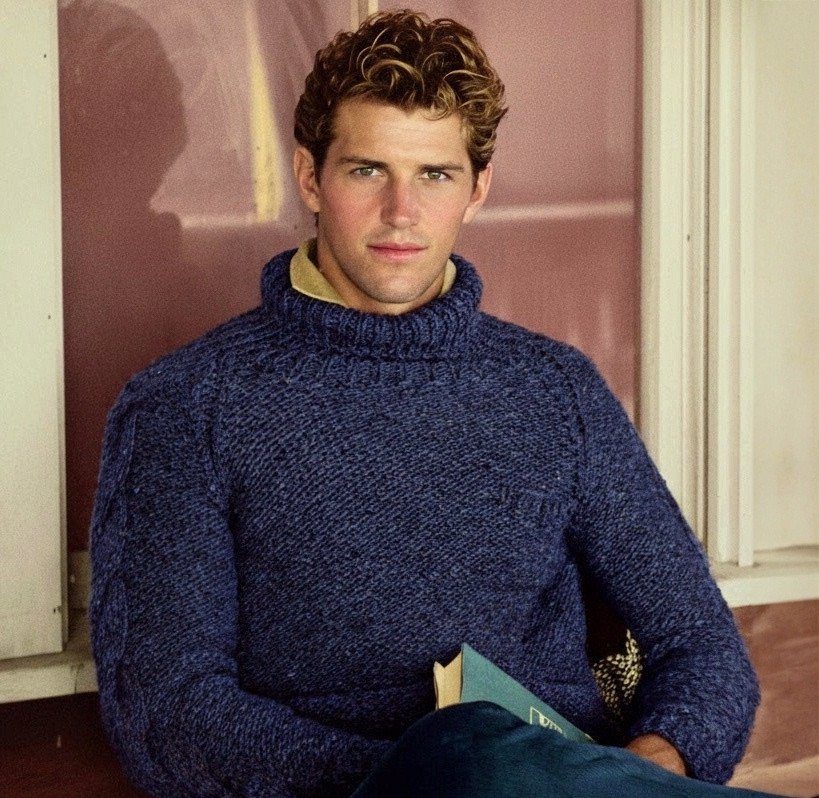
The turtleneck sits over a collared shirt so the collar pokes through at the neck, layering 2 pieces that normally occupy the same space.
The sweater here is thick and ribbed, in blue, over a yellow shirt that provides the only color contrast.
It worked in 1981 because the chunky knit was casual enough to offset the formality of the collar. The yellow gives warmth, the blue anchors it.
For this to read clearly, the turtleneck needs to fit loose enough that the collar sits flat and visible without bunching.
9. Bold Miami-Style Bright Blazer
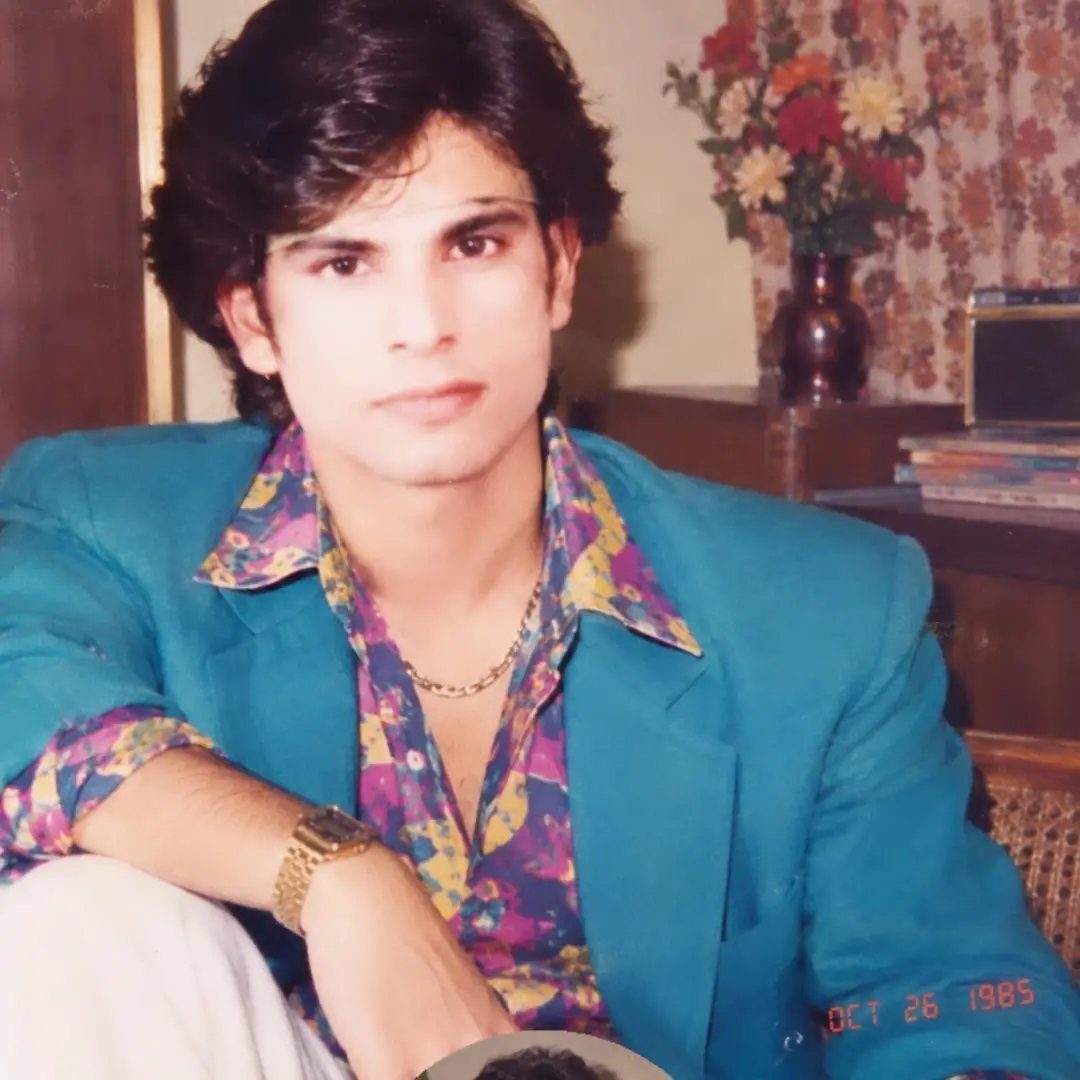
The blazer is bright turquoise, worn over a shirt covered in floral print, with a gold chain at the neck.
The color is the defining choice here, saturated and tropical in a way that only worked when you leaned into it.
The chain added a flash of metal that matched the confidence of the color. The shirt should be equally bold, not a neutral background.
This reads best when every piece competes slightly and nothing is toned down.
10. Patterned Shirt with High-Waisted Jeans
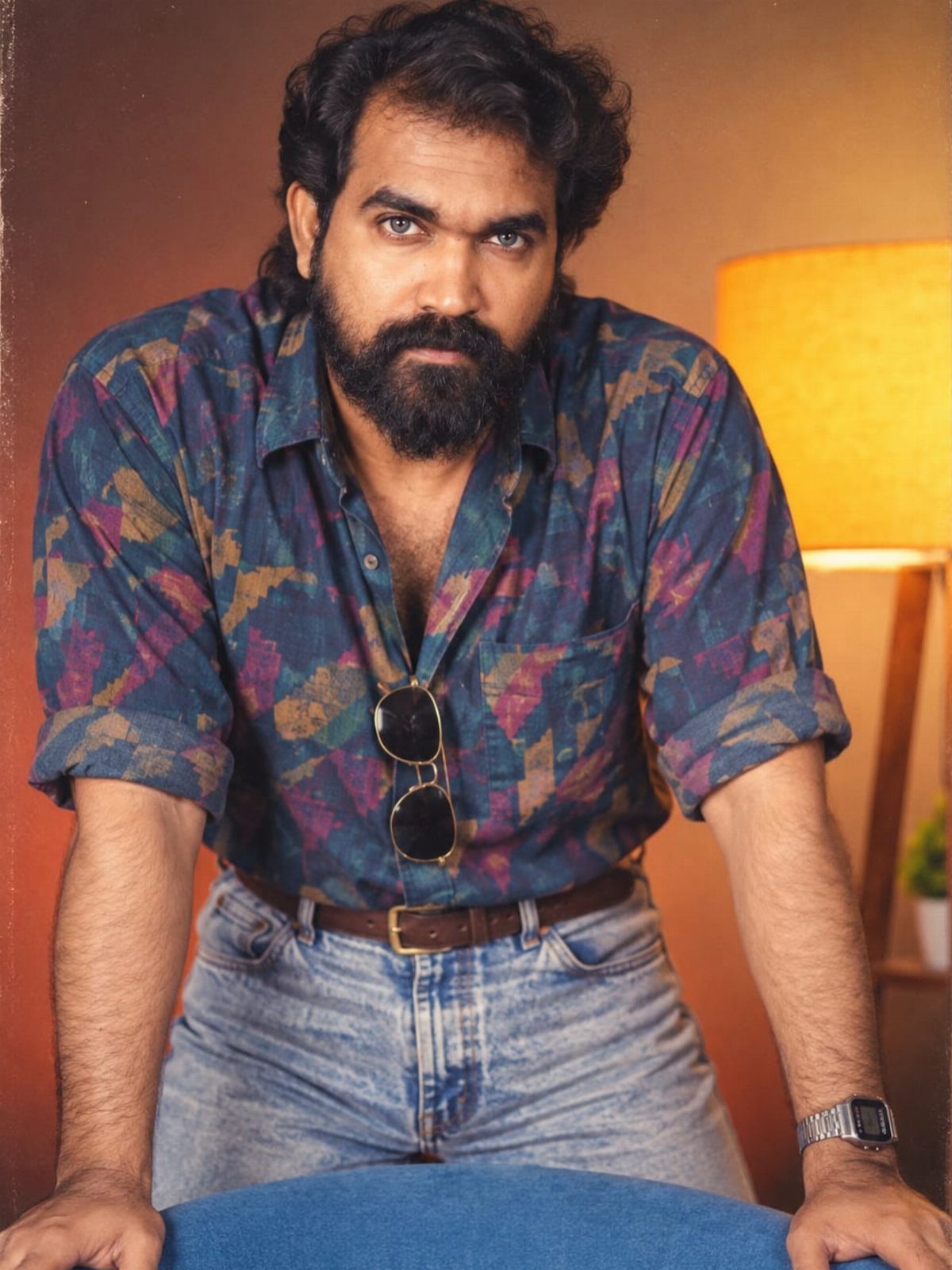
Tuck a patterned shirt into light-wash jeans that sit high on the waist, and cinch it with a brown leather belt.
The shirt here is multicolored, the jeans are pale blue, and the high rise gives the legs a longer line.
The tuck is what makes the proportions work. Without it, the jeans sit lower and the pattern loses its frame.
Brown leather ties the color in the shirt to the denim without adding another pattern. Keep the shoes simple so the shirt stays the focus.
11. Dress Shirt with Suspenders
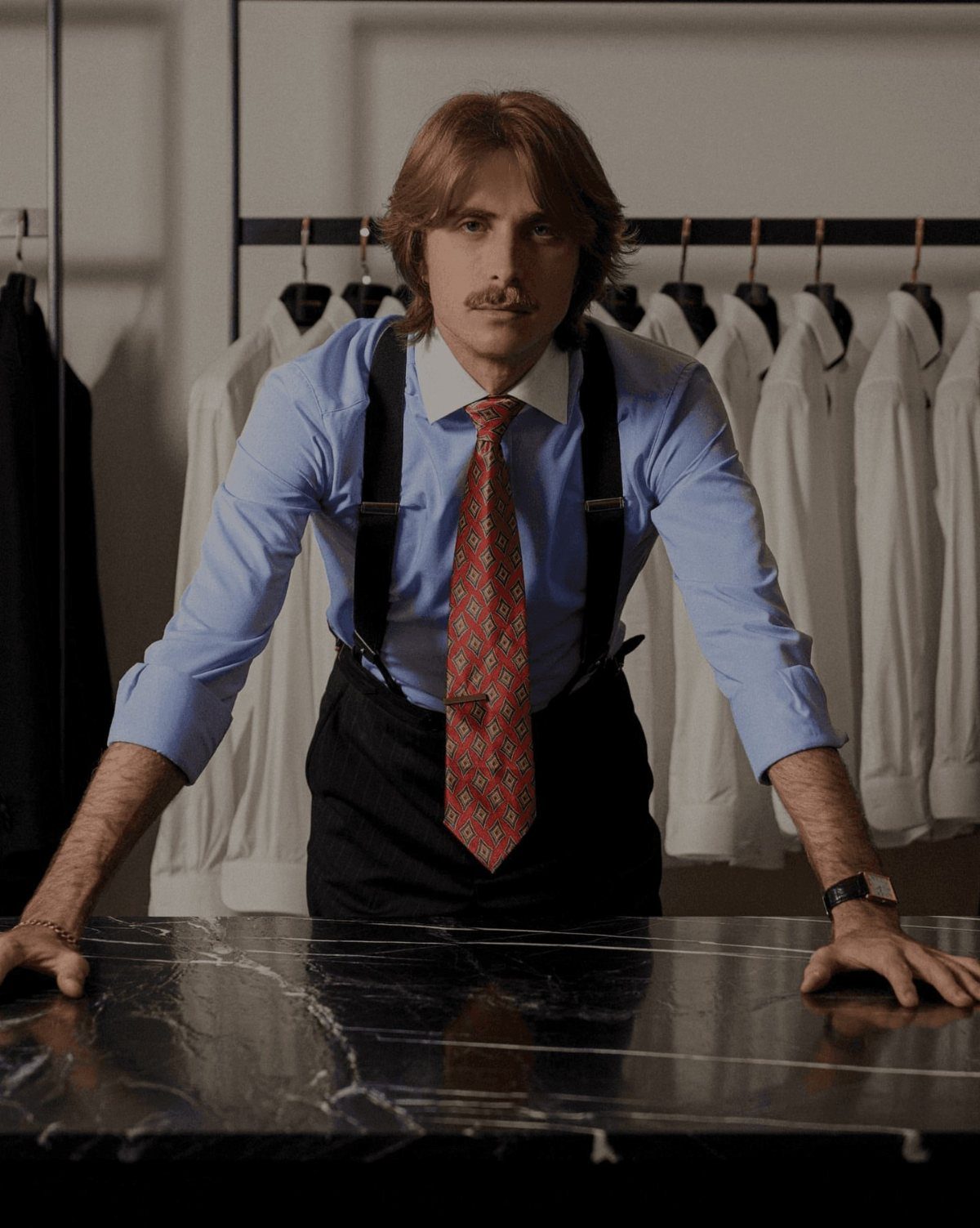
Button suspenders fasten to buttons sewn onto the trousers and run over the shoulders, eliminating the need for a belt.
The shirt here is light blue, the tie is patterned in red, and the trousers are dark enough to keep the suspenders visible.
In 1981, suspenders added formality without a jacket, and they kept the shirt tucked neatly through a full day. The tie finishes the look, but the suspenders are the structure.
Skip the belt entirely. The suspenders do that job, and wearing both reads as overcorrected.
12. Color-Blocked Windbreaker with Wide-Leg Jeans
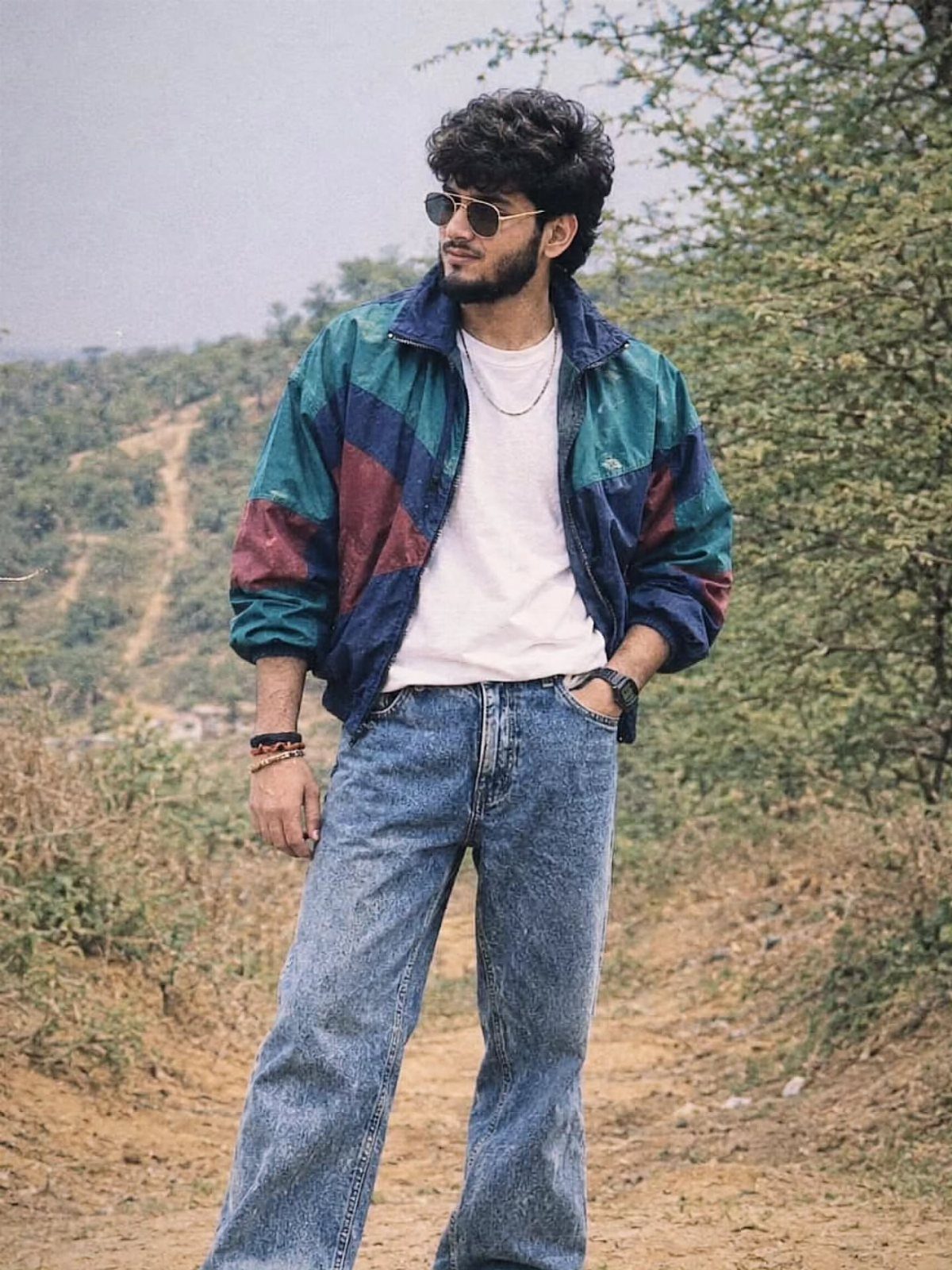
The windbreaker divides into blocks of teal, red and navy, worn over a white tee and wide-leg jeans in light wash. The jacket is nylon, cut short at the waist, and the jeans fall straight from the hip without taper.
Color-blocking was everywhere in early ’80s sportswear, and the wide leg balances the bulk of the jacket. The white tee keeps the chest simple so the blocks read clearly.
The jeans should break once at the shoe. Any shorter and the wide leg loses its effect.
Color Choices
Tracksuits, printed tees and accessories in 1981 leaned into electric blue, neon pink and vivid green, fluorescent shades that defined the look for years after.
The colors were saturated enough to read under club lighting and bright enough to stand out on the street.
Neon worked best when applied to one piece rather than across the whole outfit.
A fluorescent yellow tee under a neutral jacket, or a neon pink windbreaker over plain denim, gave the color a frame without turning the look into costume.
The acid-wash and color-blocking already in the list kept pattern and wash doing most of the work. When you added neon, it replaced those details rather than competing with them.
The fluorescent aesthetic returned to streetwear in 2026, though in 1981 it was still new enough to feel like a choice rather than a throwback.
Then: According to legend, you can go blind staring directly into the loud patterns and bright colours of an oversized printed shirt. Needless to say, this ’80s men’s fashion statement doesn’t say “retro” as much as it does scream it.
Mixing Patterns and Textures
Acid-washed denim, sequins, leather and rayon each carried a different finish, and 1981 mixed them within the same outfit more often than the decade before.
A sequin-covered collar over a leather jacket, or rayon trousers under a denim top, layered texture without requiring matched fabrics.
The approach worked because each material had enough visual weight to hold its own. Sequins caught light, acid-wash broke up solid color, leather added structure, and rayon draped softer than cotton or wool.
Pattern mixing followed similar rules. A floral shirt under a striped blazer, or a geometric tie over a patterned sweater, read as intentional when the colors shared a temperature or one pattern stayed smaller in scale than the other.
The optimism of the era showed in how far you could push a combination before it stopped working. The decade rewarded playful choices.
Casual Vs. Formal
Formal tailoring in 1981 borrowed its shape from casual wear: oversized shoulders, looser cuts across the torso, and trousers that rode high at the waist.
A suit jacket and a varsity bomber both extended past the hip, and jeans adopted the high rise that had been standard in dress trousers.
That overlap made it easier to dress an outfit up or down by swapping one piece. Swap the denim jacket for a blazer, or the dress shirt for a graphic tee, and the proportions stayed consistent.
Casual pieces also moved into formal settings more freely than they had in the previous decade.
High-top sneakers appeared under tailored trousers, and sweatshirts layered under blazers without reading as unfinished. Athletic wear had become accessible and influential enough to cross categories.
The range felt wide because the decade allowed both directions at once.
Frequently Asked Questions
What fashion was popular in 1981?
Oversized suits with extended shoulders, tracksuits worn as full matching sets, and double denim in contrasting washes defined the year.
Bold colors like neon pink and electric blue appeared in windbreakers and tees, while preppy layering mixed blazers with draped sweaters and patterned ties. High-waisted jeans, acid-wash denim, and Hawaiian shirts rounded out the casual side.
What can a man wear to an 80s party?
A full tracksuit in color-blocked nylon with white sneakers gives you the athletic look, or go for a bright turquoise blazer over a floral shirt with a gold chain for Miami styling.
A denim jacket over acid-wash jeans, a color-blocked windbreaker with wide-leg jeans, or an oversized suit in grey or charcoal all read as period-correct. Pick one bold element and build around it.