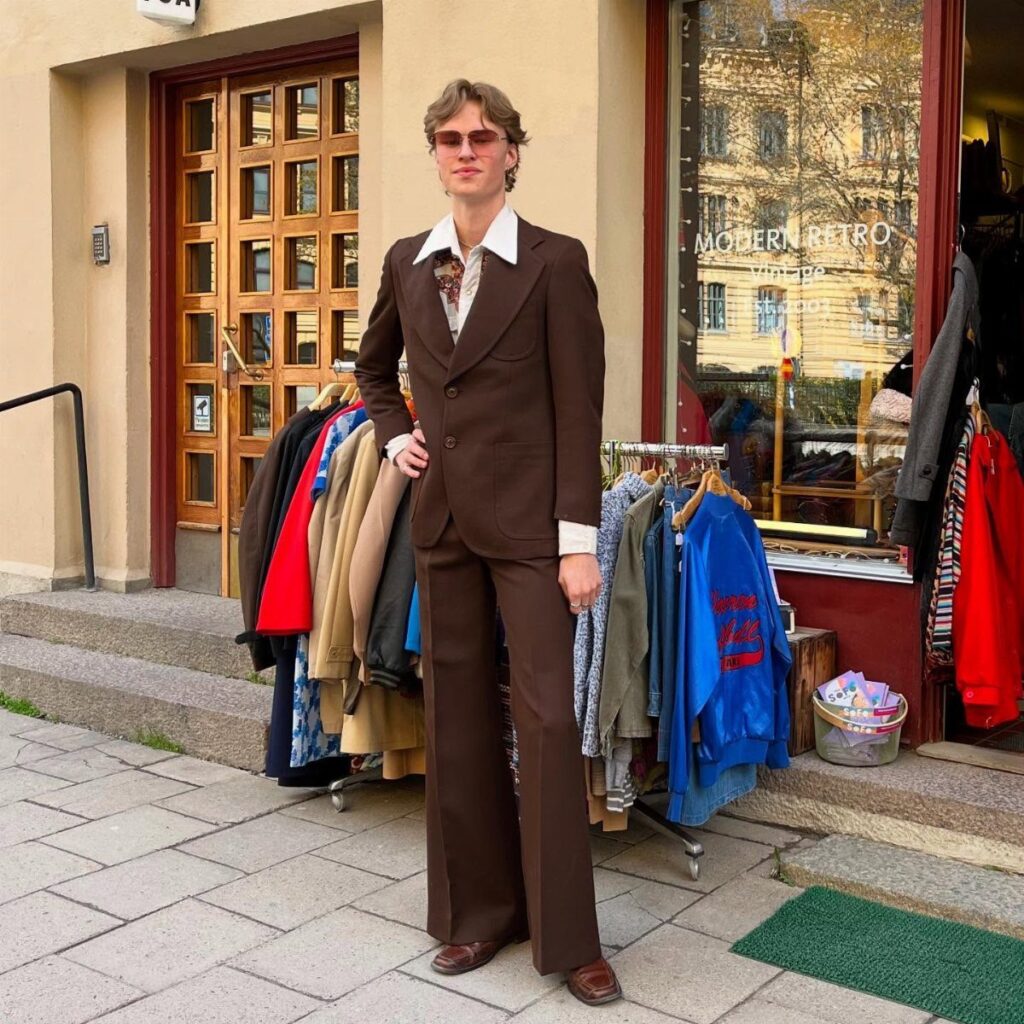
Men’s fashion in 1970 moved between the office and the disco, and the cuts ran wide: flared trousers that widened from the knee, lapels that reached their broadest point, and platform soles that lifted you an inch or more on wood or cork.
If you have the frame for it, the proportion still holds. The decade leaned into saturated color and geometric prints, often on the same shirt, and a turtleneck under a blazer replaced the collar and tie without looking unfinished.
1. Leisure Suits
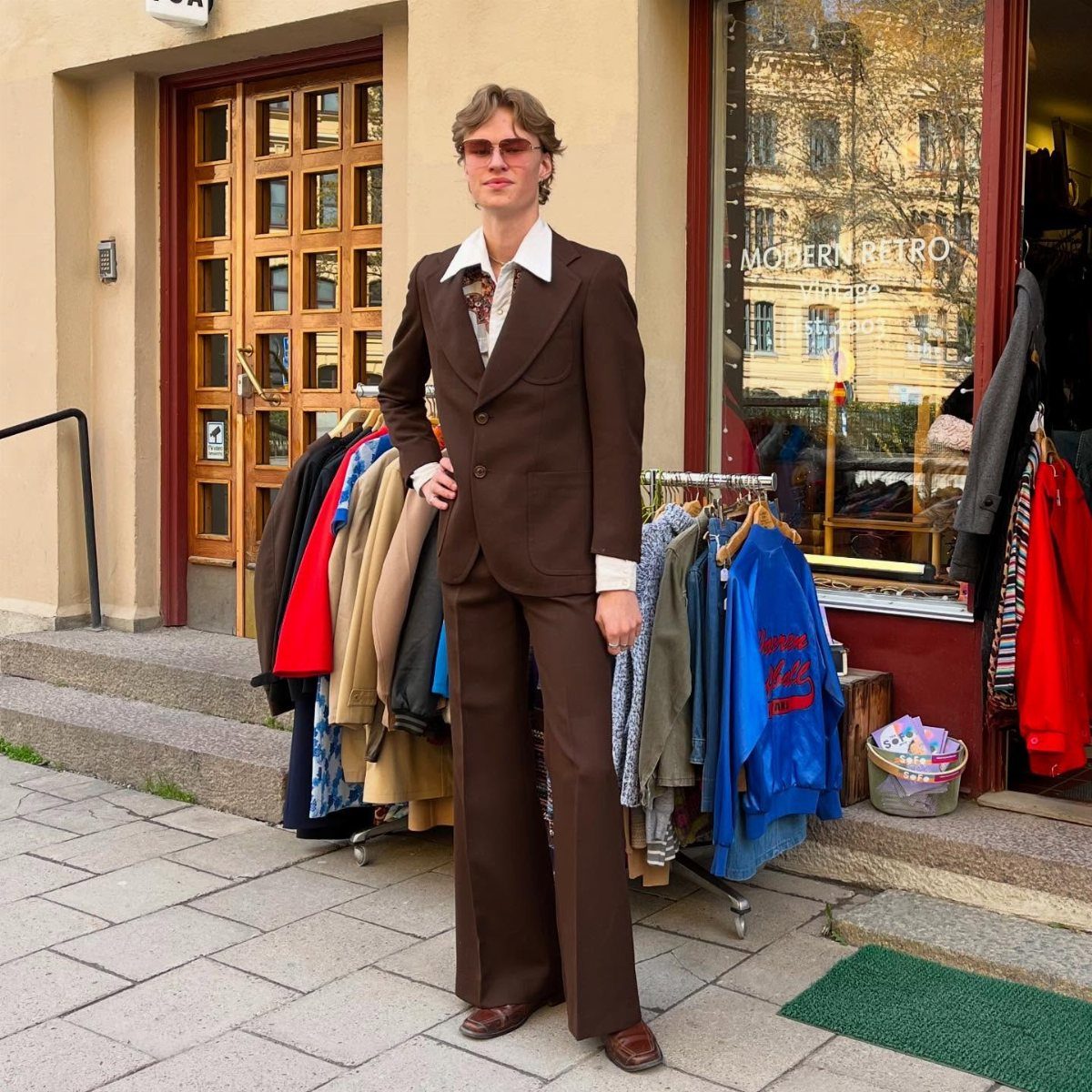
The leisure suit ran jacket and trousers in the same fabric, usually polyester, cut with the soft construction and patch pockets of casual wear but shaped like a suit. It let you move between the office and dinner without changing.
Brown and tan were common, and the fabric’s sheen caught light in a way wool didn’t.
The wide lapels and flared trousers gave it proportion, but those same details make it harder to wear now as anything but costume. If you want the idea today, try an unstructured linen suit in summer.
2. Wide Lapels
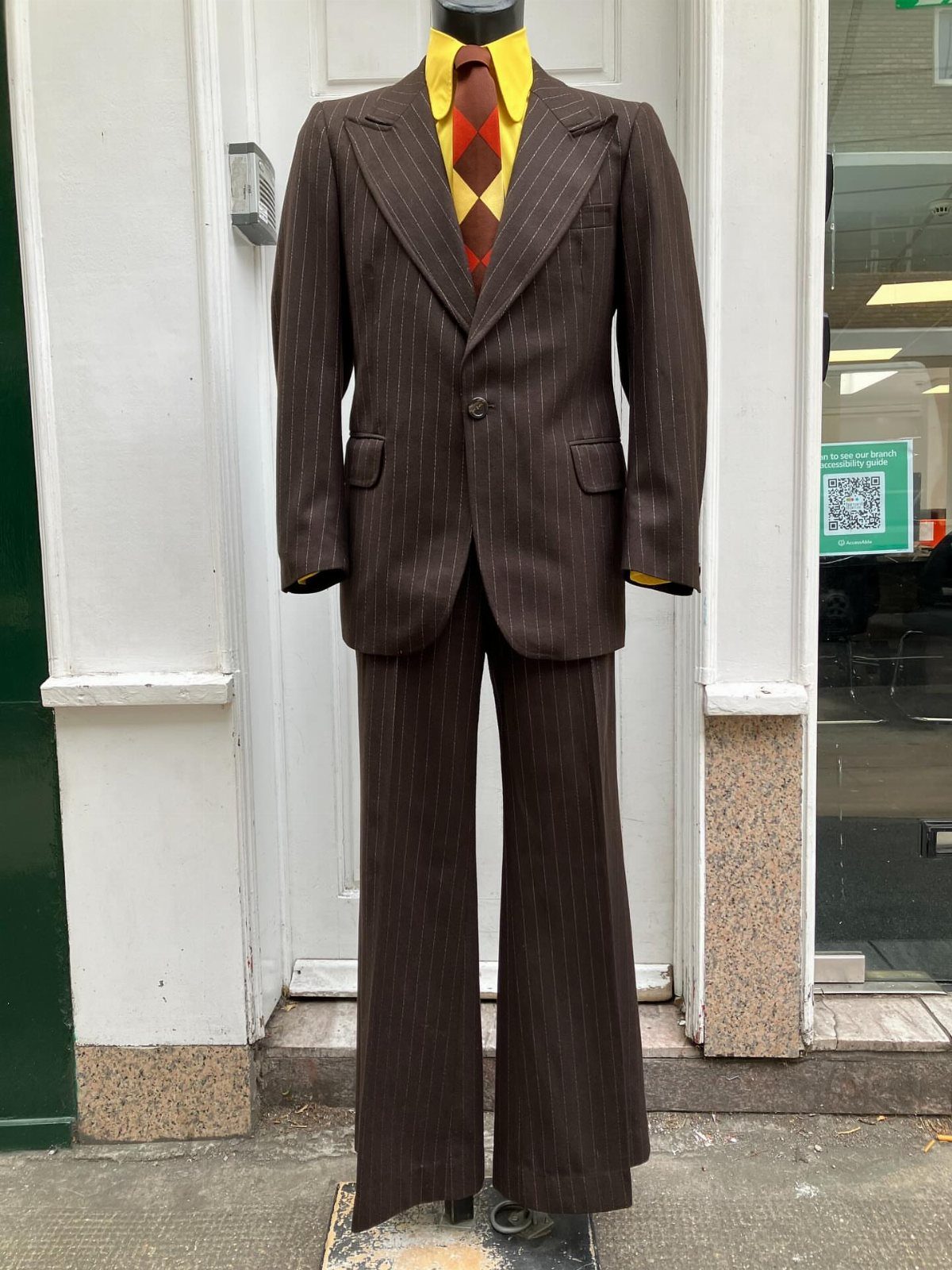
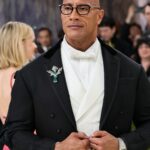
Lapels in the 1970s reached their widest point, and the extra width changed how a jacket sat on the chest. A wide lapel draws the eye out and balances broader shoulders or a larger frame.
On a narrow chest, that much lapel can overwhelm, but if you have the frame for it, the look still holds. Modern cuts run narrower, which splits the difference.
3. Flared Pants and Bell Bottoms
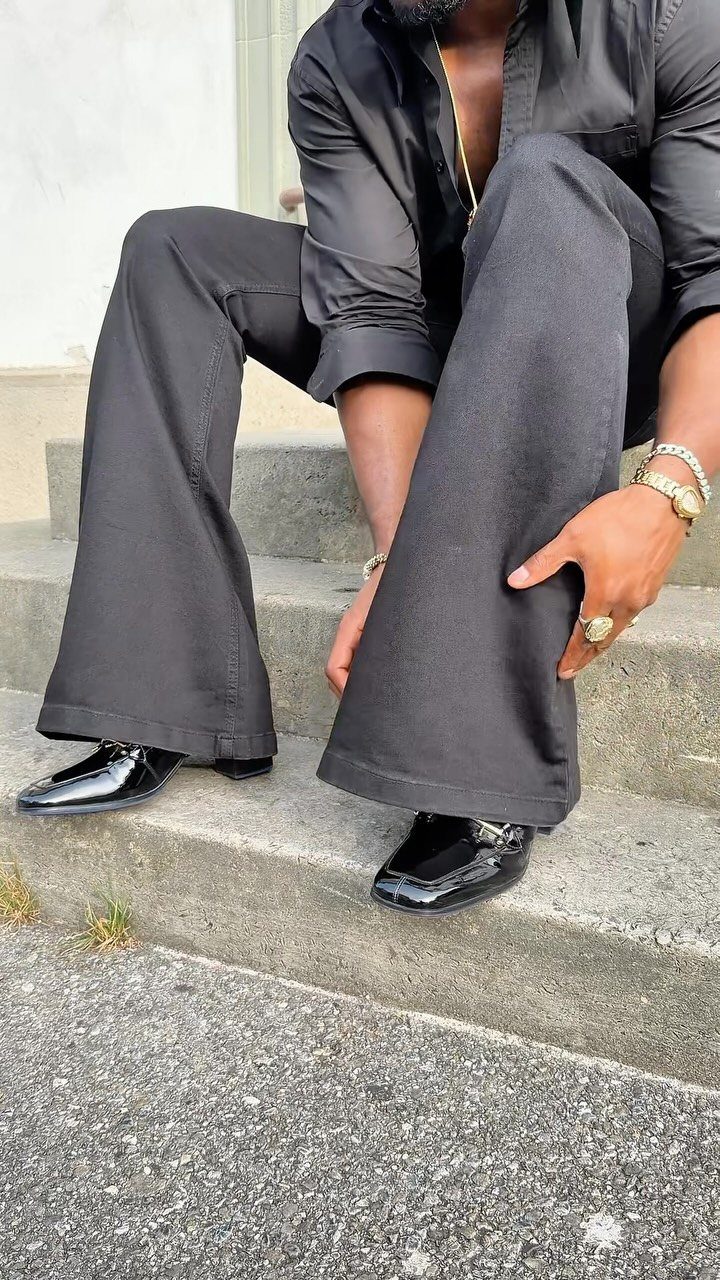
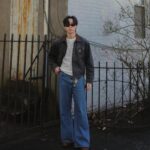
Flared trousers widen from the knee down, ending wider at the hem. Bell bottoms took the flare further, and the extra fabric moved when you walked.
Pair them with a fitted shirt or turtleneck so the volume stays below the waist.
The cut works best if you’re tall, since the length emphasizes the line. Shorter builds can try a narrower flare for the shape without the drag.
4. Bold Patterns and Colors
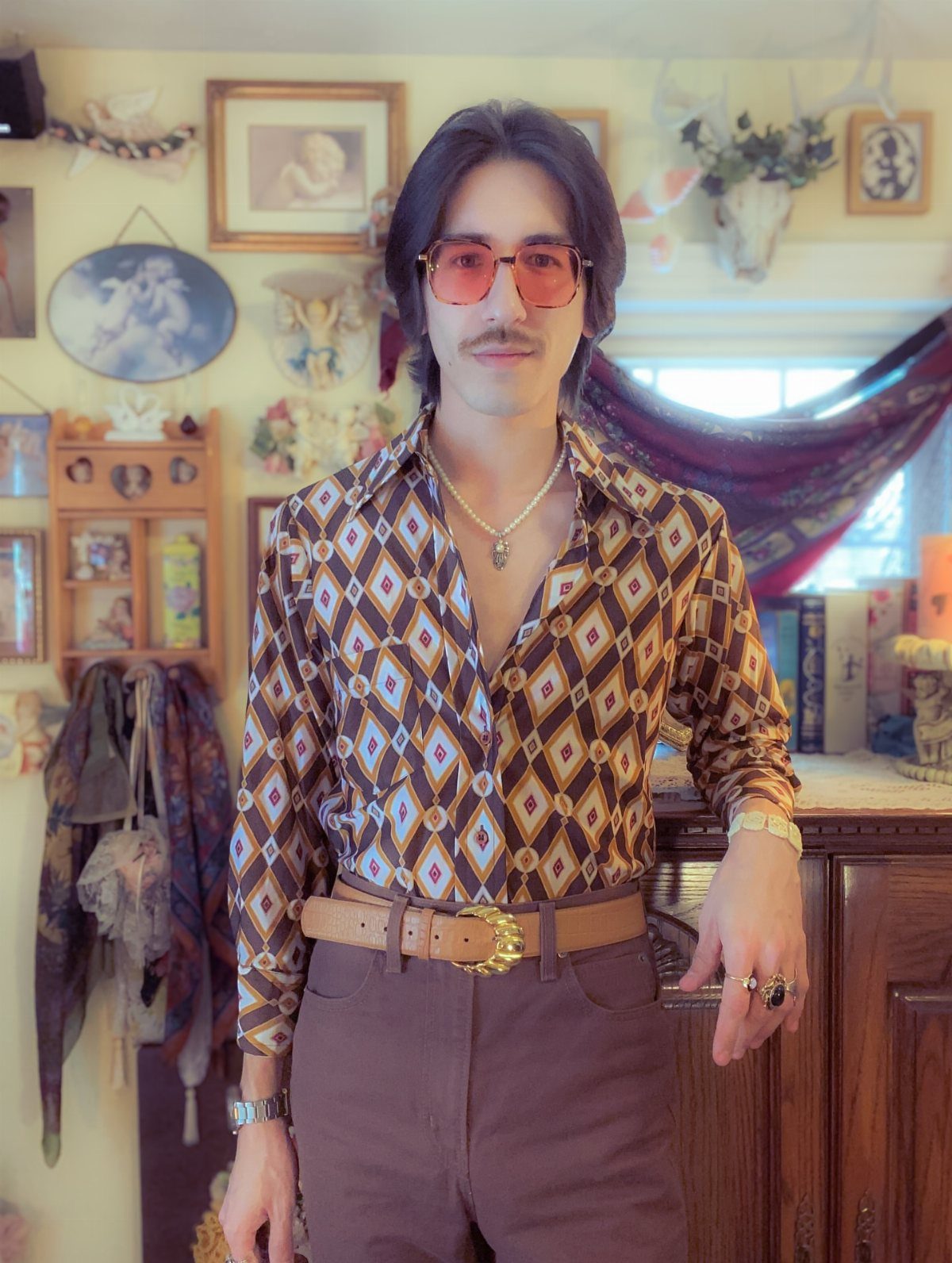
Bold patterns meant geometric prints, paisley, and saturated colors like mustard, burnt orange, and chocolate brown, often on the same shirt. The 1970s leaned into contrast, and a patterned shirt became the focal point of an outfit.
If you try this now, limit everything else to solid neutrals so the pattern does the work. The fit should be slim enough to avoid adding bulk.
5. Turtlenecks
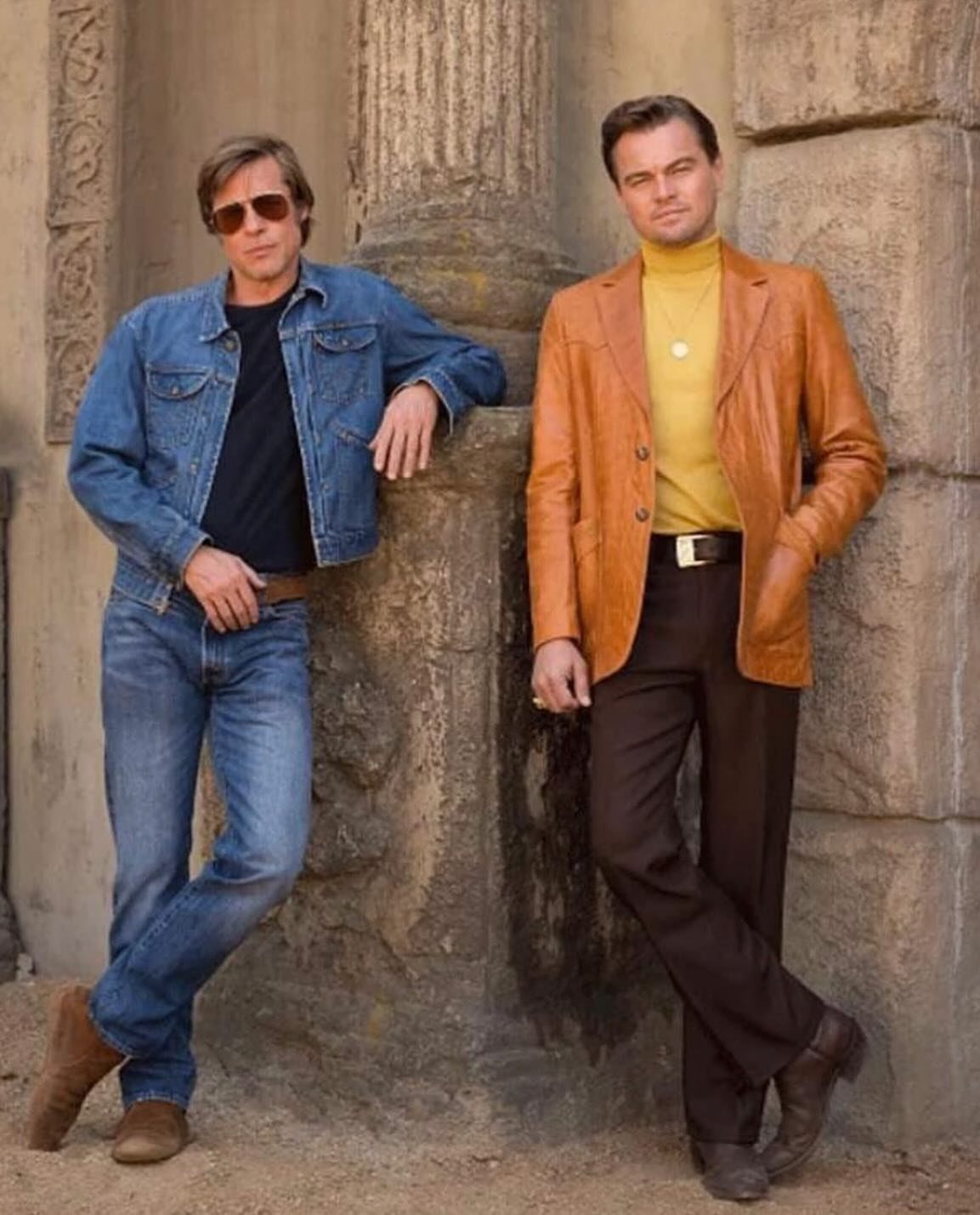
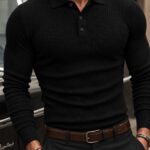
A turtleneck replaced the collar and tie, and layering it under a blazer or leather jacket gave you a finished look without buttoning up.
The fit should be close but not tight, so the fabric sits smooth under a jacket.
If the neck feels restrictive, try a mock neck, which stops an inch below the chin. Wool and cotton both work, but wool holds its shape better through the day.
6. Safari Jackets
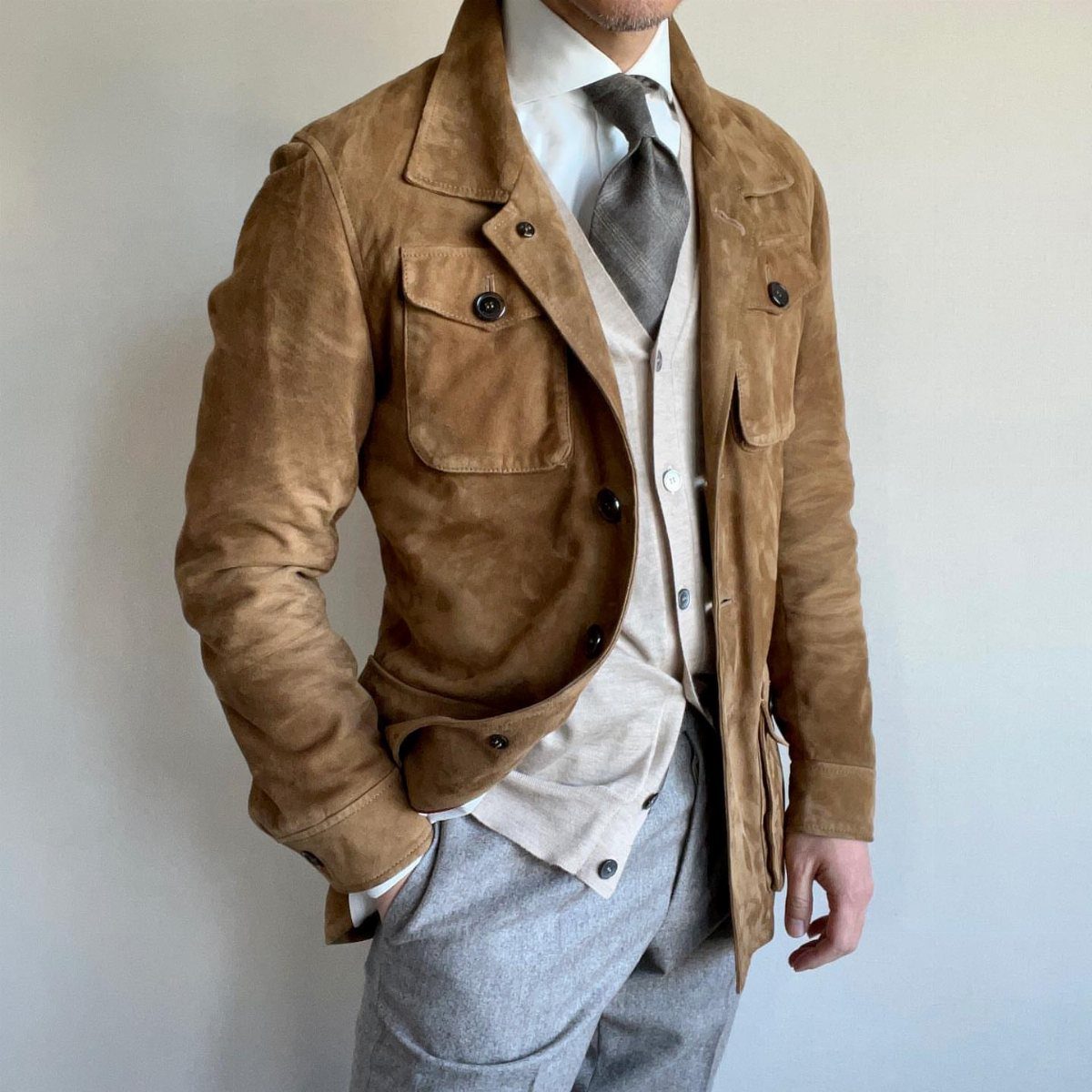
A safari jacket is a short, belted jacket with patch pockets and a shirt-style collar, originally worn for fieldwork but adopted as casual outerwear in the 1970s.
The belt cinches at the waist, which gives structure to an otherwise boxy cut.
Cotton canvas is lighter and easier to care for than suede, and it still holds the shape. Wear it over a shirt or thin knit, and keep the trousers simple so the jacket stays the focal point.
7. Platform Shoes
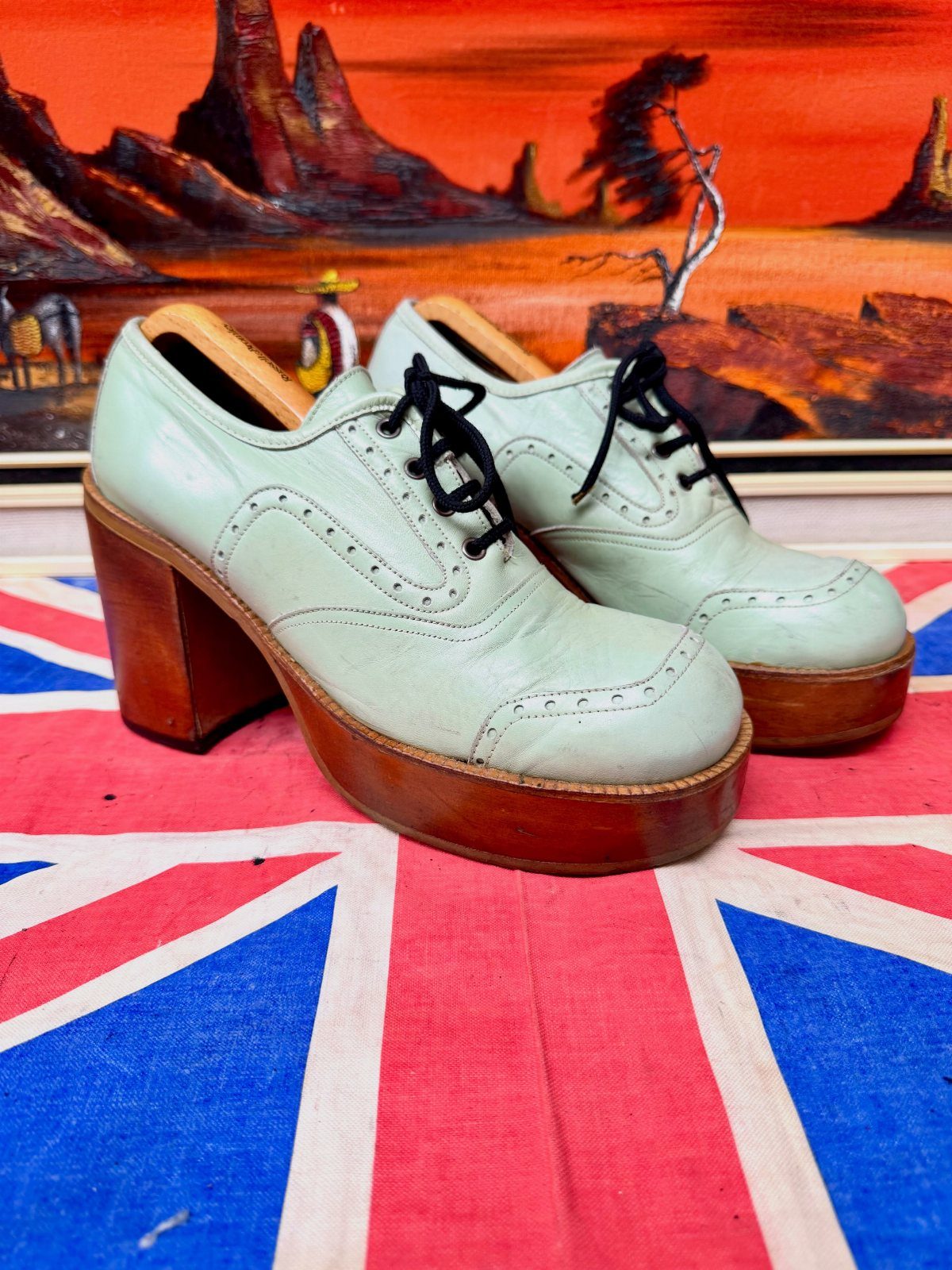
Platform shoes lifted the sole an inch or more, usually on wood or cork, and the extra height changed your stance without the pitch of a heel. The 1970s ran them on oxfords, loafers, and boots alike.
The thick sole adds weight, so the leather should be light enough that the shoe doesn’t fight your gait. Pair them with slim or straight trousers so the proportion stays balanced and the shoe doesn’t disappear under wide hems.
8. Three-Piece Suits
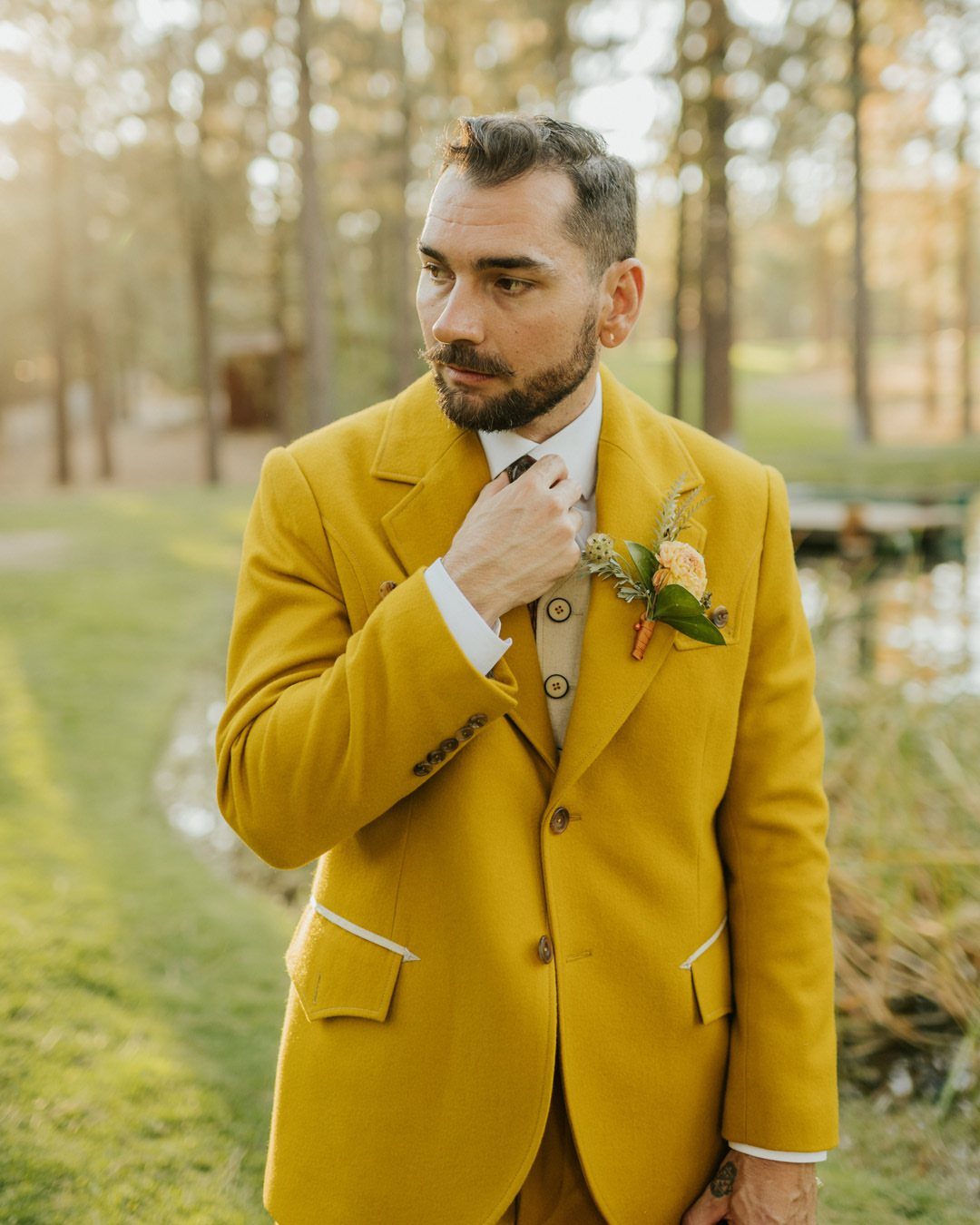
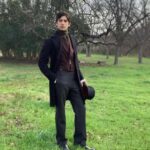
A three-piece suit adds a vest between the shirt and jacket, which lets you drop the jacket indoors without looking unfinished. The vest should sit close enough that it doesn’t bunch when you move, and the bottom button stays open.
Mustard yellow is loud, but the structured cut keeps it from reading as costume.
If you want the formality without the color, try the same cut in charcoal or navy. The vest works best on a build that can fill it out, since a loose fit reads sloppy.
9. High-Waisted Trousers
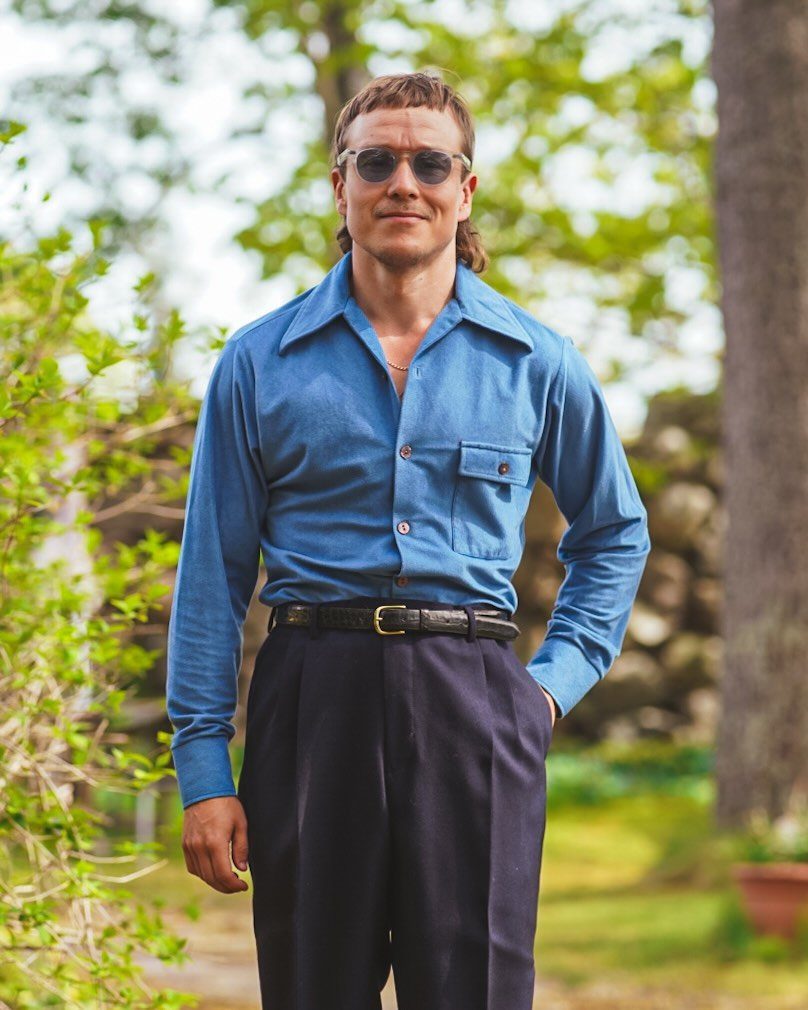
High-waisted trousers sit at or just above the natural waist, which lengthens the leg and shortens the torso. The higher rise works best if you tuck the shirt, since the waistband becomes part of the line.
Black trousers keep the focus on the cut, and pairing them with a wide-collar shirt balances the proportion. If you have a shorter torso, the high waist can make it look even shorter, so try a mid-rise instead.
Integrating Retro Flair
Retro pieces work best when the fit is modern. Mixing vintage seventies pieces with modern staples stops it reading as costume.
Pattern works the same way.
A geometric print or paisley shirt carries the decade, but if the cut is boxy, you tip into fancy dress. Size down if needed so the shoulder seam sits at your shoulder, not past it.
Pick one per outfit and build the rest around neutrals. Rose and beige also showed up often, and both mix more easily than orange if you’re starting out.
Influence of Music
Disco and rock shaped how men dressed in the 70s, and both pushed for clothes that moved. Disco especially meant tight through the body and flared at the leg, so the silhouette changed as you walked.
Shirts in disco style were cut close and often shiny, either from polyester or a fabric with a sheen.
Sequins appeared on some outfits, though that level of shine is hard to pull off outside a club. Saturated colors worked better because they held under low light.
High-waisted bell bottoms paired with them because the rise kept the proportion balanced when the sole lifted you an inch or more.
Hairstyles of the 70s
Hair in the 70s grew longer and looser, and men stopped slicking it back the way they had in the 60s. The shaggy cut was common, and it read as casual even when the suit or jacket was dressed up.
Longer styles work now if you keep them clean and shaped.
Let it grow past the collar if you want, but trim the ends every few weeks so it doesn’t look unkempt. A side part or no part both fit the era, and neither requires product.
If your workplace leans formal, a shorter version of the same cut still carries the shape without crossing the line. The 70s look was about less grooming, not none.